
REVIEW · HIROSHIMA
Hiroshima 3hr Peace Cycling Tour with Local Guide
The most powerful part of this three-hour e-bike tour is the way it connects Hiroshima’s famous memorials with quieter places you could easily miss. You ride from Hiroshima Castle and Gokoku Shrine to the Atomic Bomb Dome, surviving trees, railway history, and the far edge of the blast area.
I like the small group limit of 10, which gives you room to ask questions. I also like the personal approach of guides such as Shin and Moe, whose family stories have helped make the history more immediate for many people. The main drawback is that the tour covers a serious subject at a brisk pace, and cyclists may need to slow down if children or less confident riders are in the group.
Key points to know before you book
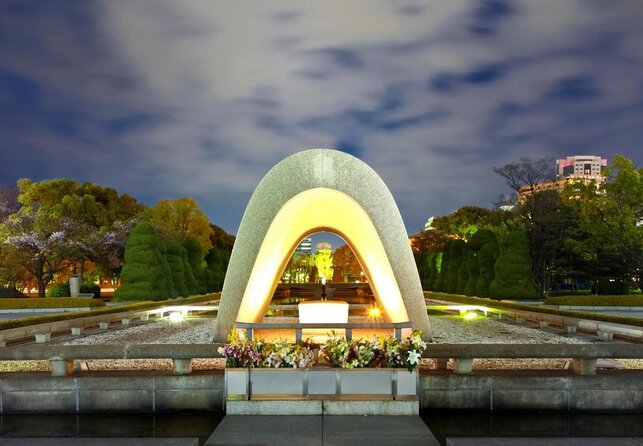
- Family stories give the history a human voice: Guides including Shin and Moe have shared personal connections to Hiroshima’s bombing and recovery.
- Electric bicycles keep the route manageable: The ride is generally flat and easy, including in hot weather, according to the experience details.
- The route goes beyond the Peace Park: You also visit Hiroshima Castle, Gokoku Shrine, the Red Cross Hospital site, surviving railway cars, and outer memorials.
- A maximum of 10 people keeps it personal: Smaller groups make it easier to hear the guide and ask questions.
- The tour returns to the Peace Park: You begin and finish at the Peace Memorial Park Rest House.
- Rain does not always end the day: You may switch to a walking route focused on the Peace Park, Atomic Bomb Dome, hypocenter, former Bank of Japan, and Fukuromachi Elementary School.
Why cycling gives Hiroshima’s history a different shape
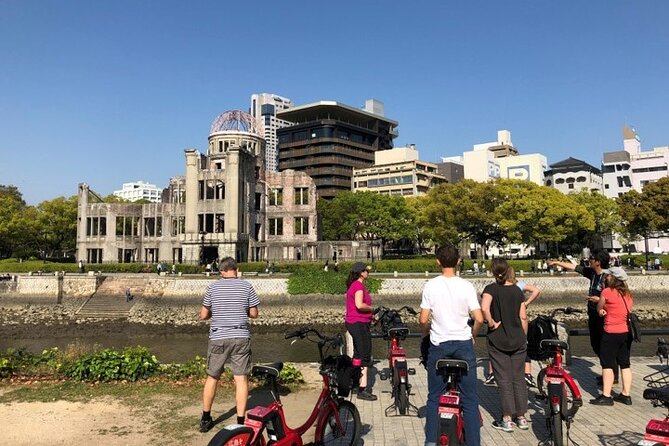
You can visit Hiroshima’s main memorials on foot, but a bicycle changes your sense of distance. On this route, you move from the city center toward places one and two kilometers from the blast center, then continue to the area where the bomb’s reach ended. That physical progression helps you understand the scale of the destruction in a way that a single museum visit may not.
The route is not a demanding athletic ride. The bicycles are electric, and the path is described as relatively flat and uncrowded. You still need to be comfortable starting, stopping, steering, and riding near other people, but you do not need a high level of fitness.
The bicycle also lets the guide show you how Hiroshima looks today. You pass rivers, parks, roads, railway lines, trees, and rebuilt neighborhoods between the memorial stops. The contrast is part of the lesson. Hiroshima is not only a city frozen in wartime memory. It is also a working, living place that rebuilt itself.
The subject matter is heavy, so the steady motion helps the experience. You listen, stop, look, and ride again rather than spending three straight hours indoors. For many people, that rhythm makes the history easier to process.
More Guided Rides in Japan:
- Tokyo Guided Small-Group Biking Tour
★ 5.0 · 1,250 reviews - Tokyo Top Highlights 3h Guided E-bike Tour
★ 5.0 · 714 reviews - 3h Tokyo E-Bike Tour: Hidden Gems, and Local Life with guide
★ 5.0 · 670 reviews
Starting at the Peace Memorial Park Rest House
The meeting point is the Rest House in Hiroshima Peace Memorial Park. The morning departure is scheduled for 10:00, and the afternoon version begins at 14:00. You meet the guide and the rest of the group, receive an introduction to the route, and go through the required safety and health procedures.
The tour returns to the same place at about 13:00 for the morning departure or 17:00 for the afternoon departure. That makes it easy to plan a museum visit, lunch, or another Hiroshima sight before or after the ride.
Arrive early. The late policy is strict: if you miss the start without prior notice, the tour can be canceled with a full same-day charge. There is no luggage storage at the Rest House, so leave large bags at your hotel or use coin lockers at the International Conference Center Hiroshima or the Hiroshima Peace Memorial Museum, about a six-minute walk away.
Hiroshima Castle and Gokoku Shrine: the city before and after the bomb
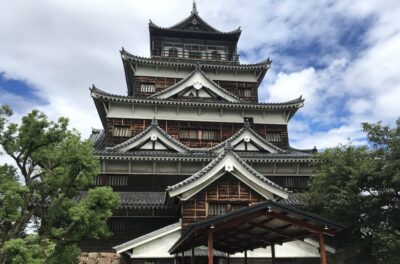
The first major stop is Hiroshima Castle, reached shortly after the tour begins. The castle area is tied to the military headquarters that became the first place in Hiroshima to report the atomic bombing. Your guide uses this site to explain what happened in the city immediately after the attack.
The stop is short, about 20 minutes, so do not expect a full castle visit. Its value is the historical setting and the guide’s explanation rather than a long look at the interior.
You then continue to Hiroshima Gokoku Shrine and its large gate. Here you hear about less familiar survivors of the bombing, including the Guardian Dog statue and the shrine gate. These details matter because they show that Hiroshima’s wartime story is not limited to the most famous monuments.
This early section adds context before you reach the Peace Park. You begin with the city’s military role, then move through surviving structures and objects that carry their own stories.
Central Park and Aioi Bridge: seeing the blast area in space
Hiroshima Central Park provides a quieter stretch of the ride. You walk or pause among trees and open green space, giving the group a break from the most difficult material. It also shows the ordinary side of the rebuilt city.
The next stop is Aioi Bridge. The bridge was the intended target for the bomb, and the river and bridge remain part of the present city. From here, the guide helps you understand how the attack was aimed and how the surrounding area relates to the Peace Park.
This is one of the places where cycling pays off. You are not simply checking off a monument. You are moving through the street network and seeing how the river, bridge, parks, and memorial grounds fit together.
More Cycling Trips in Japan:
- Hidden Kyoto E-Biking tour
★ 5.0 · 1,843 reviews - Bike Tour Exploring North Kyoto plus Lunch
★ 5.0 · 1,087 reviews - Tokyo Great Cycling Tour
★ 5.0 · 811 reviews - Arashiyama Bamboo Forest & Hidden Gems Bike Tour (Early Bird)
★ 5.0 · 613 reviews
The Atomic Bomb Dome and Motoyasu River
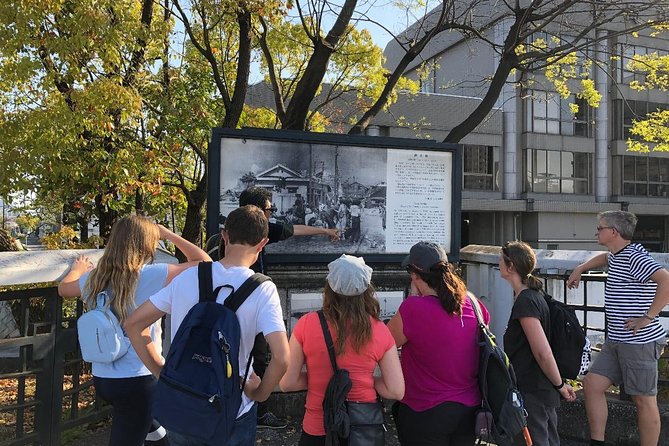
The Atomic Bomb Dome needs no introduction, but it benefits from a guide’s explanation. You will hear local stories and memories connected with the building and the people around it. The stop lasts about 15 minutes, enough for a focused explanation and time to look carefully.
The Dome can feel familiar from photographs, yet seeing it beside the river gives it a different force. Its damaged frame is not an abstract image. It is part of the city’s daily setting, surrounded by water, paths, trees, and people going about their day.
You then follow the Motoyasu River and cross or view the Peace Bridge area on the way south. The river route adds a calmer visual break and shows more of Hiroshima’s greenery. Your guide continues explaining how the city changed after the war and how the Peace Park relates to the neighborhoods around it.
The schedule allows about 15 minutes here. Keep your questions focused, since the tour has many stops still ahead.
Higashisenda Park and the Red Cross Hospital remains
At Higashisenda Park, about one kilometer from the blast center, you hear about trees sent from countries around the world. The park gives the tour an international dimension, but it also returns the focus to individual stories and the long process of recovery.
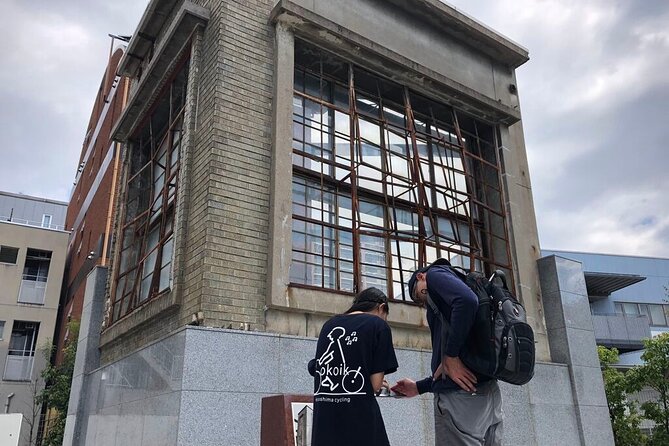
The next stop is the Atomic Bomb Window Frame Monument at the former Hiroshima Red Cross Hospital area. The remaining window frame and building fragments show how far the bomb’s force traveled. This is less polished than the central memorial area, which is precisely why it can feel so direct.
The tour description places the hospital site about 1.5 kilometers from the blast center. That distance is important. You are gradually riding outward and seeing evidence of the damage at different points from the hypocenter.
The guide’s explanation carries much of the meaning here. Without context, a damaged window frame can look like an isolated object. With the history attached, it becomes evidence of the blast’s reach and of the medical crisis that followed.
Surviving trains, Miyuki Bridge, and the edge of destruction
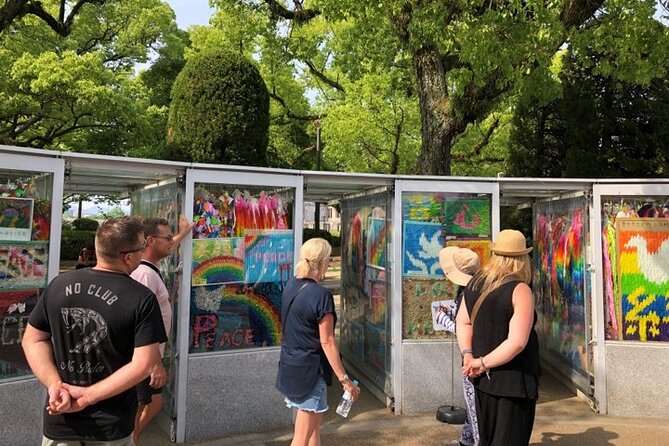
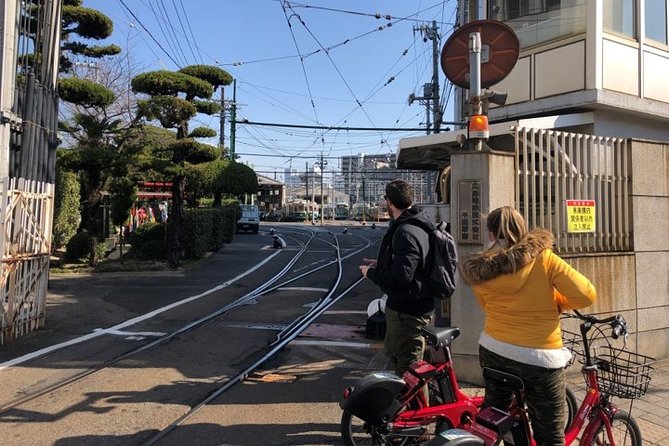
The route continues to Hiroshima’s railway area, about two to two and a half kilometers from the blast center. Two trains survived the bombing and continued to be used, a detail that adds an unusual connection between Hiroshima’s past and its present transportation system.
You then reach Miyuki Bridge and the Kobayashi River. The site marks roughly where the bomb’s reach ended, and a displayed photograph shows the sharp difference between Hiroshima at the time and Hiroshima today.
This portion of the tour is especially useful if you want more than the standard Peace Park visit. The best-known memorials tell you what happened. These outer stops help you picture the scale of the event across the city.
The schedule is tight, with about 10 minutes at the railway and another 10 minutes at Miyuki Bridge. The guide will need to keep the group moving, so this is not the time for long independent exploration.
The surviving weeping willow and Peace Boulevard
The surviving weeping willow near the Hiroshima City Children’s Museum area is presented as a highlight of the ride. The tree continued growing despite the widespread belief that Hiroshima would not support natural growth for decades. It represents recovery in a simple, living form.
You may find this stop especially effective after the more severe sights earlier in the route. A tree does not explain the bombing by itself, but it gives the story a symbol of endurance without reducing the event to a slogan.
On the return, the route follows Peace Boulevard and passes other monuments and significant trees. You also see the current city around them. This final ride brings the central idea of the experience into view: Hiroshima remembers the destruction while continuing to function as a modern city.
The tour ends back at the Peace Memorial Park. You can then visit the Peace Memorial Museum on your own, return to a hotel, or continue exploring the park on foot.
The guides make the difference
The strongest part of this experience is the guide’s voice. Shin is repeatedly praised for his clear English, lively personality, and family connection to Hiroshima. His mother was still unborn when the bomb fell, and he has shared how that event shaped his family and wider community.
Moe has also made a strong impression. Her four grandparents lived through the bombing, and she has shared their experiences with care and emotional restraint. She has also offered local restaurant suggestions, which is a useful extra at the end of a serious morning.
Other guides named in the experience feedback include Toma, Kana, Thomas, and Moet. Their approach may differ, but you should expect the route to combine factual history with personal explanation. Do not assume every guide will tell the same family story. The exact guide depends on the date and assignment.
A personal connection does not replace historical facts, and it should not. The best version of this tour uses both: clear information about the bombing and rebuilding, plus a local perspective that helps you understand how the event remains part of family memory.
Price, timing, and who gets the best value
At $85.89 per person, the tour costs more than simply walking through the Peace Park. You are paying for an electric bicycle, a three-hour guided route, entrance fees where applicable, bicycle accident insurance, and access to sites spread around the city.
I think the price makes sense if you want to cover more ground than you could comfortably walk. It is also a practical choice for a short Hiroshima visit because the tour occupies only the morning or afternoon, leaving time for the museum, lunch, or another activity.
The value is weaker if you prefer to linger at each memorial. The schedule gives most stops 10 to 20 minutes, and the group must keep moving. Someone who wants quiet reflection, long photography sessions, or detailed museum time may prefer to visit the Peace Park independently.
The group limit is 10, though the actual group can be smaller. A small group makes the guide easier to hear and gives you more chance to ask questions. The pace may be adjusted for children or riders who are less comfortable on bicycles, so expect consideration rather than a fast ride.
Practical details before you reserve
Adult electric bicycles are available for people at least 145 centimeters tall. Children from 110 to 145 centimeters can use one of two children’s bicycles reserved for a booking, and children under 15 may also use adult bicycles at the child rate if their height allows.
Child seats on electric bicycles are available for children under 22 kilograms and under 115 centimeters. Since the tour is shared, families should be ready for the pace to reflect the least experienced rider in the group.
The bicycles include accident insurance. The city has Hiroshima Free Wi-Fi, but there is no Wi-Fi at the tour meeting point, so do not depend on a connection there.
The tour needs suitable weather for cycling. If rain prevents the bicycle route, you can choose the Rainy Day Limited Peace Route or request a refund. The walking option includes the Peace Memorial Park, Atomic Bomb Dome, hypocenter, former Bank of Japan, Fukuromachi Elementary School, and a main street route, ending at about 13:00 or 17:00.
Free cancellation is available up to 24 hours before the start time. Cancellations or changes inside that window are not refunded, and weather cancellations offer either another date or a full refund.
Should you book the Hiroshima Peace Cycling Tour?
Book it if you want a personal, efficient introduction to Hiroshima and are comfortable processing difficult history while riding between sites. The route is especially useful for first-time visitors, families with older children, and anyone who wants to understand the city’s rebuilding beyond the Atomic Bomb Dome and Peace Park.
I would choose the three-hour version over the two-hour route if you have the time. The longer ride adds Hiroshima Castle, pre-war context, outer blast sites, surviving railway history, and the weeping willow. Those extra stops give the city a fuller shape.
Skip it if you dislike bicycles, need long periods of quiet at each memorial, or want to spend the whole day inside the Peace Memorial Museum. For most active visitors, though, the combination of easy e-bikes, a small group, and guides such as Shin or Moe offers a thoughtful way to meet Hiroshima as both a place of loss and a city that rebuilt itself.
FAQ
How long is the Hiroshima Peace Cycling Tour?
The tour lasts approximately three hours. The morning tour runs from 10:00 to 13:00, and the afternoon tour is scheduled from 14:00 to 17:00.
Where does the tour begin and end?
You meet at the Hiroshima Peace Memorial Park Rest House in Naka Ward. The tour ends back at the same meeting point.
How many people can join the tour?
The shared tour has a maximum of 10 travelers.
Are electric bicycles provided?
Yes. Adult electric bicycles are available for participants at least 145 centimeters tall. The tour information describes the route as suitable for a gentle ride.
Can children join the tour?
Yes. Children from 110 to 145 centimeters can use one of two available children’s bicycles per booking. Children under 15 can use children’s or adult bicycles at the child rate, subject to the bicycle height requirements.
Are child seats available?
Electric bicycles with child seats are available for children under 22 kilograms and under 115 centimeters.
What happens if it rains?
If rain prevents the cycling route, you can switch to a walking tour or request a refund. The walking route includes the Peace Memorial Park, Atomic Bomb Dome, hypocenter, former Bank of Japan, Fukuromachi Elementary School, and a main street route.
Is luggage storage available at the meeting point?
No. There is no luggage storage at the Rest House. Coin lockers are available at the International Conference Center Hiroshima and Hiroshima Peace Memorial Museum, about a six-minute walk away.
Can I cancel for a refund?
You can cancel at least 24 hours before the start time for a full refund. Cancellations or changes made less than 24 hours before the start time are not refunded.
Newest rides we have reviewed in Japan
- Afternoon Adventure: Okinawa Local Cycling with Spectacular Views★ 5.0 · 92 reviews
- Zodiac Shrines and Naha Backstreets Cycling Tour★ 5.0 · 29 reviews
- Iya Valley BROMPTON Slow Cycling Tour★ 5.0 · 28 reviews
- eTour de Matsumoto – Electric Bike Tour★ 5.0 · 16 reviews
- ONLY YOU in the Bamboo Forest! 4 hours E-bike tour with a local★ 5.0 · 45 reviews
- South Kyoto in a Nutshell: Gentle Backstreet Bike Tour!★ 5.0 · 225 reviews
- Pedal Adventure Kyoto’s iconic landmarks on an e-bike tour★ 5.0 · 189 reviews
- The Beauty of Kyoto by Bike: Private Tour★ 5.0 · 47 reviews
Hiroshima Cycling Tours, compared.
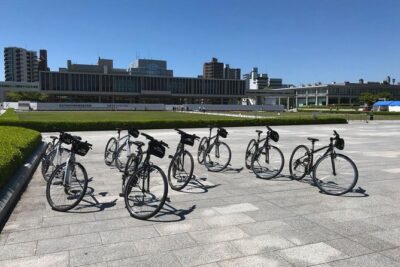
Hiroshima in a Nutshell: Morning Bike Adventure
Read our review →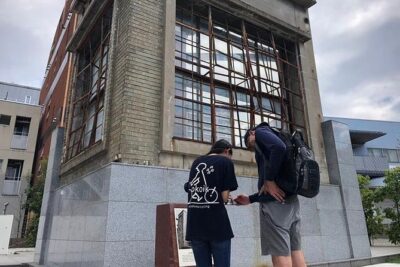
Hiroshima 2hr Peace Cycling Tour with Local Guide
Read our review →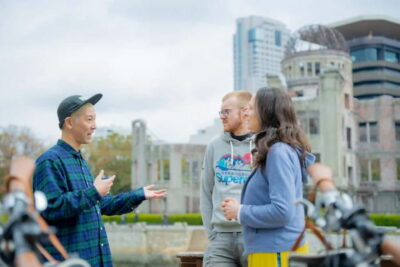
Hiroshima Country Cycling: Explore Rural Life 1 HR from City
Read our review →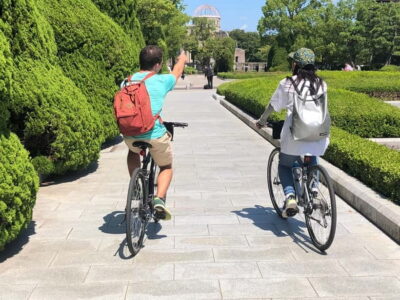
Other lists this ride turns up in