
REVIEW · HIROSHIMA
Hiroshima and Miyajima by Bike and Boat
Hiroshima is easier to understand when you move through it at street level. This full-day trip links quiet riverside cycling with the Peace Memorial Park, Hiroshima Castle, a train ride, and the JR ferry to Miyajima. It gives you two very different sides of the city in one well-packed day.
I like the small maximum of eight, which gives guides such as Aimee, Alex, Ihsan, and Sage room to answer questions and adjust the pace. I also like the mix of transport: you ride a bicycle, board a train, cross the water, and walk Miyajima’s old streets rather than simply following a coach from one sight to the next.
The main caution is time. This is an ambitious seven- to eight-hour outing, and some departures have run longer. You will spend much of Miyajima on foot, and the Hiroshima Peace Memorial Museum is not included, so you need extra time afterward if that is important to you.
Key points at a glance
- Small group of up to eight: The guide can help with bike fitting, questions, photos, and changes to the pace.
- Two major Hiroshima experiences: You visit the Peace Memorial Park and Cenotaph, then shift to the older world of Hiroshima Castle.
- Miyajima by train and ferry: The JR ferry fare, train ride, bicycle, lunch, taxes, and fees are included.
- A local meal is part of the day: Lunch features regional Hiroshima food, with vegetarian choices available if arranged ahead.
- Active but not race-like: You cycle through riverside paths, parks, and neighborhoods, then walk around Miyajima.
- Guides shape the day: Aimee, Alex, Ihsan, James, Melissa, and Sage have led departures, with strong praise for clear explanations and friendly pacing.
Why the bicycle makes Hiroshima easier to read
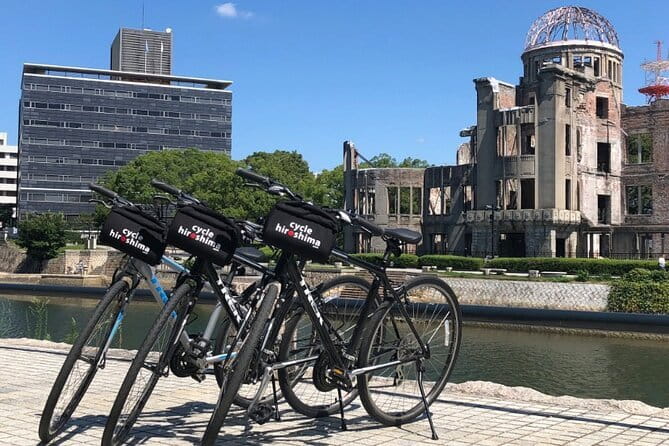
The bike is not just a way to move faster. It helps you connect the city’s broad spaces. You cycle beside rivers, pass through parks, and move through ordinary neighborhoods between the headline sights. That gives you a better feel for Hiroshima than jumping from one isolated monument to another.
The route is suited to people who enjoy moderate activity rather than a hard ride. One guide fitted a 159-centimeter participant with a Trek bicycle, and several departures adjusted the pace for heat, rain, or mixed ability. The group stops often enough for explanations and photos, but this is still a full day on the move.
You begin at Cycle Hiroshima at 4-chome-5-4 Otemachi in Naka Ward at 9:30 a.m. The tour ends back there, where you can collect stored luggage and ask your guide for suggestions for the rest of your visit.
The small-group format matters here. With eight people or fewer, a guide can check that everyone is comfortable on the bike, help with the route, and change the order when conditions or local timing make that sensible. Several guides have also been praised for making the day feel personal when only two or four people booked.
More Bike and Boat Tours in Japan:
- Hiroshima: City and Miyajima Bike and Boat Tour
★ 5.0 · 20 reviews - Ninh Binh Full-Day Tour from Hanoi to Hoa Lu, Tam Coc & Mua Cave Via Boat & Bike
★ 5.0 · 4,384 reviews - From Perth: Rottnest Island Full-Day Bike and Ferry Trip
★ 4.7 · 2,548 reviews
Hiroshima’s rivers and the first hour on two wheels
The opening ride takes you along rivers, through parks, and into neighborhoods. This is a useful introduction because it places the city’s memorial sites within its present-day setting. You are not only looking at monuments. You are seeing how Hiroshima functions as a lived-in city.
Your guide provides the thread between the streets and the past. Alex has been described as bringing two decades of life in Japan to the day, while James has been praised for careful bike fitting and strong language skills. Aimee is known for keeping a gentle pace in hot weather and making regular hydration breaks part of the plan.
Do not expect a long, uninterrupted cycling workout. The route mixes riding with stops and walking. That is a strength for most people, though anyone seeking a serious bike tour may find the active portion lighter than expected.
Peace Memorial Park and the Cenotaph
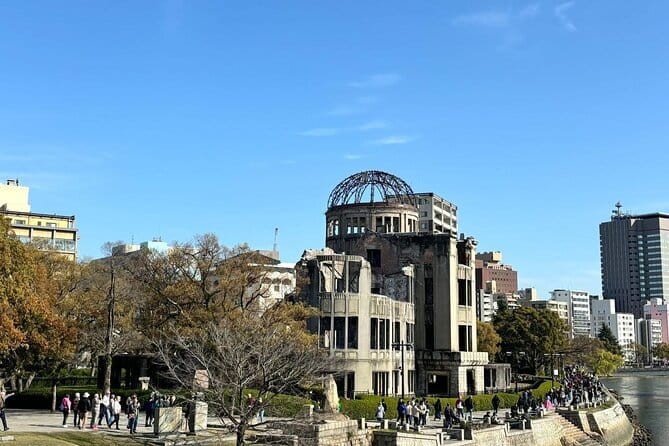
The Peace Memorial Park receives about an hour, followed by around 15 minutes at the Cenotaph for the Atomic Bomb Victims. This is the emotional center of the Hiroshima portion, and the guide’s manner matters greatly.
The best departures handle the subject with restraint and care. Guides have explained the events leading up to the atomic bombing, the bombing itself, and its aftermath in clear language, while leaving room for silence at the Cenotaph. You should expect thoughtful commentary rather than a quick photo stop.
The park contains more than one memorial, and cycling lets you reach several points without spending the whole day walking between them. You may see the Children’s Peace Monument and other sculptures or markers that are easy to miss when exploring alone.
The Peace Memorial Museum is not part of the scheduled visit. This is an important planning point. If you want the museum, set aside additional time after the tour and arrange your own entry. Some people have found that the packed schedule leaves little room to return to monuments they passed earlier, so do not count on a long independent pause at every memorial.
Hiroshima Castle and the city before 1945
The next listed stop is Hiroshima Castle, with about 30 minutes for the grounds and restored main tower. This changes the mood from twentieth-century remembrance to feudal-era Japan.
You can look across the moats, explore the grounds, and take photographs of the tower. The castle gives your guide a chance to explain Hiroshima before the modern city and before the war. It also adds needed variety to a day that otherwise could feel heavily focused on one painful chapter.
Thirty minutes is enough for an introduction, not a detailed museum visit. If your main interest is castle architecture or interior exhibits, you may want a separate visit. The timing can also shift when the day begins at Miyajima or when transport runs slowly, so ask your guide how much time remains before you set off.
More Cycling Trips in Japan:
- Hidden Kyoto E-Biking tour
★ 5.0 · 1,843 reviews - Tokyo Guided Small-Group Biking Tour
★ 5.0 · 1,250 reviews - Bike Tour Exploring North Kyoto plus Lunch
★ 5.0 · 1,087 reviews - Tokyo Great Cycling Tour
★ 5.0 · 811 reviews
The train and JR ferry to Miyajima
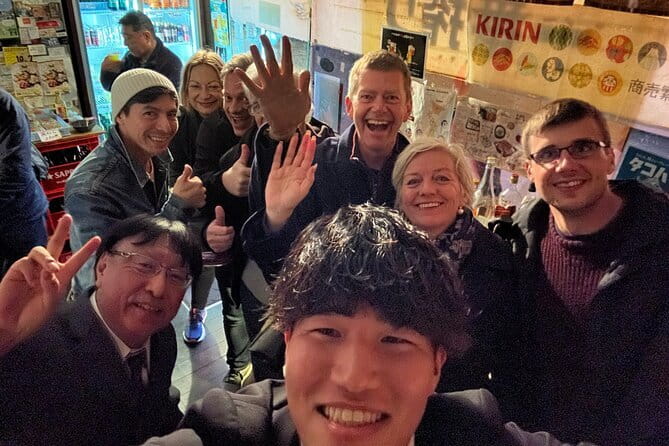
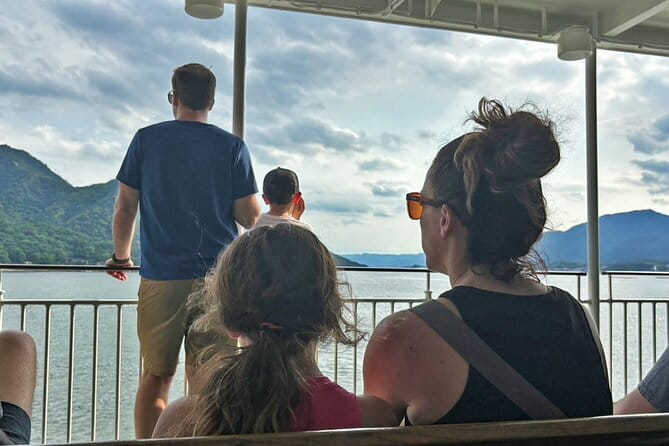
The journey to Miyajima is part of the appeal. You retrace part of the route by train, then board the JR Miyajima Ferry. The ferry fare is included, as are the train ride, bicycle use, taxes, and other listed fees.
This transport change gives the day a welcome rhythm. You move from city streets to the water, with Miyajima appearing as a clear break from Hiroshima proper. The crossing itself is short enough to fit into a busy day, yet it feels like a real transition rather than a routine transfer.
The tour uses the ferry rather than treating Miyajima as a simple add-on by road. That helps the island feel separate and gives you a better sense of its position in Hiroshima Bay. The return follows the same general train and ferry pattern before the final bike ride back to the meeting point.
Miyajima’s streets, deer, and Itsukushima Shrine
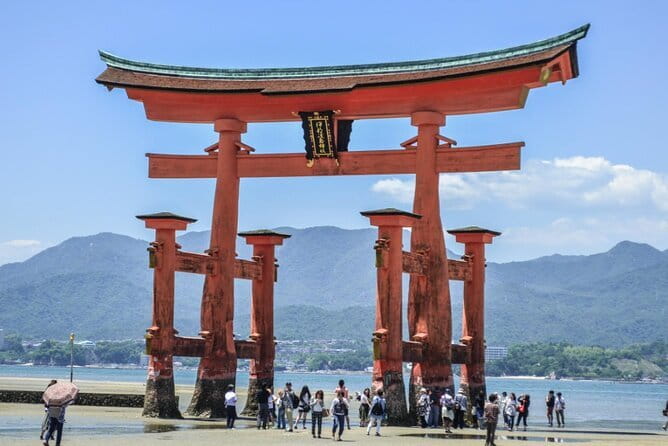
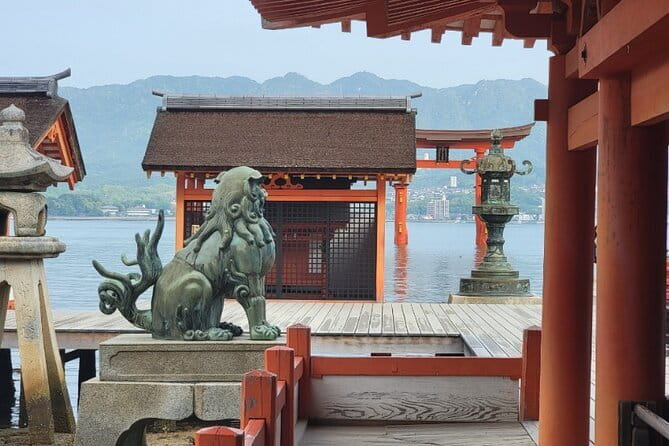
Miyajima receives about an hour and a half of exploration, followed by another hour and a half around Itsukushima Shrine and lunch. Your guide leads you through the island’s streets, points out orange buildings against the wooded hills, and explains local customs and stories.
The island is a beautiful contrast to the city. Expect time on foot, not hours in the saddle. You may meet the local deer, take photographs around the shrine area, and learn about the island’s religious and cultural background.
Itsukushima Shrine is famous for its orange structures and the great torii associated with the water. The tour focuses on the shrine and nearby monuments rather than giving you a full day for every corner of Miyajima. If you want a long visit to Daisho-in Temple, the ropeway, or the mountain trails, this schedule may feel too tight.
One guide added the Kaidan Meguri at Daisho-in Temple when rain changed the cycling plan, showing that the route can sometimes adapt. Still, do not book this expecting a complete Miyajima day. The purpose is to combine the island with Hiroshima’s major memorial and historic sights.
Lunch: local food with a practical caveat
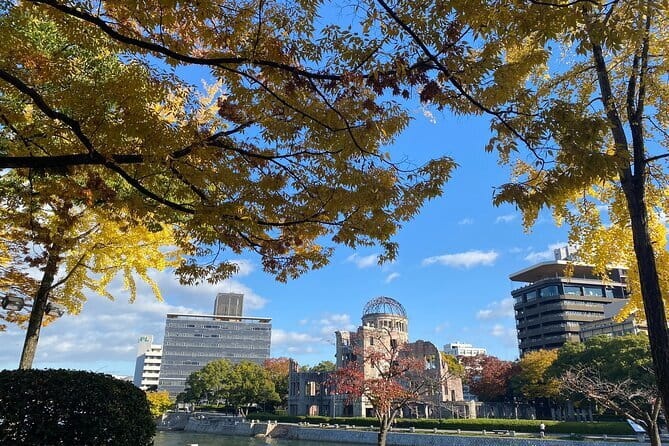
Lunch is included and is served at a nearby local eatery around the Itsukushima Shrine portion of the day. The meal features regional Hiroshima dishes. Depending on the departure, you might encounter Hiroshima-style okonomiyaki, ramen, or another local preparation, but the exact restaurant and dish are not fixed in the information provided.
Vegetarian options are available. For other dietary restrictions, contact the provider before the tour rather than waiting until the morning of departure.
The meal adds value because it saves you from searching for a place during the busiest part of the day. It also gives the group a chance to sit together after cycling and walking. The tradeoff is time. One departure found lunch too long, and the whole outing stretched to about 10 hours. If you have an evening train or a fixed dinner booking, leave a generous buffer.
How the guides shape the experience
The route is consistent, but the guide can change how the day feels. Aimee has been praised for warm humor, strong explanations, flexible timing, and care in extreme heat. She has brought extra water and cooling strips, and she has adjusted the pace for people who needed more breaks.
Alex has received praise for his friendly manner and detailed local context. Ihsan has been especially valued for explaining wartime events from several perspectives and for keeping the tone approachable. James has been noted for his attention to bike fit, Japanese language ability, and careful help with photos, food, and shopping.
Melissa has been praised for clear English and for balancing serious discussion with lighter moments. Sage has been described as friendly, organized, and good at keeping a group together.
This variety is worth noting because the subject requires judgment. Most of the available feedback praises guides for being sensitive and clear, but one departure felt that the wartime discussion was too light and avoided adult-level detail. If Hiroshima’s history is your main reason for booking, tell your guide that you want a fuller explanation. The small group makes that conversation easier.
Heat, rain, and the real physical effort
Hiroshima can be hot and humid, and the tour does not stop being active because the weather is uncomfortable. Multiple departures took place in high heat, with guides slowing the pace and adding water breaks. Bring water-friendly clothing, sun protection, and shoes you can comfortably walk in for several hours.
Rain can change the plan. At least one departure switched from cycling to a walking format because of a heavy forecast. The company may cancel for poor weather and offer another date or a full refund, but a tour that runs in light rain may still adjust its cycling sections.
The physical demand is moderate but long. You need to be comfortable riding a bicycle, getting on and off transport, and walking around Miyajima. Most participants can take part, but the seven- to eight-hour duration matters more than the cycling distance alone.
Is $142.05 a fair price?
At $142.05 per person, this is not the cheapest way to see Hiroshima and Miyajima. It is a fair price if you value the organization and the guide’s interpretation.
The fee covers the bicycle, train and ferry rides, lunch, taxes, and other listed admission costs. You also avoid working out the route between Hiroshima, the ferry terminal, and Miyajima on your own. Most importantly, you get a guide for the Peace Memorial Park and Cenotaph, where context can make the visit far more meaningful.
The value is weaker if you want long, independent museum visits or several hours on Miyajima. The museum is not included, castle time is brief, and the island portion can feel hurried if lunch or transport runs late.
I see this as a strong choice for a first Hiroshima visit when you have one full day and want a guided overview. It is less suitable for a repeat visit built around slow photography, extended museum time, or mountain walking.
Who should book this day?
You should consider it if you like active sightseeing, want to cover both Hiroshima and Miyajima in one day, and prefer a local guide to explain difficult history. It also suits solo visitors and couples who want company without joining a large bus group.
Families with older children may enjoy the bikes, ferry, deer, and varied transport, provided everyone can manage a full day. The tour is also a good fit for people who normally find city sightseeing tiring, since the bicycle reduces long stretches of walking in Hiroshima.
You may want another plan if you dislike cycling, need a strict end time, require a full museum visit, or want a slow day on Miyajima. Ask about the expected order when you arrive, since some departures visit the island first and the Peace Park later.
Should you book Hiroshima and Miyajima by Bike and Boat?
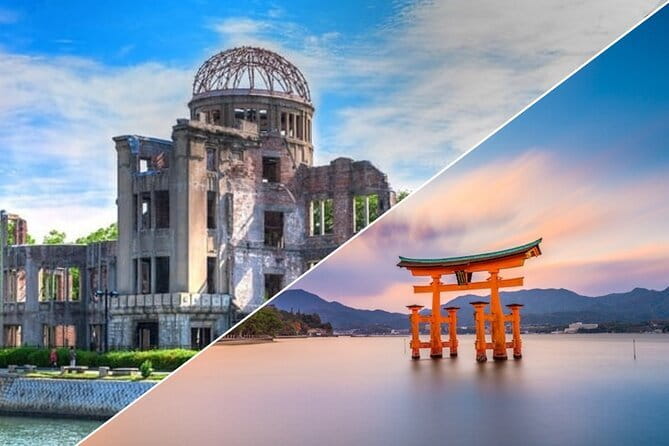
Book it if you want breadth with a human guide. In one day, you get Hiroshima’s rivers, Peace Memorial Park, the Cenotaph, Hiroshima Castle, a train, the JR ferry, Miyajima, Itsukushima Shrine, deer, and a local meal.
Skip it if your priority is spending half a day inside the Peace Memorial Museum or exploring Miyajima without a clock. For most first-time visitors with limited time, though, the combination is hard to match. Just start early, expect a long day, plan extra time for the museum, and tell the guide what matters most to you.
FAQ
What time and where does the tour start?
The tour starts at 9:30 a.m. at Cycle Hiroshima, 4-chome-5-4 Otemachi, Naka Ward, Hiroshima, 730-0051, Japan.
Where does the tour end?
The activity ends back at the Cycle Hiroshima meeting point. You can collect any luggage stored there and ask your guide for suggestions for your onward plans.
Is the Peace Memorial Museum included?
No. The tour visits Peace Memorial Park and the Cenotaph for the Atomic Bomb Victims, but the museum is not included.
Are the train and ferry fares included?
Yes. The tour includes the train and JR Miyajima Ferry ride, along with bicycle use, lunch, taxes, and listed fees.
Is vegetarian food available?
Yes. Vegetarian options are available. Contact the provider before the tour about other dietary restrictions.
What happens if the weather is poor?
The experience requires good weather. If it is canceled because of poor weather, you can choose another date or receive a full refund. You can also cancel up to 24 hours before the start time for a full refund.
Newest rides we have reviewed in Japan
- Best of Kyoto: Ginkakuji & Path of Philosophy E-Bike Tour★ 4.9 · 79 reviews
- Kyoto: Tailored E-Bike Tour to Highlights & Hidden Gems★ 4.9 · 32 reviews
- Kyoto: Half-day Guided Bike Tour with Fushimi Inari★ 4.9 · 21 reviews
- Kyoto: Full Day Bike Tour★ 4.9 · 39 reviews
- Kyoto: Early Bird E-Bike Tour with Lunch★ 5.0 · 14 reviews
- Kyoto: Full-Day City Highlights Bike Tour with Light Lunch★ 5.0 · 52 reviews
- Kanazawa Half Day E-bike Tour★ 5.0 · 81 reviews
- Hiroshima: Best of Hiroshima Guided Bike Tour★ 4.9 · 89 reviews
Bike and Boat Tours, compared.

E-Bike Tour with Montjuic Cable Car & Boat Ride
Read our review →
From Fremantle: Rottnest Island Ferry and Bike Day Tour
Read our review →
From Fremantle: SeaLink Rottnest Ferry and Bike Hire
Read our review →

Other lists this ride turns up in