

REVIEW · HERITAGE AND TEMPLE BIKE TOURS IN JAPAN
Zodiac Shrines and Naha Backstreets Cycling Tour
Naha’s best stories are often tucked behind the main roads. This four-hour electric-bike ride takes you through quiet lanes, temple grounds, sacred springs, and Shuri sites tied to the old Ryukyu Kingdom. You are not just checking off famous sights. You are seeing how worship still fits into everyday Okinawan life.
I like two things right away: the e-bike makes Shuri’s hills manageable, and the group size is capped at five. Guides such as Maria, Jojo, Sally, and Reija have also been praised for clear explanations, friendly help, and taking memorable photos. The main drawback is traffic. Part of the route uses busy streets, so you need to be comfortable riding in an urban setting.
Key points at a glance
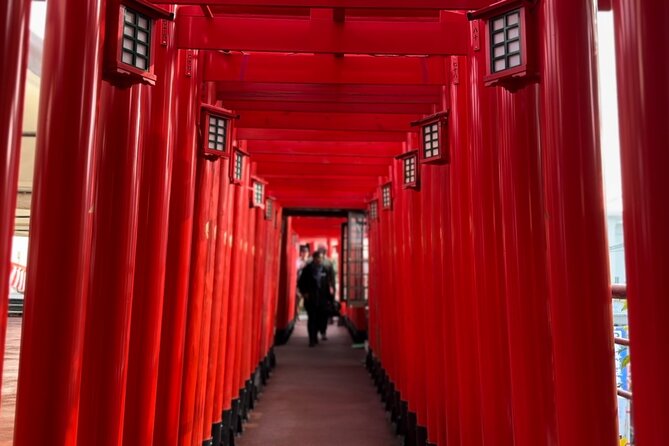
- Zodiac pilgrimage through Naha and Shuri: Visit temples, shrines, sacred water sites, and royal memorial places connected with Okinawan beliefs.
- Electric bicycles for the hills: The motor matters on the climb toward Shuri and makes the route less tiring.
- Small groups of up to five: This gives you more room to ask questions and ride at a sensible pace.
- A useful cultural extra: You receive a goshuin-cho, a small pilgrimage book for collecting shrine and temple stamps.
- A mix of famous and quiet places: Shuri Castle’s vermilion gate shares the route with back lanes and old religious sites.
- Four hours with no admission fees listed: The price is $108.72 per person, including the bicycle, helmet, pilgrimage book, and snacks.
Why this ride shows you a different Naha
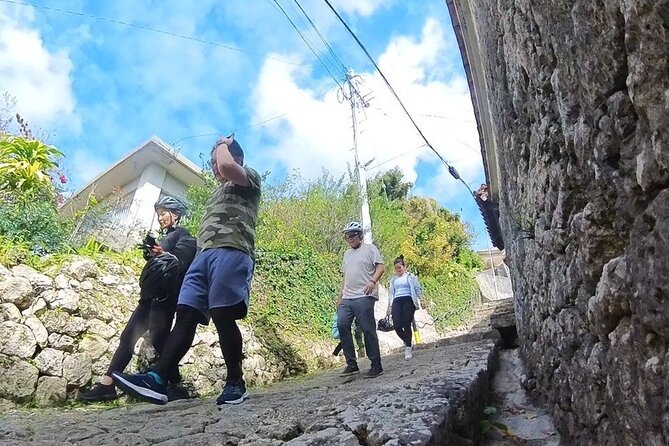
Most first visits to Naha revolve around Kokusai Street, the market, and Shuri Castle. Those places deserve time, but they only show part of the city. This tour follows the smaller roads between them, where traditional houses, temple gates, monorail tracks, and ordinary city life sit close together.
The religious focus gives the ride a clear purpose. You visit places connected with Kannon Bodhisattva, Buddhist worship, local legends, royal ancestors, and zodiac traditions. The route also helps explain that Okinawa’s culture is not simply Japanese culture with tropical weather. Ryukyuan customs, Buddhism, ancestor worship, and royal-era traditions all appear in different forms.
You receive a goshuin-cho, or pilgrimage book, which makes the trip feel more personal. It is not just a souvenir. It gives you a small record of the sites you visited and helps frame the day as a pilgrimage rather than a standard sightseeing circuit.
More Heritage and Temple Bike Tours in Japan
- E-Bike Nara Highlights – Todaiji, Knives, Deer, Shrine
★ 4.8 · 186 reviews - Historical Kyoto E-Bike Tour
★ 5.0 · 181 reviews - 4.5-Hour Kyoto Bike Tour with Lunch and UNESCO Zen Temples
★ 5.0 · 122 reviews
Starting near Makishi Monorail Station
Meet at the shop at 3-chōme-13-20 Makishi, about a one-minute walk from Makishi Monorail Station. The tour begins with bicycle pickup and a short safety briefing. This is the time to make sure you are comfortable with the controls, helmet, and route.
The shop location is practical if you are staying near central Naha. You do not need to arrange a separate taxi to a distant meeting point, and the ride finishes at the same place. Afterward, you can continue exploring Naha on foot or by monorail.
The bikes are electric, which is important here. Shuri is hillier than central Naha, and one direct account of the tour noted that the e-bike made the climbs much easier. You still pedal, but the motor takes the sting out of the uphill sections.
Shuri Kannondo and Okinawa’s Buddhist traditions
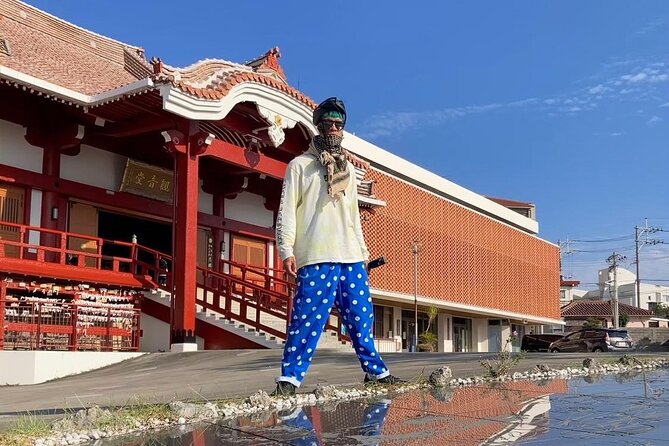
The first major stop is Shuri Kannondo, a bright vermilion temple associated with Kannon Bodhisattva, regarded here as a guardian deity of the Ryukyu Kingdom. Look closely at the carvings and ornaments rather than rushing in for a quick photograph.
The temple also gives you a view over Shuri. That visual connection matters. You are looking across the same general area that served as the political and religious center of the Ryukyu Kingdom, even though modern Naha now spreads around it.
This is a good early stop because it introduces the tour’s main theme: sacred places are part of the city, not isolated museum pieces. Your guide can explain what you are seeing and how people use these sites today.
Ankoku-ji Temple and the older lanes of Naha
The route then slips through a local area where several traditional houses remain. This is one of the stronger parts of the experience for anyone who wants to see more than major monuments. The ride itself becomes part of the sightseeing.
Ankoku-ji has practiced Okinawan Buddhism for more than 500 years. The exact feel of the visit depends on the guide and the activity at the temple that day, but you can expect an older religious setting with a strong connection to local worship.
Cycling is useful here because you cover ground between sites without spending the whole morning inside a vehicle. You get short views of homes, side streets, and ordinary neighborhoods as you move from one stop to the next.
Same roads, a different saddle:
- Hidden Kyoto E-Biking tour
★ 5.0 · 1,843 reviews - Tokyo Guided Small-Group Biking Tour
★ 5.0 · 1,250 reviews - Bike Tour Exploring North Kyoto plus Lunch
★ 5.0 · 1,087 reviews - Tokyo Great Cycling Tour
★ 5.0 · 811 reviews
Shuri Castle’s vermilion gate

The Shuri Castle stop is brief and focused on the ceremonial gate. You can take a photograph with your bicycle in front of the bright vermilion structure, whose balanced design makes a strong backdrop.
This is not a full castle visit. That distinction matters if you have set aside time to tour the wider Shuri Castle grounds. The bicycle tour gives you a photo stop and cultural context, but you should plan a separate visit if you want a longer look at the palace area.
Even so, the stop works well in the route. The castle gate connects the smaller temples and shrines with the royal center of Okinawa, and the bicycle offers a fun way to frame the picture.
Sairaiin, the Daruma Temple
Sairaiin is known for its red daruma dolls and for prayers connected with good health and pregnancy. People also visit to give thanks for their current lives, not only to ask for something new.
The bright dolls make this one of the easiest stops to remember. More important, the site shows how religious practice can be both formal and personal. You are seeing a place used by modern Okinawans, not a preserved display with the meaning removed.
Your guide’s explanation matters here. A quick photograph of red figures tells you very little. The value comes from learning why people come, what they pray for, and how the site fits into the wider pilgrimage route.
Seikoji beneath the monorail
At Seikoji, the setting changes sharply. You cross a main street, pass beneath the elevated monorail, and reach a temple with a quieter, more sacred feel. The contrast is striking because the modern city remains close by.
The newer temple was rebuilt after the war, while an older Japanese pine remains beside it. That pairing gives the stop a useful lesson in Okinawa’s past: war and rebuilding changed the physical city, but not every religious connection disappeared.
This is also a good reminder that Naha is layered rather than neatly divided into old and new districts. A train can pass overhead while worship continues below. The tour does not ask you to choose between modern Okinawa and traditional Okinawa. It lets you see both within a few minutes.
Shuritobarucho and its forest spring
Shuritobarucho is tied to a local story about an Okinawan princess who noticed waterfowl near a forest and discovered a spring. The water still connects the place to that old story.
The stop is shorter than the temple visits, but it adds a natural element to a route otherwise centered on streets and religious buildings. You may find the spring especially appealing if you like places where local legend and physical surroundings meet.
Do not expect a large nature excursion. This is a compact stop within an urban cycling tour. Its value is the sense of continuity, water found in the forest and remembered across generations, rather than a long walk in the countryside.
The downhill ride to Sogenji-dori
The route includes a downhill ride along Sogenji-dori toward the sacred place where successive Ryukyu kings were entombed. The downhill section should be enjoyable, but pay attention to your speed and the guide’s instructions.
The royal mausoleum area is now a city park with clean air and open space. A stone gate and an old banyan tree remain as important reminders of the site’s former role.
This stop brings the royal theme into focus. Shuri was not only a castle town. It was also a place of worship, burial, political power, and family memory. You see that wider setting here, away from the more familiar castle gate.
How the route feels on an e-bike
The tour lasts about four hours, with roughly 15 to 20 minutes at most stops. That pace keeps the morning moving. You will not spend long enough at every site for an exhaustive study, but you will see a useful range of places in one outing.
The e-bike is the practical key to the route. Shuri’s slopes can be tiring, especially in warm weather, and the motor gives you more energy for the temples and explanations. One caution remains: some riding takes place on busy streets. This is not a closed-road ride or a leisurely path-only outing.
I would choose this tour if you already ride a bicycle and want a more active way to see Naha. If you feel nervous around traffic, ask about the route and riding conditions before booking. Most people can participate, but comfort on a bicycle matters more than athletic ability.
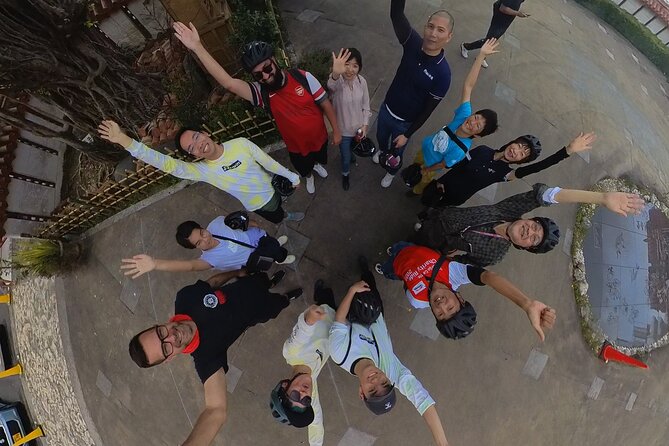
The group limit of five is another real advantage. A guide can answer questions without trying to manage a large crowd, and the ride can feel more like a personal introduction to the city. In smaller groups, guides such as Jojo have also been able to help with photographs and respond to individual interests.
What the $108.72 price includes
At $108.72 per person, this is not the cheapest way to see Naha. The value depends on what you would otherwise pay for transport, a guide, and bicycle rental, and on whether you care about the smaller religious sites.
The price includes the electric bicycle, cycling helmet, goshuin-cho, and snacks. There are no separate admission charges listed for the stops, which keeps the cost easier to understand. You are paying mainly for the bike, the route, and the guide’s cultural explanations.
Bottled water is not included. Bring your own water, especially in warm or humid weather. Camera mounts and mobile-phone holders are also not provided, so use a small bag or secure pocket for your phone rather than expecting a handlebar setup.
The snacks are a modest but useful touch. This is not a food tour, and you should not book it for a full meal. They simply help during a four-hour ride.
Who will enjoy this Naha tour most
I would recommend it to you if you want to connect major Shuri sights with places you probably would not find on your own. It suits curious first-time visitors, repeat visitors looking for a different side of Naha, and anyone who likes combining light exercise with culture.
It is also a good choice if you want a small group. With a maximum of five people, the guide can explain details at a human pace, and the outing is less likely to feel like a procession.
Families can ask about a child seat for children aged one to five, attached to a parent’s bicycle. The tour does not provide a separate child bicycle according to the supplied details, so confirm the arrangement with the staff before booking.
I would skip it if you want a slow, indoor temple tour, a full Shuri Castle visit, or a route entirely free from traffic. The experience is active and includes streets, hills, and short visits rather than long stays at one monument.
Weather, timing, and cancellation
The tour requires suitable weather. If the precipitation probability exceeds 70 percent or severe weather is expected, the plans may change, with contact made the day before. If poor weather cancels the activity, you can receive another date or a full refund.
For your own planning, keep the morning or afternoon around the four-hour ride reasonably flexible. The tour ends back at the shop, so you do not need to arrange a separate return transfer.
Free cancellation is available up to 24 hours before the start time. Changes or cancellations inside that window are not accepted for a refund, so check the local start time carefully.
Should you book the Zodiac Shrines and Naha Backstreets Cycling Tour?
Book it if you want Naha to feel like a living city rather than a list of famous stops. The combination of e-bike assistance, small roads, Buddhist temples, royal sites, a sacred spring, and a goshuin-cho gives the morning a clear sense of place.
The strongest reasons to go are the small group, the helpful guide style associated with Maria, Jojo, Sally, and Reija, and the way the e-bike opens up hilly Shuri. Just bring water, expect some traffic, and remember that the Shuri Castle stop is a short gate visit rather than a full castle tour.
For many visitors, this is a good-value add-on to a separate castle visit. It gives you the context and quieter corners that a standard Naha sightseeing day often misses.
FAQ
Where does the tour start?
It starts at the shop at 3-chōme-13-20 Makishi, Naha, about a one-minute walk from Makishi Monorail Station.
Where does the tour end?
The tour ends back at the shop where you return the bicycle.
How long does the experience last?
The cycling tour lasts approximately four hours.
How many people can join?
The maximum group size is five people.
Is the bicycle included?
Yes. The tour includes use of an electric bicycle and a cycling helmet.
Are children allowed to participate?
Children aged one to five can have a child seat attached to a parent’s bicycle. You should consult the staff for more information before booking.
What happens if the weather is bad?
If the precipitation probability exceeds 70 percent or severe weather is expected, the plans may change. If the activity is canceled because of poor weather, you will be offered another date or a full refund.
Newest rides we have reviewed in Japan
- Afternoon Adventure: Okinawa Local Cycling with Spectacular Views★ 5.0 · 92 reviews
- Iya Valley BROMPTON Slow Cycling Tour★ 5.0 · 28 reviews
- eTour de Matsumoto – Electric Bike Tour★ 5.0 · 16 reviews
- ONLY YOU in the Bamboo Forest! 4 hours E-bike tour with a local★ 5.0 · 45 reviews
- South Kyoto in a Nutshell: Gentle Backstreet Bike Tour!★ 5.0 · 225 reviews
- Pedal Adventure Kyoto’s iconic landmarks on an e-bike tour★ 5.0 · 189 reviews
- The Beauty of Kyoto by Bike: Private Tour★ 5.0 · 47 reviews
- Kyoto Bamboo Forest & Golden Pavilion E-Bike Tour★ 5.0 · 50 reviews
Heritage and Temple Bike Tours, compared.

Historical Singapore Bike Tour on Full-Sized Bicycles
Read our review →
Night Bike Tour with Temples & Flower Market Visit
Read our review →
Intramuros, Manila: Historical Bamboo Bike Tour
Read our review →
Historical Bike Tour of Savannah and Keep Bikes After Tour
Read our review →Other lists this ride turns up in