
REVIEW · HIROSHIMA
Hiroshima: City and Miyajima Bike and Boat Tour
The clever part of this day is the contrast: you move from Hiroshima’s solemn Peace Park by bike to the wooded island setting of Miyajima, with its orange Shinto buildings and old religious lanes. I like the flat route, which keeps the cycling easy, and the small group, which gives guides such as Ishan, Melissa, Sage, and Aimee-Linh room to answer questions.
I also like that lunch, water, bike, helmet, train, and ferry are included, so you are not piecing the day together yourself. The main drawback is the length: at 450 minutes, this is a full day with several changes of scene, and you must be able to ride a bicycle. Hotel pickup is not included, so you need to reach the starting point on your own.
Key points to know before booking
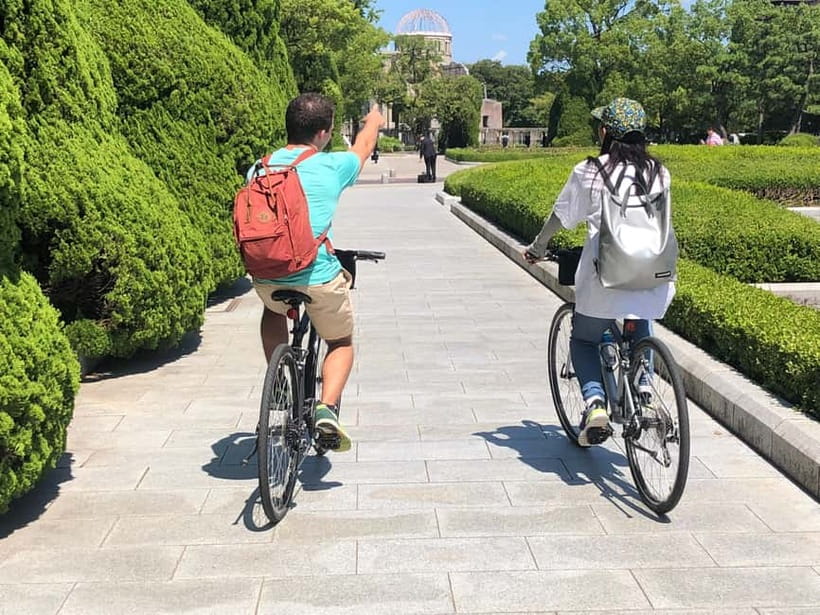
- A flat ride for ordinary cyclists: The Peace Park cycling route is suitable for anyone who can ride a bike, including slower riders.
- Two very different sides of Hiroshima: You see the city’s wartime memory and feudal past before heading to Miyajima’s wooded religious setting.
- A small English-speaking group: The group is limited to eight, which helps with questions and personal attention.
- The ferry is part of the day: Train and ferry transfers to Miyajima are included, saving you the trouble of arranging the connection.
- Several bike sizes are available: Trek bikes, step-through models, and child-sized bikes are offered, but you should provide everyone’s height when booking.
- Rain has a clear backup plan: The operator may switch the Peace Park ride to a walking tour or offer a full refund, so stay reachable before the tour.
Why the city-to-island format works
Hiroshima and Miyajima are often treated as separate outings, but this tour links them in a useful way. The first part gives you the city’s historical weight. The second changes the mood without losing the historical thread.
You begin with Hiroshima’s most important modern sites, then look further back at the city’s feudal era. After that, the train and ferry carry you to Miyajima, where religion, wooded hills, traditional buildings, and narrow lanes shape the experience.
I like this progression because it gives you more than a single famous sight. You are not spending the whole day around one memorial or one shrine. You get a broad introduction to the area, with a guide to connect the pieces.
The tradeoff is pace. You will not have unlimited time at each location, and the day includes cycling, walking, a train, and a ferry. If you prefer a slow morning at one museum or long independent shopping time on Miyajima, this may feel too structured. If you have only one day in Hiroshima, the variety is a strong reason to choose it.
More Bike and Boat Tours in Japan:
- Hiroshima and Miyajima by Bike and Boat
★ 5.0 · 172 reviews - Ninh Binh Full-Day Tour from Hanoi to Hoa Lu, Tam Coc & Mua Cave Via Boat & Bike
★ 5.0 · 4,384 reviews - From Perth: Rottnest Island Full-Day Bike and Ferry Trip
★ 4.7 · 2,548 reviews
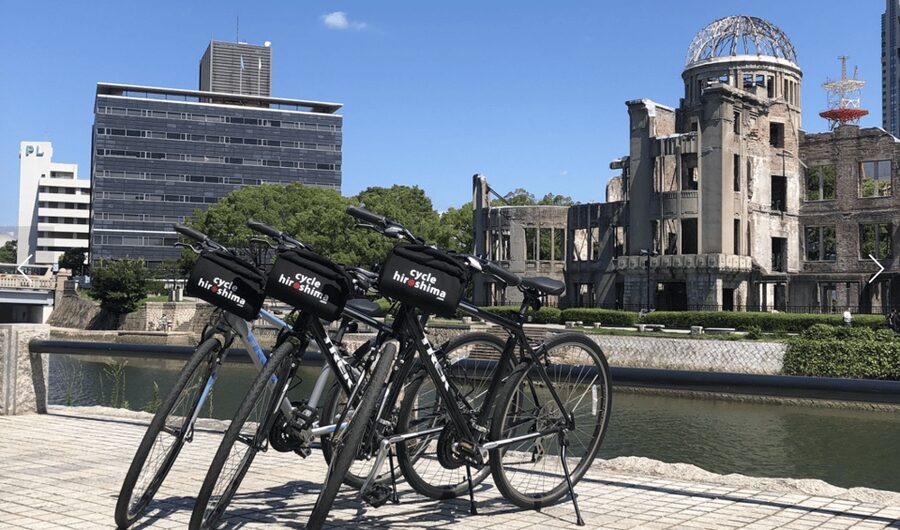
Cycling through Peace Park and the A-bomb Dome
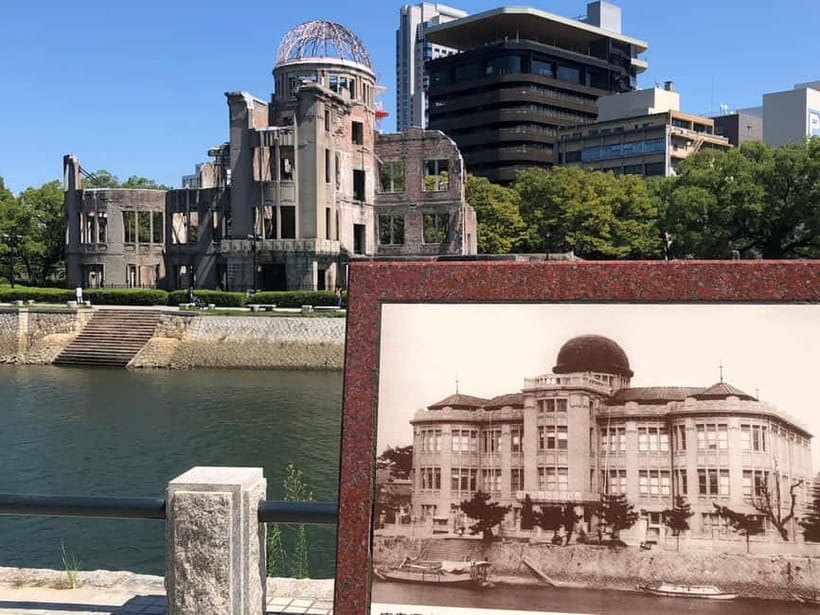
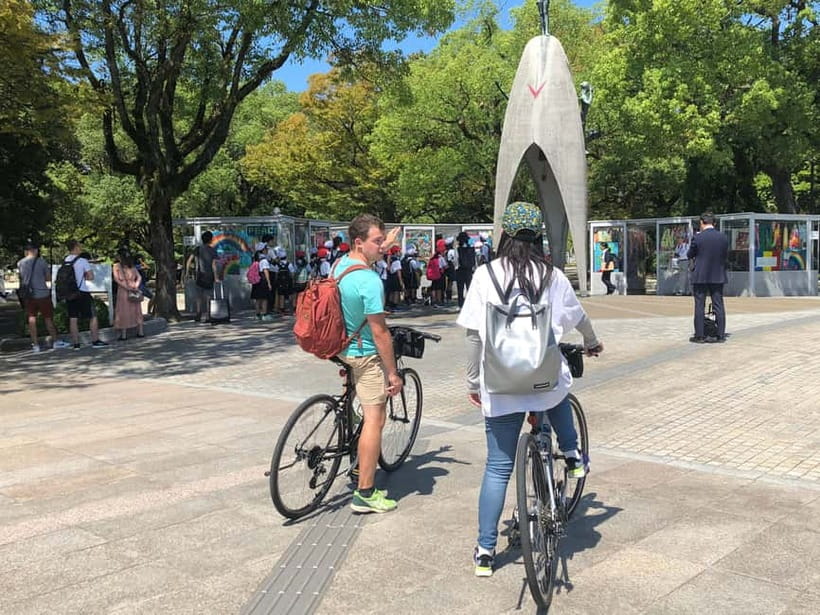
The cycling begins with Hiroshima’s Peace Park and the A-bomb Dome. This is not a casual ride past monuments. The guide provides commentary on the bombing, the memorial sites, and the meaning of the area, giving shape to what can otherwise feel like a difficult collection of buildings and names.
The A-bomb Dome is especially powerful because its damaged structure remains visible beside the modern city. The setting asks for attention and respect. A bike makes it possible to move between points without the stop-and-start feel of a vehicle, while the flat route keeps the physical effort low.
You should expect a serious section of the day. Hiroshima’s wartime history is painful, and the guide’s role matters here. Feedback about guides including Melissa and Sage points to detailed explanations, thoughtful handling of the bombing’s history, and room for questions. That is useful because you can ask for context instead of trying to absorb everything from plaques alone.
The route is described as completely flat. You do not need advanced cycling skills, and slower riders are supported. Still, this is not suitable for someone who cannot ride a bike, and the operator does not list the experience as suitable for wheelchair users or pregnant women.
Comfortable clothing and shoes make sense. You should also bring a camera, though the Peace Park portion calls for discretion and respect rather than constant picture-taking. Smoking is not allowed on the activity.
Hiroshima Castle and the city before 1945
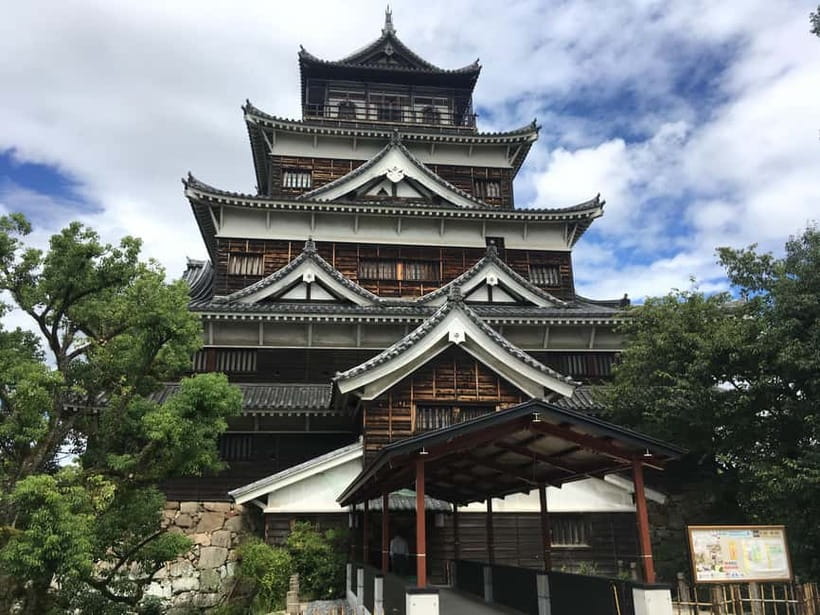
The stop at Hiroshima Castle shifts the focus from modern conflict to the city’s feudal past. This matters because Hiroshima can easily be understood only through the atomic bombing. The castle adds another layer, showing that the city had a long political and military story before the twentieth century.
The tour includes a visit to the castle, with commentary on Hiroshima’s earlier history. You will not simply see a reconstructed landmark and move on. The guide helps place it within the city’s development, giving you a clearer sense of Hiroshima before its modern identity was formed.
This stop also breaks up the emotional weight of Peace Park. That is one of the tour’s better choices. The day acknowledges the bombing fully, but it does not make Hiroshima only a place of tragedy.
Do not expect an extended, independent castle visit with unlimited time. The tour has to keep moving toward Miyajima, and the castle is one part of a long day. For a first look at Hiroshima, though, the combination of Peace Park and castle gives you a better historical range than a tour focused only on the memorial district.
The train and ferry to Miyajima
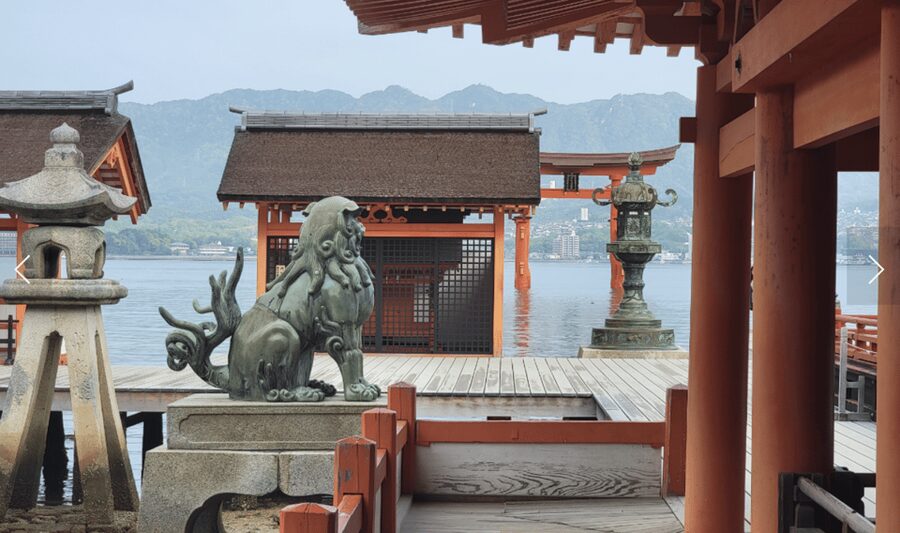
After the city portion, you travel by train and then board a ferry to Miyajima. Both transfers are included, which is important in practical terms. You do not have to work out separate fares or navigate the entire connection alone.
The change from city streets to the island is part of the experience. Hiroshima’s urban setting gives way to greenery and open water, then to the island’s orange Shinto structures and pedestrian lanes. It feels like a real change of place, not just another stop on a city sightseeing loop.
The ferry also gives the day a natural pause. After the Peace Park commentary and castle visit, you have time in transit before the walking tour begins. The information provided does not promise a particular ferry view or crossing length, so you should treat the ride mainly as transportation with added scenery rather than as a separate cruise.
Since the overall activity lasts 450 minutes, or seven and a half hours, plan for a full day away from your hotel. Lunch and water are included, which makes the long schedule easier. Dietary restrictions should be provided in advance so the operator can account for them.
More Cycling Trips in Japan:
- Hidden Kyoto E-Biking tour
★ 5.0 · 1,843 reviews - Tokyo Guided Small-Group Biking Tour
★ 5.0 · 1,250 reviews - Bike Tour Exploring North Kyoto plus Lunch
★ 5.0 · 1,087 reviews - Tokyo Great Cycling Tour
★ 5.0 · 811 reviews
Miyajima, Itsukushima Shrine, and the island’s religious past
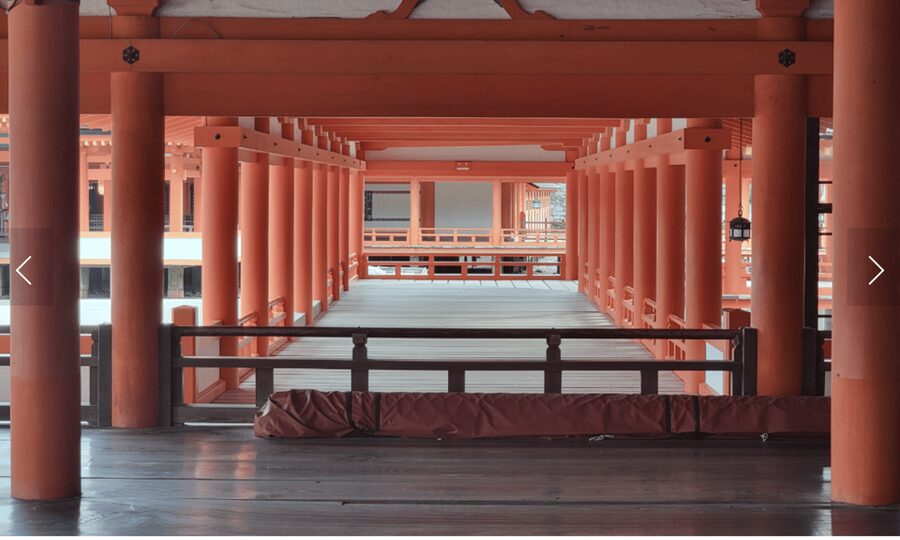
Miyajima is the day’s major change of pace. Its wooded setting and orange Shinto buildings create a strong contrast with Hiroshima’s concrete city streets and memorial spaces.
The walking tour explains how the island developed as a religious center. That context is valuable because the shrine and lanes are not just attractive photo stops. They reflect a place shaped by worship, tradition, and the relationship between the island and the water around it.
The tour includes Itsukushima Shrine, the island’s signature religious site. You can expect time to see the shrine as part of the guided walk, along with picture-friendly lanes and other views around the island. The exact amount of free time is not specified, so do not book this expecting a long solo exploration of every corner.
This is also where your comfortable shoes matter most. The cycling is flat and easy, but Miyajima is explored on foot. You will want footwear that handles a full day of movement without complaint.
The island section is likely to be the visual highlight for many people, but its value is not only scenic. It gives you a chance to understand how religion shaped the place before modern tourism became central to its identity. That makes the guide’s explanations more useful than a quick visit for photographs alone.
Guides, group size, and the feel of the day
The tour uses a live English-speaking guide and limits the group to eight people. That is a good size for a day with both bicycles and walking. You are less likely to be lost in a large crowd, and asking a follow-up question is easier.
Guides named in the feedback include Ishan, Aimee-Linh, Melissa, Sage, and Aimee. Their strengths include answering many questions, explaining Hiroshima’s bombing and pre-Meiji history, and keeping the group supported when conditions were wet. Aimee-Linh was also praised for combining historical knowledge with humor, which can help on a long day with serious subject matter.
Guide quality is particularly important here. Hiroshima’s history deserves more than a memorized list of dates, and Miyajima’s religious background can be easy to miss without explanation. The small group gives the guide a better chance to adjust the amount of detail to your questions.
That personal attention is not a guarantee of a particular guide or style on your date. Still, the format is promising if you want conversation rather than a headset and a fixed script.
Bikes, fitness, and practical comfort
The cycling is deliberately accessible. The route is flat, and the operator provides Trek bikes in several sizes, along with step-through bikes and child-sized bikes. Helmets are included.
You should send the heights of everyone in your party before the tour. That simple step helps the operator prepare a better fit, especially if your group includes children or people who need a step-through frame.
You do not need to be a fast cyclist. The route is slow and supported, and the purpose is sightseeing rather than exercise. Even so, you must be able to ride a bike independently. This experience is not suitable for people who cannot cycle, wheelchair users, or pregnant women.
The day combines cycling with walking and public transport. I would choose comfortable clothes, shoes suitable for a full day, and a camera. Bring only what you want to carry easily. The tour includes water, but the provided information does not specify additional equipment or storage arrangements.
Rain planning and other limits
Rain is the main weather concern. If conditions make cycling unsuitable, the operator contacts you and offers two choices: switch to a walking tour around Peace Park or take a full refund. You need to remain reachable so you do not miss that message.
One important point is that the rain plan specifically mentions Peace Park. The information does not promise that every part of the Miyajima itinerary will operate unchanged in poor weather, so ask for clarification if rain is forecast for your date.
Hotel pickup and drop-off are not included. You need to arrange your own way to the starting point, and the tour information supplied here does not state the meeting location. Check that detail before booking, especially if you are staying outside central Hiroshima.
Free cancellation is available up to 24 hours before the activity for a full refund, and you can reserve now and pay later. Those policies help if your schedule is still moving, but they do not remove the need to check the meeting point, height details, and dietary requirements.
Is $138 a fair price?
At $138 per person, this is not the cheapest way to see Hiroshima and Miyajima. You are paying for a seven-and-a-half-hour guided day, a small group, bicycles and helmets, commentary, lunch, water, train and ferry transfers, and a guided walk on Miyajima.
The value is strongest if you would otherwise need to arrange both locations yourself. Separate planning for the city sights, castle, train, ferry, shrine, lunch, and island walk takes time. The guide also adds context to the Peace Park and religious history, which is harder to gain from simply following a map.
The price is less compelling if you already know Hiroshima well, prefer public transport, or want a lot of free time. Independent visitors who are comfortable arranging the ferry and choosing their own meals may spend less.
For a first visit with one open day, I think the price can be justified by the range and the included transport. The small group matters too. You are buying a guided introduction to two distinct places, not just a bicycle rental.
Who should book this day?
I would recommend it to you if you want to see the main Hiroshima sights and Miyajima in one organized outing. It suits people who enjoy history, easy cycling, guided interpretation, and a full schedule.
It is also a good fit for families with children who can ride, since child-sized bikes are available. Send heights in advance, and remember that the day still includes a substantial walking section.
You may want another plan if you need wheelchair access, cannot cycle, are pregnant, or dislike fixed itineraries. It is also not ideal if your main goal is shopping, independent photography, or an unhurried day at the shrine.
The activity has received a perfect 5.0 rating from 20 bookings, and the strongest praise centers on the guides, easy bikes, range of places, and well-supported pace. Those are exactly the points I would weigh most heavily when deciding.
Should you book the Hiroshima and Miyajima bike tour?
Book it if you have one day, want both Hiroshima and Miyajima, and like having the history explained as you move. The flat ride, small group, included ferry, and well-planned contrast between city and island make it an efficient introduction.
Skip it if you cannot ride, need wheelchair access, or want a slow independent visit. Also think carefully about the seven-and-a-half-hour schedule. For the right person, this is a thoughtful and active way to understand Hiroshima, not just a checklist of famous sights.
FAQ
How long does the Hiroshima and Miyajima tour last?
The activity lasts 450 minutes, which is seven and a half hours.
What language is the tour conducted in?
The tour has a live English-speaking guide.
How large is the group?
The group is limited to eight participants.
Is the cycling route difficult?
The cycling route is completely flat and suitable for all skill levels, provided you can ride a bicycle.
Are bikes and helmets included?
Yes. A bike and helmet are included. Trek bikes, step-through bikes, and child-sized bikes are available.
Are the train and ferry included?
Yes. Train and ferry transfers to Miyajima are included, along with the walking tour on the island.
Is lunch included?
Yes. Lunch and water are included. You should provide information about dietary restrictions in advance.
What happens if it rains?
The operator will contact you and offer either a walking tour around Peace Park or a full refund. Make sure you can be reached before the tour.
Newest rides we have reviewed in Japan
- Best of Kyoto: Ginkakuji & Path of Philosophy E-Bike Tour★ 4.9 · 79 reviews
- Kyoto: Tailored E-Bike Tour to Highlights & Hidden Gems★ 4.9 · 32 reviews
- Kyoto: Full Day Bike Tour★ 4.9 · 39 reviews
- Kyoto: Half-day Guided Bike Tour with Fushimi Inari★ 4.9 · 21 reviews
- Kyoto: Early Bird E-Bike Tour with Lunch★ 5.0 · 14 reviews
- Kyoto: Full-Day City Highlights Bike Tour with Light Lunch★ 5.0 · 52 reviews
- Kanazawa Half Day E-bike Tour★ 5.0 · 81 reviews
- Hiroshima: Best of Hiroshima Guided Bike Tour★ 4.9 · 89 reviews
Bike and Boat Tours, compared.

E-Bike Tour with Montjuic Cable Car & Boat Ride
Read our review →
From Fremantle: Rottnest Island Ferry and Bike Day Tour
Read our review →
From Fremantle: SeaLink Rottnest Ferry and Bike Hire
Read our review →

Other lists this ride turns up in