
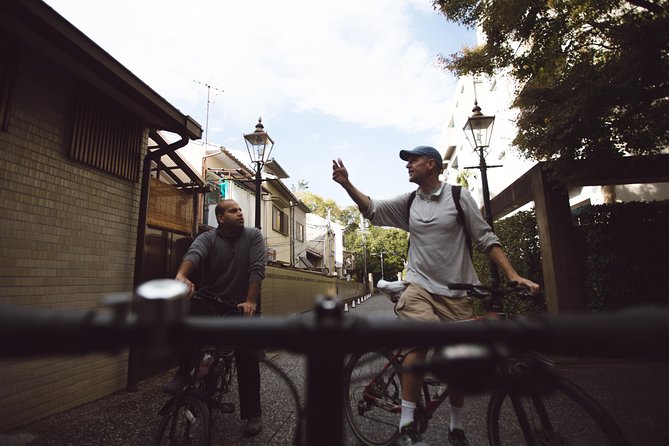
REVIEW · E-BIKE TOURS IN KYOTO
Hidden Kyoto E-Biking tour
Kyoto is easiest to love when you leave the main sightseeing lanes. This small-group e-bike tour takes you from NORU’s bicycle shop through quiet streets, temple grounds, and peaceful Zen gardens, while still covering big names such as Kinkakuji and Kitano Tenmangu. Guides including Yuta, Michael, Sean, Henry, and Shizuka bring different strengths, from Zen and tea traditions to feudal Japan and everyday temple etiquette.
I like two things right away: the electric bikes flatten Kyoto’s hills, and the route links famous sights with places you would likely skip on foot. The tea stop, tied to a shop with more than a thousand years of history, also adds a wonderfully local touch. The main consideration is that this is still a bicycle tour. If you cannot ride, arrive late, or dislike extended historical storytelling, the experience may not suit you.
Key points at a glance
- A 7 to 8-kilometer route through northern Kyoto: You see major temples, shrines, backstreets, and quiet gardens in about three hours and 45 minutes.
- Electric bikes make the hills manageable: The ride is designed for people aged 13 and older, with minimal effort required on most of the route.
- Five distinctive cultural stops: Kinkakuji, Daitokuji, Kitano Tenmangu, Koto-in, and Zuihoin give the ride a strong mix of famous and less-visited places.
- Guides add real cultural context: Yuta is often praised for his explanations of Zen, Shinto, Buddhism, geisha culture, and temple manners. Michael, Sean, Henry, and Shizuka have also led highly regarded rides.
- A maximum of eight people keeps the group manageable: That matters on narrow lanes and when stopping to listen at temple grounds.
- You get the essentials: A rental e-bike, helmet, water, and an English-speaking route coordinator are included.
Why a bicycle is smart in northern Kyoto
Kyoto’s famous sights are spread out. You can walk between some of them, but long connections eat up time and make it harder to add quieter temples to your day. A bus can help, though crowded roads and fixed routes sometimes slow you down.
This ride solves that problem in a simple way. You pedal between sites rather than spending the morning waiting for transport. The route covers roughly 7 to 8 kilometers, depending on how it is described, and lasts about three hours and 45 minutes. That is enough time to see several religious sites without turning the outing into an athletic test.
The bikes are foldable rental models with electric assistance. You still pedal, but the motor helps on inclines and keeps the ride from becoming tiring. Several people who had not cycled for years found the ride manageable, and one route includes a fairly steep hill. The e-bike assistance matters there.
You should still feel comfortable balancing, braking, and riding on city streets. The minimum age is 13, and the activity is described as easy and safe, but it is not a sightseeing bus. You will spend much of the morning or afternoon in the saddle.
More E-Bike Tours in Japan
- 5 Top Highlights of Kyoto Full Day Bike Tour (E-bike option)
★ 5.0 · 511 reviews - Kyoto: Memory Kyoto E-Bike Tour
★ 4.8 · 297 reviews - E-Bike Tours of the highlights of Kyoto!!!
★ 5.0 · 291 reviews
Starting at NORU and settling onto the bike
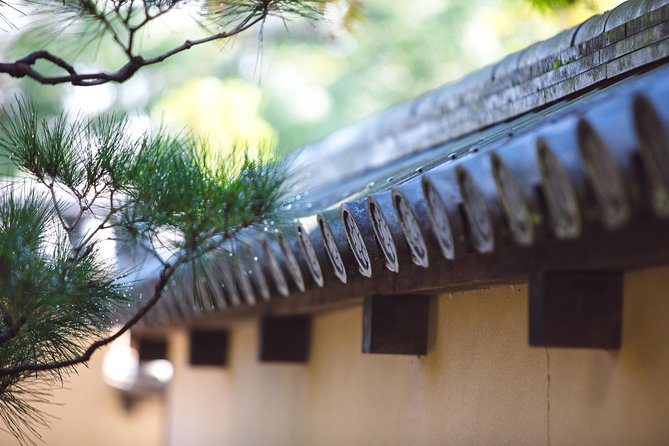
The tour begins at NORU Kyoto Bike Tours, at 429-22 Takigahanacho in Kyoto’s Kamigyo Ward. You need to arrive at least 15 minutes before departure. Available start times are listed as 8:30, 9:00, 12:30, and 1:00.
The opening routine is practical. You receive your bike and helmet, get oriented to the e-bike, and begin with the route coordinator. Water is included. Food and other drinks are not, so eat beforehand if you need more than a light start.
The group size is capped at eight people. That is a useful limit for a bicycle outing. A large pack would be harder to keep together, especially on narrow residential lanes or when crossing busy areas. A small group also gives you a better chance to ask about Shinto, Buddhism, tea customs, or places to eat afterward.
Guides have varied by departure. Yuta has been especially praised for his clear English and his ability to explain Zen Buddhism, temple behavior, geisha and maiko culture, and Japanese history without losing the thread of the ride. Michael has been described as a strong storyteller, while Sean has helped with rainy-weather gear and local food suggestions. Henry and Shizuka have also led rides with a strong focus on culture and quieter neighborhoods.
Kinkakuji: the famous first stop
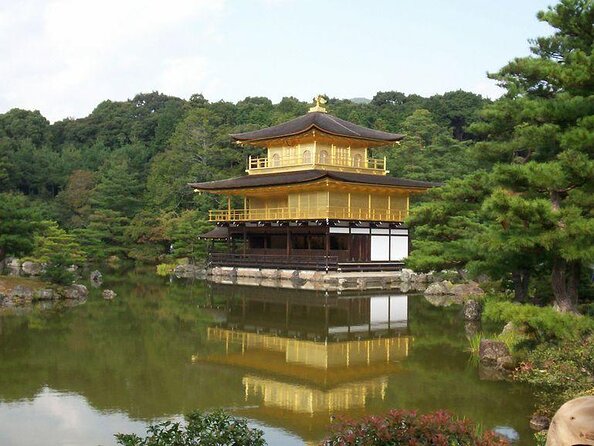
Kinkakuji, the Golden Pavilion, is the most recognizable stop on the route. The upper floors are covered in gold leaf, and the pavilion sits beside a reflective pond in a carefully arranged garden. It is one of Kyoto’s UNESCO-listed sites and a clear contrast to the smaller temples later in the ride.
This is the stop most likely to draw crowds. That is part of the bargain. You get one of Kyoto’s essential sights, but you should not expect the solitude promised by the rest of the route. The value here is efficiency: you reach Kinkakuji without spending a large part of your day navigating across the city, then move on to quieter places.
Your guide can also give the pavilion useful context instead of leaving you with a photo and a name. The wider explanations on this tour often cover how Buddhist and Shinto traditions differ, how to behave at religious sites, and how Kyoto’s old customs still shape the city.
Daitokuji: a quieter temple complex
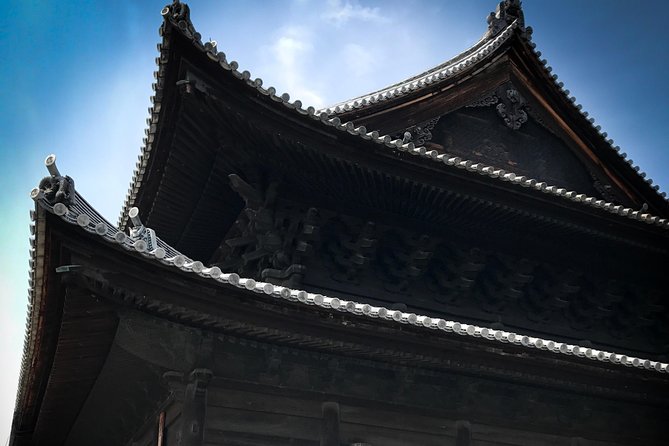
Daitokuji is a large temple complex rather than one single monument. Its collection of sub-temples gives the area a calmer feel and helps explain why Kyoto’s religious sites are not all built around one famous building.
This is where the tour begins to feel less like a checklist. You are moving through a historic religious district, stopping to consider gardens, gates, and details that are easy to miss when you rush from one headline attraction to the next.
Access and exact stops can vary by the day’s route and temple conditions, so do not assume every building will be open. The larger point is the change in pace. After Kinkakuji, Daitokuji offers room for explanation and observation.
More E-Bike Tours in Kyoto
- Kyoto: City Secrets eBike Tour
★ 4.9 · 196 reviews - Kyoto: Hidden Gems E-Bike Tour with Local Japanese Guide
★ 4.9 · 189 reviews - Historical Kyoto E-Bike Tour
★ 5.0 · 181 reviews - Best of Kyoto: Ginkakuji & Path of Philosophy E-Bike Tour
★ 4.9 · 79 reviews
Kitano Tenmangu and Kyoto’s living traditions
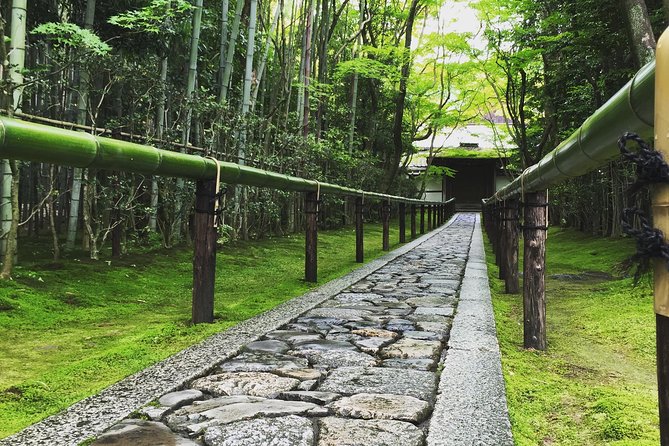
Kitano Tenmangu is a major Shinto shrine dedicated to Sugawara no Michizane, a scholar and political figure associated with learning. It is a useful place to notice the difference between a shrine and a Buddhist temple, a distinction your guide is likely to explain along the way.
This stop also helps connect Kyoto’s grand religious sites with daily Japanese customs. You may learn when to bow, how to approach a shrine, and what small actions show respect. Those details are practical for the rest of your Kyoto visit, not just for this morning.
The shrine can be busier than the smaller temple gardens, particularly at popular times. Still, the bicycle approach and small group make it easier to include than if you were planning a long, disconnected walking route.
Koto-in: quiet paths and shaded garden space
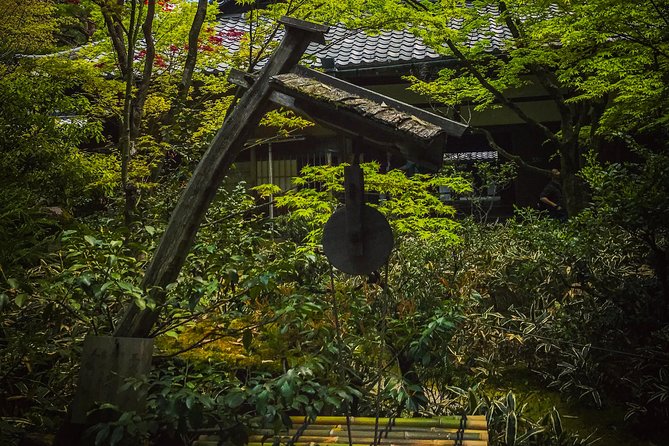
Koto-in is one of the stops that gives the experience its hidden side. The approach and garden setting are more intimate than the Golden Pavilion, with a slower rhythm and less emphasis on taking one famous photograph.
This is a good place to let the guide’s explanation breathe. The tour has been praised for short Zen elements and for connecting garden design with Buddhist ideas. You do not need prior knowledge of Zen to enjoy the setting. The point is to notice how space, plants, paths, and framing shape the experience.
Because this is a bike tour, you are not simply being moved from one famous gate to another. The quiet streets between stops are part of Koto-in’s appeal. You see ordinary corners of northern Kyoto, not just the polished face presented in guidebooks.
Zuihoin and the value of a smaller stop
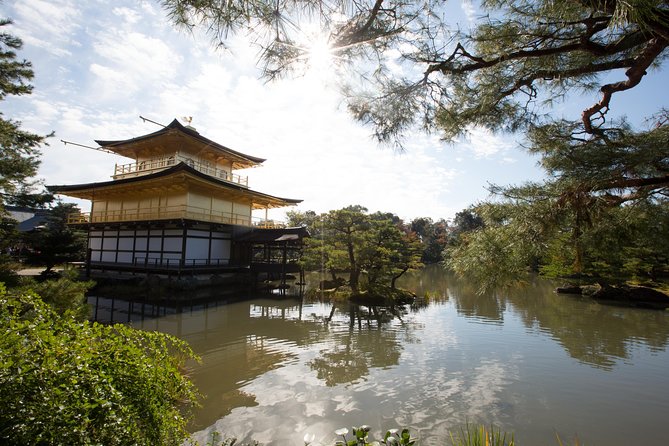
Zuihoin provides another look at Zen temple design. It is less instantly famous than Kinkakuji, but that is exactly why it works well near the end of the route. You have already seen Kyoto’s grand public face and can now pay closer attention to the details of a smaller religious space.
Guides may use stops such as this to explain Zen practice, garden symbolism, and the relationship between a temple’s architecture and its grounds. The tour’s cultural focus is one of its strongest features, though it can also be the part that tests your patience if you prefer to keep moving.
One person found the historical storytelling too long for a half-day ride. That is a fair caution. The guides are clearly enthusiastic, and the best ones adjust to questions and group interest, but you should expect substantial commentary rather than a quick photo stop.
The tea stop and the local side of Kyoto
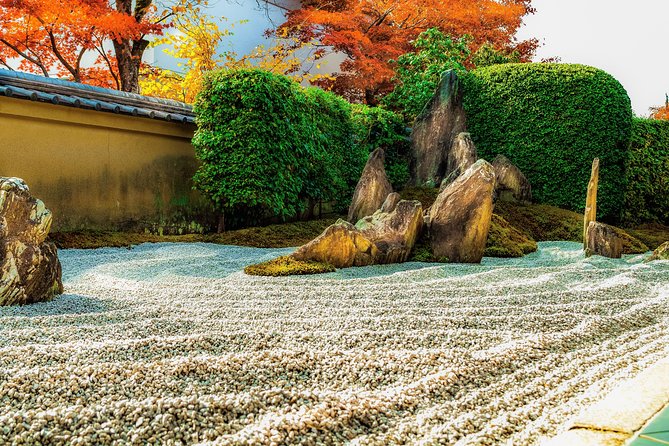
One of the most memorable details in the route is a tea stop at a place described as more than 1,000 years old and maintained through 28 generations. The stop includes sweets and tea, with the backstory adding meaning to what could otherwise be a brief refreshment break.
Food and drinks are not generally included in the tour description, so treat this as a possible part of the route rather than a guaranteed meal. The important point is cultural access. A traditional tea stop gives you a chance to discuss hospitality, tea ceremony customs, and the way family businesses carry old practices into modern Kyoto.
This also helps break up the ride. Three hours and 45 minutes is not an extreme length, but it is long enough to appreciate a pause that is more than a water break.
How difficult is the cycling?
The ride is billed as easy and suitable for most people aged 13 and older. The electric assistance is the key reason. It helps with hills and reduces the effort needed on a warm or humid day.
The route is not completely flat. You may encounter steep sections, descents, and ordinary city traffic. People who had not ridden in a decade managed the experience, but that should not be read as a promise that cycling ability does not matter. You need to control the bike and stay alert.
Rain can make the ride less comfortable. The experience requires good weather and may be canceled if conditions are poor. If the ride goes ahead in wet weather, bring a raincoat or poncho and weatherproof gloves if you have them. Guides may provide some rain gear, but your own clothing is the safer plan.
What $116 buys you
At $116 per person, this is not the cheapest way to see Kyoto’s temples. You are paying for more than a bicycle rental, though. The price covers the e-bike, helmet, water, a small group capped at eight, an English-speaking guide, route planning, and the ability to connect sites that are awkward to combine independently.
I think the value is strongest for a first or second day in Kyoto. You cover a useful section of the city, learn how to approach temples and shrines, and come away with food and neighborhood suggestions. It can also work well for a repeat visit because the route focuses on less familiar corners.
The value drops if you mainly want a fast ride past buildings or if you already know northern Kyoto well. In that case, a self-guided rental may cost less. You would also lose the cultural explanations, the planned route, and the reassurance of a guide on the hills.
Who should book this ride?
I would recommend it to active adults, families with teenagers aged 13 and up, and anyone who wants to see Kyoto beyond the busiest postcard locations. It is particularly useful for people who like history, religious traditions, gardens, and local stories as much as they like sightseeing.
It also suits visitors who want an easy introduction to Kyoto. A morning ride gives you a sense of how the northern districts fit together, while an afternoon departure leaves the earlier part of your day open.
I would hesitate if you are uncomfortable on a bicycle, cannot ride, or want a tour with almost no formal explanation. Missed departures, late arrival, and choosing not to participate are not refundable. Arrive early, wear practical clothes, and be honest with yourself about your cycling ability.
Cancellation and practical details
You can cancel for a full refund up to 24 hours before the start time. Changes or cancellations inside that window are not accepted, and no-shows are not refundable.
The tour ends back at NORU. It is near public transportation, and confirmation is provided when you book. If poor weather cancels the ride, you can choose another date or receive a full refund. The same applies if the minimum number of participants is not reached.
Should you book the Hidden Kyoto E-Biking tour?
Book it if you want Kyoto’s famous temples plus quiet lanes, small Zen spaces, and useful cultural guidance in one half-day outing. The electric bikes make the route practical, and the small group keeps it personal. Guides such as Yuta, Michael, Sean, Henry, and Shizuka have brought strong storytelling and clear explanations to the ride.
Skip it if you dislike cycling, need a completely flat route, or prefer to explore temples without extended commentary. For everyone else, the $116 price is reasonable because it combines transport, equipment, planning, and cultural interpretation. The best reason to book is simple: you see more of northern Kyoto without spending the whole day on foot or in a bus.
FAQ
How long does the Hidden Kyoto E-Biking tour last?
The experience lasts approximately 3 hours and 45 minutes.
How far do you cycle?
The route is described as roughly 7 to 8 kilometers, or about 4.3 to 4.9 miles.
What sights are included?
The route includes Kinkakuji Temple, Daitokuji Temple, Kitano Tenmangu Shrine, Koto-in, and Zuihoin. The ride also passes quiet streets and smaller Zen spaces.
Are the bike and helmet included?
Yes. The rental bike, helmet, and water are included in the price.
What is the minimum age?
The minimum age is 13.
Where does the tour begin and end?
The tour begins and ends at NORU Kyoto Bike Tours, located at 429-22 Takigahanacho, Kamigyo Ward, Kyoto, 602-8336, Japan.
Newest rides we have reviewed in Kyoto
- Best of Kyoto: Ginkakuji & Path of Philosophy E-Bike Tour★ 4.9 · 79 reviews
- Kyoto: Tailored E-Bike Tour to Highlights & Hidden Gems★ 4.9 · 32 reviews
- Kyoto: Full Day Bike Tour★ 4.9 · 39 reviews
- Kyoto: Half-day Guided Bike Tour with Fushimi Inari★ 4.9 · 21 reviews
- Kyoto: Early Bird E-Bike Tour with Lunch★ 5.0 · 14 reviews
- Kyoto: Full-Day City Highlights Bike Tour with Light Lunch★ 5.0 · 52 reviews
- Cycle Kyoto’s Hidden Gems & Gion Stroll★ 5.0 · 29 reviews
- Kyoto: Arashiyama Bamboo Forest Morning Tour by Bike★ 5.0 · 115 reviews
E-Bike Tours, compared.
3-Hour Porto Highlights on a Electric Bike Guided Tour
Read our review →
Hills, Alfama, and Mouraria Tour by Electric Bike
Read our review →
Athens Scenic Electric Bike Tour with optional Acropolis visit
Read our review →
City Highlights 3-Hour Guided Electric Bike Tour
Read our review →
Rome EBike Tour: Appian Way, Catacombs & Roman Aqueducts
Read our review →
Top Highlights & Hidden Gems Tour by Cannondale E-Bike
Read our review →
Lisbon E-Bike Tour Commerce Square, Mouraria and Alfama
Read our review →Other lists this ride turns up in