
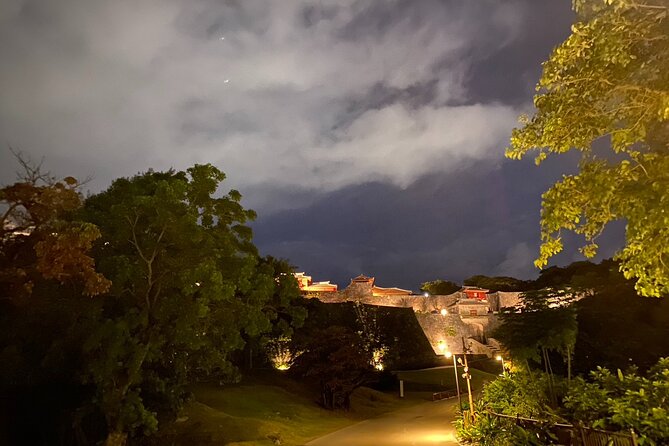
REVIEW · JAPAN
Afternoon Adventure: Okinawa Local Cycling with Spectacular Views
Naha’s best stories are often found away from the main shopping streets. This small-group e-bike ride takes you from Makishi through pottery lanes, old neighborhood streets, Shuri’s stone road, and a hilltop viewpoint over the city. It feels less like checking off sights and more like seeing how Naha fits together.
I like the helmet communication system, which lets you hear the guide while riding, and I like the route’s variety: pottery, local homes, Ryukyu history, green park paths, and a broad city view. The main drawback is that this is still a real bike ride, with steep sections toward Shuri and narrow streets that require confidence and attention.
- Tsuboya pottery quarter: Walk and ride through one of Naha’s most distinctive craft districts.
- Electric assistance: E-bikes make the climb toward Shuri far easier, especially in Okinawa’s heat.
- Helmet microphones: You can hear the guide without stopping every few minutes.
- Shuri’s stone road and castle park: This is the historical heart of the route, with old paving, gates, walls, and sacred sites.
- Small groups: A maximum of five people allows guides such as Aki, Maki, Tony, Jojo, and Hiro to keep the pace personal.
- Shurisakiyamacho viewpoint: The final high point gives you a wide view across Naha and can be especially appealing near sunset.
Why this Naha bike tour works so well
This is a useful choice if you want more than Kokusai Street but do not want to spend a full day on a bus. In about three and a half hours, you cover several parts of Naha that feel quite different from one another.
The route begins near Makishi Monorail Station, making it simple to reach from central Naha. After a quick safety briefing, you collect your bike and helmet, then set off with a guide. The ride is not presented as a race. The point is to stop, look, listen, and understand how the old Ryukyu capital still shapes modern Naha.
I especially like the way the route mixes well-known places with ordinary streets. You pass through local neighborhoods where a few traditional houses remain, then move into Shuri’s historic area. That contrast matters. A castle on its own can feel like a single attraction. A bicycle route shows you how the castle town connected to workshops, homes, shrines, roads, and viewpoints.
The group limit of five is another real advantage. Guides can answer questions more easily, and the ride is less likely to feel like a long line of bicycles. The available guides include Aki, Maki, Tony, Jojo, Hiro, and others, with Aki and Tony receiving particular praise for clear explanations and friendly conversation.
Starting near Makishi Monorail Station
The meeting point is e-CHARIty Naha Kokusai Street, at 3-chōme-13-20 Makishi. It is about a one-minute walk from Makishi Monorail Station, which is handy if you are staying near central Naha or using public transport.
Allow a few minutes before the scheduled start to get fitted to your bike and hear the safety instructions. The tour includes the bicycle, rental, cycling guide, and an installed cycling helmet. Camera mounts and phone holders are not included, so bring your own solution if you want to film while riding.
The quick briefing is more important than it sounds. You will be riding through narrow lanes, local streets, and some inclines. If you are not used to city cycling, use this time to ask about braking, gear settings, and how the group will communicate.
The bikes are electric-assist models, not fully motorized scooters. You still pedal, but the motor helps with hills and makes the route more manageable. This is particularly useful as you climb toward Shuri Castle Park. One practical feature is the microphone system built into the helmets, allowing the guide to speak while the group is moving.
More Cycling Trips in Japan:
- Hidden Kyoto E-Biking tour
★ 5.0 · 1,843 reviews - Tokyo Guided Small-Group Biking Tour
★ 5.0 · 1,250 reviews - Bike Tour Exploring North Kyoto plus Lunch
★ 5.0 · 1,087 reviews
Tsuboya Yachimun Dori and Naha’s pottery tradition

The first major stop is Tsuboya Yachimun Dori. In Okinawan language, yachimun means pottery. Around 300 years ago, the Ryukyu Kingdom brought pottery kilns from different parts of the islands together in this area, creating a center for ceramic production.
That background gives the street more meaning than a quick photo stop. The district is tied to working craft traditions, not just decorative old buildings. You get a glimpse of how trade, government decisions, and local skills shaped everyday life in the Ryukyu Kingdom.
Plan on about 30 minutes here. The guide can explain the pottery tradition and point out details you might miss while walking alone. The stop also breaks up the cycling early in the tour, giving you time to settle into the pace.
Do not expect a large museum visit or an extended shopping session. The value is in the setting and the explanation. If you love ceramics, you may want to return later on your own with more time. The tour gives you an introduction rather than a full study of Okinawan pottery.
Asato Shotengai and the ordinary streets of Naha
The route passes near Asato Shotengai, an area once associated with a red-light district. In the evening, it becomes a place for izakayas and other small eateries. The tour gives you a look at the area’s changing identity without turning the stop into a sensational story.
This is one of the more useful parts of the ride because it shows that Naha’s past is not confined to monuments. Streets change function over time. A neighborhood can carry traces of an older reputation while serving as a lively local eating area today.
You also pass through parts of Naha where a few traditional houses remain. These sections are not major attractions with ticket booths or grand signs. That is exactly why they are worth seeing by bike. You get a sense of the city’s everyday scale, including streets and homes that are easy to pass without noticing.
The guide makes the difference here. Without local context, you might simply see a narrow road and some older buildings. With a guide such as Tony or Jojo explaining the area, the ride becomes a lesson in how Okinawan life fits around its historic center.
Shurikinjocho Stone-Path Road
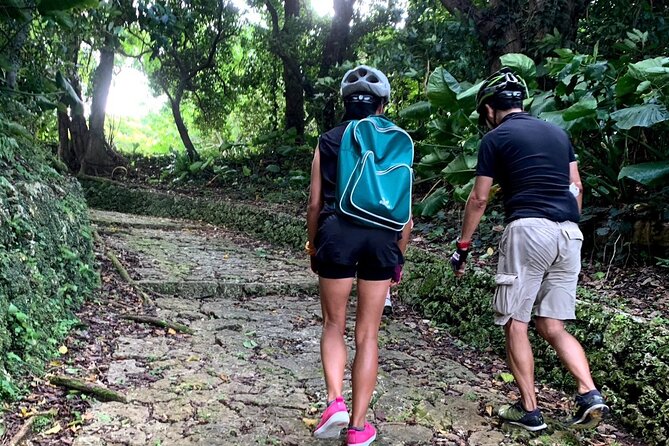
The climb toward Shuri is the physical heart of the ride. Shurikinjocho Stone-Path Road leads into the old castle town, once the capital of the Ryukyu Kingdom. Cobblestones, temples, and sacred shrines give this part of Naha a slower, older feel.
The route is attractive, but it is not completely effortless. There are steep inclines, and some narrow passages call for careful handling. The electric assistance is especially helpful here. You will still pedal, but the bike takes much of the sting out of the climb.
About an hour is set aside for this part of the experience. That gives the guide time to explain the area rather than simply lead you uphill. Aki has been singled out for giving detailed information while keeping the ride moving, a useful balance when the group wants both history and action.
The stone road can be less comfortable for anyone who dislikes uneven surfaces or tight turns. You should also expect to share the road and give yourself room to maneuver. The tour is suitable for most participants, but it is not a passive sightseeing ride.
Same roads, a different saddle:
- Tokyo Great Cycling Tour
★ 5.0 · 811 reviews - Tokyo Top Highlights 3h Guided E-bike Tour
★ 5.0 · 714 reviews - 3h Tokyo E-Bike Tour: Hidden Gems, and Local Life with guide
★ 5.0 · 670 reviews - Arashiyama Bamboo Forest & Hidden Gems Bike Tour (Early Bird)
★ 5.0 · 613 reviews
Shurijo Castle Park and the former Ryukyu capital
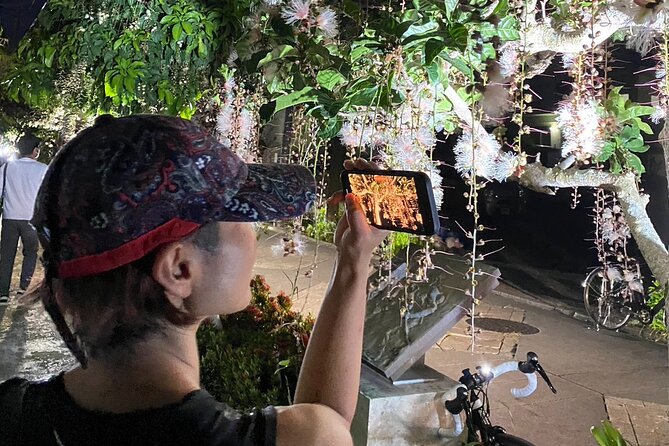
Shurijo Castle Park is the longest stop, with about an hour planned for exploring and riding through the grounds. The park brings together stone walls, plants, gates, and paths connected to the former Ryukyu royal center.
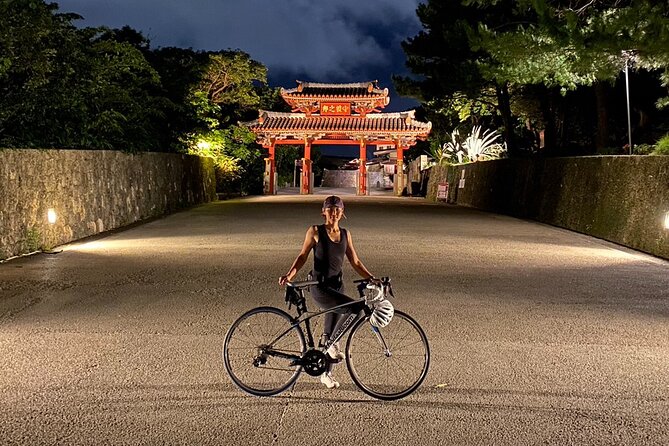
The route includes the Shureimon gate, one of the most recognizable sights in the park. Its illuminated walls and gate can be especially photogenic later in the day. The plants also change with the season, giving the park a different feel depending on when you visit.
Cycling through the park lets you cover more ground than walking alone, but do not expect to race from one sight to the next. The appeal is the combination of movement and pauses. You can ride through quieter sections, stop for photographs, and hear how the site relates to the old kingdom.
The park is also where the tour’s historical thread comes together. Tsuboya showed the craft side of Okinawan life. The neighborhood streets showed the daily city. Shuri explains the political and ceremonial center that once connected the island kingdom with the wider region.
This is not a replacement for spending a full day at every Shuri attraction. If you want a detailed museum visit or a long look at each building, you will need to return independently. For a half-day outing, though, the park gives the ride a strong central purpose.
The Shurisakiyamacho viewpoint
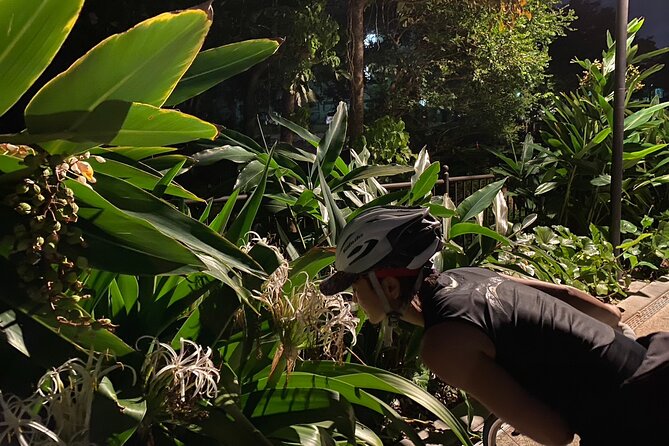
Near the end of the route, the guide takes you to a viewpoint in Shurisakiyamacho. From here, you can look across Naha and take one of the best photographs of the outing.
This stop lasts about 20 minutes, which is enough for pictures and a short rest. The view gives you a useful sense of the city’s layout after riding through its older quarters. You can see how the low local streets, historic hilltop area, and wider urban center relate to one another.
Timing matters. The experience is described as an afternoon adventure, and several departures have been enjoyed as sunset rides. If your schedule brings you here near evening, this may become the emotional high point of the tour. Bring a light layer because temperatures can feel cooler later in the day.
The viewpoint is also a reminder of why the e-bike route works. You are not only moving through streets at ground level. The climb gives you a different angle on Naha, and the effort feels worthwhile once the city opens below you.
What the $99.10 price delivers
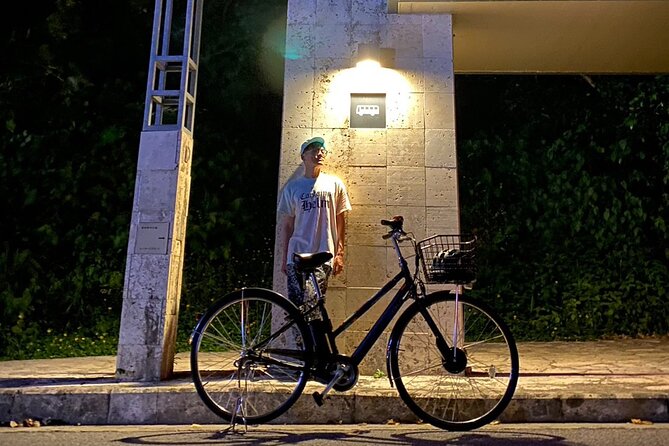
At $99.10 per person, this is not the cheapest way to rent a bicycle in Naha. It is also more than a basic self-guided ride. The price covers an e-bike, helmet, guide, and roughly three to three and a half hours of structured sightseeing.
The strongest value comes from the route planning and local explanation. You could visit Kokusai Street, Tsuboya, Shuri Castle Park, and a viewpoint independently, but connecting them by bicycle takes time and local know-how. The guide also handles the route through narrow streets and steep sections.
The small group improves the value. With no more than five people, the guide can keep an eye on the pace and answer questions without turning every stop into a crowd-control exercise. If you are traveling alone or as a couple, the format should feel more personal than a large coach excursion.
I would book this for the experience, not simply for transportation. If you only want to get from Makishi to Shuri, the monorail and taxis may be more practical. If you want local stories, exercise, and several contrasting parts of Naha in one outing, the price is easier to justify.
Heat, hills, and the practical side of riding

Okinawa can be hot, and cycling in the afternoon takes more effort than walking between air-conditioned shops. The electric motor helps, but it does not remove the need for water, sensible clothing, and attention to the road.
The operator recommends bringing something to wear in case it gets colder in the evening. That is particularly useful if your ride finishes near sunset or at the viewpoint. You should also be ready for a change of plan if the precipitation probability rises above 70 percent or severe weather is expected. In that case, the team may contact you the day before.
Most people can participate, but the ride requires basic comfort on a bicycle. The route includes inclines, narrow streets, and uneven paving. Children aged one to five may use a child seat attached to a parent’s bicycle, with arrangements to be discussed with the staff.
For shorter riders, check the bike fit before setting off. Smaller bikes may use a Mama-chan style frame rather than a small mountain-bike design, which can matter if you prefer a particular riding position. The operator can provide the best guidance when you book.
Free cancellation is available up to 24 hours before the start time for a full refund. Changes made within 24 hours are not accepted, and a weather cancellation gives you the choice of another date or a full refund.
Who should choose this ride
I would choose this tour if you want to combine movement with history and prefer local streets to a standard sightseeing loop. It suits solo visitors, couples, and small groups who enjoy asking questions and stopping for photographs.
It is also a strong option if you are visiting Naha on a short schedule. The route links several useful areas without requiring you to plan transfers between them. The e-bike assistance makes the Shuri climb far less intimidating for casual cyclists.
I would think twice if you dislike cycling in traffic, have trouble with hills, or want a completely relaxed ride with no physical effort. The electric bikes help, but they do not turn the experience into a motorized sightseeing vehicle.
Should you book the Naha local cycling tour?
Book it if you want to see Naha through several lenses in one afternoon: pottery, neighborhood life, old roads, the Ryukyu royal center, and a city view. The best parts are the small group, the helmet communication system, and the way the route reaches places that are easy to miss from a train or taxi.
Skip it if you prefer to move slowly through museums or spend most of your time shopping. For everyone else, this is a well-shaped half-day ride with enough history to be useful, enough exercise to feel active, and enough scenery to make the hills worthwhile.
FAQ
Where does the cycling tour start?
It starts at e-CHARIty Naha Kokusai Street, at 3-chōme-13-20 Makishi, Naha, Okinawa 900-0013, Japan.
How close is the meeting point to public transportation?
The shop is about a one-minute walk from Makishi Monorail Station.
How long does the experience last?
The tour lasts approximately three to three and a half hours.
Where does the tour finish?
It finishes back at the meeting point, where you return the bicycles.
What is included in the price?
The experience includes bicycle use, bike rental, an installed cycling helmet, and a cycling guide.
Are camera mounts or phone holders included?
No. Camera mounts and mobile phone holders are not included.
How many people can join the tour?
The activity has a maximum of five participants.
Can young children join?
Children aged one to five can use a child seat attached to a parent’s bicycle. You should consult the staff for details.
What happens in bad weather?
If the precipitation probability is above 70 percent or severe weather is expected, the plan may change. If the tour is canceled because of poor weather, you can receive a different date or a full refund.
Can I cancel for a full refund?
Yes. You can cancel at least 24 hours before the start time for a full refund. Cancellations or changes made less than 24 hours before the experience are not refunded or accepted.
Newest rides we have reviewed in Japan
- Zodiac Shrines and Naha Backstreets Cycling Tour★ 5.0 · 29 reviews
- Iya Valley BROMPTON Slow Cycling Tour★ 5.0 · 28 reviews
- eTour de Matsumoto – Electric Bike Tour★ 5.0 · 16 reviews
- ONLY YOU in the Bamboo Forest! 4 hours E-bike tour with a local★ 5.0 · 45 reviews
- South Kyoto in a Nutshell: Gentle Backstreet Bike Tour!★ 5.0 · 225 reviews
- Pedal Adventure Kyoto’s iconic landmarks on an e-bike tour★ 5.0 · 189 reviews
- The Beauty of Kyoto by Bike: Private Tour★ 5.0 · 47 reviews
- Kyoto Bamboo Forest & Golden Pavilion E-Bike Tour★ 5.0 · 50 reviews
Japan Cycling Tours, compared.
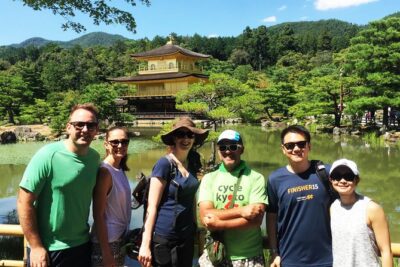
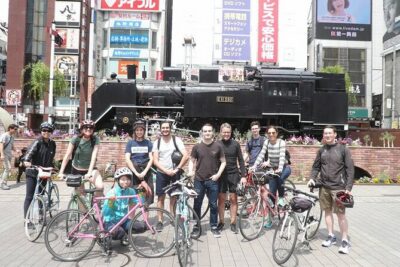
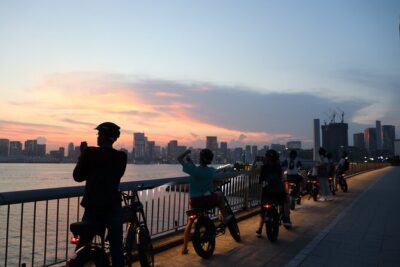

3h Tokyo E-Bike Tour: Hidden Gems, and Local Life with guide
Read our review →
Arashiyama Bamboo Forest & Hidden Gems Bike Tour (Early Bird)
Read our review →
Hiroshima in a Nutshell: Morning Bike Adventure
Read our review →Other lists this ride turns up in