
REVIEW · HIROSHIMA
Hiroshima in a Nutshell: Morning Bike Adventure
Hiroshima’s key sights are spread across the city, and a bicycle lets you link them without waiting for buses or walking long stretches. This morning ride takes you from the Peace Memorial Park and Atomic Bomb Dome to Hiroshima Castle and Shukkei-en Garden, with time for quiet reflection and plenty of local history.
I like the small groups of up to eight, which make it easier to ask questions and stay together in city traffic. I also like the practical setup: a bike, helmet, bottled water, and an English-speaking guide are included, so you can arrive ready to ride.
The main consideration is the pace of the day. You will get on and off the bikes often for explanations and photographs, and the subject of Hiroshima’s wartime past can feel heavy. An e-bike is available for an extra fee, but limited supply means you should arrange one ahead of time.
What makes this Hiroshima bike tour useful
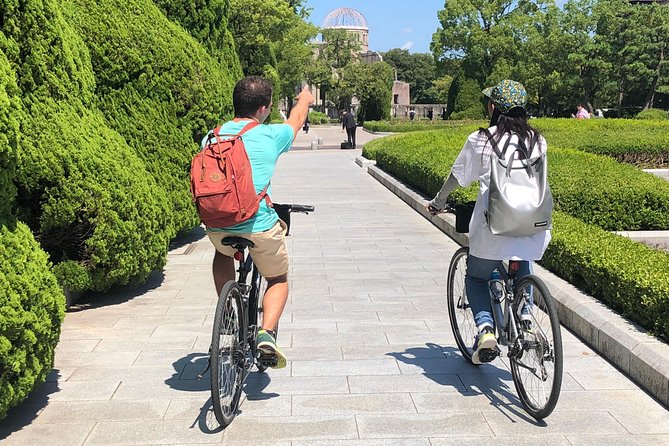
- Covers four major sights in one morning: Peace Memorial Park, the Atomic Bomb Dome, Hiroshima Castle, and Shukkei-en Garden.
- Mostly flat city riding: The route is manageable for ordinary cyclists, with an e-bike option for an additional 2,000 yen.
- Small-group format: The maximum is eight people, allowing for a more personal guide experience.
- History comes with context: Guides such as Awais, James, Melissa, Yuki, Amy, Levi, Ihsan, and others explain both the atomic bombing and Hiroshima’s wider past.
- Good for a short stay: The three to four-hour ride gives you a useful first look if you have only a day or two.
- Bikes reach side streets and canals: You can see parts of Hiroshima that are less practical by car, bus, or walking tour.
Why a bicycle works so well in Hiroshima
Hiroshima is not a difficult city to cover, but its main sights are separated by enough distance to make a walking tour tiring. The Peace Memorial Park sits west of the city center, Hiroshima Castle lies farther north, and Shukkei-en Garden is near the station area. A bicycle joins these places into one clear route.
I like this format because you do not spend the morning shuttling between isolated stops. You ride through ordinary city streets, along canals, and into quieter corners between the main monuments. That gives you a better sense of Hiroshima as a living city, not only as a place defined by one terrible event.
The route is mostly flat. One rider mapped a route of about 6.81 miles over more than four hours, though your exact distance and timing may vary with the group and the guide. This is not a race or a strenuous cycling trip. It is sightseeing by bike, with frequent stops and a steady pace.
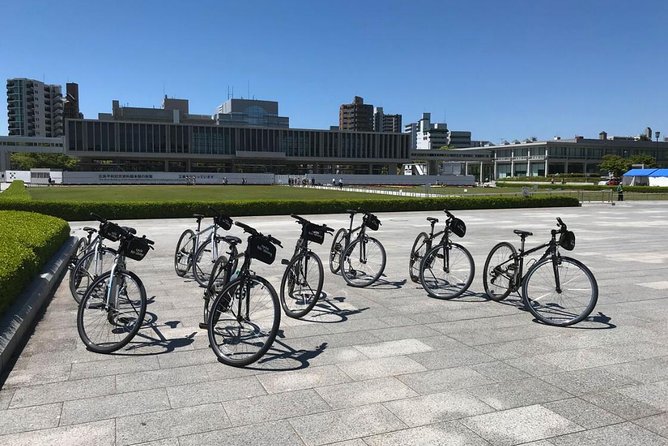
The bikes are supplied in good condition, and the guide checks the fit before departure. You receive a helmet and water, too. If you have not ridden a regular bicycle for years, or you are concerned about heat or stamina, ask about the e-bike before the tour begins. The extra cost is modest, but availability may be limited.
More Cycling Trips in Japan:
- Hidden Kyoto E-Biking tour
★ 5.0 · 1,843 reviews - Tokyo Guided Small-Group Biking Tour
★ 5.0 · 1,250 reviews - Bike Tour Exploring North Kyoto plus Lunch
★ 5.0 · 1,087 reviews
Starting at 10:00 am in Otemachi
The meeting point is Cycle Hiroshima at 4-chōme-5-4 Ōtemachi in Naka Ward. The tour begins at 10:00 am and ends back at the same place, which is useful if you have afternoon plans, a train to catch, or a hotel outside central Hiroshima.
Allow enough time to find the shop, check in, and adjust your bicycle. Your guide will explain basic safety points and hand signals before the group sets off. That short briefing matters in a city setting, even on a route that feels relaxed.
The maximum group size is eight. That is small enough for the guide to notice if someone is struggling with a seat height or riding speed. It also helps when the group stops at monuments, where a large crowd can make listening difficult.
The tour normally lasts three to four hours. Some guides take extra time for questions and explanations, so do not plan an appointment immediately after the stated finish time. One especially helpful feature is the return to the starting point, rather than ending at a distant sight.
Peace Memorial Park: a quiet beginning
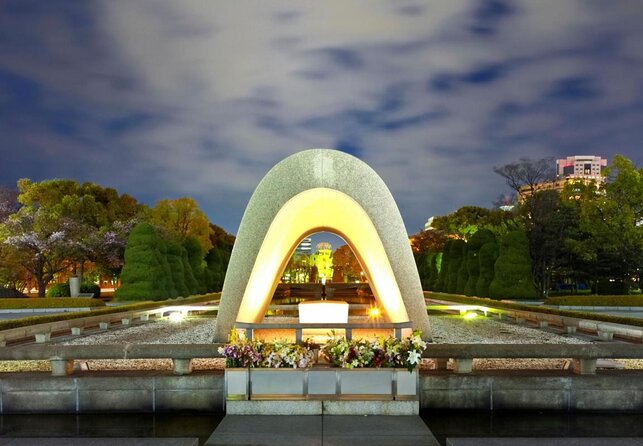
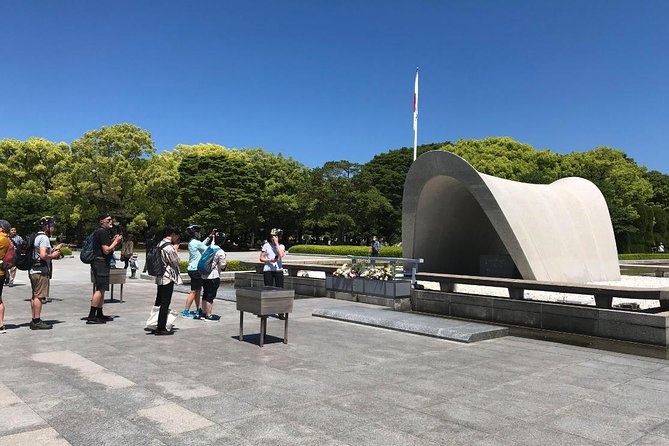
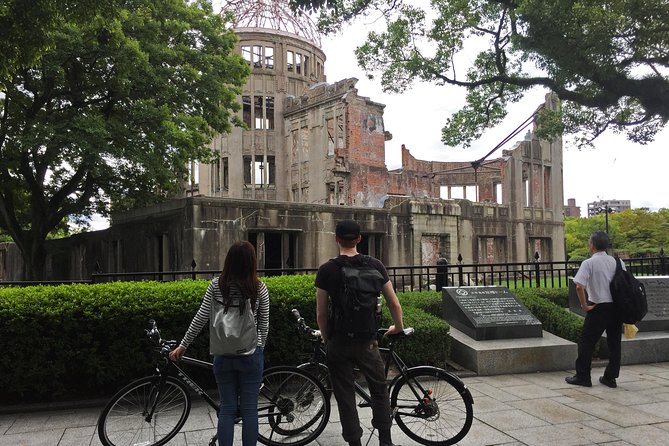
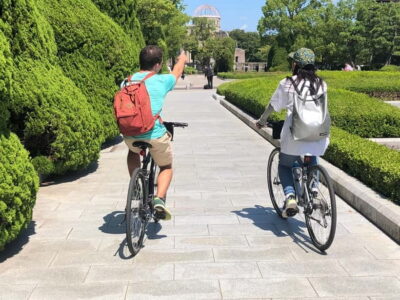
The first stop is Hiroshima Peace Memorial Park, with about 20 minutes for a slow ride and reflection. This is not a quick photo stop. The guide uses old pictures of the area from before the war and offers short historical commentary, helping you picture what existed before the bombing.
The park is spacious and quiet, but it is not emotionally easy. You will see memorials connected with the dead, survivors, and children affected by the atomic bombing. A bicycle gives the group a gentle way to move through the park, but the important part is the time off the saddle.
Twenty minutes is enough for an introduction, not enough for every memorial or display. If you want to study the park in detail, return later on your own. This tour is best viewed as a first orientation, giving you the names and locations you need for a longer visit.
The guide’s approach matters here. Awais, Amy, Levi, Melissa, James, and other guides are praised for explaining difficult material clearly while keeping the tone respectful and human. The history is not treated as a list of dates. You can ask questions and hear how the city remembers the event.
The Atomic Bomb Dome and the weight of place
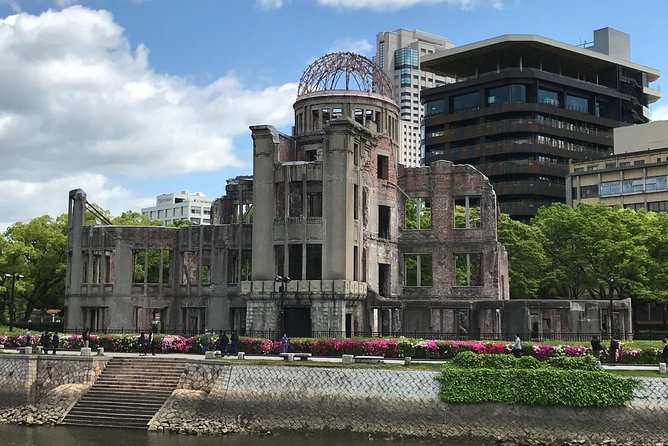
The Atomic Bomb Dome is the next major stop, with about 10 minutes for photographs and quiet thought. The building’s damaged structure is one of Hiroshima’s most recognizable sights, but a photograph alone cannot explain its meaning.
Your guide provides the context. You will hear about the bombing, the destruction around the dome, and the way the site became a symbol of remembrance. The stop is brief, so I would not expect a full museum-style explanation here. Instead, it connects the park’s memorials with a single, powerful building.
The subject can become politically sensitive, depending on the questions asked and the guide’s style. One piece of feedback described moments when the discussion felt political from an American point of view. That is worth keeping in mind. The tour aims to provide a broad account of Hiroshima’s past, but discussions of war and responsibility rarely feel neutral to everyone.
For most people, this is the emotional center of the morning. You should give yourself some breathing room afterward, especially if you plan to visit the Peace Memorial Museum later.
Same roads, a different saddle:
- Tokyo Great Cycling Tour
★ 5.0 · 811 reviews - Tokyo Top Highlights 3h Guided E-bike Tour
★ 5.0 · 714 reviews - 3h Tokyo E-Bike Tour: Hidden Gems, and Local Life with guide
★ 5.0 · 670 reviews - Arashiyama Bamboo Forest & Hidden Gems Bike Tour (Early Bird)
★ 5.0 · 613 reviews
Hiroshima Castle beyond the usual war story
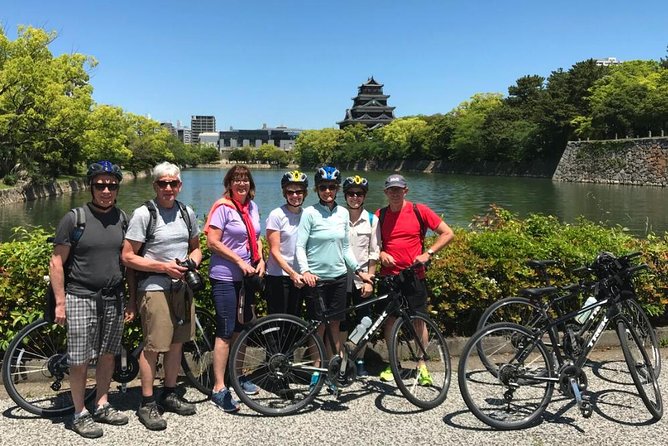
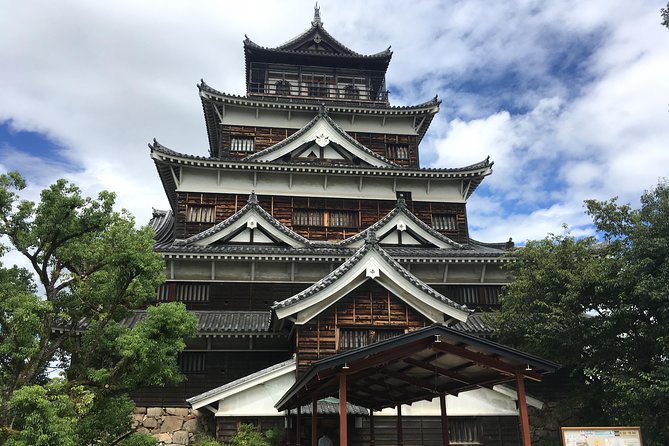
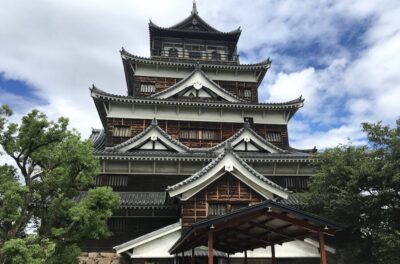
From the peace sites, the route shifts to Hiroshima Castle. The visit lasts about 25 minutes and gives the morning a useful change of pace. You ride through landscaped gardens, get close to the castle grounds, and hear about the castle’s role in the city’s older history.
This stop is valuable because Hiroshima is more than the events of 1945. The castle helps place the city in a longer Japanese story, before the modern war and atomic bombing. The guide can show you how the city’s identity includes military, political, architectural, and everyday elements.
The time here is enough for photos and an introduction. It is not a full castle tour. If you want to enter the keep or spend longer with exhibits, you may need to return separately. The point of this bike stop is to show you the setting and explain why it matters.
I particularly like the contrast. After the quiet intensity of the Peace Memorial Park and Atomic Bomb Dome, the castle offers greenery and a different chapter of Hiroshima’s past. The route feels more balanced because it does not keep you in one historical frame all morning.
Shukkei-en Garden and the art of small spaces
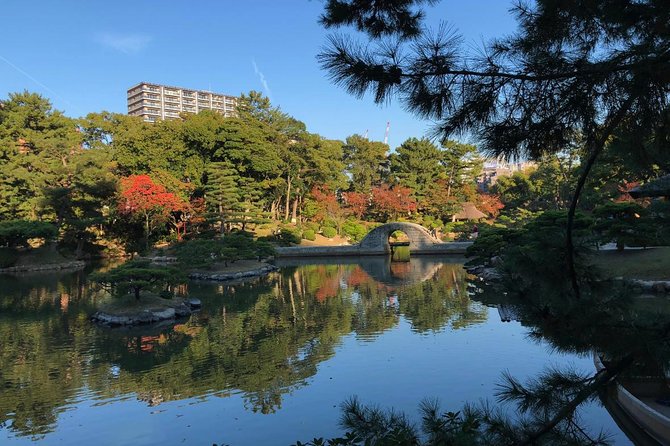
The final listed stop is Shukkei-en Garden, with about 25 minutes inside. Admission is included, which is a useful touch because you do not need to handle another ticket or decide if the garden fits your budget.
Shukkei-en is known for carefully arranged scenery, ponds, bridges, and greenery. The guide explains how Japanese gardens use balance, scale, and movement to create a sense of space. This is a short visit, but it gives you a chance to slow down after the city riding.
The garden also provides another view of Hiroshima’s past. Its calm paths and planted spaces may feel far removed from the modern streets, yet they form part of the same city story. I find this kind of stop especially helpful for first-time visitors who want more than monuments and war history.
Again, 25 minutes is an introduction rather than a complete garden visit. You may leave wishing for more time, which is not a bad result. Note the details that interest you, then return later if your schedule allows.
The guides make the difference
The route is fixed enough to give you a clear morning, but the guide shapes the experience. Names connected with this tour include Awais, James, Melissa, Yuki, Amy, Levi, and Ihsan. Their strengths vary, but the best guides combine traffic awareness, clear explanations, humor, and care for the group.
Awais is praised for answering questions, taking photographs, and sharing local and Japanese history in detail. James is described as careful with safety and hand signals, while Melissa is known for an energetic and friendly approach. Levi begins with a history lesson, and Amy includes an origami crane activity connected with the Children’s Peace Monument.
Do not expect the exact same style every day. One guide may focus more on prewar Hiroshima, another on the atomic bombing, and another on Japanese traditions. That variety is normal for a small guided operation. What remains consistent is the structure: ride, stop, listen, ask questions, and continue.
The strongest practical benefit is the chance to ask about things you might otherwise miss. Guides can point out side streets, canals, and local details that do not appear in a standard sightseeing list. This is where the bicycle format earns its place.
How demanding is the ride?
For a regular cyclist, the physical effort should be moderate. The city is mostly flat, and the pace is described as steady rather than rushed. You will not pedal continuously for four hours because the tour includes several stops and short explanations.
Still, you need to feel comfortable riding in a city. The tour is not possible for anyone under 140 cm tall, and it is not recommended for children aged 12 and under. A 12-year-old did manage the regular bike on a hot day, but that should not be treated as a guarantee for every child.
Heat can change the experience. Bottled water is provided, but you should dress for the weather and consider the e-bike if you are out of practice. Rain can also change the plan. In poor weather, the operator may cancel and offer another date or a full refund.
On one rainy outing, the group walked instead of cycling and still followed the sightseeing and history portion of the experience. That option may depend on the conditions and the guide, so do not book this expecting a guaranteed walking tour.
Is the $72.96 price fair?
At $72.96 per person, the tour is not the cheapest way to move around Hiroshima. You could visit many of these places independently using public transport and your own walking route. The price makes more sense if you value a guide, bicycle access, historical explanation, and a tidy route that fits into one morning.
The admission fee for Shukkei-en is included, along with the bike, helmet, bottled water, and English-speaking guide. You also avoid the work of planning how to connect four separate sights. For a first visit, that convenience has real value.
The small group helps justify the cost. With no more than eight people, the guide can adjust bicycle fittings, check the pace, and answer questions. You are paying for an organized experience, not just a rental bicycle.
An e-bike costs an additional 2,000 yen, according to tour information shared by riders. If you need one, arrange it early because only a limited number may be available. The standard bike is fine for many people, but the upgrade could be worthwhile if you are not confident on hills, in heat, or after a long day of sightseeing.
Who should book this ride?
I would choose this tour if I had one or two days in Hiroshima and wanted a strong introduction before deciding where to spend more time. It also suits people arriving by cruise ship, since the morning schedule and return to the starting point can fit a short port visit, provided your ship schedule allows enough time.
It is a good match for adults, active older children who meet the height and age guidance, solo visitors who want company, and families who prefer moving around rather than spending the whole morning indoors. History lovers will appreciate the explanations, while casual sightseers will like the efficient route.
I would hesitate if you dislike bicycles, feel uneasy in city traffic, need long periods at each monument, or want a purely lighthearted morning. Hiroshima’s history is central here, and the tour treats it seriously. You should also leave extra time afterward if you plan to visit a museum or catch a train.
Book at least 24 hours ahead if you may need to cancel, since changes or cancellations inside that window are not refundable. The experience also needs a minimum number of participants, and poor weather can lead to a new date or full refund.
My advice on booking
Book this Hiroshima bike tour if you want to cover the city’s main historical sights quickly, hear the background from a guide, and enjoy some fresh air between serious stops. The combination of Peace Memorial Park, the Atomic Bomb Dome, Hiroshima Castle, and Shukkei-en gives you a much fuller picture than a short walk around the memorial area.
Choose a different plan if you want a slow, museum-heavy day or if cycling is not comfortable for you. For most first-time visitors who can ride a bicycle and have limited time, this is a practical and thoughtful way to get oriented. The 98 percent recommendation and 4.9 rating from 524 reviews point to a consistently strong experience, especially for the guides, safety, historical detail, and easy pace.
FAQ
How long does the Hiroshima bike tour last?
The experience lasts approximately three to four hours. Some tours may run longer if the guide spends extra time answering questions or explaining the sights.
What time does the tour begin?
The tour starts at 10:00 am.
Where does the tour start and finish?
It starts at Cycle Hiroshima, 4-chōme-5-4 Ōtemachi, Naka Ward, Hiroshima, 730-0051, Japan. The activity ends back at the same meeting point.
Are bicycles and helmets included?
Yes. Bike rental, a helmet, and bottled water are included in the price.
Is Shukkei-en Garden admission included?
Yes. Admission to Shukkei-en Garden is included.
Can children join the tour?
The tour is not recommended for children aged 12 and under. Riders must be at least 140 cm tall.
What happens if the weather is bad?
The experience is subject to weather conditions. If it is canceled because of poor weather, you will be offered an alternative date or a full refund. Free cancellation is available up to 24 hours before the start time.
Newest rides we have reviewed in Japan
- Best of Kyoto: Ginkakuji & Path of Philosophy E-Bike Tour★ 4.9 · 79 reviews
- Kyoto: Tailored E-Bike Tour to Highlights & Hidden Gems★ 4.9 · 32 reviews
- Kyoto: Full Day Bike Tour★ 4.9 · 39 reviews
- Kyoto: Half-day Guided Bike Tour with Fushimi Inari★ 4.9 · 21 reviews
- Kyoto: Early Bird E-Bike Tour with Lunch★ 5.0 · 14 reviews
- Kyoto: Full-Day City Highlights Bike Tour with Light Lunch★ 5.0 · 52 reviews
- Kanazawa Half Day E-bike Tour★ 5.0 · 81 reviews
- Hiroshima: Best of Hiroshima Guided Bike Tour★ 4.9 · 89 reviews
Hiroshima Cycling Tours, compared.
Hiroshima 2hr Peace Cycling Tour with Local Guide
Read our review →
Other lists this ride turns up in