REVIEW · HIDDEN GEMS BIKE TOURS IN TOKYO
3h Tokyo E-Bike Tour: Hidden Gems, and Local Life with guide
Tokyo is too large to understand from train platforms alone. This three-hour e-bike tour gives you street-level views of Kanda, grand government buildings, food markets, temples, shopping streets, and ordinary neighborhoods without asking you to pedal every hill and avenue yourself.
I like the way the tour combines major sights with small backstreets, and I like the practical help from guides such as Yo, Ted, Jenny, Kazu, Take, and Yoshiko. The main catch is simple: you must already know how to ride a bicycle and feel comfortable sharing busy city streets.
- Morning and afternoon routes differ: Choose Imperial Palace and Tsukiji in the morning, or Akihabara, Asakusa, and Ryogoku in the afternoon.
- Small groups help: Bookings are limited to six people, so the guide can keep an eye on the group.
- Electric assistance saves your legs: You cover more ground without arriving worn out.
- The ride starts near Kanda Station: The shop is about a one-minute walk from the JR Kanda West Exit.
- Practical extras are included: Helmet, insurance, simple rain gear, luggage storage, and seasonal gloves or cooling items.
- Weather matters: Rain can cancel the ride, and extreme summer heat can also lead to a cancellation or early return.
Why an E-Bike Works So Well in Huge Tokyo
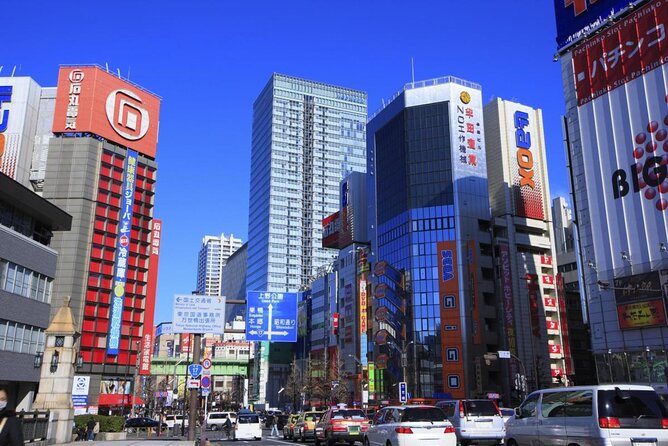
Tokyo is easy to explore by rail, but the train can hide the connections between neighborhoods. On a bicycle, you see the shift from office towers to tiny bars, from polished Ginza streets to local lanes, and from historic gates to modern shopping districts.
The electric-assist bikes make this possible for a wide range of reasonably fit riders. You still pedal, but the motor helps you maintain a comfortable pace. That matters in July and August, when heat and humidity can turn an ordinary ride into hard work. It also lets the group cover much more ground than a walking tour.
I would not treat this as a quiet countryside cycle. Tokyo traffic, pedestrians, crossings, and narrow streets are part of the experience. You need to pay attention, follow the guide, and keep up. One useful point from the tour feedback is that riders can fall behind if they stop watching the group, especially on backstreets or at intersections.
The reward is a better sense of Tokyo as a connected city. You are not simply ticking off monuments. You are moving through the spaces between them.
Starting in Kanda, Where Office Workers Meet Tiny Bars
The meeting point is Cycling Holiday Tokyo at 3-chome-8-6 Uchikanda, near JR Kanda Station. The shop provides a waiting area, restroom, luggage storage, helmets, and the bikes. You can leave luggage during the ride, but valuables should stay with you.
Kanda makes a fitting starting point. It is a compact downtown district known for small Japanese-style bars and weekday office life. The area offers an early glimpse of the less polished, more local side of central Tokyo.
The tour generally begins with a safety check and instructions for using the e-bike. The minimum age is 12, and the minimum height is 147 centimeters. If you cannot ride a standard bicycle, this is not the place to learn from scratch.
More E-Bike Tours in Japan
- Hidden Kyoto E-Biking tour
★ 5.0 · 1,843 reviews - Tokyo Top Highlights 3h Guided E-bike Tour
★ 5.0 · 714 reviews - 5 Top Highlights of Kyoto Full Day Bike Tour (E-bike option)
★ 5.0 · 511 reviews
The Morning Route, Imperial Views and the Tsukiji Market
The morning route is the better choice if you want Tokyo’s formal center and a look at the city’s food culture. The exact streets can change with traffic, road conditions, the season, and the number of pedestrians, but the route typically links several strong sights.
You first pass through Tokyo’s financial center, where modern buildings provide a sharp contrast with older neighborhoods. The route then reaches Tokyo Station’s Marunouchi side.
Tokyo Station and Marunouchi
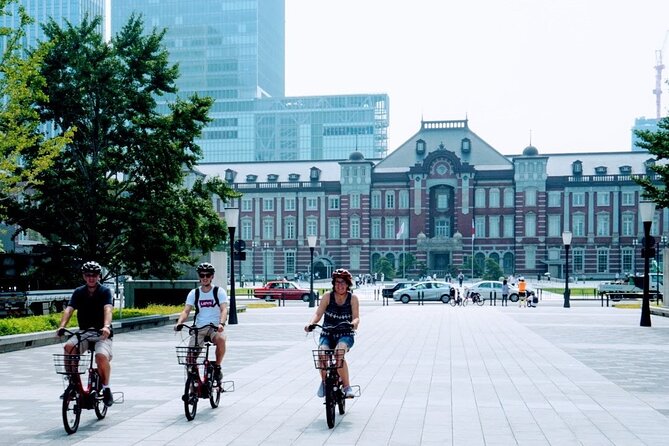
At Tokyo Station Marunouchi Ekimae Hiroba, you stop for a view of the red-brick Marunouchi station building. From Gyoko-dori Street, the guide explains the station’s history and points out the relationship between the grand building and the surrounding business district.
This is a short stop, listed at about five minutes, so think of it as an orientation and photo pause rather than an extended visit. The advantage is that you see the station as part of Tokyo’s civic center instead of rushing through it underground.
Otemon Gate and the Imperial Palace Moat
The route continues to Kokyo Otemon Gate. From here, you look across the moat toward the Fujimi-yagura tower, one of the Imperial Palace’s notable remaining structures.
The area gives you a sense of old castle Tokyo within the modern capital. The guide can explain the gates, moat, and palace setting, while you get a welcome break from active riding. The stop itself is brief, so plan a separate palace visit if you want a longer look at the grounds.
More E-Bike Tours in Tokyo
- Tokyo: 3-Hour Bike or E-Bike City Highlights Tour
★ 4.8 · 435 reviews - Tokyo: 3-hour Guided E-Bike Tour of the City’s Hidden Gems
★ 4.8 · 251 reviews - 3-Hour Tokyo Private E-Bike Tour Starting from Your Hotel
★ 5.0 · 117 reviews - Tokyo: 3-Hour Bike or E-Bike Tour of City’s Hidden Gems
★ 4.7 · 81 reviews
The Imperial Palace Gardens and Sakuradamon
Near the palace, the ride passes through a large park area of about 200,000 square meters. In season, flowers add color, but the open space is also valuable simply because it feels surprisingly spacious in central Tokyo.
Sakuradamon provides another look at traditional castle gates. Cycling through this area is one of the morning route’s strongest features because you move from financial towers to moats, gates, and broad green space within a short ride.
Ginza Backstreets and Tsukiji Outer Market
The route may pass through Ginza’s main streets or quieter side lanes, depending on conditions. The contrast is useful. The main avenues show Tokyo’s luxury retail face, while the backstreets reveal a more local rhythm.
At Tsukiji Jogai Market, you have a short stop among small, old-fashioned food shops. This is the outer market, not the former wholesale fish-market auction area. You may browse shops and see food being sold in a compact street setting, but the tour does not include food or drinks. Any purchase is your responsibility.
The guide may also lead you through local streets that are easier to reach by bicycle than by train. These connecting lanes are often where the tour feels most personal. You see residential corners, small businesses, and everyday Tokyo rather than only famous photo points.
The Afternoon Route, Anime Culture, Kitchen Tools, and Sumo
The afternoon route offers a different slice of Tokyo. It is especially appealing if you want Asakusa and older downtown districts, with stops in Akihabara, Kappabashi, Ryogoku, and Nihonbashi.
You do not get every morning stop on this version. That is an important booking detail. Choose the time based on the sights you care about most, not simply on your schedule.
Akihabara and Tokyo’s Subculture
Akihabara is the city’s best-known district for youth culture, electronics, games, and anime-related subculture. The tour gives you a quick introduction to the area and its maid-cafe association, but this is not a shopping expedition or a long specialist visit.
The value is seeing how sharply Akihabara differs from nearby office districts. Your guide can provide context beyond the obvious signs and shop fronts. If you want to browse stores at length, save that for after the tour.
Kappabashi Tool Street
Kappabashi Dogugai is a useful and unusual stop. Shops here sell kitchen utensils, professional cooking tools, Japanese knives, and restaurant supplies.
The tour allows some time to look around and shop. Since the stop is short, serious shoppers should not expect to inspect every store. Still, it is a practical place to buy a cooking item or souvenir that feels more connected to daily life than a standard tourist trinket.
Asakusa and Senso-ji Area
Asakusa is the afternoon route’s major landmark. It is home to Tokyo’s oldest famous temple area and one of the city’s most recognizable traditional settings.
The stop is brief, around ten minutes, so you will not have time for a full temple visit or a relaxed walk through every shopping lane. What you do get is an introduction to the district, a chance to take photos, and guidance on temple customs and rituals. That cultural explanation is useful for the rest of your Japan trip, especially if you plan to visit more temples and shrines.
Because Asakusa can be crowded, stay close to the guide and be ready to move the bike carefully. The route and stopping point may change to keep the group safe.
Ryogoku and the Sumo Connection
Ryogoku is Tokyo’s sumo district. The ride passes through the area around the sumo arena, and if timing is lucky, you might see actual sumo wrestlers.
That possibility is part of the fun, but it should not be treated as a guaranteed encounter. The district itself is worthwhile because it adds a sport and neighborhood identity that you would not get from a standard palace and temple tour.
Nihonbashi Bridge
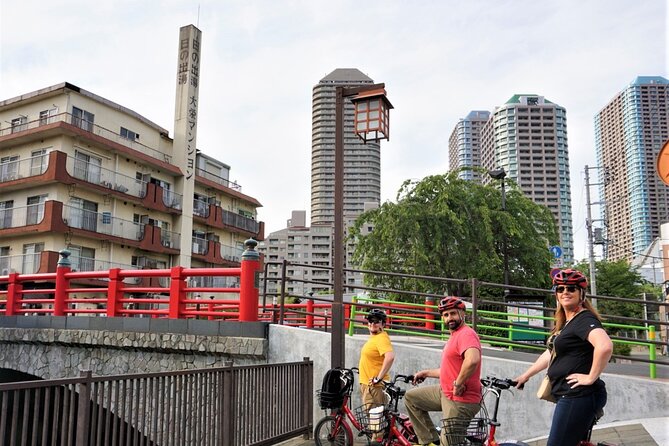
Both the morning and afternoon routes include Nihonbashi Bridge. Historically, it served as a central point for road-distance measurements in Japan, and it remains an important marker in the city.
The bridge gives the tour a useful closing idea: Tokyo is not a collection of unrelated sights. Its roads, districts, markets, commercial centers, and historic routes have long connected one another.
What the Guides Add to the Ride
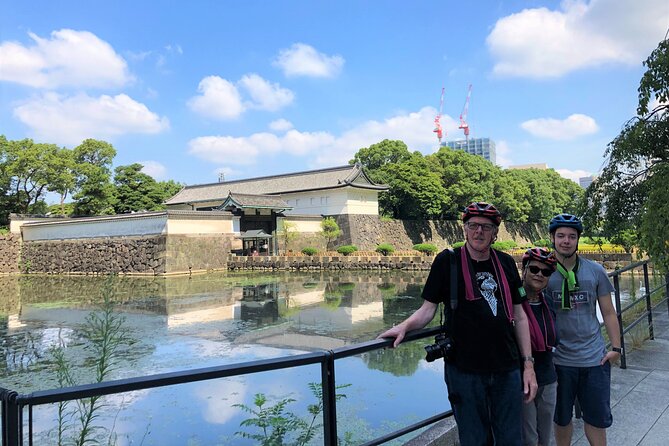
The guide is a major part of the experience. English-speaking guides named in the tour material include Yo, Ted, Jenny, Kazu, Take, Yoshiko, Ninja, and Yoppi. Your guide will depend on the date and availability.
The strongest guide qualities are friendliness, patience, safety awareness, and the ability to explain history without turning the ride into a lecture. Ted has been praised for answering questions and keeping the group comfortable. Jenny is known for showing local eating areas and quieter streets. Guides such as Yo, Take, and Kazu bring a relaxed tone while explaining neighborhoods and cultural details.
The small-group format helps here. With a maximum of six people per booking, the guide can stop for questions, photos, and route adjustments more easily than on a large coach tour. The tour requires at least two participants to operate, but a solo customer can still join if other people are booked.
The guide also controls the pace. You ride at a group pace, not entirely at your own speed. That is helpful for navigation and safety, but riders who want to stop constantly or explore independently may find the format restrictive.
Price, Equipment, and Real-World Value
At $63.01 per person, the tour is not the cheapest way to see Tokyo. You can visit many of these districts by train for less money. The price makes more sense when you count the bike, helmet, guide, insurance, luggage storage, and three hours of city coverage.
You are also paying to avoid the planning burden. The guide chooses practical streets, keeps the group together, and handles navigation while you concentrate on the city around you. For a first day in Tokyo, that orientation can be especially useful. Several riders have used the tour early in their visit, then returned later to places they spotted from the bike.
The electric assistance is a real part of the value. In hot weather, it helps you cover ground without exhausting yourself. Each bike also has a front basket, useful for water and a small bag.
Food is not included. Bring or buy your own water, and budget separately for anything you want at Tsukiji or Kappabashi. In summer, take sunscreen, a towel, and ideally an electrolyte drink. In winter, wear warm clothing and bring gloves, though simple winter gloves are supplied.
Simple rain gear is included, but that does not make the tour a guaranteed wet-weather activity. The company checks the forecast the day before. Rain may cancel the tour, and if dangerous heat develops during July or August, the guide may stop and return to the shop. Safety comes first, and a full refund is offered if the operator cancels for weather.
Who Should Book This Tokyo Bike Tour
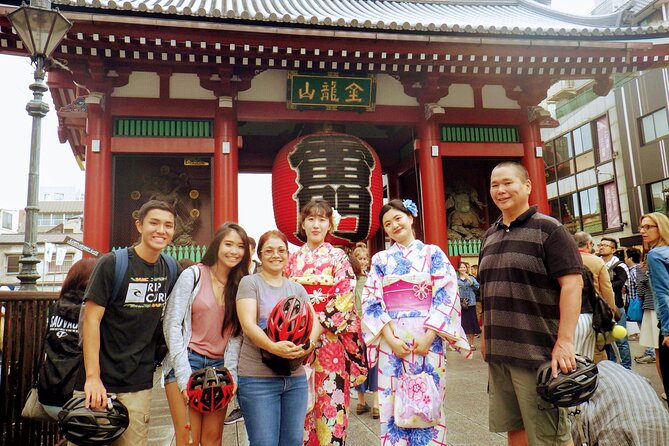
I would recommend it to first-time Tokyo visitors who want orientation, families with children aged 12 or older, and repeat visitors who want to see ordinary streets between the famous districts. It also suits people who like active sightseeing but do not want a strenuous full-day cycle.
The tour is a good fit for riders who can manage traffic, crossings, and a three-hour outing. You should be reasonably comfortable on a bicycle and able to follow a guide through central Tokyo. It is not suitable for anyone who cannot ride, and it may not suit people who dislike city traffic or need a completely relaxed pace.
Families should note that the tour has worked well for teenagers, including groups with 12-, 14-, and 15-year-olds. The guide’s safety focus and regular stops help, but parents should still judge their children’s cycling ability honestly.
The cancellation policy is friendly if your plans change: cancel at least 24 hours before the start for a full refund. Changes or cancellations inside that window are not accepted, except when the operator cancels because of weather or minimum group size.
Final Call: Is This Three-Hour Ride Worth It?
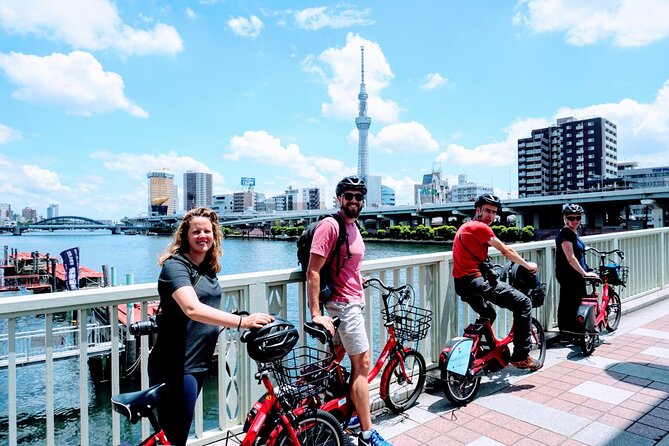
Book this tour if you want to understand Tokyo through movement, local streets, and a mix of major sights. The morning route is best for Tokyo Station, the Imperial Palace, Ginza, and Tsukiji. The afternoon route is better for Akihabara, Kappabashi, Asakusa, and Ryogoku.
I especially like it as an early-Tokyo activity. You get useful neighborhood bearings, learn basic cultural details, and identify places to revisit on foot or by train. The only serious warning is the riding itself: busy streets and summer heat are not minor details.
For a modest half-day price, the tour gives you a friendly guide, efficient transport, and a much broader view of Tokyo than walking alone. If you can ride confidently and accept the weather risk, it is a strong choice.
FAQ
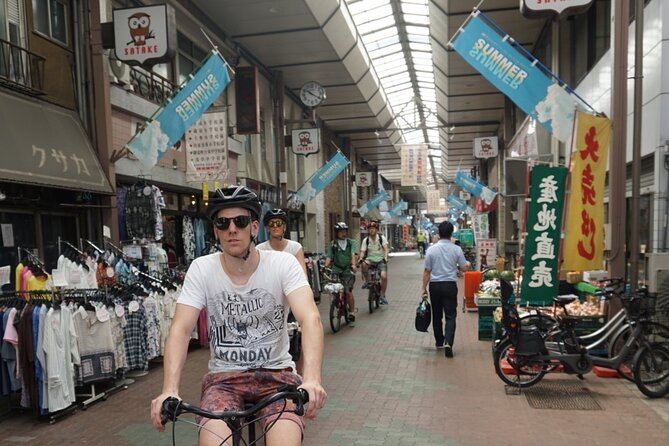
How long is the Tokyo e-bike tour?
The tour lasts approximately three hours and ends back at the Cycling Holiday Tokyo meeting point.
Where does the tour start?
It starts at Cycling Holiday Tokyo, 3-chome-8-6 Uchikanda, Chiyoda City, Tokyo. The shop is about a one-minute walk from the west exit of JR Kanda Station.
Are morning and afternoon routes the same?
No. The morning route generally includes Tokyo Station, the Imperial Palace area, Ginza, Tsukiji, and local streets. The afternoon route generally includes Akihabara, Kappabashi, Asakusa, Ryogoku, and Nihonbashi.
What is included in the price?
The price includes an electric-assist bicycle, helmet, English-speaking guide, insurance, simple rain gear, and luggage storage for nonvaluable items. Simple gloves are available in winter, and cooling products are available in summer.
Are food and drinks included?
No. Food and drinks are self-pay at the shop or along the route.
How many people can join?
The maximum is six travelers per booking. The tour operates with a minimum of two participants, though a solo customer may join if other people are booked.
What is the minimum age?
The minimum age is 12 years.
Is there a minimum height?
Yes. Riders must be at least 147 centimeters tall.
Do I need to know how to ride a bicycle?
Yes. Anyone who cannot ride a bicycle cannot join the tour. You should also feel comfortable riding on busy city streets.
What happens if it rains?
The tour may be canceled in poor weather. The company checks the forecast the day before and offers another date or a full refund if it cancels. If rain begins during the ride, the guide decides whether to continue or return.
Can I cancel for a full refund?
Yes. You can cancel at least 24 hours before the local start time for a full refund. Cancellations or changes made less than 24 hours before the start are not accepted.
More Three-Hour Experiences in Japan
- 3-Hour Porto Highlights on a Electric Bike Guided Tour
★ 5.0 · 4,392 reviews - 3-hour Complete Prague Bike Tour
★ 5.0 · 3,674 reviews - Porto: City Highlights 3-Hour Guided Electric Bike Tour
★ 4.8 · 3,092 reviews - Copenhagen: Highlights 3 Hour Bike Tour with a Local Guide
★ 4.8 · 2,312 reviews
More Hidden Gems Bike Tours in Japan
- Arashiyama Bamboo Forest & Hidden Gems Bike Tour (Early Bird)
★ 5.0 · 613 reviews - Kyoto: City Secrets eBike Tour
★ 4.9 · 196 reviews - Kyoto: Hidden Gems E-Bike Tour with Local Japanese Guide
★ 4.9 · 189 reviews - 5-Hour Tokyo & Edo Hidden Gem Bike Tour with Lunch
★ 5.0 · 113 reviews
Newest rides we have reviewed in Japan
- Kyoto: Tailored E-Bike Tour to Highlights & Hidden Gems★ 4.9 · 32 reviews
- Best of Kyoto: Ginkakuji & Path of Philosophy E-Bike Tour★ 4.9 · 79 reviews
- Kyoto: Full Day Bike Tour★ 4.9 · 39 reviews
- Kyoto: Half-day Guided Bike Tour with Fushimi Inari★ 4.9 · 21 reviews
- Kyoto: Early Bird E-Bike Tour with Lunch★ 5.0 · 14 reviews
- Kyoto: Full-Day City Highlights Bike Tour with Light Lunch★ 5.0 · 52 reviews
- Kanazawa Half Day E-bike Tour★ 5.0 · 81 reviews
- Hiroshima: Best of Hiroshima Guided Bike Tour★ 4.9 · 89 reviews
Hidden Gems Bike Tours, compared.
Small Group Guided Bike Tour of Amsterdam’s Hidden Gems
Read our review →

Top Highlights & Hidden Gems Tour by Cannondale E-Bike
Read our review →
Barcelona 3-hour Bike or E-Bike Tour: Highlights and Hidden Gems
Read our review →