
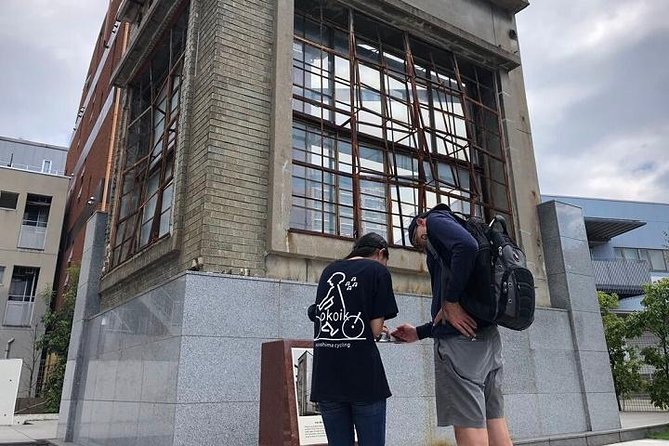
REVIEW · HIROSHIMA
Hiroshima 2hr Peace Cycling Tour with Local Guide
Hiroshima’s Peace Memorial Park is easy to visit on foot, but a bicycle lets you connect its memorials with the living city around them. This two-hour ride combines the A-Bomb Dome, Cenotaph, Children’s Peace Monument, and Peace Bell with quieter streets and city views that many first-time visitors miss.
I especially like the electric bicycles, which make the flat route manageable even if you are not a regular cyclist. I also like the chance to hear Hiroshima’s story from local guides such as Shin and Kana, who explain the bombing, recovery, and family memories with care. The main drawback is the short schedule: two hours gives you a strong introduction, but not much time for the museum or a long conversation at every stop.
Key points to know before you ride
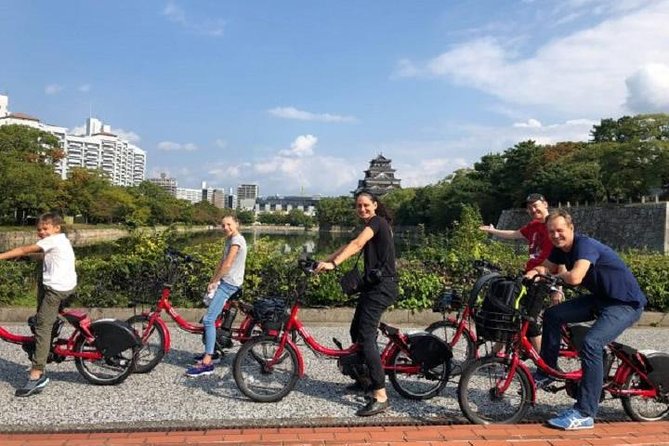
- Local voices: Guides including Shin, Kana, Bella, and Tomas bring personal stories and clear historical context.
- Easy electric bikes: The route is flat, and the bikes require little effort.
- Beyond the main park: You ride through present-day Hiroshima and see the city’s rebuilt neighborhoods.
- Small shared group: Numbers are limited to 10, though the pace may slow for children or less confident cyclists.
- Rain backup: Poor weather can bring a walking route, a rainy-day peace route, or a refund.
- Short but focused: The tour covers wartime memory and postwar recovery, while the three-hour option adds Hiroshima Castle and more background.
Starting at the Peace Park Rest House
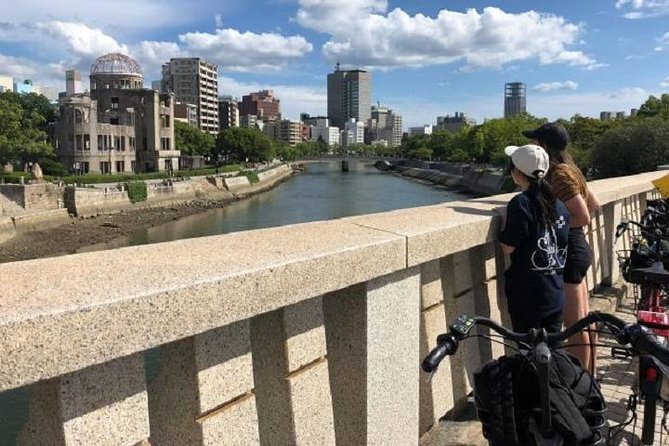
The meeting point is the Hiroshima Peace Memorial Park Rest House, at Nakajimacho 1, a practical location inside the park. Tours begin at 11:00 or 15:00 and return to the same place around two hours later, at 13:00 or 17:00.
Arrive early. The operator treats lateness seriously, and missing the start without advance notice can mean cancellation with no refund. There is no luggage storage at the Rest House, so use coin lockers at the International Conference Center Hiroshima or the Peace Memorial Museum, about a six-minute walk away.
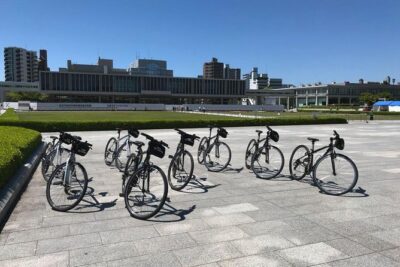
After a short introduction, you receive your bicycle and safety guidance. Adult electric bicycles are available for people at least 145 centimeters tall. Children from 110 to 145 centimeters can use one of the two children’s bicycles available for each booking, subject to the stated arrangements. Child seats are available for children under 22 kilograms and under 115 centimeters.
The ride is not a race. Hiroshima is relatively flat, and the electric assistance does the hard work. If your group includes young children or someone unused to cycling, the guide may adjust the pace. That is sensible, though confident riders may occasionally wish for a little more speed.
More Guided Rides in Japan:
- Tokyo Guided Small-Group Biking Tour
★ 5.0 · 1,250 reviews - Tokyo Top Highlights 3h Guided E-bike Tour
★ 5.0 · 714 reviews - 3h Tokyo E-Bike Tour: Hidden Gems, and Local Life with guide
★ 5.0 · 670 reviews
Reading the Peace Memorial Park by bicycle
The first major part of the tour is a guided ride through the Peace Memorial Park. This is not simply a stop for photographs. The guide explains what the monuments mean and how the atomic bombing changed the lives of people who lived in Hiroshima.
You can expect to see the Cenotaph for the A-Bomb Victims, the Children’s Peace Monument, the Peace Bell, and the Atomic Bomb Dome. Each site carries a different role in the park’s message. The Cenotaph remembers those who died. The Children’s Peace Monument is closely tied to the memory of young victims. The Peace Bell expresses the hope that nuclear weapons will not be used again.
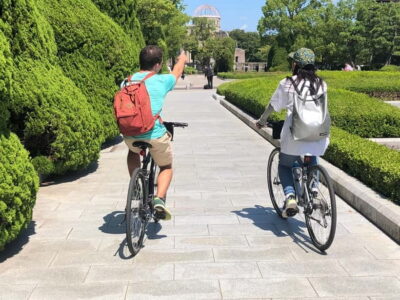
Moving by bicycle helps you understand how these places relate to one another. On foot, you may focus on one monument at a time. From a bike, you also notice the paths, river edges, open spaces, and the city beyond the memorial grounds. The park becomes part of modern Hiroshima rather than an isolated memorial zone.
The guide’s explanations are the heart of this section. Shin has been especially effective for visitors looking for a personal connection, sharing family memories tied to the bombing. Other guides, including Kana and Bella, have been praised for clear English, warm conversation, and detailed explanations at each site.
Do not expect the same experience from every guide. The tour is built around local leadership, but individual backgrounds differ. One guide may share direct family testimony, while another may focus more on monuments, city history, and the rebuilding of Hiroshima. That variety is worth keeping in mind if a personal survivor connection is important to you.
The park portion lasts roughly 55 minutes. It is enough time to understand the central memorials, but it is not a substitute for the Hiroshima Peace Memorial Museum. If you want museum displays, artifacts, and a longer account of the bombing, plan a separate visit before or after the ride.
Seeing the A-Bomb Dome from outside the usual path
The Atomic Bomb Dome is Hiroshima’s best-known image, and you will see it during the tour. The useful difference here is that the guide takes you to city viewpoints beyond the standard photo stop.
That matters because the Dome can become a quick checklist item. You photograph the ruined structure, read a sign, and move on. From different streets and river areas, you get a clearer sense of its position within the city and its distance from other important sites.
The guide also explains what happened in the area and how the Dome became a lasting symbol. Expect the tone to be serious. This is a history tour about mass death, loss, and recovery, not a casual city ride with a few memorials added on.
At the same time, the bicycle makes the experience less confined to the park. You are not asked to spend the full two hours standing in silence. You ride between locations, ask questions, and see Hiroshima as a functioning city. That contrast is one of the tour’s strongest features.
Riding into present-day Hiroshima
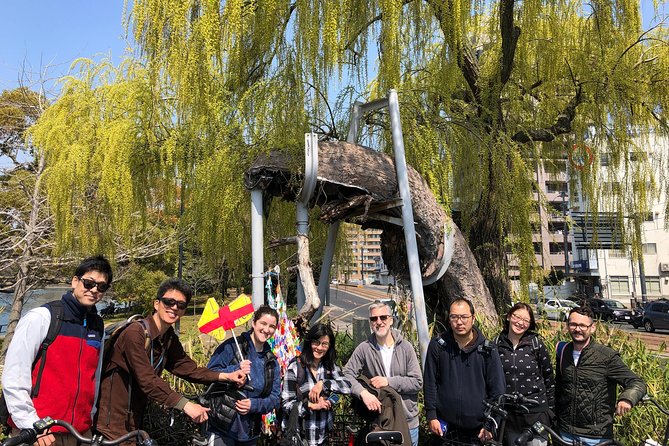
After the central memorials, the route moves beyond the Peace Park. This is where the tour earns its price for many people. You see the rebuilt city rather than only the places preserved as evidence of destruction.
The itinerary includes the story of Hiroshima’s A-Bombed Streetcars, trains that survived the bombing and continue to operate today. The guide can point out the actual streetcars and explain how they fit into the city’s recovery. This connects a historic event with something you can still see in ordinary daily life.
You also ride through suburban or downtown areas, depending on the route used that day. The exact timetable can change with conditions, so the city portion is not a rigid sightseeing circuit. Think of it as a guided look at Hiroshima’s present, shaped by what the guide can safely and sensibly show you.
The cycling itself is gentle. Reviews describe the electric bikes as easy to operate, and the flat streets make the route accessible to people who are not keen cyclists. One 64-year-old participant found the riding manageable with help from the group. That said, you still need to feel comfortable steering, stopping, and riding in a shared urban setting.
The city is not described as heavily congested like Tokyo or Osaka, but streets and sidewalks still require attention. If you are nervous on a bicycle, tell the guide at the start. The pace can be adjusted, though a mixed group may mean you spend less time at certain stops.
More Cycling Trips in Japan:
- Hidden Kyoto E-Biking tour
★ 5.0 · 1,843 reviews - Bike Tour Exploring North Kyoto plus Lunch
★ 5.0 · 1,087 reviews - Tokyo Great Cycling Tour
★ 5.0 · 811 reviews - Arashiyama Bamboo Forest & Hidden Gems Bike Tour (Early Bird)
★ 5.0 · 613 reviews
What guides such as Shin and Kana add
The guide can make or break a history tour, and this experience has several strong names attached to it. Shin is repeatedly singled out for personal family accounts, including stories connected to relatives who experienced the bombing. He also brings an upbeat, friendly manner that helps the tour move between painful history and Hiroshima’s message of peace.
Kana is praised for her English, organization, and ability to answer questions. Her style appears to suit families and first-time visitors who want clear explanations without a heavy academic lecture. Bella has also been noted for taking people to places outside the main memorial area and explaining details you might otherwise miss.
Tomas has been remembered for combining historical information with personal warmth and useful Japan travel suggestions. Another guide, Moet, has been described as sharing both stories of suffering and stories of survival and resilience.
The guide’s role is not just to recite dates. You can ask about the monuments, the city’s reconstruction, the streetcars, or how Hiroshima presents its peace message today. If you prefer a quiet, self-guided visit, this may feel like too much structure. If you want context while looking at the sites, it is a strong reason to book.
Price, timing, and what the two hours really deliver
At $59.69 per person, this is not the cheapest way to see Peace Memorial Park. You can walk through much of the park for free, and the museum is a separate expense if you choose to visit it.
The value comes from four things: an electric bicycle, a local guide, a small group capped at 10, and access to parts of Hiroshima beyond the main park. A taxi or private guide would likely offer more flexibility, while a self-guided walk would cost less. This tour sits in the middle, giving you more coverage and explanation without the cost of a private vehicle.
Two hours is a good length for a first orientation. You can see the major monuments, hear the basic story, and ride through the modern city without giving up the entire day. The limitation is equally clear: you will not have time for a full museum visit, extended reflection at every memorial, or a long exploration of Hiroshima Castle.
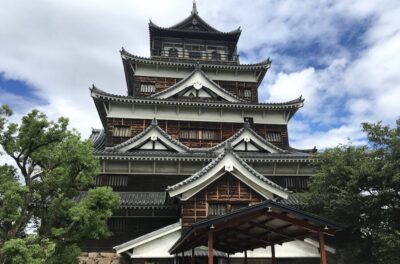
The three-hour option adds Hiroshima Castle and more detail about the city before the war and during its recovery. Choose the longer route if Hiroshima is a major focus of your trip and you want time to ask questions. Choose this two-hour version if you have a packed schedule or want an active introduction before exploring alone.
Rain plans and seasonal comfort
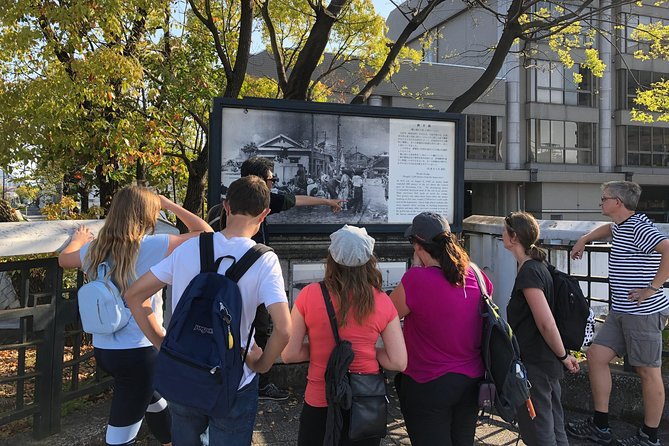
The tour requires suitable weather for cycling. If rain makes the ride unsafe, you may be offered a rainy-day walking route or a refund. The walking route visits the Peace Memorial Park, Atomic Bomb Dome, hypocenter, Former Bank of Japan, Fukuromachi Elementary School, and a main street before returning to the Rest House.
That alternative is not a token substitute. It focuses directly on the bombing’s physical impact, including the hypocenter, where the city was reduced to scorched ground almost instantly. The operator describes the walking route as covering an area of roughly 0.5 to 1 kilometer around the site.
Some tours have gone ahead as walking experiences during heavy rain, with the guide adjusting the plan for safety. If you strongly want to cycle, select a refund instead of the rainy-day route when offered. If your main aim is the history, the walking option can still be worthwhile.
Winter conditions also matter. Cold wind and even snowfall have been part of some rides. The electric motor helps with effort, but it does not keep you warm. Dress for the forecast, and remember that Hiroshima’s weather can affect both the route and your comfort.
Who should book this Hiroshima cycling tour?
I would recommend it to first-time visitors who want a clear introduction to Hiroshima in a short block of time. It is also a good choice if you have already seen the Dome and museum but want to understand the surrounding city better.
Families can use the children’s bicycles and child seats, within the stated height and weight limits. The easy electric bikes also make the ride suitable for older adults who can cycle but do not want a demanding workout.
This is less suitable if you dislike cycling, need a private pace, or want a full museum-focused day. It is also not the right choice if you expect a long, leisurely stop at every memorial. The group is shared, and the guide may slow down for less confident riders.
The most important preparation is emotional. Hiroshima’s memorials are sobering, and the tour discusses death, destruction, and family loss. The bicycle adds movement and fresh air, but it does not make the subject light. That balance is part of the experience: you face the past, then ride through the city that rebuilt itself.
Final call: a useful and human way to see Hiroshima
Book this tour if you want more than a quick photograph at the A-Bomb Dome. The strongest reasons are the local guides, electric bikes, small group, and route beyond the Peace Park.
I would pair it with a separate visit to the Peace Memorial Museum. Take the cycling tour first if you want a broad map of the city and its memorials, then visit the museum with that context in mind. If rain threatens, decide in advance if the walking route suits you.
For $59.69, you are paying for interpretation and access rather than admission alone. The two-hour format is brief, but it gives you a thoughtful look at Hiroshima’s wartime past, postwar recovery, and continuing peace message without making you spend the whole day on a bike.
FAQ
Where does the Hiroshima Peace Cycling Tour begin and end?
It begins at the Hiroshima Peace Memorial Park Rest House in Nakajimacho 1 and finishes back at the same meeting point.
What time does the tour start?
The tour is scheduled at 11:00 or 15:00. It usually ends at 13:00 or 17:00, though the timetable may change according to conditions on the day.
Are the bicycles electric?
Yes. Adult participants use electric bicycles, and children may use children’s bicycles within the stated height requirements. Child seats are available for children under 22 kilograms and under 115 centimeters.
Is the Peace Memorial Museum included?
The tour visits Peace Memorial Park and its memorials, but the Peace Memorial Museum is not listed as part of the cycling route. You should plan a separate museum visit if you want to see its exhibits.
What happens if it rains?
The tour may change to a rainy-day walking route covering the Peace Memorial Park, Atomic Bomb Dome, hypocenter, Former Bank of Japan, Fukuromachi Elementary School, and a main street. If you do not want the walking route, a refund may be offered. Poor weather can also lead to a different date.
How large is the group?
The shared tour has a maximum of 10 participants. The guide may adjust the pace if children or less experienced cyclists are in the group.
Newest rides we have reviewed in Japan
- Best of Kyoto: Ginkakuji & Path of Philosophy E-Bike Tour★ 4.9 · 79 reviews
- Kyoto: Tailored E-Bike Tour to Highlights & Hidden Gems★ 4.9 · 32 reviews
- Kyoto: Full Day Bike Tour★ 4.9 · 39 reviews
- Kyoto: Half-day Guided Bike Tour with Fushimi Inari★ 4.9 · 21 reviews
- Kyoto: Early Bird E-Bike Tour with Lunch★ 5.0 · 14 reviews
- Kyoto: Full-Day City Highlights Bike Tour with Light Lunch★ 5.0 · 52 reviews
- Kanazawa Half Day E-bike Tour★ 5.0 · 81 reviews
- Hiroshima: Best of Hiroshima Guided Bike Tour★ 4.9 · 89 reviews
Hiroshima Cycling Tours, compared.
Hiroshima in a Nutshell: Morning Bike Adventure
Read our review →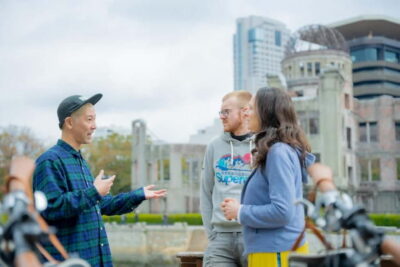
Other lists this ride turns up in