
REVIEW · TOKYO
Tokyo Great Cycling Tour
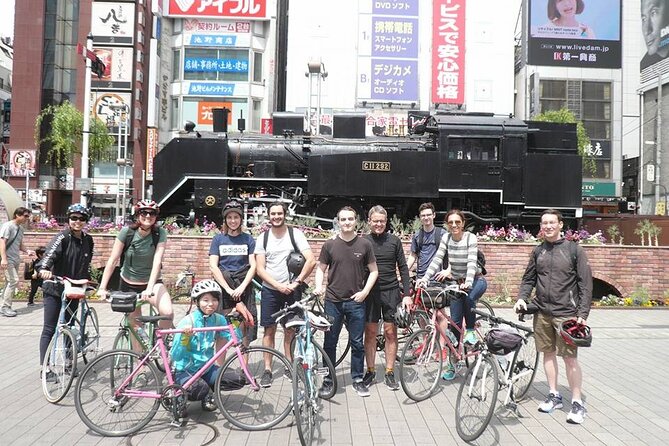
Tokyo is easier to understand from a bicycle than from a coach window. This six-hour ride links Tsukiji Jogai Market, Zojo-ji Temple, Meiji Jingu Shrine, and the Imperial Palace, while also slipping through city districts that are hard to appreciate from a main road. The small group, capped at 12, keeps the day personal and manageable.
I like the mix of major sights and ordinary Tokyo streets. I also like the practical care shown by guides such as Toshi, Nick, and Naoko, who pay close attention to safety and the group’s welfare. The main drawback is simple: six hours on a bicycle takes moderate fitness, and hot weather can make the day tiring.
Key points to know before you book
- You cover four major Tokyo sights by bike: The route connects Tsukiji, Zojo-ji, Meiji Jingu, and the Imperial Palace in one morning and afternoon.
- The group is limited to 12 people: That is small enough for closer guide attention and easier movement through city streets.
- The route includes more than famous landmarks: You pass expensive apartment buildings, offices, shopping areas, and a cemetery set among fashionable neighborhoods.
- The pace is active but not a race: You need a moderate level of fitness and the ability to cycle for roughly six hours.
- Weather can change the day: A picnic may be replaced by lunch at an izakaya in very hot conditions, and poor weather can lead to a refund or a new date.
- The tour begins and ends in the same place: Meet at Tokyo Great Tours, 1-chōme-3-2 Shinkawa, Chuo City, at 9:00 a.m.
Why cycling works so well in Tokyo
Tokyo covers a huge area, and its best-known sights are spread across several districts. Walking between them would take too long, while a bus can leave you watching the city through glass. A bicycle gives you a useful middle ground: you cover serious distance, but you still notice side streets, building changes, and the way one neighborhood gives way to another.
The route also gives you a sense of Tokyo’s contrasts. A traditional temple can appear with Tokyo Tower behind it. A quiet cemetery can sit beside expensive homes and shops. A grand shrine can be reached after passing through dense urban districts. Those transitions are part of the point.
This is not a flat sightseeing loop around one compact area. You are moving through a large city, so the ride requires attention and energy. The tour is best for someone who already feels comfortable on a bicycle and wants a broad introduction to Tokyo rather than a slow visit to one neighborhood.
The maximum group size of 12 is important. A larger cycling group can become a long, awkward chain at intersections. With 12 or fewer people, the guide can keep a closer eye on the group and spend more time explaining what you are seeing. Past experience with guides such as Toshi, Nick, and Naoko suggests that safety and general welfare receive serious attention, which matters on an urban ride.
More Cycling Trips in Japan:
- Hidden Kyoto E-Biking tour
★ 5.0 · 1,843 reviews - Tokyo Guided Small-Group Biking Tour
★ 5.0 · 1,250 reviews - Bike Tour Exploring North Kyoto plus Lunch
★ 5.0 · 1,087 reviews
Starting at Tsukiji Jogai Market
The morning begins at the Tokyo Great Tours meeting point in Shinkawa, at 9:00 a.m. The first listed stop is Tsukiji Jogai Market, the outer market area that remains active after the inner fish market moved to Toyosu.
You get about 15 minutes here. That is enough for a quick look at the market atmosphere and a short explanation, but not enough for a long food crawl or a leisurely meal. Think of this stop as a first taste of Tokyo’s food culture and commercial energy rather than a full market visit.
Tsukiji is useful at the start of a cycling day because it gives you an immediate sense of place. It is still used by local shoppers as well as visitors, so you see a working market area rather than only a preserved attraction. The short stop also helps keep the overall route moving.
If food stalls are your main reason for coming to Tsukiji, set your expectations carefully. The tour schedule gives you only a brief visit, and the day has several more major stops ahead. You will have a better experience if you focus on the setting, the shopping activity, and the guide’s comments instead of trying to sample everything.
Zojo-ji Temple and the Tokyo Tower contrast
Next comes Zojo-ji Temple, another short stop of about 15 minutes. This Buddhist temple is especially memorable for its visual contrast with Tokyo Tower rising behind it. Few images explain old and new Tokyo as quickly.
The temple offers a pause from the dense modern city. You can look at the traditional architecture, then turn your attention to the tower and the high-rise city beyond it. The value here is not only the temple itself, but the way the two periods of Tokyo appear together in one view.
Fifteen minutes is enough for a quick visit and photographs. It is not enough for a detailed temple study, so you should treat this as a focused introduction. The tour’s strength is its range. You see several distinct sides of Tokyo in one day, but each individual stop is fairly brief.
That tradeoff will suit you if you want orientation and variety. If you prefer to sit quietly at a temple, inspect every detail, and spend an hour in one place, a cycling tour may feel rushed.
The city between the famous stops
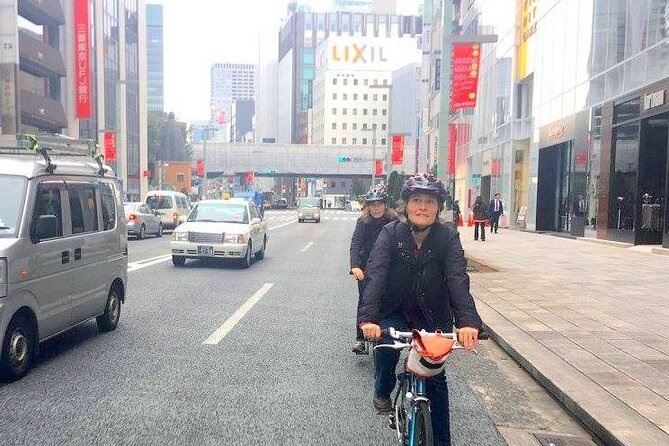
Some of the most useful parts of the ride are the sections between the headline sights. The route passes areas filled with expensive apartments, shopping, and office buildings. You also see a cemetery located in the middle of fashionable neighborhoods.
These details help you read Tokyo as a lived-in city. The high-rise apartments and offices show the pressure and value of urban space. The cemetery offers a different kind of pause, with older traces of the city surrounded by newer development. You may notice how quickly Tokyo shifts from commercial streets to residential blocks, and then back to major public spaces.
This is where cycling has a clear advantage over a hop-on, hop-off approach. You are not simply dropped at four attractions. You travel through the spaces connecting them, and those connecting spaces often explain the city better than a single monument can.
The exact feel of the ride will vary with traffic, weather, and the day’s route. Still, the basic appeal remains: you are close enough to notice neighborhood changes, but fast enough to cross a wide section of Tokyo before the day is over.
Same roads, a different saddle:
- Tokyo Top Highlights 3h Guided E-bike Tour
★ 5.0 · 714 reviews - 3h Tokyo E-Bike Tour: Hidden Gems, and Local Life with guide
★ 5.0 · 670 reviews - Arashiyama Bamboo Forest & Hidden Gems Bike Tour (Early Bird)
★ 5.0 · 613 reviews - Hiroshima in a Nutshell: Morning Bike Adventure
★ 5.0 · 524 reviews
Meiji Jingu Shrine in a dense capital
Meiji Jingu Shrine is listed as the longest sightseeing stop, at about 20 minutes. It is one of Tokyo’s best-known Shinto shrines, and its presence gives the route a strong change of mood after the commercial and modern districts.
The shrine is valuable because it places a major religious site inside a huge capital city. The guide can add context about Shinto customs and Japanese history as you walk or pause with the group. You should allow yourself to watch the setting as well as the architecture. This is a place where quiet and ceremony matter as much as the individual structures.
Again, 20 minutes is an introduction, not a full shrine visit. You will have time to see the main area included in the route and take in the atmosphere, but not to explore every path or spend long periods observing ceremonies. If Meiji Jingu is high on your personal list, you may want to return on your own later.
The short time also protects the rhythm of the cycling day. The tour is designed to keep moving, and that means each stop has a clear limit. I see this as a fair trade for the chance to connect several distant parts of Tokyo in a single outing.
The Imperial Palace and the end of the route
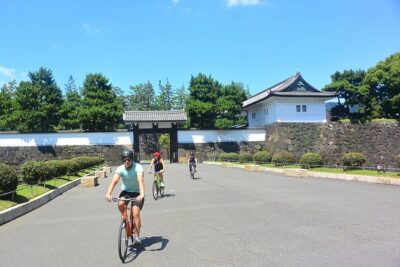
The Imperial Palace is the final named stop, with about 15 minutes set aside. It is the residence of Japan’s Emperor and Empress, so the visit carries national and historical importance even if your view of the grounds is brief.
This stop works well near the end because it gives the day a broad civic finish. You have already seen markets, a Buddhist temple, modern neighborhoods, a cemetery, and a Shinto shrine. The palace adds another layer, linking the city’s present-day activity with Japan’s imperial institution.
Do not book this ride expecting a long palace tour. The stated stop is short, and the experience is built around seeing the area and learning from the guide rather than spending hours inside a single complex. The overall value lies in the sequence of places, not in extended time at any one attraction.
After the palace stop, the activity returns to the original meeting point. That makes the morning’s transportation simpler, since you do not need to find your way to a distant finish after six hours of riding.
Guides, safety, and the pace of the day
Guide quality matters more on a bicycle than on a walking tour. You need clear directions, steady pacing, and someone who notices if a rider is struggling. The named guides associated with this experience include Toshi, Nick, and Naoko. The feedback available for the tour gives particular weight to guides looking after safety and welfare.
That does not mean the ride is effortless. You should be comfortable cycling for most of a six-hour activity and have a moderate fitness level. The route involves city streets and regular movement between stops. You will want to arrive ready to ride, not expecting a sightseeing bus with only occasional walking.
The group maximum of 12 helps in several ways. You can hear the guide more easily than you might in a large group. Stops are less cumbersome, and the guide can pay closer attention to individual riders. It also gives the experience a more social, small-group feel without turning it into a private tour.
Hot weather deserves special attention. One very hot day led to a picnic being changed to lunch at an izakaya. That is a sensible adjustment, but it also tells you that conditions can shape the experience. Tokyo summers can make a six-hour ride demanding, so consider your own heat tolerance before booking.
The price and what you receive for $99.49
At $99.49 per person, this is not the cheapest way to see Tokyo. You are paying for a six-hour guided outing, bicycle access to a wide route, explanations about Japanese culture and history, and the convenience of connecting several major areas in one day.
The value improves if you have limited time in Tokyo. A visitor trying to fit Tsukiji, Zojo-ji, Meiji Jingu, and the Imperial Palace into one day by public transportation would need to plan several transfers and still spend much of the day navigating. The bicycle provides a direct link between those places and adds the ordinary city streets between them.
The price is less attractive if you want long visits at each sight. The stops are short, and the experience is active. You are buying range, guidance, and a view of Tokyo in motion, not an unhurried deep look at four individual attractions.
I would also compare the cost with your transport and meal plans for the day. The cycling experience ends back at its starting point, and the food arrangement can vary, especially in hot weather. The listed experience includes mobile ticketing, while the provided details do not promise a specific meal or a set menu.
A 4.9 rating from 797 reviews and a 100 percent recommendation figure suggest a very strong record. Still, those numbers should not replace a practical question: do you enjoy cycling enough to make six hours feel like sightseeing rather than exercise? If yes, the price is easier to justify.
Who should book this cycling tour
This outing suits you best if you want a broad first look at Tokyo and prefer active sightseeing. It is especially useful for visitors with only a few days who want to connect several famous sights without spending the whole day underground or in taxis.
It also works well for families with older children or teenagers who can cycle confidently, couples, and solo visitors who like a small group. The experience can be social without the scale of a large coach tour. Guides such as Toshi, Nick, and Naoko add a human element to the route, and their attention to safety is a meaningful advantage.
You should think twice if you dislike traffic, tire easily, or want a quiet museum-style day. The itinerary is broad, but the stops are short. You may also want another plan if your main goal is an extended visit to Tsukiji, Meiji Jingu, or the Imperial Palace.
Book with the weather in mind. The operator requires good conditions, and a poor-weather cancellation may result in a different date or a full refund. You can cancel for a full refund up to 24 hours before the 9:00 a.m. start time, but changes or cancellations inside that window are not accepted.
Should you book the Tokyo Great Cycling Tour?
I would book this tour if you want to see how Tokyo’s neighborhoods fit together, not just collect four famous photo stops. The route covers a lot of ground, the group stays small, and the mix of market, temple, shrine, palace, offices, apartments, and cemetery gives you a useful first-day picture of the city.
I would skip it if you want a slow cultural tour or are unsure about riding for six hours. For a fit cyclist who values local context and efficient sightseeing, this is one of the more practical ways to cover a large slice of Tokyo in one day.
FAQ
How long does the Tokyo Great Cycling Tour last?
The tour lasts approximately six hours.
What time does the tour start?
The tour starts at 9:00 a.m.
Where does the tour begin and end?
It begins at Tokyo Great Tours, 1-chōme-3-2 Shinkawa, Chuo City, Tokyo 104-0033, Japan, and ends back at the same meeting point.
How many people can join the tour?
The group has a maximum of 12 participants.
What level of fitness is needed?
A moderate level of physical fitness is recommended because the experience involves cycling for about six hours.
What happens if the weather is poor?
If poor weather causes a cancellation, you will be offered a different date or a full refund. The experience may also be canceled if the minimum number of participants is not reached, with a different date, another experience, or a full refund offered.
Newest rides we have reviewed in Japan
- Best of Kyoto: Ginkakuji & Path of Philosophy E-Bike Tour★ 4.9 · 79 reviews
- Kyoto: Tailored E-Bike Tour to Highlights & Hidden Gems★ 4.9 · 32 reviews
- Kyoto: Full Day Bike Tour★ 4.9 · 39 reviews
- Kyoto: Half-day Guided Bike Tour with Fushimi Inari★ 4.9 · 21 reviews
- Kyoto: Early Bird E-Bike Tour with Lunch★ 5.0 · 14 reviews
- Kyoto: Full-Day City Highlights Bike Tour with Light Lunch★ 5.0 · 52 reviews
- Kanazawa Half Day E-bike Tour★ 5.0 · 81 reviews
- Hiroshima: Best of Hiroshima Guided Bike Tour★ 4.9 · 89 reviews
Tokyo Cycling Tours, compared.

3h Tokyo E-Bike Tour: Hidden Gems, and Local Life with guide
Read our review →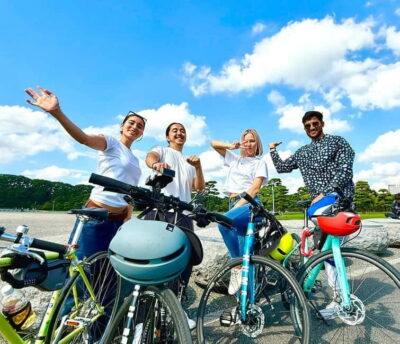
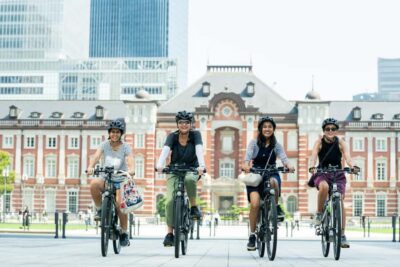
3-hour Guided E-Bike Tour of the City’s Hidden Gems
Read our review →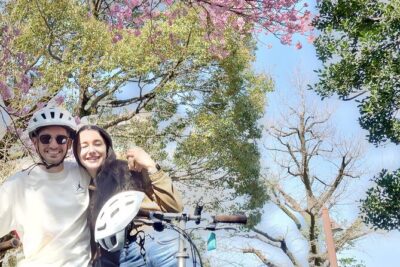
3-Hour Tokyo Private E-Bike Tour Starting from Your Hotel
Read our review →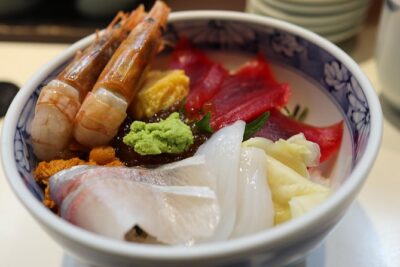
5-Hour Tokyo & Edo Hidden Gem Bike Tour with Lunch
Read our review →Other lists this ride turns up in