
REVIEW · HIROSHIMA
Hiroshima: Best of Hiroshima Guided Bike Tour
Hiroshima is compact, but its important sights are spread across the city. This 3.5-hour bike tour links the Peace Memorial Park, Atomic Bomb Dome, Gokoku Jinja, Hiroshima Castle, and Shukkei-en Garden without making you walk every step. I like the flat route and the way the ride reaches spots that buses and cars cannot.
I also like the human scale. Groups are capped at eight, and guides such as Awais, Aimee, Miyu, James, and Ehsan make time for questions, photos, and personal stories. The main drawback is that the tour needs good weather, and the route is not suitable for children under 12, pregnant women, or riders under 140 centimeters.
Key points at a glance
- Peace Memorial Park by bike: Reach the Atomic Bomb Dome and other important sites without spending the day on foot.
- A flat, relaxed route: The ride suits anyone who can ride a bicycle, with regular stops for stories and photos.
- Beyond the bomb memorials: Gokoku Jinja, Hiroshima Castle, and Shukkei-en Garden show the city before and after 1945.
- Small groups matter: With no more than eight people, guides can answer questions and adjust the pace.
- Good bikes for different riders: Trek bikes, step-through models, e-bikes, helmets, and child-sized bikes are available.
- Strong value at $70: You get a guide, bike, helmet, bottled water, and entry to Shukkei-en Garden in one half-day outing.
Why cycling makes sense in Hiroshima
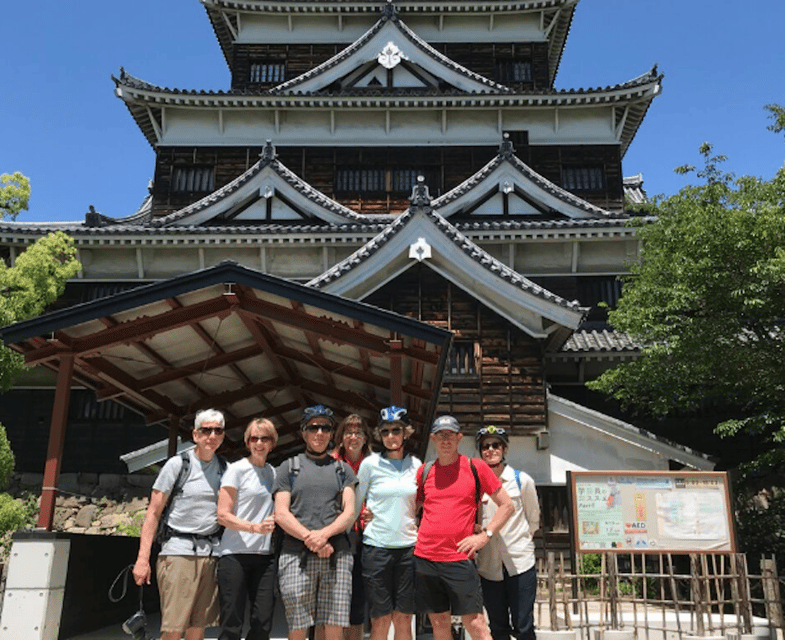
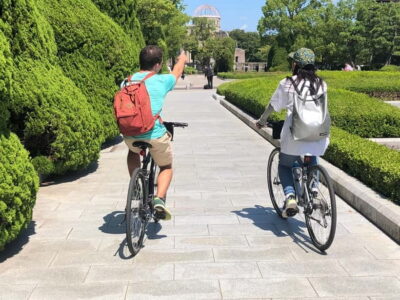
Hiroshima rewards a tour that covers ground without rushing. The central sights are not far apart, but walking from one to the next can eat up much of your day. On a bicycle, you move between them quickly, get fresh air, and see ordinary city life along the way.
The route is flat, which is the key point here. You do not need to be a serious cyclist. The pace is described as leisurely, and the ride includes stops rather than one long push from sight to sight. Several guides have also adjusted the pace for heat, rain, or riders who had not been on a bike for years.
I would still treat this as an active outing. You need to be comfortable balancing, braking, and riding for several hours. One account puts the route at about 10 kilometers, though the exact distance may vary. Comfortable clothes and shoes are the right choice.
The small-group limit of eight improves the experience. You are less likely to lose the guide at crossings, and it is easier to ask about a monument or pause for a photo. A larger family group can also fit together, though the stated age limit means children under 12 are not accepted.
More Guided Rides in Japan:
- Tokyo Guided Small-Group Biking Tour
★ 5.0 · 1,250 reviews - Tokyo Top Highlights 3h Guided E-bike Tour
★ 5.0 · 714 reviews - 3h Tokyo E-Bike Tour: Hidden Gems, and Local Life with guide
★ 5.0 · 670 reviews
From Cycle Hiroshima HQ to the Peace Memorial Park
You meet at Cycle Hiroshima HQ, marked by a large sign at the front. The outing begins with a short orientation and bike fitting. Arrive ready to spend a few minutes getting the saddle and bike size right. That small step matters more than it sounds, especially if you are tall, short, or switching between a standard bike and an e-bike.
The ride begins beside the river. This is a pleasant way to get moving because it eases you into Hiroshima rather than dropping you straight into a busy road. The route is mainly flat and, according to the experience details, often avoids regular roads. That makes it feel less stressful for riders who do not cycle often.
You receive a helmet and bottled water. The bikes are Trek models in several sizes, with step-through bikes, e-bikes, and child-sized options also available. The basic tour is built around standard bikes, so ask about an e-bike if you prefer extra help. One rider chose an e-bike but found the flat ground made it unnecessary.
The guides have earned praise for setting up the bikes carefully and explaining local cycling habits. That is useful in Japan, where riding etiquette may differ from what you follow at home. Your guide leads from the front, keeps the group together, and gives you time to settle into the rhythm.
Peace Memorial Park and the Atomic Bomb Dome
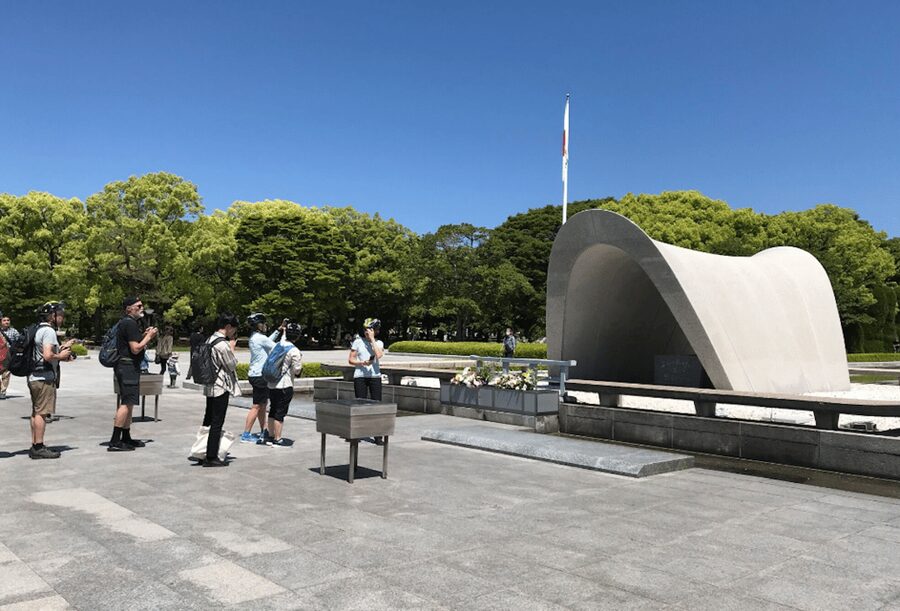
The emotional center of the ride is Peace Memorial Park. Here, the bicycle is more than transport. It lets you reach several memorial points without turning the visit into a long march, while the relaxed pace leaves room to stop and listen.
The Atomic Bomb Dome is the best-known landmark in the park and a UNESCO World Heritage Site. Its remaining structure recalls the destruction caused by the atomic bomb on August 6, 1945. The guide explains what happened, how the city changed, and how Hiroshima became known as the City of Peace.
Expect serious conversation here. This is not a light sightseeing stop, and a good guide needs to handle the subject with care. Guides including Miyu and Aimee have been praised for combining facts with family or personal stories, while Ehsan has been noted for presenting more than one perspective and inviting thoughtful questions.
That human detail can make the history easier to understand, but it also means the tone may vary slightly by guide. Awais, James, Hasan, Ihsan, Ali, Melissa, and others have led this route, and each brings a different style. Some are more story driven, some more focused on facts, and some add humor between the heavier stops.
You should have time for photos and individual sightseeing, but the tour is not a substitute for a full museum visit. If the Hiroshima Peace Memorial Museum is a priority, plan a separate visit before or after the bike ride. The cycling tour gives you a guided outdoor introduction to the memorial area and its wider setting.
Stories connected with Sadako and the paper cranes may also form part of the discussion. These details help connect the large event to a child and a personal act of hope. You can ask questions as you go, which is one reason the small group works well here.
Gokoku Jinja and Hiroshima Castle
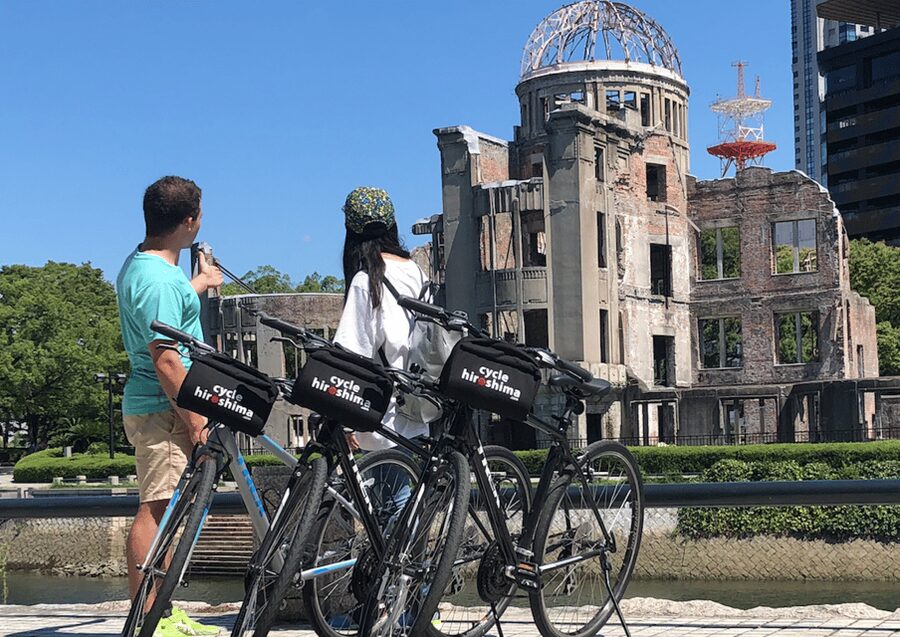
After Peace Memorial Park, the route heads north toward Gokoku Jinja. This is described as the city’s most popular Shinto shrine, and it changes the mood of the tour. You move from a site tied to wartime loss to a living religious place where local tradition continues.
The shrine gives you a wider view of Hiroshima. It is not included simply as another photo stop. It helps show that the city is more than its memorial story. Your guide can place the shrine within the city’s cultural setting, while you get a quiet break from the weight of the Peace Park.
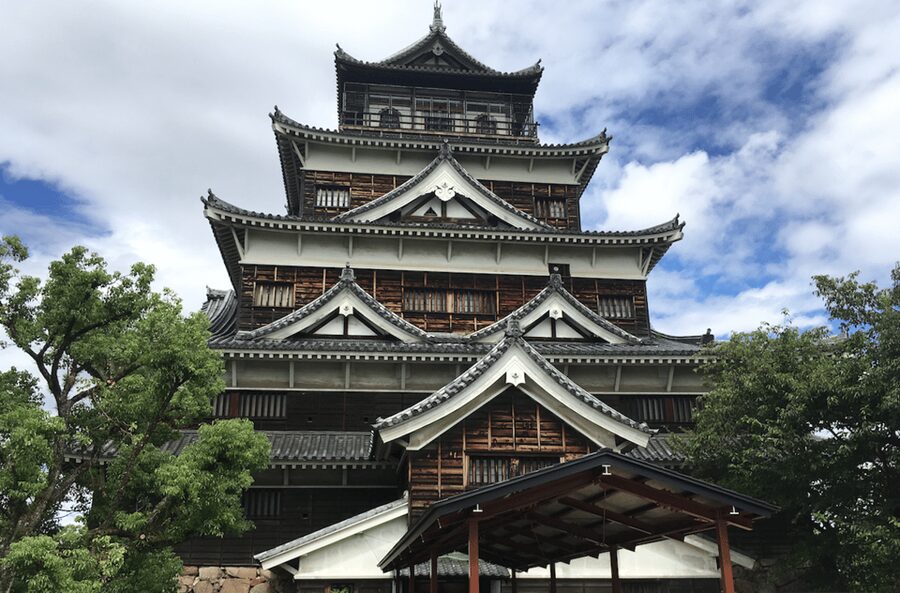
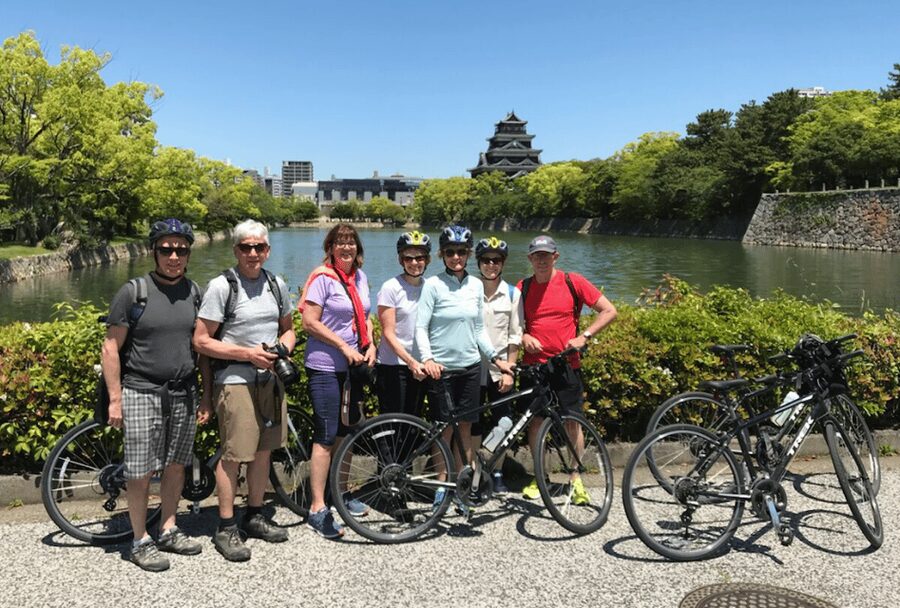
The tour then continues through the grounds of Hiroshima Castle. The castle area offers a glimpse into the age of the samurai and the older city that existed before the modern rebuilding of Hiroshima. You are not only looking at postwar Hiroshima. You are also seeing traces of its earlier identity.
The castle stop is valuable for another reason: it breaks up the historical focus. After the atomic bombing memorials, a ride through castle grounds gives the day some balance. You can compare the city’s feudal past with its wartime destruction and later renewal.
The route is designed to keep moving, but guides usually stop often enough for a short explanation and photographs. That works better than a nonstop narrated ride. You hear the key points, then have a moment to look around instead of trying to listen while steering.
More Cycling Trips in Japan:
- Hidden Kyoto E-Biking tour
★ 5.0 · 1,843 reviews - Bike Tour Exploring North Kyoto plus Lunch
★ 5.0 · 1,087 reviews - Tokyo Great Cycling Tour
★ 5.0 · 811 reviews - Arashiyama Bamboo Forest & Hidden Gems Bike Tour (Early Bird)
★ 5.0 · 613 reviews
Shukkei-en Garden is a calm final stop
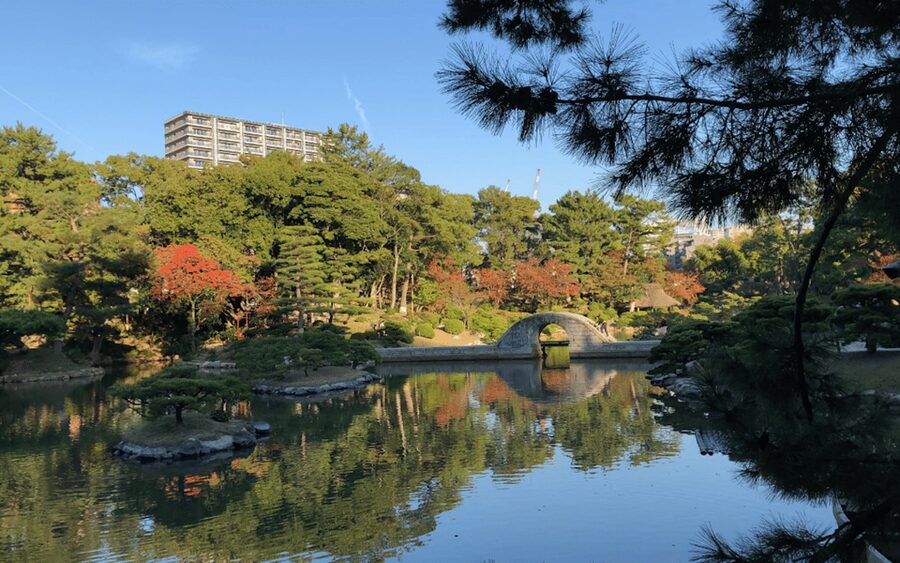
Shukkei-en Garden is the final major stop, and it is a smart ending. Built during the Edo Period, the garden is regarded as one of the finest traditional gardens in western Japan. Its ponds, paths, and carefully arranged scenery provide a quiet contrast to the earlier memorial sites.
Entry to the garden is included in the $70 price. That improves the overall value because you are not paying for the guided ride and then adding another admission fee at the final stop. The garden also gives you a chance to slow down and take in a different side of the city.
I especially like the order of the itinerary. The tour begins with riverside cycling, moves through the Peace Park and its difficult history, then shifts toward the shrine, castle, and garden. You get Hiroshima as a place of remembrance, but also as a city with religious traditions, older architecture, and peaceful public spaces.
Do not expect a long independent garden visit. The tour has a fixed duration, so your time at Shukkei-en will be part of the group schedule. If gardens are a major interest, you may want to return later on your own. For a first visit, the stop gives you a useful taste without taking over the day.
How the guides shape the experience
The route is set, but the guide makes the day. Awais has led many outings and is often praised for clear explanations, friendly energy, bike setup, and strong English. Aimee has been noted for warmth, regular breaks on hot days, local suggestions, and a respectful approach to the bomb memorials.
Miyu brings local and family stories to the history. James is known for careful explanations and for adding extra sites when time allows. Ehsan has a thoughtful storytelling style and may extend the tour if the group has no need to leave promptly. Other guides named for this experience include Hasan, Ihsan, Melissa, Sage, Ali, Alex, and Awais.
That variety is worth keeping in mind. You cannot choose a specific guide from the information provided, and each person may organize the stories differently. The common thread is an English-language tour with room for questions, photos, and personal context.
Several guides have taken photos or videos for participants. Do not count on an elaborate photo service, but you can reasonably ask for a group picture at a suitable stop. The emphasis remains on guiding and storytelling.
The guides also seem willing to respond to conditions. On very hot days, expect more breaks. In rain or cooler weather, the outing can still go ahead if conditions are safe, but the experience may feel less comfortable. Good weather is required, and a cancellation for poor weather brings either another date or a full refund.
Is $70 a fair price?
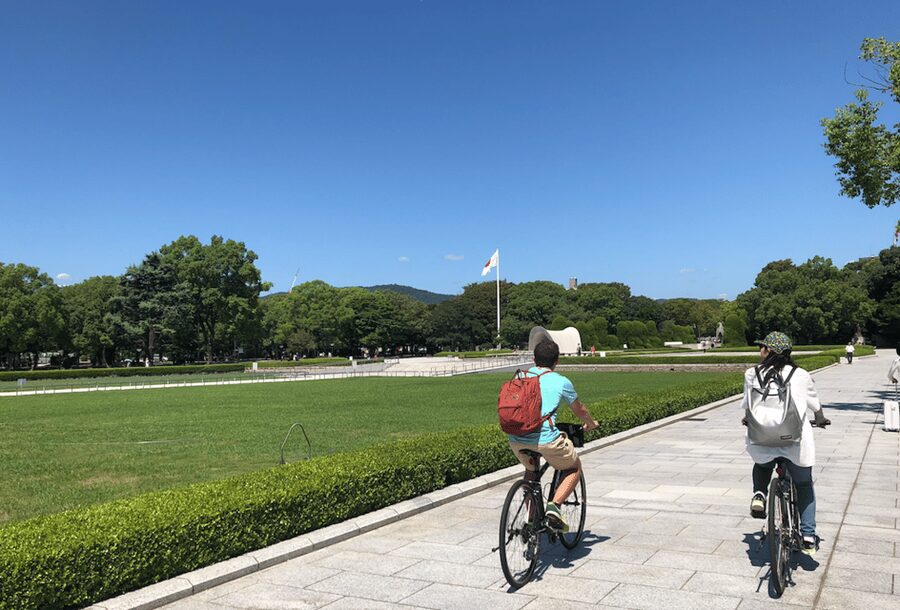
At $70 per person, this is not the cheapest way to see Hiroshima. You can walk around parts of the city yourself, and some sights can be reached by local transit. The question is what you want the money to do.
The price covers an English-speaking guide, a quality bike, helmet rental, bottled water, and admission to Shukkei-en Garden. You are also paying for route planning, bike fitting, traffic management, and the chance to connect several distant stops in one outing.
I see the strongest value if you have only one day in Hiroshima. The ride covers major memorial sites, the castle area, a shrine, and a traditional garden in 210 minutes. It saves your feet and gives you an organized introduction before you choose which places deserve a longer return visit.
The value is also good for solo visitors or couples who want company without joining a large bus tour. A maximum of eight people keeps the outing personal. Families with older children may find it useful, though children under 12 cannot join, and each rider must meet the 140-centimeter minimum.
The price is less compelling if you dislike bicycles, need extensive time at museums, or want to explore each site independently. You will see a lot, but you will not linger everywhere. Think of it as a well-organized orientation and city ride, not a full museum program.
Who should book this ride?
I would recommend it to first-time visitors who want to understand Hiroshima’s layout quickly. It is also a good fit if walking long distances is tiring but you can comfortably ride a bike. The flat route helps, and the availability of step-through bikes and e-bikes gives you more choice.
History-minded visitors will get the most from the Peace Park explanations, especially if they ask questions. The ride also suits people who want more than the atomic bomb memorials alone. Gokoku Jinja, Hiroshima Castle, and Shukkei-en show the city from several angles.
You should reconsider if you have back or heart problems, a pre-existing medical condition, or are pregnant. The experience is not suitable for those groups according to the safety information. You also need comfortable shoes, comfortable clothes, and enough mobility to ride and stop safely.
Summer riders should prepare for heat. Guides have added breaks on hot days, but a bicycle ride can still feel warm. Rain may also affect the plan, so keep some flexibility in your schedule.
Should you book the Hiroshima bike tour?
Book it if you want a fast, thoughtful introduction to Hiroshima with a guide who can explain both the bombing and the city’s recovery. The route is flat, the groups are small, and the mix of Peace Memorial Park, castle, shrine, and garden is well judged.
Skip it if you want a slow museum day, cannot ride safely, or prefer to set your own pace at every stop. For most fit visitors with limited time, though, $70 buys a useful half-day of transport, context, and careful guiding. It is one of the better ways to connect Hiroshima’s difficult past with the peaceful city you see today.
FAQ
How long does the Hiroshima bike tour last?
The tour lasts 210 minutes, or about three and a half hours.
What sights are included?
The route includes Peace Memorial Park, the Atomic Bomb Dome, Gokoku Jinja, Hiroshima Castle, and Shukkei-en Garden.
Is the cycling route difficult?
The route is completely flat and described as suitable for anyone who can ride a bike. The ride is relaxed, with stops along the way.
What type of bikes are available?
The operator provides Trek bikes in several sizes, plus step-through bikes, e-bikes, and child-sized bikes. A helmet is included.
Is Shukkei-en Garden admission included?
Yes. Entry to Shukkei-en Garden is included in the tour price.
How many people can join the tour?
The group is limited to a maximum of eight participants.
What happens if the weather is poor?
The tour requires good weather. If it is canceled because of poor weather, you are offered another date or a full refund.
Who cannot take this tour?
The tour is not suitable for children under 12, pregnant women, people with back or heart problems, people under 140 centimeters, or people with pre-existing medical conditions.
Newest rides we have reviewed in Japan
- Best of Kyoto: Ginkakuji & Path of Philosophy E-Bike Tour★ 4.9 · 79 reviews
- Kyoto: Tailored E-Bike Tour to Highlights & Hidden Gems★ 4.9 · 32 reviews
- Kyoto: Full Day Bike Tour★ 4.9 · 39 reviews
- Kyoto: Half-day Guided Bike Tour with Fushimi Inari★ 4.9 · 21 reviews
- Kyoto: Early Bird E-Bike Tour with Lunch★ 5.0 · 14 reviews
- Kyoto: Full-Day City Highlights Bike Tour with Light Lunch★ 5.0 · 52 reviews
- Kanazawa Half Day E-bike Tour★ 5.0 · 81 reviews
- Half-day Himeji Castle Town Bike Tour with Lunch★ 4.9 · 13 reviews
Hiroshima Cycling Tours, compared.
Hiroshima in a Nutshell: Morning Bike Adventure
Read our review →
Hiroshima 2hr Peace Cycling Tour with Local Guide
Read our review →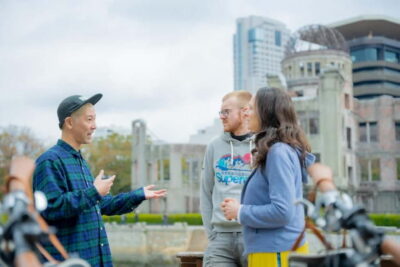
Other lists this ride turns up in