
REVIEW · HERITAGE AND TEMPLE BIKE TOURS IN JAPAN
Kamakura Heritage Bike or Walk Tour with ex-Rickshaw guide
Kamakura is much easier to understand when someone connects its temples, shrines, samurai stories, and seaside roads into one day. This private tour with Ichi, a former rickshaw guide, does that by bicycle or on foot, with the route adjusted to your pace.
I like the choice of bikes or walking, and I like that the tour reaches both famous sights and quieter corners. Ichi also takes plenty of photos, a useful touch when you are busy watching traffic, gardens, and temple details. The main drawback is the price: at $150.24 per person, it makes the most sense for a small private group that values personal guiding.
Key points to know before booking
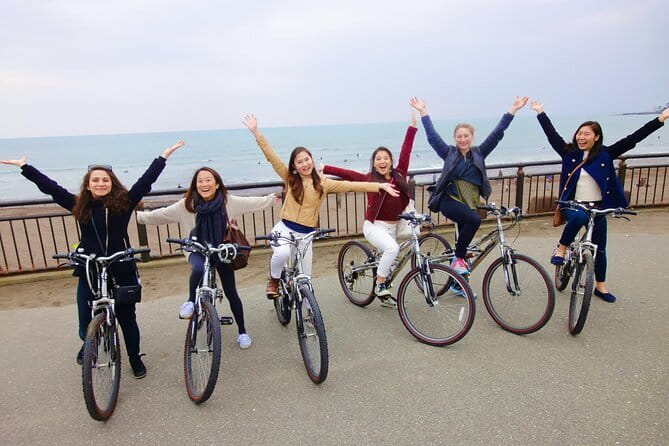
- Four hours by bike or on foot: You can choose the pace and change how you explore during the tour.
- A guide with rickshaw experience: Ichi spent five years guiding through Kamakura’s streets as a rickshaw driver.
- Major sights in one route: The Great Buddha, Tsurugaoka Hachimangu, Hokokuji, Hasedera, Egara Tenjin, and Yuigahama Beach are all included.
- Good historical context: The tour explains Kamakura’s role in the rise of the samurai government and the Kamakura shogunate.
- Private and photo-friendly: Only your group participates, and the guide takes photos along the way.
- Weather matters: Poor weather can lead to a rescheduled tour or a full refund.
Why Kamakura works so well by bike or on foot
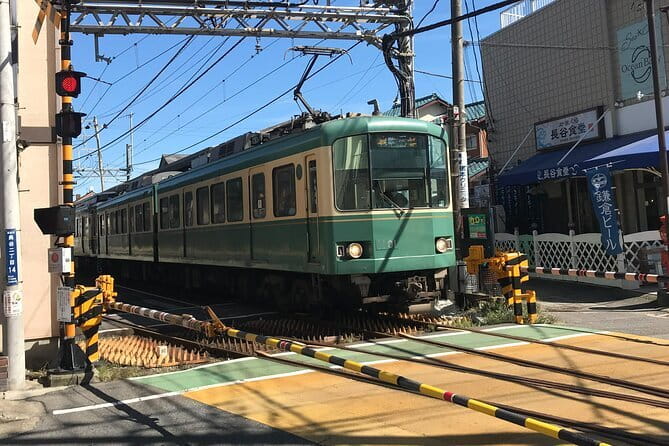
Kamakura is compact enough to explore without a bus-heavy schedule, but its sights are spread across several parts of town. The Great Buddha and Hasedera sit toward the coast, while Tsurugaoka Hachimangu, Egara Tenjin, and Hokokuji are farther inland. A four-hour route on two wheels lets you cover more ground than a standard walking tour.
The walking option has its own appeal. You can slow down at a shrine gate, pause for a garden view, or listen to a story without worrying about parking a bicycle. If you choose bikes, you get a better sense of the town beyond the main shopping streets. The tour description also allows you to adjust your mode within the time available, so you are not locked into one style from start to finish.
The guide’s background is important here. Ichi spent five years working as a rickshaw guide, so the tour is built around moving through Kamakura rather than simply checking off temple names. His English is described as good, and the strongest praise focuses on clear explanations, cultural stories, and a friendly manner.
More Heritage and Temple Bike Tours in Japan
- E-Bike Nara Highlights – Todaiji, Knives, Deer, Shrine
★ 4.8 · 186 reviews - Historical Kyoto E-Bike Tour
★ 5.0 · 181 reviews - 4.5-Hour Kyoto Bike Tour with Lunch and UNESCO Zen Temples
★ 5.0 · 122 reviews
Starting at Kamakura Station
The meeting point is outside Kamakura Station at 1-chōme-1-15 Onarimachi. This is a practical start because the station is easy to reach by public transport and gives you a clear place to meet before setting out.
Expect the first part of the tour to establish the shape of Kamakura. The city was the center of Japan’s first military government, and the route helps explain how the shogunate, samurai power, temples, and shrines fit together. Ichi is especially useful for turning names and dates into a story you can follow.
Because this is a private tour, the pace can respond to your interests. You can ask for more explanation at a shrine, spend less time at a familiar sight, or take extra photos. That flexibility is more valuable here than on a fixed group excursion, since Kamakura has enough historical detail to fill an entire day if you let it.
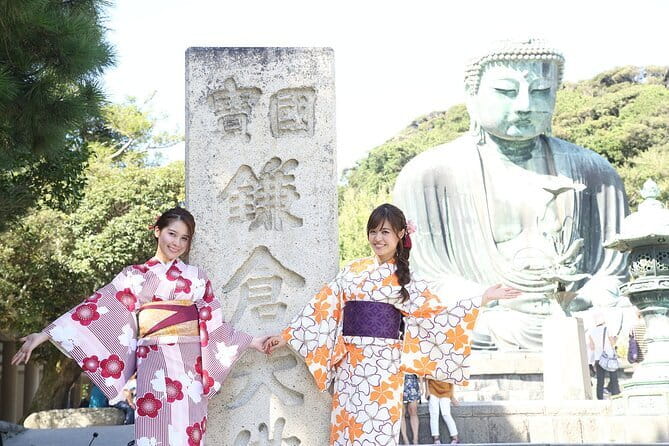
The Great Buddha at Kotoku-in
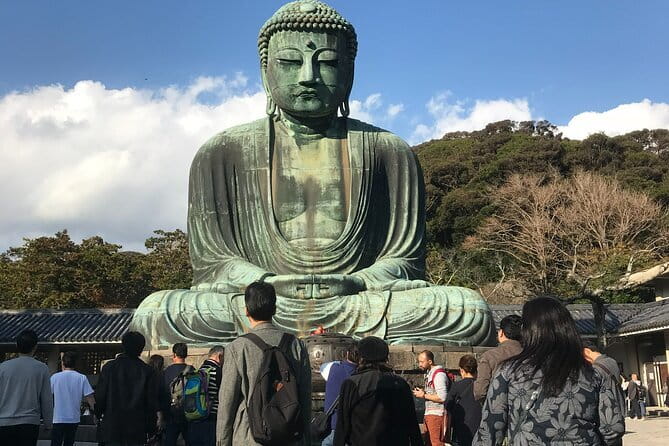
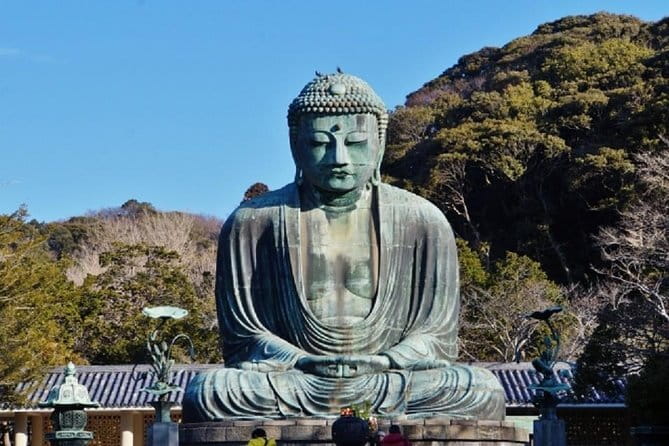
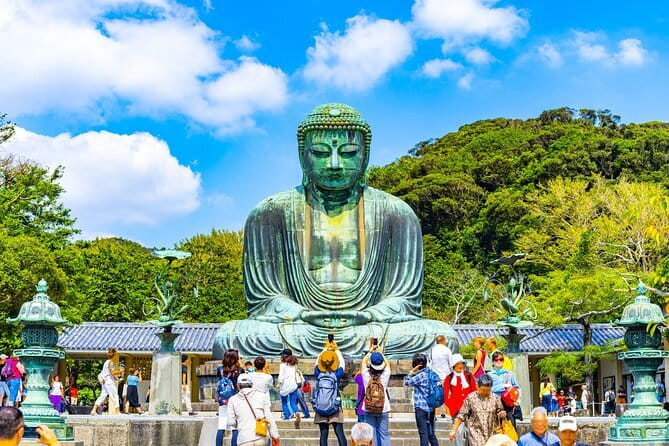
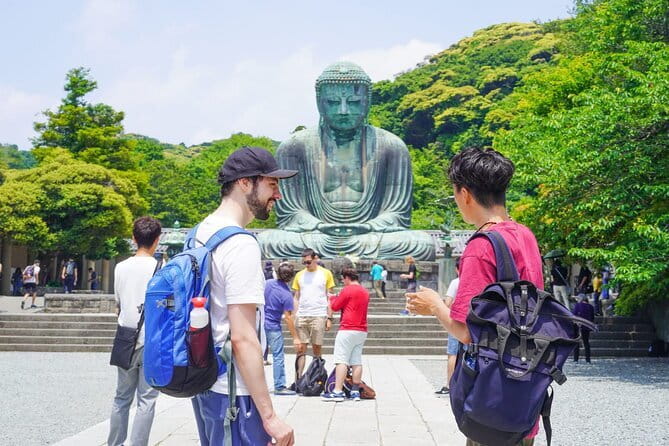
The Great Buddha of Kamakura is the tour’s most famous stop. The bronze statue sits at Kotoku-in Temple and is one of the city’s essential sights. The scheduled visit is about 30 minutes, with admission included.
The statue is impressive even for visitors who have seen large Buddhist images elsewhere in Japan. Its calm expression and outdoor setting give the visit a different feel from a Buddha housed inside a dark temple hall. I would listen closely to Ichi here, since this is a place where a short explanation can add useful context to what you are seeing.
Thirty minutes is enough for the statue, the temple grounds, and photographs, but it is not a long free period. If you want to study every detail or visit additional parts of the temple, you may wish you had more time. That is part of the tradeoff in a route covering so much of Kamakura.
Tsurugaoka Hachimangu and the samurai city
Tsurugaoka Hachimangu is Kamakura’s main Shinto shrine and a central stop for understanding the city’s political past. The shrine is linked with the samurai and is dedicated to Hachiman, a deity associated with warriors.
The approach and shrine grounds give you a sense of scale that smaller neighborhood shrines cannot provide. The 30-minute visit is free, and Ichi can explain how the shrine relates to the founding of Kamakura as a seat of military power.
This is one of the places where a guide adds real value. Without context, you might see a broad approach, red shrine structures, and a busy religious site. With a good explanation, you begin to understand why this particular shrine became so important to the ruling class and to Kamakura itself.
Same roads, a different saddle:
- Hidden Kyoto E-Biking tour
★ 5.0 · 1,843 reviews - Tokyo Guided Small-Group Biking Tour
★ 5.0 · 1,250 reviews - Bike Tour Exploring North Kyoto plus Lunch
★ 5.0 · 1,087 reviews - Tokyo Great Cycling Tour
★ 5.0 · 811 reviews
The graves of Minamoto no Sanetomo and Hojo Masako
The brief stop at the graves of Minamoto no Sanetomo and Hojo Masako lasts about 10 minutes. It is a small, quiet historical pause rather than a major attraction with a long visit.
Sanetomo was the third shogun of the Kamakura shogunate, while Hojo Masako was one of the most powerful figures connected with the early regime. Their stories bring a human edge to the political history. This is where I would rely on Ichi to provide the background, since the site itself may not explain the complicated relationships clearly to every visitor.
Ten minutes is enough for the setting and a short account, but the stop will feel brief if you enjoy historical sites and want time to reflect. Its value comes from its place in the larger route, not from elaborate buildings or grand views.
Hokokuji’s bamboo grove and matcha
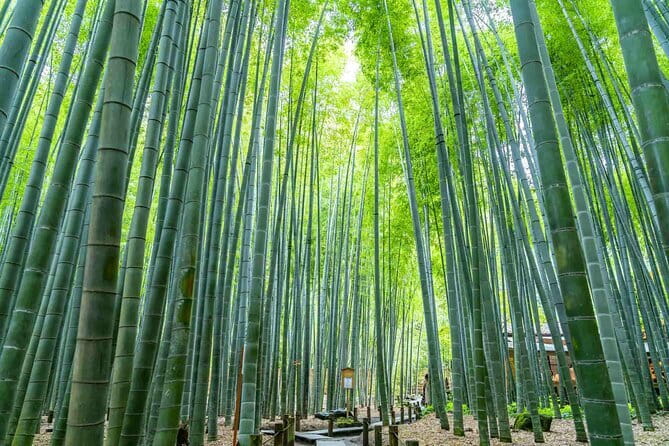
Hokokuji Temple is one of the most appealing stops for visitors who want a quieter setting. Its bamboo grove offers a sharp change from Kamakura’s main shrines and crowded streets. The scheduled visit is about 30 minutes, and admission is included.
The grove is compact, so you do not need hours to appreciate it. The tall bamboo creates a cool, enclosed atmosphere, and the path gives you a slower section of the tour. You can also stop for matcha tea at the temple cafe for an extra 500 yen, or roughly $3.
The tea is optional, but I think it is worth considering if you want a proper pause during the four-hour route. It is not included in the tour price, and the visit is not designed as a long meal break. Lunch is also not included, so plan to eat before or after the tour unless you are comfortable keeping food to a minimum.
Yuigahama Beach and the seaside road
The route also reaches Yuigahama Beach, where the town opens toward the Pacific. The appeal here is less about a formal attraction and more about changing the mood of the day. You can ride or walk along the seaside road and take in Kamakura’s coastal side.
The beach is described as relaxing, but summer brings more people and a livelier atmosphere. That seasonal note matters if you are hoping for a quiet shoreline. The beach stop also depends on how efficiently the rest of the route goes, since the tour has several temple and shrine visits packed into four hours.
I like this part of the plan because it prevents Kamakura from becoming a string of religious sites. You see the city as a place where history, ordinary streets, and the coast sit close together. If you choose the bike option, the seaside road may be one of the most enjoyable stretches of the day.
Hasedera and the Kannon statue
Hasedera Temple, also called Hase Temple, is known for its gardens, coastal views, and a 9.18-meter wooden statue of Kannon, the Goddess of Mercy. The planned visit is about 20 minutes, and admission is listed as free for this tour.
The temple combines religious art with scenery. You can look at the Kannon statue, walk through the gardens, and catch views toward the coast. I would expect the 20-minute schedule to feel brisk, especially if you want both the statue and the gardens.
This stop works best when you let Ichi direct your attention. The figure of Kannon carries major importance in Japanese Buddhism, and the guide can explain what you are seeing without turning the visit into a long lecture. The coastal setting also gives the tour another visual change after the inland shrines.
Egara Tenjin Shrine and the quieter finish
Egara Tenjin Shrine is dedicated to Sugawara no Michizane, a deity associated with scholarship and learning. The planned stop lasts about 10 minutes, with admission included.
This is a peaceful shrine in a leafy setting and a good place to see a different side of Kamakura’s religious life. It is not as famous as the Great Buddha or Tsurugaoka Hachimangu, which can make the short visit feel more personal and less like a headline attraction.
The shrine’s connection with learning gives it a distinct purpose. If you are visiting with students, teachers, or anyone interested in Japanese customs, ask Ichi about the traditions connected with Michizane. Ten minutes is short, but the stop can add variety to a day otherwise dominated by major temples.
What Ichi adds to the day
The most praised part of this experience is the guide, not simply the list of stops. Ichi is described as friendly, funny, thorough, and skilled at explaining complicated Japanese history in clear language. That includes the role of the Bakufu, the early military government based in Kamakura, as well as customs and traditions that you might miss on your own.
His former rickshaw work matters because it suggests practical familiarity with the streets. The route includes central Kamakura, eastern areas, the Hase district, and the beach. A guide who has spent years showing people around by road can help the day feel like a connected outing rather than six unrelated visits.
I also value the photo service. The guide takes plenty of pictures, and one account describes more than 20 good photos from the walking tour. This is especially useful on a bike tour, when stopping to set up a group photograph is awkward. You should still ask before the tour if there are particular photo spots you want included, since the information only promises plenty of photos, not a fixed photo package.
Is $150.24 per person good value?
The price is $150.24 per person, and the tour usually sells about 44 days ahead. That advance booking pattern suggests you should not leave it until the last minute if your Kamakura date is fixed, especially since this is a private activity with limited guide availability.
The value depends heavily on group size. For one person or a couple, the price is a serious splurge for four hours. For a small group sharing a private guide, it becomes easier to justify because you are paying for transport by bike or foot, historical interpretation, flexibility, photos, and entrance fees to the Great Buddha and Hokokuji.
The tour does not include lunch or the optional 500-yen matcha. It also does not cover personal damage caused by a customer. Those are minor costs compared with the tour price, but they belong in your budget.
I would compare this experience with the cost and hassle of arranging several Kamakura sights yourself. Independent visits may cost less, but you would need to plan the route, work out transport between the coastal and inland areas, and supply your own historical context. If you already know Kamakura well, the private guide may be less useful. If this is your first visit, the guidance is the main reason to pay more.
Bike or walking tour?
Choose the bike option if you want to see more of Kamakura in four hours and are comfortable riding on city streets. The experience has been praised as a fun way to cover the main sights, and electric bikes may be available, which makes the distances easier.
Choose walking if you prefer a slower rhythm, want to focus on temple grounds, or do not feel comfortable on a bicycle. The walking version has also been described as a strong choice for first-time visitors and as a good fit for people with different backgrounds exploring together.
The tour is not recommended for children under 13 who cannot ride an adult-sized bicycle. The information says most people can participate, but it does not promise a child-sized bike or special support for young riders. Ask before booking if your group has a participant who cannot use an adult bike.
Good weather is important. Rain does not automatically mean the experience is impossible, but the activity requires suitable weather and can be canceled if conditions are poor. You will be offered another date or a full refund in that case.
Who should book this Kamakura tour?
I would choose this tour if you want one well-organized half-day covering both major landmarks and less familiar stops. It fits first-time visitors who want the history explained, couples or friends who prefer a private outing, and small groups that want photos without repeatedly asking strangers to take them.
It is also a good match for people who have limited time in Kamakura. The route reaches the Great Buddha, Tsurugaoka Hachimangu, Hokokuji, Hasedera, Egara Tenjin, the samurai graves, and Yuigahama Beach. You will not linger for hours at each place, but you will see a broad cross-section of the city.
I would hesitate if you want a slow temple day, a long lunch, or extensive time at each site. The itinerary is full, and several stops have only 10 or 20 minutes. The price may also feel high if you are happy navigating on your own and do not need a private guide.
Book it if the combination of history, local guiding, and flexible transport is worth paying for. Skip it if your priority is the lowest possible cost or a relaxed day with no fixed route.
FAQ
Where does the tour start?
The tour starts at Kamakura Station, at 1-chōme-1-15 Onarimachi, Kamakura, Kanagawa 248-0012, Japan.
Where does the tour end?
The activity ends back at the meeting point near Kamakura Station.
How long does the tour last?
The tour lasts approximately four hours.
Can I choose between biking and walking?
Yes. You can choose a bike tour or a walking tour, and the schedule can be adjusted within the tour time to suit your pace and interests.
Are entrance fees included?
Admission to the Great Buddha at Kotoku-in and Hokokuji Temple is included. The optional matcha tea at Hokokuji costs 500 yen, or about $3, and is not included.
Is this a private tour?
Yes. Only your group participates in the activity.
What happens if the weather is poor?
The experience requires good weather. If it is canceled because of poor weather, you will be offered a different date or a full refund. You can also cancel for a full refund if you do so at least 24 hours before the start time.
Newest rides we have reviewed in Japan
- Afternoon Adventure: Okinawa Local Cycling with Spectacular Views★ 5.0 · 92 reviews
- Zodiac Shrines and Naha Backstreets Cycling Tour★ 5.0 · 29 reviews
- Iya Valley BROMPTON Slow Cycling Tour★ 5.0 · 28 reviews
- eTour de Matsumoto – Electric Bike Tour★ 5.0 · 16 reviews
- ONLY YOU in the Bamboo Forest! 4 hours E-bike tour with a local★ 5.0 · 45 reviews
- South Kyoto in a Nutshell: Gentle Backstreet Bike Tour!★ 5.0 · 225 reviews
- Pedal Adventure Kyoto’s iconic landmarks on an e-bike tour★ 5.0 · 189 reviews
- The Beauty of Kyoto by Bike: Private Tour★ 5.0 · 47 reviews
Heritage and Temple Bike Tours, compared.
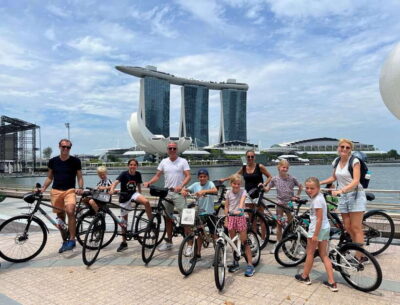
Historical Singapore Bike Tour on Full-Sized Bicycles
Read our review →
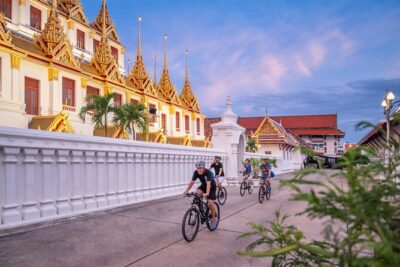
Night Bike Tour with Temples & Flower Market Visit
Read our review →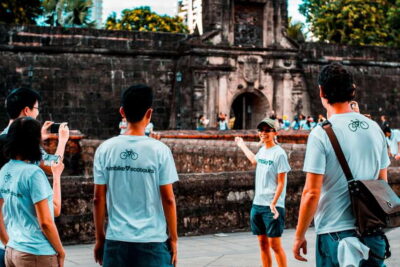
Intramuros, Manila: Historical Bamboo Bike Tour
Read our review →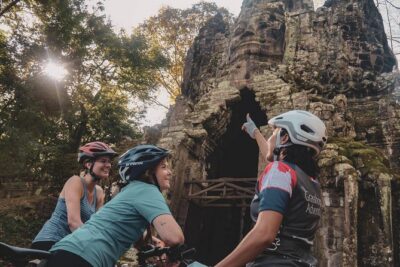
Historical Bike Tour of Savannah and Keep Bikes After Tour
Read our review →Other lists this ride turns up in