REVIEW · HERITAGE AND TEMPLE BIKE TOURS IN JAPAN
E-Bike Nara Highlights – Todaiji, Knives, Deer, Shrine
Nara’s famous sights spread across a large park, and an e-bike lets you connect them without spending the whole day on foot. You’ll ride past deer, pause at the great Nandaimon Gate, enter Todaiji, visit Kasuga Taisha, and finish with a quiet view at Ukimido. I especially like the smart route and the way the tour mixes major sights with a family knife shop most visitors would not find on their own.
I also like the practical help. Guides such as Chris, Remi, Robert, Melody, and Elodie have been praised for clear explanations, patience, photography, and safe riding. The main catch is price: at $90 per person, this is not a cheap bike rental, and the pace can be fairly brisk. One recent experience also raised concerns about bike maintenance and fit for taller riders, so ask to check your bicycle before setting off.
Key points before you book
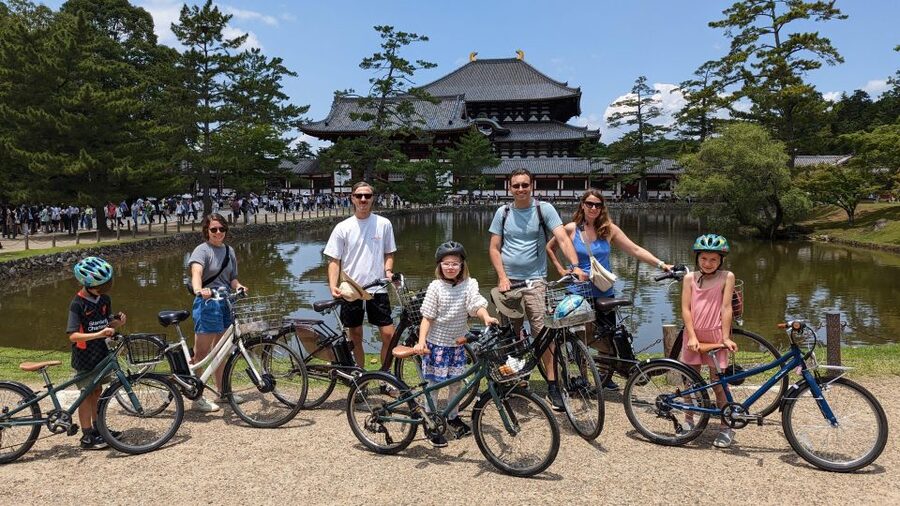
- Cover Nara Park by e-bike: See in roughly three and a half hours what could take much longer on foot.
- Enter Todaiji Temple: The admission fee is included, along with time inside the massive Buddhist temple.
- Learn the deer routine: Your guide explains how to offer the special deer crackers safely and properly.
- Visit a traditional knife shop: Kikuichimonjushirokanenaga connects Japanese cutlery with generations of sword-making.
- See Kasuga Taisha and Ukimido: The route includes shrine lanterns, forested paths, and a pond pavilion.
- Expect a useful but active pace: The bikes are electric, yet you still need to ride confidently and follow the guide.
Why an e-bike makes sense in Nara Park
Nara Park is easy to underestimate. On a map, Todaiji, Kasuga Taisha, Mt. Wakakusa, and Ukimido may look close together. In practice, you’ll cover a lot of ground, stop often, share paths with people and deer, and spend plenty of time walking once you park the bike.
The electric assistance changes the day. You still pedal, but hills and longer stretches require less effort. A 60-year-old rider who described being out of shape still managed the tour comfortably, while a family with children found the bikes a fun way to keep everyone moving. If heat is a concern, the e-bike also saves energy for the temples and shrine.
This is not a slow bicycle stroll. The group rides at a forward pace between stops, and you need to handle a bicycle properly. The tour includes bicycle rental, but not bicycle insurance. I would choose it only if you are comfortable braking, steering, starting, and riding around other people.
The bicycles were described as being in good condition on many outings, though one person found a bike poorly maintained and not well suited to a taller rider. Before leaving the base, check the seat height, brakes, tires, and electric assistance. A quick adjustment can make the difference between a relaxed ride and a tiring one.
More City Highlights Bike Tours in Japan
- Tokyo Top Highlights 3h Guided E-bike Tour
★ 5.0 · 714 reviews - 5 Top Highlights of Kyoto Full Day Bike Tour (E-bike option)
★ 5.0 · 511 reviews - Tokyo: 3-Hour Bike or E-Bike City Highlights Tour
★ 4.8 · 435 reviews
Starting near Kintetsu Nara Station
The meeting point is at 16-1 Takamaichicho, in front of Building LIFE 21, just a few minutes from Kintetsu Nara Station. This location is convenient if you arrive by the Kintetsu line, but do not confuse it with JR Nara Station. The bicycle base is less than a five-minute walk from Kintetsu Nara Station.
Arrive 15 minutes early. Your guide wears a JTA uniform with a navy cap and red polo shirt, which helps at a busy meeting point. You’ll receive your e-bike and can request a helmet, subject to availability. Bring comfortable clothes, comfortable shoes, your passport, and some cash for optional purchases and extra food.
The tour is offered in English and French, with private or small-group options. French-speaking guides are available, but French is not guaranteed on a shared tour. If you need French on a particular date, contact the operator ahead of time.
A single person can make a booking, but the tour requires at least two participants to operate. If nobody else joins, the session may be canceled, with rescheduling or a full refund offered. That is worth knowing before you build a tightly timed Nara day around it.
Deer, open park, and the Nandaimon Gate
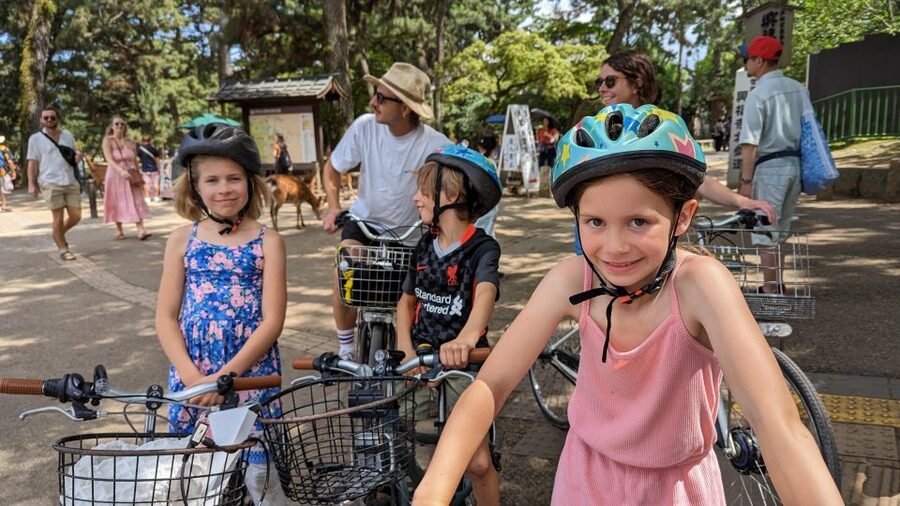
The first riding section takes you into Nara Park, where deer are part of the everyday scene rather than a brief wildlife stop. The animals move freely around the paths and temple grounds, so your guide’s instructions matter.
You receive deer crackers, called shika senbei, as part of the tour. Your guide explains the local way to feed the deer, including how to offer the crackers and manage the attention once the food is gone. Extra crackers cost more, and the included amount is intended for the activity rather than unlimited feeding.
The deer are charming, but they are still animals. Keep food in hand only when you intend to offer it, follow the guide’s directions, and keep your belongings secure. The tour’s value here is not simply access to deer. It gives you a little context and helps you handle the encounter without turning it into a frantic chase.
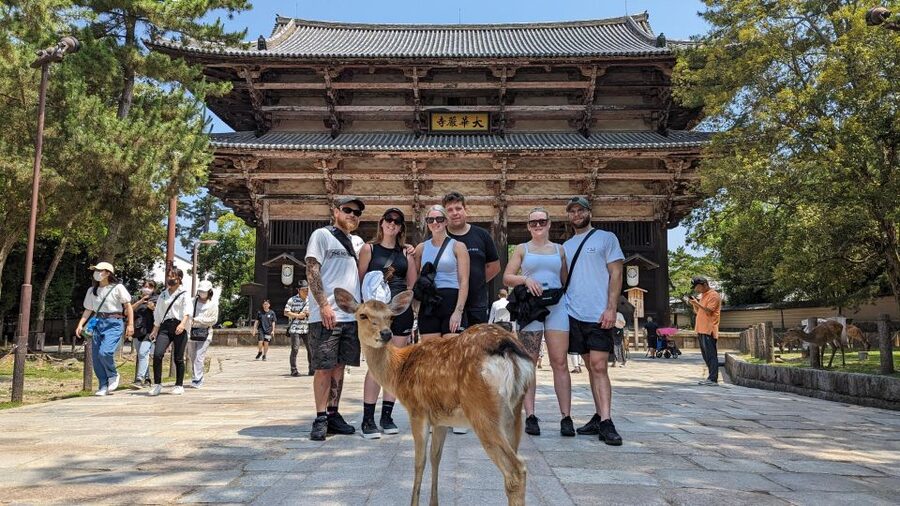
You then reach Nandaimon, the great southern gate of Todaiji. The gate’s scale sets up the temple visit well, and the stop includes time for photos and a guided explanation. You may also see deer around the approach, which creates the classic Nara picture, but the gate itself deserves attention for its size and dramatic structure.
Inside Todaiji, Nara’s essential temple
Todaiji is the main cultural anchor of the tour. Admission is included, so you do not need to budget a separate entrance fee. Inside, you have about 45 minutes for a visit, photos, and some free time.
The temple is best approached with a little patience. The building is enormous, and the famous Great Buddha gives the interior its focus. Your guide may explain the Buddhist setting and the role Todaiji has played in Nara, then allow you to look around at your own pace.
This is not a long temple study session. Forty-five minutes is enough to see the central sights without making the tour feel stuck in one building, but you will not have time for every corner of the wider complex. If you want detailed architectural study, quiet meditation, or a slow look at every statue, you may prefer to visit Todaiji separately.
For most first-time visitors, the timing works. You get the major temple experience, then return to the bicycle before the day becomes a long sequence of indoor stops. The route also leaves room for shopping and the shrine later.
More E-Bike Tours in Japan
- Hidden Kyoto E-Biking tour
★ 5.0 · 1,843 reviews - 3h Tokyo E-Bike Tour: Hidden Gems, and Local Life with guide
★ 5.0 · 670 reviews - Kyoto: Memory Kyoto E-Bike Tour
★ 4.8 · 297 reviews - E-Bike Tours of the highlights of Kyoto!!!
★ 5.0 · 291 reviews
Mt. Wakakusa and the ride toward the knife shop
After Todaiji, the group passes Mt. Wakakusa. The stop lasts about 15 minutes and focuses on photos, scenery, and the deer around the park. You are not signing up for a mountain hike, so think of this as a scenic riding section rather than a climb.
The open views and changing surroundings give the tour a welcome break from temple courtyards. You’ll see how quickly Nara shifts from formal religious buildings to broad parkland. The e-bike is particularly useful here, since it keeps the group together over the connecting roads and paths.
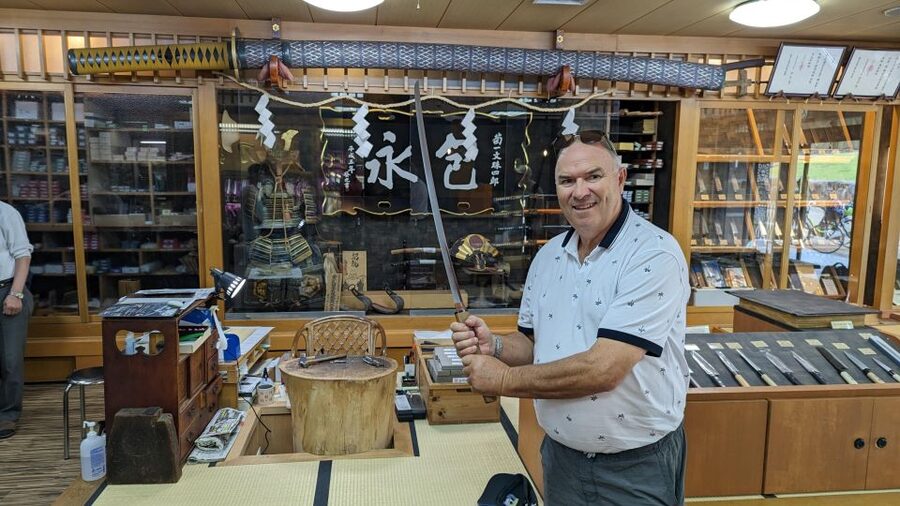
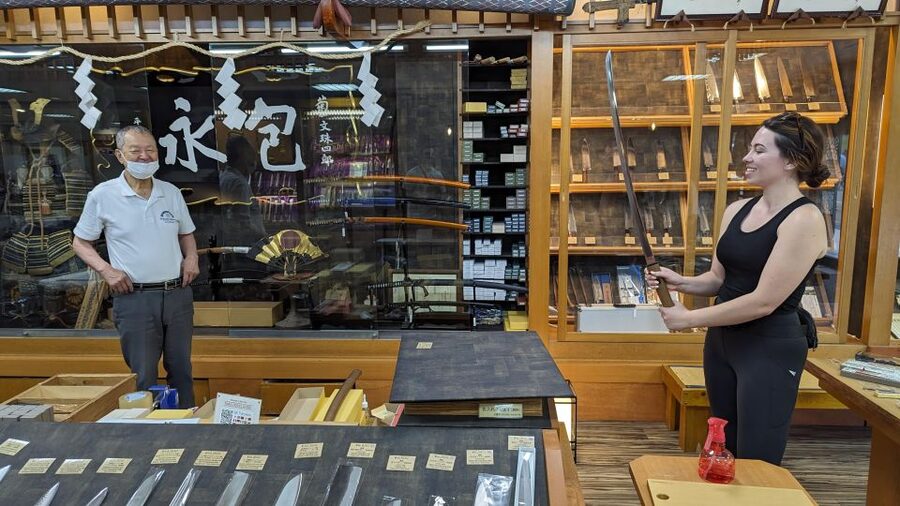
The ride then heads toward Kikuichimonjushirokanenaga Honten, a traditional cutlery shop. This is one of the most distinctive parts of the experience. The stop includes a break, a Japanese snack called Kanoko, time for shopping, and an introduction to Japanese knives and their craft tradition.
The shop’s connection with earlier sword makers gives the visit more substance than a generic souvenir stop. Your guide can help explain different types of cutlery and assist with a purchase if you want one. Several riders found themselves buying knives or wishing they had bought a set or gifts, so decide in advance how much luggage space and budget you have.
You should not feel pressured to purchase anything. The knife stop is included as an introduction, not a requirement to shop. Still, if Japanese cooking interests you, this may be the part that gives the tour a personal souvenir rather than another temple photograph.
Remember that extra food and drinks are not included. The supplied Kanoko snack is a small local treat, not a full meal, so eat beforehand if you need substantial food during the afternoon.
Kasuga Taisha and its lanterns
Kasuga Taisha brings a different mood from Todaiji. The shrine is known for its rows of stone and bronze lanterns, and the wooded setting makes the approach feel quieter and more enclosed. The visit lasts about 30 minutes and includes time for photos, sightseeing, and walking.
Your guide can explain the difference between Buddhist and Shinto sites, which helps make sense of the day. Nara places both traditions close together, but they are not interchangeable. A short explanation about shrine customs, spiritual practice, and the meaning of the lanterns adds much more than simply taking a picture at the entrance.
The pace here is sensible. Thirty minutes gives you enough time to see the main area and appreciate the setting, but not enough for a detailed exploration of every path. If Kasuga Taisha is your top priority, note the route and return later for a slower visit.
The deer also appear around the shrine grounds. Their presence links the park, the temples, and the shrine into one shared Nara experience, but the shrine itself should not become merely a backdrop for animal photos. Look up at the lanterns, notice the forest setting, and give the religious site its due.
Ukimido gives the route a quiet finish
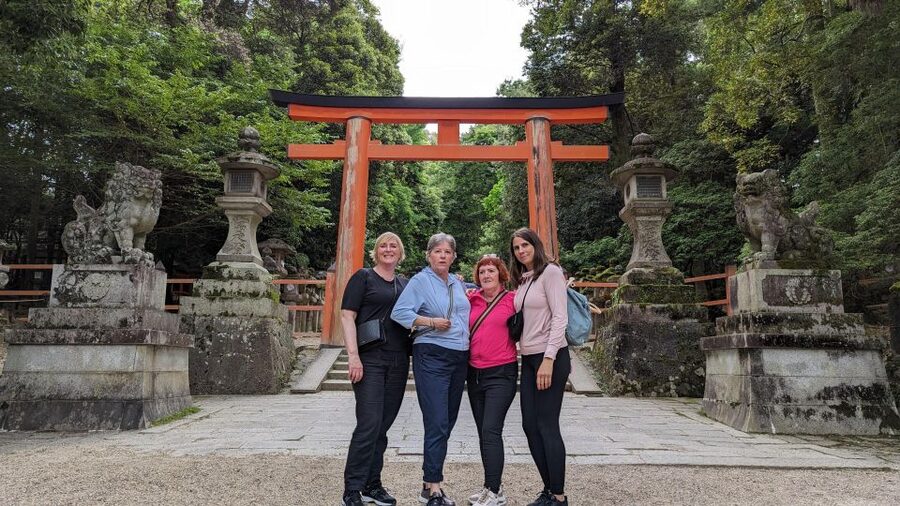
The final scenic stop is Ukimido, a small pavilion associated with the pond and surrounding views. The stop lasts about 15 minutes, with time to walk and take photographs.
After the scale of Todaiji and the formal setting of Kasuga Taisha, Ukimido works as a calmer pause. You’ll have a chance to slow down, look across the water, and take in a different side of Nara. It is a short stop, but it helps the tour end with scenery rather than another crowded entrance.
The group then rides through Nara Park for the return to the bicycle base. In total, the scheduled route takes 210 minutes. Guides sometimes allow extra time when the group is comfortable with it, but I would avoid booking a train or dinner reservation immediately afterward. Leave a buffer, especially if weather, photographs, or shopping slow the group.
Guide quality and group atmosphere

The guide is central to the value of this experience. The company uses bilingual local guides, and several names have appeared on successful outings, including Chris, Christian, Christoph, Remi, Robert, Melody, Elodie, Jean-Yves, and Mattheus.
The strongest pattern is personal attention. Guides have helped with photographs, answered questions about Japanese culture, adjusted the route to group interests, and kept riders safe. Robert has been praised for explaining Shinto, Buddhism, Zen, gardens, and Japanese spirituality. Remi has been described as especially flexible and well informed about the area and wider Japanese culture.
That does not mean every guide will give the same talk. Shared tours mix nationalities, so English usually becomes the working language. A private or small-group booking gives you a better chance to ask detailed questions and set the pace around your interests.
The group format also affects the ride. A small group can feel almost private, particularly when only two people book. Larger groups may be more social but require closer attention to the guide and more patience at stops.
Is $90 a fair price?
At $90 per person, the cost includes the e-bike, Todaiji entrance, deer crackers, a Kanoko snack, a bilingual guide, and the knife introduction. You are also paying for route planning, bicycle logistics, local knowledge, and the ability to connect sites that would take much longer to cover on foot.
For a short stay in Nara, I think the value can be solid. You see Todaiji, Nandaimon, Mt. Wakakusa, Kasuga Taisha, Ukimido, the deer, and a traditional knife shop in one outing. The e-bike also reduces the physical cost of moving between them.
The price is harder to justify if you already plan to spend a full day in Nara and enjoy walking slowly. You could visit the main sites independently and control your own timing. It is also worth comparing the cost with other bike tours, since one person considered this option somewhat expensive despite praising the guide.
In other words, the tour sells time and ease more than simple transportation. If you have only a morning or afternoon, that matters. If you have two days and want to linger, the premium may not suit you.
Who should book this Nara e-bike tour?
I would recommend it to first-time visitors who want the major Nara sights without organizing routes, bike parking, temple admission, and deer etiquette themselves. It also suits families with older children, couples, active older adults, and anyone visiting Nara as a day trip from Kyoto or Osaka.
It is a good fit for people who enjoy a guide but still want free time at Todaiji, Kasuga Taisha, and the knife shop. The electric assistance helps, but this is still a cycling activity, not a sightseeing bus.
You may want another plan if you dislike riding near pedestrians and animals, need a very slow pace, cannot ride confidently, or want to spend hours inside one temple. Tall riders should check the bike fit before departure, and anyone booking alone should understand that two participants are needed for the tour to run.
Weather also matters. Outings have gone ahead in rain and cold, with guides doing their best to keep the mood up, but good weather will make the park and cycling much more pleasant. Wear suitable clothes and leave room in your schedule after the tour.
Should you book it?
Book this tour if your priority is seeing a lot of Nara in a short time, with a guide who can explain the temples, shrine, deer, and knife craft along the way. The route is well balanced, the entrance fee and small food items are included, and the e-bike makes the wide park much easier to manage.
Skip it if you want a cheap rental, a leisurely ride, or a completely independent day. At $90, the best value comes when your time is limited and you appreciate having the route, local explanations, and logistics handled for you.
FAQ
How long does the Nara e-bike tour last?
The scheduled duration is 210 minutes, or three and a half hours. The route begins and ends at the bicycle base near Kintetsu Nara Station.
Where does the tour meet?
Meet your guide at 16-1 Takamaichicho, in front of Building LIFE 21. The base is less than a five-minute walk from Kintetsu Nara Station, not JR Nara Station.
What languages are available?
The activity is offered in English and French. French cannot be guaranteed on a shared tour, so contact the operator ahead of time if you need a French-speaking guide.
Is Todaiji admission included?
Yes. The Todaiji entrance fee is included in the tour price.
Are deer crackers included?
Yes. Deer crackers are provided for the feeding activity. Extra crackers, along with additional food and drinks, cost extra.
Do I need to bring a helmet?
A helmet can be provided if requested and available. Ask when you arrive at the bicycle base.
Can children join the tour?
Young riders under 10 can be accommodated with child seats, with up to one child seat per e-bike.
What happens if I book alone?
A single person can book, but at least two participants are needed for the tour to operate. If the minimum is not reached, the session may be canceled, with rescheduling or a full refund offered.
More Heritage and Temple Bike Tours in Japan
- Historical Kyoto E-Bike Tour
★ 5.0 · 181 reviews - 4.5-Hour Kyoto Bike Tour with Lunch and UNESCO Zen Temples
★ 5.0 · 122 reviews - Kyoto: Fushimi Inari Shrine and Tofukuji Temple E-Bike Tour
★ 5.0 · 75 reviews - Kyoto: Hidden Gems E-Bike Tour Through Backstreets & Temples
★ 4.9 · 54 reviews
Newest rides we have reviewed in Japan
- Best of Kyoto: Ginkakuji & Path of Philosophy E-Bike Tour★ 4.9 · 79 reviews
- Kyoto: Tailored E-Bike Tour to Highlights & Hidden Gems★ 4.9 · 32 reviews
- Kyoto: Half-day Guided Bike Tour with Fushimi Inari★ 4.9 · 21 reviews
- Kyoto: Full Day Bike Tour★ 4.9 · 39 reviews
- Kyoto: Early Bird E-Bike Tour with Lunch★ 5.0 · 14 reviews
- Kyoto: Full-Day City Highlights Bike Tour with Light Lunch★ 5.0 · 52 reviews
- Kanazawa Half Day E-bike Tour★ 5.0 · 81 reviews
- Hiroshima: Best of Hiroshima Guided Bike Tour★ 4.9 · 89 reviews
Heritage and Temple Bike Tours, compared.

Historical Singapore Bike Tour on Full-Sized Bicycles
Read our review →
Night Bike Tour with Temples & Flower Market Visit
Read our review →
Intramuros, Manila: Historical Bamboo Bike Tour
Read our review →