REVIEW · HERITAGE AND TEMPLE BIKE TOURS IN KYOTO
4.5-Hour Kyoto Bike Tour with Lunch and UNESCO Zen Temples
Kyoto’s temples are spread across the city, and a bicycle lets you connect them in a way a bus tour cannot. This small-group ride begins near Kyoto Station, crosses the Gion district, visits Kennin-ji and Nanzen-ji, and follows the Kamogawa River before lunch in a traditional Japanese house.
I like the maximum of five people, which gives your guide room to adjust the pace and answer questions. I also like that the price includes the bicycle, insurance, Kennin-ji admission, photos, and a local lunch. The main drawback is that you must arrive on time and be ready to cycle in Kyoto traffic and changing weather.
Key points at a glance
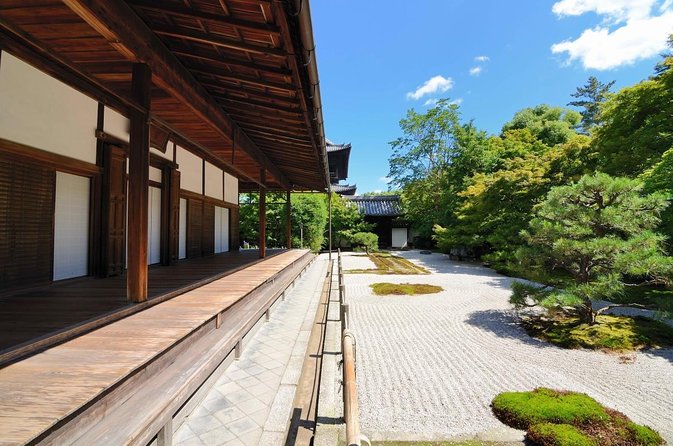
- Kennin-ji in Gion: Explore Kyoto’s oldest Zen temple and its simple dry garden.
- Nanzen-ji and Heian Shrine: See two major eastern Kyoto sights without spending the day on buses.
- Kamogawa River cycling: Enjoy one of the calmest stretches of the route as you ride beside the water.
- Lunch in a Japanese house: A traditional Kyoto meal is included, with advance notice needed for dietary requests.
- Tiny groups: No more than five people join, and guides such as Yusuke and Naru have led the tour.
- Near Kyoto Station: Start at a 7-Eleven close to the station and finish at the Kyoto Eco Trip bicycle shop.
A practical way to see several sides of Kyoto
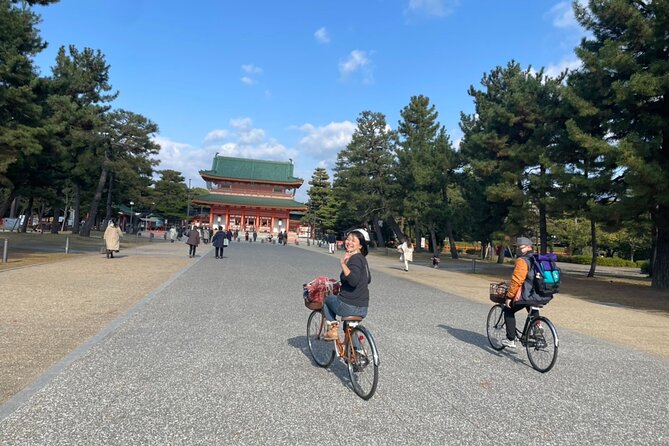
This 4.5-hour tour gives you a useful mix: temple courtyards, a river ride, neighborhood streets, a traditional meal, and short lessons in Kyoto’s past. You are not simply being taken from one major sight to another. The bicycle is the link between them.
The route begins at 9:00 a.m. near Kyoto Station. That early start matters. You can cover a fair amount of ground before the hottest part of the day, especially in summer, when Kyoto temperatures can reach 40°C. In winter, temperatures may fall as low as -5°C, so clothing matters just as much.
You receive a rental bicycle, bike lock, and bodily injury liability insurance. A helmet is available if you need one. You should wear comfortable clothes and shoes that work well for several hours of riding. The tour is for people over 150 centimeters tall, or about 4 feet 11 inches.
The group limit of five is one of the strongest features here. A bike tour can become awkward when a large pack is spread across city streets. With a small group, your guide can keep an eye on the route, explain what you are seeing, and adjust the pace more easily. One person described having what felt like a private outing, which can happen when bookings are light.
More Heritage and Temple Bike Tours in Japan
- Historical Kyoto E-Bike Tour
★ 5.0 · 181 reviews - Kyoto: Fushimi Inari Shrine and Tofukuji Temple E-Bike Tour
★ 5.0 · 75 reviews - Kyoto: Hidden Gems E-Bike Tour Through Backstreets & Temples
★ 4.9 · 54 reviews
Starting near Kyoto Station and riding toward Gion
The meeting point is the 7-Eleven at 44-1 Higashikujō Kamitonodachō in Minami Ward. It is close to public transportation, but you should still allow extra time to find the exact shop and meet your guide. The tour does not wait for late arrivals, and missing the start means no refund or rescheduling.
After the bicycle handover and a review of traffic rules, the ride heads toward the Gion district. Japan prohibits cycling under the influence of alcohol and using a smartphone while riding. You may use a phone when the bicycle is stopped, but not while moving. These rules are taken seriously, and your guide will explain how to ride safely in the city.
This is not a mountain-bike outing or a race. The point is to move through Kyoto at street level, with enough time to notice the shift from busy roads to temple grounds and quieter lanes. Still, you should feel comfortable cycling around other road users. If you are nervous on a bicycle, the city setting may require more attention than a quiet countryside ride.
Kennin-ji: Zen simplicity in the Gion district
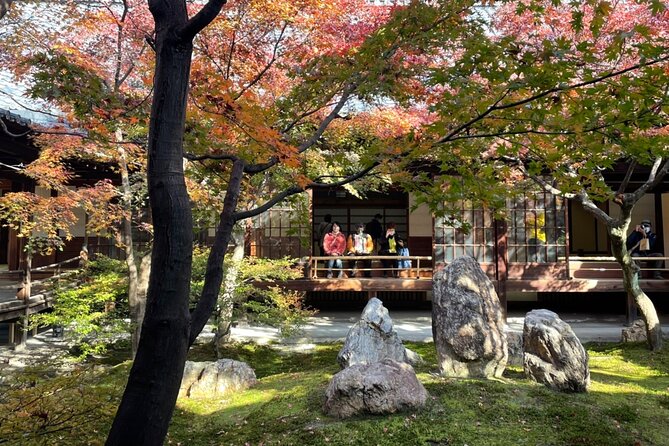
Kennin-ji is the first major stop. It is described as Kyoto’s oldest Zen temple, and the visit includes admission. You have about 30 minutes here, enough to see the grounds and focus on the dry garden rather than trying to cover every corner.
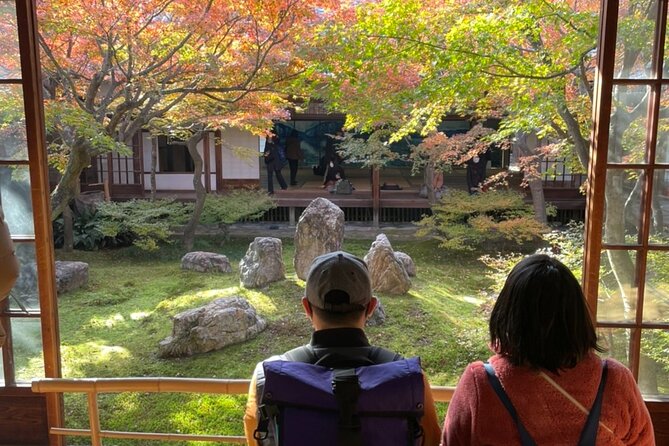
The garden uses carefully arranged stones, gravel, and open space. Its appeal is restraint. Instead of colorful decoration at every turn, you get a quiet composition that rewards a slower look. Your guide can explain the Zen setting and the idea of wabi-sabi, the beauty found in simplicity and imperfection.
Kennin-ji is a strong early stop because it gives the tour an unmistakable Kyoto character. You are in Gion, one of the city’s best-known districts, but the temple grounds offer a change of pace from the streets outside. The contrast helps you understand why Kyoto is more than a collection of photogenic buildings.
The 30-minute visit is also a limitation. If you want long periods for sitting in the garden, taking photos, or exploring every room, the group schedule may feel brisk. You will get an introduction and a clear look at the main features, not an unhurried half-day temple visit.
Nanzen-ji and the old eastern edge of Kyoto
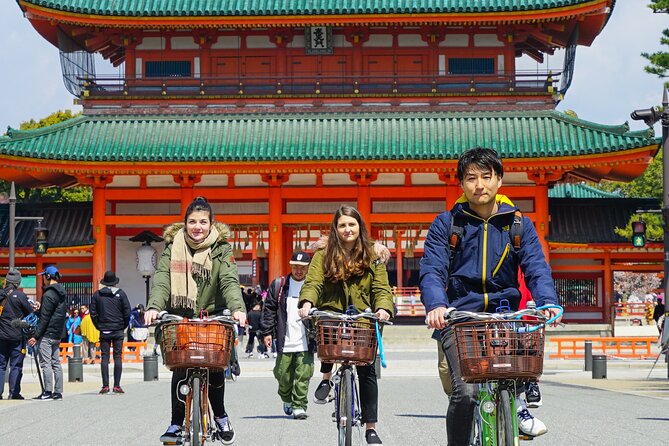
From Kennin-ji, you continue by bicycle to Nanzen-ji. The stop lasts about 20 minutes, and admission to the temple itself is free. Nanzen-ji is described as Japan’s most prestigious Zen temple, with roughly 700 years of history.
The powerful temple gate is a major visual point, while the surrounding grounds offer seasonal beauty. Your guide’s explanation adds useful context here, especially if you want to understand how Zen temples functioned in earlier periods of Kyoto’s development.
Nanzen-ji works well in this itinerary because it differs from Kennin-ji. Kennin-ji gives you a more focused look at a dry garden in Gion. Nanzen-ji provides a larger temple setting with a monumental gate and a stronger sense of space. Together, they give you two different views of Zen architecture and design.
The short stop means you should set your expectations properly. You will not have time to explore every part of Nanzen-ji at length. If this is your first visit to Kyoto, the guided overview is useful. If you already know the temple well or want to examine every sub-temple, you may prefer to return independently later.
More Heritage and Temple Bike Tours in Kyoto
- 4.5-hr Kyoto Historical Highlights Bike Tour with UNESCO
★ 4.7 · 13 reviews
Heian Shrine and the ride between major sights
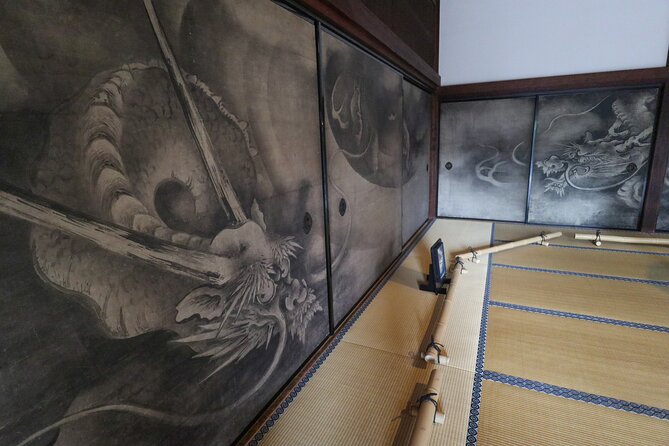
The route passes by Heian Shrine rather than listing it as a full stop. That distinction matters. You can see the shrine as part of the cycling route, but the schedule does not promise a dedicated visit or entry time.
This is one of the pleasures of riding. You can connect famous places without treating every stop as a separate transport problem. A bus may get you close to a temple, but the bicycle lets you see the streets in between and gives your guide a chance to point out details along the way.
At the same time, you should not book this tour expecting lengthy visits at every landmark. The itinerary is designed as a balanced circuit. You receive temple time, riding time, lunch, and local commentary within one morning and early afternoon.
A calmer stretch beside the Kamogawa River
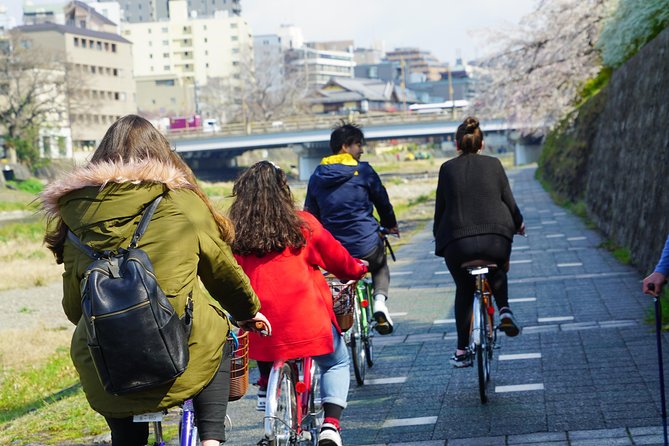
The Kamogawa River section is likely to be one of the most relaxing parts of the ride. You glide alongside the water and get a break from city traffic. The route lets you see Kyoto from a lower, quieter viewpoint, with the river acting as a natural thread through the city.
This section also gives the tour a change of rhythm. Temple visits ask you to stop and look closely. River cycling lets you keep moving, breathe a little, and enjoy the setting without a formal explanation at every moment.
You should remember that the ride is still weather-dependent. Strong heat, cold, rain, or other unsafe conditions can lead to cancellation. Kyoto’s climate has become more extreme, so check the forecast and dress for the season rather than relying on a mild morning.
Lunch in a traditional Japanese house
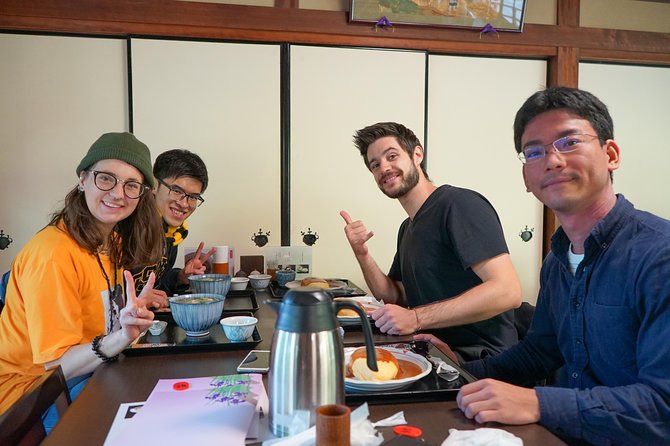
Lunch takes place at 6 Shōgoin Nishimachi, where you can enjoy a local Kyoto meal or dessert and stroll around a Japanese garden. The meal is included in the tour price, which makes the $99.10 cost easier to assess.
This is more useful than simply stopping at a standard restaurant. A meal in a traditional Japanese house gives you a chance to slow down and experience a setting connected to local daily culture. The garden adds another quiet pause after the riding and temple visits.
Vegetarian and vegan meals are available, but there is an important condition: fish stock is used. If you have dietary requests or allergies, tell the operator at least one day before the tour. Requests made on the day cannot be accommodated, and an allergy-free meal or substitution cannot be guaranteed because the food is prepared in kitchens outside the tour company’s control.
Drinks and extra food cost more. You should also remember that the meal is one part of a timed route. This is not a long restaurant visit where you choose from an extensive menu. It is a scheduled local lunch included to round out the morning’s sightseeing.
What the $99.10 price really covers
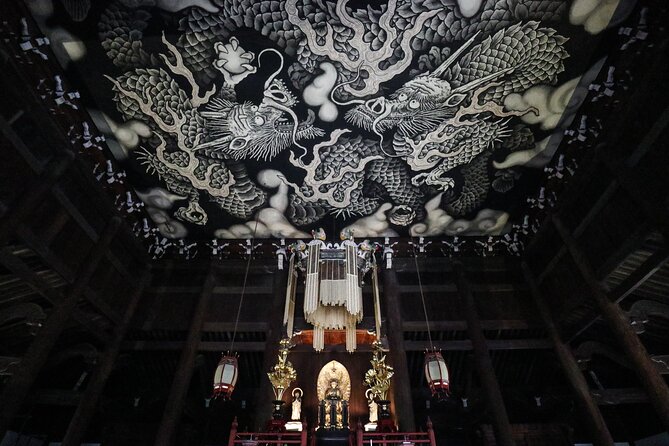
At $99.10 per person, the tour is not the cheapest way to move around Kyoto. You are paying for more than a bicycle rental, though. The price includes the rental bicycle, bodily injury liability insurance, bike lock, helmet if needed, a certified MagicalTrip guide, Kennin-ji admission, photos taken during the outing, and lunch.
That package has practical value. Arranging a bicycle separately would not give you the same route, temple context, meal, or group support. The guide also handles navigation, which lets you focus on the city rather than checking directions at every junction.
The best value comes if you want a first look at several areas in one half-day. You save the time and effort of planning how to connect Gion, Nanzen-ji, Heian Shrine, the river, and lunch. You also get a small group instead of a large coach.
The value is weaker if you already have a bicycle, know Kyoto well, or prefer to spend an hour or two at one temple. The fixed schedule gives you variety, but it limits how long you can linger.
Guide style and the benefit of a small group
The guide is English-speaking and certified by MagicalTrip. Guides named in the tour feedback include Yusuke and Naru, with another response referring to Icchan. Your assigned guide will depend on the date, so you should not book on the assumption that a particular person will lead your tour unless the operator confirms it.
The most useful quality in a guide here is not a long lecture. It is the ability to explain what you are seeing while keeping the bicycle group together. A good guide can also help you feel comfortable with the pace and point out how each temple fits into Kyoto’s past.
The small size helps with this. At no more than five people, you can ask questions without holding up a large crowd. If the group is particularly small, you may get a more personal pace, but you should still expect the advertised itinerary rather than a fully custom private tour.
Safety, weather, and preparation
Japan’s bicycle rules are clear. Do not cycle after drinking, and do not use your smartphone while riding. Stop first if you need to check a message, take a photo, or look at something on your phone.
The guide will explain traffic rules, but you remain responsible for riding carefully. Comfortable clothing and suitable shoes are essential. A helmet is available, and the bicycle comes with a lock and bodily injury liability insurance.
The tour requires good weather. If poor conditions make the outing unsafe, you can be offered another date or a full refund. Free cancellation is available if you cancel at least 24 hours before the 9:00 a.m. start. Cancellations or changes inside that window are not refunded or accepted.
These terms make advance planning important. The tour is often booked about 40 days ahead, so if you want a particular date, reserve early. At the same time, do not book it as your only possible Kyoto activity if your visit falls during a season of uncertain weather.
Who should book this Kyoto bike tour
I would choose this outing if you want an active introduction to Kyoto and like the idea of seeing the city between major sights. It suits people who value a small group, want an included meal, and prefer an English-speaking guide to explain the temples rather than simply handing over a route map.
It is also a good choice for someone with limited time. In four and a half hours, you get Gion, Kennin-ji, Nanzen-ji, a pass by Heian Shrine, the Kamogawa River, and a traditional lunch. You will not master Kyoto in one morning, but you will get a well-shaped first look.
I would think twice if you dislike cycling in city streets, need a fully accessible sightseeing format, or want long, quiet visits at each temple. The height requirement is over 150 centimeters, and the tour information does not provide broader accessibility details, so ask the operator directly if you have specific mobility needs.
Should you book it?
Book this tour if you want movement, temples, and a local meal in one compact outing. The small group, included bicycle, temple entry, photos, insurance, and lunch make the $99.10 price reasonable for a guided introduction.
Skip it if your main goal is slow temple study or independent cycling. For everyone else, this is a practical way to get beyond a single Kyoto neighborhood, with the Kamogawa River and the traditional lunch keeping the morning from feeling like a checklist.
FAQ
How long is the Kyoto bike tour?
The tour lasts approximately 4 hours and 30 minutes. It begins at 9:00 a.m.
Where does the tour start?
The meeting point is the 7-Eleven at 44-1 Higashikujō Kamitonodachō, Minami Ward, Kyoto, 601-8002, Japan.
Where does the tour end?
The tour ends at Rental Bicycle KYOTO ECO TRIP Flagship shop at 58 Higashikujo Muromachi, Minami Ward, Kyoto, 601-8001, Japan.
Are bicycles and helmets included?
A rental bicycle, bike lock, and bicycle insurance are included. A helmet is available if you need one.
What temples are included?
The route includes Kennin-ji Temple and Nanzen-ji Temple. Kennin-ji admission is included. The route also passes by Heian Shrine.
Is lunch included?
Yes. A local Kyoto lunch at a Japanese house is included. Drinks and additional food cost extra.
Can I request a vegetarian or vegan meal?
Vegetarian and vegan options are available, but fish stock is used. You must provide dietary requests or allergy information at least one day before the tour, and allergy-free meals cannot be guaranteed.
How many people can join?
The tour has a maximum of five participants.
What happens if the weather is bad?
The tour may be canceled for safety if the weather is unsuitable. You will be offered another date or a full refund.
More Rides with Lunch in Kyoto
- Bike Tour Exploring North Kyoto plus Lunch
★ 5.0 · 1,087 reviews - Kyoto: Full-Day City Highlights Bike Tour with Light Lunch
★ 5.0 · 52 reviews - Kyoto: Early Bird E-Bike Tour with Lunch
★ 5.0 · 14 reviews - Electric Cycling Tour of Ubud with Free Hotel Transfer and Lunch
★ 5.0 · 1,397 reviews
Newest rides we have reviewed in Kyoto
- Best of Kyoto: Ginkakuji & Path of Philosophy E-Bike Tour★ 4.9 · 79 reviews
- Kyoto: Tailored E-Bike Tour to Highlights & Hidden Gems★ 4.9 · 32 reviews
- Kyoto: Full Day Bike Tour★ 4.9 · 39 reviews
- Kyoto: Half-day Guided Bike Tour with Fushimi Inari★ 4.9 · 21 reviews
- Kyoto: Early Bird E-Bike Tour with Lunch★ 5.0 · 14 reviews
- Kyoto: Full-Day City Highlights Bike Tour with Light Lunch★ 5.0 · 52 reviews
- Cycle Kyoto’s Hidden Gems & Gion Stroll★ 5.0 · 29 reviews
- Kyoto: Arashiyama Bamboo Forest Morning Tour by Bike★ 5.0 · 115 reviews
Heritage and Temple Bike Tours, compared.

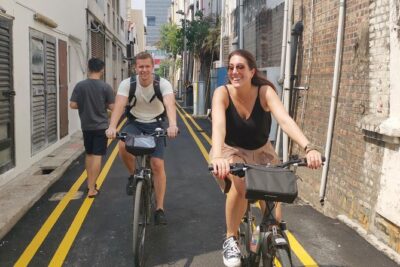
Historical Singapore Bike Tour on Full-Sized Bicycles
Read our review →
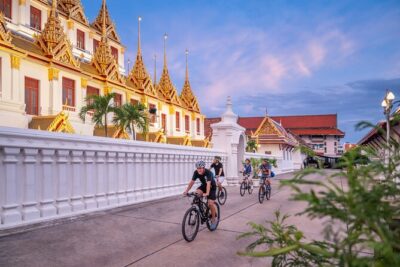
Night Bike Tour with Temples & Flower Market Visit
Read our review →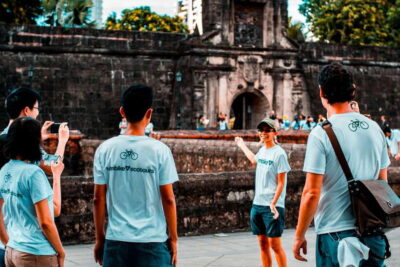
Intramuros, Manila: Historical Bamboo Bike Tour
Read our review →