
REVIEW · SIEM REAP
Siem Reap: Bike the Angkor Temples – Full-Day 30km Tour
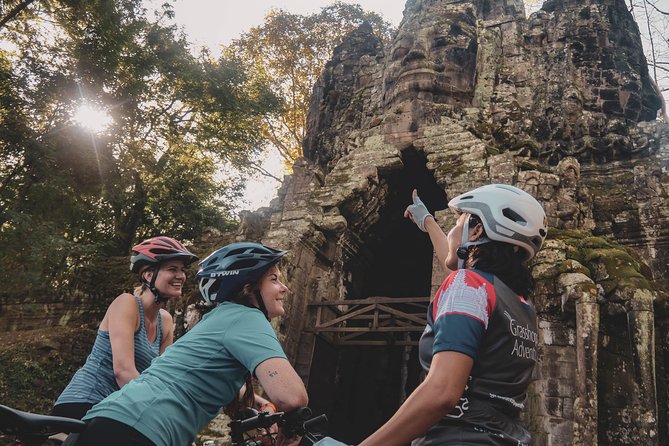
Angkor is enormous, and a bicycle lets you see more than the famous stone towers. This 30-kilometer ride uses forest tracks, village roads, and quieter routes to connect Angkor Wat, Bayon, and Ta Prohm. I like the chance to see rice fields and rural homes between temple visits, and I like that guides such as Chen, Moon, Wich, and Samnang Chan add useful context instead of simply pointing at ruins.
The tour includes a bike, helmet, water, fruit, snacks, and an English-speaking guide. Lunch costs extra if you choose the no-lunch option, and the Angkor Pass is also extra at $37. The main concern is simple: heat and rough ground can make the final miles tiring, so this suits reasonably fit riders more than casual cyclists.
Key points to know before you book
- You ride 25 to 30 kilometers: Most roads are flat, but some forest tracks include sand, bumps, and uneven ground.
- You see the essential temples: The route includes Angkor Wat, Bayon, Angkor Thom, and Ta Prohm, with time to walk around each site.
- The countryside is part of the tour: Back roads lead through villages, wooded areas, and farm yards rather than keeping you on the main tourist route.
- The group stays small: The maximum is 10 people, with a private tour option available.
- Food and drinks keep the day moving: Water, fruit, and snacks are included. A Khmer lunch is included only with the selected lunch option.
- Temple clothing matters: Your knees and shoulders must be covered for entry. Sleeveless and see-through shirts are not permitted.
Why cycling changes your Angkor day
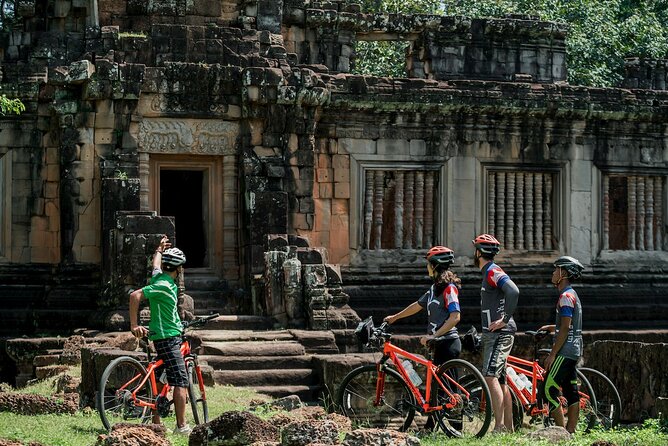
A tuk-tuk gets you from one temple gate to another. A bicycle gives you the space between those gates. That difference matters at Angkor, where the park covers a huge area and the roads pass through trees, villages, and open country.
I like the rhythm of this tour. You ride for a while, stop for a temple, walk and listen, then get back on the bike. The pace is active but not built around speed. Guides wait, give safety instructions, and keep the group together. Some rides use a guide at the front and another person at the back, which helps on public roads and narrow tracks.
The $35 price is good value for the equipment and guiding, but it is not the complete cost of the day. You still need to buy the one-day Angkor Pass for $37. The lunch choice also affects the final price. If you select lunch, you receive a local Khmer meal arranged during the ride. If you choose the option without lunch, you need to handle that part yourself.
The strongest value comes from combining transport and sightseeing. You do not need to arrange a tuk-tuk, rent a bike, plan a route, or work out how to find the quieter paths. You also get explanations at the temples and regular drinks along the way.
More Heritage and Temple Bike Tours in Cambodia:
- From Siem Reap: Angkor Wat Sunrise and Temples E-Bike Tour
★ 5.0 · 52 reviews - Bangkok: Temples, Canals & Local Life Bike Tour
★ 4.9 · 3,511 reviews - Historical Singapore Bike Tour on Full-Sized Bicycles
★ 5.0 · 1,421 reviews
Starting in Siem Reap at 7:30 am
The ride begins at ផ្ទះគ្រូ Café, near central Siem Reap. You make your own way there, since hotel pickup and drop-off are not included. After introductions, you receive a mountain bike and helmet, and the staff adjusts the bike to your height.
The bikes are described as well maintained, and the setup is practical. Riders have reported that bikes were labeled and adjusted before departure, with working suspension helping on the rougher tracks. You should still check your saddle, brakes, and gears before leaving. A few minutes spent getting comfortable is worthwhile when you have several hours in the seat.
The guide gives a safety briefing before the group sets off. This includes road behavior, hand signals, and riding pace. The route uses some regular paved roads, so you are not simply pedaling inside a closed park.
You should arrive ready to ride. Wear proper cycling shoes or sturdy athletic shoes, bring sunscreen, and use a hat for temple walking. The tour supplies bottled water, but a small personal day bag can be useful. Dress for temple rules from the start: shirts must cover the shoulders, and trousers or shorts must reach at least the knees.
Angkor Wat, the grand opening stop
The first major stop is Angkor Wat, reached after riding toward the park entrance and arranging your Angkor Pass. This is a sensible place to begin because the temple immediately shows the scale and ambition of the Khmer builders.
You have time to walk through the complex, see its towers, and study the carved galleries and bas-reliefs. The carvings include scenes connected with the Ramayana, the Hindu epic. Your guide can help you understand what you are seeing, which makes the stone panels easier to read than they would be on a quick solo visit.
The cycling itself adds to the arrival. You approach through the park instead of stepping straight out of a vehicle. The route may use the main road for part of the way, but later sections move into wooded paths and smaller roads.
Angkor Wat is also the stop where the heat can begin to show. You may be walking on broad stone surfaces without much shade, then getting back on the bicycle. Drink early rather than waiting until you feel thirsty. The regular water breaks are not a minor extra here. They help keep the day comfortable.
One practical point: the tour description gives about an hour at this stop, but the actual time available can depend on the group, temple access, and riding conditions. Do not expect a slow, detailed visit to every gallery. The strength of the tour is the full combination of cycling, several temples, and village routes.
Angkor Thom and the smiling faces of Bayon
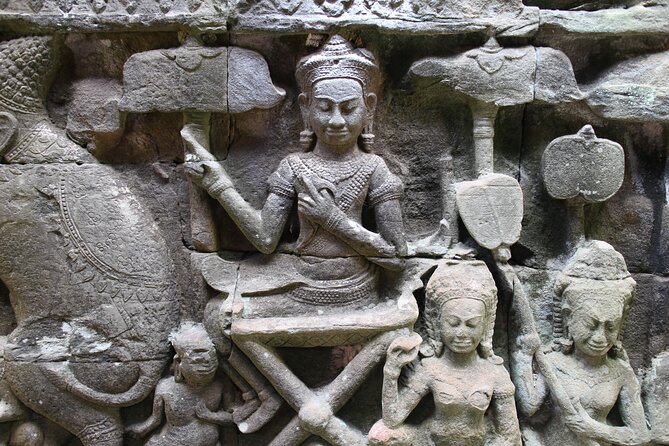
From Angkor Wat, the route heads toward Angkor Thom along roads lined with trees and stone figures. The approach itself is part of the attraction. You pass through the monumental gates and see rows of divinities and demons, details that are easy to miss when you are focused only on reaching the next temple.
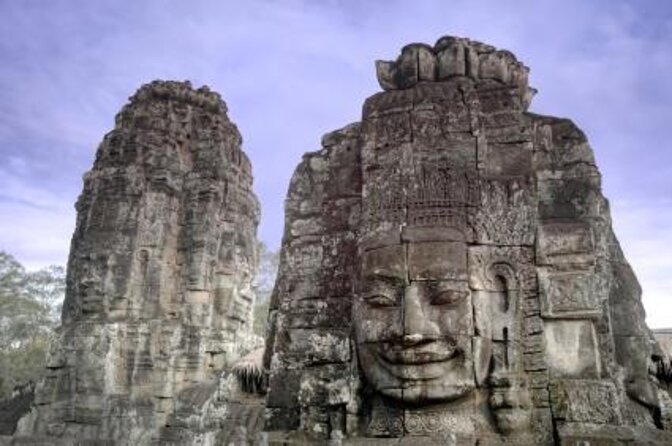
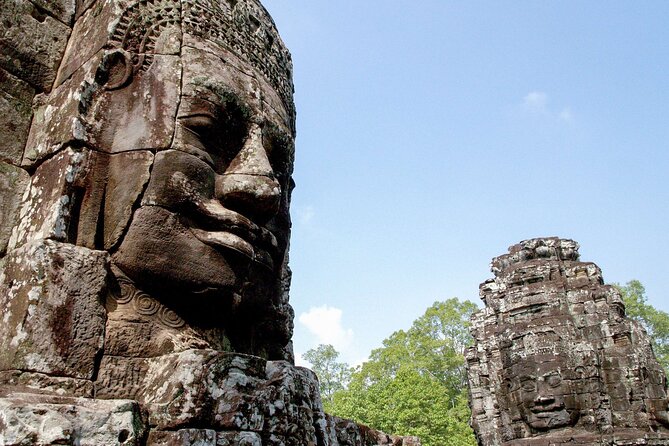
Bayon is the emotional center of the temple portion for many people. Its towers carry large stone faces with calm expressions, and the changing light under the trees gives the site a different mood from Angkor Wat’s open galleries.
Your guide explains the structure and the stories behind the carvings, then gives you time to walk and take photographs. I appreciate this balance. You are not being rushed from one photo stop to the next, but the schedule keeps you moving enough to cover a large part of the park.
The route also includes the Terrace of the Leper King, the Terrace of the Elephants, and the Royal Enclosure. These sites make the Angkor Thom section feel broader than a single temple visit. You see ceremonial spaces and carved terraces that show how the ancient city functioned beyond its best-known towers.
The drawback is that temple walking can be harder than the cycling. Stone steps, uneven surfaces, and hot open areas place different demands on your legs. Save some energy for the second half of the day.
More Full-Day Rides in Cambodia:
- Ninh Binh Full-Day Tour from Hanoi to Hoa Lu, Tam Coc & Mua Cave Via Boat & Bike
★ 5.0 · 4,384 reviews - From Perth: Rottnest Island Full-Day Bike and Ferry Trip
★ 4.7 · 2,548 reviews - Versailles Full Day Bike Tour with Palace, Gardens, & Picnic
★ 5.0 · 2,217 reviews - Cat Ba: Lan Ha, HaLong bay full day- biking, kayaking, lunch
★ 4.8 · 1,166 reviews
Lunch near Srah Srang and a useful rest
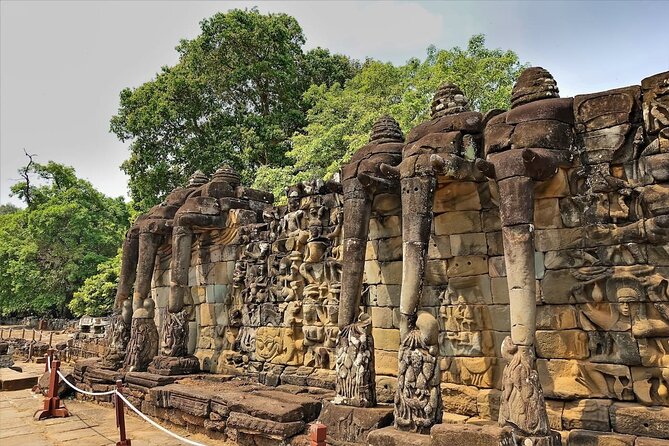
Lunch is arranged near the Srah Srang area. If you choose the lunch option, you receive a local Khmer meal, with fruit and snacks also provided during the day. The food is described as generous and tasty, and the stop gives you a proper break rather than a quick snack beside the bikes.
Some lunch arrangements allow you to choose from a menu, with drinks available for purchase. Dietary requirements should be given when you book. If you do not select lunch, remember that the advertised price does not include a meal.
Srah Srang is a good pause point because the schedule has already included a long ride and several temple visits. The stop is listed as taking about two hours, which includes eating, resting, and learning more about local culture and the area.
This is also where I would be most careful about pacing. The day can be hot, with temperatures reaching 35 degrees according to ride conditions reported by the operator. A filling lunch helps, but a heavy meal followed by hard pedaling may not suit everyone. Eat enough, drink steadily, and use the break to cool down.
Ta Prohm and the afternoon forest ride
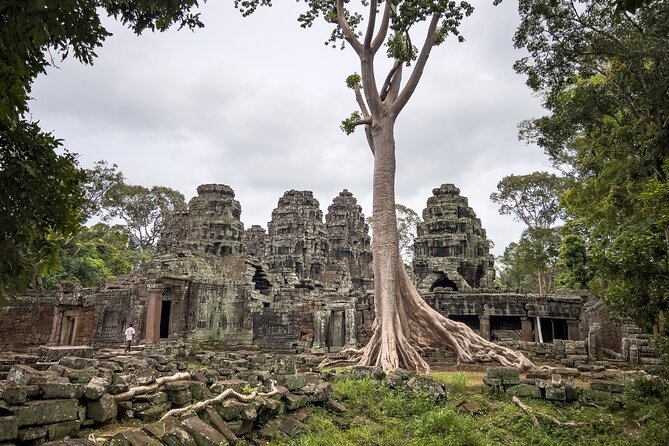
After lunch, you continue toward Ta Prohm through quieter forest corridors. This part of the ride is one of the main reasons to choose a bicycle instead of a vehicle. The route can include sand, dirt, and bumpy ground, so you need to keep your speed under control.
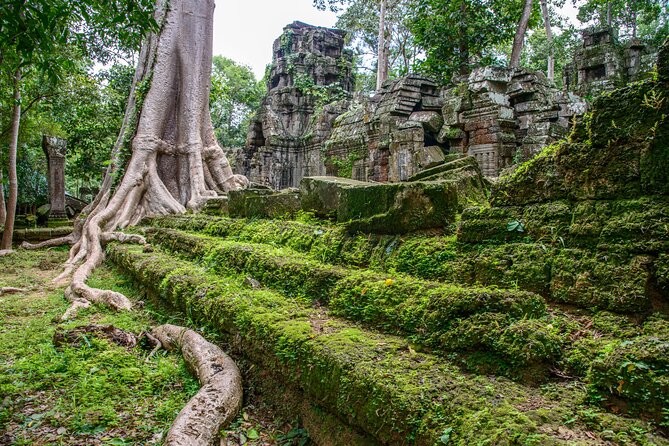
Ta Prohm has a different character from Angkor Wat and Bayon. Tall trees and spreading roots grow across the ruins, wrapping the stone in a way that makes the temple feel less formal and more wild. Moss-covered walls, narrow passages, and broken galleries create plenty of detail for photographs.
Your guide explains the temple’s history, stories, and symbolism, then lets you explore. This is not a quick roadside view. You leave the bikes and walk through the complex, so the time at Ta Prohm feels like a proper temple visit.
The afternoon timing can be a plus. The light and shade differ from the morning, and the forest offers some relief from the sun. Still, you may be tired by now. The combination of cycling, heat, stone walking, and repeated stops makes this a full physical day, even though the roads are mostly flat.
The village route back to Siem Reap
The return ride passes through small villages and rural areas. You may see farm yards, homes, wooded paths, and ordinary local life that a vehicle route can miss. This is not staged entertainment. It is simply the setting around the temple park, and cycling lets you notice it at a slower speed.
The village section is especially useful if you want more than temple photographs. You get a clearer sense of how Angkor sits within the wider area, rather than treating the archaeological park as an isolated collection of ruins.
The route is not always smooth. Some riders find the sand and bumps tiring, and knees may feel the distance by this stage. That is why the tour fits people in moderate physical condition. You do not need to race, but you should be comfortable riding for several hours and handling a mountain bike on uneven ground.
The group returns to the café in Siem Reap. A cold coconut drink and, in some cases, a cold towel provide a welcome finish. Some riders are allowed to keep their water bottle, a small but practical souvenir.
Heat, fitness, and road conditions
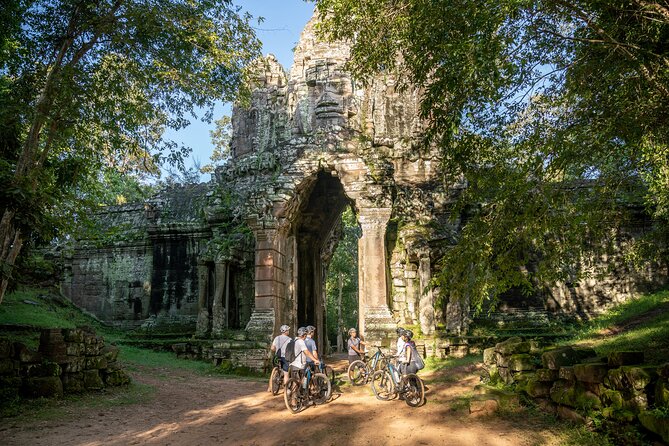
The ride covers roughly 15 to 18 miles, or 25 to 30 kilometers. Most of it is flat, which removes the problem of long climbs, but flat does not mean effortless. Heat, sand, temple walking, and a full day outside add up.
I would rate the physical demand as moderate. Families have completed the ride with children aged 11 and 13, and a child seat can be requested for a child weighing up to 14 kilograms. Still, the tour is not ideal for someone who rarely rides a bicycle or struggles with uneven paths.
Expect a mix of:
- Paved roads near Siem Reap and the main park routes
- Forest trails with sand and bumps
- Small roads through villages
- Walking and climbing around temple sites
- Long exposure to warm weather
Guides are expected to manage the pace and keep riders safe. You should follow their road signals and stay aware of other bikes and vehicles. The route is designed for sightseeing, not speed.
Group size and the guide’s role
The maximum group size is 10, which keeps the day more personal than a large coach tour. You can also upgrade to a private trip if you want the guide’s attention focused on your party.
The guide matters here because the ride has two separate parts: safe cycling and temple interpretation. Guides including Chen, Moon, Wich, Mun, Meun, Pat, Samnang Chan, Samie, Sunchen, and Sam have been praised for explaining Cambodian history, local culture, and temple details in an approachable way.
Chen, in particular, has led rides that combined hidden corners of the park with clear explanations about Cambodia. Moon has been praised for taking care of the group at lunch. Wich has helped older riders manage a hot day, while Pat has used quieter routes to avoid some crowds.
Those details point to the real strength of the operation: good guides adjust the pace, answer questions, and make the day feel like a guided outing rather than a bike rental. Guide quality can vary from one departure to another, but the staff role is central to the experience.
What the $35 price really covers
At $35 per person, the tour is reasonably priced for an eight-and-a-half-hour guided day. You receive:
- Mountain bike and helmet
- English-speaking cycling guide
- Bottled water
- Fruit and snacks
- Lunch if you select the lunch option
- Temple visits within the planned route
You must add the $37 single-day Angkor Pass. Hotel transport is not included, so you also need to reach the café on your own. These extra costs are easy to overlook when comparing tours.
I still think the value is strong if you want to see the temples actively. A self-guided bike rental may cost less, but it would not include the route planning, safety support, historical explanations, food, or regular refreshments. A private vehicle may be easier physically, but it will not give you the same feel for the paths and villages between the temples.
Who should book this ride
I would choose this tour if you are visiting Angkor for the first time and want the major temples plus a look beyond the main road. It suits outdoor-minded couples, families with active older children, and anyone who finds a full day in a vehicle too passive.
It is also a good fit for history fans. Guides have enough time to discuss the temples and wider Cambodian culture, rather than giving only a short introduction at each gate.
I would think twice if you dislike heat, cannot comfortably ride 25 kilometers, or want a slow photographic study of one or two temples. The tour covers a lot, and the full schedule means you must keep moving.
Book with clothing, water, sunscreen, and realistic expectations. You will be tired at the end, but the riding is part of the reward.
FAQ
How long does the bike tour last?
The activity lasts approximately 8 hours and 30 minutes. It starts at 7:30 am and ends back at the meeting point in Siem Reap.
Where does the tour start?
You meet at ផ្ទះគ្រូ Café, listed at 9VH7+X7G, Krong Siem Reap, Cambodia. Hotel pickup and drop-off are not included.
How far will I ride?
You should expect to cycle about 25 to 30 kilometers, or 15 to 18 miles. The route is mostly flat, but some dirt trails are sandy or bumpy.
Which temples are included?
The route includes Angkor Wat, Bayon, Ta Prohm, and parts of Angkor Thom such as the Terrace of the Leper King, Terrace of the Elephants, and Royal Enclosure.
Is lunch included?
Lunch is included only if you select the lunch option when booking. Water, snacks, and fruit are included.
Is the Angkor Pass included?
No. The one-day Angkor Pass costs $37 and is paid separately.
What equipment is provided?
The tour provides a mountain bike and helmet. Bikes are adjusted before departure, and the route uses equipment suited to paved roads and rougher trails.
What clothing is required at the temples?
Sleeveless and see-through shirts are not allowed. Pants and shorts must reach at least the knees for temple entry.
Can children join the tour?
Most people can participate, and child seats are available on request for children weighing up to 14 kilograms. The ride is still a full day with about 25 to 30 kilometers of cycling.
What happens if I need to cancel?
You can receive a full refund if you cancel at least 24 hours before the start time. Cancellations or changes made less than 24 hours before the start time are not accepted for a refund.
Should you book it?
Book this ride if you want Angkor Wat, Bayon, and Ta Prohm with a healthy dose of forest paths and village life. The combination of capable bikes, small groups, steady refreshments, and guides who explain both temples and Cambodia gives the day real value.
Skip it if your ideal temple visit means minimal exertion and maximum time at one site. For everyone else, this is a strong way to understand that Angkor is not just a set of famous ruins. It is a huge area best appreciated slowly, with the wind in your face and a little red dust on your shoes.
Newest rides we have reviewed in Cambodia
- Cycle Angkor Backroad Bike Tour / E-Bike or Tuk Tuk★ 4.9 · 16 reviews
- Ho Chi Minh City: 2-Day Bike & Kayak Mekong Delta Tour★ 4.9 · 64 reviews
- From Siem Reap: Angkor Wat Sunrise and Temples E-Bike Tour★ 5.0 · 52 reviews
- Explore the Village &Countryside By Bicycle-Half Day Morning★ 4.8 · 13 reviews
- Small Group Countryside Sunset Bike Tours★ 5.0 · 39 reviews
- Angkor Wat: Guided Sunrise Bike Tour w/ Breakfast and Lunch★ 4.8 · 48 reviews
- Siem Reap: Angkor Wat Sunrise Bike Tour & Jungle Breakfast★ 4.9 · 141 reviews
- Cycle the Angkor Backroads with lunch / E-Bike or Tuk Tuk★ 5.0 · 124 reviews
Heritage and Temple Bike Tours, compared.
Historical Singapore Bike Tour on Full-Sized Bicycles
Read our review →
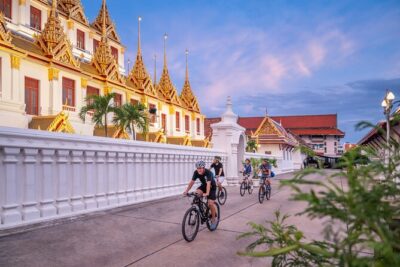
Night Bike Tour with Temples & Flower Market Visit
Read our review →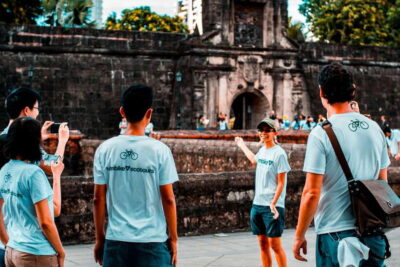
Intramuros, Manila: Historical Bamboo Bike Tour
Read our review →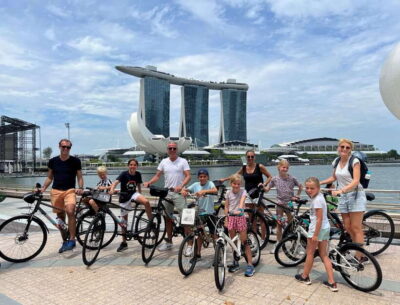
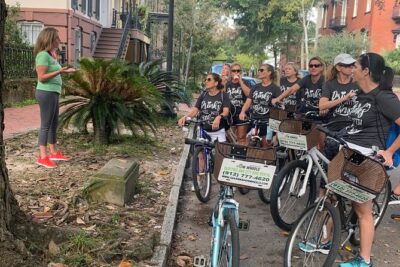
Historical Bike Tour of Savannah and Keep Bikes After Tour
Read our review →
Half-Day Ubud Electric Cycling Tour to Tirta Empul Water Temple
Read our review →Other lists this ride turns up in