
REVIEW · SINGAPORE
Singapore: Historical Half-Day Bike Tour
Singapore reveals itself in layers on this 16-kilometer bike route. You move from ordinary housing blocks and a local market to colonial landmarks, Chinatown, the Singapore River, and the polished towers of Marina Bay. It is a smart way to get your bearings without spending half the day underground or inside a tour bus.
I like the mix of daily life and big sights, especially the contrast between public housing and expensive riverfront homes. I also like the local coffee-shop stop, where one snack and one drink add a small taste of Singaporean routine rather than another packaged refreshment.
The main consideration is comfort. Singapore is hot and humid, and you will share some paths with pedestrians and cross busy roads. The pace is gentle, but this is still a real bike ride, so it is not suited to complete beginners, anyone unable to ride, or anyone with low fitness.
Key points to know before you book
- See old and new Singapore in one ride: The route links Kampong Glam, Chinatown, colonial landmarks, the Singapore River, Marina Bay, and the modern business district.
- Expect about 16 kilometers over four hours: Frequent stops make the ride manageable, with roughly an hour to an hour and a half of actual cycling according to the route experience.
- The guide matters: Tay, Alfie, Jackie, Kavin, Yong, and others are praised for humor, clear instructions, and stories about both history and everyday life.
- The Chinatown break is part of the appeal: You receive one local snack and one drink at a traditional coffee shop or eatery. It is a tasting stop, not a full meal.
- The route is mostly level: You use full-sized hybrid bicycles, with smaller options for petite riders and teenagers.
- Plan for city riding: Some sections use shared pedestrian paths, and the tour crosses busy roads under the guide’s direction.
Why a bicycle is a smart way to see Singapore
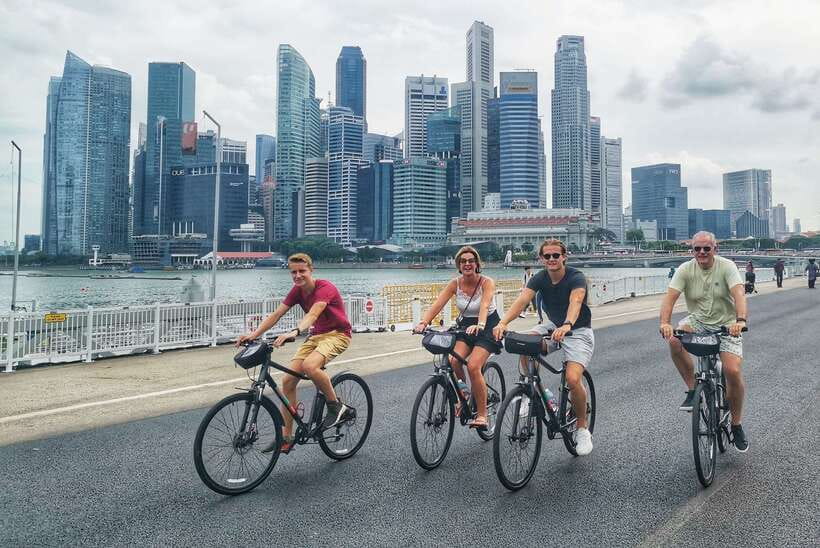
Singapore is easy to move around by MRT, taxi, and bus. Yet public transport can make the city feel like a set of separate stops. On a bicycle, you see the changes between them: a housing estate giving way to a market, a quiet river path leading toward office towers, or a narrow historic street opening onto a major road.
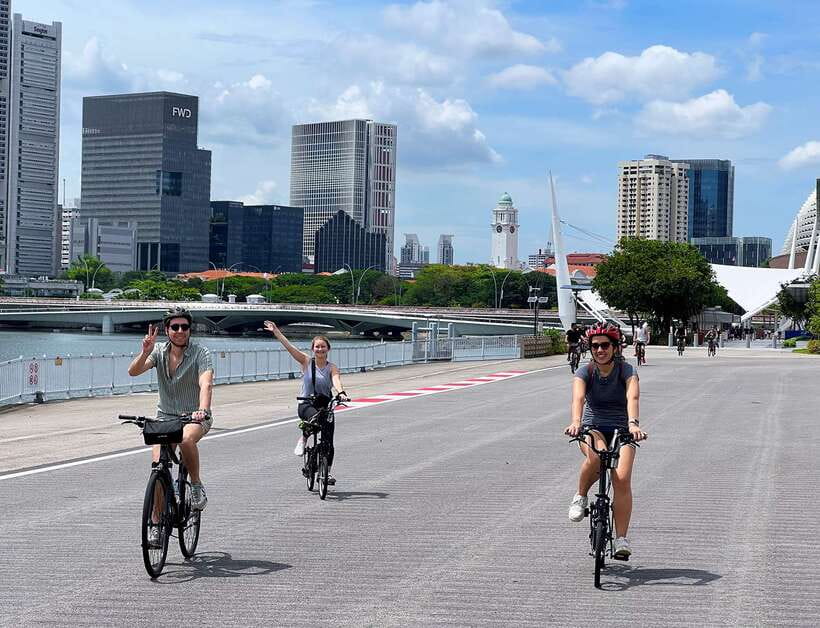
This tour covers a lot without turning into a race. The listed distance is 9.9 miles, or about 16 kilometers, but you are not pedaling continuously for four hours. Stops for explanations, photos, and the coffee-shop break break up the ride. The route is described as mostly flat, and several people found it comfortable despite Singapore’s humidity.
I would book this early in your stay. The tour gives you a broad map of the central city, and the guide can point out places worth returning to later. It also helps you decide which areas deserve more time, instead of trying to understand Singapore from a string of isolated attractions.
The ride is conducted in English with a live guide. The strongest guides named in the tour feedback include Tay, Alfie, Jackie, Kavin, Yong, Kevin, Vincent, and Melvin. The names change from departure to departure, but the qualities you want are consistent: clear cycling instructions, a steady pace, and a willingness to explain modern Singapore as well as its past.
More Heritage and Temple Bike Tours in the world:
- Bangkok: Temples, Canals & Local Life Bike Tour
★ 4.9 · 3,511 reviews - Historical Singapore Bike Tour on Full-Sized Bicycles
★ 5.0 · 1,421 reviews - Barcelona: 2.5-Hour Bike or E-Bike Historical Tour
★ 4.5 · 1,262 reviews
Starting at Crawford Lane and entering Kampong Glam
The meeting point is at the ground-floor retail unit of Block 462 Crawford Lane, near the intersection of North Bridge Road and Jalan Sultan Road. You begin by checking the bicycle and getting familiar with the group before heading toward Kampong Glam.
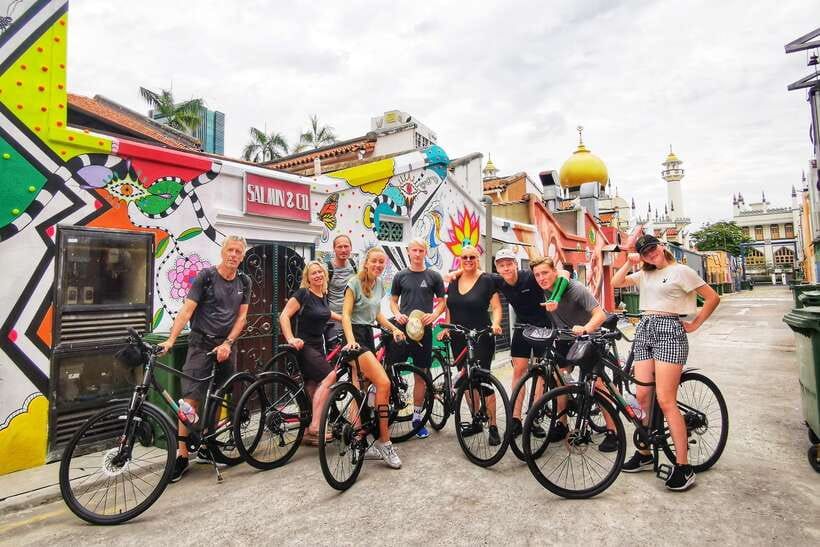
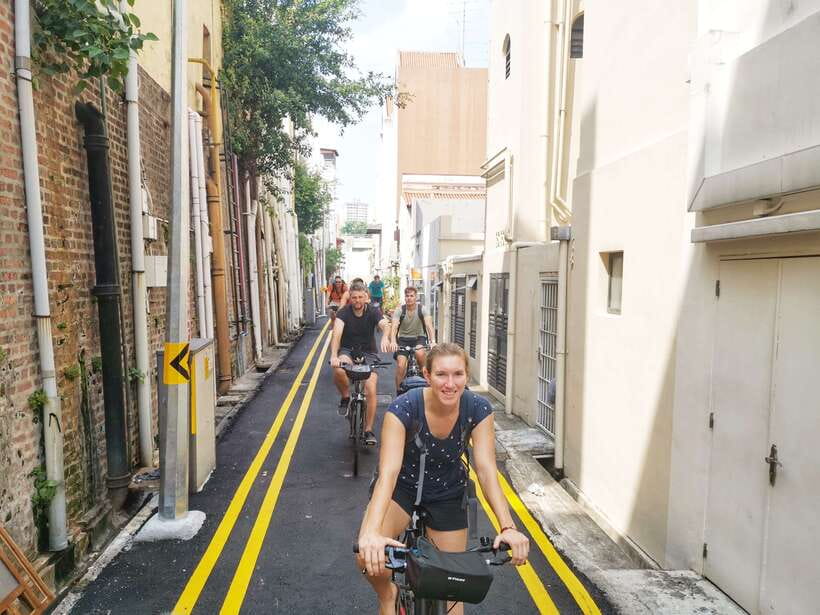
Kampong Glam gives the ride an immediate sense of place. It is one of the city’s historic districts, and the route uses it to introduce Singapore’s blend of communities, faiths, trade, and migration. You are not simply looking at grand buildings. You are moving through a neighborhood that connects the older city to the residential areas around it.
The bicycles are full-sized rather than small novelty bikes. Adult riders can use sturdy 28-inch-wheel hybrid bicycles, while 24-inch ladies bicycles and 20-inch bicycles are available for teens and petite riders. That matters on a route of this length. A properly sized bicycle is easier to control and less tiring than a poorly adjusted rental bike.
The guides take safety seriously. You receive instructions about riding near pedestrians, crossing roads, and staying together. Some groups use shared paths, so you need to slow down and give people space. You can choose to wear a helmet, and the guide explains the riding conditions before the group sets off.
Public housing, local markets, and ordinary Singapore
One of the most useful parts of the tour takes you away from the postcard version of Singapore. You visit a typical residential town and market, where the focus shifts from monuments to daily routines.
Singapore is often presented through Marina Bay’s towers and carefully designed attractions. Those sights are worth seeing, but the housing districts explain how most people live. You get a closer look at the public housing system and the high-density planning that shapes the city.
The route also points out the contrast between these large residential developments and expensive homes along the river. That comparison gives you a better sense of Singapore’s social and economic range. The city is compact, yet its neighborhoods can feel very different within a short ride.
This is where a guide adds real value. On your own, you might pass a housing block or market without understanding what you are seeing. A good guide can explain how the area fits into Singapore’s present-day life, not just give you a date and a name.
The stop is also a good reminder that this is not a landmark checklist. You will see famous places later, but the residential section may be the part that makes Singapore feel most like a lived-in city.
Following the Singapore River into the colonial center
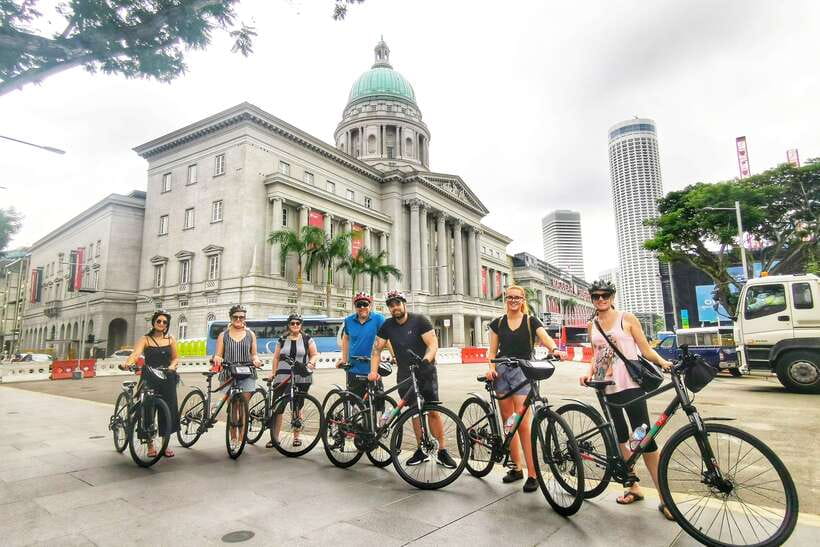
The Singapore River provides the historical spine of the tour. In the 1800s, trade transformed what had been a quiet settlement into a commercial port. As you ride along the river, the guide connects the waterway to the warehouses, civic buildings, religious sites, and streets that grew around it.
The route includes historically important buildings such as a century-old fire station, museums, and places of worship. You stop to hear the story, take photographs, and look around rather than simply rolling past. Regular breaks are useful here, especially in the heat.
The river section works well because it links history to geography. You can see why this area mattered. Trade needed a river, ships needed access, and the city developed around that movement of goods and people. The guide also explains how Singapore became a meeting place for communities from many parts of the world.
Expect a blend of cycling and walking-speed sightseeing. This is not a fast road ride. The group pauses often, and the guide keeps an eye on riders with different levels of experience. One benefit of the slower pace is that you can ask questions and notice details you would miss from a vehicle.
More Half-Day Rides in the world:
- Red Rock Canyon eBike Half-Day Tour
★ 5.0 · 1,870 reviews - Lisbon: 7 Hills Half-Day Electric Bike Tour
★ 4.9 · 1,592 reviews - Ubud: Rice Terraces & Villages Half-Day Fat Tire E-Bike Tour
★ 4.9 · 602 reviews - Amsterdam’s Countryside Half-Day Bike Tour in Small Group
★ 5.0 · 460 reviews
Raffles, war memorials, and Singapore’s difficult past
The ride includes a stop at the statue of Sir Stamford Thomas Raffles, who is linked with the founding of modern Singapore. It is a familiar landmark, but the value comes from hearing how the city developed around trade and colonial administration.
The tour also addresses World War II and the effects of the occupation on Singapore. Monuments honoring those who suffered add a more serious note to the morning. This portion keeps the city’s success story from becoming too polished. Singapore’s development came through conflict, hardship, and major changes in political and social life.
I appreciate that the route does not treat history as a string of dates. The guides are encouraged to make the commentary interactive, and the best ones use humor without making difficult subjects feel trivial. You can ask questions as you go, which makes the information easier to remember.
If you prefer a purely scenic ride, this historical material may feel like more than you expected. For most people, though, it gives the landmarks a reason to matter.
Chinatown and the local coffee-shop break
Chinatown is both a sightseeing stop and the main refreshment point. You visit the Chinatown Complex area, where you pause at a local eatery or traditional coffee shop for one snack and one drink.
Keep your expectations sensible. This is not a full breakfast or lunch, and one snack will not replace a meal. It is a short taste of local routine, which is exactly why it works. You get a chance to sit down, cool off, and try something associated with the city rather than eating a standard tour snack.
Coffee is part of the plan, but an alternative is offered if you do not drink coffee. The tour does not specify one fixed snack for every departure, so the exact food can vary. One group also had a stop for durian ice cream, but you should treat that as a possible extra rather than a guaranteed part of the itinerary.
Chinatown adds another layer to the city’s cultural story. The guide can explain how different communities shaped Singapore, and the market and food setting make that story more immediate than a museum display. It is also a useful point to ask where to return for a longer meal later in your stay.
The break helps with the physical side of the ride. Singapore’s heat can catch you off guard, even on a flat route. A drink and short pause make the second half more comfortable.
Marina Bay, the Merlion, and the Formula 1 route
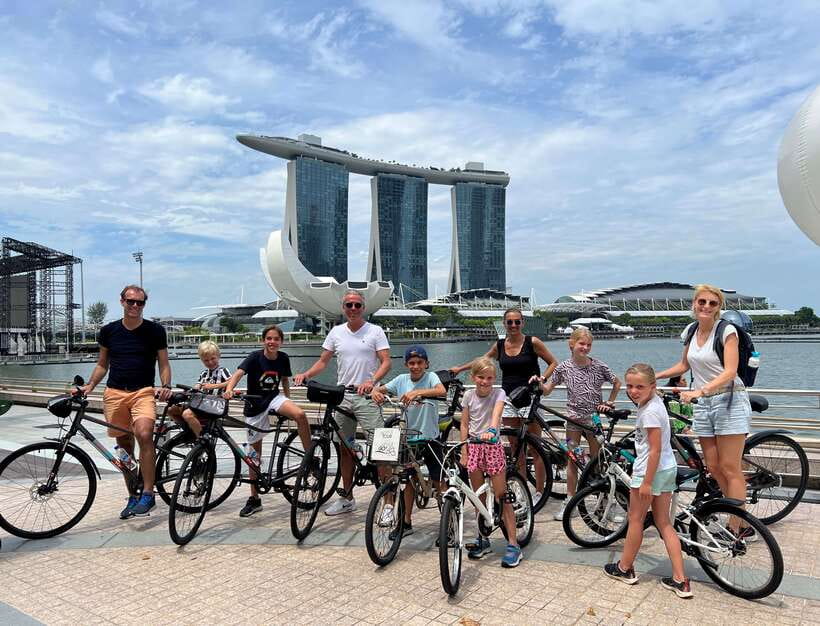
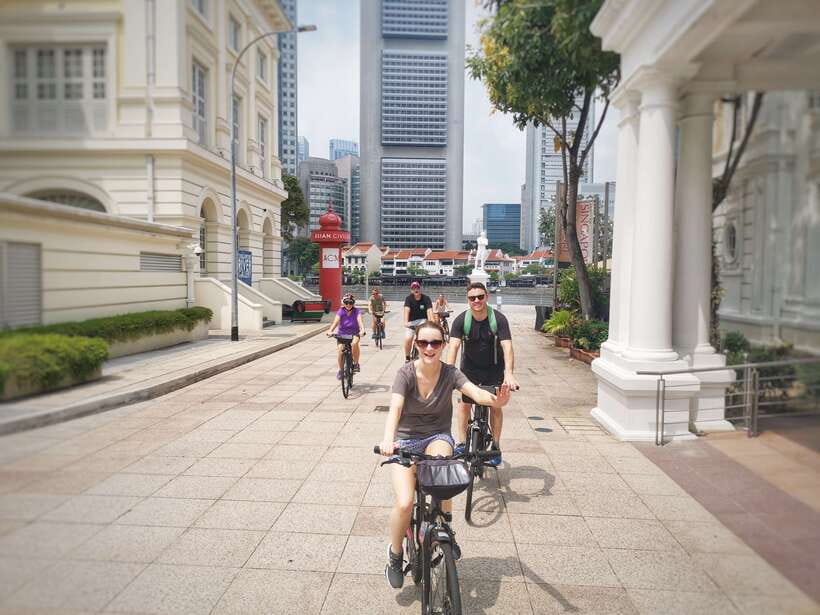
After the older districts, the route shifts toward Singapore’s modern center. You ride through the Downtown Core and Central Business District before reaching Marina Bay and Merlion Park.
This is the city most people picture first: towers, open waterfront views, modern infrastructure, and the Merlion statue. The bicycle gives you a better connection between the districts than a quick taxi ride. You can stop for photographs and see how the historic core leads into the financial center.
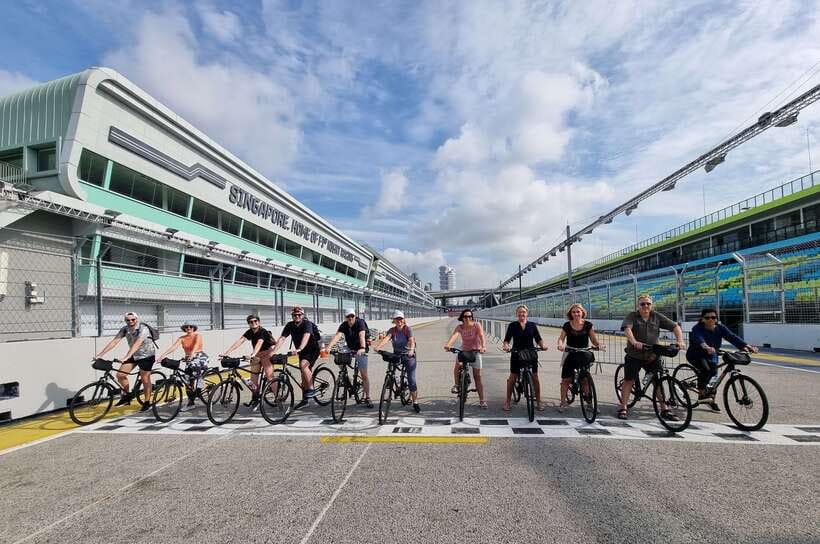
The Formula 1 section is a fun change of pace. You cycle along part of the Singapore Grand Prix route, at a much slower speed than the racing cars, naturally. The tour may include the area around the F1 Pit Building, though access conditions can vary. One group was able to ride out through the pit lane, but you should not assume that access is available on every departure.
This is also the section most affected by real-time conditions. The provider can amend the route if roads, events, weather, or local conditions require it. That flexibility is sensible in a busy city, but it means the exact sequence and access points may change.
The modern skyline can feel like a sharp contrast with Chinatown and the river. That contrast is one of the tour’s strengths. In a single morning, you see Singapore as a historic trading port, a dense residential city, and a major financial center.
How demanding is the 16-kilometer ride?
The route is designed as a sightseeing ride, not a fitness challenge. It is mostly level, and the guides make frequent stops. Several riders found that the actual cycling time felt closer to an hour or a little more, with the rest spent listening, photographing, and resting.
Still, you need basic bike confidence. The tour is not suitable for people who cannot ride, have no experience, or have a low level of fitness. It is also not suitable for children under eight, pregnant women, or people with mobility impairments.
The conditions deserve honest attention. You may ride on paths shared with pedestrians, and you cross busy roads. The guide leads the group carefully, gives clear instructions, and works to keep riders together, but you remain responsible for paying attention.
A rider with a bad knee managed the route because of the flat terrain and frequent pauses, but that is not a promise that the ride will suit every physical limitation. If you have a concern, ask the provider before booking.
Wear light clothing and bring water. The provided drink is welcome, but the tour information does not say that it replaces all personal hydration needs. Avoid treating the ride as effortless simply because the route is flat. Heat and humidity can make a moderate ride feel harder.
What the $63 price gets you
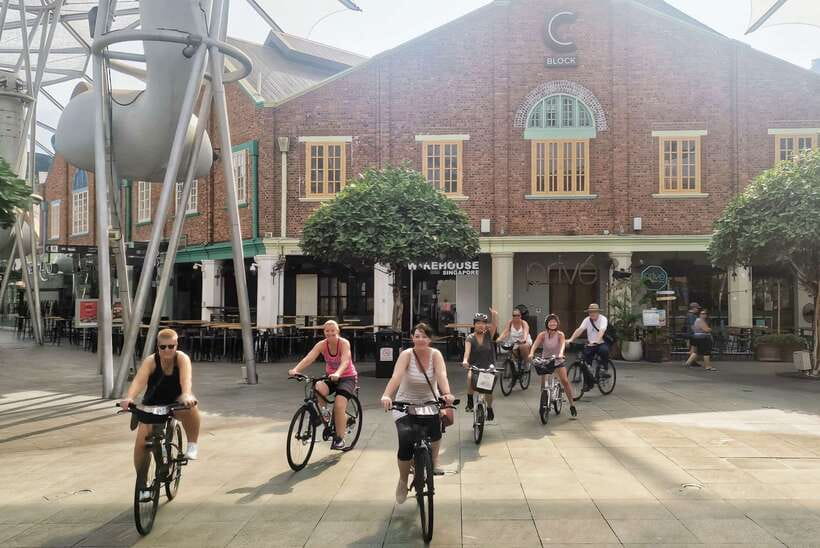
At $63 per person, the tour costs more than renting a bicycle and following a map. You are paying for a guide, a maintained bicycle, a planned route, safety leadership, historical commentary, and access to a local snack and drink.
The value is strongest if you have limited time or want context while you ride. Covering Kampong Glam, residential districts, the Singapore River, Chinatown, Marina Bay, and the F1 area independently would take planning and several transport changes. The guide also helps you ride through unfamiliar streets without constantly checking directions.
The snack and drink are pleasant additions, but they should not be the reason you book. Think of them as a pause that improves the rhythm of the tour, not as a meal included in the price.
Hotel pickup and drop-off are not included. You need to make your own way to Crawford Lane, and the exact starting time varies by availability. The minimum group size is two participants. If that number is not reached, the provider can move the booking to another time or day.
You can cancel up to 24 hours before the activity for a full refund, and reserve now while paying later. If you book within 48 hours of the ride, contact the provider directly, since short-notice arrangements may need confirmation.
Who will enjoy this tour most?
I would choose this for a first visit, a short stopover, or any trip where you want a city overview before exploring on your own. It suits adults and older children who can ride confidently, especially families with a ten-year-old or older child who is comfortable on a bike.
It is also a good match for people who like history but do not want to spend the entire morning indoors. The commentary covers trade, colonial Singapore, World War II, housing, religion, food, and modern business life. You get information, but the ride keeps moving.
It may not suit you if you dislike heat, shared paths, road crossings, or guided commentary. You should also skip it if you want a hard cycling workout. The pace is deliberately relaxed, with plenty of stops and time to listen.
The guide can make a major difference. Tay, Alfie, Jackie, Kavin, Yong, Kevin, and Vincent have all led highly praised departures, with particular credit for humor, safety advice, and explanations of local customs. No guide can be guaranteed, but the tour clearly depends on the person leading it, so an engaging guide is a major part of what you are buying.
Should you book the Singapore Historical Half-Day Bike Tour?
Book it if you want to understand Singapore quickly and prefer moving through neighborhoods to sitting in a bus. The strongest reasons are the wide-ranging route, the flat and manageable ride, and the chance to see ordinary housing and market life alongside the major landmarks.
Book early in your stay if possible. You will leave with a useful mental map and several ideas for what to revisit. Just remember that the snack is small, the weather can be demanding, and the route requires basic cycling ability.
For most reasonably fit riders who enjoy guided sightseeing, $63 is a fair price for four hours of transport, history, local context, and city orientation. It is less suitable for anyone seeking a quiet, air-conditioned tour or a serious cycling challenge.
FAQ
Where does the Singapore bike tour start and finish?
The tour starts and finishes at the ground-floor retail unit of Block 462 Crawford Lane, at the intersection of North Bridge Road and Jalan Sultan Road.
How long is the bike tour?
The tour lasts four hours and covers about 9.9 miles, or 16 kilometers.
Which sights are included?
The route includes Kampong Glam, a residential town and market, the Singapore River, the Downtown Core, Chinatown, the Central Business District, Merlion Park, the F1 Pit Building, and Chinatown Complex.
Is food included?
One local snack and one drink are included at a local coffee shop or eatery. This is a light refreshment and not a full breakfast or lunch.
What bicycles are available?
Adults can use 28-inch-wheel hybrid bicycles. Twenty-four-inch ladies bicycles and 20-inch bicycles are available for adults who are petite and for teenagers.
Who should not join this activity?
The tour is not suitable for children under eight, pregnant women, people with mobility impairments, people who cannot ride a bicycle, people without cycling experience, or people with a low level of fitness.
Newest rides we have reviewed in the world
- Ljubljana by E-Bike: Guided City Highlights Tour★ 4.8 · 28 reviews
- London Christmas Lights Bike Tour★ 4.5 · 70 reviews
- Lisbon: Portuguese Petiscos Tasting Tour by E-Bike★ 5.0 · 16 reviews
- Liverpool: The Beatles Tour on Electric Pedal-Assist Ebikes★ 5.0 · 17 reviews
- Lisbon Bike Tour: Langs de rivier van Belém naar Lissabon★ 4.7 · 59 reviews
- Lisbon: E-Bike Adventure Through the City of Seven Hills★ 5.0 · 28 reviews
- Lisbon: 7 Hills Panoramic Guided Tour by E-Bike★ 4.8 · 50 reviews
- Lisbon: Guided E-Bike Tour to Belém★ 4.8 · 115 reviews
Heritage and Temple Bike Tours, compared.
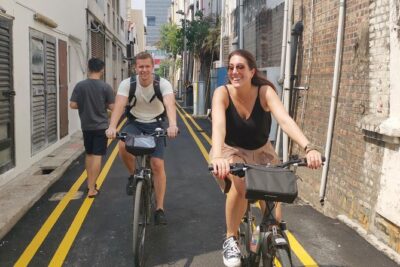
Historical Singapore Bike Tour on Full-Sized Bicycles
Read our review →
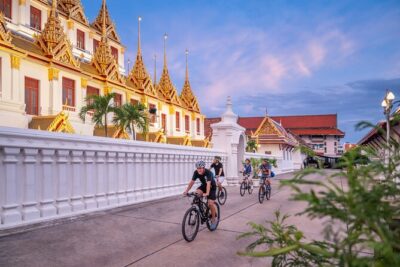
Night Bike Tour with Temples & Flower Market Visit
Read our review →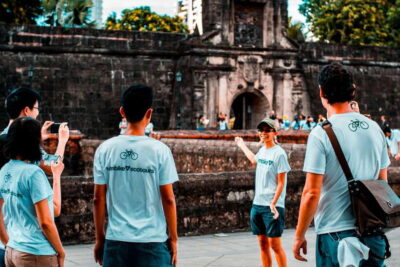
Intramuros, Manila: Historical Bamboo Bike Tour
Read our review →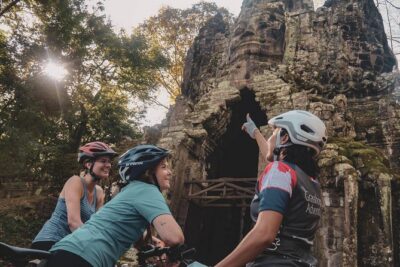
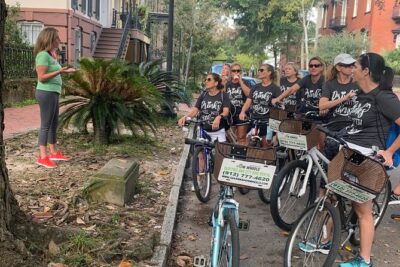
Historical Bike Tour of Savannah and Keep Bikes After Tour
Read our review →
Half-Day Ubud Electric Cycling Tour to Tirta Empul Water Temple
Read our review →Other lists this ride turns up in