
REVIEW · JAPAN
Kyoto Satoyama Cycling with Lunch and English Guide
Sonobe gives you a side of Kyoto that most visitors never see: quiet roads, mountain views, farm fields, shrines, and the sound of birds and running water. I especially like the local English-speaking guides, including Maki and Yasu, and the choice between making soba yourself or eating local produce in a traditional house. The main consideration is that this is a countryside cycling day, not a sightseeing bus tour, and extra activities can push the finish past 2 p.m.
I also like the small private-group format. You ride at the pace of your own party, with an e-bike to make the countryside accessible. The roughly 30-minute train ride from Kyoto City makes this a practical escape, but you still need to reach the meeting point in Sonobe by 10 a.m.
Key points to know before you book
- Ride through rural Sonobe by e-bike: Expect 10 to 20 minutes of cycling between the main stops, with views of fields, houses, trees, and mountains.
- Meet local guides Maki and Yasu: The guides were born and raised in the town and explain local customs in English.
- Choose your lunch style: Course A includes soba making with local buckwheat, while Course B features local produce at a restaurant in a traditional Japanese house.
- See two unusual historic sites: Visit Ikimi Tenmangu Shrine, described as Japan’s oldest Tenmangu Shrine, and the remains of Sonobe Castle, said to be the last castle built in Japan.
- Add two or three free activities: Options include a kimono photo, koto playing, shrine worship, spring water, a castle visit, and Mt. Komugi, linked with the birthplace of Super Mario.
- Plan for weather and timing: The tour lasts about four to five hours, but optional activities may extend it beyond 2 p.m.
Why Sonobe makes a good change from central Kyoto
Central Kyoto is packed with famous temples, buses, shops, and people. Sonobe offers a much quieter day. This town in Kyoto Prefecture sits close enough to the city for a half-day outing, yet the setting feels rural almost as soon as you begin riding.
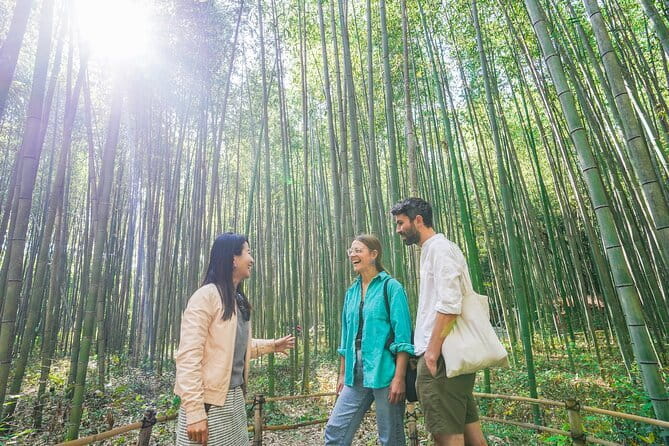
The appeal is not one grand monument. It is the rhythm of the ride: a shrine, a castle gate, a country road, a local meal, and small details you would likely miss on your own. You see Japanese houses, cultivated fields, wooded hills, and the waterways that give the area its calm feel.
I would choose this tour after several busy days in Kyoto. It gives you fresh air and movement without requiring a full mountain trek. The e-bikes matter here. You still pedal and take part in the outing, but the electric assistance helps keep the focus on the views rather than on working hard up every rise.
The tour is private, meaning only your group participates. That is useful for families, school groups, couples, and friends who want to ask questions or adjust the pace. A school group of 16 has taken part, so the experience can handle larger parties, though you should check the current arrangements when booking.
More Rides with Lunch in Japan:
- Bike Tour Exploring North Kyoto plus Lunch
★ 5.0 · 1,087 reviews - 5-Hour Osaka Highlights Bike Tour with Lunch
★ 4.8 · 146 reviews - 4.5-Hour Kyoto Bike Tour with Lunch and UNESCO Zen Temples
★ 5.0 · 122 reviews
Starting in Sonobe at 10 a.m.
The meeting point is at Mizobe-6-21 Sonobechō Oyama Higashimachi, Nantan, Kyoto 622-0041. The tour begins at 10 a.m. and returns to the same point.
Sonobe is reachable by public transportation and is about 30 minutes by train from Kyoto City. That travel time is one of the tour’s strongest practical features. You do not need to commit to an overnight stay in the countryside, but you should allow enough time to get to the meeting point without rushing.
Your guide handles the English explanations and introduces the choices for the day. At the start, tell the team which optional activities interest you. You can choose two or three, and they are included in the tour price. This is worth deciding early, since the additions affect the timing.
The tour provider also offers advice about what to wear based on the forecast and prepares safety equipment. On colder days, disposable hand warmers and neck warmers may be available. Still, dress for the actual weather and for several hours outdoors. Comfortable clothing is more useful than anything formal, unless you select the kimono photo option.
Ikimi Tenmangu Shrine and the first taste of local tradition
The first stop is Ikimi Tenmangu Shrine, with about 10 minutes set aside. The shrine is dedicated to Sugawara no Michizane, the deity associated with learning and academic success. Students and families visit to pray before exams.
The stop is brief, but it gives the tour an early cultural anchor. Instead of only photographing a shrine, you can learn why people come here and how it fits into local religious life. Your guide can also explain the proper way to worship, one of the optional activities available during the day.
If you are hoping for a long temple visit, this is not that. Ten minutes passes quickly, and the tour is designed around cycling rather than extended sightseeing at each site. I see that as a fair trade, since the shrine is one part of a much broader day.
Sonobe Castle ruins beside the high school
The next stop lasts about 20 minutes and focuses on the ruins of Sonobe Castle. The remaining features include the main gate, sections of castle wall, turrets, and a guardhouse. The main gate is now used by Sonobe High School, which gives the site an everyday setting rather than a museum-like one.
The claim that this was the last castle built in Japan makes the stop especially unusual. You are not walking through a fully restored fortress. Instead, you are looking at surviving structures folded into present-day town life.
Depending on the selected options and the day’s schedule, you may have a chance to visit the castle area more fully. Ask about this at the start if castles are a priority. The short scheduled stop is enough to understand the site, but anyone seeking a lengthy castle tour may find it limited.
The ride between points usually takes 10 to 20 minutes. That travel time is part of the tour, not dead time. It gives you room to see the area between the named stops and enjoy the quiet pace of Sonobe.
More Guided Rides in Japan:
- Tokyo Guided Small-Group Biking Tour
★ 5.0 · 1,250 reviews - Tokyo Top Highlights 3h Guided E-bike Tour
★ 5.0 · 714 reviews - 3h Tokyo E-Bike Tour: Hidden Gems, and Local Life with guide
★ 5.0 · 670 reviews - Hiroshima 2hr Peace Cycling Tour with Local Guide
★ 5.0 · 321 reviews
Course A: making soba in a former school
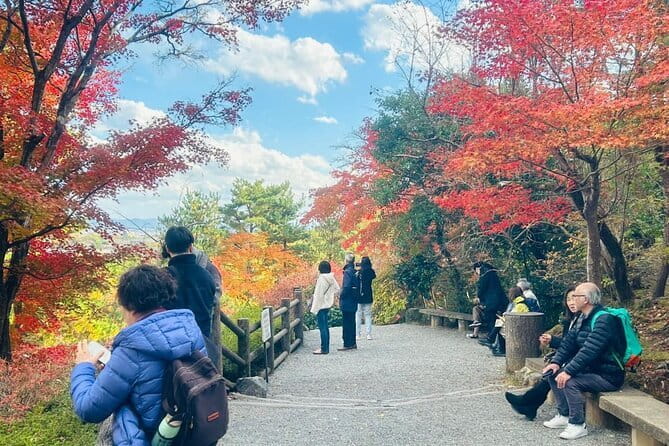
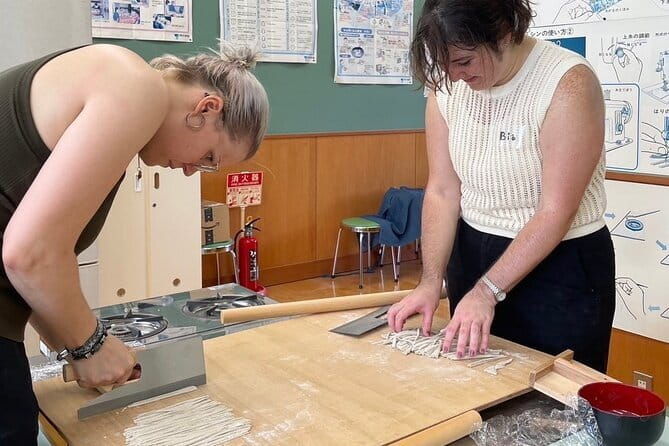
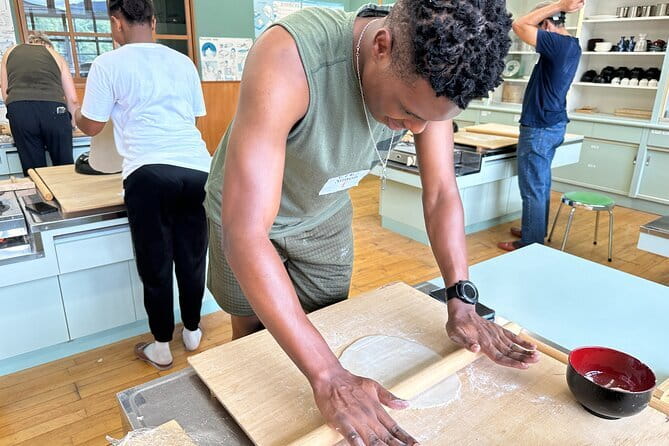
Course A is the most hands-on lunch choice. At the former Maki Elementary School, you use buckwheat flour harvested in the local area to make soba noodles. The activity and meal take about 1 hour and 50 minutes.
A closed school is a fitting place for this kind of class. It gives you a direct connection to local food production and to a building that once served the community. You are not simply handed a bowl of noodles. You take part in making the food, then eat it freshly boiled.
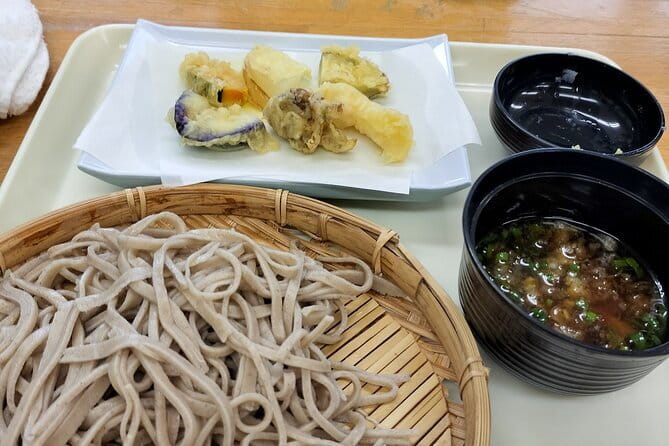
The meal also includes tempura and rice balls. That makes Course A a substantial midday stop, not a quick snack between rides. If you enjoy cooking activities or want something your children can take part in, this is probably the stronger choice.
Soba making can take more time than a standard restaurant lunch, so keep the schedule in mind. You are choosing an activity as much as a meal. The extra time is part of the value, but it leaves less room for adding every optional stop.
The tour can arrange vegan, vegetarian, and allergy-friendly meals when requested. Make that request ahead of time rather than waiting until the morning of the tour.
Course B: local food in a traditional Japanese house
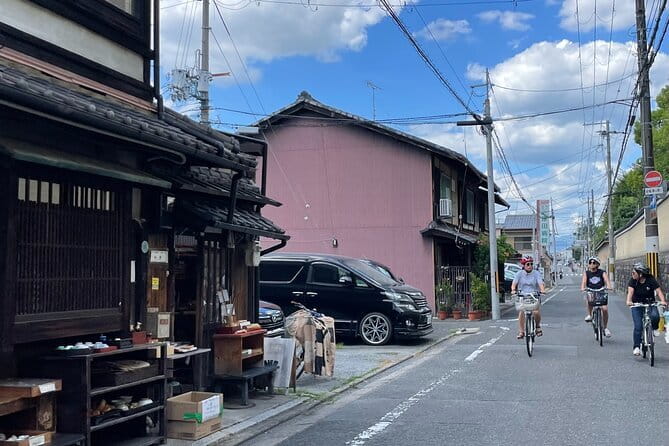
Course B takes you to a restaurant in a traditional Japanese house for a meal made with local produce. One recommended dining option is Kaeyuno Oyado, a guesthouse-style restaurant with a playful frog theme.
This course suits you if you care more about a relaxed local meal than food preparation. You can sit down after the morning ride and enjoy regional ingredients in a setting that feels tied to the town. It is also the better choice if someone in your party would rather not spend nearly two hours making noodles.
The two courses create a useful choice. Course A gives you the activity and the satisfaction of eating soba you helped prepare. Course B gives you a simpler meal stop and more flexibility for optional experiences. Neither is automatically better; choose based on how active and hands-on you want the middle of the day to be.
As with Course A, vegan, vegetarian, and allergy-friendly meals are available by request. Confirm your needs when booking.
Make Shrine and the food culture of Tamba
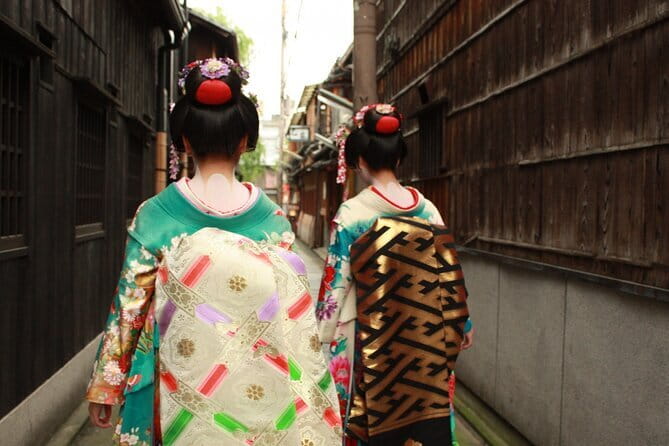
After lunch, the route continues to Make Shrine, with about 30 minutes planned there. The shrine honors an agricultural deity connected with the Tamba area, a region that has long helped supply food to Kyoto.
That connection makes the stop more than another shrine visit. The meal, the buckwheat, the farms, and the shrine all point to the same idea: rural communities support the food culture of the city nearby. The tour lets you see that link in place rather than explaining it only in a guidebook.
The main hall has a traditional thatched roof, a detail that gives the shrine a distinct rural character. You can also learn the proper way to worship. As elsewhere, the visit is focused and practical, not a long historical lecture.
The optional experiences can change the whole day
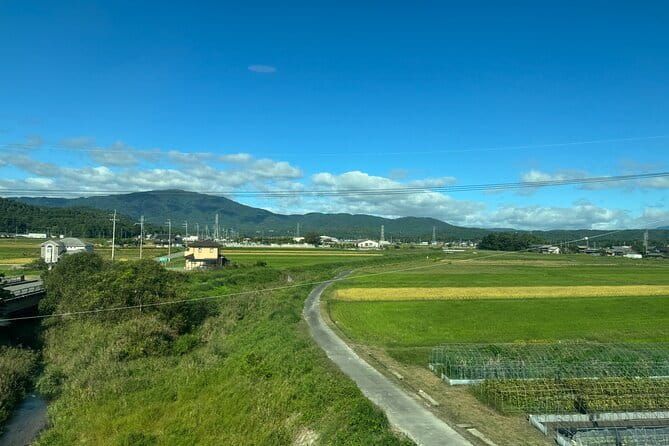
The basic route is already full, but the included choices let you shape the outing. You can select two or three of the following:
- A castle visit
- Worship at Shinto shrines
- Drinking spring water after crossing a small mountain
- Taking a photo in a kimono
- Playing the koto, a traditional Japanese instrument
- Exploring Mt. Komugi, associated with the birthplace of Mario
The kimono and koto options are especially useful if your group wants cultural activities that do not involve much cycling. They also give families and school groups a wider range of things to do.
Mt. Komugi is the option most likely to extend the day. The tour information notes that exploring it may push the finish beyond 2 p.m. If you have a train reservation, dinner booking, or evening show in Kyoto, do not assume you will be back right at the four-hour mark.
The extra activities are included in the tour price, which adds real value. The tradeoff is time. You cannot reasonably expect every option, a long soba class, and an unhurried ride while keeping to the shortest schedule.
What the $78.83 price includes in practical terms
At about $78.83 per person, the price is fair if you use the parts that make this different from an ordinary bike rental. You get an e-bike, an English-speaking local guide, several stops, a full meal choice, and included extra activities.
A self-guided ride would cost less in some cases, but it would not give you the same help with shrine customs, local stories, meal arrangements, or route planning. You would also need to organize the food stop and decide how to connect the rural sites yourself.
The value improves for groups because the activity is private and group discounts may be available. Families and school parties can also benefit from having one guide coordinate the cycling and cultural stops.
The price is less attractive if you want only a short bike ride or only a formal castle visit. This is a combined countryside day. You are paying for the mix of cycling, food, local interpretation, and hands-on choices.
One detail deserves attention: the supplied information also gives a participation fee of 15,000 yen for one person. Prices can vary by booking channel, group size, and date, so check the amount shown for your reservation before paying.
Who will enjoy this most
I would recommend this to you if you want to get beyond central Kyoto without spending a full day on trains. It works particularly well for:
- Families who want cycling, food, and cultural activities in one outing
- School or youth groups that need a private format
- Couples and solo visitors who prefer a calm local setting
- Food lovers choosing the soba-making course
- Visitors seeking a rural contrast to Kyoto’s famous temples
- Anyone interested in Japanese shrines, local agriculture, or traditional arts
You should think twice if you dislike cycling, want a tightly timed schedule, or prefer major monuments with long guided explanations. The roads and countryside are the point, so the day includes movement and outdoor time.
Fitness demands are not fully described, but the e-bike reduces the effort. Most people can participate according to the tour information. You should still be comfortable riding a bicycle for several hours, including the 10 to 20 minute stretches between stops.
Weather, cancellations, and timing
This is a fair-weather activity. If bad weather threatens the tour, the provider says reservation holders will be notified by 5 p.m. the previous day. You may then switch to transportation by car, reschedule, or cancel without a fee.
For your own cancellation, you can receive a full refund if you cancel at least 24 hours before the start time. Changes or cancellations inside that window are not accepted for a refund.
Keep the weather policy in mind when planning a tight Kyoto schedule. The provider offers practical alternatives, but a car-based version would not feel exactly like the planned e-bike outing.
Should you book the Sonobe cycling tour?
Book it if you want a personal look at rural Kyoto, enjoy moving between stops by bicycle, and like the idea of a meal that connects directly to the region. The strongest reasons are the quiet Sonobe setting, the local guides, the private format, and the choice between soba making and a traditional-house meal.
I would choose Course A for a hands-on food day and Course B if you want more time for the optional cultural activities. Tell the guides at the start whether the kimono, koto, shrine worship, spring water, castle, or Mt. Komugi matters most to you.
Skip it if your Kyoto plans leave no room for a flexible finish or if you want only the city’s famous sights. For everyone else, this is a thoughtful way to trade crowded streets for fields, shrines, local food, and a slower view of Kyoto Prefecture.
FAQ
How long does the Kyoto Satoyama cycling tour last?
The tour lasts about four to five hours, including bicycle travel between stops. Optional activities, especially Mt. Komugi, may extend the day beyond 2 p.m.
Where does the tour begin and end?
It begins at Mizobe-6-21 Sonobechō Oyama Higashimachi, Nantan, Kyoto 622-0041, and ends back at the same meeting point.
What time does the tour start?
The scheduled start time is 10 a.m.
Is the tour conducted in English?
Yes. Local guides born and raised in Sonobe guide the activity in English. Guides named in the tour information include Maki and Yasu.
What are the two lunch choices?
Course A includes making soba from locally harvested buckwheat flour, followed by freshly boiled soba with tempura and rice balls. Course B includes local produce at a restaurant in a traditional Japanese house.
Can the tour accommodate dietary needs?
Vegan, vegetarian, and allergy-friendly meals are available when requested.
What happens if bad weather cancels the cycling?
You may be offered transportation by car, a different date, or a full refund. The provider says weather-related cancellation details will be sent by 5 p.m. the day before.
Newest rides we have reviewed in Japan
- Afternoon Adventure: Okinawa Local Cycling with Spectacular Views★ 5.0 · 92 reviews
- Zodiac Shrines and Naha Backstreets Cycling Tour★ 5.0 · 29 reviews
- Iya Valley BROMPTON Slow Cycling Tour★ 5.0 · 28 reviews
- eTour de Matsumoto – Electric Bike Tour★ 5.0 · 16 reviews
- ONLY YOU in the Bamboo Forest! 4 hours E-bike tour with a local★ 5.0 · 45 reviews
- South Kyoto in a Nutshell: Gentle Backstreet Bike Tour!★ 5.0 · 225 reviews
- Pedal Adventure Kyoto’s iconic landmarks on an e-bike tour★ 5.0 · 189 reviews
- The Beauty of Kyoto by Bike: Private Tour★ 5.0 · 47 reviews
Japan Cycling Tours, compared.
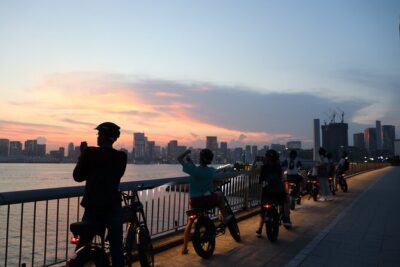
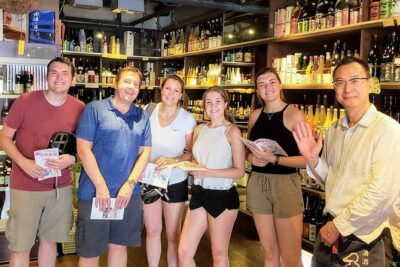
3h Tokyo E-Bike Tour: Hidden Gems, and Local Life with guide
Read our review →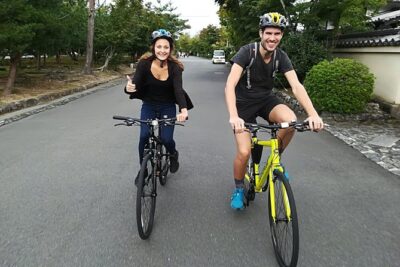
Arashiyama Bamboo Forest & Hidden Gems Bike Tour (Early Bird)
Read our review →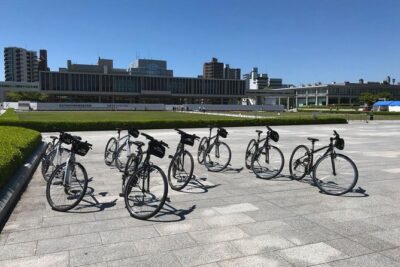
Hiroshima in a Nutshell: Morning Bike Adventure
Read our review →Other lists this ride turns up in