
REVIEW · HERITAGE AND TEMPLE BIKE TOURS IN JAPAN
Shuri+Naha: Cycling Tour Explore Water Heritage with E-Bike
The best surprise here is how quickly Naha’s city streets give way to springs, waterfalls, old stone steps, and quiet forest sounds. You pedal from the Makishi area toward Shuri, following the water that shaped daily life in the old Ryukyu Kingdom.
I like the small maximum group of five, which makes it easier to ask questions and ride at a comfortable pace. I also like the e-bikes, especially for the gradual climb toward Shuri. The main consideration is that this is still a cycling tour, with slippery roads, rocky areas, and hills. You need to ride a bike confidently and wear athletic shoes.
Key points at a glance
- Follow Naha’s water heritage: Ride beside rivers and visit two springs where waterfalls, waterfowl, and birdsong replace city noise.
- Reach Shuri by electric bike: The motor assistance helps on the uphill section toward the former Ryukyu capital.
- Taste old-style Ryukyu sweets: Stop at a confectionery shop that preserves recipes handed down since the kingdom era.
- See Okinawa’s famous vermilion gate: Pause for photographs at the symbolic entrance associated with Shuri Castle.
- Ride with close guidance: Groups are limited to five, and helmets include an intercom system for safety and conversation.
- Meet near Makishi Station: The shop is a one-minute walk from the monorail and next to Makishi Post Office.
Why the water story makes this Naha bike tour different
Many visitors see Naha through its shopping streets, markets, monorail, and castle grounds. This tour gives you another way to read the city. Water is the thread. Rivers and springs helped shape neighborhoods, supported households, and remain part of local life today.
You begin near Makishi Monorail Station, only a one-minute walk from the shop. After a quick safety briefing, you collect a helmet and an electric-assist bicycle. The helmet has an intercom system, so your guide can speak with the group while you ride. That is a useful detail in a city where traffic and street noise can make ordinary conversation difficult.
The cycling itself is not presented as a race. You move through streets where traditional and modern houses sit side by side. The tour description encourages simple greetings to people you pass, and you may receive a smile in return. That small human contact is part of the appeal. You are not only being taken from one famous sight to another. You are seeing how Shuri and Naha function as living neighborhoods.
The electric motor helps, but it does not turn the ride into a passive sightseeing trip. You still pedal, steer, and handle changing surfaces. If you enjoy cycling but do not want a hard climb to Shuri, the assistance is a practical advantage.
More E-Bike Tours in Japan
- Hidden Kyoto E-Biking tour
★ 5.0 · 1,843 reviews - Tokyo Top Highlights 3h Guided E-bike Tour
★ 5.0 · 714 reviews - 3h Tokyo E-Bike Tour: Hidden Gems, and Local Life with guide
★ 5.0 · 670 reviews
From Makishi to quiet springs and old stone steps
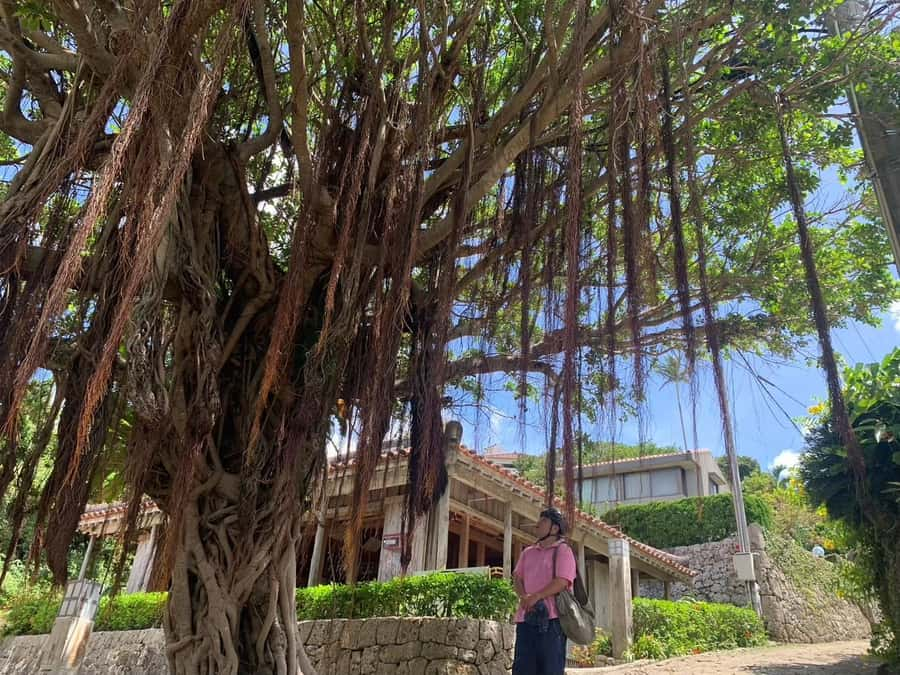
One of the strongest parts of the experience comes when the route leaves the main roads. The monorail and city traffic are still close, yet ancient trees and stone steps begin to appear. This sharp change in mood gives the tour its sense of discovery without requiring a long transfer outside Naha.
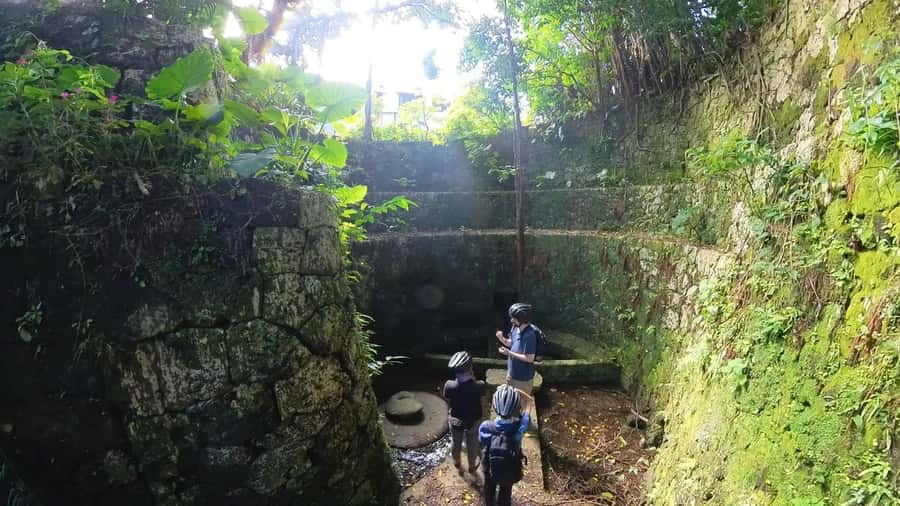
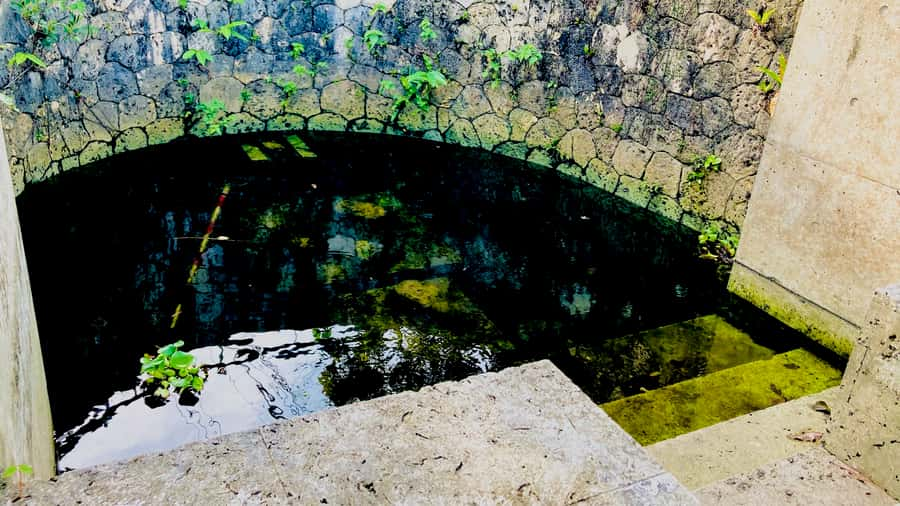
At 指司笠樋川, also written as Sasikasa Hiija, you reach one of the water sites on the route. The spring is perennial, and a waterfall adds a steady, gentle sound. The setting offers a welcome pause after riding through town. You can slow down, listen, and consider how unusual it is to find a natural water source so near central Naha.
The approach includes stone steps and areas close to water. That matters when choosing shoes. High heels and sandals are poor choices here, and athletic shoes are specifically advised. The road or stone can be slippery, so I would treat this as a proper outdoor stop rather than a quick roadside photo opportunity.
A second spring comes after you pass through residential streets. It sits near the forest, where waterfowl gather and birdsong replaces most other sound. This is one of the moments when the electric bike earns its keep: you can cover the urban distance between sites without spending your limited tour time and energy on a long physical effort.
These springs also give the guide room to explain Okinawa beyond castle architecture. You learn about the relationship between residents and water, not just the dates and names associated with the Ryukyu Kingdom. The tour is at its best when the guide connects the physical place to ordinary life.
Handmade sweets with a royal-court connection
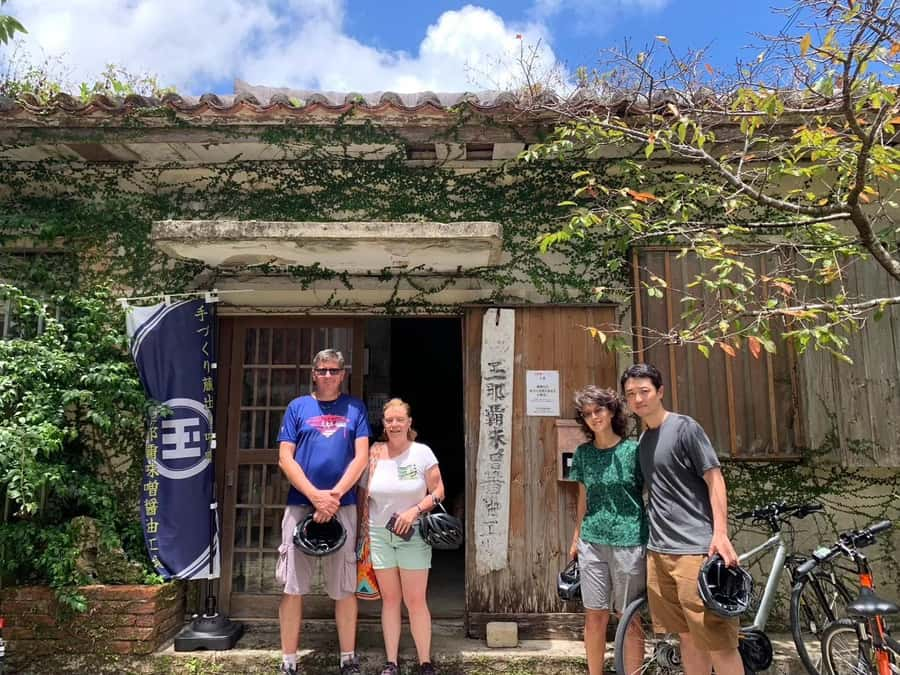
The stop at the traditional confectionery shop adds a pleasant change of pace. The shop preserves recipes passed down since the Ryukyu Kingdom era, and the sweets are made and packaged by hand. You can see part of the production process and taste the finished confectionery.
A German participant specifically appreciated a stop at a small bakery where handmade sweets have been prepared for more than 100 years. The exact details of the shop may vary with the route, but the key point is the same: this is not simply a packaged snack bought at a convenience store. It is a chance to see food tradition being maintained through careful, small-scale work.
The tasting helps make the history tangible. Instead of only hearing about royal hospitality, you get a direct connection to the kinds of sweets associated with formal occasions and honored guests. Do not expect a full meal here. Think of it as a cultural tasting and a short rest during the ride.
This is also a useful stop if you are interested in Okinawan food but have limited time. The tour does not ask you to dedicate a separate afternoon to a food workshop. You get a taste of the tradition while moving between the springs and Shuri.
The vermilion gate and Shuri’s castle-town streets
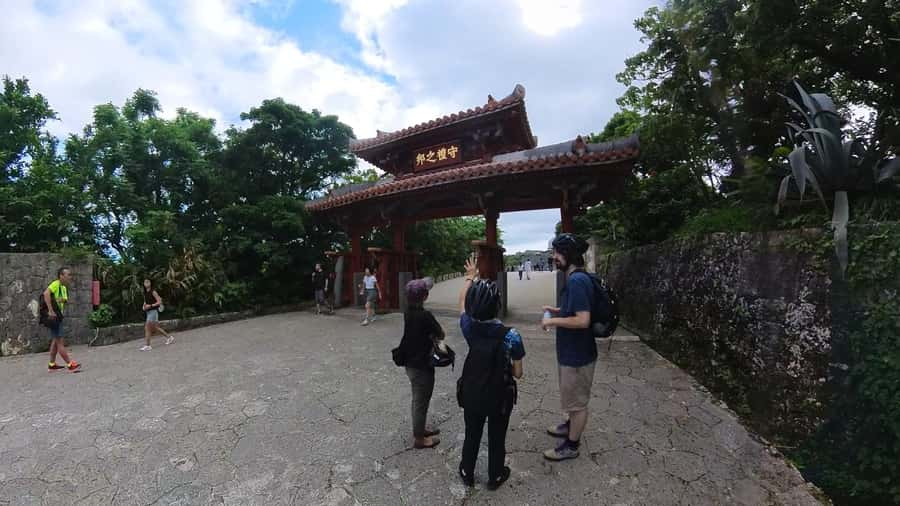
The route then reaches the famous vermilion gate associated with Shuri Castle. Its strong color and balanced design make it one of the clearest visual symbols of Okinawa. The gate was known by common residents as Ue no Ayamon Ii no Ayashō, or Beautiful Gate Above.
You have time for photographs here, but the value is not only the picture. The gate helps you understand how Shuri presented itself as the center of the Ryukyu Kingdom. Its color, form, and position carry a sense of ceremony that is easy to miss when you rush through with a camera.
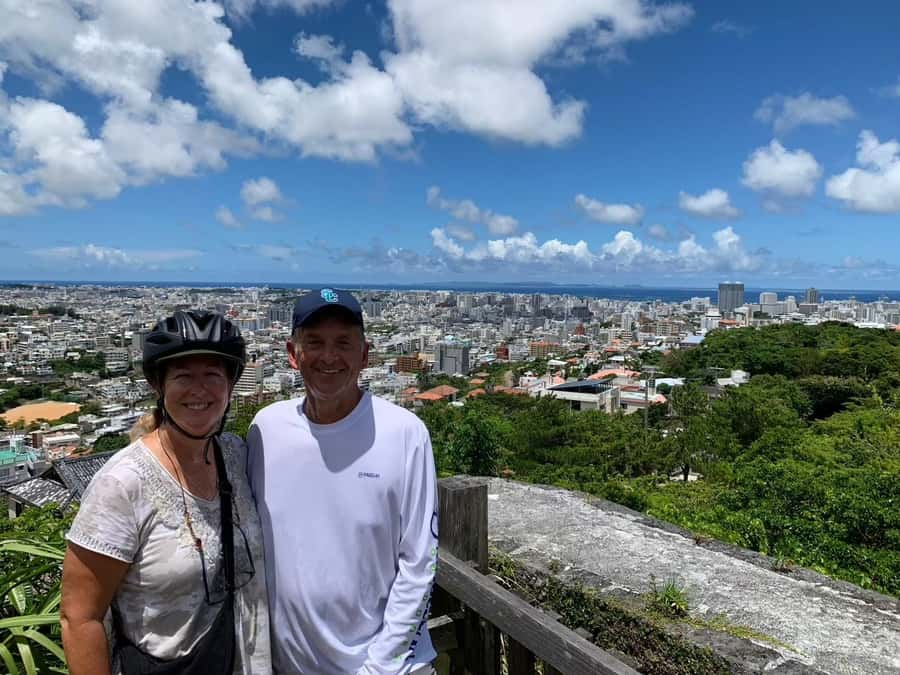
From here, the route climbs gradually. You can look over Naha City, with red-tiled roofs, stone pillars, and guardian figures appearing around the old castle town. The climb is one reason I would choose the e-bike rather than a standard bicycle. You still need to work, but the motor reduces the strain and lets you pay attention to the view.
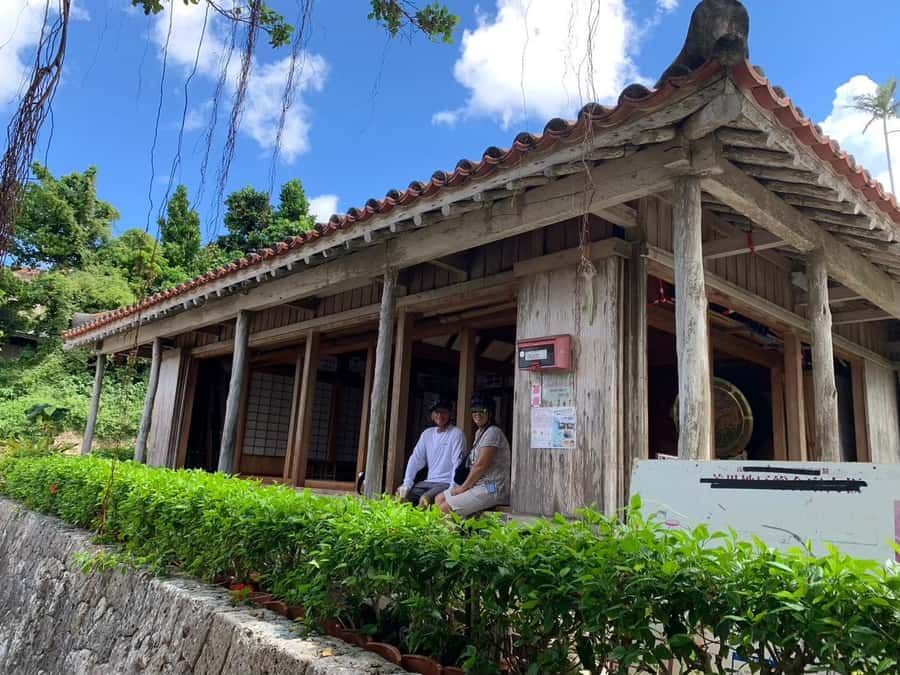
The streets around Shuri Castle include cobblestones, temples, and sacred places. Your guide explains the culture of the Ryukyu Kingdom and Okinawa’s religious beliefs as you move through them. This gives the tour a broader focus than a simple castle photo stop.
One practical point is worth keeping clear: the experience includes exploring the Shuri Castle area, but the supplied details do not promise a separate admission ticket or an extended indoor castle visit. You should think of this as a guided ride through Shuri’s historic streets and sacred sites, with the gate and castle-town atmosphere as major highlights.
More Heritage and Temple Bike Tours in Japan
- E-Bike Nara Highlights – Todaiji, Knives, Deer, Shrine
★ 4.8 · 186 reviews - Historical Kyoto E-Bike Tour
★ 5.0 · 181 reviews - 4.5-Hour Kyoto Bike Tour with Lunch and UNESCO Zen Temples
★ 5.0 · 122 reviews - Kyoto: Fushimi Inari Shrine and Tofukuji Temple E-Bike Tour
★ 5.0 · 75 reviews
What the small group and guides add
With a limit of five participants, this is much closer to a guided outing than a large cycling procession. You can hear the guide through the intercom system, ask questions, and receive more direct help with the bike and route.
Several guides have led this experience, including Jo-Jo, Aki, Sally, and Maki. Their strengths, as reflected in the provided tour feedback, include clear English, polite support, strong local knowledge, and careful attention to safety. Aki was praised for handling difficult weather calmly, while Sally was noted for making Okinawa’s natural and historical details easy to understand.
That matters because the route includes a mix of road surfaces and settings. You move from city streets to riversides, stone steps, springs, residential lanes, and a hill. A guide who watches the group and explains what is ahead makes the experience more relaxed.
The English and Japanese language options give you a choice when booking. If you need a detailed explanation of historical or religious points, confirm your preferred language and starting time when reserving.
The downhill return and overall pace
After the Shuri section, the return ride is mostly downhill. This is the fun payoff after the climb. You can coast with the wind in your face while heading back toward the shop, though you should still follow the guide’s instructions and control your speed.
The complete experience lasts three hours. That is long enough to cover several distinct parts of Naha without taking up an entire day. It also means the stops are focused. You will not have unlimited time at every spring, shop, or photo point.
The pace should suit you if you want active sightseeing with regular pauses. It may not suit you if you prefer to spend an hour inside Shuri Castle, linger over every photograph, or stop for a full lunch. This is a moving tour, with the bicycle linking the sights.
The weather can affect the plan. If the chance of precipitation rises above 70 percent or severe weather is expected, the route may be changed. The operator can contact you from three days before the tour through the day before. One group completed the experience during a storm and still had fun, but that does not mean you should ignore the weather notice. Wet roads and stone surfaces make footwear and caution especially important.
Is $87 a fair price?
At $87 per person, the price is reasonable if you value a small guided group, an electric-assist bike, and several different experiences in one outing. The fee includes the bicycle, helmet, intercom-equipped guide service, historical commentary, spring visits, a sweets stop, and the ride to Shuri.
You are paying for more than bicycle hire. A self-guided rental would not automatically show you the water sites, explain the connection between springs and local life, or lead you through the less obvious stone paths. You would also need to plan the route, manage the hill, and decide how to connect Makishi, Shuri, and the various stops.
The value is less clear if you already have your own bike, dislike organized activities, or want a long independent visit inside the castle complex. Camera mounts and mobile phone holders are not included, so bring your own simple solution if you want to film or photograph while riding. Do not handle your phone while moving.
The reserve-now-and-pay-later option can help if your Naha schedule is still changing. Cancellation is free up to 24 hours before departure, with a full refund. Starting times depend on availability.
Who will enjoy this ride most?
I would choose this for an active first visit to Naha, especially if you want history, local neighborhoods, and nature in the same morning or afternoon. It is also a good fit if you have already seen the main shopping streets and want a different view of the city.
The experience suits:
- Confident bike riders who want help with the climb to Shuri
- Visitors who prefer small groups over large guided outings
- People interested in springs, local water use, and Ryukyu culture
- Families with children aged one to five, if a child seat is arranged with the staff
- Visitors who want a three-hour activity near the monorail
It is not suitable for people who cannot ride a bicycle or wheelchair users. The route includes rocky and slippery areas, so athletic shoes are essential. I would also avoid bringing a large bag that could make riding awkward.
My verdict on the Shuri and Naha cycling tour

You should book this tour if you want to connect Naha and Shuri through small natural sites, local food tradition, and everyday streets, rather than seeing only the headline attractions. The springs and waterfall give the ride a quiet side, while the e-bike and small group keep the hill manageable.
Choose something else if your main goal is a long, detailed visit inside Shuri Castle or a completely independent day. For everyone else, $87 buys a well-planned three-hour route with strong guide support, a taste of handmade Ryukyu sweets, and a more personal look at Okinawa’s former capital.
FAQ
Where does the cycling tour begin?
You meet at the e-charity Naha Kokusai Street main shop, located next to Makishi Post Office. It is a one-minute walk from Makishi Monorail Station.
How long does the tour last?
The tour lasts three hours, including the ride from Makishi toward Shuri, the sightseeing stops, and the return to the bicycle shop.
What languages are available?
The tour is available with a live guide in English or Japanese.
Are the bicycles electric?
Yes. The tour includes an electric-assist bicycle rental service. Helmets with an intercom system are also included.
Can young children join?
Children aged one to five can have a child seat attached to a parent’s bicycle. You should consult the staff for details before booking.
What happens in bad weather?
If the precipitation probability exceeds 70 percent or severe weather is expected, the plan may be changed. The operator may contact you from three days before the tour through the day before.
Newest rides we have reviewed in Japan
- Afternoon Adventure: Okinawa Local Cycling with Spectacular Views★ 5.0 · 92 reviews
- Zodiac Shrines and Naha Backstreets Cycling Tour★ 5.0 · 29 reviews
- Iya Valley BROMPTON Slow Cycling Tour★ 5.0 · 28 reviews
- eTour de Matsumoto – Electric Bike Tour★ 5.0 · 16 reviews
- ONLY YOU in the Bamboo Forest! 4 hours E-bike tour with a local★ 5.0 · 45 reviews
- South Kyoto in a Nutshell: Gentle Backstreet Bike Tour!★ 5.0 · 225 reviews
- Pedal Adventure Kyoto’s iconic landmarks on an e-bike tour★ 5.0 · 189 reviews
- Kyoto Bamboo Forest & Golden Pavilion E-Bike Tour★ 5.0 · 50 reviews
Heritage and Temple Bike Tours, compared.


Historical Singapore Bike Tour on Full-Sized Bicycles
Read our review →
Night Bike Tour with Temples & Flower Market Visit
Read our review →
Intramuros, Manila: Historical Bamboo Bike Tour
Read our review →

Historical Bike Tour of Savannah and Keep Bikes After Tour
Read our review →Other lists this ride turns up in