REVIEW · HERITAGE AND TEMPLE BIKE TOURS IN KYOTO
Kyoto: Fushimi Inari Shrine and Tofukuji Temple E-Bike Tour
Fushimi Inari Shrine is the headline here, but the best part is the ride between famous sights. You’ll pass through Gion, quiet residential lanes, suburban streets, and riverside paths that show you a more ordinary side of Kyoto. Guide Maki brings the route to life with stories about religion, customs, samurai, geisha, and daily life.
I like the small group of no more than eight and the easy electric bicycles, which make the four-hour route manageable for many fitness levels. I also like the balance of major sights and quieter temples, with time to pause in Tofukuji’s Zen garden. The main caution is that you will need to share the road in some busy areas, and the schedule may leave less time at Fushimi Inari than you would have on a private visit.
Key points at a glance
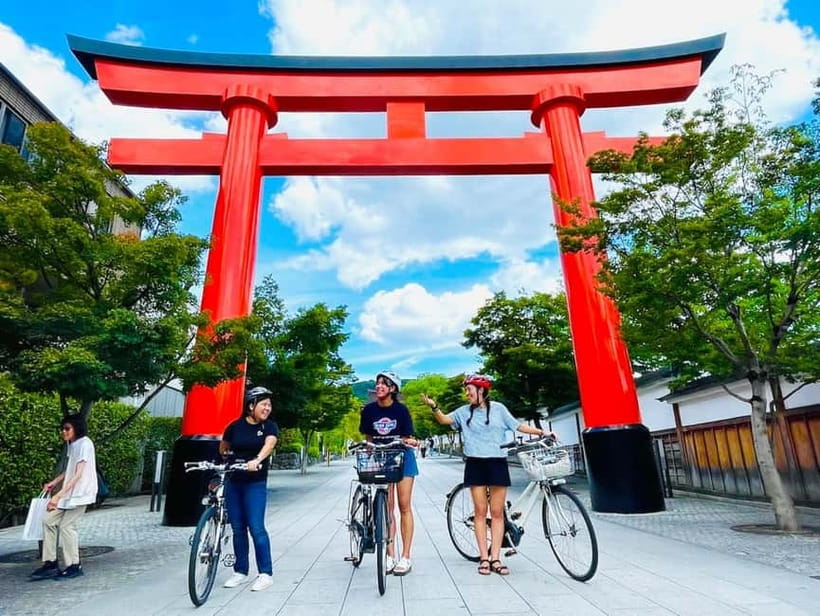
- Fushimi Inari by bicycle: Reach Kyoto’s famous Shinto shrine without spending the entire morning on temples and shrine visits.
- Maki’s local storytelling: Expect clear English, humor, personal stories, and practical explanations of Japanese customs.
- A varied Kyoto route: Cycle through Gion, residential lanes, suburban streets, quieter religious sites, and along the river.
- Comfortable e-bikes: Electric assistance helps on steeper stretches and when your legs tire.
- A calm Tofukuji stop: Slow down in a Zen garden after the busier shrine experience.
- Useful half-day format: At $83 per person, the tour includes the bike, helmet, insurance, snack, water, and entrance fees for two places.
Why this Kyoto bike tour works so well
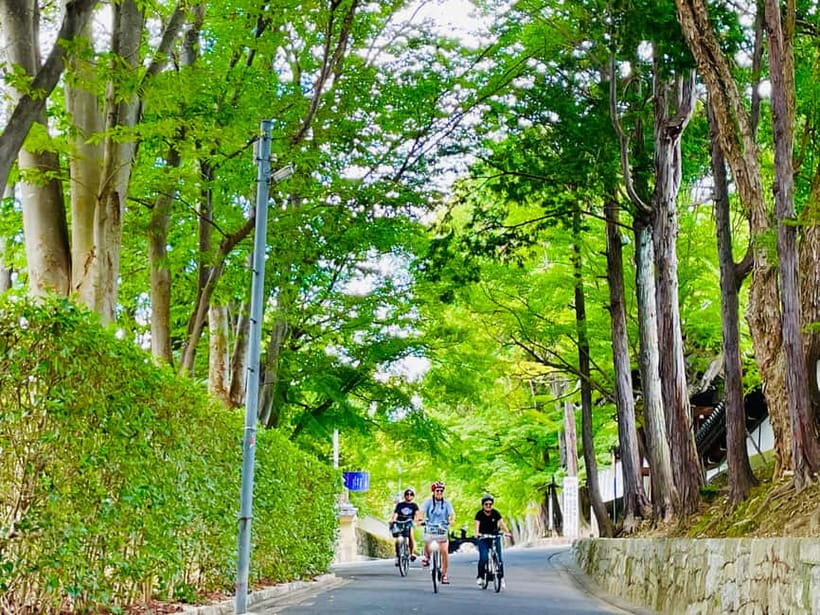
Kyoto can be tiring. The city offers an almost endless list of shrines, temples, gardens, and old districts, but moving between them by bus or taxi can eat up a surprising amount of time. Walking is rewarding, yet a full day on foot can leave you staring at your hotel room instead of enjoying dinner.
This tour solves part of that problem. In four hours, you see several different sides of Kyoto without committing to a seven-hour sightseeing marathon. You get a major attraction in Fushimi Inari, a quieter temple setting at Tofukuji, cultural context in Gion, and a look at residential Kyoto between the stops.
I especially like the fact that the route is not just a bike ride from one famous place to another. The roads and lanes are part of the experience. You may pass small homes, neighborhood streets, waterways, and less-visited shrines. That gives you a better sense of how Kyoto functions beyond the postcard sites.
The experience is led in English, and Maki has received particularly strong praise for her humor, clear explanations, and ability to connect historical details with personal stories. She also uses visual material, including a binder with pictures, to help explain subjects that can be hard to grasp on the spot.
More E-Bike Tours in Japan
- Hidden Kyoto E-Biking tour
★ 5.0 · 1,843 reviews - 5 Top Highlights of Kyoto Full Day Bike Tour (E-bike option)
★ 5.0 · 511 reviews - Kyoto: Memory Kyoto E-Bike Tour
★ 4.8 · 297 reviews
Starting near Higashiyama-Sanjo
The meeting point is Pedal Adventure Kyoto, with the tour beginning at a temple near Higashiyama-Sanjo. You do not get hotel pickup, so plan your route to the meeting point before setting out.
The first step is a riding orientation. This matters in Kyoto, where you may cycle on quiet lanes one moment and share busier roads the next. You’ll learn how the e-bike works and receive guidance on riding in Japan before heading out.
The included helmet and insurance add welcome peace of mind. The bikes have been described as clean, sturdy, and well maintained, which is important when you are relying on them for several hours. Electric assistance is especially useful on uphill sections and toward the end of the ride.
You should wear comfortable clothes and shoes suited to cycling. Sunscreen is a smart addition on sunny days, and a water bottle is recommended, although the tour also includes bottled water. The activity mixes cycling with walking and standing, so it is not a purely seated sightseeing experience.
Cycling through Gion and everyday Kyoto
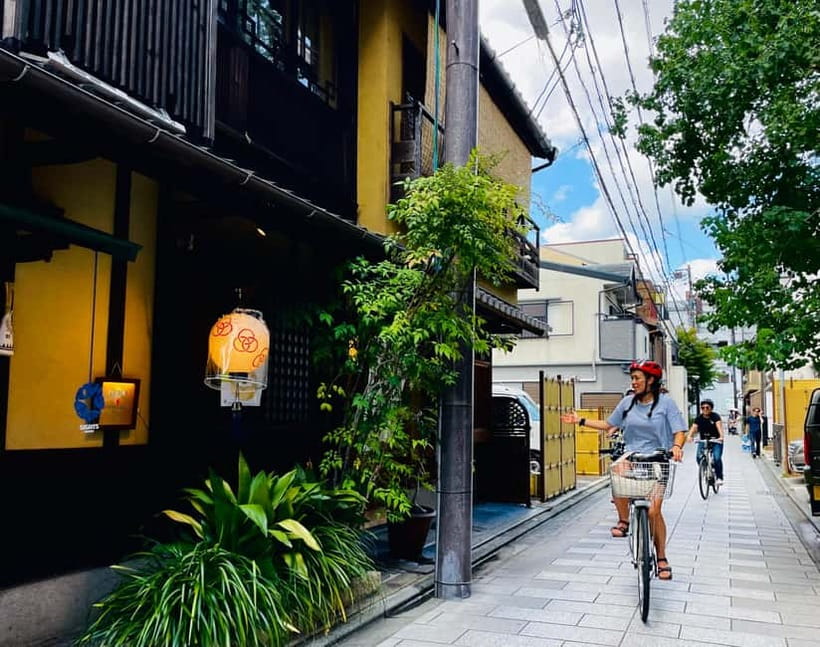
Gion is one of Kyoto’s best-known districts, associated with traditional wooden buildings, geisha culture, and old customs. The tour uses the district as a starting point for understanding how Kyoto’s traditions fit into modern city life.
This is not simply a photo stop. Maki explains geisha customs and local etiquette, then carries the conversation into broader subjects such as Japanese history, religion, and social traditions. Her personal stories help make the material less formal and easier to remember.
One benefit of traveling by bicycle is that you can move through areas too spread out for a short walking tour. The route includes residential streets, suburban sections, smaller lanes, and waterways. You get glimpses of regular Kyoto life rather than seeing only the polished center of the tourist map.
The route can include busy areas, so you should be comfortable riding near traffic. The tour leader sets the pace and provides directions, and the e-bike reduces the physical strain, but this is still an active outing. You will not be pedaling on a completely car-free path for four hours.
Frequent stops help. They give you time to catch your breath, listen to explanations, take photographs, and ask questions. Several families with teenagers found the pace easy to manage, while a group of middle-aged riders also completed the route without difficulty.
Fushimi Inari Shrine and its red torii gates
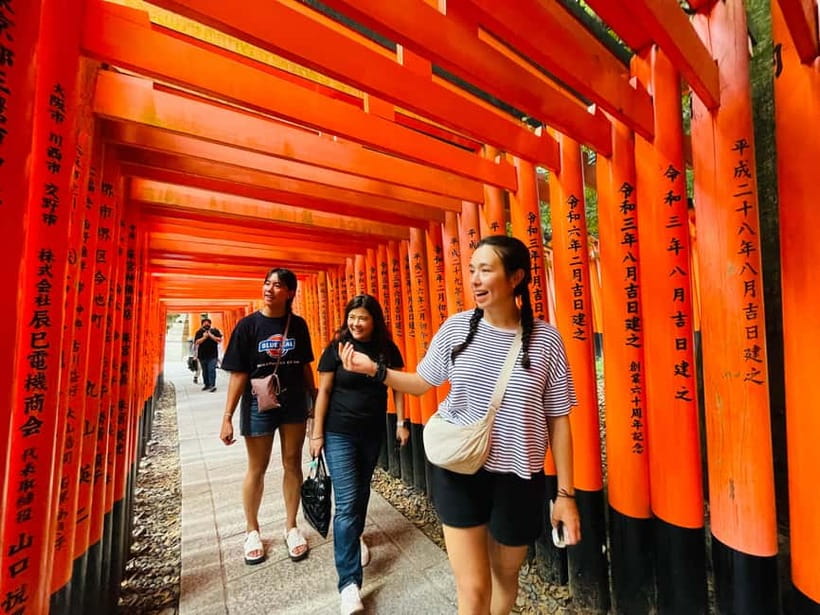
Fushimi Inari is the tour’s biggest draw. Its long rows of red torii gates have made the shrine one of Japan’s most recognizable sights, and it can be one of Kyoto’s busiest places.
The value of visiting with a guide is the explanation. Rather than treating the torii as a colorful backdrop, Maki introduces the shrine’s history and the basics of Shinto. You learn what you are looking at and why the site matters.
That context changes the experience. Shinto is closely tied to nature, local traditions, purification, and respect for spirits and sacred places. A guide can explain the customs in a way that helps you behave respectfully and notice details you might otherwise pass without understanding.
Keep your expectations realistic about time. The tour includes Fushimi Inari, but it also has several other stops and must accommodate a small group with different cycling speeds. You may not have time to walk every section of the mountain paths or explore the shrine at your own pace.
One participant specifically wanted more time at the shrine, noting that some time was lost at the start while the group settled into riding. That is a fair tradeoff to consider. If Fushimi Inari is your top priority, a separate visit gives you more freedom. If you want a broad introduction to Kyoto, the shorter stop fits the tour’s purpose.
More E-Bike Tours in Kyoto
- E-Bike Tours of the highlights of Kyoto!!!
★ 5.0 · 291 reviews - Kyoto: City Secrets eBike Tour
★ 4.9 · 196 reviews - Kyoto: Hidden Gems E-Bike Tour with Local Japanese Guide
★ 4.9 · 189 reviews - Historical Kyoto E-Bike Tour
★ 5.0 · 181 reviews
Tofukuji and a quieter Zen pause
After Fushimi Inari, the tour visits Tofukuji Temple. This creates a useful change of mood. Fushimi Inari can feel energetic and crowded, while Tofukuji offers a more reflective setting and a chance to slow down.
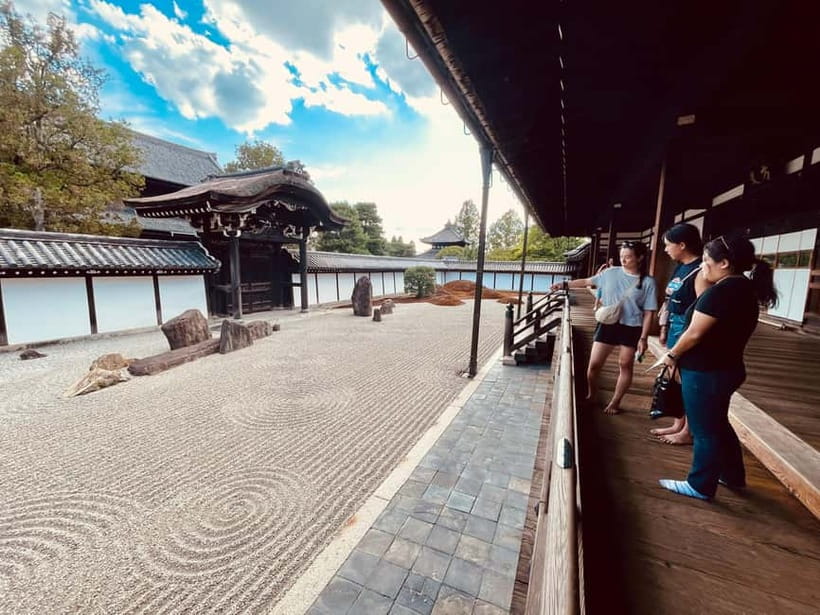
The Zen garden is the key moment. Instead of rushing through another temple, you get time to sit, look, and absorb the atmosphere. I like this pause because it gives the four-hour route some breathing room. Kyoto sightseeing is not just about collecting entrance tickets. Sometimes the most memorable part is a few quiet minutes in a carefully arranged garden.
The stop also lets Maki explain the difference between Shinto shrines and Buddhist temples. That distinction can be confusing at first, especially because Japanese religious life often includes both traditions. Hearing the explanation at actual sites makes the comparison practical rather than abstract.
Entrance fees for two places are included, which covers the principal paid visits on the route. You should still expect some walking around the temple and shrine grounds, along with time standing while the guide explains what you are seeing.
The return ride along Kyoto’s waterways
The ride back is not treated as dead time. Parts of the return route follow the river, giving you a pleasant change from city streets and a relaxed finish to the tour.
This is where the e-bike earns its keep. Four hours of cycling can feel different from four hours of walking, but fatigue still catches up with you. Electric assistance lets you enjoy the scenery instead of worrying about every incline or trying to keep up with a faster rider.
The cycling itself has been described as easy and safe when following the guide’s directions. Still, road conditions vary, and you should be ready for a mix of quieter routes and busier sections. Anyone nervous about cycling in a Japanese city should pay close attention during the opening orientation and stay with the group.
Maki also takes photographs for the group, which is useful when you are busy riding or listening. This is not listed as a formal professional photography service, so think of it as a thoughtful extra rather than the main reason to book.
What the guide adds to the experience
A bike rental on its own can show you more of Kyoto, but it cannot explain why a shrine has a certain layout or how geisha traditions fit into local culture. The guide is the part of this experience that turns transportation into a tour.
Maki is praised for her English, humor, energy, and ability to answer questions. She covers a wide range of subjects, including Japanese history, religion, infrastructure, customs, samurai, geisha, and everyday life. Her style appears conversational rather than lecture-heavy.
I also like that she uses personal stories. Kyoto can sometimes feel like a museum if every explanation focuses only on the past. Local perspective helps connect the old temples and rituals with present-day Japan.
The small-group size matters here. With up to eight participants, you have a reasonable chance to ask questions and hear the answers. A larger group could make stops slower and conversations less personal. The tradeoff is that a group tour cannot adjust every stop to suit one person’s priorities.
One small practical note comes from the nature of the format. The guide usually speaks after the group stops, rather than delivering a running commentary while everyone rides. If you are at the back of the line, gather in close when the group pauses so you do not miss the explanation. One participant suggested a microphone and earpiece, which tells you that keeping close during stops is sensible.
Is $83 a fair price?
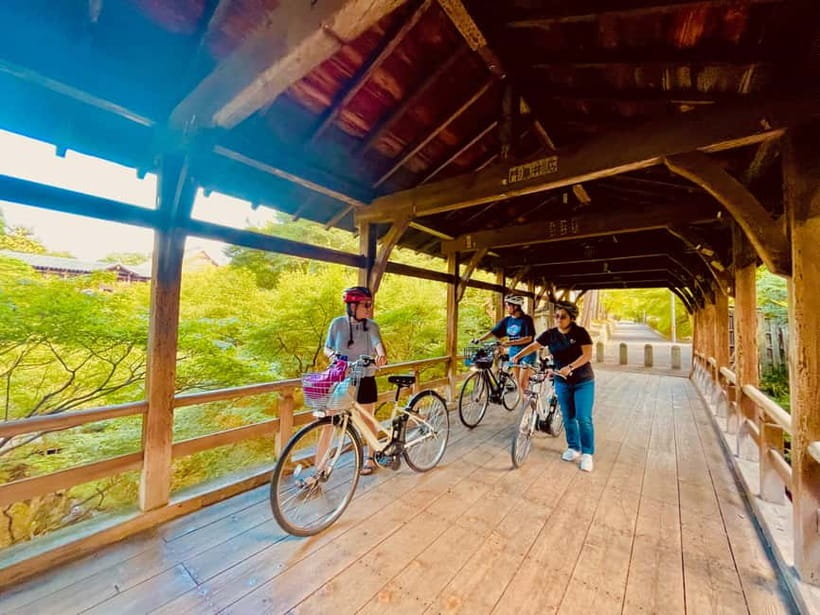
At $83 per person, this is not the cheapest way to see Kyoto, but the price covers more than a basic bicycle rental. You receive an electric bicycle, helmet, insurance, an English-speaking local guide, a snack, a water bottle, and entrance fees for two places.
The real value is the route and the time saved. Planning a path between Gion, Fushimi Inari, Tofukuji, and quieter neighborhoods takes effort, and navigating it alone means stopping to check maps. The guided route lets you focus on the city and the stories.
The price makes the most sense if you want an introduction to Kyoto early in your stay. You will learn what you are looking at, pick up ideas for later visits, and see areas you might not reach on foot.
It is less suitable if you prefer long, unhurried visits at a single shrine or temple. You are paying for variety, local interpretation, and efficient movement, not for an in-depth exploration of Fushimi Inari alone.
The free cancellation period extends to 24 hours before the tour, and you can reserve now and pay later. Those terms are useful if your Kyoto schedule is still shifting.
Who should book this tour?
I would recommend it to first-time Kyoto visitors who want orientation without spending a full day in a tour group. It also suits families with teenagers, couples, and active adults who enjoy seeing a city at street level.
You do not need to be an athlete. The e-bikes provide assistance, the route includes stops, and riders with different fitness levels have managed the tour. You do need to be comfortable on a bicycle and ready for some city riding.
The tour is not suitable for children under 12, pregnant women, or people with mobility impairments. Smoking and alcoholic drinks in the vehicle are not allowed, although the activity itself centers on bicycles rather than a motor vehicle.
For families, the guide’s ability to keep teenagers involved is a real advantage. Cultural information can lose young audiences quickly, but humor, questions, photographs, and frequent changes of scene help hold attention.
My final take on the Kyoto e-bike route
I like this tour because it gives you more than the standard Fushimi Inari stop. You see Gion, ordinary neighborhoods, smaller religious sites, Tofukuji’s Zen garden, and a riverside route, all while learning how Shinto, Buddhism, and Kyoto customs fit together.
The main compromise is time. Four hours passes quickly, and you will not explore every major site at length. Busy roads and a group pace may also require patience.
Book it if you want a friendly, active introduction to Kyoto and value a guide who can explain the city with humor and local insight. Skip it if you want a slow private visit, dislike cycling in traffic, or plan to spend several hours at Fushimi Inari alone. For most visitors seeking a well-priced half-day activity, the combination of e-bike access, a small group, and Maki’s engaging guidance makes this a strong choice.
FAQ
How long is the Kyoto e-bike tour?
The tour lasts four hours. It includes cycling, walking, visits to Fushimi Inari Shrine and Tofukuji Temple, and stops for explanations and questions.
Where does the tour meet?
The meeting point is Pedal Adventure Kyoto. The tour begins at a temple near Higashiyama-Sanjo, and hotel pickup and drop-off are not included.
What language is the tour conducted in?
The live tour is conducted in English.
Are bicycles, helmets, and entrance fees included?
Yes. The price includes an electric bicycle, helmet, insurance, a snack, a water bottle, and entrance fees for two places.
Is the tour suitable for children?
The activity is not suitable for children under 12. Families with teenagers can take part, provided the children are comfortable cycling and walking.
What should I bring and wear?
Wear comfortable clothes and shoes suitable for cycling and walking. Sunscreen and a water bottle are recommended, and you may want to bring a camera for the views.
More Heritage and Temple Bike Tours in Kyoto
- Bangkok: Temples, Canals & Local Life Bike Tour
★ 4.9 · 3,511 reviews - Historical Singapore Bike Tour on Full-Sized Bicycles
★ 5.0 · 1,421 reviews - Barcelona: 2.5-Hour Bike or E-Bike Historical Tour
★ 4.5 · 1,262 reviews - Bangkok: Night Bike Tour with Temples & Flower Market Visit
★ 4.8 · 751 reviews
More Heritage and Temple Bike Tours in Japan
- 4.5-Hour Kyoto Bike Tour with Lunch and UNESCO Zen Temples
★ 5.0 · 122 reviews - Kyoto: Hidden Gems E-Bike Tour Through Backstreets & Temples
★ 4.9 · 54 reviews - 4.5-hr Kyoto Historical Highlights Bike Tour with UNESCO
★ 4.7 · 13 reviews - E-Bike Nara Highlights – Todaiji, Knives, Deer, Shrine
★ 4.8 · 186 reviews
Newest rides we have reviewed in Kyoto
- Best of Kyoto: Ginkakuji & Path of Philosophy E-Bike Tour★ 4.9 · 79 reviews
- Kyoto: Tailored E-Bike Tour to Highlights & Hidden Gems★ 4.9 · 32 reviews
- Kyoto: Full Day Bike Tour★ 4.9 · 39 reviews
- Kyoto: Half-day Guided Bike Tour with Fushimi Inari★ 4.9 · 21 reviews
- Kyoto: Early Bird E-Bike Tour with Lunch★ 5.0 · 14 reviews
- Kyoto: Full-Day City Highlights Bike Tour with Light Lunch★ 5.0 · 52 reviews
- Cycle Kyoto’s Hidden Gems & Gion Stroll★ 5.0 · 29 reviews
- Kyoto: Arashiyama Bamboo Forest Morning Tour by Bike★ 5.0 · 115 reviews
Heritage and Temple Bike Tours, compared.


Historical Singapore Bike Tour on Full-Sized Bicycles
Read our review →
Night Bike Tour with Temples & Flower Market Visit
Read our review →
Intramuros, Manila: Historical Bamboo Bike Tour
Read our review →