
REVIEW · KYOTO
Kyoto Shogun Cycling Tour
Kyoto’s shogun-era story makes more sense when you move between its grand sites by bicycle. This easy downhill route links the gold-covered Kinkakuji, quiet Toji-in Temple, and imposing Nijo Castle without trapping you on a bus all morning. I like the mix of major sights and peaceful temple time, and I like that your private guide can explain the people and events behind each place. The main thing to consider is the price: at $153.50 per person, this costs more than simply visiting the sights on your own.
You’ll also need to be comfortable cycling on Kyoto’s roads, and the tour requires at least two riders per guide. Guides including Seiya, Makoto, Nozomi, Yutaka Kaneda, and Yasunobu Yagyu have led similar routes, with English communication and a friendly, flexible approach repeatedly praised. Rain does not automatically cancel the ride, but hot weather and cycling conditions may affect your comfort.
Key points to know before booking
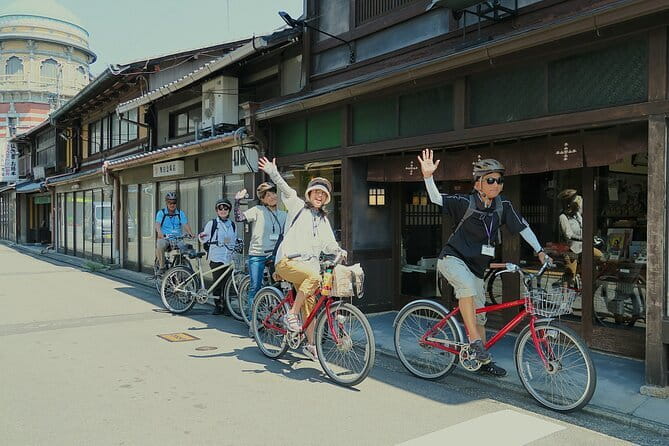
- Three major stops in about three and a half hours: You visit Kinkakuji, Toji-in Temple, and Nijo Castle, with admission included.
- The route generally runs downhill: That makes the ride approachable, but you still need to ride safely on the road without help.
- A private experience for small groups: Two to six people can ride with one guide. Groups of seven to twelve can request an extra guide.
- Strong guide-led history: The route connects Ashikaga shogun power, Zen temple culture, and the final Tokugawa shoguns.
- Rain plans are built in: You can continue by bicycle with free rainwear or switch to a walking tour using public transportation.
- A station finish is useful: The ride ends at the Kyoto Cycling Tour Project terminal near Kyoto Station, rather than returning to the starting point.
Why this route tells Kyoto’s shogun story well
Many Kyoto sightseeing routes pile up temples without giving you a clear thread. This one has a useful theme: you move from Ashikaga power and Zen culture to the political shift that ended the shogunate.
Kinkakuji introduces the Ashikaga world in a spectacular way. Toji-in then changes the mood from grand display to quiet gardens and restrained design. Nijo Castle brings the story forward to the Tokugawa period, when the shoguns ruled from Edo but maintained an important Kyoto residence.
That sequence gives the ride more shape than a simple collection of famous addresses. You see how political power, religious life, architecture, gardens, and ceremony fit together.
The bicycle matters here. Kyoto is spread out, and moving between these places under your own power lets you see more of the city between the formal sights. You are not only stepping off a bus, taking a quick photo, and getting back on. The route connects neighborhoods and monuments at a human pace.
The tour lasts about three hours and thirty minutes, though the stated stop times add up to roughly three and a half hours: one hour at Kinkakuji, one hour at Toji-in, and one and a half hours at Nijo Castle. That leaves little room for a slow lunch or a long café stop, so plan this as a focused morning or afternoon activity.
More Cycling Trips in Kyoto:
- Hidden Kyoto E-Biking tour
★ 5.0 · 1,843 reviews - Bike Tour Exploring North Kyoto plus Lunch
★ 5.0 · 1,087 reviews - Arashiyama Bamboo Forest & Hidden Gems Bike Tour (Early Bird)
★ 5.0 · 613 reviews
Starting near Wara Tenjin and riding downhill
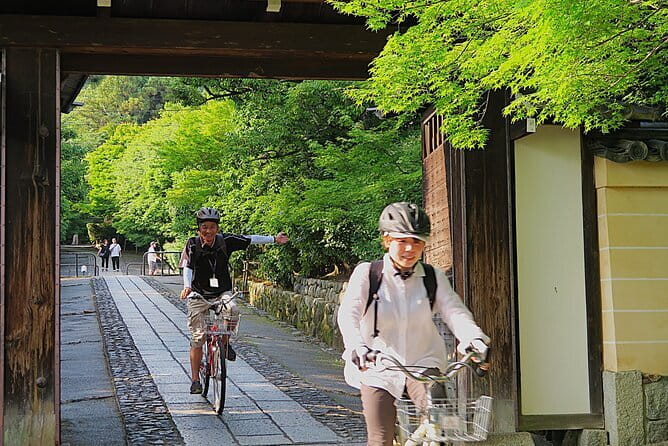
The meeting point is Wara Tenjin mae on Kinugasa Oharaicho in Kyoto’s Kita Ward. The ride ends at the Kyoto Cycling Tour Project Kyoto Station Cycle Terminal at 552-13 Higashiaburanokojicho in Shimogyo Ward.
The downhill direction is one of the route’s practical strengths. Kyoto sightseeing can involve a surprising amount of walking, and a route that generally loses elevation is easier on the legs than a ride that climbs toward the northern temples. You still need to handle a bicycle on public roads, but the route is designed for ordinary riders rather than serious cyclists.
The tour includes a bicycle, helmet, and rainwear. That keeps the packing list simple. You do not need to arrange a rental bike separately, and you have basic protection if the weather turns wet.
The starting location is not Kyoto Station, so give yourself time to reach it. The ending point near Kyoto Station is more convenient for your next plan. You can finish the ride and continue by train or head onward with your luggage arrangements already centered in the station area.
This is a private activity, so only your own group participates. That is a real advantage in Kyoto, where a guide can adjust explanations and pacing without addressing a large crowd. The tradeoff is that the minimum is two people. A solo booking is not accepted.
Kinkakuji: a dramatic opening at the Golden Pavilion
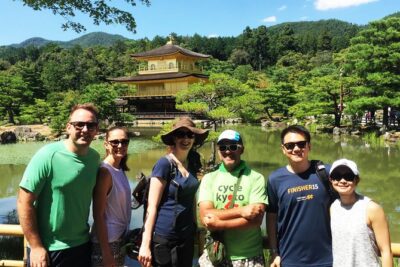
The first major stop is Kinkakuji, better known as the Golden Pavilion. The temple building is covered in gold leaf and reflected in the surrounding pond, making it one of Kyoto’s most instantly recognizable sights.
You spend about an hour here, including admission and a walk through the gardens. That timing is sensible. Kinkakuji is not a place where you normally enter and wander through every room of the main pavilion. The pleasure comes from the view across the water, the carefully arranged grounds, and the chance to understand the site’s role in Ashikaga power.
Your guide can give the pavilion more meaning than its famous appearance alone. It was connected with the Ashikaga shoguns and once served as a center of government. The building’s polished gold surface suggests ceremony and authority, while the garden gives you the quieter side of elite Japanese taste.
There is one practical point to keep in mind: Kinkakuji is a major Kyoto attraction, and the main viewing area can feel busy. An hour is enough for the essential sights, but not for a relaxed, solitary garden visit. If you want extensive photography or time to read every sign, you may feel rushed.
Still, this is an effective first stop. You begin with Kyoto’s most theatrical image, then leave it behind by bicycle for a quieter temple experience.
Toji-in Temple: Kyoto’s quieter Zen pause
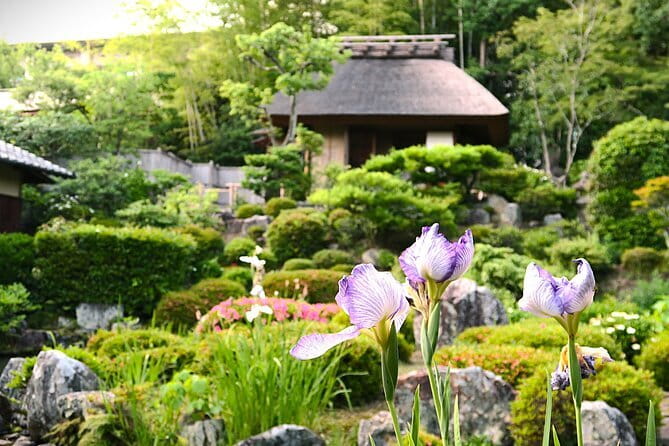
Toji-in Temple offers the sharpest contrast with Kinkakuji. Here the focus is not a gleaming landmark, but the calm of the temple interior, the garden, and the small teahouse.
The tour gives you about an hour at Toji-in, and your guide takes you inside. That matters because the experience depends on more than seeing the grounds from a path. You can pause in the temple hall, where Zen masters once contemplated the world, and look across the groomed garden toward the teahouse.
This is where the idea of wabi-sabi becomes useful. Rather than chasing perfect symmetry or glittering display, the aesthetic values restraint, age, simplicity, and quiet attention. You do not need a lecture on Zen to appreciate it, but a good guide can help you notice why the temple feels so different from Kinkakuji.
A matcha service is not included. If you were hoping for tea as part of the visit, budget for that separately, if available at the time. The tour includes access and guiding, not a formal tea experience.
Toji-in is likely the most restful part of the route. It gives you time to slow down before the larger final stop. I would pay attention here to the garden’s small details rather than rushing to collect another famous photograph.
Same roads, a different saddle:
- 5 Top Highlights of Kyoto Full Day Bike Tour (E-bike option)
★ 5.0 · 511 reviews - Full Day Biking Tour Exploring the Best of Kyoto
★ 5.0 · 498 reviews - Kyoto: Memory Kyoto E-Bike Tour
★ 4.8 · 297 reviews - E-Bike Tours of the highlights of Kyoto!!!
★ 5.0 · 291 reviews
Nijo Castle: the political finale
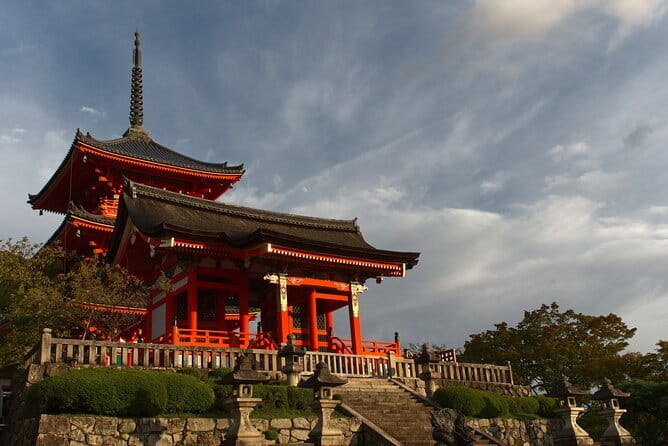
Nijo Castle receives the longest visit, about one hour and thirty minutes. That extra time is well used because the complex has several layers: defensive walls, ornamental carvings, formal buildings, gardens, and the former Kyoto residence of the Tokugawa shoguns.
The castle represents a later chapter than Kinkakuji. It was tied to the Tokugawa Shogunate and became the setting for important events near the end of shogun rule. The site helps you understand that political power in Japan did not vanish overnight. It shifted through ceremonies, alliances, and decisions that changed the country’s direction.
Your guide leads you through the grounds and explains the buildings rather than leaving you to connect the pieces alone. The ornamental details reward a slower pace, and the castle’s scale gives the tour a strong finish after the more intimate atmosphere of Toji-in.
Nijo Castle is not simply a fortress in the rough medieval sense. Its formal architecture and decoration show that power could be displayed through ceremony as much as through walls and weapons. That makes it a useful counterpart to the Golden Pavilion.
Because this is the longest stop, wear comfortable shoes for walking inside the complex. The cycling may be downhill, but the sightseeing itself still involves standing and walking. If you are trying to fit in several other central Kyoto sights the same day, remember that this tour already occupies a solid half-day once you add transportation to the start.
What the guides add to the ride
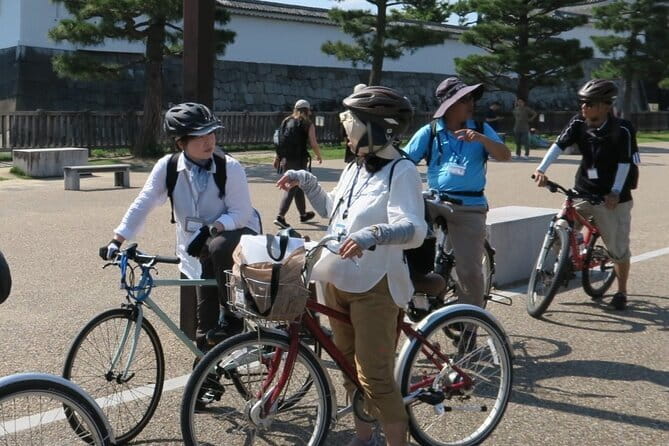
The guide is the main reason to choose this experience instead of renting a bicycle and following a map. The sites are famous, but their connections are not always obvious. A guide can explain why Kinkakuji matters to the Ashikaga period, how Toji-in reflects Zen taste, and why Nijo Castle marks the final stage of shogun rule.
Several guides have been associated with similar Kyoto cycling routes, including Seiya, Makoto, Nozomi, Yutaka Kaneda, Yasunobu Yagyu, Kaz, and JJ. The strongest pattern is clear: English communication and personal attention are central to the experience.
Seiya has been praised for making the ride engaging for a family that included a 12-year-old. Makoto has adjusted the route to allow extra time for a local festival. Nozomi has led rides through temples, shrines, Gion, and the Imperial Palace area. Yasunobu Yagyu has been noted for local insight into Kyoto’s people, culture, and history.
Those details point to a useful benefit of a private tour: the guide can respond to your group. If you have children, a history question, or a sudden local event along the way, the ride need not feel like a fixed script.
Guide assignment is not guaranteed, so do not book on the assumption that one named person will lead your group. The important point is the small-group format and the chance to ask questions as you go.
The real value of $153.50 per person
At $153.50 per person, this is not a bargain bike rental. You are paying for the guide, bicycle, helmet, rainwear, admissions, route planning, and the convenience of seeing three significant sites in one organized outing.
Admission to Kinkakuji, Toji-in, and Nijo Castle is included. That reduces the number of separate expenses to manage, though the price still reflects the private guiding rather than just entry tickets.
I think the cost makes the most sense for people with limited time in Kyoto, families who want help with the history, and anyone who would rather not work out a long cross-city route alone. A private group of four or six also gets better value per person than a booking for only two.
The value is weaker if you are an experienced cyclist who enjoys planning your own route, already know Kyoto’s history, or want to spend as long as you like at each site. You could visit independently and keep the schedule looser.
The tour’s excellent rating of 4.9 from 13 ratings and 100 percent recommendation point to consistently strong satisfaction, especially with the guides. That is encouraging, but the sample is small. I would treat the rating as support for the guide-led format, not as a guarantee that every ride will match your ideal pace.
Rain, heat, children, and riding ability
The tour operates in rain. You can continue by bicycle with a free rain poncho, or switch to a walking tour using public transportation, with the transport included in the tour fee. That flexibility is useful in Kyoto, where a wet day can otherwise disrupt a carefully planned schedule.
Rainwear does not make cycling fully comfortable for everyone. If you dislike riding in wet conditions, the walking option gives you a practical alternative. Confirm the preferred plan with your guide when the weather is clear enough to make the choice.
Children must be at least 10 years old, at least 145 centimeters tall, and able to ride safely on the road without assistance. This is not a child trailer or supervised beginner lesson. You should be honest about your family’s cycling ability before booking.
Most people can participate, but the route still requires basic road confidence. Reviews of similar rides describe the bikes as easy to ride, yet that does not remove the need to steer, brake, and follow road rules independently.
Hot weather can also affect the experience. One ride was described as enjoyable despite high temperatures, but Kyoto summers can make outdoor activity tiring. Bring water and dress for the forecast, even though those details are not supplied as tour inclusions.
Who should book the Kyoto Shogun Cycling Tour
I would choose this tour if you want history with movement, rather than a series of passive visits. It suits couples, families with older children, and small groups who value an English-speaking guide and a private setting.
It is also a good choice if you want the major western Kyoto sights without spending the entire day navigating buses. The downhill direction helps, and the finish near Kyoto Station is convenient.
I would hesitate if you are uncomfortable cycling on roads, want a relaxed temple meditation experience, or dislike fixed timing. The three main stops are substantial, and the schedule leaves limited space for wandering beyond the planned route.
Book only if your group has at least two people. Groups of seven to twelve can request an additional guide, but that arrangement should be confirmed before you rely on it. The activity requires confirmation within 48 hours, subject to availability.
The cancellation rule is strict: the experience is non-refundable and cannot be changed for any reason. If the operator cancels because the minimum number is not met, you receive the choice of another date or experience, or a full refund. Read that policy carefully before paying.
Should you book it?
Book this ride if you want a compact, well-connected introduction to Kyoto’s shogun-era sights, with a guide who can turn temples and castle buildings into one understandable story. The private format, included admissions, rain plan, and station finish all add practical value.
Skip it if the $153.50 price feels high for a half-day activity or if you would rather set your own pace. For most suitable riders, though, the route offers a smart balance: the Golden Pavilion for spectacle, Toji-in for calm, and Nijo Castle for political drama, all linked by bicycle instead of another crowded vehicle.
FAQ
How long does the Kyoto Shogun Cycling Tour last?
The tour lasts approximately 3 hours and 30 minutes.
Which attractions are included?
The tour visits Kinkakuji Temple, Toji-in Temple, and Nijo Castle. Admission tickets are included for all three stops.
Where does the tour start?
The starting point is Wara Tenjin mae on Kinugasa Oharaicho in Kyoto’s Kita Ward.
Where does the tour end?
The tour ends at the Kyoto Cycling Tour Project Kyoto Station Cycle Terminal at 552-13 Higashiaburanokojicho in Shimogyo Ward.
Is the tour private?
Yes. Only your own group participates. Each guide can take a minimum of two and a maximum of six people.
Can a group of more than six people join?
Groups of seven to twelve people can request an additional guide.
What happens if it rains?
The tour operates in rain. You can continue by bicycle with free rainwear, or switch to a walking tour using public transportation included in the tour fee.
Can children join the tour?
Children must be at least 10 years old, at least 145 centimeters tall, and able to ride a bicycle safely on the road without assistance.
Newest rides we have reviewed in Kyoto
- ONLY YOU in the Bamboo Forest! 4 hours E-bike tour with a local★ 5.0 · 45 reviews
- South Kyoto in a Nutshell: Gentle Backstreet Bike Tour!★ 5.0 · 225 reviews
- Pedal Adventure Kyoto’s iconic landmarks on an e-bike tour★ 5.0 · 189 reviews
- The Beauty of Kyoto by Bike: Private Tour★ 5.0 · 47 reviews
- Kyoto Bamboo Forest & Golden Pavilion E-Bike Tour★ 5.0 · 50 reviews
- Secret Eastern Kyoto Biking Adventure★ 5.0 · 44 reviews
- Arashiyama Bamboo Forest E-Biking Tour★ 5.0 · 183 reviews
- KIYOTO’s Kyoto Private E-Cycling Tour: Highlights & Hidden Gems★ 5.0 · 48 reviews
Kyoto Cycling Tours, compared.
Arashiyama Bamboo Forest & Hidden Gems Bike Tour (Early Bird)
Read our review →
5 Top Highlights of Kyoto Full Day Bike Tour (E-bike option)
Read our review →
Full Day Biking Tour Exploring the Best of Kyoto
Read our review →
Afternoon Kyoto Bike Tour: Bamboo Forest, Monkeys & Hidden Spots
Read our review →Other lists this ride turns up in