REVIEW · HIDDEN GEMS BIKE TOURS IN KYOTO
Kyoto: City Secrets eBike Tour
Kyoto’s best moments often appear between the famous sights. This 9-kilometer eBike route uses quiet lanes, temple grounds, mountain roads, and backstreets to connect major places with corners most visitors miss. You may see the Golden Pavilion, an old geisha district, Zen gardens, a shrine linked with learning, and a traditional cafe or mochi shop.
I like the small group of no more than eight, which makes it easier for guides such as Yuta, Henry, Michael, Sean, and Shizuka to adjust the pace and explain what you are seeing. I also like the electric bikes, which turn Kyoto’s occasional hills into a pleasant ride rather than a test of stamina. The main caution is that this is still a bicycle tour: tight turns, cobblestones, descents, traffic lights, and one or two hills call for confident riding.
Key points to know before you book
- A 9-kilometer route links famous sights with quiet Kyoto lanes, so you see more of the city without spending the whole day on foot.
- The Golden Pavilion provides the big postcard moment, while Zen temples, mountain streams, and side streets supply the quieter rewards.
- Guides bring strong local context, with Yuta often praised for his Zen knowledge and guides such as Henry, Sean, Michael, and Shizuka adding history, culture, and practical Kyoto advice.
- Electric assistance makes the ride manageable, but you still need to control a bicycle on descents, narrow paths, and city streets.
- Small groups keep the tour personal, with a maximum of eight people and regular stops for explanations, photos, and short rests.
- The best time slots are limited, with departures at 9:00, 9:30, and 13:00, and you need to arrive 15 minutes early at NORU.
Why an eBike is a smart way to see Kyoto
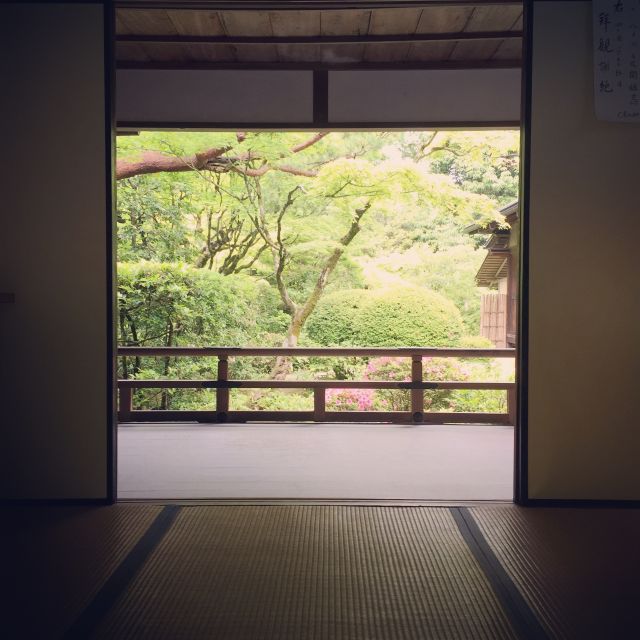
Kyoto is compact on a map, yet its sights are spread across a wide area. Walking between temples can eat up half a day, while buses become slow when the streets are full. A bicycle gives you a better sense of how the old capital fits together.
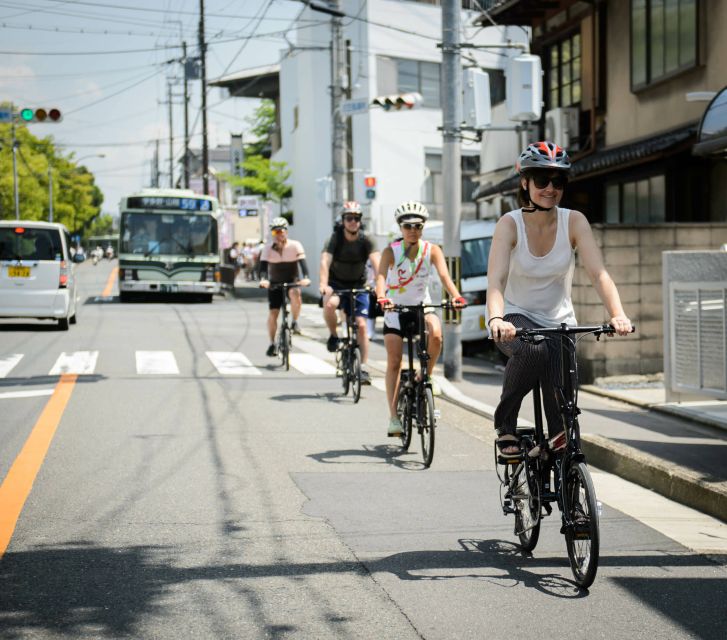
The electric motor matters most on the route’s hills. You still pedal, but the bike helps on climbs and makes a longer ride practical for people who are not regular cyclists. The route covers about 9 kilometers over 225 minutes, so this is not a race or a hard workout. You have time to stop, listen, take photos, and look around.
The ride is not completely effortless. One section may involve a steep climb followed by a rewarding descent, and some sections include cobbled paths, tight turns, or uneven surfaces. You should be comfortable starting, stopping, steering, and riding in a group. The electric assistance does not replace basic cycling skills.
Kyoto’s road rules also matter. Keep left, watch for red traffic lights, and follow your guide closely. The guides are used to choosing quieter streets and avoiding busy areas, but Kyoto is still a city. On crowded dates such as Golden Week, the streets can become much harder to navigate.
More E-Bike Tours in Japan
- Hidden Kyoto E-Biking tour
★ 5.0 · 1,843 reviews - 5 Top Highlights of Kyoto Full Day Bike Tour (E-bike option)
★ 5.0 · 511 reviews - Kyoto: Memory Kyoto E-Bike Tour
★ 4.8 · 297 reviews
The Golden Pavilion gives you the famous Kyoto moment
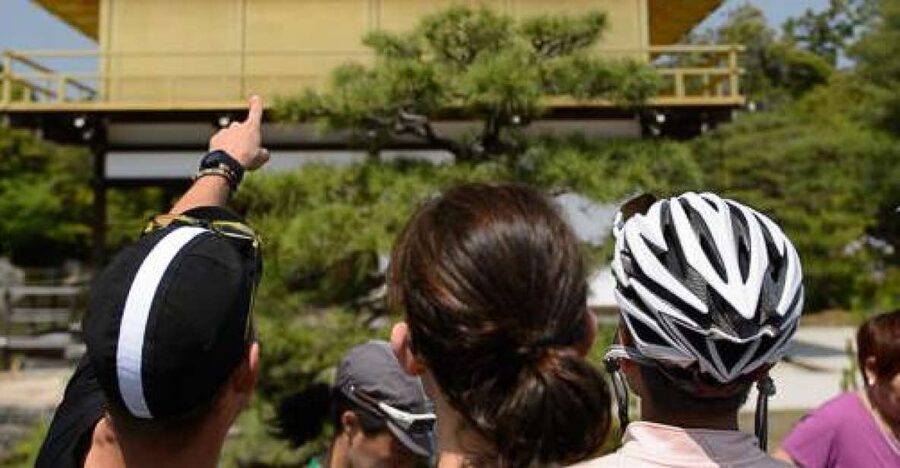
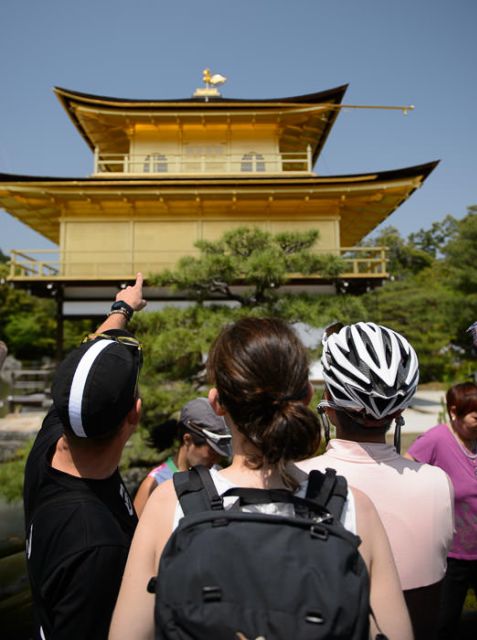
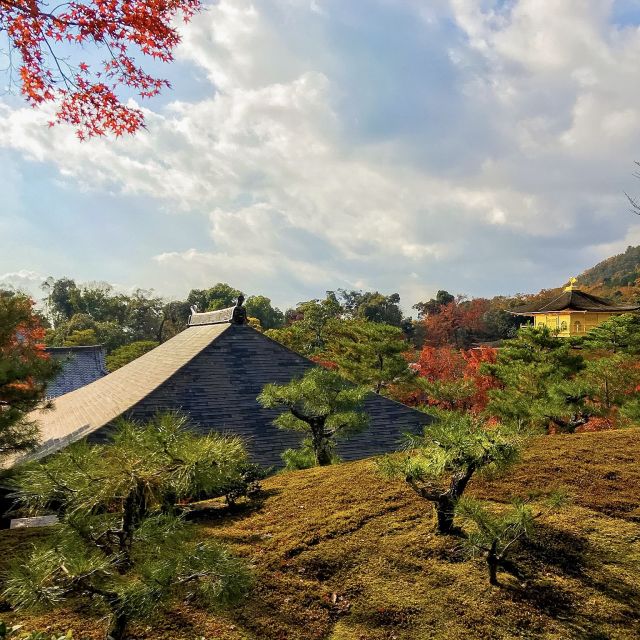
The Golden Pavilion, or Kinkaku-ji, is the tour’s most recognizable stop. Its gold-covered upper floors reflect in the pond, with carefully arranged gardens and trees around it. This is the image many people carry of Kyoto before arriving, and it deserves its fame.
The drawback is simple: it is famous. You will not have the place to yourself, and the stop can feel more formal and crowded than the quieter temples later in the ride. The value of visiting with a guide is not just seeing the building. A good guide helps explain its role in Kyoto and keeps the stop from becoming a quick photo session with no context.
Allow yourself to enjoy the contrast. The Golden Pavilion is polished, dramatic, and highly visited. Later stops are more restrained. That change in mood is one reason the route works well.
Old geisha streets and Kyoto’s quieter character
The ride also passes through Kyoto’s oldest geisha district. You should not expect a stage show or a guaranteed geisha encounter, but you can see a part of the city where traditional streets and old customs remain part of the setting.
The bicycle is useful here because it lets you move slowly through the area without turning every narrow street into a major expedition. Your guide can point out details that are easy to miss, including the way old lanes sit beside ordinary homes, cafes, and modern city life.
Several tour times have included sightings of geisha, but that is never something to book the experience around. Treat it as a possible bonus, not a promise. The real value is seeing Kyoto as a lived-in city rather than a collection of isolated monuments.
Shrines, learning, and the meaning behind the buildings
The tour includes a shrine known as Kyoto’s shrine of knowledge. That gives your guide a chance to explain how Shinto practice, education, local customs, and everyday life overlap in Japan.
This is where the guide makes the difference. Names, dates, and architectural details are easy enough to find later. What is harder to understand alone is why people visit a shrine, how to behave in the grounds, and what the symbols mean. Guides such as Yuta and Sean are especially good at linking religious ideas with the city around you.
Do not expect a long lecture at each stop. The route keeps moving, with shorter visits spread across the morning or afternoon. That suits you if you prefer seeing several places rather than spending an hour in one temple. If you want an in-depth study of a single site, a specialist temple tour would be a better fit.
More E-Bike Tours in Kyoto
- E-Bike Tours of the highlights of Kyoto!!!
★ 5.0 · 291 reviews - Kyoto: Hidden Gems E-Bike Tour with Local Japanese Guide
★ 4.9 · 189 reviews - Historical Kyoto E-Bike Tour
★ 5.0 · 181 reviews - Best of Kyoto: Ginkakuji & Path of Philosophy E-Bike Tour
★ 4.9 · 79 reviews
Zen gardens offer the tour’s quietest pause
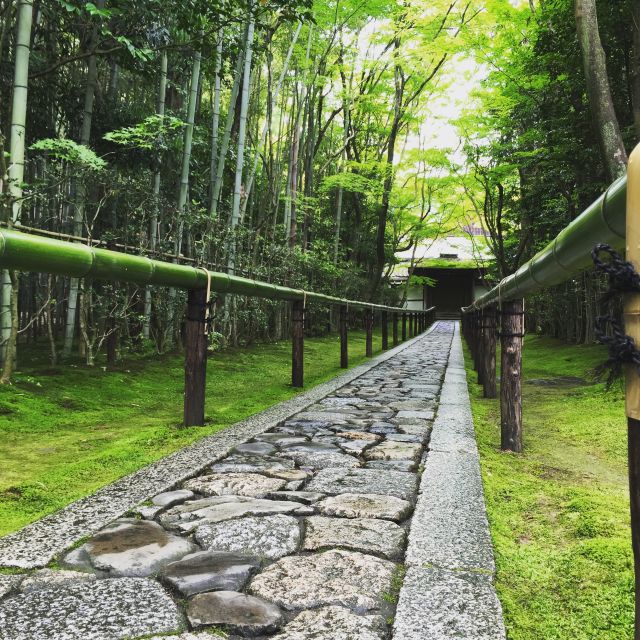
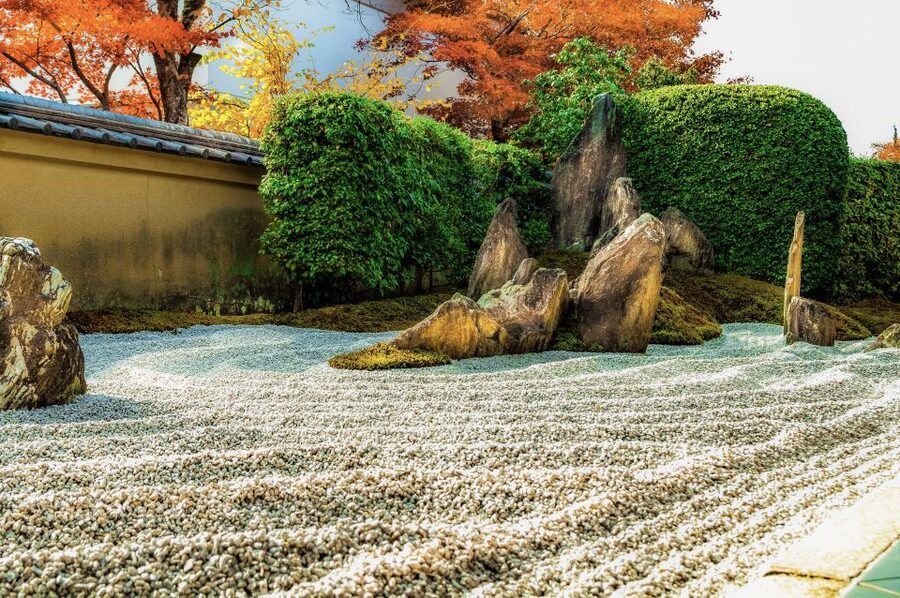
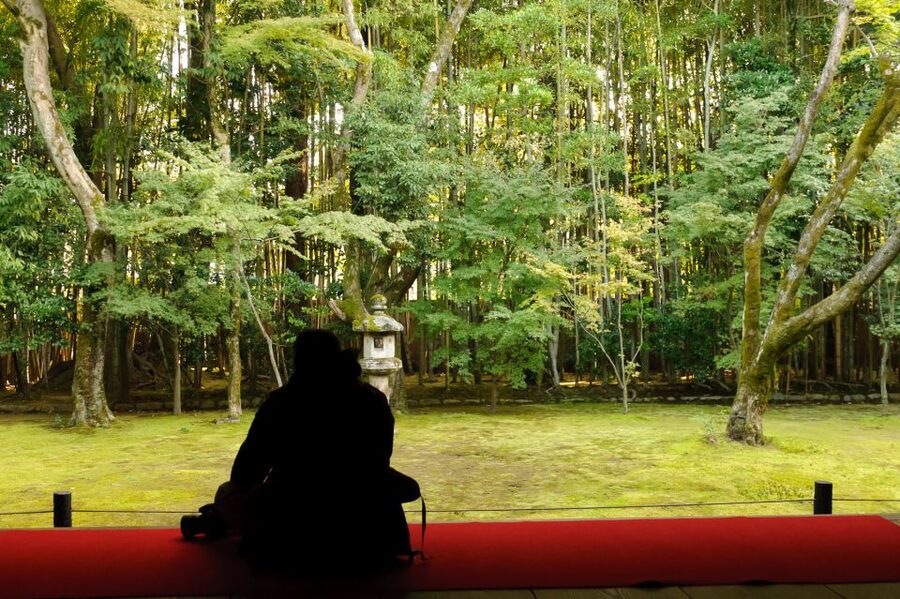
The strongest part of the route is often the shift from central Kyoto into quieter Zen settings. You may reach a temple or monastery where the main attraction is not a famous object, but the calm of the garden, the sound of birds, or the chance to sit without rushing.
The Zen gardens give the tour breathing room. Instead of collecting sights, you can pause and let the setting work on you. Guides with a personal connection to Zen Buddhism, including Yuta, can add useful background about meditation, simplicity, and the way gardens are designed to shape attention.
A visit to Daitoku-ji and a tea experience have been part of some tours, along with stops at smaller temples. Exact stops can vary with the guide, the pace of the group, and local opening conditions. That flexibility is useful, but it means you should not treat every cafe, ceremony, or temple as guaranteed.
The quiet sections may be the most memorable part for you if crowded attractions wear you down. They are also where the tour earns its price. You could find the Golden Pavilion alone, but finding a peaceful temple setting, understanding why it matters, and reaching it by a quiet route takes more local sense.
Mountain roads, streams, tea, and old food traditions
The route can extend toward greener mountain roads and quieter residential areas. You may pass streams, ride through leafy backstreets, and reach a more rural-feeling part of Kyoto without leaving the city’s wider area.
Some outings include a stop at a traditional tea room, where chilled tea and sweets provide a welcome break. A 1,000-year-old cafe and an old family-run mochi shop have also featured on routes. These food stops add a human scale to the temples. You are not just looking at beautiful buildings. You are seeing how old food traditions still fit into a modern city.
The mochi stop is particularly useful for anyone curious about Japanese sweets, since your guide can explain what you are eating and why the shop matters. It is generally a tasting moment rather than a full meal, so eat beforehand if you need a substantial lunch.
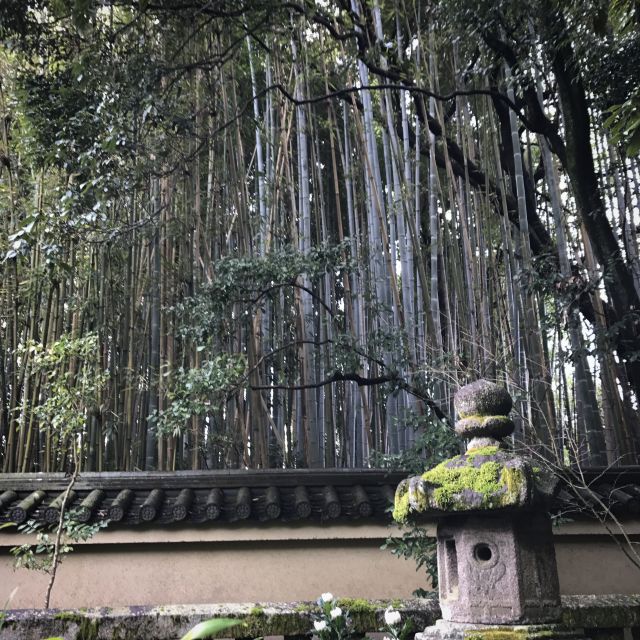
The route may also include bamboo areas or a river stop. These details make the ride feel varied, but they should be viewed as possible parts of the day rather than fixed promises. The exact experience depends on the guide and the day’s conditions.
What the guides add to the ride
The company uses several English-speaking guides, and each brings a slightly different strength. Yuta is often associated with Zen, religion, safety, and careful attention to group comfort. Henry is known for lively explanations, personal stories, and practical suggestions for the rest of your Kyoto visit.
Sean brings strong cultural context and a friendly pace. Michael is praised for making history feel approachable while showing parts of his neighborhood. Shizuka has led tours that combine the Golden Pavilion with a tea experience and an explanation of Zen ideas.
Your guide matters because the route is not just a bike rental with a map. At each stop, you need someone to explain what you are seeing, manage crossings, watch the group, and adjust the plan when streets or sites are busy. Guides have provided water, breaks, ponchos in wet weather, and restaurant or sightseeing tips for later in the trip.
That said, guide style can differ. Some guides may spend more time on history, while others focus on local life, religion, or food. The common thread is an English-led, small-group experience rather than a scripted coach tour.
Safety, comfort, and the physical demands
The bikes are described as comfortable, reliable, and easy to pedal. That makes the tour suitable for many adults and teenagers over 13, provided they can ride a bicycle confidently. The minimum height is 140 centimeters, or 4 feet 6 inches.
Most of the route is manageable, but you should not book it if you are uneasy on city streets. You may encounter traffic lights, narrow lanes, slopes, quick turns, cobblestones, and a descent. The guide leads the group and checks on everyone, but you remain responsible for handling the bike.
Wear comfortable clothes and shoes that work for cycling and temple visits. Kyoto’s weather can change, and heavy rain or storms can lead to a cancellation with a full refund. Summer heat can also be tiring, so take advantage of water and rest stops.
Arrive at NORU 15 minutes before departure. The starting times are 9:00, 9:30, and 13:00. Missing the start can mean losing the booking, so do not cut the arrival time close, especially if you are coming from another part of Kyoto.
Is the $127 price fair?
At $127 per person, this is not the cheapest way to rent a bicycle for an afternoon. But you are paying for more than the bike. The price includes the English-speaking guide, bicycle, helmet, and entrance fees, along with nearly four hours of route planning and local interpretation.
The value is strongest if you want to see several parts of Kyoto in one outing and would otherwise spend money on separate entrance tickets, transport, and a guidebook you may not have time to use. A small group of eight also gives you far more contact with the guide than a large bus tour.
The price is less compelling if you already know Kyoto well, prefer to move at your own pace, or only want a short bicycle ride. You could rent a bike for less, but you would need to plan the route, manage traffic, find the temple entrances, and supply your own cultural context.
Free cancellation is offered, but the booking information gives both 24 hours and 12 hours as cutoff points in different places. Check the exact policy shown when you reserve. No-shows and missed departures are not refundable.
Who should book this Kyoto ride?
I would choose this tour for a first or second Kyoto visit if you want an efficient orientation to the city without being pushed from one major sight to another. It works especially well for couples, families with teenagers, and active adults who want history, scenery, and a little exercise in one outing.
It is also a good choice for a return visit. The ride reaches side streets, quieter temples, local food stops, and mountain areas that are easy to skip on a standard Kyoto itinerary. One practical point deserves attention: one person found it less suited to a first-time visit because the route is not a standard checklist of the biggest sights. I see that as a matter of taste. If you want the essential temples only, choose a conventional sightseeing tour. If you want the city’s quieter texture, this ride makes more sense.
You should skip it if you are under 140 centimeters, cannot ride confidently, dislike hills, or need a fully predictable list of stops. You should also think twice during very hot, wet, or stormy weather, although poor conditions may lead the operator to cancel.
Should you book the City Secrets eBike Tour?
Book it if you want to connect Kyoto’s famous sights with its calmer side. The Golden Pavilion supplies the headline attraction, but the old geisha streets, Zen gardens, mountain lanes, tea, mochi, and thoughtful guide commentary give the afternoon its character.
I would book an early departure if you prefer cooler temperatures and a fresher start, or the 13:00 option if you want an afternoon activity after a slow morning. Arrive early, follow left-side road rules, and bring enough energy for a few technical sections.
For $127, this is a fair value for a small group, a nearly four-hour outing, bike equipment, entrance fees, and a guide who can turn scattered sights into a connected picture of Kyoto. It is not a passive sightseeing ride, but for confident cyclists, that is exactly the point.
FAQ
Where does the Kyoto City Secrets eBike Tour meet?
The meeting point is NORU in Kyoto.
How long is the tour?
The tour lasts 225 minutes, or 3 hours and 45 minutes.
How far do you ride?
The planned route covers about 9 kilometers.
What departure times are available?
There are three stated departure times: 9:00, 9:30, and 13:00.
Is the tour conducted in English?
Yes. The tour has a live English-speaking guide.
How large is the group?
The group is limited to eight participants.
Are bikes, helmets, and entrance fees included?
Yes. Bikes, helmets, attraction entrance fees, and an English-speaking guide are included.
Who can take part?
Participants should be at least 13 years old, at least 140 centimeters tall, and able to ride a bicycle confidently.
More Hidden Gems Bike Tours in Kyoto
- Small Group Guided Bike Tour of Amsterdam’s Hidden Gems
★ 5.0 · 3,936 reviews - Bangkok: Temples, Canals & Local Life Bike Tour
★ 4.9 · 3,511 reviews - Rome: Top Highlights & Hidden Gems Tour by Cannondale E-Bike
★ 4.9 · 1,760 reviews - Amsterdam: Off the Beaten Path Bike Tour in French
★ 4.9 · 1,632 reviews
More Hidden Gems Bike Tours in Japan
- Arashiyama Bamboo Forest & Hidden Gems Bike Tour (Early Bird)
★ 5.0 · 613 reviews - Kyoto: Hidden Gems E-Bike Tour Through Backstreets & Temples
★ 4.9 · 54 reviews - Kyoto: Tailored E-Bike Tour to Highlights & Hidden Gems
★ 4.9 · 32 reviews - Cycle Kyoto’s Hidden Gems & Gion Stroll
★ 5.0 · 29 reviews
Newest rides we have reviewed in Kyoto
- Best of Kyoto: Ginkakuji & Path of Philosophy E-Bike Tour★ 4.9 · 79 reviews
- Kyoto: Tailored E-Bike Tour to Highlights & Hidden Gems★ 4.9 · 32 reviews
- Kyoto: Full Day Bike Tour★ 4.9 · 39 reviews
- Kyoto: Half-day Guided Bike Tour with Fushimi Inari★ 4.9 · 21 reviews
- Kyoto: Full-Day City Highlights Bike Tour with Light Lunch★ 5.0 · 52 reviews
- Kyoto: Early Bird E-Bike Tour with Lunch★ 5.0 · 14 reviews
- Cycle Kyoto’s Hidden Gems & Gion Stroll★ 5.0 · 29 reviews
- Kyoto: Arashiyama Bamboo Forest Morning Tour by Bike★ 5.0 · 115 reviews
Hidden Gems Bike Tours, compared.
Small Group Guided Bike Tour of Amsterdam’s Hidden Gems
Read our review →

Top Highlights & Hidden Gems Tour by Cannondale E-Bike
Read our review →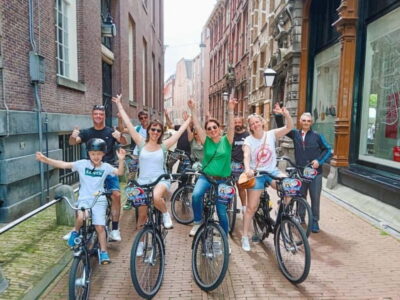
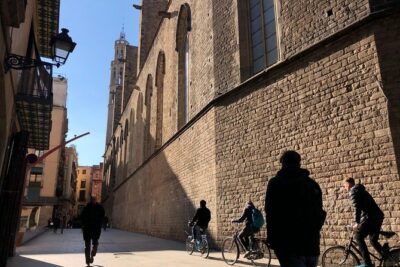
Barcelona 3-hour Bike or E-Bike Tour: Highlights and Hidden Gems
Read our review →