REVIEW · HERITAGE AND TEMPLE BIKE TOURS IN KYOTO
Kyoto Early Morning E Biking Tour Fushimi Inari Kiyomizu Temple
Kyoto’s famous sights are much easier to enjoy before the day fills up, and this early morning e-bike tour puts three major stops within reach in about five hours. You ride from Kyoto Station with a guide, then visit Fushimi Inari-taisha, Sanjusangendo, and Kiyomizu-dera.
I like two things right away: the e-bike takes the sting out of Kyoto’s hills, and the small maximum group of eight leaves room for questions. Guides Hiro and Rin have received especially warm praise for being personable, informative, and helpful with photos.
The main point to check before booking is temple admission. It is advertised as included, but one person reported paying 3,300 yen for entries to two temples. Confirm the current arrangement with GuideMe Japan so there are no surprises.
Key points to know before you book
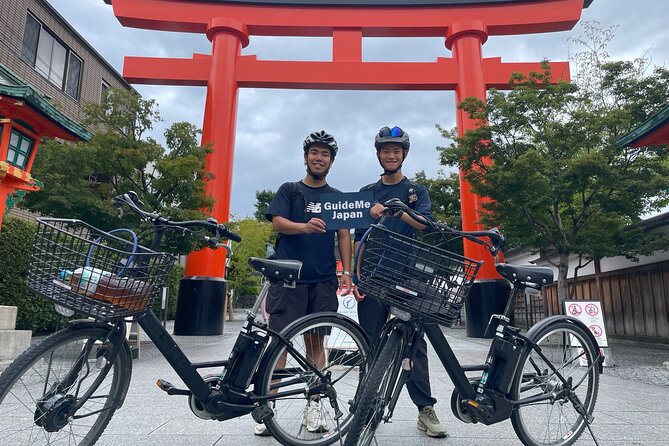
- Start at Kyoto Station: Meet at the JR-Central Ticket Office by the Shinkansen Hachijo Entrance, then return there at the end.
- Three major sights in one morning: The route covers Fushimi Inari-taisha, Sanjusangendo, and Kiyomizu-dera.
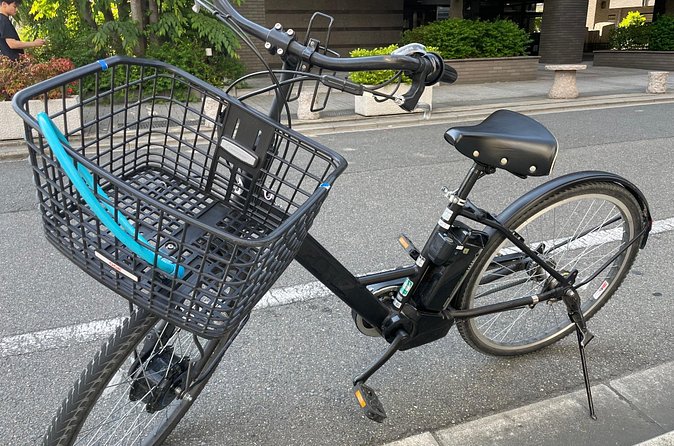
- E-bikes are supplied: You do not need to rent a bicycle separately, and electric assistance helps on Kyoto’s hills.
- Small group size: The tour accepts a maximum of eight people, which should make conversation with the guide easier.
- Guides add a personal touch: Hiro is described as personable and informative, while Rin is also praised as a skilled photographer.
- Good-weather activity: The tour may be moved or refunded if poor weather forces cancellation.
Why an early start changes Kyoto
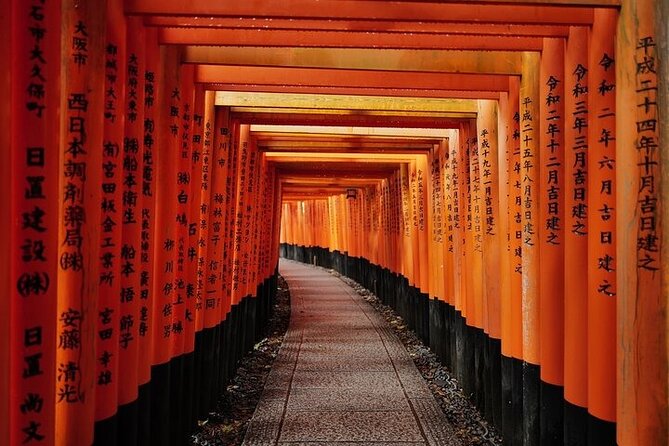
The timing is the heart of this outing. Fushimi Inari and Kiyomizu-dera are among Kyoto’s best-known sights, so a late morning or afternoon visit can feel crowded. Starting early gives you a better chance to walk through the torii gates and see the temples before the busiest part of the day.
I also like the way the bicycle connects the stops. Kyoto’s major sights are not all next door to one another, and using an e-bike saves you from piecing together buses, trains, and walks. You still get outdoor movement and a sense of the city, but you are not spending the whole morning waiting for transport.
The electric assistance matters most around eastern Kyoto, where Kiyomizu-dera sits on a hillside. You will still need a moderate level of physical fitness, but the bike should make the climbs more manageable than a standard bicycle. The tour is not a passive sightseeing ride. You will pedal, walk at the sights, and spend much of the morning on your feet.
The group limit of eight is another practical advantage. A small group does not guarantee a private tour, but it gives the guide a better chance to answer questions and keep everyone together. One account describes the outing becoming almost one-on-one after other participants dropped out, allowing a long conversation about the temples and extra photographs. That kind of personal attention may happen, but it should not be expected on every departure.
More Heritage and Temple Bike Tours in Japan
- Historical Kyoto E-Bike Tour
★ 5.0 · 181 reviews - 4.5-Hour Kyoto Bike Tour with Lunch and UNESCO Zen Temples
★ 5.0 · 122 reviews - Kyoto: Fushimi Inari Shrine and Tofukuji Temple E-Bike Tour
★ 5.0 · 75 reviews
Fushimi Inari and its long line of red gates
Fushimi Inari-taisha is the first major stop, with about an hour set aside for exploring. The shrine is famous for its thousands of red torii gates, which form striking passages up the hillside.
The gates are the main visual draw, but a guide can help give the place more meaning than a quick photo stop. Your English-speaking guide can explain what you are seeing and point out details that are easy to miss when you are focused on walking through the bright red corridors.
The one-hour visit is enough for a taste of Fushimi Inari, not a complete exploration of every path. The shrine complex extends well beyond the most photographed gates, so you should think of this as a focused visit. If you want to hike the full mountain route at a slow pace, this tour will not give you unlimited time.
The early hour should help here. Fushimi Inari is one of Kyoto’s most popular attractions, and the narrow gate passages feel more pleasant when you have room to walk without stopping every few steps. Keep your expectations sensible, though. The tour aims to cover several places in one morning, so you will not have the shrine entirely to yourself.
Your bicycle remains part of the larger route rather than the main activity inside the shrine. You will explore Fushimi Inari on foot, then continue by e-bike to the next stop.
Sanjusangendo and 1,000 Kannon figures
Sanjusangendo gives the morning a very different mood. Instead of outdoor paths and red gates, you enter a temple known for its interior arrangement of 1,000 statues of Kannon, the goddess of mercy.
This stop is set for about an hour, which gives you time to take in the scale and detail of the figures. The statues are arranged in formation, and each has individual features. A guide is especially useful here because the impact comes from understanding what you are looking at, not just taking a quick photograph.
Sanjusangendo also offers a welcome change of pace between the two more widely recognized Kyoto sights. Fushimi Inari is about movement through the gates, while Kiyomizu-dera brings broad views and grand architecture. Sanjusangendo asks you to slow down and look carefully.
Photography conditions and rules inside a temple can vary, so follow the guide’s directions. The supplied information does not promise that every part of the interior can be photographed. The safest approach is to treat the statues as the focus and avoid assuming that cameras are welcome everywhere.
Admission is another detail worth clarifying. The tour information says temple admission is included, but one person reported paying for three entries to the two temples, totaling 3,300 yen. Since the exact fee arrangement may change, ask GuideMe Japan before the morning begins if you want a firm answer.
Kiyomizu-dera on Kyoto’s eastern hillside
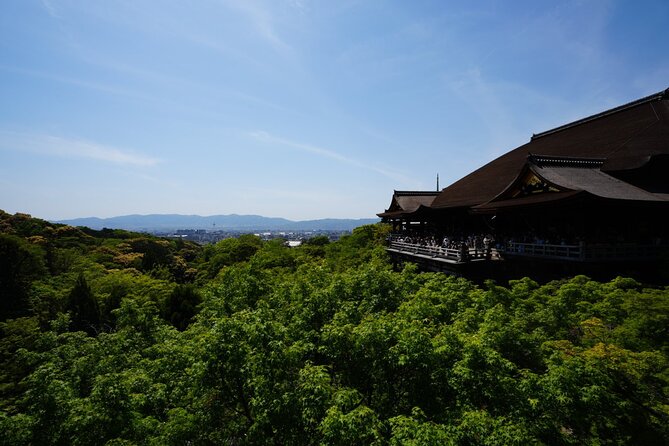
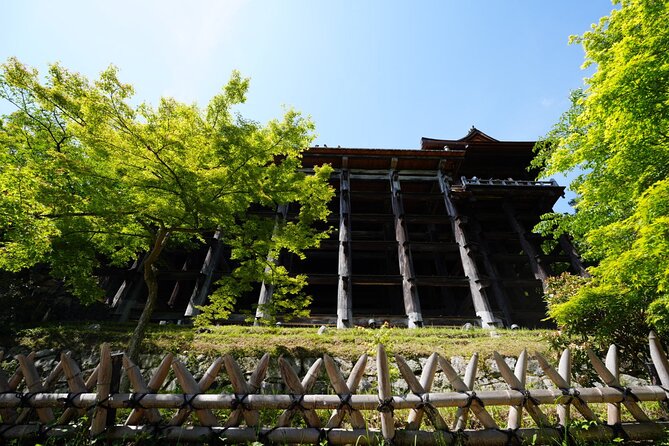
Kiyomizu-dera is the final major stop and another one-hour visit. The temple sits on a hillside in eastern Kyoto, giving you views across the city and surrounding areas.
The setting is a strong reason to include this stop in a bicycle tour. Reaching a hillside temple by regular bicycle can be tiring, especially after two earlier visits. The e-bike provides assistance, so you can save more energy for the temple grounds and the views.
Kiyomizu-dera is also the stop where the tour’s combination of architecture, scenery, and local stories comes together. The buildings are impressive, the site has a long history, and the hillside position makes it feel different from Sanjusangendo’s enclosed interior.
You should allow time for walking once you arrive. The bike gets you through the city, but it does not remove the need to walk around the temple. Comfortable clothing and shoes make sense, especially since the tour requires moderate fitness.
A guide can add useful context here. Rin, one of the named guides associated with the experience, is praised for explaining Kiyomizu-dera and taking strong photographs. If your guide offers photos, that can be a nice bonus, but it is not listed as a formal inclusion. Bring your own camera or phone as well.
More Heritage and Temple Bike Tours in Kyoto
- Kyoto: Hidden Gems E-Bike Tour Through Backstreets & Temples
★ 4.9 · 54 reviews - Kyoto E-Bike Tour of Hidden Gems, Backstreets and Temples
★ 5.0 · 43 reviews - 4.5-hr Kyoto Historical Highlights Bike Tour with UNESCO
★ 4.7 · 13 reviews
What the five-hour schedule feels like
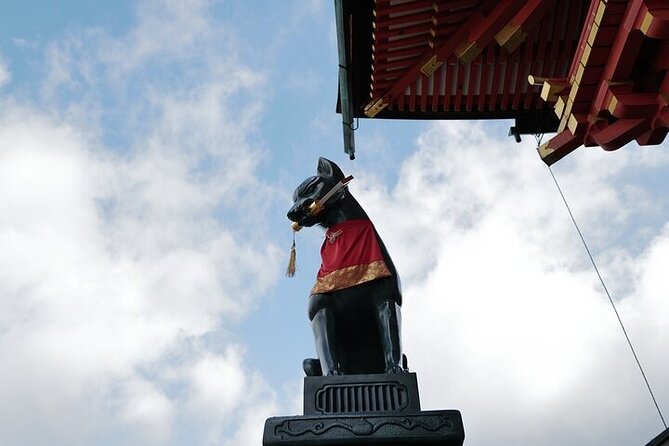
The tour is built for people who want to see a lot before lunch rather than linger at one site. Each of the three main stops receives roughly an hour, with cycling time between them. That gives you a clear structure and makes the most of a limited Kyoto stay.
The tradeoff is obvious: you get breadth instead of a slow, unhurried visit. You will see three important places, hear stories from a guide, and get a feel for the city between stops. You will not have the freedom to spend half a day at Fushimi Inari or wait for the perfect quiet moment at Kiyomizu-dera.
I see this as a good first Kyoto activity. It helps you get oriented, puts several major sights on your schedule, and leaves the rest of the day open. After returning to Kyoto Station, you can continue with lunch, shopping, or another part of the city.
The meeting point is the JR-Central Ticket Office at the Kyoto Station Shinkansen Hachijo Entrance. The address is in the Hachijo area of Kyoto Station, and the tour ends back at the same place. That return point is useful if you are catching a train later or want a clear base for the rest of your day.
How much value you get for $67.41
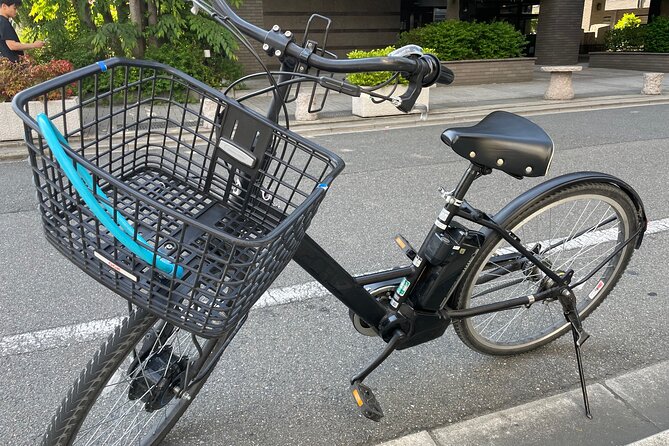
At $67.41 per person, the price covers about five hours, the e-bike, an English-speaking guide, and advertised admission to the temples. The value depends on how much you would otherwise spend arranging transport and bicycle rental yourself.
The e-bike is the strongest part of the price. You do not need to find a rental shop, choose a route, or work out how to connect three sights by public transport. You also get a guide who can fill the ride and temple visits with explanations instead of leaving you to read signs on your own.
The tour is less compelling if you prefer to move at your own pace or already know Kyoto’s transport system well. You may also find the schedule tight if your priority is photography or a long walk through Fushimi Inari.
Admission needs special attention when judging value. The stated inclusions say temple fees are covered, yet a person on an earlier departure reported paying 3,300 yen for three entries to two temples. That is a meaningful difference. Ask for clarification before booking or at the meeting point, and keep some yen available just in case.
Guides, group size, and the human side
The guide can make or break a fast-moving tour. Hiro is described as personable and informative, while Rin is praised for both temple explanations and photography. Those details suggest that the experience is not limited to leading a bicycle line from one address to another.
The maximum group size is eight. That is small enough for a more relaxed exchange than a large coach tour, and it should be easier to hear the guide at the stops. It also means the pace may be influenced by the slowest rider or by the needs of the group.
The guide speaks English, which makes this a practical choice if you want explanations without relying on translation apps. The precise depth of the historical discussion can vary by guide, but the available information specifically points to stories and explanations at Kiyomizu-dera, Fushimi Inari, and Sanjusangendo.
Rin’s photography is a particularly nice extra for solo visitors or couples who want a few pictures together. Still, photography help is not listed as a guaranteed service. Treat it as a possible bonus, not part of the price calculation.
Who should book this Kyoto ride
I would choose this tour if you are visiting Kyoto for a short time and want three major sights handled in one morning. It also suits you if hills concern you, but you still want to experience Kyoto by bicycle rather than from a bus.
It is a good fit for active adults and older children who can manage cycling and walking. The moderate fitness requirement matters. You need to be comfortable riding for part of the morning, getting on and off the bike, and exploring temple grounds on foot.
You may want a different plan if you dislike early starts, need a fully relaxed pace, or want to spend hours at one shrine. The tour does not include food or drinks, so plan to eat before the start or after returning to Kyoto Station.
The tour requires good weather. If rain or other poor conditions cause cancellation, you will be offered another date or a full refund. You can also cancel for a full refund up to 24 hours before the start time. Changes or cancellations inside that window are not accepted.
My call on the early morning e-bike tour
Book it if you want an efficient, active introduction to eastern Kyoto and value having the bicycle, route, guide, and major sights arranged for you. The early start, small group limit, and electric assistance make the five-hour plan practical rather than punishing.
Before paying, confirm the temple admission question. That is the one loose end in an otherwise clear package. If GuideMe Japan confirms that current admission fees are covered, $67.41 is a fair price for the transport convenience and guided access. If you want slow temple visits or complete independence, spend the morning on your own instead.
FAQ
How long does the Kyoto e-bike tour last?
The tour lasts approximately five hours.
Where does the tour start?
It starts at the JR-Central Ticket Office at the Kyoto Station Shinkansen Hachijo Entrance in Kyoto’s Shimogyo Ward.
Where does the tour end?
The activity ends back at the same meeting point.
Which sights does the tour visit?
The route includes Fushimi Inari-taisha Shrine, Sanjusangendo Temple, and Kiyomizu-dera Temple.
Is an e-bike provided?
Yes. An e-bike is included, so you do not need to arrange a separate rental.
Is a guide included?
Yes. An English-speaking guide is included. Guides named in the available information include Hiro and Rin.
Are temple admission fees included?
Temple admission is stated as included, but one person reported paying 3,300 yen for three entries to two temples. Confirm the current fee arrangement with GuideMe Japan before the tour.
How many people can join the tour?
The maximum group size is eight people.
What happens if the weather is poor?
The activity requires good weather. If it is canceled because of poor weather, you can choose another date or receive a full refund.
Newest rides we have reviewed in Kyoto
- ONLY YOU in the Bamboo Forest! 4 hours E-bike tour with a local★ 5.0 · 45 reviews
- South Kyoto in a Nutshell: Gentle Backstreet Bike Tour!★ 5.0 · 225 reviews
- Pedal Adventure Kyoto’s iconic landmarks on an e-bike tour★ 5.0 · 189 reviews
- The Beauty of Kyoto by Bike: Private Tour★ 5.0 · 47 reviews
- Kyoto Bamboo Forest & Golden Pavilion E-Bike Tour★ 5.0 · 50 reviews
- Kyoto Shogun Cycling Tour★ 5.0 · 13 reviews
- Secret Eastern Kyoto Biking Adventure★ 5.0 · 44 reviews
- Arashiyama Bamboo Forest E-Biking Tour★ 5.0 · 183 reviews
Heritage and Temple Bike Tours, compared.

Historical Singapore Bike Tour on Full-Sized Bicycles
Read our review →
Night Bike Tour with Temples & Flower Market Visit
Read our review →
Intramuros, Manila: Historical Bamboo Bike Tour
Read our review →