
REVIEW · JAPAN
Okinawa: Afternoon Cycling Tour with Local Guide
Naha reveals itself best away from Kokusai Street, and this small-group electric-bike ride takes you into the quieter corners. You pedal past pottery workshops, old houses, sacred sites, and Shuri’s stone lanes, with a local guide explaining what you are seeing as you go. The e-bike matters most on the climb toward Shuri, where the motor takes the sting out of the hills.
I like the mix of everyday Naha and Ryukyu-era culture, rather than a simple checklist of major sights. I also like the tiny group, limited to five people, and the intercom that lets you hear the guide while riding. The main consideration is simple: you must be comfortable cycling on city roads, and the route is not suitable for wheelchair users or people who cannot ride a bike.
Key points to know before you book
- Pottery history in Tsuboya: Ride through Naha’s famous yachimun quarter, where ceramics have been made for roughly 300 years.
- Electric assistance for Shuri’s hills: The bike makes the uphill sections far more manageable, especially for visitors unused to Okinawa’s slopes.
- A quieter side of Naha: Small lanes and remaining traditional houses offer a look at local life beyond the main shopping streets.
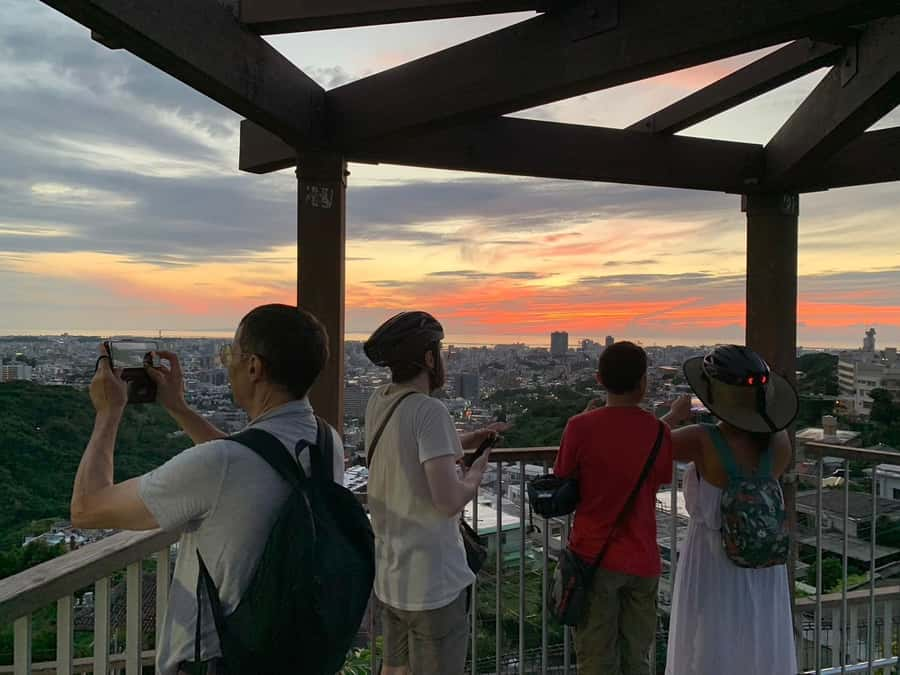
- A hilltop pause over the city: Stop for photos and an afternoon view across Naha, with sunset possible depending on timing.
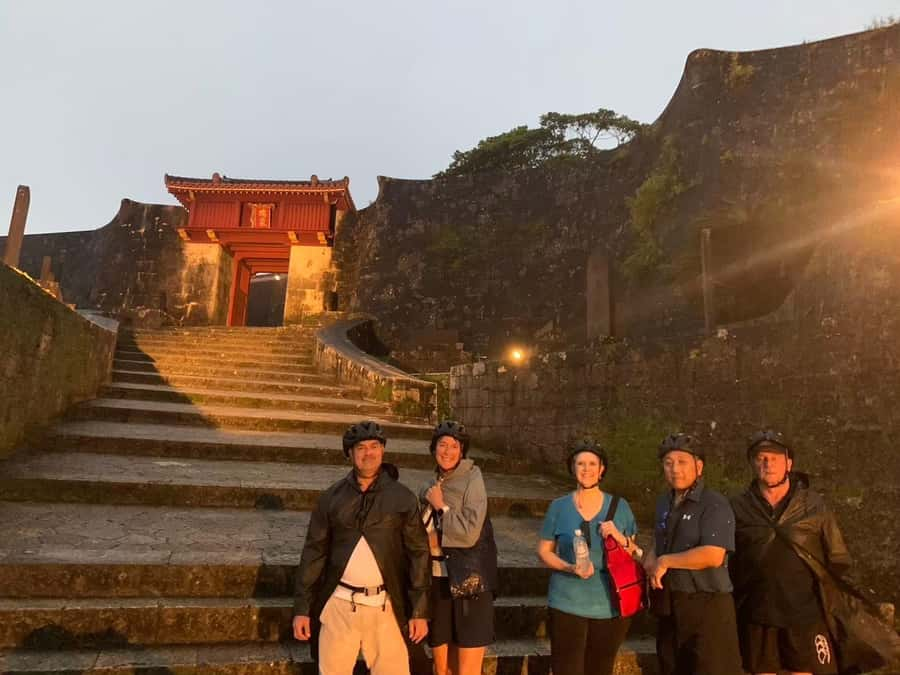
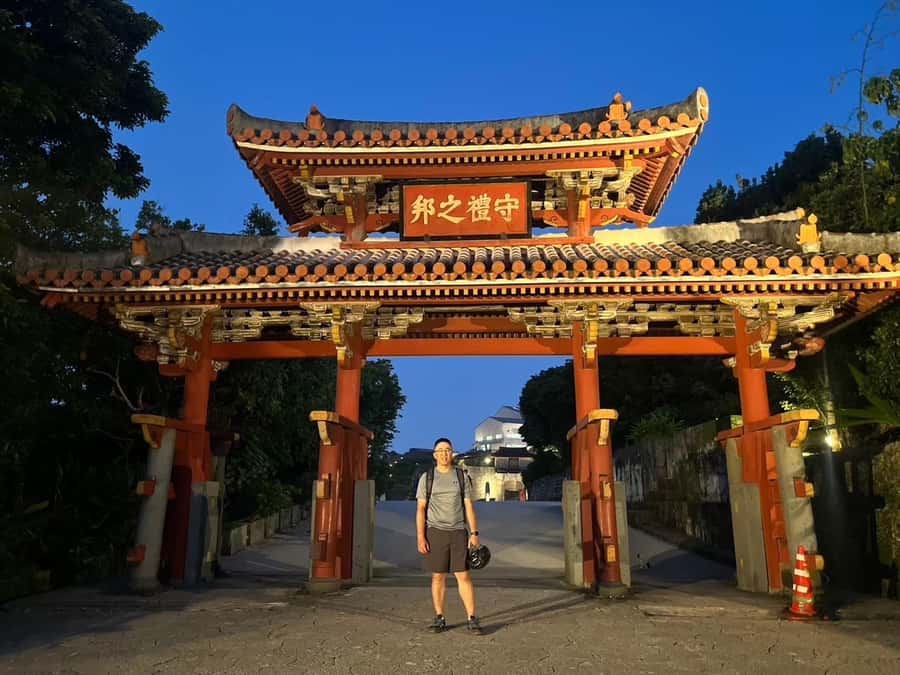
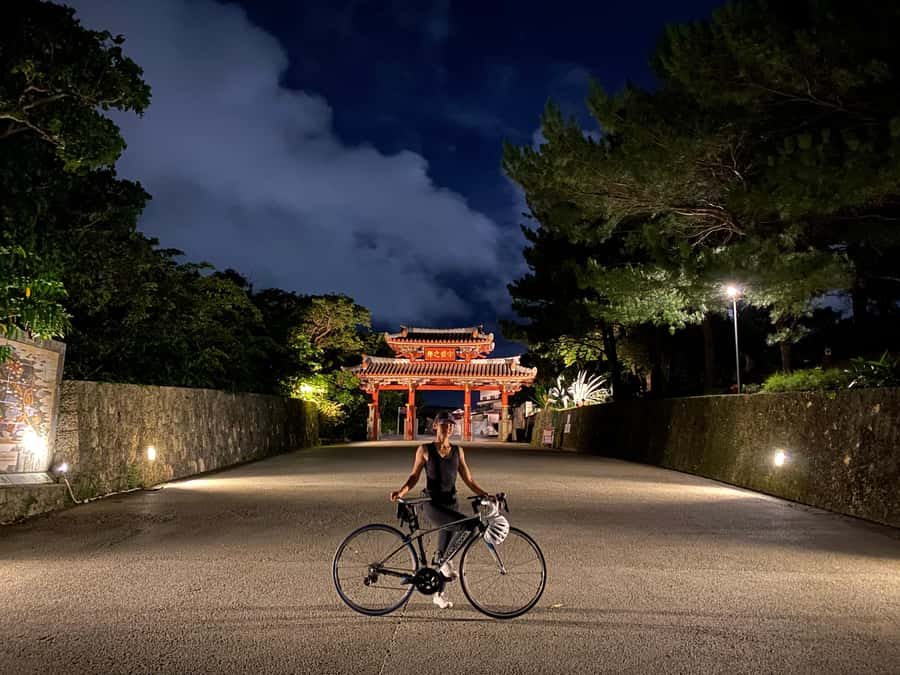
- Shuri Castle town and sacred places: See stone streets, temples, shrines, Shuri Castle Park, and the photogenic Shureimon gate.
- A useful dinner tip: The ride passes near Asato Shotengai, a good place to return for an evening meal or drinks.
Why an electric bike is the right way to see Naha
At $87 per person for 210 minutes, this is not the cheapest way to move around Naha. But it gives you transport, a guide, equipment, historical explanation, and access to small streets that are awkward to cover on foot. For a first visit, that combination can make the price reasonable.
The electric assistance is the real value. Naha and Shuri are not flat, and the route includes a climb toward the old castle town and a viewpoint above the city. You still pedal, but the motor reduces the effort. One family with two ten-year-old children found the hills manageable because of the e-bikes, and that is a useful guide for other families considering the tour.
You will ride in a small group of no more than five people. That makes it easier for the guide to watch the group, answer questions, and adjust explanations. It also avoids the slow, anonymous feel of a large cycling tour. The supplied intercom system helps you hear the guide while moving, though you should still pay attention to traffic and your surroundings.
The tour uses English or Japanese guides. Several guides have led the route, including Jojo, Aki, Tony, Reiji, and Yuri. Guide assignments can change, but the experience is designed around local explanation rather than simply following a route on a map.
More Guided Rides in Japan:
- Tokyo Guided Small-Group Biking Tour
★ 5.0 · 1,250 reviews - Tokyo Top Highlights 3h Guided E-bike Tour
★ 5.0 · 714 reviews - 3h Tokyo E-Bike Tour: Hidden Gems, and Local Life with guide
★ 5.0 · 670 reviews
Starting beside Makishi Monorail Station
You meet at the e-charity shop near Makishi Monorail Station, next to Makishi Post Office. The meeting point is about a one-minute walk from the station, which is useful if you are staying near central Naha or arriving by monorail.
The staff provide your electric-assisted bicycle and helmet, then give a short safety briefing. This is the moment to ask about the controls, brakes, seat height, and how the group will ride through traffic. If you have not used an electric bike before, take a minute to understand the assistance before setting off.
Wear comfortable shoes or sports shoes. The tour lasts roughly three to three and a half hours, so this is not the place for stiff sandals or footwear that slips. Bring a warm layer too. Okinawa is warm for much of the year, but the afternoon can cool as the ride runs into evening, especially during a stop on the hill.
Camera mounts and mobile phone holders are not included. If you want easy access to your phone for photos, bring a secure pocket or small bag. You should not try to handle your phone while riding.
Tsuboya, where Naha’s pottery story begins
The first notable area is Tsuboya, the historic pottery quarter. In Okinawan, yachimun means pottery. About 300 years ago, the Ryukyu Kingdom brought scattered pottery kilns together in this part of Naha, creating a district that still carries that craft tradition.
The route passes through streets lined with pottery workshops and enters narrow roads that are much easier to reach by bicycle than by tour bus. This is one of the best reasons to choose the tour. You are not just looking at a named attraction from the outside. You are moving through a working part of the city where the pottery tradition remains part of the local identity.
The area also has a nostalgic feel, with lanes that contrast sharply with the commercial energy of central Naha. Your guide can provide the historical setting as you ride, which helps explain why Tsuboya matters rather than leaving you with a few attractive photographs.
There is a practical tradeoff here. Narrow streets are part of the appeal, but they require careful riding. Stay alert, follow the guide’s instructions, and do not assume every quiet lane is free of pedestrians or vehicles.
Traditional houses and ordinary Naha
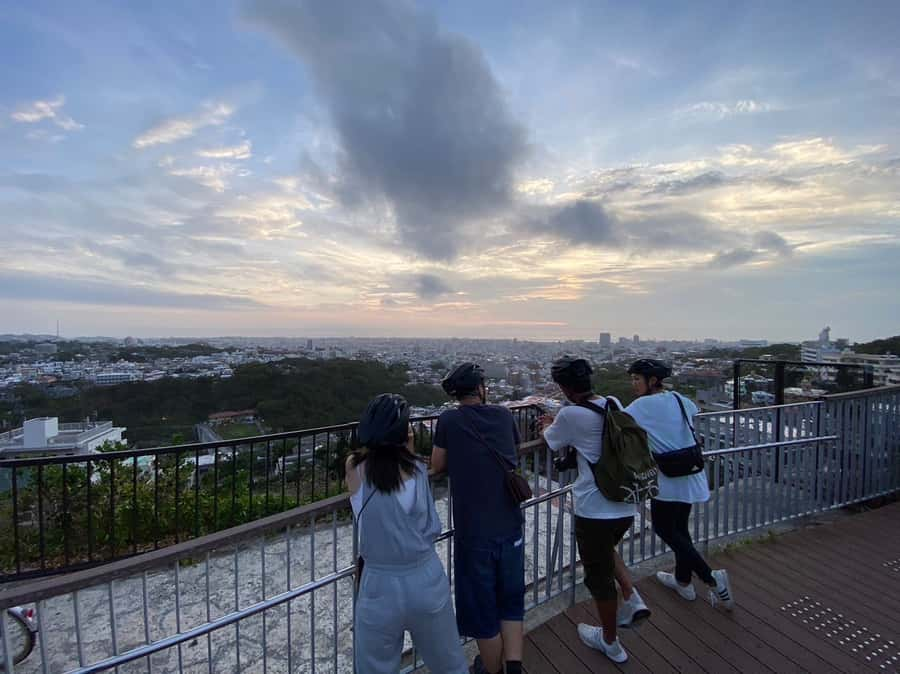
After Tsuboya, the route moves through local parts of Naha where a few traditional houses remain. These sections are less about a single famous monument and more about seeing how the city changes from one block to the next.
I like this part because it gives the tour some balance. Shuri Castle and its gates are important, but they can feel removed from daily life if you see them alone. Riding past older homes and local streets gives you a better sense of the city that grew around the Ryukyu capital.
The guide’s commentary is especially useful here. A well-timed explanation can point out features you would otherwise pass without noticing. Past participants have appreciated guides who explain not only Okinawa’s history but also local life and upcoming festivals. That kind of detail is more useful than a long list of dates.
This section also shows why the bike is preferable to a fixed walking route. You cover more ground than you would on foot, but you still move slowly enough to notice the details. The tour is not designed as a hard workout, though you will be active for several hours.
More Cycling Trips in Japan:
- Hidden Kyoto E-Biking tour
★ 5.0 · 1,843 reviews - Bike Tour Exploring North Kyoto plus Lunch
★ 5.0 · 1,087 reviews - Tokyo Great Cycling Tour
★ 5.0 · 811 reviews - Arashiyama Bamboo Forest & Hidden Gems Bike Tour (Early Bird)
★ 5.0 · 613 reviews
Climbing into Shuri’s old capital
The ride then heads toward Shuri, the former capital of the Ryukyu Kingdom. This is where the electric motor earns its keep. The route includes uphill riding, but the assistance makes the climb approachable for riders who might hesitate at the word hill.
Shuri’s streets bring a different mood from Tsuboya. Expect cobblestones, temples, sacred shrines, and reminders of the kingdom that once governed the Ryukyu Islands. The route does not treat Shuri as a single photo stop. You move through the old castle town and get a sense of how religious and political life shaped the area.
One visitor who had never done city cycling before found the clear road instructions reassuring. That is important. You do not need to be a serious cyclist, but you do need to know how to ride safely on city streets. If you are nervous in traffic or have not ridden for years, this may not be the right activity.
The small group helps here. With a maximum of five participants, the guide can keep the pace together and offer more direct help. The guides praised most often for patience and clear instruction include Aki and Reiji, while Jojo, Tony, and Yuri have also led the route with strong English skills and historical explanations.
The hilltop viewpoint over Naha

The viewpoint is the natural pause in the tour. From the hill, you can look across Naha and take a break after the ride through Shuri. Depending on the starting time and season, the stop may include late-afternoon light or sunset.
This is a good example of how the e-bike changes the experience. Walking up to a high viewpoint can take time and energy, while a bicycle lets you reach more than one part of the city in a single afternoon. You get the reward of the view without spending the whole day on a steep climb.
Bring your camera, but do not expect a supplied phone mount. The viewpoint is intended for a break and photos, so this is the moment to take pictures safely while the bike is parked.
The view is also a useful pause in the cultural route. After pottery streets, old homes, and Shuri’s religious sites, you get a broad look at Naha and can understand how the older districts relate to the modern city.
Shuri Castle Park and Shureimon Gate
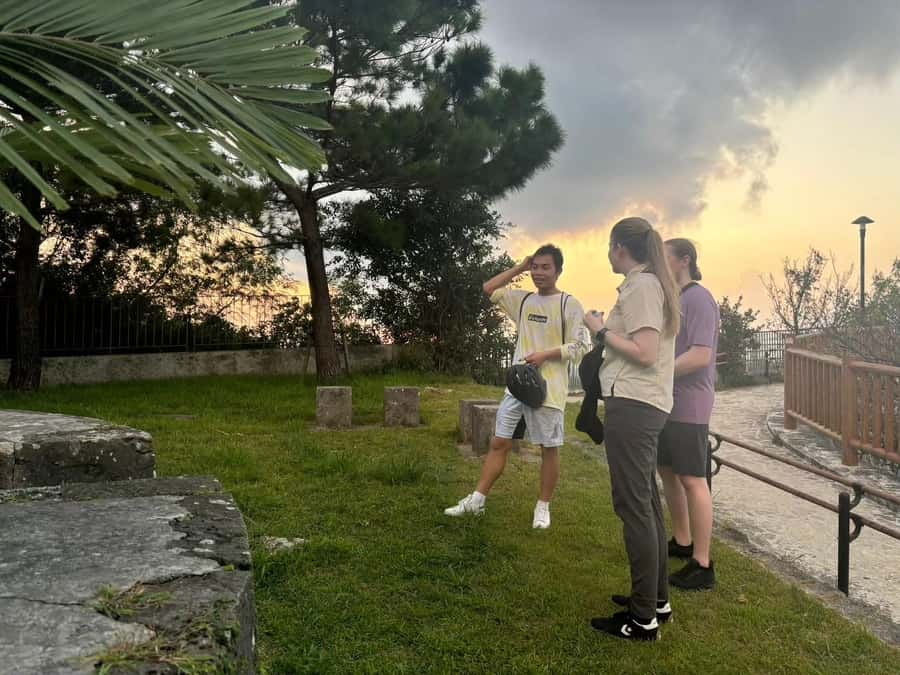
The route passes through Shuri Castle Park, where seasonal plants add color and texture to the ride. The stone walls and Shureimon gate are especially photogenic, and the late-day light can make the area feel quite different from a midday visit.
The tour includes a photo stop at Shurijo Castle, but the experience is not presented as a full museum visit or a detailed castle interior tour. You should book this cycling trip for the wider setting, the approach through the old town, and the historical context provided along the route.
Shuri Castle has great importance in Okinawan history, but the park and surrounding streets are also valuable because they show the relationship between the royal center and the town around it. The stone lanes, shrines, and walls give the area a distinct character that you would miss by arriving only for a quick photograph.
The condition of individual sites can change, and the supplied tour information does not promise entry into every building. If your main goal is a full castle visit, check the day’s access arrangements separately and allow additional time after the bike tour.
Finishing near Asato Shotengai

The route returns to the starting shop, passing near Asato Shotengai on the way. This area was once known as a red-light district and now becomes livelier in the evening with izakayas and other places to eat and drink.
That makes the finish practical. Return your bicycle, then consider walking back toward Asato for dinner. You have already seen the area in daylight, so coming back after dark gives you a different view and saves you from having to plan a separate evening district.
The tour ends back at the shop, leaving you free to continue exploring Naha. It is a useful arrangement for an afternoon activity because you are not committed to a group meal or a long transfer afterward.
What the $87 price really includes
The $87 fee covers the bicycle tour, a local guide, helmet, electric-assisted bicycle, and intercom system. The guide is the central part of the value. Without the commentary, you could rent a bicycle and ride through some of these areas yourself for less.
The tour earns its price if you want context and a carefully planned route. The guide connects Tsuboya’s pottery history with Shuri’s former royal role, points out local streets, and takes you to a viewpoint that you might not choose on your own. The five-person limit also makes the cost easier to justify than a large group excursion.
It is less good value if you already know Naha well, have your own bicycle, and prefer exploring without a set pace. You also need to factor in that phone holders and camera mounts are extra or unavailable, so bring your own way to carry devices securely.
Free cancellation is available up to 24 hours before the tour for a full refund, and you can reserve now and pay later. If rain is likely to exceed 70 percent or severe weather is expected, the plans may change, with notice sent the day before.
Who should book this ride
I would recommend it to first-time visitors who want more than Kokusai Street, families with older children who can ride safely, and anyone who enjoys history best when it is connected to real streets and neighborhoods.
It also suits repeat visitors. One family visiting Okinawa for the third time found the bicycle route opened up places they had not seen before, including local areas, the castle district, and a hilltop view. That is the tour’s strength: it changes the scale of sightseeing.
You should skip it if you cannot ride a bicycle, use a wheelchair, or dislike riding on city roads. Children from ages one to five may ride in a child seat attached to a parent’s bicycle, but you should consult the staff before booking. The information provided does not specify a minimum riding skill level beyond being able to ride, so ask if you have concerns.
FAQ
Where does the Okinawa cycling tour start?
It starts at the e-charity shop near Makishi Monorail Station, next to Makishi Post Office. The shop is about a one-minute walk from the station.
How long does the tour last?
The listed duration is 210 minutes, or three and a half hours. The tour may be scheduled for approximately three to three and a half hours.
What languages does the guide speak?
The tour is available with live guides who speak English or Japanese.
How many people are in the group?
The group is limited to five participants.
Is an electric bicycle included?
Yes. The tour includes use of an electric-assisted bicycle, along with a helmet and an intercom system for hearing the guide.
Do I need cycling experience?
You must be able to ride a bicycle. The tour is not suitable for people who cannot ride, and it includes city-road cycling and uphill sections.
Can young children join?
Children aged one to five can have a child seat attached to a parent’s bicycle. You should consult the staff for details before booking.
What should I wear?
Wear comfortable shoes or sports shoes. Bring warm clothing in case the temperature drops during the afternoon or evening.
Is Shuri Castle included?
The route passes through Shuri Castle Park and includes a photo stop at Shurijo Castle. The supplied information does not state that a full interior visit is included.
What happens if the weather is poor?
If the precipitation probability is over 70 percent or severe weather is expected, the plans may change. The operator will contact you the day before.
Should you book it?
Book this tour if you want Naha explained as a living city, not just a list of attractions. The strongest reasons are the e-bike assistance, the very small group, the patient road guidance, and the route linking Tsuboya pottery streets with Shuri’s castle town and hilltop views.
Skip it if you want a private vehicle, a relaxed sightseeing ride with no traffic, or a full castle tour. For an active afternoon that combines local neighborhoods, Ryukyu history, and useful city orientation, the $87 price is fair, especially for first-time visitors and families who want to see more without exhausting themselves on Naha’s hills.
Newest rides we have reviewed in Japan
- Afternoon Adventure: Okinawa Local Cycling with Spectacular Views★ 5.0 · 92 reviews
- Zodiac Shrines and Naha Backstreets Cycling Tour★ 5.0 · 29 reviews
- Iya Valley BROMPTON Slow Cycling Tour★ 5.0 · 28 reviews
- eTour de Matsumoto – Electric Bike Tour★ 5.0 · 16 reviews
- ONLY YOU in the Bamboo Forest! 4 hours E-bike tour with a local★ 5.0 · 45 reviews
- South Kyoto in a Nutshell: Gentle Backstreet Bike Tour!★ 5.0 · 225 reviews
- Pedal Adventure Kyoto’s iconic landmarks on an e-bike tour★ 5.0 · 189 reviews
- The Beauty of Kyoto by Bike: Private Tour★ 5.0 · 47 reviews
Japan Cycling Tours, compared.



3h Tokyo E-Bike Tour: Hidden Gems, and Local Life with guide
Read our review →
Arashiyama Bamboo Forest & Hidden Gems Bike Tour (Early Bird)
Read our review →
Hiroshima in a Nutshell: Morning Bike Adventure
Read our review →Other lists this ride turns up in