
REVIEW · E-BIKE TOURS IN JAPAN
Kanazawa Half Day E-bike Tour
Kanazawa makes an excellent cycling city, and this four-hour tour links its best-known sights without turning the day into a march between them. You ride from the station through geisha lanes, castle grounds, formal gardens, and samurai streets, with a local guide explaining what you are seeing along the way. The small group of up to eight keeps the outing personal.
I like the way the electric bike lets you cover more ground while keeping a comfortable pace. I also like the balance of major sights and quieter corners, plus the included matcha and traditional Wagashi in Kenrokuen. The main consideration is weather: rain, snow, strong winds, or unsafe roads can cancel the cycling portion, and the e-bike is not recommended for riders under 145 centimeters.
Key points
- Six very different stops: Move from Kanazawa Station and the Edo-period geisha quarter to Kenrokuen, the castle, a lord’s private garden, and the samurai district.
- Local guides shape the experience: Rina, Nicola, Liam, and Ti have led tours, with a strong focus on history, food advice, and adjusting the pace to the group.
- Easy cycling over a wider area: The electric assist helps you reach more sights than a walking tour in the same four-hour window.
- A useful first-day orientation: You get a clear feel for Kanazawa’s districts and can ask where to eat or what to visit later.
- Tea inside Kenrokuen: Matcha and Wagashi provide a calm pause between the outdoor sightseeing stops.
- Weather matters: The operator may cancel in poor conditions, and any cancellation for unsafe weather comes with a choice of another date or a full refund.
Why an e-bike works so well in Kanazawa
Kanazawa’s main sights are spread across several historic districts. You can walk between some of them, but the distances add up, especially when you want to see the station, Higashi Chaya, Kenrokuen, the castle area, and Nagamachi in one outing.
The electric bicycle solves that problem without making the tour feel like a race. You still ride through the city at street level, but the motor takes the strain out of longer stretches. That leaves more energy for garden paths, castle walls, and explanations from your guide.
The pace appears to be deliberately unhurried. Guides have adjusted the route for solo participants, slowed down for people who had not ridden in years, and chosen quieter streets when possible. If you are nervous on a bike, say so at the start. One guide, Rina, has helped riders practice before setting off, which is exactly the kind of patient beginning you want.
Helmets are available on request. The tour is not recommended for riders shorter than 145 centimeters, so check that point before booking. You should also be comfortable riding an electric bicycle in an urban setting, even though the route aims to avoid the busiest streets.
More E-Bike Tours in Japan
- Hidden Kyoto E-Biking tour
★ 5.0 · 1,843 reviews - Tokyo Top Highlights 3h Guided E-bike Tour
★ 5.0 · 714 reviews - 3h Tokyo E-Bike Tour: Hidden Gems, and Local Life with guide
★ 5.0 · 670 reviews
Starting beneath Kanazawa Station’s Tsuzumi Gate
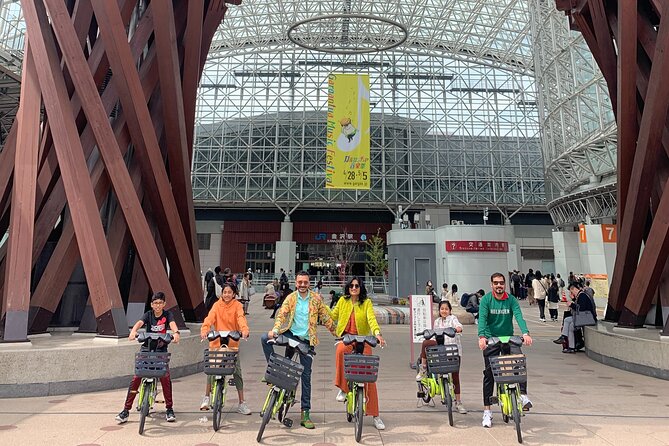
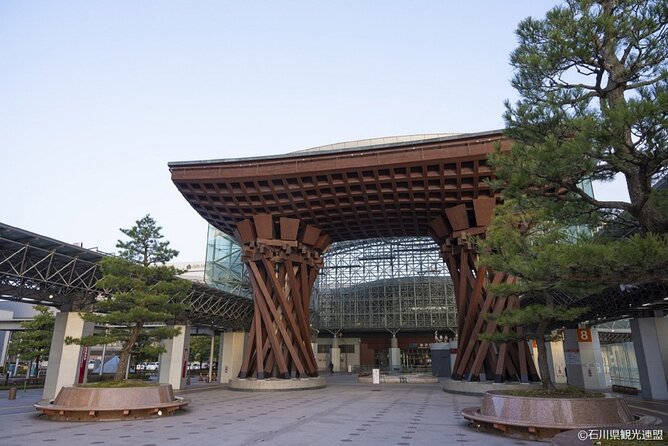
The meeting point is at the McDonald’s at 1-1-1 Kinoshinbomachi, near Kanazawa Station. The station itself is worth a few minutes before the ride begins. Its large Motenashi Dome shelters the forecourt, while the wooden Tsuzumi Gate gives the entrance a distinctive local identity.
The opening stop lasts about 30 minutes and works as a quick introduction to Kanazawa. Your guide can set the historical scene here before you move into the older districts. It is also a sensible place to check the bike, ask questions, and settle into the group.
Do not expect a long station tour. This is an orientation stop rather than a museum visit. Its value is practical: you begin in a landmark that is easy to find, then quickly shift from modern Kanazawa to the city’s older streets.
Higashi Chaya and the world of geisha teahouses
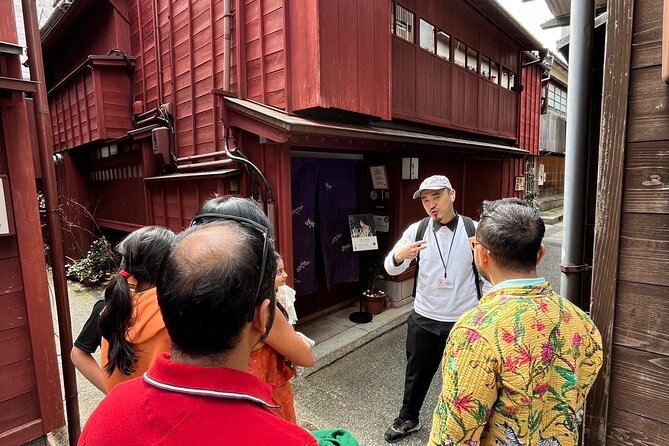
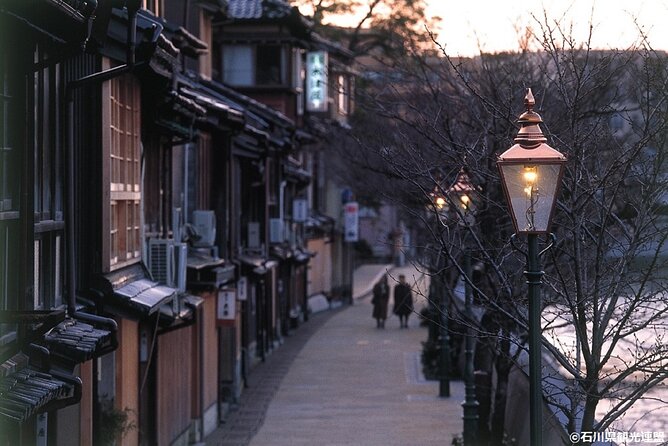
The ride into Higashi Chaya is one of the tour’s most atmospheric moments. The district preserves the look of the Edo period, with traditional wooden facades and narrow streets associated with Kanazawa’s chaya, or teahouse, culture.
Your guide explains how these entertainment districts worked and how Kanazawa’s merchant society was organized. That context helps you read the streets properly. Without it, Higashi Chaya can seem like a pretty row of old buildings. With it, the district becomes a window onto social rules, status, commerce, and performance in early modern Japan.
The stop lasts about an hour, giving you time to look around and take photographs rather than simply pedal through. Still, remember that this is a guided street visit, not a full interior tour of every teahouse. Some buildings may be open separately, but entry beyond the included stops is not promised.
I would pay attention to the contrast between the carefully preserved facades and the ordinary city around them. That contrast is part of the appeal. You are not visiting a reconstructed theme park. You are moving through a functioning district with a long cultural identity.
Kenrokuen, garden design with a lesson behind it
Kenrokuen is the tour’s major garden stop and receives about an hour. It is counted among Japan’s Three Great Gardens, but the useful part of this visit is not simply ticking off a famous name.
Your guide explains how the garden was planned during the feudal era. Paths, ponds, viewpoints, bridges, trees, and open spaces were arranged to create changing scenes as you walk. The garden rewards a slow pace, and the guide’s comments can help you notice the design rather than rushing from one photo spot to the next.
The entrance fee is included. You should expect to walk your bicycle in or leave it as directed, since garden paths are for strolling, not cycling. Comfortable shoes will help here, particularly if the ground is damp.
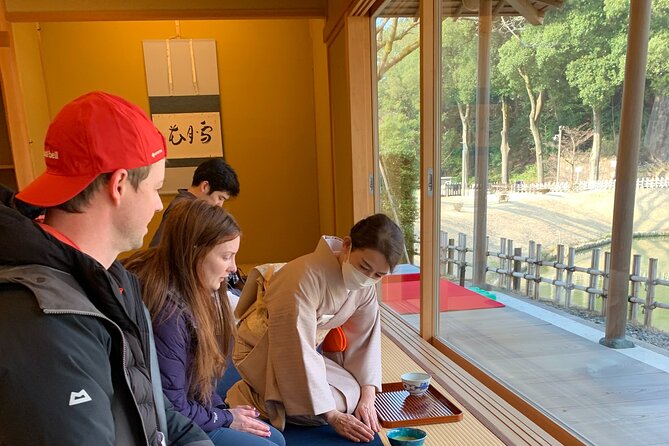
This is also where the tea break adds real value. Matcha and traditional Wagashi give you a quiet pause with a strong sense of place. The tea stop has been a highlight for people taking the tour in wet weather, and it is easy to see why. After cycling and sightseeing, a small sweet and warm tea slow the day down.
Kenrokuen can be especially attractive in different seasons, but the tour details do not promise a particular type of seasonal display. Go for the structure, views, and atmosphere rather than expecting one exact picture from a guidebook.
Same roads, a different saddle:
- Tokyo Guided Small-Group Biking Tour
★ 5.0 · 1,250 reviews - Bike Tour Exploring North Kyoto plus Lunch
★ 5.0 · 1,087 reviews - Tokyo Great Cycling Tour
★ 5.0 · 811 reviews - Arashiyama Bamboo Forest & Hidden Gems Bike Tour (Early Bird)
★ 5.0 · 613 reviews
Kanazawa Castle and the power of the Maeda clan
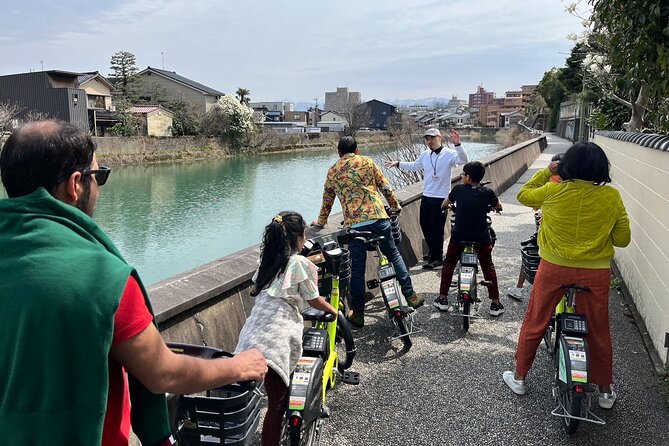
From Kenrokuen, the route continues to Kanazawa Castle and the Ishikawa Gate. The castle was the seat of the Maeda clan for more than 280 years, making it central to the story of Kanazawa’s political and cultural development.
The castle stop is shorter, about 30 minutes, and focuses on the exterior and the surrounding grounds. Your guide can point out the white walls, defensive layout, and design features such as fire-resistant storehouses and maze-like approaches.
That short visit is enough to understand the castle’s place in the city, but it is not a full castle museum experience. If you want extensive interior exhibits, you will need separate time. The advantage here is that the tour keeps moving, so you can see the castle without using up the afternoon.
The route also helps connect the castle to Kenrokuen. These are not unrelated sights. Together, they show the power, taste, and planning of the Maeda rulers. The garden offered controlled beauty, while the castle projected authority and defense.
Gyokusen’inmaru Garden, a quieter castle-side stop
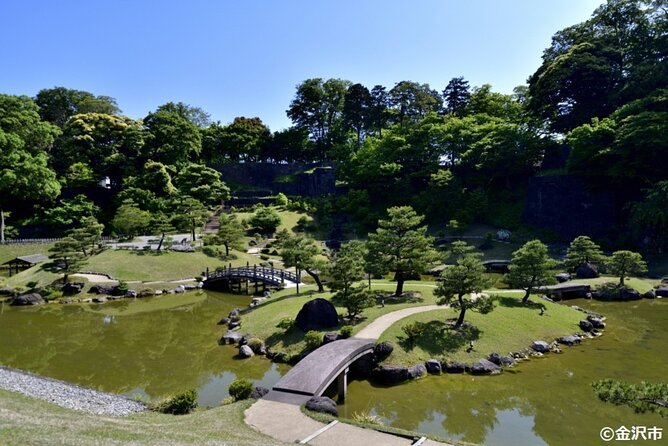
Gyokusen’inmaru Garden takes another 30 minutes and provides a useful contrast with Kenrokuen. It was once a private garden for the feudal lord and has been restored from historical records.
I like having this smaller garden in the itinerary. Kenrokuen is the famous name, but Gyokusen’inmaru gives you a more enclosed and reflective setting. It helps you understand that feudal gardens served different purposes. Some were designed for public prestige, while others offered a more private place for the ruling family.
The entrance fee is included. Since this is a compact stop, the guide’s explanation matters. Without context, you might spend only a few minutes admiring the pond and paths. With the story of its former use and restoration, the garden becomes a meaningful part of the castle district rather than just another pleasant green space.
Nagamachi and the lives of Kanazawa’s samurai
The final listed stop is Nagamachi, the former samurai quarter. You ride along stone-paved lanes bordered by earthen walls and canals, a setting that feels markedly different from Higashi Chaya.
Here the guide talks about Kanazawa’s warrior class and how samurai families lived. The district also offers a chance to consider change. Samurai society did not remain fixed forever, and the tour addresses how these families adapted as Japan moved beyond the feudal order.
The stop lasts about 30 minutes and is free to enter as described. You will not get an exhaustive tour of every former residence, but you will see the street pattern, walls, drainage channels, and overall character of the quarter.
For me, Nagamachi is important because it adds social depth to the tour. Higashi Chaya introduces merchant and entertainment culture. The castle shows the ruling house. Nagamachi brings the warrior class into the picture. Together, the three districts give you a clearer sense of how Kanazawa was organized.
Guides who add practical local knowledge
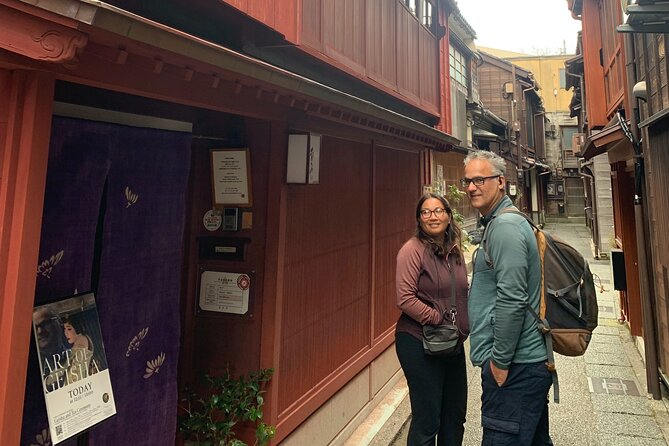
The guide can make or break a city tour, and this experience has several named guides associated with it. Rina has been praised for patient instruction, clear communication, and useful advice for the rest of a stay. Nicola has led routes at a friendly pace and shared local food suggestions. Liam has handled groups carefully, answered questions, and navigated the route in a relaxed way. Ti has adjusted stops for solo participants and offered recommendations for restaurants and later sightseeing.
These details matter because this tour is not just transport between attractions. You are paying for interpretation and judgment: which streets to use, how long to spend at a site, when to slow down, and what to notice.
The guide may also help shape the experience around your interests. If food matters to you, ask for restaurant advice. If you have only one day in Kanazawa, ask how to use the rest of it. If you are uneasy on a bike, mention that early so the pace can be set sensibly.
The tour is offered in a group format, with a maximum of eight people. That is small enough for questions and personal guidance, but you should not expect a fully private outing unless you book in a way that makes you the only participant.
What the $125.50 price gets you
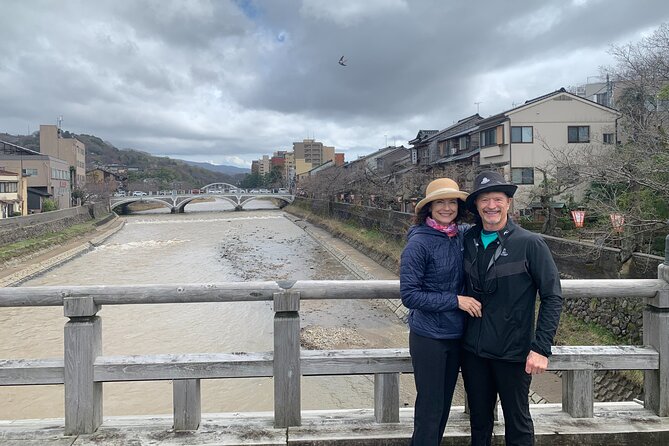
At $125.50 per person, this is not the cheapest way to see Kanazawa. The value comes from combining an electric bike, a local guide, entrance fees, a structured route, and the tea and Wagashi stop in four hours.
If you tried to arrange the same day independently, you would still pay for Kenrokuen and Gyokusen’inmaru Garden, then spend time working out the most efficient route between districts. You would also miss much of the background unless you researched each site in advance.
The price makes the most sense for a first visit, a short stay, or anyone who wants a strong orientation early in the trip. It is less compelling if you already know Kanazawa well, dislike group activities, or prefer to spend a full hour at every single site.
Group discounts are available, which may improve the value for people booking together. Hotel pickup and drop-off are not included, and additional food and drinks are your responsibility. The tour ends in a different location from the start, so check the final meeting details before planning your next train or reservation.
Weather, riding ability, and useful planning advice
Cycling depends on safe conditions. The tour can be canceled for rain, snow, strong winds, or unsafe roads. If the operator cancels because of poor weather, you are offered another date or a full refund.
Some outings have been adapted to walking and public transportation when rain was forecast, but you should not assume that option is guaranteed. The stated policy is weather dependent, so plan with flexibility and keep a dry-weather alternative in mind.
You receive confirmation at booking, and the tour is near public transportation. Most people can participate, but the 145-centimeter minimum recommendation is important for children and shorter riders.
I would book this tour near the start of your Kanazawa stay. That way, the guide’s restaurant suggestions and advice about other districts can shape the rest of your visit. If your schedule is tight, reserve with enough flexibility to handle a weather change.
Who should book this Kanazawa ride
This tour suits first-time visitors who want a broad introduction without spending the whole day on foot. It is also a good match for couples, small groups, and solo visitors who value a guide but do not want a large coach tour.
You will get the most from it if you enjoy short explanations, photo stops, gentle riding, and a mix of famous places and quieter streets. The electric assistance helps, but this is still a cycling activity. Anyone who is uncomfortable on a bike, too short for the equipment, or hoping for a purely indoor cultural tour should choose another format.
The four-hour length is another strength. It gives you a useful map of the city while leaving time for a market, museum, restaurant, or second visit to a favorite district later.
Should you book it?
I would book the Kanazawa Half Day E-bike Tour if you have limited time and want to understand how the city’s main districts fit together. The strongest reasons are the efficient route, the small group, the local guides, and the thoughtful mix of geisha, garden, castle, and samurai settings.
The price is fair when you count the bike, guide, entry fees, and tea break, but it is not a bargain outing. Book it for the local explanation and the easy movement between sights, not just for bicycle rental.
Choose a dry day if possible, arrive ready to ride, request a helmet if you want one, and ask your guide for food advice. For a first look at Kanazawa, this is a practical and enjoyable way to get your bearings fast.
FAQ
How long does the Kanazawa e-bike tour last?
The tour lasts approximately four hours.
What sights are included?
The route includes Kanazawa Station, Higashi Chaya District, Kenrokuen Garden, Kanazawa Castle’s Ishikawa Gate, Gyokusen’inmaru Garden, and the ruins and streets of Nagamachi.
Is the bicycle rental included?
Yes. The electric bicycle rental, local guide, entrance fees, traditional Japanese snacks, and matcha are included.
Where does the tour start?
The meeting point is McDonald’s at 1-1-1 Kinoshinbomachi, Kanazawa, Ishikawa 920-0858, Japan, near Kanazawa Station.
Is the tour suitable for shorter riders?
The e-bike is not recommended for riders under 145 centimeters.
What happens if the weather is unsafe?
The tour may be canceled because of rain, snow, strong winds, or unsafe road conditions. If it is canceled for poor weather, you can choose another date or receive a full refund. Free cancellation is also available when you cancel at least 24 hours before the start time.
Newest rides we have reviewed in Japan
- Afternoon Adventure: Okinawa Local Cycling with Spectacular Views★ 5.0 · 92 reviews
- Zodiac Shrines and Naha Backstreets Cycling Tour★ 5.0 · 29 reviews
- Iya Valley BROMPTON Slow Cycling Tour★ 5.0 · 28 reviews
- eTour de Matsumoto – Electric Bike Tour★ 5.0 · 16 reviews
- ONLY YOU in the Bamboo Forest! 4 hours E-bike tour with a local★ 5.0 · 45 reviews
- South Kyoto in a Nutshell: Gentle Backstreet Bike Tour!★ 5.0 · 225 reviews
- Pedal Adventure Kyoto’s iconic landmarks on an e-bike tour★ 5.0 · 189 reviews
- The Beauty of Kyoto by Bike: Private Tour★ 5.0 · 47 reviews
E-Bike Tours, compared.
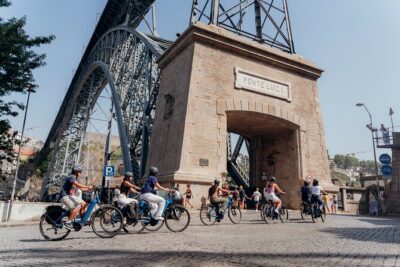
3-Hour Porto Highlights on a Electric Bike Guided Tour
Read our review →
Hills, Alfama, and Mouraria Tour by Electric Bike
Read our review →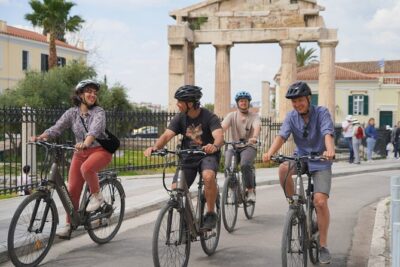
Athens Scenic Electric Bike Tour with optional Acropolis visit
Read our review →
City Highlights 3-Hour Guided Electric Bike Tour
Read our review →
Rome EBike Tour: Appian Way, Catacombs & Roman Aqueducts
Read our review →
Top Highlights & Hidden Gems Tour by Cannondale E-Bike
Read our review →Other lists this ride turns up in