
REVIEW · KYOTO
Bike Tour Exploring North Kyoto plus Lunch
Kyoto makes much more sense at bicycle speed. You can leave the traffic behind, slip through ordinary streets, and reach major sights without spending the day waiting for buses. This six-hour ride links grand temples and shrines with quieter corners of north Kyoto, then finishes back at the shop near Kyoto Station.
I like the small group of no more than eight and the way the tour mixes famous places with less-visited Nishi Honganji. I also like that lunch, bottled water, bikes, guidance, and the Kinkakuji entrance fee are covered in the $106.12 price. The catch is simple: you need to be comfortable on a bike and ready for roughly 13 miles, or about 24 kilometers, of riding. Kyoto heat can make that feel like a serious workout.
Key points to know before booking
- You cover a lot of Kyoto by bike: The riding takes about two and a half hours, spread across a five to six-hour day with stops.
- The route balances famous and overlooked sights: You see Kinkakuji and Gion, but also spend time at Nishi Honganji and Kitano Tenmangu.
- Guides shape the experience: Mayko, Quinn, Indra, Karl, Jay, Jamie, Julian, and others have led tours praised for clear stories, good pacing, and friendly group management.
- Lunch is part of the plan: The meal may be at a noodle restaurant, sushi bar, or conveyor-belt sushi place, so the exact setting can vary.
- The route is moderate, not effortless: Most of the ride is manageable, but there is a slight climb toward the Golden Pavilion and hot weather can add strain.
- The tour works well early in your Kyoto stay: You get a broad orientation and can mark places to revisit on foot or by transit later.
Why Kyoto works so well from a bicycle
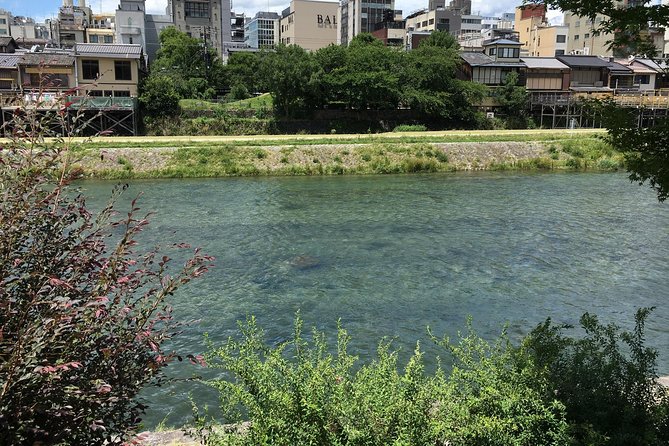
Kyoto’s major sights are spread across a wide city basin. Buses can be slow, especially when roads clog near Kinkakuji, Gion, or the central shopping streets. A bicycle gives you a better sense of how the city fits together.
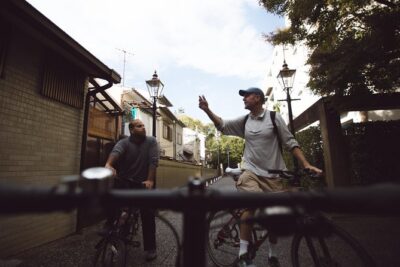
You are not simply pedaling from one ticket gate to another. The ride uses back streets and connecting roads that let you see Kyoto’s everyday side between the major stops. That might mean a quiet residential lane, a traditional building, or a stretch of the city you would otherwise pass beneath a bus window.
The group size matters here. With eight people or fewer, the guide can keep an eye on the group, adjust the pace, and explain a site without shouting across a crowd. Quinn, Jay, Indra, Karl, Mayko, Jamie, and Julian are among the guides associated with this experience. The guide you get will shape the day, but the strongest pattern is clear: the role is not just to lead the route. It is to explain Buddhist and Shinto traditions, local customs, Japanese history, and the character of each neighborhood.
The tour starts at 10 a.m. at Cycle Kyoto, at 7 Higashikujō Nishisannōchō in Minami Ward. The meeting point is near public transportation, and the activity ends at the same place. That return is useful if you have evening plans, though you should leave some breathing room because the advertised duration is approximate and some guides have extended the day when the group was enjoying itself.
More Rides with Lunch in Kyoto:
- 4.5-Hour Kyoto Bike Tour with Lunch and UNESCO Zen Temples
★ 5.0 · 122 reviews - Kyoto: Full-Day City Highlights Bike Tour with Light Lunch
★ 5.0 · 52 reviews - Kyoto: Early Bird E-Bike Tour with Lunch
★ 5.0 · 14 reviews
Getting fitted at Cycle Kyoto
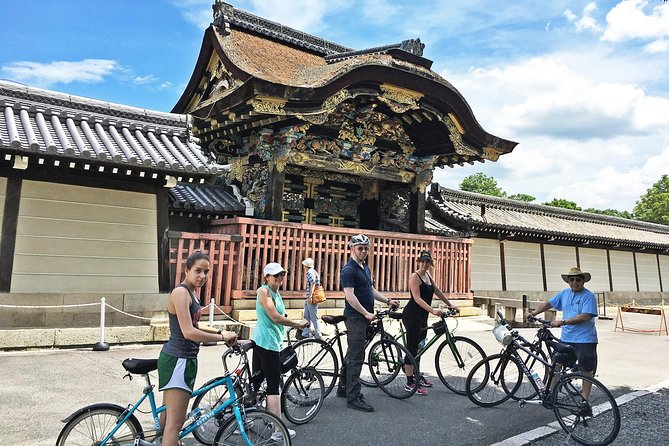
The opening 15 minutes cover the practical work: meeting your guide and the rest of the group, choosing a bike, and preparing for the ride. A high-quality Cannondale bike is included, and the operator provides cycling equipment and bottled water.
The bikes are fitted by height. Padding was added to seats for comfort on the longer ride, and helmets were available to some riders. Ask about a helmet when you arrive if you want one. You should also wear clothing that lets you pedal easily and bring sunscreen, especially in summer.
The official requirement is a moderate level of physical fitness. That sounds fair. The pace is described as easy to moderate, with frequent sightseeing breaks, and the route is not dominated by hills. Still, this is not a short sightseeing spin. The cycling portion has been reported at about 24 kilometers, or 13 miles, over the course of the day.
If you ride only occasionally, you may find the route perfectly manageable if you keep a steady pace. If you have not ridden for years, the distance is worth taking seriously. The guide can tailor speed and the route to the group, but you still need to feel secure riding in a city.
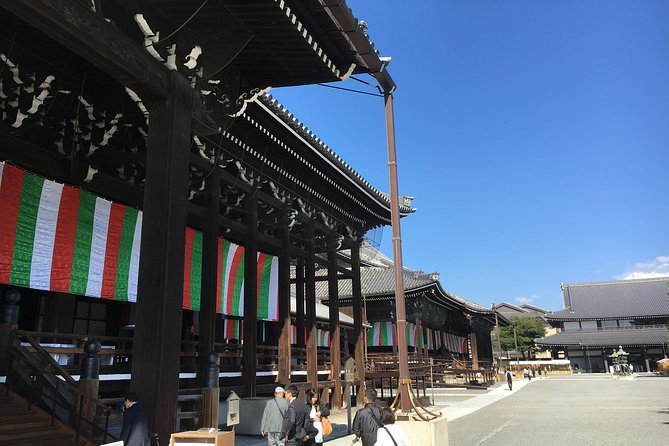
Nishi Honganji, a powerful first stop
Nishi Honganji is a useful opening stop because it gives you scale without the heavy crowds found at Kyoto’s most famous attractions. The tour spends about 15 minutes here, entering one of the city’s less-visited religious sites and one of the largest wooden buildings in the world.
That description alone makes the stop worthwhile. The wooden architecture gives you a sense of the physical scale of Japanese religious buildings, while the quieter setting lets you look around without being pushed along by a tour group.
This is also the sort of place where a guide adds real value. You can admire a huge wooden hall on your own, but a guide can point out how the building is used and place it within Kyoto’s religious life. One particularly memorable detail from the day is the visible repair work on the historic structure. The mended sections do not make the building less appealing. They show how an old place remains part of living city life.
The stop is short, so do not expect a long, silent temple visit. Think of it as a focused introduction before the route moves north.
Kitano Tenmangu and Kyoto’s living shrine culture
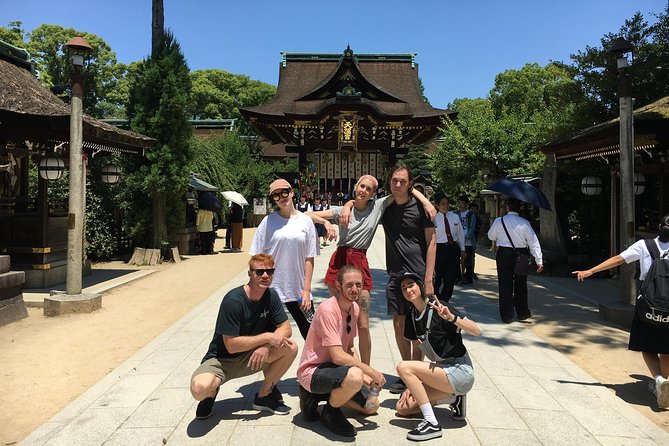
Kitano Tenmangu takes about 20 minutes. This is a working shrine rather than a frozen museum piece, and the tour gives you time to notice the local rhythm around it.
You join shrine goers, hear about the shrine’s past, and take in its calmer mood. Guides have used this stop to explain the differences between Shinto and Buddhism, the development of Japanese culture, and the way religious traditions still affect daily life.
That context helps you read the site. Without it, you may see gates, buildings, offerings, and visitors paying their respects without understanding what each action means. With a guide, the stop becomes more than a photo break.
Twenty minutes is enough for an introduction but not a complete exploration. If Kitano Tenmangu catches your interest, note it as a place to revisit later. The bike tour is designed to give you a broad day across Kyoto, not to replace a slow, detailed visit at every stop.
More Cycling Trips in Kyoto:
- Hidden Kyoto E-Biking tour
★ 5.0 · 1,843 reviews - Arashiyama Bamboo Forest & Hidden Gems Bike Tour (Early Bird)
★ 5.0 · 613 reviews - 5 Top Highlights of Kyoto Full Day Bike Tour (E-bike option)
★ 5.0 · 511 reviews - Full Day Biking Tour Exploring the Best of Kyoto
★ 5.0 · 498 reviews
Kinkakuji, the Golden Pavilion
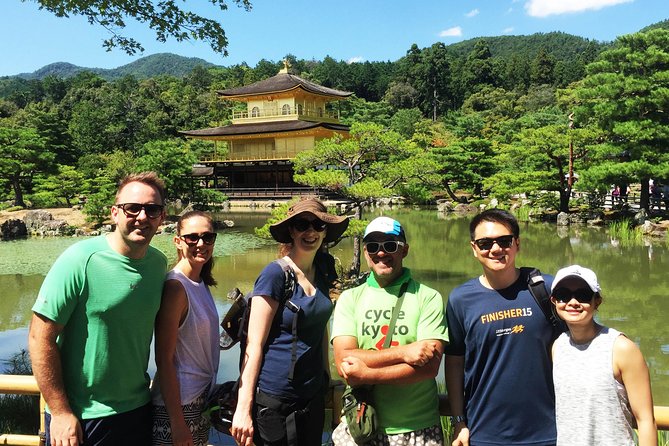
Kinkakuji is the visual centerpiece of the route. The tour includes temple admission and allows about 30 minutes at the famous Golden Pavilion.
You will probably recognize the pavilion from photographs before you arrive. In person, the setting around the pond gives the gold-covered building its full effect, especially when the reflection is clear. The guide provides commentary, then you have time to look around, take photographs, and perhaps stop for an ice cream.
This is one of Japan’s most visited attractions, so you should expect more people here than at Nishi Honganji. That contrast is part of the day’s design. The guide helps you understand the place, but the tour cannot make Kinkakuji quiet or private.
There is also a slight incline on the way to the Golden Pavilion. It is not described as a major climb, but it is the part of the route most likely to remind you that you are on an active tour. Afterward, the route is largely downhill, which feels welcome in warm weather.
The admission fee is included, which improves the value of the tour. You do not need to calculate an extra temple charge during the day, and the stop is already fitted into a route that connects the northern sights efficiently.
The former imperial grounds and the ride between stops
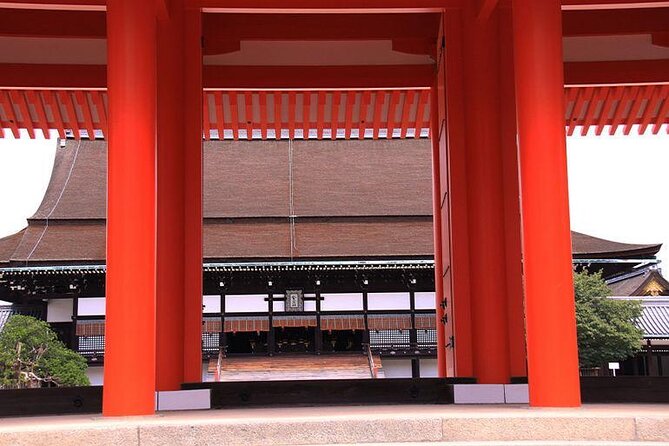
The itinerary also takes you through the grounds of the former seat of Japan’s imperial family. The stop is described as a chance to learn about its past and enjoy the grounds, though the supplied schedule does not give it a formal stop number or exact time.
This section helps break up the major temple visits. You get a change of setting and a chance to understand Kyoto’s role as Japan’s imperial capital. The value is not only the destination. It is also the ride through the city to reach it.
That is where the bicycle format earns its keep. You see the distance between religious sites, historic compounds, and modern neighborhoods instead of treating each place as an isolated attraction. The route feels like a connected portrait of Kyoto.
The ride is not a race. Guides such as Quinn and Jay have adjusted the pace for the group and added short breaks in hot weather. You should still expect regular starts, stops, and time in the saddle. That rhythm suits people who want a full day of sightseeing but do not want to sit in a vehicle.
Lunch is a useful part of the day
Lunch is included, but the exact restaurant can change. The planned meal has been a traditional noodle lunch on some outings, while other groups have eaten at a sushi bar or conveyor-belt sushi restaurant. A noodle restaurant with about 400 years of history has also been used.
That variation matters. You should book this expecting a Japanese lunch, not one fixed restaurant or one guaranteed dish. The meal gives you a proper pause after the morning riding and adds a local food experience without requiring you to choose a restaurant while tired and hungry.
Vegetarian needs can be accommodated when given ahead of time. Dietary requirements must be shared in advance, not at the last minute. Extra drinks are not included, although bottled water is provided.
The lunch is also one reason the $106.12 price can work for many people. You are paying for a half-day-plus guided route, bike use, water, temple entry, and a meal. It may not be the cheapest way to see Kyoto, but you are buying structure and local explanation as well as transport between sights. If you planned to visit the same places independently, you would still need to arrange bikes, navigate the route, pay for food, and work out the best order.
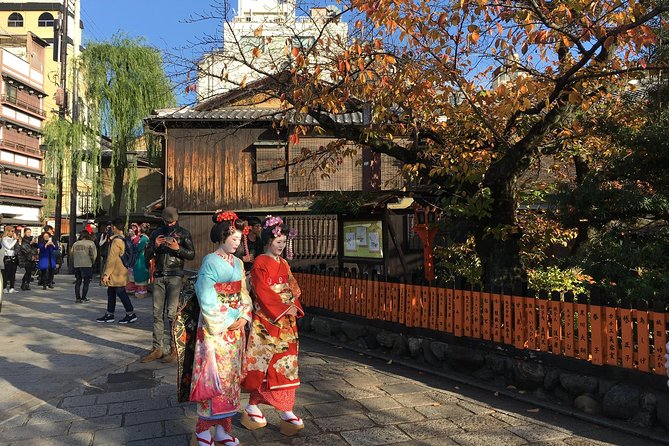
A short look at Gion
The day includes a brief stop in Gion, Kyoto’s famous geisha district. The listed time is only about 10 minutes, so think of this as an introduction rather than a full walk through the area.
Your guide explains the district and the world of geisha, and you might catch a glimpse of an entertainer moving between appointments. The wording matters here: a sighting is possible, not promised. You should also behave respectfully and avoid treating people working in the district as photo props.
Gion is a good final flavor of Kyoto because it shows another side of the city. The route has already covered religious buildings, imperial history, and ordinary streets. Gion adds traditional entertainment culture to that mix.
The short stop can feel rushed if this is the part of Kyoto you most want to explore. I would treat the tour as an introduction, then return independently if you want more time in the district.
How hard is the ride?
The best estimate from the detailed ride reports is about 13 miles or 24 kilometers, with around two and a half hours spent actively cycling. The full experience lasts five to six hours because the rest of the time is used for temples, explanations, photos, lunch, and breaks.
Most of the route is described as easy to moderate, and there are not many hills. The climb toward Kinkakuji is the main effort mentioned. The bigger challenge may be heat, particularly in summer. One guide made a point of keeping the group hydrated and checking that everyone was comfortable on a hot day.
You should be comfortable riding a bike and at least 13 years old. The route is not presented as suitable for very young children, and the operator sets the minimum age at 13. Families with teenagers can enjoy it, especially when the children already ride confidently.
The steady pace makes this more accessible than a fast cycling workout. Still, do not book it if you dislike riding in city streets, sitting on a saddle for several hours, or staying active in warm weather.
Who gets the most from this tour?
I would choose this tour for a first or second full day in Kyoto. It gives you a useful map of the city and helps you decide where to spend more time later. Several guides also offer practical ideas for what to do after the ride, which adds value to an early booking.
It suits active couples, solo visitors, families with older children, and small groups of friends. Solo riders can fit into the small group easily, and the shared ride gives the day a social feel without the size of a large bus tour.
It is less suitable if you want long, quiet temple visits or a slow photography day. The route covers a lot, so each stop has a set window. It is also not the right choice for anyone who is not comfortable cycling or who needs a completely flat, low-effort outing.
The guide makes a major difference. Names connected with especially strong outings include Mayko, Quinn, Indra, Karl, Jay, Jamie, and Julian. You cannot choose your guide from the information provided, but you can expect the guide to be central to the experience. The best guides personalize the pace, learn names, answer questions, and connect religious history with present-day Japanese culture.
Practical value, weather, and cancellation
At $106.12 per person, the tour offers solid value if you want one organized day that combines transport, sightseeing, food, and interpretation. Included items are a Cannondale bike, guidance, bottled water, lunch, and the Kinkakuji admission fee. Extra drinks and optional tips cost more.
Weather is the main planning risk. The activity requires good weather, and poor conditions can lead to a new date or a full refund. You can cancel for a full refund up to 24 hours before the 10 a.m. start time. Changes or cancellations inside that 24-hour window are not accepted for a refund.
I would schedule it near the beginning of your Kyoto visit rather than the final day. If rain forces a change, you have a better chance of moving the ride to another day. You also gain an orientation before choosing which temples, neighborhoods, and restaurants deserve a second look.
Should you book the North Kyoto bike tour?
Book it if you want to cover a broad slice of Kyoto in one active day, prefer local streets to bus windows, and value a guide who can explain what you are seeing. The combination of Nishi Honganji, Kitano Tenmangu, Kinkakuji, the former imperial grounds, Gion, and a Japanese lunch gives you a well-rounded introduction.
Skip it if you want to move slowly, avoid physical activity, or spend a long time at only one or two temples. For most riders with moderate fitness, though, the pace and frequent stops make the 13-mile route reasonable.
The strongest reason to choose this experience is not simply that it checks off famous sights. It shows you how Kyoto’s neighborhoods connect. Add a small group, a meal, included equipment, and guides such as Quinn, Indra, Karl, Jay, or Mayko, and this becomes a practical first look at the city with enough local detail to shape the rest of your stay.
FAQ
Where does the bike tour start?
It starts at Cycle Kyoto, 7 Higashikujō Nishisannōchō, Minami Ward, Kyoto, 601-8003, Japan.
What time does the tour begin?
The start time is 10 a.m.
How long does the experience last?
The tour lasts approximately five to six hours and ends back at the meeting point.
What is included in the price?
The price includes a high-quality Cannondale bike, guidance, bottled water, lunch, and temple entrance fees. The Kinkakuji admission is specifically included.
Is lunch included?
Yes. Lunch is included, though the restaurant and meal can vary. Outings have used noodle restaurants, sushi bars, and conveyor-belt sushi restaurants.
How old do you need to be to join?
Riders must be at least 13 years old and comfortable riding a bicycle.
What happens if the weather is poor?
If poor weather causes the tour to be canceled, you will be offered a different date or a full refund. You can also cancel up to 24 hours before the start time for a full refund.
Newest rides we have reviewed in Kyoto
- Best of Kyoto: Ginkakuji & Path of Philosophy E-Bike Tour★ 4.9 · 79 reviews
- Kyoto: Tailored E-Bike Tour to Highlights & Hidden Gems★ 4.9 · 32 reviews
- Kyoto: Full Day Bike Tour★ 4.9 · 39 reviews
- Kyoto: Half-day Guided Bike Tour with Fushimi Inari★ 4.9 · 21 reviews
- Kyoto: Early Bird E-Bike Tour with Lunch★ 5.0 · 14 reviews
- Kyoto: Full-Day City Highlights Bike Tour with Light Lunch★ 5.0 · 52 reviews
- Cycle Kyoto’s Hidden Gems & Gion Stroll★ 5.0 · 29 reviews
- Kyoto: Arashiyama Bamboo Forest Morning Tour by Bike★ 5.0 · 115 reviews
Kyoto Cycling Tours, compared.
Arashiyama Bamboo Forest & Hidden Gems Bike Tour (Early Bird)
Read our review →
5 Top Highlights of Kyoto Full Day Bike Tour (E-bike option)
Read our review →
Full Day Biking Tour Exploring the Best of Kyoto
Read our review →
Afternoon Kyoto Bike Tour: Bamboo Forest, Monkeys & Hidden Spots
Read our review →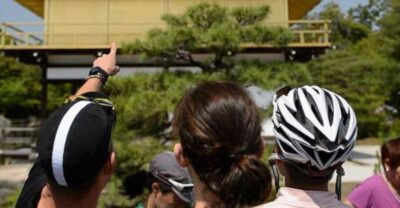
Other lists this ride turns up in