
REVIEW · TOKYO
Tokyo: Discover Traditional Tokyo Full-Day Bicycle Tour
Tokyo is easier to understand from a bicycle than from a train window. On this 20-kilometer ride, you move from Ginza and Tokyo Station to temples, markets, canal-side paths, old neighborhoods, and streets you could easily miss on foot. Guide Hiro is often named for his careful route planning, local stories, and thoughtful food stops.
I like the small groups of up to eight and the way the route favors side streets over heavy traffic. I also like the generous snacks, tea, and picnic-style break, which turn a long ride into a pleasant introduction to local food. The main caution is the distance: 20 kilometers over roughly four and a half to five hours is not a casual spin for young children or anyone uncomfortable riding in a large city.
Key points at a glance
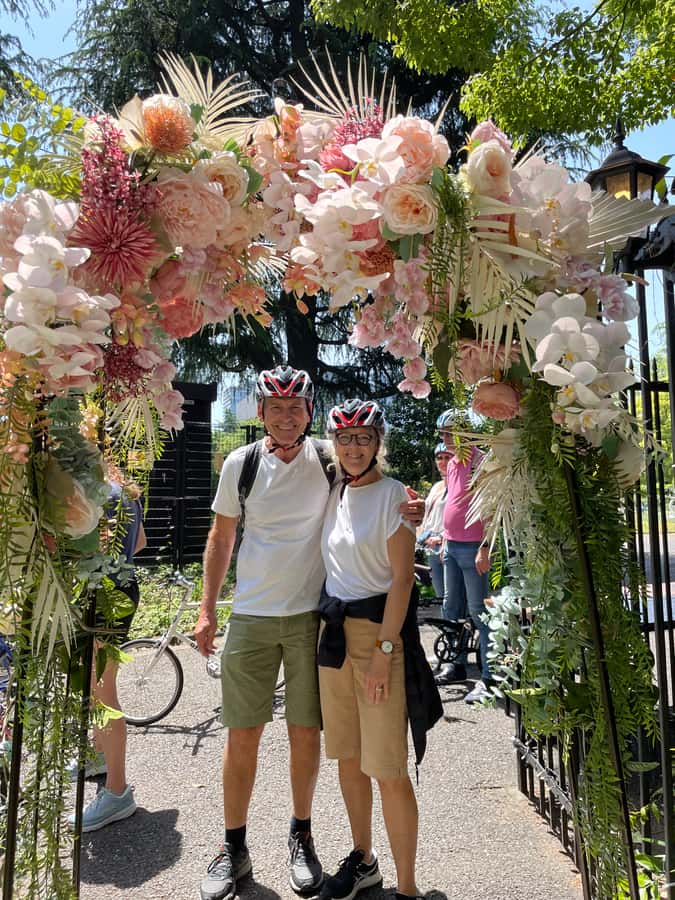
- A 20-kilometer route: Mostly flat roads make this a manageable way to cover a broad stretch of central Tokyo.
- A mix of famous and lesser-known sights: You pass Ginza, Tsukiji, the Imperial Palace, Tokyo Station, temples, shrines, bridges, and old neighborhoods.
- Careful local guiding: Hiro and other guides such as Brezza and Hirotoshi focus on safe backstreets, history, and keeping the group together.
- Food built into the ride: Expect tea, pastries, anpan, sweet potato, sandwiches, and other light local treats, depending on the day.
- Small 20-inch bicycles: The bikes suit Tokyo’s narrow bicycle parking spaces and are reported to be well maintained.
- Best for active sightseers: Older children, teens, couples, and adults who can comfortably cycle for several hours should get the most from it.
Why a bicycle works so well in central Tokyo
Tokyo is enormous, yet many of its central sights sit within a surprisingly workable cycling route. A train can get you across town quickly, but it usually leaves you below ground, in a station, or moving too fast to notice the change from office district to shrine lane. A bicycle gives you that in-between view.
This tour covers about 20 kilometers, with most of the roads described as flat. That matters in Tokyo, where the bigger challenge is usually traffic, crossings, crowds, and navigation rather than hills. You are not asked to race. The guide sets an easy pace, stops often, and leads the group through quieter streets where possible.
I particularly like the balance between landmark sightseeing and ordinary city life. You get major names such as Ginza and the Imperial Palace, but you also pass older sections, local shops, canals, small parks, and streets that do not always appear on a first-time visitor’s plan.
Before setting off, the guide explains the bicycle and local traffic rules. That briefing is useful even if you ride regularly at home. Tokyo has its own rhythm, and following a local who knows how to handle the route takes much of the pressure out of cycling in a huge capital.
More Full-Day Rides in Tokyo:
- Ninh Binh Full-Day Tour from Hanoi to Hoa Lu, Tam Coc & Mua Cave Via Boat & Bike
★ 5.0 · 4,384 reviews - From Perth: Rottnest Island Full-Day Bike and Ferry Trip
★ 4.7 · 2,548 reviews - Versailles Full Day Bike Tour with Palace, Gardens, & Picnic
★ 5.0 · 2,217 reviews
Starting at Toranomon Hills
The meeting point is in the lobby in front of the flower shop on the third floor of the Mori Tower in the Toranomon Hills Building. This detail matters because Toranomon Hills is divided into four towers. You need Mori Tower, not simply any entrance marked Toranomon Hills.
For the Ginza Line, use exit B1 or B6 at Toranomon Station. The Hibiya Line’s Toranomon Hills Station connects directly to Mori Tower. The guide can be reached at +81-90-9567-0007, which is useful if you have trouble finding the correct tower.
The tour does not include hotel pickup or drop-off. Plan your route to Toranomon Hills before the start time, and give yourself enough time to identify the right building. Once you meet the guide, you receive your bicycle, helmet, and, in winter, gloves.
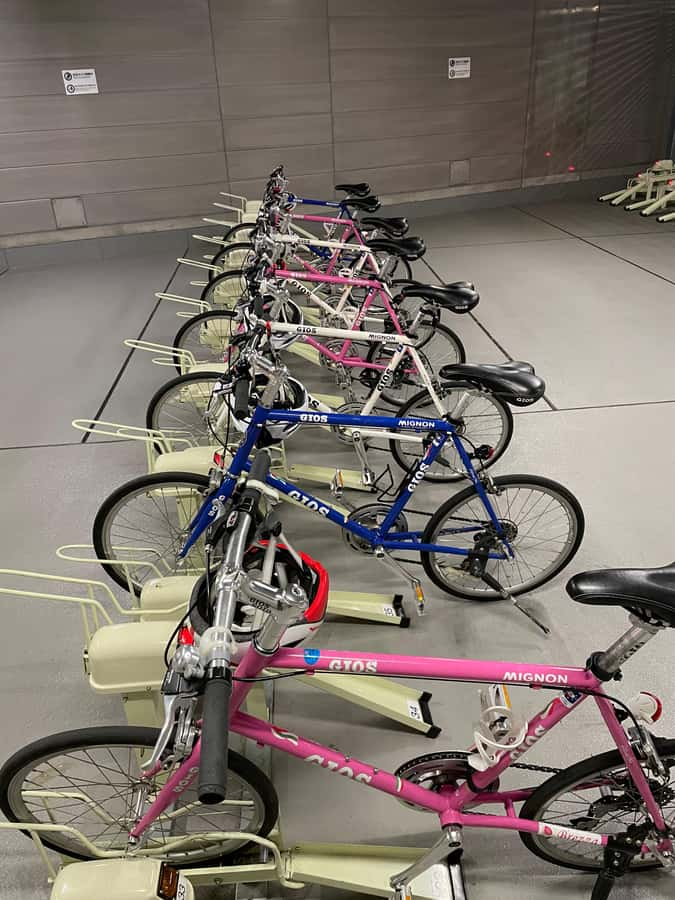
The bicycles have 20-inch wheels. That may sound small if you are used to a full-size touring bike, but the choice makes sense in Tokyo, where bicycle parking areas and narrow streets can be tight. The available bikes have been described as well maintained and suitable for a range of ages and heights, though you should still make sure the fit feels comfortable before leaving.
Hibiya Park, Ginza, and Kabukiza
The first section introduces several of Tokyo’s best-known central sights. Hibiya Park gives you a change from towers and office blocks, with open space and a calmer place to stop. It is a useful early reminder that Tokyo is not only concrete, train stations, and neon signs.
From there, the route reaches Ginza, one of the city’s major shopping districts. Ginza is polished and modern, but cycling through it lets you see how quickly Tokyo’s character changes from grand commercial streets to smaller lanes. Your guide can provide context that a short photo stop cannot.
Kabukiza theater adds a cultural note to this part of the ride. Even if you are not attending a performance, the building connects the route to kabuki, one of Japan’s major traditional theater forms. The stop works well because the tour is not asking you to spend hours inside every attraction. Instead, you get a broad introduction, then keep moving.
That approach suits families and teenagers especially well. You see the exterior, hear why it matters, and avoid spending the whole day in formal visits that can test younger attention spans.
Tsukiji and the flavor of the old fish market
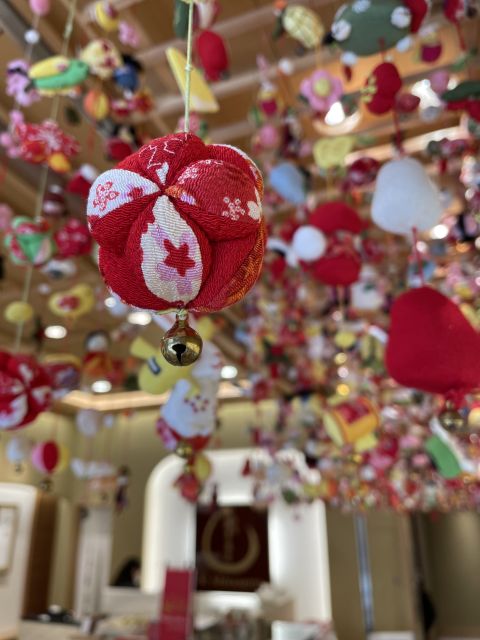
Tsukiji is one of the most appealing stops for people who like food. The wholesale market moved to Toyosu, but the Tsukiji area remains associated with shops, prepared foods, and the older market atmosphere. The tour includes the chance to see the market area and, on some tours, enjoy food connected with the historic fish market.
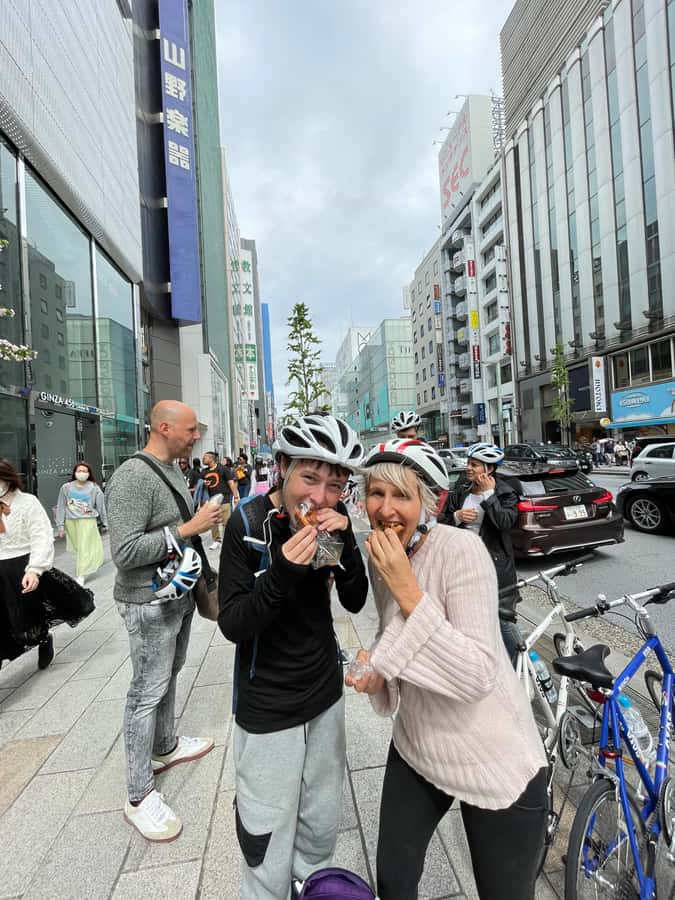
The included snacks are a real strength here. Past food stops have included pastries, anpan, sweet potato, ham and cheese sandwiches, and tea. The exact selection can vary, but the pattern is clear: this is not a ride where you need to wait until the end to eat.
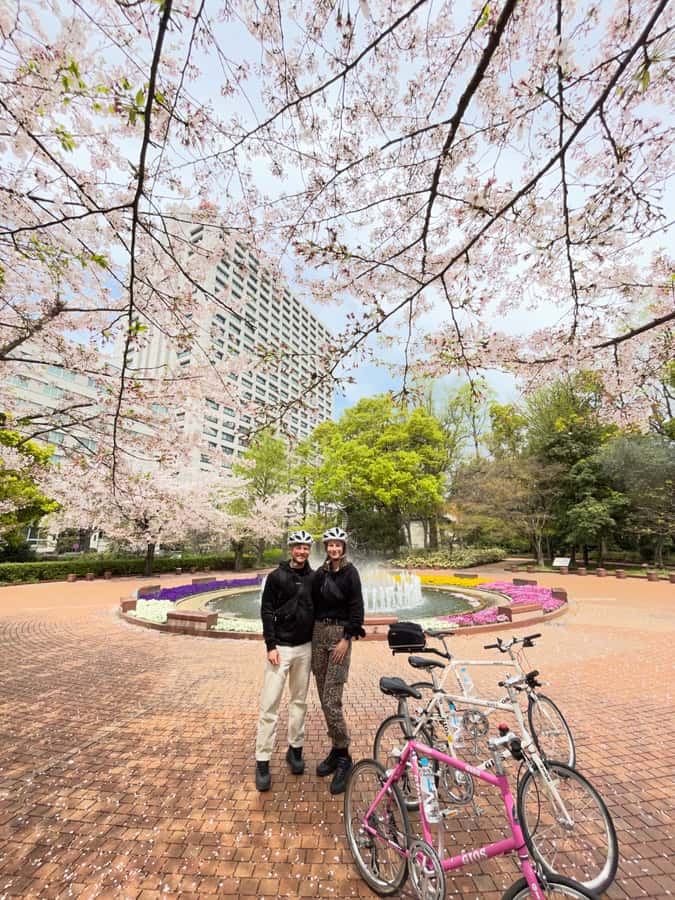
Several guides have also arranged a tea break or picnic beside a canal or in a small park. One especially appealing touch is matcha tea with sweets, sometimes enjoyed under a cherry tree in spring. These stops give your legs a rest and let you try Japanese flavors without committing to a full restaurant meal.
The food is also practical. Cycling for four and a half hours can leave you hungry, particularly in summer heat and humidity. The snacks help make the long route comfortable, though you should still arrive ready for an active outing.
More Cycling Trips in Tokyo:
- Tokyo Guided Small-Group Biking Tour
★ 5.0 · 1,250 reviews - Tokyo Great Cycling Tour
★ 5.0 · 811 reviews - Tokyo Top Highlights 3h Guided E-bike Tour
★ 5.0 · 714 reviews - 3h Tokyo E-Bike Tour: Hidden Gems, and Local Life with guide
★ 5.0 · 670 reviews
Bridges, canals, and old Tsukudajima
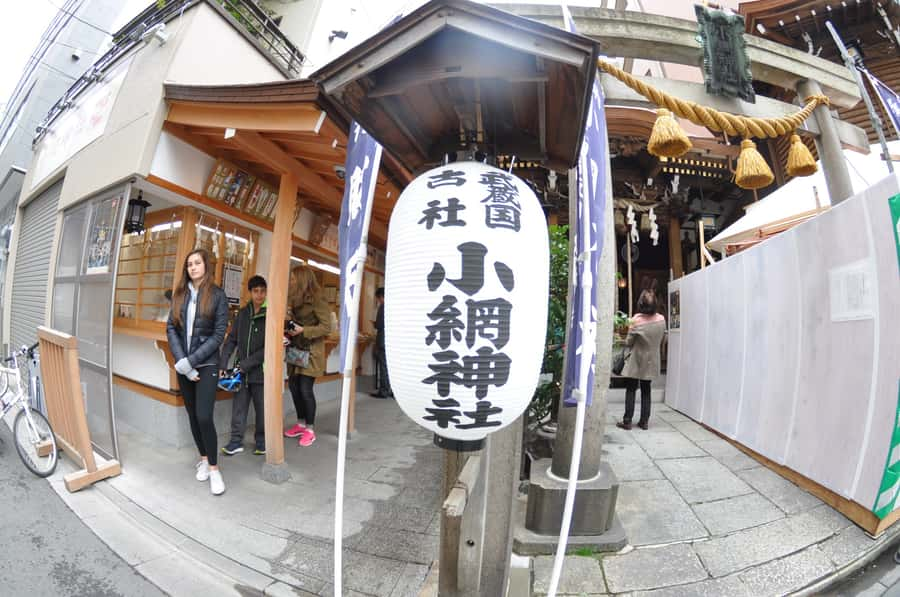
Kachidoki Bridge provides one of the route’s more distinctive city views. Bridges help you understand Tokyo’s waterways and the way neighborhoods developed around them. You are not simply checking off another structure. You are seeing how canals and rivers shape the city’s movement and identity.
The ride continues toward old Tsukudajima, Tsukishima, and Monja Street. This is one of the strongest parts of the itinerary for anyone interested in traditional Tokyo beyond the major attractions. Tsukishima is closely associated with monjayaki, a local savory dish cooked on a hot plate, and the street gives the tour a food-and-neighborhood focus that feels different from Ginza’s department stores.
The provided information does not promise a full monjayaki meal, so you should not book expecting a restaurant lunch as part of the fixed package. What you can expect is a look at the area and a route shaped by local food culture, with light snacks included.
I like this section because it shows why a guide adds value. You might pass through Tsukishima on your own, but without some context it could register as just another Tokyo neighborhood. A guide who knows the backstreets can point out how the older character survives beside modern development.
Temples, shrines, and the Imperial Palace
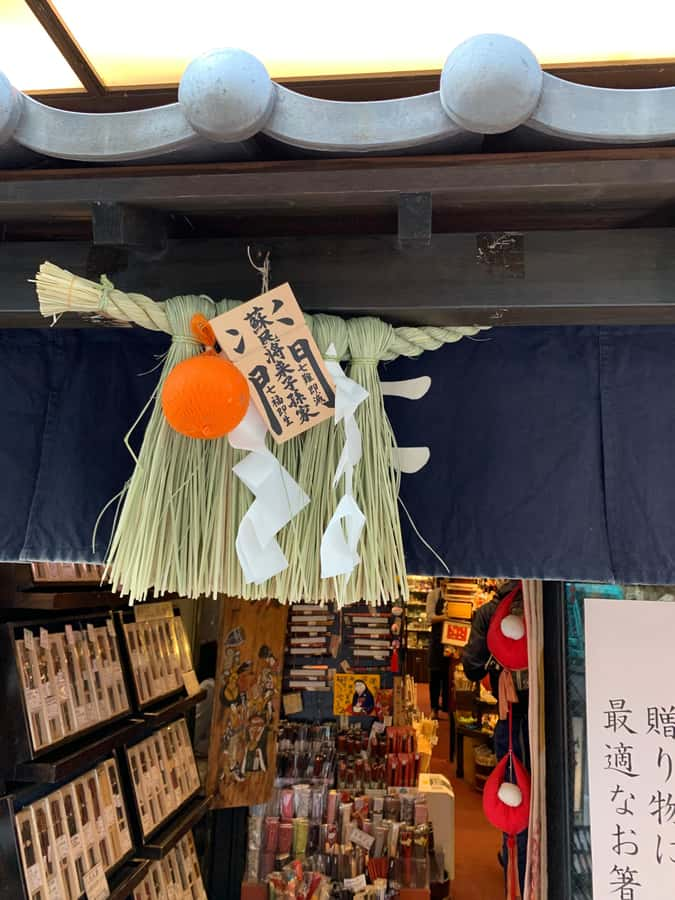
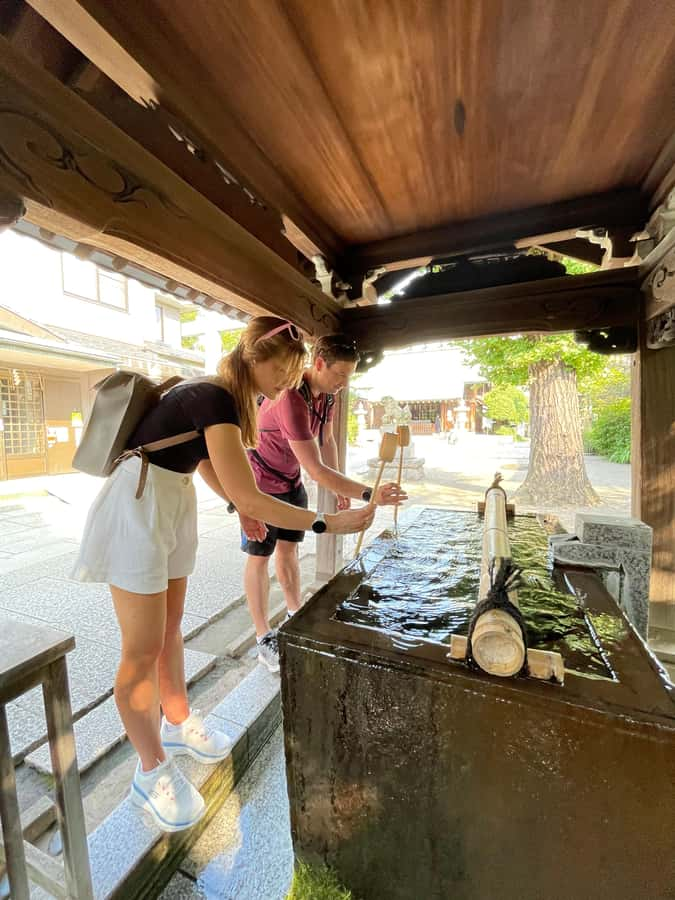
The route includes temples and shrines, though the exact stops can depend on the day, timing, and group. These visits break up the ride and give you short windows into Japanese religious traditions, architecture, and everyday customs.
You should think of these as guided outdoor visits rather than long temple tours. The appeal is variety. One moment you are cycling through a city district, and soon you are standing in a quieter sacred space, listening to an explanation before getting back on the bike.
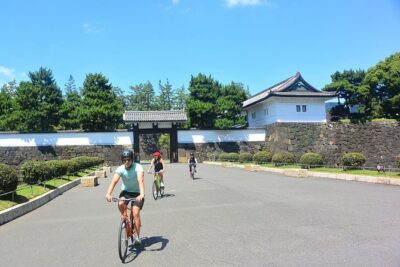
The Imperial Palace is another major landmark on the route. A bicycle makes the surrounding area easier to connect with because you can approach from different streets and continue onward without retracing your steps. You will not be touring every interior section of the palace complex, but the stop provides an important sense of Tokyo’s political and imperial center.
Several guides have used maps to explain how Tokyo has changed over time. That kind of visual explanation can be more useful than a long list of dates. You begin to see why old districts, waterways, palace grounds, and modern commercial areas sit so close together.
Tokyo Station and the changing face of the city
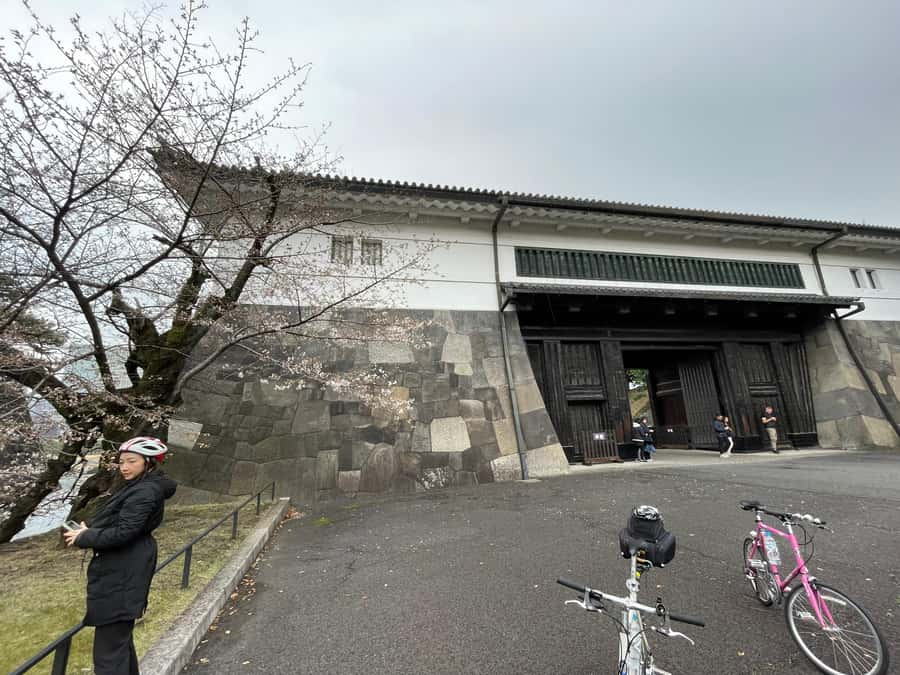
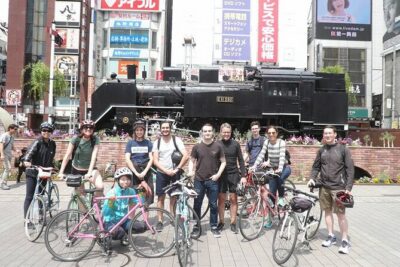
Tokyo Station brings the route back to one of the capital’s most recognizable transport and architectural landmarks. It is also a fitting stop because the station links many versions of Tokyo: historic brick architecture, high-rise business districts, department stores, restaurants, and the constant movement of commuters.
The tour’s value is not that it gives you a deep visit inside each sight. It gives you a connected view of central Tokyo. By the time you reach Tokyo Station, you have crossed shopping districts, old neighborhoods, market streets, green spaces, canals, bridges, and sacred sites.
That broad perspective is especially useful near the beginning of your stay. One past participant described the tour as a good introduction to Tokyo, and I agree with that use. You can mark places to revisit later, then return by train when you want more time at a market, shrine, theater, or shopping district.
How hard is the ride?
The route is mostly flat and described as easy paced, but the distance remains significant. Twenty kilometers is a proper day’s cycling for many people, especially when you add stops, city riding, weather, and time in the saddle.
You do not need to be an athlete, and several experiences included beginners or families. Still, I would not call this a short orientation ride. One practical assessment specifically advised against it for young children because of the five-hour length, while other families had a good time with children aged 10, 12, 13, 15, and 16.
My advice is simple: book it for older children and teens who already ride comfortably, not for toddlers or children who tire quickly. Adults who cycle occasionally should be fine if they can handle a long, steady outing. In hot and humid weather, the frequent stops become important. In cooler weather, gloves are supplied.
Guide quality and group size
The guide is central to this experience. Hiro is repeatedly associated with the tour and is praised for safe route choices, historical explanations, food surprises, and attention to each person in the group. Other guide names appearing with the experience include Brezza, Hirotoshi, Shiro, and Thiery.
The strongest practical benefit is route knowledge. The guide uses side streets, parks, and quieter roads where possible, while still reaching central sights. That makes a big city feel less intimidating and reduces the need for you to navigate while watching traffic.
Groups are limited to eight people. That is small enough for the guide to keep an eye on everyone and give the ride a personal feel. It also means the experience can be more flexible than a large coach tour, though the exact route and food stops should not be treated as completely fixed.
The overall rating is 4.7 from 131 reviews, with especially high praise for the guides, safety, food breaks, historical explanations, and access to less obvious parts of Tokyo. I would put the guide and route planning ahead of the bicycle itself when judging the value.
Is $102 a fair price?
At $102 per person, this costs more than renting a bicycle and exploring on your own. The comparison is not quite equal, though. The fee includes the bicycle, helmet, winter gloves, guide, light snack, and teatime confectionary.
You are also paying for route planning, local traffic guidance, historical explanations, and the ability to cover a large area without spending time figuring out directions. The small group matters here. A cheap rental can be good value for independent riders, but it will not take you through a carefully linked route of central landmarks and older neighborhoods.
I consider the price fair for a first or second day in Tokyo, especially if you value food tastings and personal guiding. It is less compelling if you already know central Tokyo well, dislike group activities, or want long unstructured visits inside individual attractions.
The reserve-now-and-pay-later option and free cancellation up to 24 hours before the tour add useful flexibility, but the main value comes from the time saved and the quality of the route.
What to bring and how to prepare
Wear clothes you can pedal in comfortably and shoes suitable for several hours of riding. Bring water, even though snacks and tea are included. Tokyo weather can make the same route feel very different, particularly in summer heat and humidity.
Arrive at the correct Mori Tower meeting point with enough time to sort out the bicycle. If you have concerns about height or fit, raise them before setting off. The 20-inch bicycles are chosen for Tokyo’s narrow parking spaces, so they may feel different from the bike you use at home.
I would also avoid scheduling another demanding activity immediately afterward. The tour is packed with sights and stops, but it is still a long physical outing. Leave room for a shower, a relaxed meal, or an early night.
Should you book the Traditional Tokyo Bicycle Tour?
Book this tour if you want to cover a lot of central Tokyo, prefer local streets to a bus window, and enjoy learning through conversation. It is particularly well suited to couples, active adults, older children, teens, and repeat visitors who want neighborhoods beyond the standard checklist.
I would choose it early in a Tokyo visit. The route gives you a useful mental map, and the guide can introduce foods, districts, and cultural details you may want to explore later.
Skip it if 20 kilometers sounds tiring, if you need a fully accessible sightseeing format, or if you want to spend most of the day inside museums, temples, or markets. For everyone else, the combination of safe route planning, small groups, local snacks, and broad city coverage makes the $102 fare a reasonable buy.
FAQ
How long is the Tokyo bicycle tour?
The stated duration is 270 minutes, or four and a half hours. Several past outings have been described as lasting about four and a half to five hours, depending on stops.
How far do you cycle?
The full route covers about 20 kilometers. Most roads are described as flat, and the pace is intended to be easy.
What sights are included?
The route includes Hibiya Park, Ginza, Kabukiza theater, Tsukiji fish market, temples and shrines, Kachidoki Bridge, old Tsukudajima, Tsukishima and Monja Street, the Imperial Palace, Tokyo Station, and other locations.
Are bicycles and helmets included?
Yes. The bicycle and helmet are included. Gloves are also provided during the winter season.
What food and drinks are included?
A light snack and teatime confectionary are included. Food stops have included pastries, anpan, sweet potato, sandwiches, tea, and other local treats. The exact selection can vary.
Where do I meet the guide?
Meet in the lobby in front of the flower shop on the third floor of the Mori Tower in the Toranomon Hills Building. Use exit B1 or B6 at Toranomon Station on the Ginza Line, or the direct connection from Toranomon Hills Station on the Hibiya Line.
How many people are in the group?
The tour is limited to eight participants. Guides speak English and Japanese.
Newest rides we have reviewed in Tokyo
- Tokyo: West-Side Cycling and Food Tour with Guide★ 5.0 · 37 reviews
- Tokyo: Private Cycling Tour with cute E-bike★ 5.0 · 11 reviews
- Tokyo Bike Tour: Shibuya, Harajuku & Hidden Gems★ 5.0 · 20 reviews
- Tokyo: 2-Hour Night Bike Tour of the City’s Hidden Gems★ 4.9 · 25 reviews
- Tokyo: 3h Private E-bike Tours, Starting at Your Hotel★ 5.0 · 36 reviews
- Tokyo: Hidden Gems Guided Bike Tour with Lunch★ 4.5 · 30 reviews
- 3-Hour Tokyo Private E-Bike Tour Starting from Your Hotel★ 5.0 · 117 reviews
- 5-Hour Tokyo & Edo Hidden Gem Bike Tour with Lunch★ 5.0 · 113 reviews
Tokyo Cycling Tours, compared.
3h Tokyo E-Bike Tour: Hidden Gems, and Local Life with guide
Read our review →
3-hour Guided E-Bike Tour of the City’s Hidden Gems
Read our review →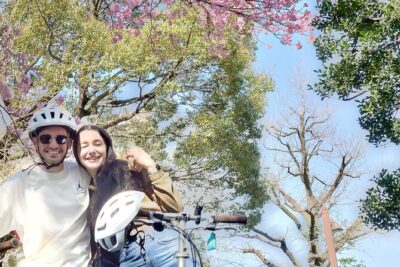
3-Hour Tokyo Private E-Bike Tour Starting from Your Hotel
Read our review →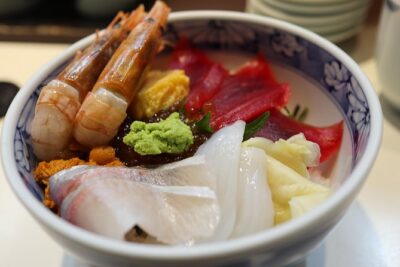
5-Hour Tokyo & Edo Hidden Gem Bike Tour with Lunch
Read our review →Other lists this ride turns up in