
REVIEW · HIDDEN GEMS BIKE TOURS IN TOKYO
Tokyo: Hidden Gems Guided Bike Tour with Lunch
Tokyo’s old neighborhoods make more sense from a bicycle seat. This five-hour ride links Asakusa’s famous gates and temples with Sumo town, a local Buddhist temple, and a small museum that shows daily life in the Edo period. I like the small-group format and the way lunch, a bike, museum entry, and insurance are included. I also like that the route gets beyond the usual photo stops. The main drawback is that you need to keep moving with the group, and vegetarian food choices are limited.
Guide Shogun gets particular praise for keeping the ride moving while still adding useful historical detail. At $96, this is a fair deal if you want transport, a guide, lunch, and two very different kinds of cultural stops in one morning or afternoon. It is less appealing if you prefer a slow walking tour or want to choose every restaurant and stop yourself.
What makes this ride worth considering
- Asakusabashi start: Meet outside Exit A3, hear a short traffic briefing, and begin close to Tokyo’s old river districts.
- Edo-era thread: The route connects Asakusa, Ryogoku, and Fukagawa, three areas tied to Tokyo’s past.
- Tokyo Skytree views: Ride across a bridge and along the Sumida River with clear views of the 634-meter tower.
- Two forms of worship: Visit Senso-ji and Fukagawa Fudo-son Temple, seeing both a major temple area and a more local religious setting.
- Practical inclusions: Your bicycle, lunch, museum admission, guide, and insurance are covered in the $96 price.
- Tight group size: The tour is limited to five participants, though the operator notes that other participants may join.
Starting at Asakusabashi with a short safety lesson
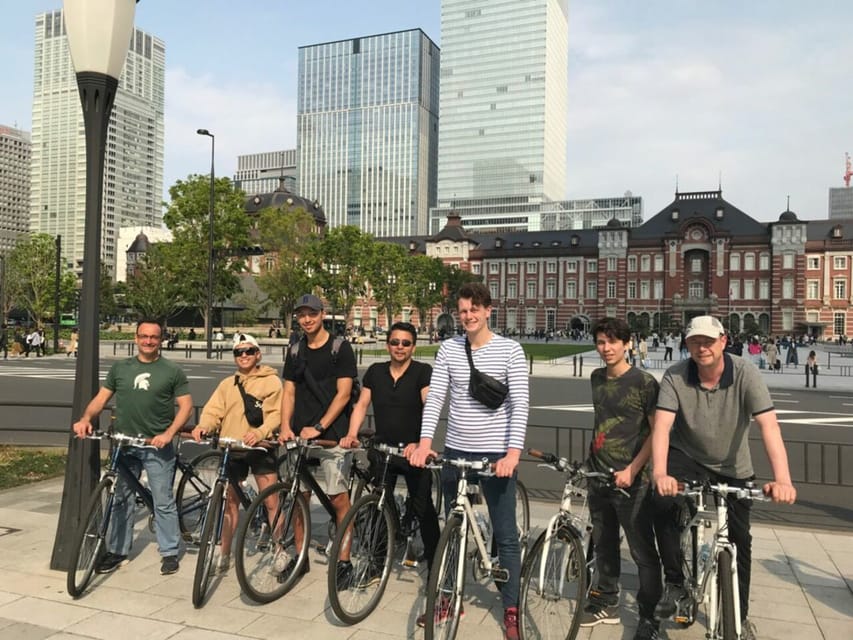
The meeting point is outside Exit A3 at Asakusabashi Station on the Toei Asakusa Line. A guide waits outside the exit, so you do not need to hunt through the station for a rental office. Be there early. This tour leaves on time, and if you miss the group, you cannot join later or receive a refund.
Before setting off, you get a short explanation of traffic rules in Japan. That matters because cycling in Tokyo is not simply a matter of following the same habits you use at home. You will be riding through city streets, across bridges, and along a river route, so the briefing gives you a useful starting point.
The tour welcomes all cycling levels, but you should be comfortable riding for several hours. Anyone joining must be taller than 150 centimeters, or about 4 feet 11 inches, and the activity is not suitable for children under 15. Wear comfortable shoes. Cycling clothes are not supplied, and you should not bring luggage because there is no storage at the bike office. Use station lockers before meeting the guide.
More Hidden Gems Bike Tours in Japan
- 3h Tokyo E-Bike Tour: Hidden Gems, and Local Life with guide
★ 5.0 · 670 reviews - Tokyo: 3-hour Guided E-Bike Tour of the City’s Hidden Gems
★ 4.8 · 251 reviews - 5-Hour Tokyo & Edo Hidden Gem Bike Tour with Lunch
★ 5.0 · 113 reviews
Bandai figures and Asakusa’s big first impression
The first stop is the headquarters of Bandai, a Japanese toy company. You spend about 20 minutes there and can take photographs with large figures, including characters from Dragon Ball and Doraemon. This is a lighthearted start, but it also gives the group an easy shared point of interest before the historical stops begin.
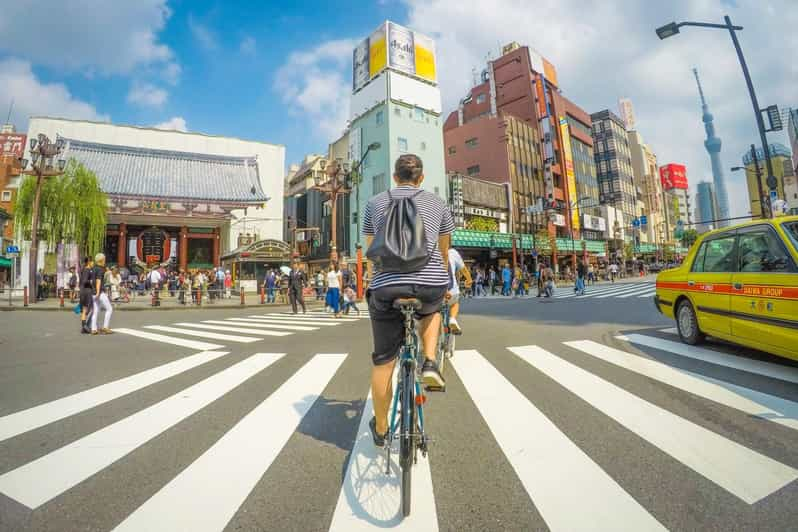
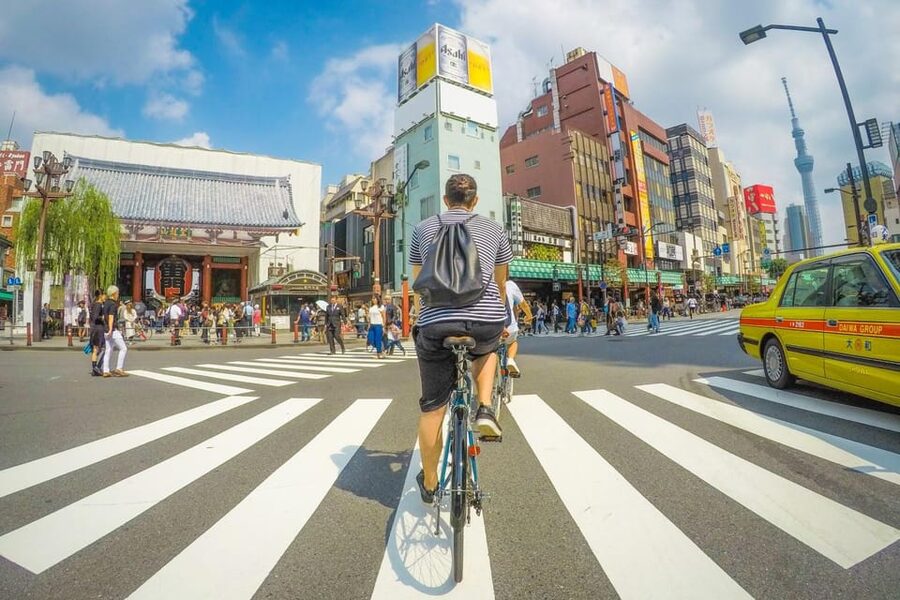
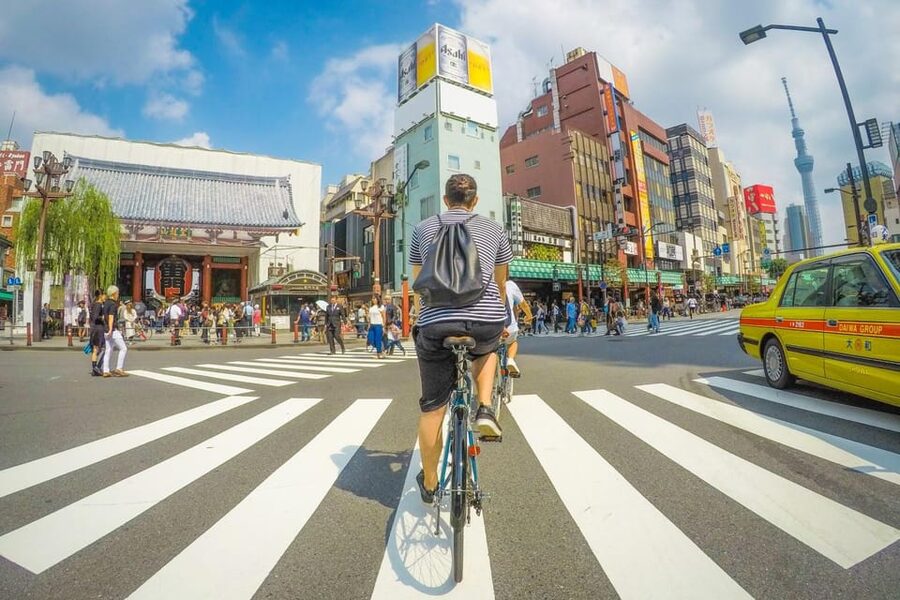
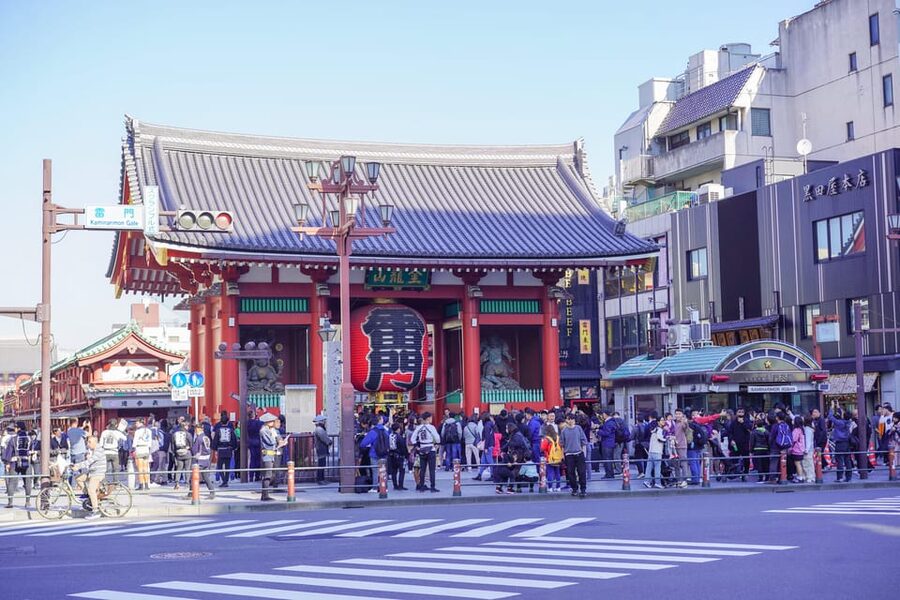
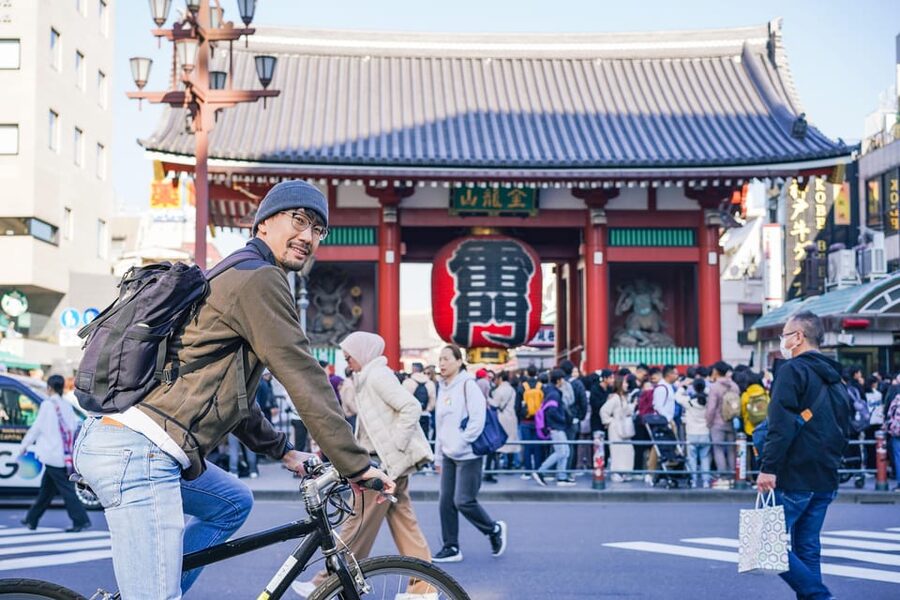
From there, you cycle toward Kaminarimon, the famous red gate that marks the approach to Senso-ji. The gate is one of Tokyo’s most familiar sights, and it can feel crowded around the main entrance. The advantage of arriving by bike is not that the area will be empty, but that you can reach it without spending the whole outing trapped in the busiest central routes.
You have about 10 minutes at Kaminarimon for a look and photographs, followed by around 30 minutes at Senso-ji. This is the major temple visit of the tour. The guide can explain how the temple fits into Asakusa’s long connection with popular entertainment, pilgrimage, and local travel during the Edo period, from 1603 to 1868.
Do not expect an hour of quiet temple study here. Senso-ji is a popular Tokyo sight, and the schedule keeps this part brisk. That is a fair trade if you want a first look at Asakusa without giving half a day to one temple complex.
Crossing the Sumida River toward Sumo town
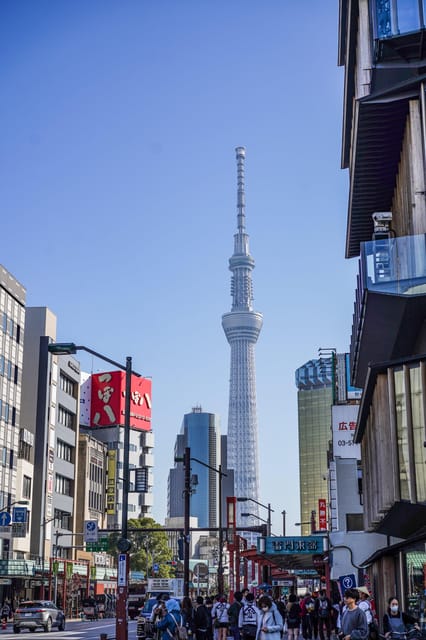
After Asakusa, the route shifts from famous landmarks to the simple pleasure of moving through the city. You cross a bridge with views toward Tokyo Skytree, the 634-meter radio tower. The view is one of the strongest visual moments on the ride, especially because you see the tower in relation to the Sumida River rather than only from a crowded viewing area.
The ride continues toward Ryogoku, known as Tokyo’s Sumo district. Here, the tour gives you a short look at the area’s connection with Sumo and the traditions that helped shape its identity. The supplied timing does not promise a tournament, wrestler sighting, or stadium visit, so treat this as a neighborhood and cultural stop, not a Sumo event.
This stretch is where the bicycle format earns its keep. You are not just jumping by train from one attraction to the next. You can see how the older districts connect along the river and get a sense of Tokyo’s scale. At the same time, a five-hour route means the pace is purposeful. Shogun was praised for maintaining a good speed while still providing historical context, which is useful if you want to see a lot without spending the whole day on one block.
Lunch in Ryogoku, with practical limits for vegetarians
Lunch is at a local restaurant in the Ryogoku area and lasts about 45 minutes. It is included in the price, so you do not need to budget separately for the main meal. That makes the $96 cost easier to judge, especially when you add the rental bicycle, guide, museum entry, and insurance.
The meal is part of the local experience rather than a separate food tour. You should not expect a long menu of choices or time to browse several restaurants. Vegetarian options are limited because many Japanese restaurants are not fully set up for vegetarian menus. If you do not eat meat or fish, ask about the available choices before booking and be ready for fewer options than on a dedicated vegetarian food tour.
Additional food and drinks are not included, though they can be purchased. A café stop later in the route gives you about 15 minutes for a drink or small purchase, but it does not replace lunch.
More Hidden Gems Bike Tours in Tokyo
- Tokyo: 3-Hour Bike or E-Bike Tour of City’s Hidden Gems
★ 4.7 · 81 reviews - Tokyo: 2-Hour Night Bike Tour of the City’s Hidden Gems
★ 4.9 · 25 reviews - Tokyo Bike Tour: Shibuya, Harajuku & Hidden Gems
★ 5.0 · 20 reviews
Fukagawa Fudo-son and everyday religious life
After lunch, you cycle to Fukagawa Fudo-son Temple in the Fukagawa area. You have around 35 minutes here. The stop offers a useful contrast with Senso-ji. Senso-ji is a major Tokyo landmark with a grand approach and heavy public attention. Fukagawa Fudo-son gives the guide room to explain how people worship in daily life at a Buddhist temple.
The tour description also refers to a Shinto shrine and a Buddhist temple. The listed route specifically names Fukagawa Fudo-son, a Buddhist temple, while the earlier Asakusa stops include the well-known temple district. The exact order can change with traffic, weather, or operations, so the guide may adjust how the religious sites are handled.
This is a good place to listen rather than rush through photographs. You can ask about customs, prayer, and the role of religious sites in ordinary Japanese life. The value here is not a long formal lecture. It is the chance to connect what you see at a temple with the daily practices that shaped these neighborhoods.
Edo Museum: a small-scale look at life 150 years ago
The Fukagawa Edo Museum is the most focused historical stop, with about 45 minutes inside. Its displays show what streets and homes could look like in the Edo era, around 150 years ago from the tour’s point of view. Instead of dealing only in dates and famous names, the museum helps you picture how people lived, moved, and worked.
I especially like this stop for first-time visitors who find Tokyo’s past hard to imagine beneath the modern roads and towers. The museum provides a physical sense of the older city, making the earlier stops at Asakusa and Ryogoku easier to place.
Forty-five minutes is enough for a useful visit, but not for an exhaustive museum study. If you are a serious museum enthusiast, you may want more time than this schedule allows. For most people, the shorter visit works well because the museum is one part of a varied route rather than the entire activity.
The final café stop lasts about 15 minutes before the ride returns to Asakusabashi Station. The tour finishes where it began, which simplifies the rest of your day. You can continue sightseeing from the station or retrieve luggage from a locker.
What the $96 price really covers
The price is $96 per person. That is not the cheapest way to see Asakusa, but the comparison should include everything bundled into the half-day:
- Bicycle rental
- English-speaking guide
- Lunch
- Fukagawa Edo Museum admission
- Insurance
You are also paying for the route planning and the practical connection between neighborhoods that you might otherwise visit separately. A train can get you between Asakusa, Ryogoku, and Fukagawa, but it will not give you the river crossing, the bridge views, or a guide’s running explanation.
The value is strongest for a visitor who wants a ready-made introduction to eastern Tokyo. The value is weaker if you already have a bicycle, do not want an included meal, or prefer to spend long periods at Senso-ji and the museum.
The group is limited to five people, a useful number for city cycling and questions. The information also notes that there might be other participants, so do not assume a private tour. Shogun’s praised ability to keep the group moving is important here. You get a full route in five hours, but the schedule does not leave much room for a late start or a long personal detour.
Weather, clothing, and the pace of the day
The activity can be cancelled for unsuitable weather because cycling safety comes first. It is wise to avoid packing the rest of your day with a fixed reservation immediately afterward, since the order of stops may change with traffic, weather, and operating conditions.
Wear comfortable shoes. The tour provides bikes, but not shoes or cycling clothes. Bring only what you need for the ride, since luggage cannot be left at the rental office. If a place closes, the operator may use an alternate location.
The route suits riders of all levels according to the activity information, but that does not mean no effort is required. You will spend several hours cycling through Tokyo and must keep pace with the group. If you are unsure about your fitness, ask the provider for current route details before booking.
English is the tour language. Guide Shogun is specifically named in the experience, and the information also notes that other English-speaking guides may lead tours. Reviews of the ride give particular credit to Shogun for combining a steady speed with historical explanation.
Who should book this Tokyo bike tour?
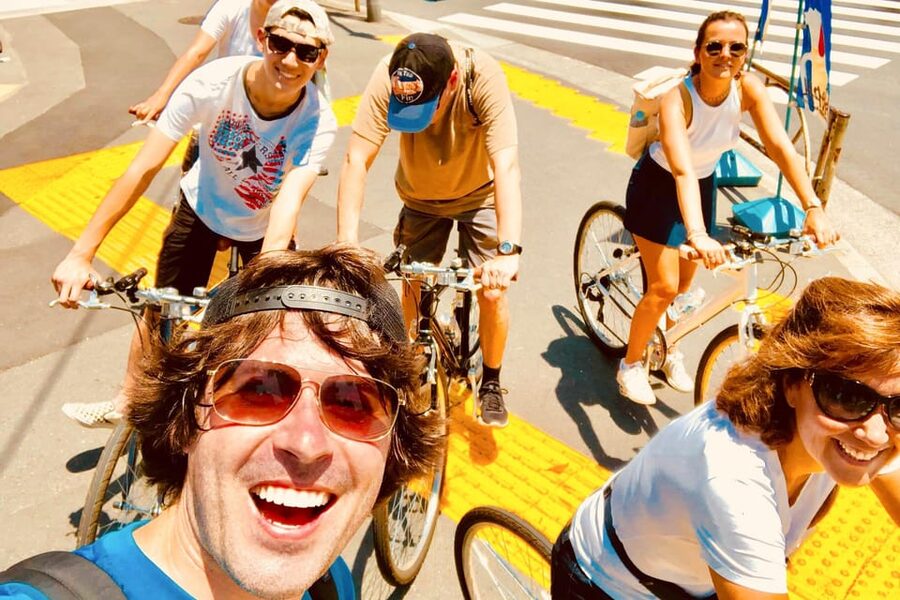
I would recommend it to a first-time Tokyo visitor who wants more than the standard Asakusa photograph. It is also a good fit if you enjoy seeing a city through neighborhoods, bridges, and short local stops rather than spending five hours inside one major attraction.
The tour should suit you if you:
- Are at least 15 years old and taller than 150 centimeters
- Can cycle for several hours at a group pace
- Want a guide to handle the route and explain the setting
- Like a mix of famous sights, local religious places, food, and museum time
- Prefer a small group to a large coach tour
I would think twice if you need a strict vegetarian meal, dislike cycling in city traffic, want a private experience, or prefer to set your own pace. The tour is also not a good choice if arriving late is likely. The group cannot wait, and missing the start means no joining later, refund, or rescheduling.
Free cancellation is available up to 24 hours before the tour, and you can reserve now and pay later. Travel insurance is recommended, especially since weather can affect a cycling activity.
My call: a strong introduction to eastern Tokyo
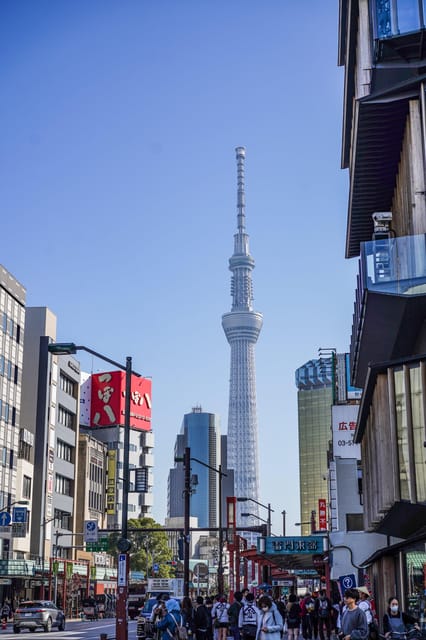
Book this tour if you want a well-packed half-day that connects Asakusa’s famous sights with the less familiar areas of Ryogoku and Fukagawa. The best parts are the river and Skytree views, the contrast between Senso-ji and Fukagawa Fudo-son, and the Edo Museum’s clear picture of older Tokyo. Lunch and admission fees also make the $96 price easier to justify.
Skip it if you want a slow, private temple visit or need broad vegetarian dining choices. For everyone else, the small group, practical route, and guide-led historical context make this a useful way to see Tokyo beyond its main postcard stops.
FAQ
Where does the Tokyo bike tour start?
It starts outside Exit A3 at Asakusabashi Station on the Toei Asakusa Line. A guide waits outside the exit.
Where does the tour finish?
The tour returns to Asakusabashi Station, the same meeting point where it began.
How long does the cycling tour last?
The activity lasts five hours. Starting times vary, so check availability when booking.
What is included in the price?
The $96 price includes the rental bike, English-speaking guide, lunch, Fukagawa Edo Museum entry, and insurance.
Is lunch included for vegetarians?
Lunch is included, but vegetarian choices are limited because many Japanese restaurants are not fully prepared to provide vegetarian menus.
Can children join the tour?
The tour is not suitable for children under 15 years old. Participants must also be taller than 150 centimeters, or about 4 feet 11 inches.
What should I bring?
Bring comfortable shoes. Cycling clothing and shoes are not provided, and you should not bring luggage because it cannot be stored at the rental bike office.
What happens if the weather is bad?
The tour may be cancelled if the weather is unsuitable for safe cycling. The itinerary order can also change because of traffic, weather, or operating conditions.
More Rides with Lunch in Tokyo
- Electric Cycling Tour of Ubud with Free Hotel Transfer and Lunch
★ 5.0 · 1,397 reviews - Bangkok: Bike and Canal Boat Tour with Lunch
★ 4.9 · 1,350 reviews - Cat Ba: Lan Ha, HaLong bay full day- biking, kayaking, lunch
★ 4.8 · 1,166 reviews - Electric Bike Beach Adventure with Tequila Tasting and Lunch
★ 5.0 · 1,162 reviews
Newest rides we have reviewed in Tokyo
- Tokyo: West-Side Cycling and Food Tour with Guide★ 5.0 · 37 reviews
- Tokyo: Private Cycling Tour with cute E-bike★ 5.0 · 11 reviews
- Tokyo: Discover Traditional Tokyo Full-Day Bicycle Tour★ 4.7 · 131 reviews
- Tokyo Bike Tour: Shibuya, Harajuku & Hidden Gems★ 5.0 · 20 reviews
- Tokyo: 2-Hour Night Bike Tour of the City’s Hidden Gems★ 4.9 · 25 reviews
- Tokyo: 3h Private E-bike Tours, Starting at Your Hotel★ 5.0 · 36 reviews
- 3-Hour Tokyo Private E-Bike Tour Starting from Your Hotel★ 5.0 · 117 reviews
- Tokyo: 3-Hour Bike or E-Bike Tour of City’s Hidden Gems★ 4.7 · 81 reviews
Hidden Gems Bike Tours, compared.
Small Group Guided Bike Tour of Amsterdam’s Hidden Gems
Read our review →
Top Highlights & Hidden Gems Tour by Cannondale E-Bike
Read our review →
Barcelona 3-hour Bike or E-Bike Tour: Highlights and Hidden Gems
Read our review →
Other lists this ride turns up in