
REVIEW · CYCLING TOURS
São Paulo: Downtown Historical Bike Tour
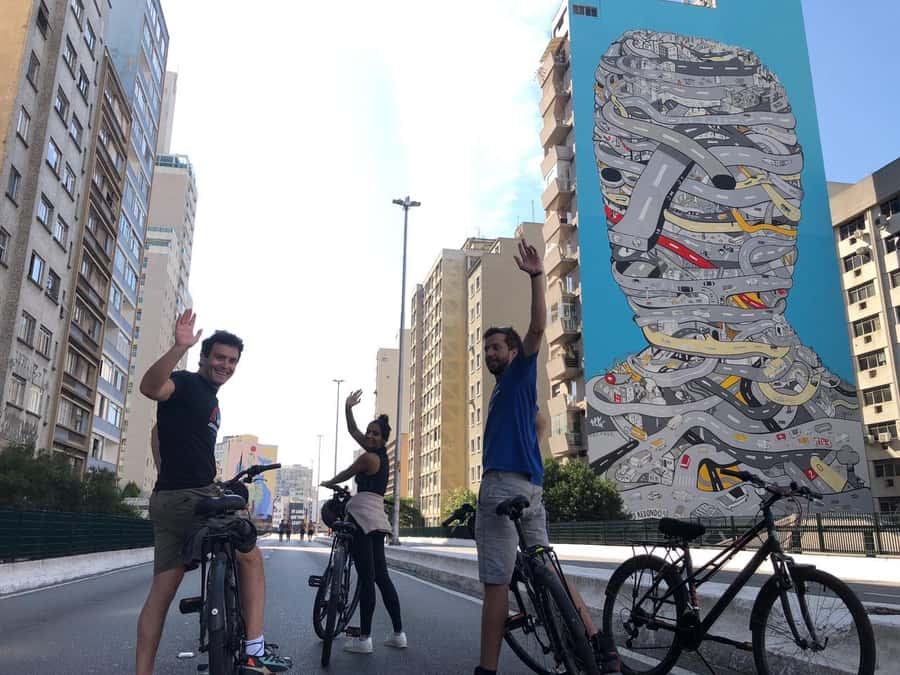
São Paulo reveals itself quickly from a bicycle. In three hours, you can move from the grand sweep of Paulista Avenue to Oscar Niemeyer’s Copan Building, old railway architecture, the birthplace of the city, and the Japanese streets of Liberdade. That range is the tour’s great strength: you see how very different parts of São Paulo fit together.
I like the friendly start at Portinha183 Café, just five minutes from Ana Rosa Station, and I like the small-group format, limited to 10 people. Guides such as Juliana, Arthur, Roberto, Pedro, and Jefferson are praised for making the city’s history easy to follow. The main caution is traffic. Much of the route uses bike lanes, but you still need to ride confidently, watch cars and pedestrians, and handle a few steeper sections.
Key points to know before you ride
- A city-sized route in three hours: Expect roughly 9 to 12 miles through Paulista, central São Paulo, Luz, Sé, and Liberdade.
- A strong first-day activity: The ride gives you a quick sense of the city’s layout before you explore on foot.
- Small groups help: With no more than 10 participants, guides can adjust the pace and check that everyone is keeping up.
- Safety depends on your attention: Bike paths cover much of the route, but busy roads and city crowds remain part of the experience.
- Useful extras are included: You receive a bike, helmet, water bottle, raincoat if needed, iced mate tea, pão de queijo, and a souvenir.
- Sunday may be easier: One rider found cycling more comfortable when São Paulo closed some traffic lanes on Sunday.
Why a bicycle works so well in São Paulo
São Paulo is too large to understand from a car window. Driving between districts can be slow, and walking the complete route would take far longer than the three-hour schedule. A bicycle gives you a middle speed. You cover serious ground, but you can still stop for a façade, a park, a street scene, or a quick explanation from your guide.
That matters here because the tour is not limited to one historic quarter. It links Paulista Avenue, the downtown core, Luz, Sé, and Liberdade. You get parks and museums alongside office towers, churches, viaducts, old railway buildings, and busy public spaces.
The route is also useful for a short stay. If you have only one day in São Paulo, this is an efficient way to see the major central districts. I would place it early in a longer visit, too. It helps you decide where you want to return for more time, such as the Copan area, Pinacoteca, Liberdade, or Paulista Avenue.
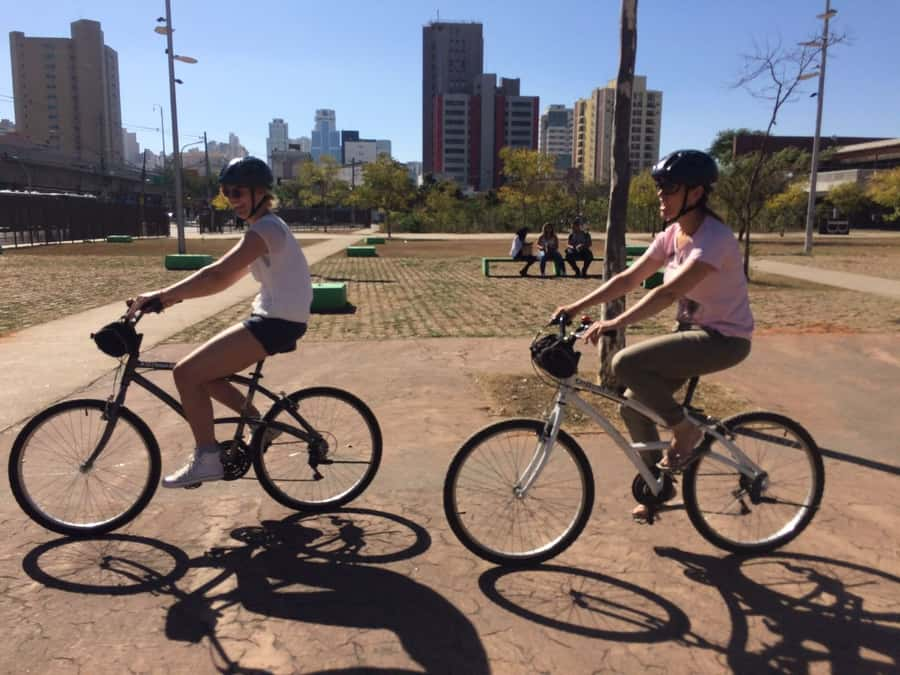
The pace is described as smooth rather than athletic, but this is still a real ride. You should be comfortable cycling in an urban setting and following traffic lights. Children under 13 cannot join, and the operator expects you to manage a distance of about 9 to 12 miles.
More Heritage and Temple Bike Tours in the world:
- Bangkok: Temples, Canals & Local Life Bike Tour
★ 4.9 · 3,511 reviews - Historical Singapore Bike Tour on Full-Sized Bicycles
★ 5.0 · 1,421 reviews - Barcelona: 2.5-Hour Bike or E-Bike Historical Tour
★ 4.5 · 1,262 reviews
Starting with coffee at Portinha183 Café
The meeting point is Portinha183 Café on Rua França Pinto, in Vila Mariana. It is about five minutes from Ana Rosa Station, served by São Paulo’s Blue and Green lines. Arrive 10 minutes before departure so there is time to meet the guide, get fitted with a bike and helmet, and settle in.
The café is more than a pin on a map. You can have Brazilian coffee or juice before riding, and the tour includes iced mate tea and pão de queijo before or after the route. That is a small but welcome touch, especially if you are heading out in warm weather.
The operator provides a bike, helmet, water bottle, and raincoat if needed. Bring sunscreen, comfortable clothes, and a camera or phone if you like taking pictures. Keep your phone secure and use it with care. In a large city, stopping to photograph something should not distract you from traffic or your belongings.
Paulista Avenue, Casa das Rosas, and MASP
The first major stretch leads to Paulista Avenue, São Paulo’s best-known urban corridor. It is a good opening scene because it shows the city’s scale and energy right away. The wide avenue brings together offices, cultural sites, public spaces, and heavy movement.
You stop at Casa das Rosas, a preserved French-style mansion now used as a cultural center. Its older residential character provides a useful contrast with the towers and traffic around it. The route also includes Trianon Park, a patch of green in the center of the avenue, and Augusta Park, another urban space where nature and city life meet.
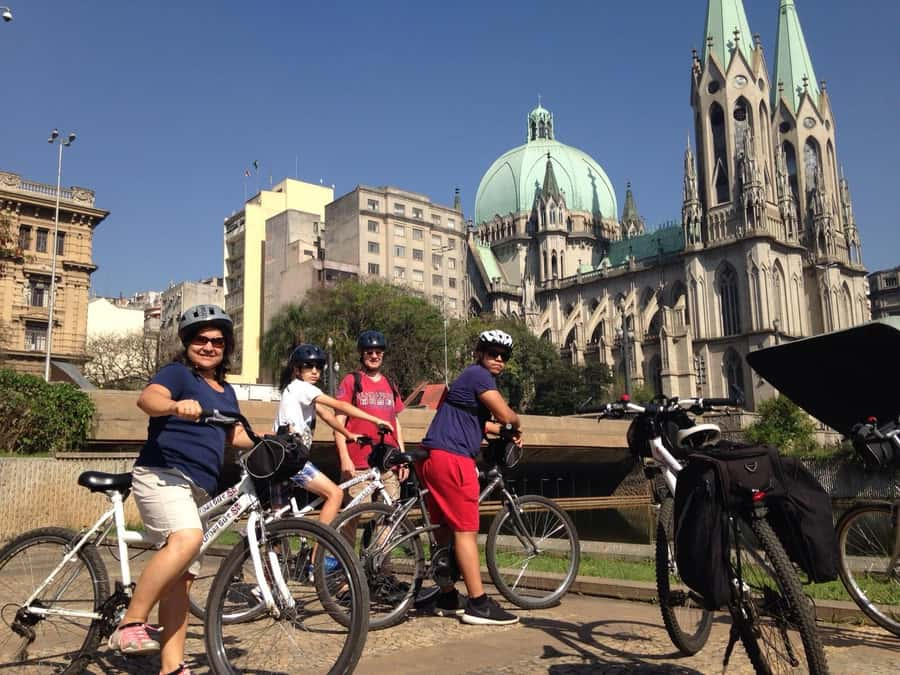
The São Paulo Museum of Art, better known as MASP, is one of the main photo stops. Its bold structure is hard to miss, and the building is as important to the view as the collection inside. This tour stops to admire the exterior rather than taking you through the museum galleries, so plan a separate visit if you want to see the art.
I like this opening because it gives you several versions of São Paulo in a short distance: grand avenue, old mansion, public park, modern art institution, and neighborhood green space. The drawback is that Paulista can be busy, so you may spend some of your attention watching the road instead of studying every building.
Copan Building and the modern center
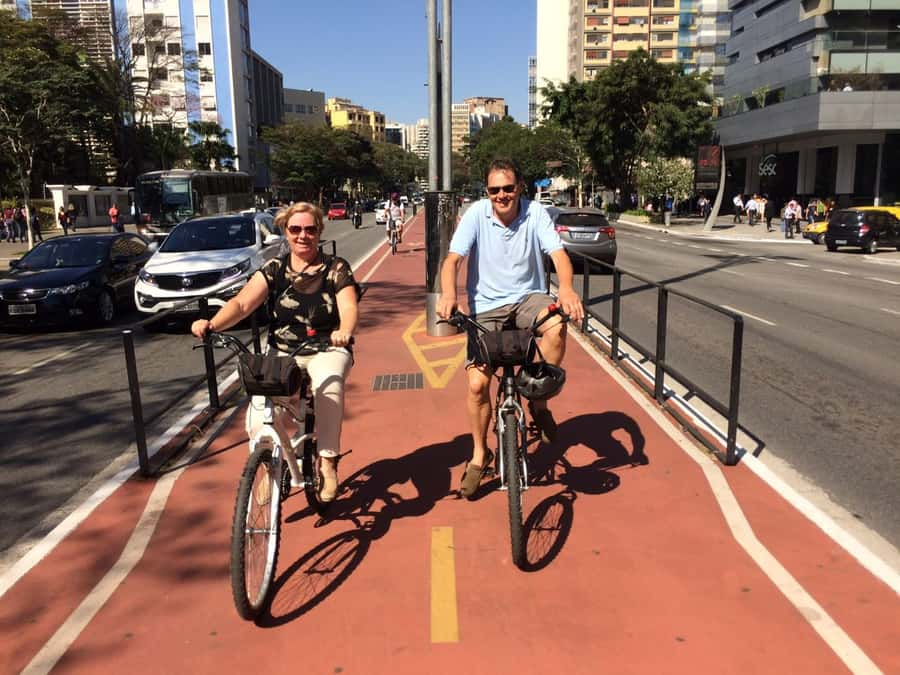
From Paulista, the route heads downtown to the Copan Building, one of Oscar Niemeyer’s best-known São Paulo designs. Its sweeping modernist form is a sharp change from Casa das Rosas and the older monuments later in the ride.
The Copan stop is not just a quick architecture photograph. It helps explain São Paulo’s twentieth-century growth and the way large residential buildings reshaped the central city. One rider returned to the Copan area later, which makes sense. The building and its surroundings reward a slower look than the schedule allows.
The guide’s storytelling is especially useful here. Pedro has been praised for connecting buildings and parks with major periods in the city’s economic development. That sort of context keeps the route from becoming a string of disconnected photo stops.
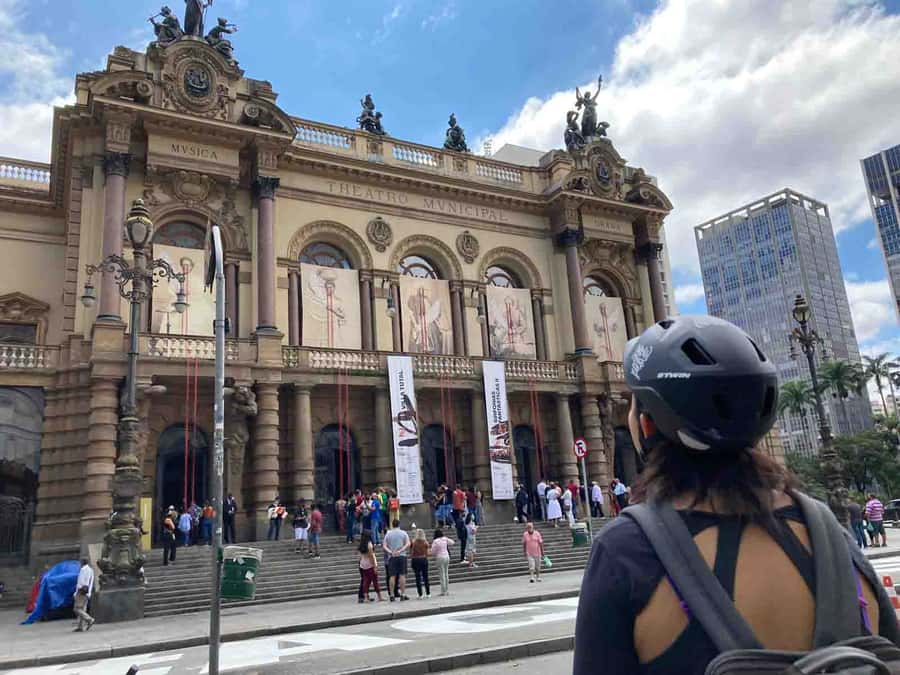
The Municipal Theater and Praça Ramos de Azevedo bring a different mood. The theater draws on European architectural traditions, while the square gives you a good place to pause and take in its façade. You are seeing a city that borrowed, adapted, and rebuilt on a huge scale. The central area can also feel crowded and intense, so keep close to the group when the bikes are stopped.
More Cycling Trips in the world:
- Lion City Bike Tour of Singapore
★ 5.0 · 6,211 reviews - Big Bike tour Amsterdam – See all in 3 unforgettable hours
★ 4.7 · 4,929 reviews - 3-Hour Porto Highlights on a Electric Bike Guided Tour
★ 5.0 · 4,392 reviews - Ninh Binh Full-Day Tour from Hanoi to Hoa Lu, Tam Coc & Mua Cave Via Boat & Bike
★ 5.0 · 4,384 reviews
Vale do Anhangabaú and the city’s public life
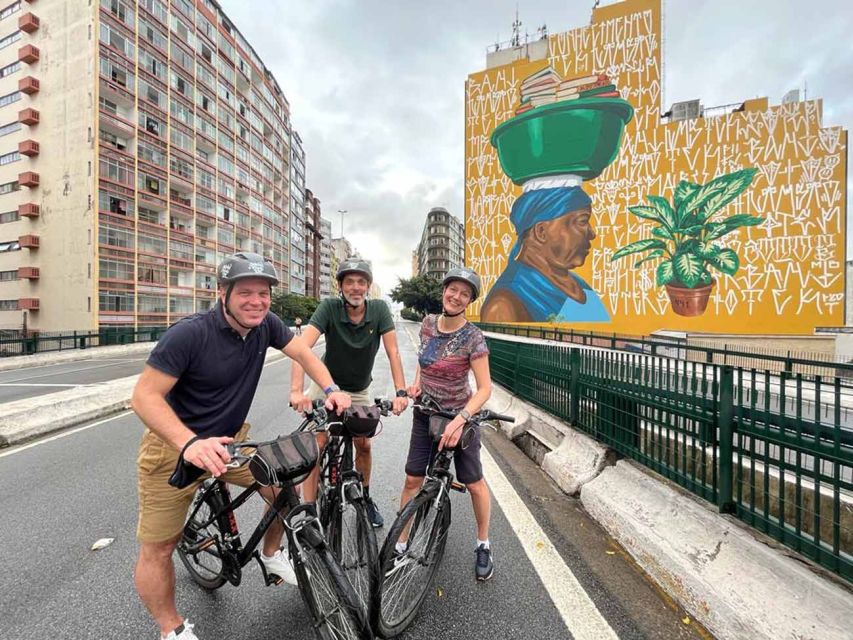
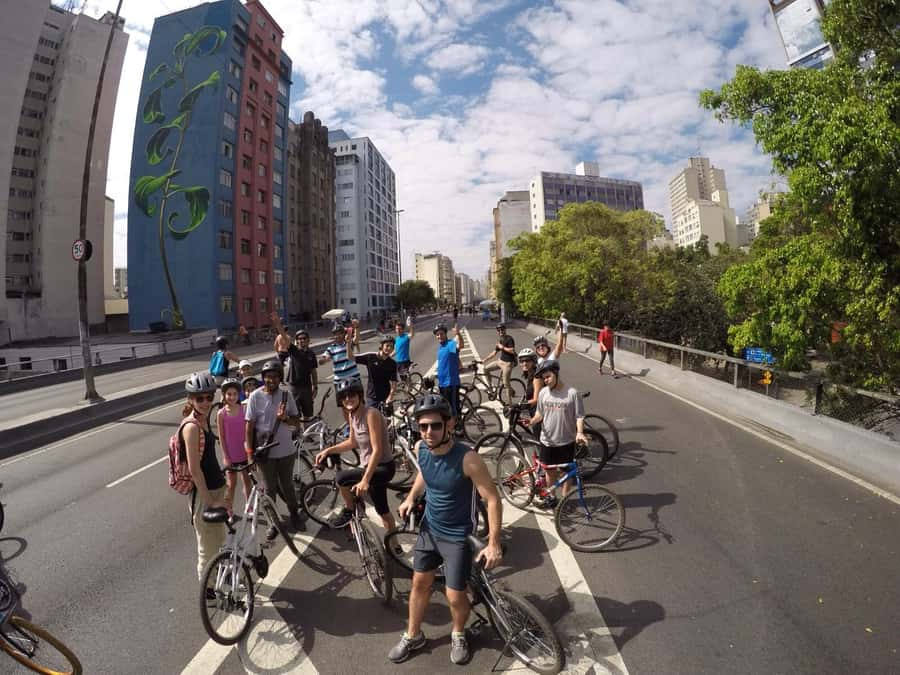
Vale do Anhangabaú is a broad historic public space with an important role in São Paulo’s political and cultural life. It is one of the places where the tour connects architecture with events rather than treating buildings as isolated objects.
Your guide may also help you understand the sharper contrasts of central São Paulo. Downtown includes grand civic buildings and public spaces, but it also exposes poverty and social inequality. Jefferson was praised for explaining the difficult parts of Brazil’s colonial legacy and present-day society without turning the city into a postcard.
That is a real benefit of a local guide. You are not asked to ignore what you see, and you are not left to draw quick conclusions from a passing view. At the same time, this is a moving bike tour, not a long social history class. Explanations need to fit around traffic, stopping points, and the three-hour limit.
Luz Station, Pinacoteca, and Luz Park
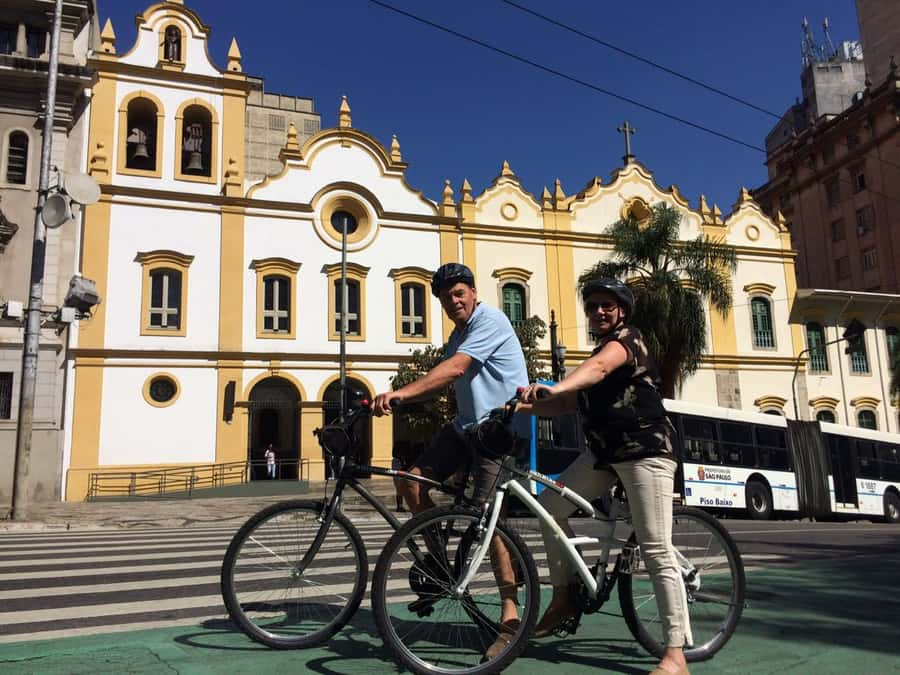
The route then moves toward Luz, where the city’s past becomes especially visible. Luz Station is a striking nineteenth-century railway building and one of the route’s strongest architectural stops. Its presence points to the rail network that helped São Paulo grow into a major commercial center.
Nearby, the Pinacoteca is one of Brazil’s leading art museums. The tour allows a short stop and exterior orientation, but it does not provide time for a full museum visit. If Brazilian art matters to you, return later when you can enter without watching the clock.
Luz Park offers a quieter pause after the streets around the station and museum. It is a useful reset before the group crosses the Santa Ifigênia Viaduct. The viaduct is one of the best points for broad views toward the historic center, and it gives you a chance to see how the old core sits within the much larger city.
This part of the route is a good example of the tour’s value. You are not simply ticking off famous façades. You are moving through transport history, public art, green space, and city views in one connected section.
Pátio do Colégio and Sé Cathedral
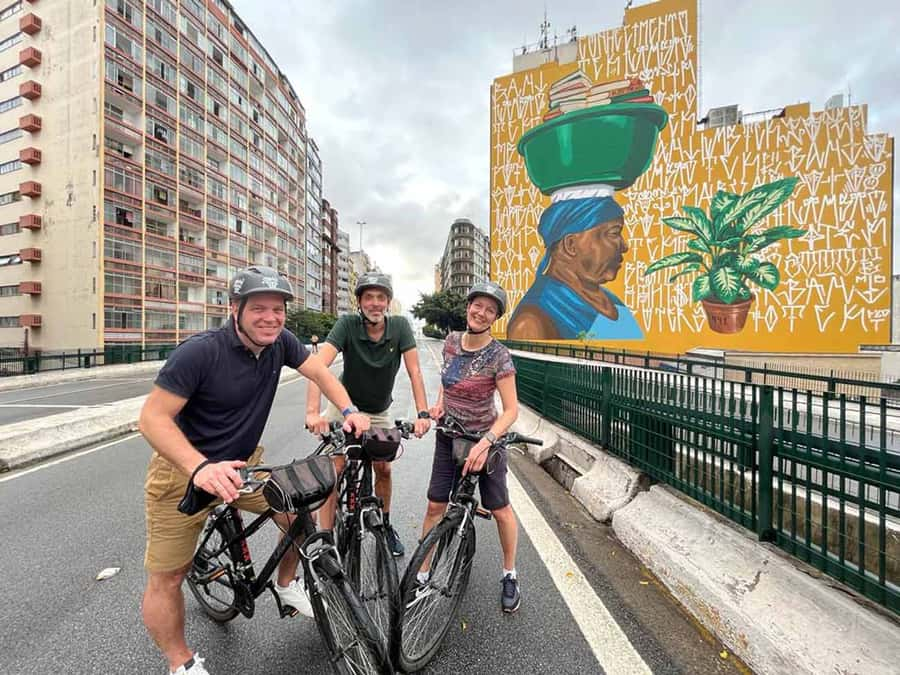
Pátio do Colégio marks the place where São Paulo was founded in 1554. It is the clearest point on the ride for understanding the city’s earliest colonial roots. After the broad avenues and modern towers, this stop takes you back to the beginning of the settlement.
A short distance away, Sé Cathedral brings a different kind of scale. Its neo-Gothic design includes large stained-glass windows and tall interior columns. The tour includes a photo stop, so you should not expect a long guided visit inside. Still, the cathedral makes a strong visual finish to the historic-center section.
This is where a good guide earns the fee. Arthur is praised for sharing his pride in Brazil while explaining the past in clear English, and guides including Roberto, Juliana, and Lucas have been singled out for patient, engaging explanations. Language support is available in English, Spanish, and Portuguese.
The center can feel confronting. You may encounter poverty, crowded sidewalks, and a level of street activity that feels very different from Paulista Avenue. Keep your phone and camera secure, follow the guide’s instructions, and stay with the group. The tour gives you a more honest view of São Paulo, but it does not remove the need for ordinary big-city awareness.
Liberdade and a taste of São Paulo’s immigrant story
Liberdade is one of the most memorable stops because its identity is immediately visible. Lanterns, torii gates, and Japanese cultural signs give the neighborhood a distinct appearance, while Brazilian life continues all around it.
The area is home to the largest Japanese community outside Japan, and the tour uses it to show how immigration shaped São Paulo. This is not a detached cultural display. It is a working neighborhood with food, shops, streets, and local routines.
You receive time for photographs, and the route may include local snacks. The tour also provides pão de queijo and iced mate tea at the café, while past versions of the experience have included treats such as sugarcane juice and fresh coconut. The exact snack timing can vary, so think of it as a pleasant taste of the city rather than a full food tour.
Liberdade is a strong reason to bring a camera, but busy streets make it important to stop safely and avoid blocking pedestrians. If you like the area, note what catches your eye and return later on foot. A bicycle gives you the overview; walking gives you the details.
How safe and demanding is the ride?
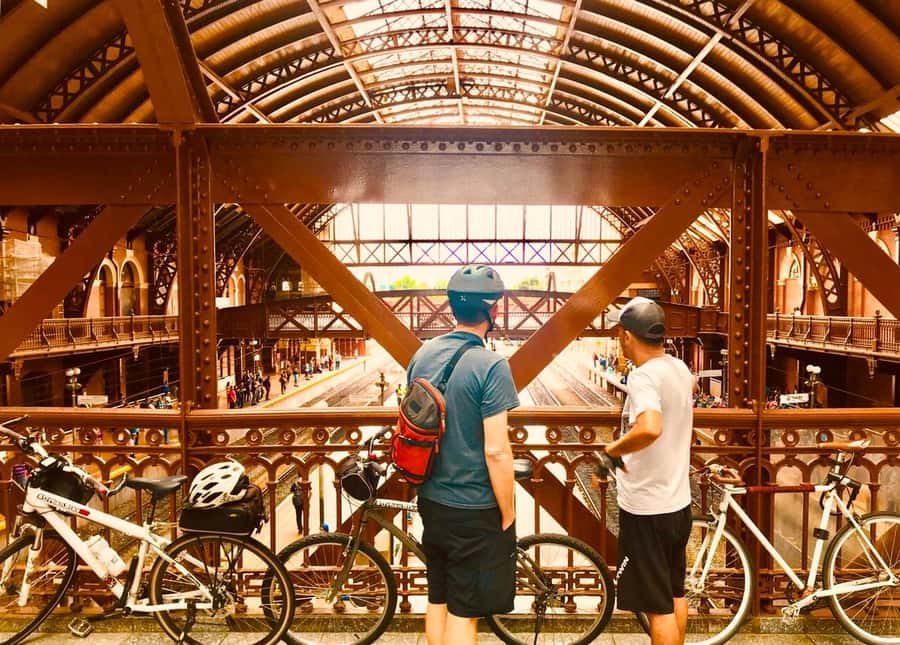
Safety is one of the most important factors in deciding if this tour suits you. Several guides have been praised for managing traffic, checking the back of the group, taking photos without leaving riders unattended, and adjusting the speed to match the group.
Much of the route uses bicycle paths, and the ride is generally described as manageable rather than fast. Still, one participant specifically warned that some sections include busy roads and pedestrians. Another noted that parts of the route can be steep depending on your cycling experience.
The practical advice is simple:
- Ride only if you are comfortable on a bicycle.
- Follow traffic lights and the guide’s signals.
- Stay aware when bike paths cross roads or crowded areas.
- Wear sunscreen and clothing that lets you move freely.
- Consider a morning departure for cooler conditions.
- If your schedule allows, Sunday may offer more room when some lanes close to cars.
Weather can change. One ride began with rain showers and ended in 32 C heat, which is why the included raincoat can matter. São Paulo’s conditions are not always predictable, so carry water and accept that the route may feel more physical than a sightseeing bus.
What the $85 price buys you
At $85 per person, this is not the cheapest way to see São Paulo. The value comes from the amount of ground covered, the small group, the guide’s local interpretation, the equipment, and the time saved connecting distant districts.
You are not paying only for a bicycle. You receive a helmet, water bottle, rain protection if needed, a guide, a souvenir, and café refreshments. The group limit of 10 is important because it allows the guide to keep an eye on the back of the line and answer questions without turning the ride into a large convoy.
The tour makes the best financial sense for a first visit, a short business trip, or a solo stay when you want company and orientation. If you already know central São Paulo well, or if you want long museum visits, the price may feel less attractive. This is a broad introduction, not a deep visit to MASP, Pinacoteca, or the Municipal Theater.
Free cancellation up to 24 hours before departure and the option to reserve without paying immediately add useful flexibility. Check the available starting time when booking, since the three-hour schedule and weather can affect how comfortable the ride feels.
Who should book this São Paulo bike tour?
I would choose this for a confident cyclist who wants a quick, thoughtful introduction to the city. It works especially well for solo visitors, couples, small groups, business visitors with limited free time, and anyone who wants to combine exercise with sightseeing.
You should skip it if you cannot ride a bicycle, dislike urban traffic, or want to spend most of your day inside museums. The tour moves at a practical pace, but you will not linger at every stop.
For the best experience, book it near the start of your stay, wear sunscreen, arrive early at Portinha183, and consider a morning or Sunday departure. Guides such as Juliana, Arthur, Roberto, Pedro, Jefferson, and Lucas have all been praised for warmth, patience, history, and traffic support. The exact guide depends on the date, but the operator offers English, Spanish, and Portuguese.
Should you book it?
Book this tour if you want one active route through many sides of São Paulo and are comfortable riding in city traffic. Its best qualities are the wide coverage, strong local storytelling, small group, and mix of landmarks, parks, art districts, and immigrant neighborhoods.
Do not book it expecting a slow museum tour or a completely traffic-free ride. You will need alertness, stamina, and a willingness to see both the impressive and difficult parts of central São Paulo. For the right cyclist, the $85 fee buys a useful first map of a huge city, plus enough ideas for the rest of your visit.
FAQ
How long is the São Paulo Downtown Historical Bike Tour?
The tour lasts three hours and covers approximately 9 to 12 miles.
Where does the tour begin and end?
It begins and ends at Portinha183 Café, Rua França Pinto, 183, in Vila Mariana. The café is about five minutes from Ana Rosa Subway Station on the Blue and Green lines.
What languages are available?
Live guides are available in English, Spanish, and Portuguese.
Is bicycle experience required?
Yes. You must know how to ride a bicycle. The route includes bike paths but also busy roads, pedestrians, traffic lights, and some sections that may feel steep.
What is included in the price?
The price includes the bicycle, helmet, water bottle, raincoat if needed, guide, souvenir, iced mate tea, and pão de queijo.
Can children join the tour?
Children under 13 are not permitted to participate.
Newest rides we have reviewed in the world
- 1 Day Bike Tour to Hell’s Gate And Lake Naivasha★ 5.0 · 14 reviews
- Afternoon Adventure: Okinawa Local Cycling with Spectacular Views★ 5.0 · 92 reviews
- Zodiac Shrines and Naha Backstreets Cycling Tour★ 5.0 · 29 reviews
- PANORAMA TOUR OF NANTES by electric bike★ 5.0 · 33 reviews
- Guided E-bike Tour★ 5.0 · 33 reviews
- Authentic Mykonos bike tour★ 5.0 · 23 reviews
- Private Munich Bike Tour: Flexible Times & Beer Garden Stop★ 5.0 · 15 reviews
- Mini Classic Bike Tour @ 4pm incl. Beer Garden & Surfers 2,5 hrs★ 5.0 · 251 reviews
Heritage and Temple Bike Tours, compared.
Historical Singapore Bike Tour on Full-Sized Bicycles
Read our review →
Night Bike Tour with Temples & Flower Market Visit
Read our review →
Intramuros, Manila: Historical Bamboo Bike Tour
Read our review →
Historical Bike Tour of Savannah and Keep Bikes After Tour
Read our review →Other lists this ride turns up in