
REVIEW · TOKYO
Tokyo Guided Small-Group Biking Tour
Tokyo is easier to understand from a bicycle seat. This 20-mile route links quiet residential lanes, major shrines, shopping districts, Tokyo Bay, and the Imperial Palace in one long day. I like the small groups of up to five and the way guide Gaku mixes famous sights with local streets. I also like the final view from the Tokyo Metropolitan Government Building, which helps you see how far you have ridden.
The main catch is the distance. This is not a gentle sightseeing spin on a cruiser bike. You need to handle a geared city bicycle on busy roads, steer around pedestrians, and stay active for about six and a half hours. Lunch is bought at your own cost and carried in your backpack, so plan for a full day outdoors.
Key points to know before booking
- About 20 miles of riding: The route covers roughly 32 kilometers, with little elevation gain but plenty of city riding.
- A true small-group outing: The maximum is five people, giving the guide room to adjust the pace and answer questions.
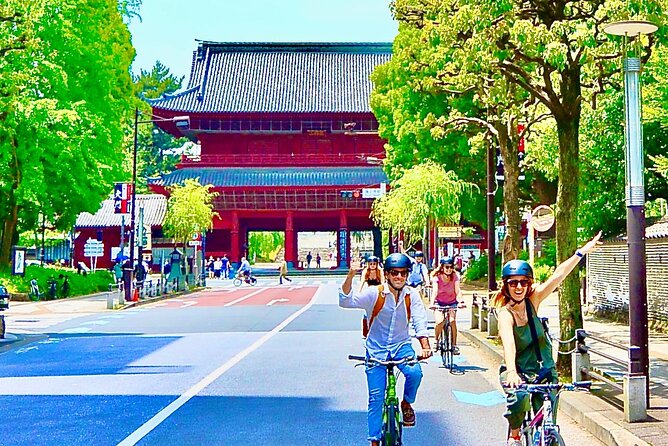
- A wide Tokyo sampler: You visit Meiji Jingu, Yoyogi Park, Omotesando, Roppongi Hills, Zōjō-ji, Tokyo Bay, Ginza, and the Imperial Palace.
- Local lunch stop: You choose a bento box at a supermarket, then carry it to the waterfront for lunch.
- Regular city bikes: The bikes have flat handlebars and multiple gears. They are not electric bikes or beach cruisers.
- Best for active sightseers: A moderate fitness level, city cycling confidence, and a rider height between 125 and 190 centimeters are required.
Why a bicycle works so well in Tokyo
Tokyo is huge, but its main sights are spread across very different neighborhoods. On foot, you can spend much of a day moving between only two or three areas. Public transportation is efficient, yet trains take you below the city and often leave you with a walk at either end.
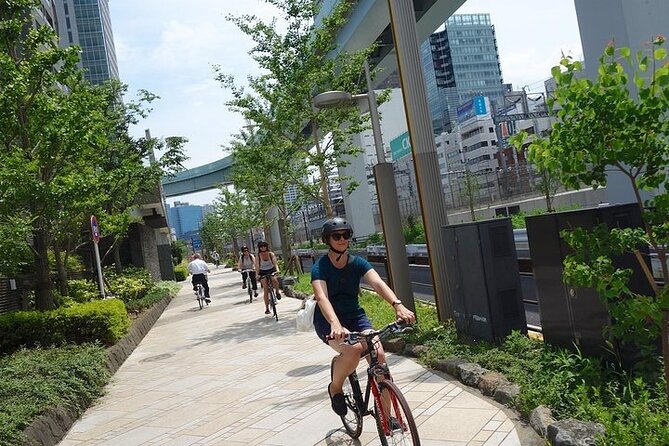
A bicycle fills that gap. You cover long distances while still seeing the small details between major stops: narrow residential lanes, pocket shrines, side streets, cemeteries, shopfronts, and the changing scale of Tokyo’s neighborhoods. I like that this route is not limited to postcard attractions. It gives you a sense of how the city shifts from skyscrapers to old temple grounds within a few blocks.
The group size matters, too. With no more than five people, the ride can stay together more easily than a large cycling group. Guide Gaku is frequently named as a warm, attentive leader who explains the route before each section and helps the group manage busy streets. The guide also takes photos and adjusts stops when the schedule allows.
This is still city cycling, not a protected park ride. You should be comfortable with gears, steering, stopping, and riding near traffic. Tokyo is generally orderly, but its roads can be crowded, and you need to follow the guide closely.
More Small-Group Bike Tours in Japan:
- Small Group Guided Bike Tour of Amsterdam’s Hidden Gems
★ 5.0 · 3,936 reviews - Rome City Small Group Bike Tour with quality Cannondale EBike
★ 5.0 · 1,380 reviews - Complete Cracow Bike Tour (small group of maximum 15 people!)
★ 5.0 · 1,322 reviews
Starting beneath the Shinjuku skyscrapers
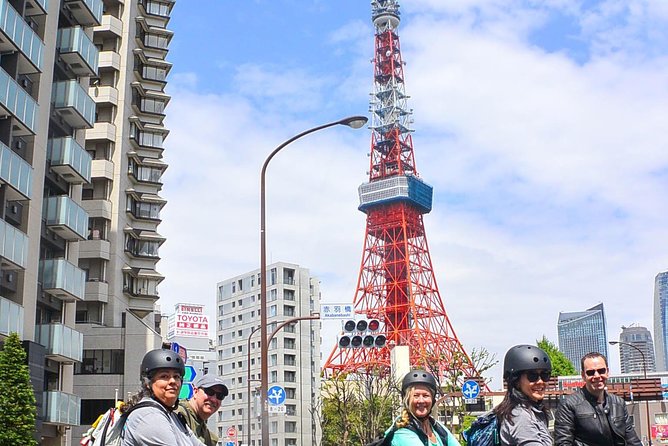
The meeting point is at 3-chōme-20-2 Nishishinjuku, in Shinjuku City. You begin near one of Tokyo’s most recognizable concentrations of tall buildings, then quickly leave the biggest streets for quieter back roads.
That change of scene is one of the most useful parts of the morning. You get the scale of modern Shinjuku, then see a smaller local shrine in a residential area. The contrast is immediate: office towers nearby, traditional worship space tucked into an everyday neighborhood.
The ride begins at a relaxed pace, but do not confuse relaxed with effortless. You will be on the bicycle for much of the day, and the total distance is substantial. The route has little elevation gain, which helps, but traffic awareness matters more than hill climbing.
Meiji Jingu and Yoyogi Park
From the residential lanes, the route continues toward Yoyogi Park and Meiji Jingu. Yoyogi Park adds open space and a welcome break from Tokyo’s hard surfaces. In spring, cherry blossoms add seasonal color, while weekends can bring more local activity.
Meiji Jingu is Tokyo’s most famous Shinto shrine and one of the tour’s main cultural stops. You leave the bikes and walk through the peaceful grounds with your guide. That walking section is important because the shrine is not something to rush through between cycling stops. The guide can explain customs and point out details that are easy to miss when you visit alone.
The park and shrine also provide a useful pause early in the day. You have already ridden through busy streets, and this section gives your legs a rest before the route returns to central Tokyo.
Omotesando, Roppongi Hills, and an old Tokyo cemetery
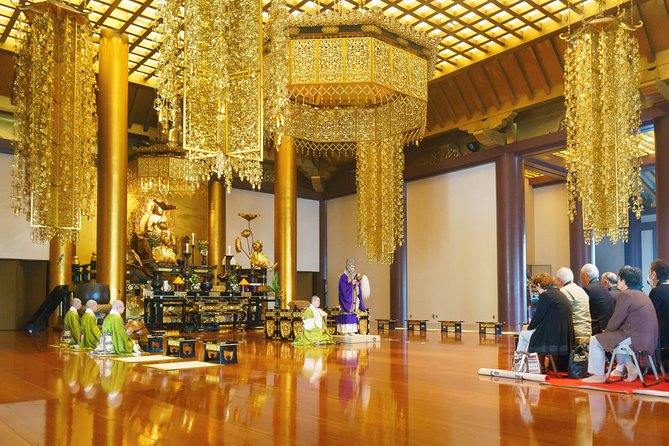
Next comes Omotesando, one of the city’s most polished shopping streets. The broad main road is lined with high-end stores and modern architecture, making it a sharp contrast to the small shrine and park you have just left.
The route then heads toward Roppongi Hills, a major entertainment and shopping complex. You do not spend the whole day inside commercial districts, though. A back street leads to Aoyama Cemetery, where the mood changes again.
Aoyama Cemetery is a striking stop because it feels far removed from the sleek storefronts of Omotesando. Its quiet lanes and older atmosphere offer a glimpse of Tokyo from another era. I like this switch between polished commercial Tokyo and a place that feels calm and historic. It is also the kind of stop that is difficult to fit into a standard coach itinerary.
More Guided Rides in Japan:
- Tokyo Top Highlights 3h Guided E-bike Tour
★ 5.0 · 714 reviews - 3h Tokyo E-Bike Tour: Hidden Gems, and Local Life with guide
★ 5.0 · 670 reviews - Hiroshima 2hr Peace Cycling Tour with Local Guide
★ 5.0 · 321 reviews - Hiroshima: Peace Cycling Tour with Local Guide
★ 4.8 · 286 reviews
Buying a bento and riding to Tokyo Bay
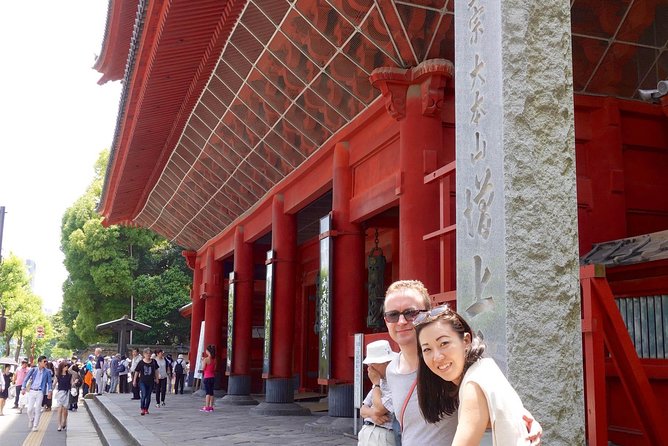
Lunch is part of the local rhythm rather than a restaurant reservation. You stop at a supermarket and select a bento box at your own expense. The food goes into your backpack, so choose something easy to carry and keep the bag secure while riding.
The group then cycles for about 25 minutes to the waterfront. You eat beside Rainbow Bridge, with views toward Tokyo’s skyline and the Aqua City Odaiba complex. The waterfront setting gives you a broad view after several hours spent among streets and buildings.
This lunch arrangement keeps the tour flexible and affordable, but it is not a full-service meal. You are choosing from supermarket food, carrying it yourself, and eating outdoors. That will suit you if you like an informal break and a local shopping experience. If you want a long, seated restaurant lunch, this is not that kind of tour.
The bay section also gives you time to recover. After lunch, you still have several major areas ahead, including Ginza and the Imperial Palace, so use the stop to eat, drink, and reset.
Ginza and the Imperial Palace moat
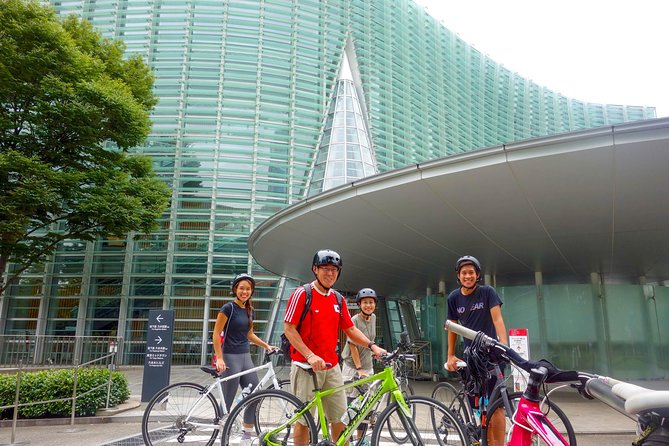
After the waterfront, you ride through Ginza. This is one of Tokyo’s most exclusive shopping districts, with major department stores, luxury brands, and large avenues. The route includes both main streets and smaller roads, so you see the district as more than a shopping destination.
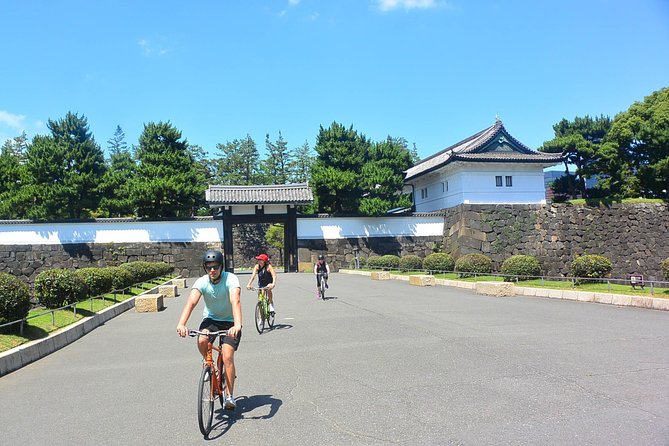
The Imperial Palace is the next major landmark. The ride passes through two outer gates and follows sections of the large moat. You also see traditional garden space, a tea pavilion, stone walls, and water defenses associated with the palace grounds.
The palace area brings together several themes from the day: old and new Tokyo, formal public spaces, and the city’s ability to preserve historic features beside dense development. You should not expect a full palace interior visit. The attraction here is the exterior setting, gardens, gates, walls, and moat.
By this point, the value of the bicycle becomes clear. You have moved from Shinjuku to the shrine district, the bay, Ginza, and the palace without spending the day changing trains. The cost is physical effort, but the reward is a much broader view of Tokyo.
Finishing at the Tokyo Metropolitan Government Building
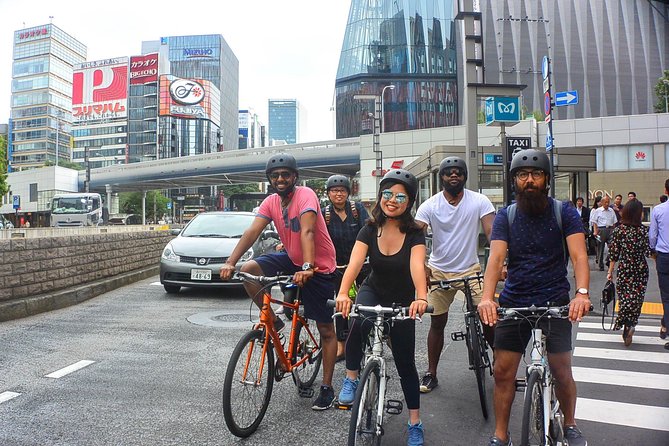
The route returns to Shinjuku and ends with a high-speed elevator ride to the top of the 48-story Tokyo Metropolitan Government Building. From the observation level, you get a 360-degree view across the city.
This is a smart final stop. At ground level, Tokyo can feel like a series of separate neighborhoods. From above, you can connect the places you visited during the day. You may see Tokyo Skytree, and on a clear day, Mt. Fuji is also visible.
The view is more than a closing photo opportunity. It gives you a sense of the distance covered by bicycle and helps put Tokyo’s size into perspective. Afterward, it is only about a five-minute ride back to the original meeting point.
How hard is the 20-mile ride?
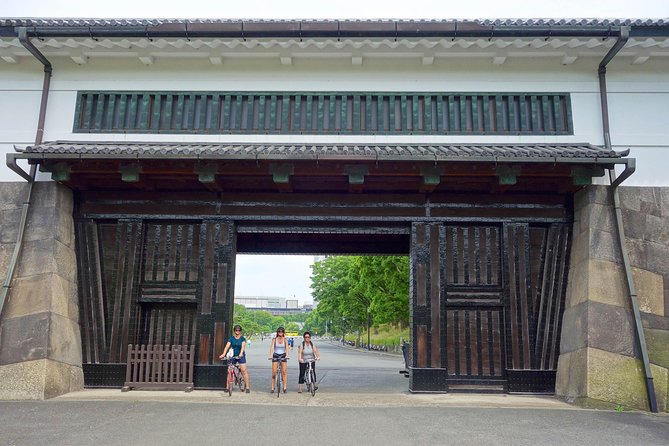
The tour is described as moderately active, and that is the right way to read it. The route is mostly flat, so you are not battling sustained climbs. Still, 32 kilometers is a serious distance for anyone who does not ride regularly.
You should be comfortable with:
- Riding a multi-speed bike
- Using a flat-handlebar city bicycle
- Cycling on busy roads
- Steering around pedestrians
- Staying with a group for a full day
- Carrying lunch in a backpack or messenger bag
The bike is a cross-city model, not a cruiser with a high riser handlebar. It is also not an e-bike, so you provide the power for every section. Several riders found the pace manageable because of the frequent stops and minimal hills, but the day can still feel tiring.
Wear comfortable clothing and shoes. Bring water, sun protection, and a small bag that will not shift while riding. The provider asks for your height at booking because proper bike fit is required. Riders must be between 125 and 190 centimeters tall, and the listed minimum age is 12, with a maximum age of 69. Identification may be requested for age verification.
What you get for $106.12
At $106.12 per person, this is not the cheapest way to see Tokyo. You are paying for roughly six and a half hours, a professional guide, bicycle and helmet rental, route planning, and the ability to cover a large part of the city in one day.
The value is strongest if you have limited time in Tokyo or want an orientation early in your stay. You see major landmarks, but you also learn how the neighborhoods connect. A train-based day could cost less, yet it would require more planning and would not give you the same view of the streets between destinations.
Lunch and drinks are extra. You also need to make your own way to the meeting point, since hotel pickup and drop-off are not included. The small group helps justify the price, particularly if your group ends up with only a few riders. In some cases, cancellations by other participants can turn the outing into a very small private-style tour, though that is not guaranteed.
Who should book this Tokyo bike tour?
I would choose this tour if you want a broad first look at Tokyo and enjoy active sightseeing. It works especially well for people who want major landmarks but also care about ordinary streets, neighborhood shrines, local shopping, and the feel of the city between attractions.
It is also a good fit if you are staying in Tokyo for only a few days. The route gives you useful orientation, and you can return to favorite neighborhoods later by train or on foot.
Families with older children may enjoy it, provided everyone meets the age, height, and cycling requirements. Couples and solo riders also benefit from the small group. The route is social, but the limited number of participants keeps it from feeling like a mass outing.
I would skip it if you dislike riding near traffic, need an e-bike, or prefer a slow tour with long stops. The day is active, and the schedule has a lot to cover. Hot weather or rain can also lead to cancellation, with a different date or full refund offered if the provider calls it off.
Booking and cancellation details
You receive a mobile ticket, and confirmation is sent within 48 hours, subject to availability. The tour runs near public transportation, but there is no hotel transfer.
Free cancellation is available up to 24 hours before the start time. A cancellation made within 24 hours is not refunded, and late changes are not accepted. Because the ride depends on safe conditions, the provider may cancel for rain, a heatwave, or similar weather. The guide is scheduled to email you by 7 a.m. on the morning of the tour if the ride is canceled.
My call: book it if you want Tokyo in motion
I recommend this tour to an active visitor who wants to cover a lot without losing contact with the street. The strongest features are the five-person maximum, the route’s mix of famous places and quiet corners, Gaku’s attentive guiding, and the final city view from above.
Just treat the distance honestly. This is a 20-mile city ride on a regular bicycle, not a casual pedal between attractions. If you can handle busy roads and a full day of movement, $106.12 buys a useful, memorable introduction to Tokyo. If you want comfort first, choose a walking or vehicle-based tour instead.
FAQ
How long is the Tokyo biking tour?
The tour lasts approximately 6 hours and 30 minutes, including cycling, sightseeing stops, lunch, and the final city view.
How far do you ride?
The total route is about 20 miles, or 32 kilometers. The route has minimal elevation gain but includes riding on busy city roads.
What sights are included?
The route includes a local neighborhood shrine, Yoyogi Park, Meiji Jingu Shrine, Omotesando, Roppongi Hills, Aoyama Cemetery, Zōjō-ji Temple, Tokyo Bay, Ginza, the Imperial Palace area, and the Tokyo Metropolitan Government Building.
Is lunch included in the price?
No. You buy a bento box at a local supermarket at your own expense, carry it in your backpack, and eat it on the waterfront near Rainbow Bridge.
Are the bicycles electric bikes?
No. The tour uses cross-city bicycles with flat handlebars and multiple gears. They are not e-bikes or cruiser bikes.
What fitness level do I need?
You need a moderate level of fitness and must be comfortable riding about 20 miles on busy roads. You should also know how to ride a multi-speed bicycle and steer around pedestrians.
What are the age and height requirements?
The minimum age is 12 and the maximum age is 69. Riders must be between 125 and 190 centimeters tall so the bicycle can be fitted safely.
Newest rides we have reviewed in Japan
- Best of Kyoto: Ginkakuji & Path of Philosophy E-Bike Tour★ 4.9 · 79 reviews
- Kyoto: Tailored E-Bike Tour to Highlights & Hidden Gems★ 4.9 · 32 reviews
- Kyoto: Half-day Guided Bike Tour with Fushimi Inari★ 4.9 · 21 reviews
- Kyoto: Full Day Bike Tour★ 4.9 · 39 reviews
- Kyoto: Early Bird E-Bike Tour with Lunch★ 5.0 · 14 reviews
- Kyoto: Full-Day City Highlights Bike Tour with Light Lunch★ 5.0 · 52 reviews
- Kanazawa Half Day E-bike Tour★ 5.0 · 81 reviews
- Hiroshima: Best of Hiroshima Guided Bike Tour★ 4.9 · 89 reviews
Small-Group Bike Tours, compared.
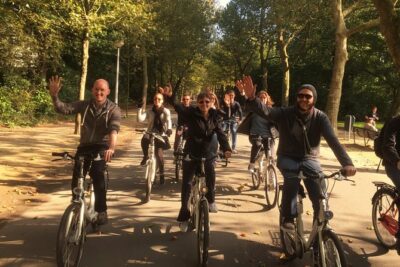
Small Group Guided Bike Tour of Amsterdam’s Hidden Gems
Read our review →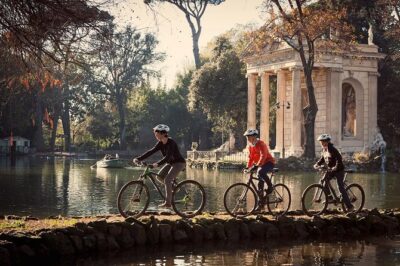
Rome City Small Group Bike Tour with quality Cannondale EBike
Read our review →
Complete Cracow Bike Tour (small group of maximum 15 people!)
Read our review →
Rome by Night – Ebike Small Group Tour – Food and Wine (Option)
Read our review →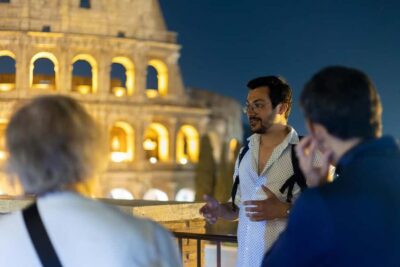
Rome by Night: E-bike Small Group Tour -Food & Wine (Option)
Read our review →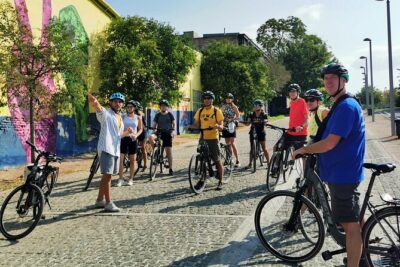
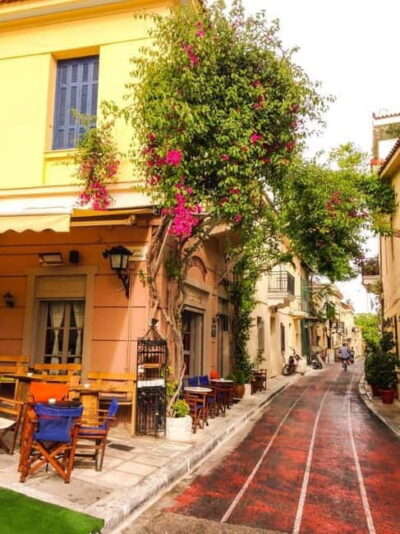
Historic Athens: Small Group Electric Bike Tour
Read our review →
Other lists this ride turns up in