REVIEW · HIDDEN GEMS BIKE TOURS IN TOKYO
Tokyo: 3-hour Guided E-Bike Tour of the City’s Hidden Gems
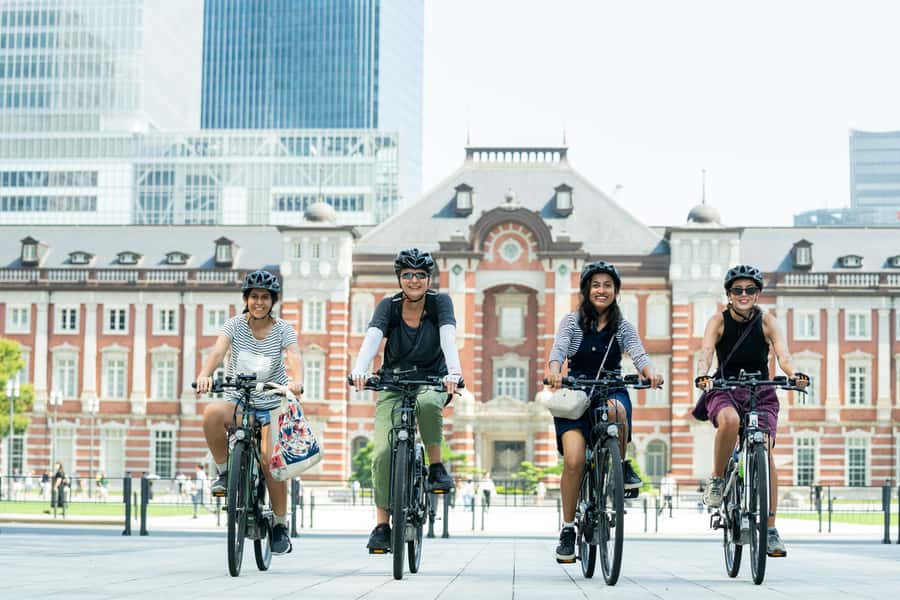
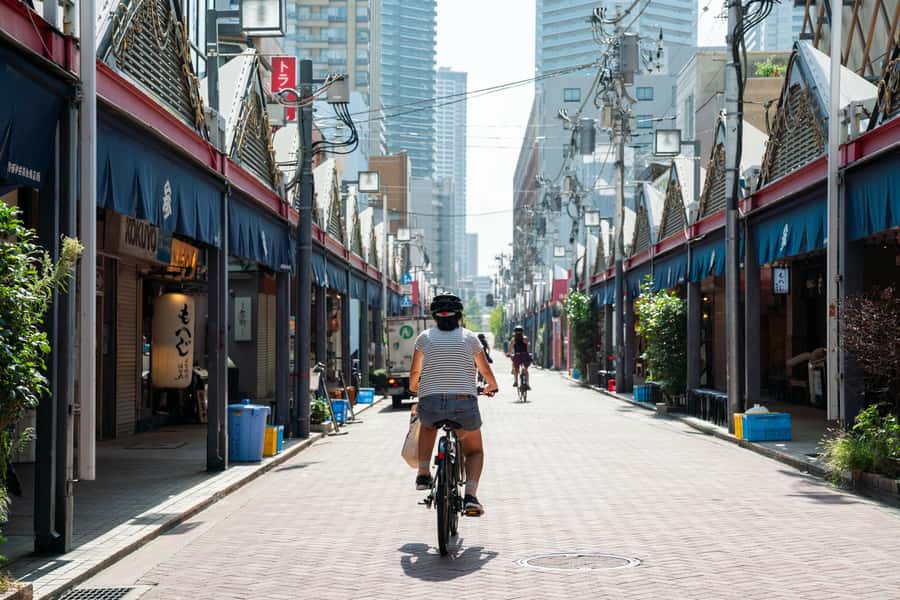
Tokyo reveals itself differently from an e-bike. You pass Tokyo Station and the Imperial Palace, then slip onto quieter streets, pause at a Japanese garden, or cross bridges with the bay opening around you. The ride gives you close-up city views that a bus cannot provide and covers far more ground than walking.
I especially like the electric assist, which takes the sting out of hills and heat, and the local stops: a small temple, a garden, a shrine, or a traditional snack. Guides such as Hiro, Yota, Miki, and Shinobu add stories and practical help along the way. The main catch is traffic and shared footpaths, so you should already feel comfortable riding a bicycle in busy places.
Key points to know before you book
- Three routes offer three different Tokyos: choose the city, Tokyo Bay, or Tokyo Tower option carefully.
- The e-bike does the hard work: riders cover hills and several hours without the effort of a standard bicycle.
- Local stops matter: gardens, shrines, temples, quiet streets, and Japanese snacks are part of the appeal.
- The Tokyo Bay route is best for open views: bridges, waterfront air, Odaiba, sunset, and the night skyline define this ride.
- Traffic requires confidence: some sections use roads or footpaths shared with pedestrians.
- The basics are covered: bike, helmet, guide, luggage storage, snack, and winter gloves are included.
Why an e-bike is a smart way to see Tokyo
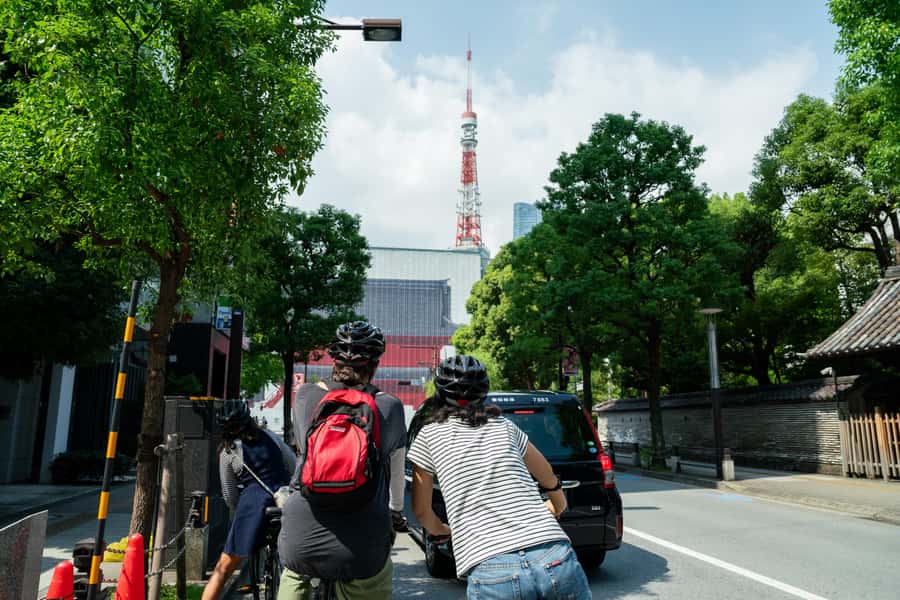
Tokyo is too large for a walking tour to cover much ground, yet public transport can leave you with only brief glimpses between stations. An e-bike fills the gap. You move at street level, stop beside sights instead of viewing them from behind glass, and get enough distance to connect neighborhoods that feel separate on the subway map.
The electric motor is the key. You still pedal, but the assistance softens hills and reduces fatigue. That matters on the Tokyo Tower route, which includes hilly stretches, and during hot, humid weather. One guide-led ride included a garden break that offered welcome relief from the heat. In winter, gloves are provided.
You do need basic cycling confidence. The e-bike itself is easy to operate, but Tokyo has traffic, crossings, pedestrians, and narrow or shared paths. One useful piece of advice is to stay alert around footpaths, where you may need to anticipate people changing direction. This is not a race, but it is not a completely separated cycle path experience either.
The tour is limited to riders at least 147 centimeters tall and no more than 120 kilograms. Children under 13 are not permitted. The additional restrictions also rule out pregnant participants, wheelchair users, and people with heart problems.
More E-Bike Tours in Japan
- Hidden Kyoto E-Biking tour
★ 5.0 · 1,843 reviews - Tokyo Top Highlights 3h Guided E-bike Tour
★ 5.0 · 714 reviews - 3h Tokyo E-Bike Tour: Hidden Gems, and Local Life with guide
★ 5.0 · 670 reviews
Pick the route that matches your idea of Tokyo
The three-hour format is the same basic length, but the mood changes sharply by route. Check the route at booking rather than assuming every ride visits the same places.
The Tokyo City Route is the best all-round introduction. The Tokyo Bay Route suits anyone who wants space, water, bridges, and sunset views. The Tokyo Tower Route is the most focused blend of old Japan, government buildings, parks, and modern city scenery.
That choice matters more than the headline list of sights. A rider hoping for famous skyline photographs may prefer Odaiba. Someone interested in gardens, shrines, and central Tokyo will likely get more from the city route. The Tower option gives you a stronger contrast between historic religious sites and modern architecture.
Tokyo City Route: central sights with quieter discoveries
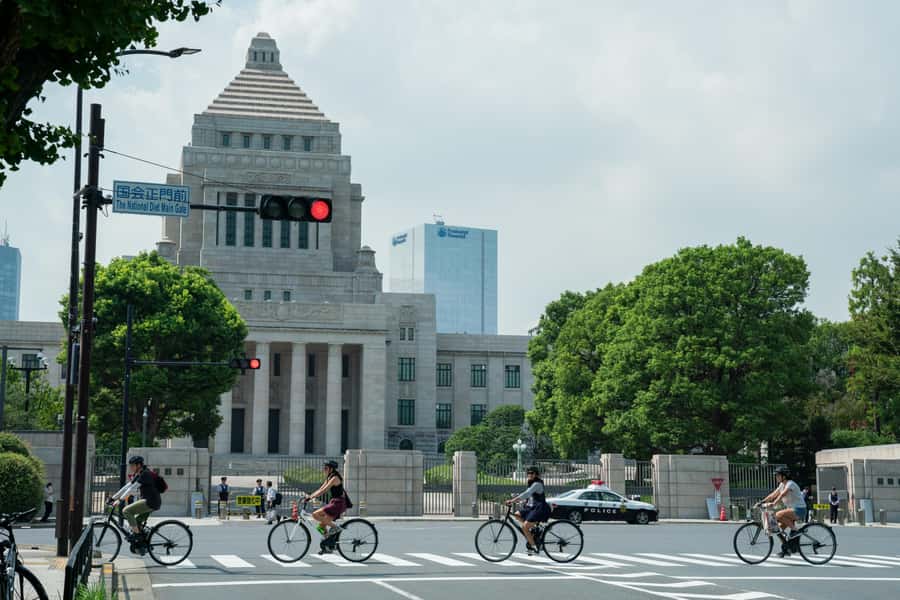
The city ride begins around the Tokyo fish market neighborhood and moves through a useful mix of central Tokyo. You pass Ginza, the Imperial Palace, Tokyo Station, and Nihonbashi, then leave the major avenues for places that are easier to miss on your own.
Ginza gives you a polished first look at central Tokyo. The Imperial Palace adds open space and a sense of the city’s political center, while Tokyo Station provides one of the route’s most recognizable architectural moments. These stops are passed by rather than treated as long interior visits, so think of them as street-level views and photo opportunities.
Nihonbashi brings a different feel. It has long been associated with commerce and transport, and the ride helps you see it as part of a working city rather than a single sightseeing stop. The route then adds a traditional Japanese snack, a small detail that makes the tour feel less like a checklist.
The strongest stop is Kiyosumi Japanese Garden. You leave the bikes and walk through a carefully arranged green space inside the city. It is a useful pause after riding, and it gives you a clear sense of Japanese garden design without sending you across town to a major park.
Tomioka Hachimangu Shrine adds another layer of local tradition. A shrine visit can be brief, but it changes the rhythm of the tour. Instead of only looking at Tokyo’s large public landmarks, you get a closer view of religious spaces woven into ordinary neighborhoods.
This route is not the most dramatic option at every turn. A rider who wants Tokyo’s biggest visual hits may prefer Asakusa, Shinjuku, or Akihabara, none of which are listed on this course. Still, the trade-off is a more local central-Tokyo feel, with a garden, shrine, snack, and streets that many first-time visitors would miss.
Tokyo Bay Route: bridges, Odaiba, and the best sunset choice
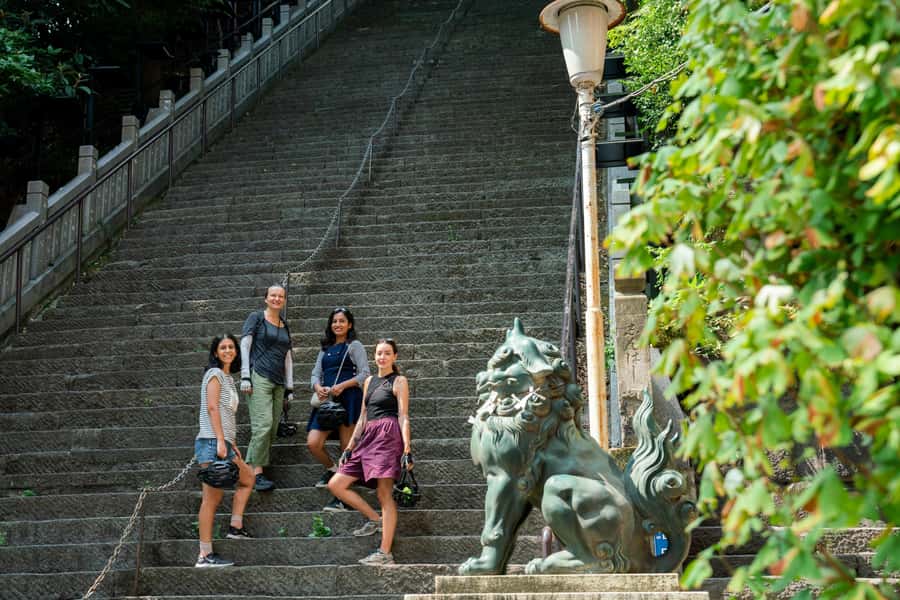
The Tokyo Bay ride is the most scenic option. It uses the broad, flat roads around Odaiba and crosses several bridges, making it a comfortable choice if you want a relaxed ride with open air and long views.
The route begins with Sumiyoshi Shrine and Tsukuda Tendai Temple, a small temple described as a place many visitors would not find without a guide. These early stops give the ride some history before it opens into the modern waterfront.
You pass TeamLab Tokyo and Tokyo Big Sight, then reach the Gundam statue. The giant figure is one of Odaiba’s unmistakable photo stops, especially if you want something playful and distinctly modern. The Statue of Liberty adds another unusual landmark, a smaller Tokyo version that looks particularly striking with the surrounding water and city buildings.
At Odaiba Aqua City, you stop for a local Japanese snack. This is a simple but useful part of the ride. It gives you a chance to pause, eat, and notice how residents use the waterfront rather than rushing from one photo point to the next.
The biggest draw is timing. The start time changes by month, and the ride may be arranged to catch sunset and then the city lights. The view from across the water can shift from bright harbor scenery to a glowing night skyline during the same outing. Several guides, including Hiro and Yota, have been praised for choosing good viewpoints and keeping the pace manageable for the whole group.
The flat roads make this route a good option for newer e-bike riders, though you still need to handle bridges, shared paths, and other road users. If your priority is historic Tokyo, this may feel light on temples and old neighborhoods. If your priority is breeze, bridges, water, and photographs, it is likely the strongest choice.
More E-Bike Tours in Tokyo
- Tokyo: 3-Hour Bike or E-Bike City Highlights Tour
★ 4.8 · 435 reviews - 3-Hour Tokyo Private E-Bike Tour Starting from Your Hotel
★ 5.0 · 117 reviews - Tokyo: 3-Hour Bike or E-Bike Tour of City’s Hidden Gems
★ 4.7 · 81 reviews
Tokyo Tower Route: old shrines beside modern government buildings
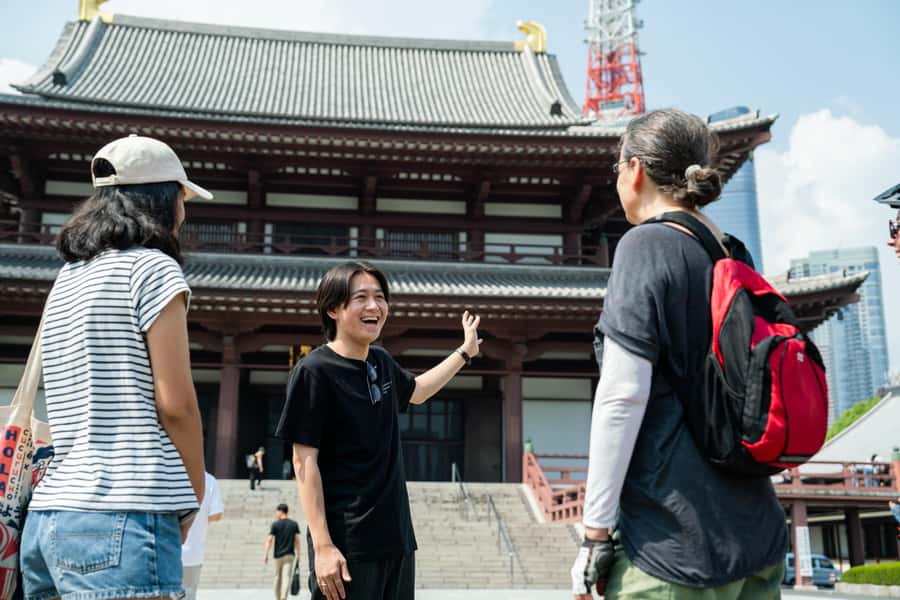
The Tokyo Tower Route is the most distinctive choice for architectural contrast. You visit Zojo-ji Temple, take a photograph at a Tokyo Tower viewpoint, and then continue through Atago Shrine, the National Diet Building, the Imperial Palace, and Hibiya Park.
Zojo-ji gives you a major Buddhist temple in the shadow of modern Tokyo. That pairing is one of the city’s most effective visual contrasts, and an e-bike makes it easy to connect the temple with the tower without spending much of the day on foot.
Tokyo Tower is a photo stop rather than a tower visit. This is important if you are expecting an observation deck ticket. The route offers a view and a chance to photograph the landmark, then moves on.
Atago Shrine introduces a more traditional setting, while the National Diet Building and Imperial Palace bring in the formal, civic side of the capital. Hibiya Park closes the ride with greenery in the middle of the city. As on the city route, you should expect to stop and look rather than spend long periods inside major attractions.
The e-assist is especially useful here because the route includes hills. You still need to pedal and steer, but the motor reduces the sense of climbing. A traditional bike could make this ride tiring in warm weather, while the electric version keeps the focus on the places around you.
A traditional Japanese snack is included on this route as well. The food stop is modest, but it adds a local touch and keeps the three hours from becoming one continuous sequence of riding and photographs.
The guides shape the experience
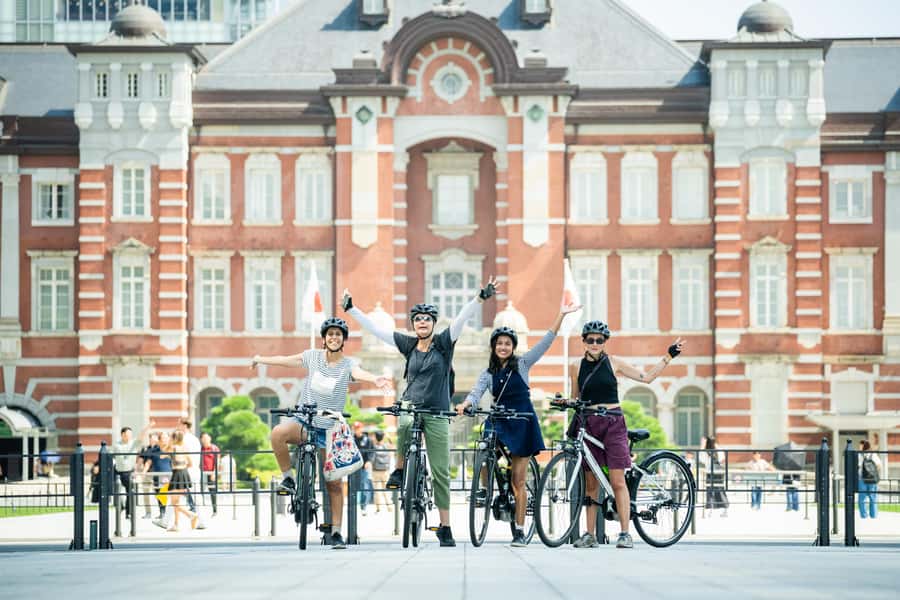
The guide is more than someone who points toward a landmark. You ride as a group, so the guide sets the pace, manages crossings, explains local customs, and decides where the group can stop safely.
The named guides include Hiro, Yota, Miki, Shinobu, Yugo, Sho, Yuki, Daichi, Jun, Parks, Tai, and others. Guides have helped riders find train stations afterward, bought or introduced Japanese snacks, explained the history behind temples and shrines, and adjusted the pace so nobody was left behind.
That personal attention is especially useful if you are new to e-bikes or nervous about Tokyo traffic. Hiro, for example, has been praised for patience, safety, humor, and interesting facts. Yota has been noted for planning a varied route through harbor and city views, while Miki has been appreciated for waiting patiently during photographs and showing less crowded places.
Guides will vary by departure, so you cannot book a particular personality unless the operator confirms it. The consistent value is having an English-speaking local who can explain what you are seeing while keeping the group together.
What the three hours feel like on the road
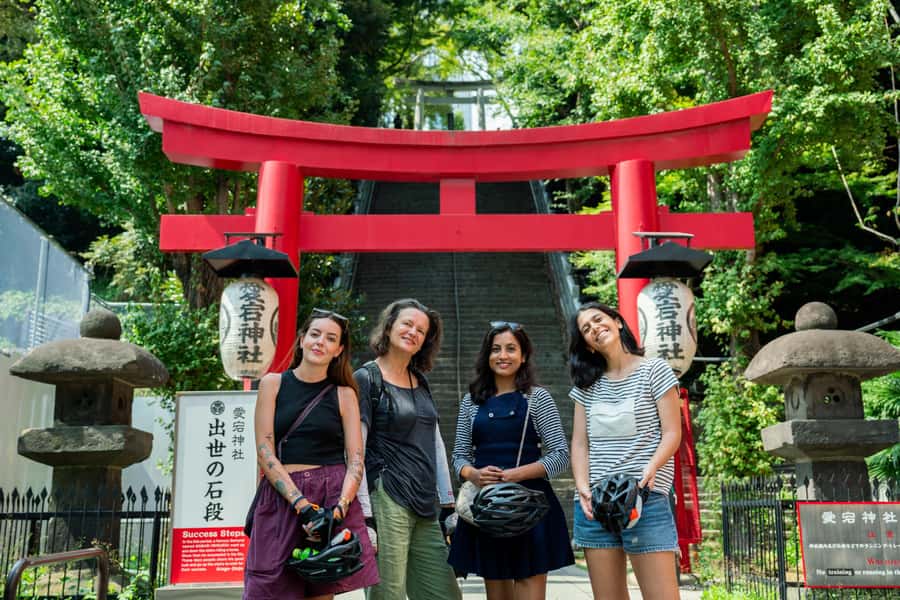
The meeting time is 15 minutes before departure for a briefing. Use that time properly. You will need to get comfortable with the bike, listen to safety instructions, and understand how the group will move through the streets.
The tour ends back at the meeting point, and the course must be completed with the bikes returned there. You cannot leave the ride early and drop the bike at another location. Traffic or another course can delay the finish by about 30 minutes, so do not schedule a tight restaurant reservation or train departure immediately afterward.
The ride is active, but it is not built around speed. You stop at sights, gardens, shrines, temples, snack points, and photo locations. The electric support means three hours is manageable for many riders, but hot weather, humidity, traffic, and time spent riding around pedestrians can still be tiring.
Late arrivals cannot join halfway through. That rule is worth taking seriously in Tokyo, where station exits and large intersections can make a short journey take longer than expected.
Rain can also change the plan. If the tour cannot operate, notification is sent by email the day before. If weather worsens on the day, cancellation may still happen for safety.
Is $65 good value?
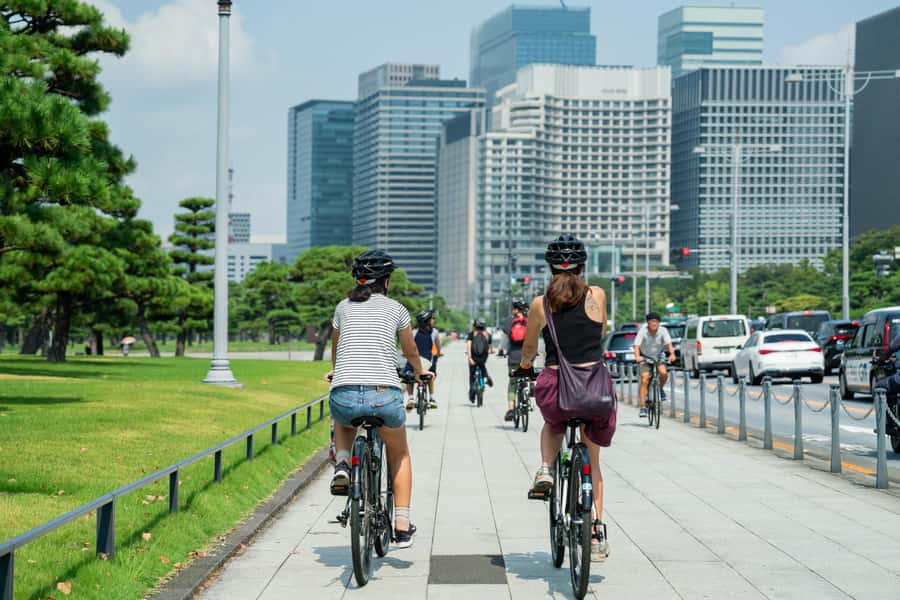
At $65 per person, this sits in a reasonable range for a three-hour guided activity in Tokyo. You are paying for the e-bike, helmet, guide, luggage storage, a traditional snack, and the route planning. The real value is the distance covered and the access to smaller places that would take effort to connect independently.
The price makes more sense if you are visiting Tokyo for the first time and want an orientation from street level. It also works well for repeat visitors who have already seen the obvious districts and want a different side of the capital.
It is less compelling if your only goal is to enter famous attractions. The Imperial Palace, Tokyo Station, Tokyo Tower, TeamLab Tokyo, and Tokyo Big Sight are mostly passed by, photographed, or viewed from outside. This is a moving city tour, not a ticketed sightseeing circuit.
A traditional bike tour might cost less in some places, but the e-assist has practical value. It reduces fatigue, helps on hills, and makes the ride more approachable in summer. For many people, that difference is worth the extra cost.
Who should book this ride?
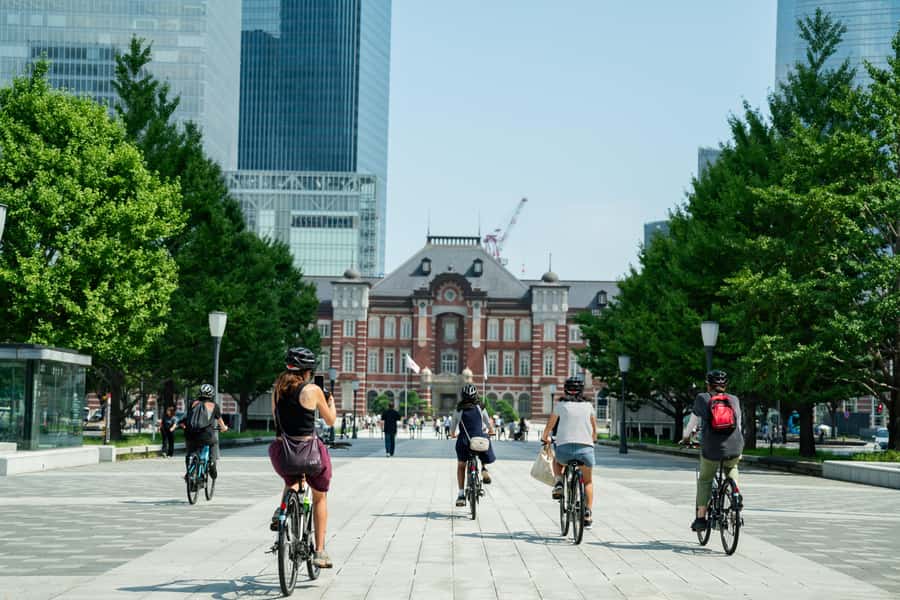
I would recommend it to adults and teenagers who already ride bicycles with confidence and want a lively introduction to Tokyo. It is particularly good for couples, friends, solo riders who enjoy small-group activities, and families with children old enough to meet the age and height rules.
Choose the Tokyo City Route if you want gardens, shrines, central districts, and a traditional snack. Choose Tokyo Bay for sunset, bridges, water, Odaiba, the Gundam statue, and the night skyline. Choose Tokyo Tower for the strongest mix of temple architecture, hills, civic buildings, parks, and modern Tokyo.
I would be cautious if you dislike riding near traffic, have trouble steering around pedestrians, or want a quiet, fully separated cycle route. You should also avoid booking it if your schedule cannot absorb a possible 30-minute delay.
Should you book the Tokyo e-bike tour?
Book it if you want to see Tokyo from street level and are willing to trade a few major interiors for a broader, more personal route. The gardens, shrines, smaller temples, snacks, bridges, and waterfront viewpoints give the tour its value.
For the best match, pick your route based on your priorities rather than the title. The bay ride is the safest bet for scenery, the city route offers the most balanced local introduction, and the Tokyo Tower ride gives you the clearest old-meets-new contrast. If you can ride comfortably and arrive on time, this is an efficient and enjoyable way to get your bearings in a very large city.
FAQ
How long is the Tokyo e-bike tour?
The tour lasts three hours. The end may be delayed by approximately 30 minutes because of traffic or other course conditions.
What routes can I choose?
You can choose the Tokyo City Route, Tokyo Bay Route, or Tokyo Tower Route. Each option has a different itinerary, so check the selected route before booking.
What is included in the price?
The tour includes an e-bike, English-speaking guide, helmet, luggage storage, a knapsack if needed, and a traditional Japanese snack. Gloves are included during the winter season.
Is the tour suitable for children?
Children under 13 are not permitted. Riders must also meet the minimum height requirement of 147 centimeters.
Do I need experience riding an e-bike?
The e-bikes are designed to be easy to ride, and the electric assist reduces physical effort. You should still be comfortable riding a bicycle around traffic, crossings, and shared footpaths.
Can I join if I am over 120 kilograms?
No. The tour is not suitable for participants over 120 kilograms, or 264 pounds.
What happens if it rains?
If the tour cannot operate because of rain or another safety issue, notification is sent by email the day before when possible. The tour may also be canceled on the day if weather conditions change.
Can I cancel for a full refund?
You can cancel up to 24 hours in advance for a full refund.
More Three-Hour Experiences in Japan
- 3-Hour Porto Highlights on a Electric Bike Guided Tour
★ 5.0 · 4,392 reviews - 3-hour Complete Prague Bike Tour
★ 5.0 · 3,674 reviews - Porto: City Highlights 3-Hour Guided Electric Bike Tour
★ 4.8 · 3,092 reviews - Copenhagen: Highlights 3 Hour Bike Tour with a Local Guide
★ 4.8 · 2,312 reviews
More Hidden Gems Bike Tours in Japan
- Arashiyama Bamboo Forest & Hidden Gems Bike Tour (Early Bird)
★ 5.0 · 613 reviews - Kyoto: City Secrets eBike Tour
★ 4.9 · 196 reviews - Kyoto: Hidden Gems E-Bike Tour with Local Japanese Guide
★ 4.9 · 189 reviews - 5-Hour Tokyo & Edo Hidden Gem Bike Tour with Lunch
★ 5.0 · 113 reviews
Newest rides we have reviewed in Japan
- Best of Kyoto: Ginkakuji & Path of Philosophy E-Bike Tour★ 4.9 · 79 reviews
- Kyoto: Tailored E-Bike Tour to Highlights & Hidden Gems★ 4.9 · 32 reviews
- Kyoto: Full Day Bike Tour★ 4.9 · 39 reviews
- Kyoto: Half-day Guided Bike Tour with Fushimi Inari★ 4.9 · 21 reviews
- Kyoto: Early Bird E-Bike Tour with Lunch★ 5.0 · 14 reviews
- Kyoto: Full-Day City Highlights Bike Tour with Light Lunch★ 5.0 · 52 reviews
- Kanazawa Half Day E-bike Tour★ 5.0 · 81 reviews
- Hiroshima: Best of Hiroshima Guided Bike Tour★ 4.9 · 89 reviews
Hidden Gems Bike Tours, compared.
Small Group Guided Bike Tour of Amsterdam’s Hidden Gems
Read our review →

Top Highlights & Hidden Gems Tour by Cannondale E-Bike
Read our review →
Barcelona 3-hour Bike or E-Bike Tour: Highlights and Hidden Gems
Read our review →