
REVIEW · KYOTO
Kyoto: Afternoon Bamboo Forest and Monkey Park Bike Tour
Arashiyama is easiest to enjoy when you can escape its packed main lanes, and this tour gives you that chance. You bike through the bamboo groves, visit Tenryuji Temple, then trade the saddle for a 20-minute uphill hike to Monkey Park and its Kyoto views. I like the mix of famous sights and quieter roads, plus the small groups capped at eight people. The climb can feel tough in hot weather or if you are not used to hills.
I also like that your guide handles the route, safety briefing, bicycle, helmet, and entry fees, so you can focus on the scenery. Guides including Ray, Peter, Yuki, and JS have been praised for useful cultural explanations, good English, patience, and taking photos for the group. The main consideration is value: at $106 per person, it costs more than visiting Arashiyama independently, but you cover a lot in four hours and get local context along the way.
Key points to know before you book
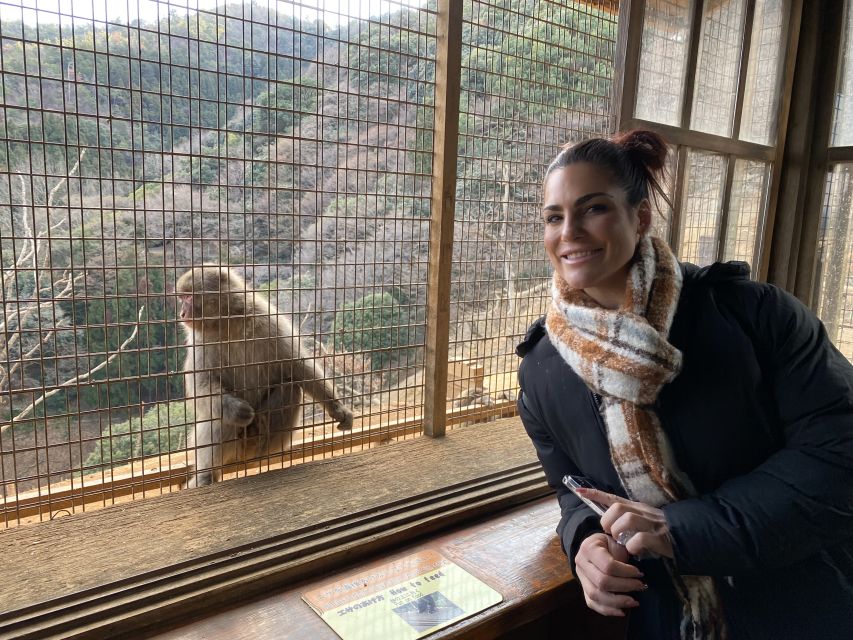
- The monkey climb is real: Expect about 20 minutes on foot up Iwatayama Mountain, with the effort rewarded by Kyoto views and close encounters with the monkeys.
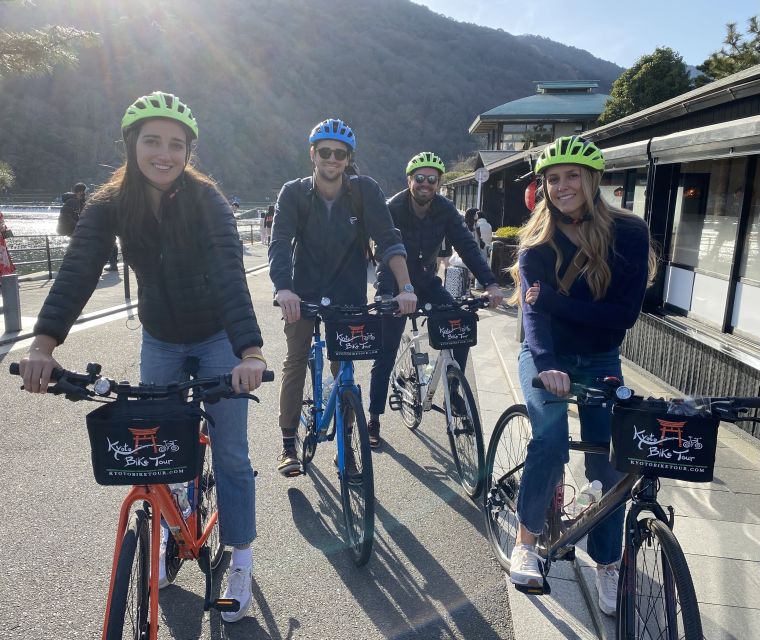
- Biking adds more than speed: You reach bamboo, temples, the bridge, local lanes, and countryside without spending the whole afternoon walking between sights.
- Tenryuji entry is included: Your guide can explain the temple and Zen gardens while your ticket is handled as part of the tour.
- The group stays small: With no more than eight participants, it is easier to ask questions and adjust the pace than on a large coach tour.
- The route is mostly relaxed: Several riders describe the cycling as easy and mainly flat, though Monkey Park provides the demanding section.
- Weather matters: If rain is forecast, the operator may contact you about changing or canceling the tour.
Why a bicycle makes Arashiyama easier
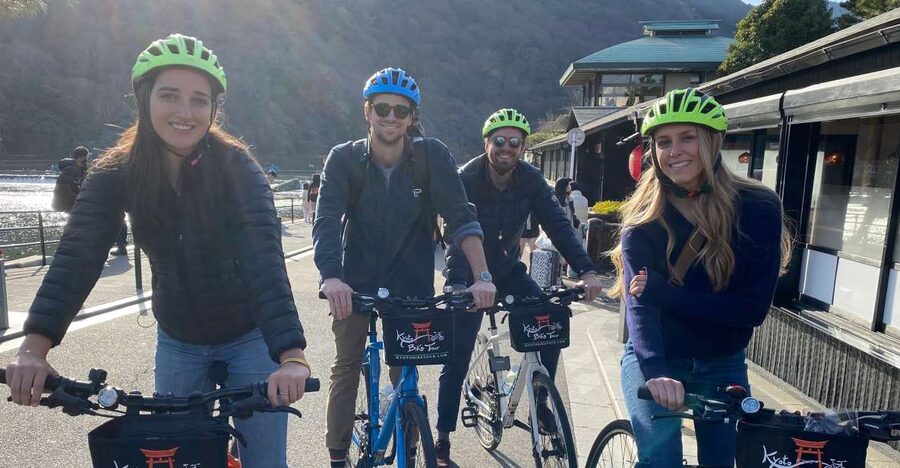
Arashiyama is a compact area on the western edge of Kyoto, but its best-known sights are spread across temple grounds, riverfront roads, bamboo lanes, and the lower slopes of Iwatayama. On foot, you can see the main attractions, but the walking adds up quickly, especially when the district is busy.
The bicycle changes the feel of the afternoon. You can move between the major sights and quieter corners without treating the whole visit as a march from one crowd to the next. The route uses roads that were once connected with sub-temples of Tenryuji, along with local streets and countryside. Some riders also see rice paddies and small-town scenery beyond the central tourist lanes.
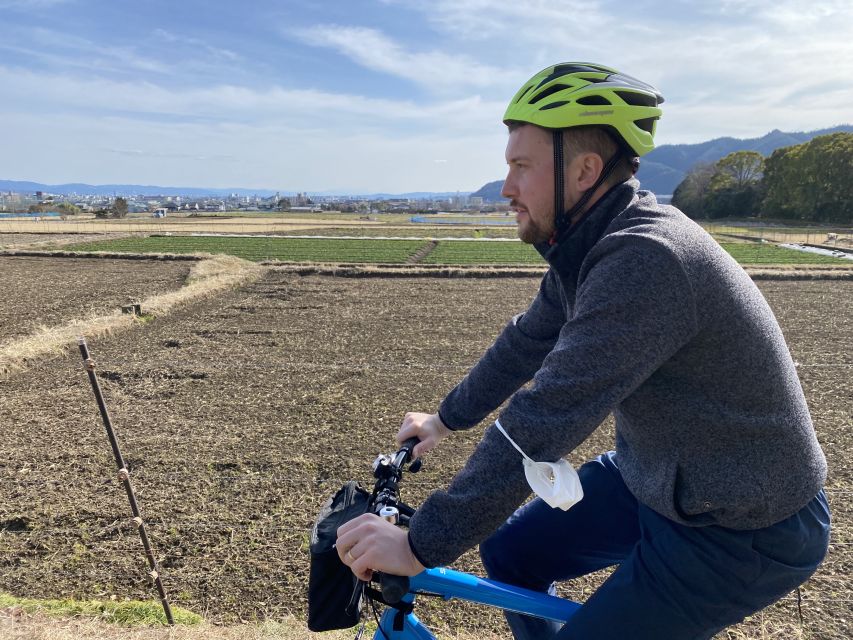
You are not signing up for a hard cycling expedition. The route is described as mainly flat, and the pace is intended to be comfortable. The one clear physical challenge is not on the bike. It is the uphill walk to Monkey Park.
The bicycles are supplied, along with helmets and bottled water. Several riders specifically found the bikes comfortable and well maintained, which matters more than it may sound. A poorly fitted seat can sour a four-hour outing quickly. Wear comfortable clothes and shoes, and leave high heels at your hotel.
More Cycling Trips in Kyoto:
- Hidden Kyoto E-Biking tour
★ 5.0 · 1,843 reviews - Bike Tour Exploring North Kyoto plus Lunch
★ 5.0 · 1,087 reviews - Arashiyama Bamboo Forest & Hidden Gems Bike Tour (Early Bird)
★ 5.0 · 613 reviews
Starting at Saga-Arashiyama Station
The meeting point is Saga-Arashiyama Station. Your guide wears a bike helmet and a Kyoto Bike Tour shirt, with the exact meeting instructions sent after booking.
Give yourself enough time to find the correct station exit and meeting spot. One useful practical note is that the exit information has not always felt perfectly clear, so read the post-booking directions carefully rather than assuming the station is tiny or self-explanatory.
The opening safety explanation is an important part of the tour. Guides have been praised for checking that everyone is comfortable and for explaining how to ride safely in an unfamiliar country. That is especially useful if you are not used to cycling in Japan or if your group includes older adults or teenagers.
The small-group setup helps here. With a maximum of eight people, the guide can keep an eye on the group without the outing feeling like a procession. The pace can also be more forgiving than a large organized tour, although you should still be comfortable riding a bicycle for several hours.
Riding through the Arashiyama Bamboo Forest
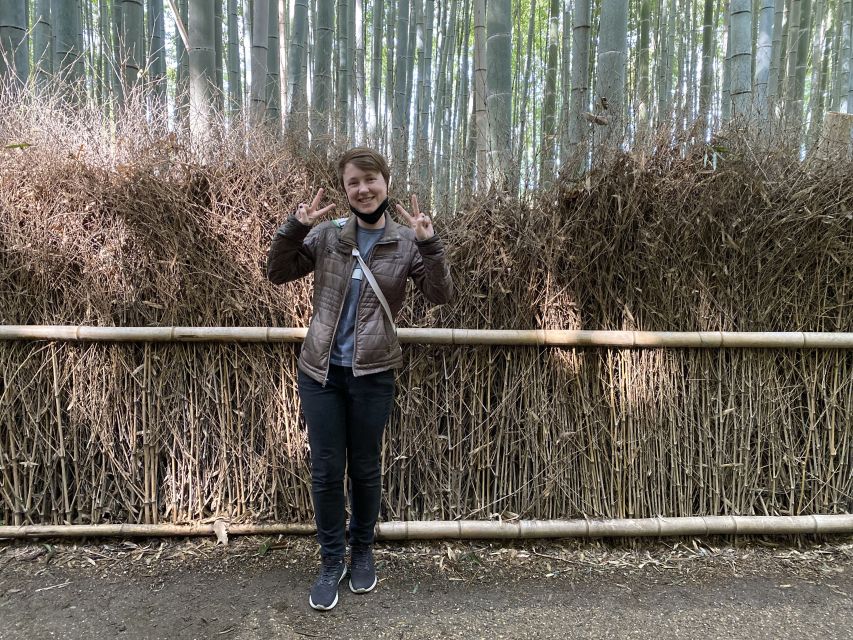
The bamboo forest is the visual centerpiece of the afternoon. Tall green stalks rise on both sides of the path, and the sound changes as you ride beneath them. Wind moving through the bamboo creates the seasonal rustling that makes this place special, though the central paths can be crowded.
A bicycle does not give you a private bamboo grove. You will still share the famous area with other people, and you may need to slow down or stop. The advantage is that your guide can help you approach it as one part of a larger route rather than spending the entire afternoon waiting for a clear photograph.
The listed stop allows about 30 minutes for the bamboo forest. That is enough to see it properly, take photographs, and hear some explanation, but it is not an extended nature walk. If you want long, quiet stretches alone among the stalks, this tour cannot promise that. Its strength is variety.
The bike also lets you appreciate what lies beyond the most photographed lane. The ride includes local roads and less tourist-heavy spots, giving you a look at the ordinary surroundings of Arashiyama. This is where the experience feels more personal than simply following a map between the district’s famous sights.
Tenryuji Temple and its Zen gardens
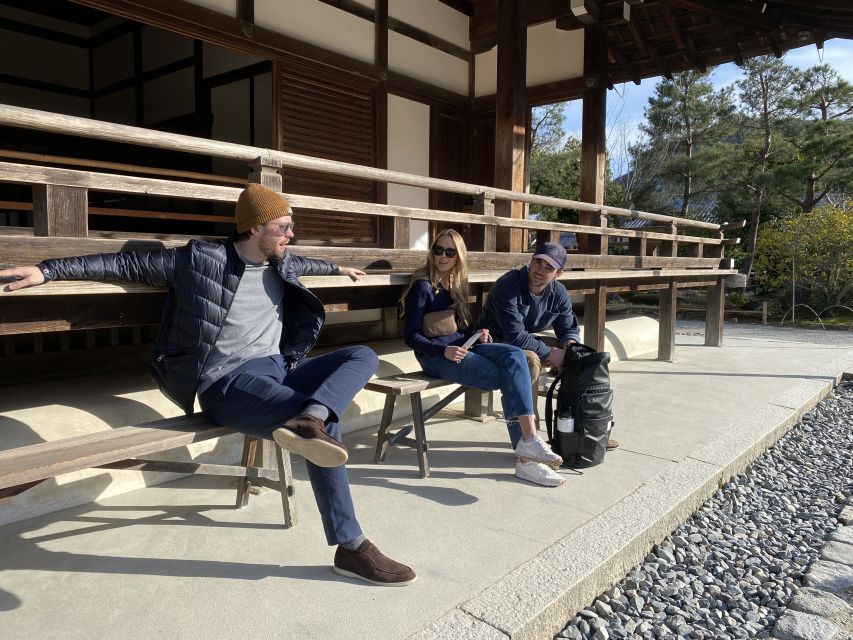
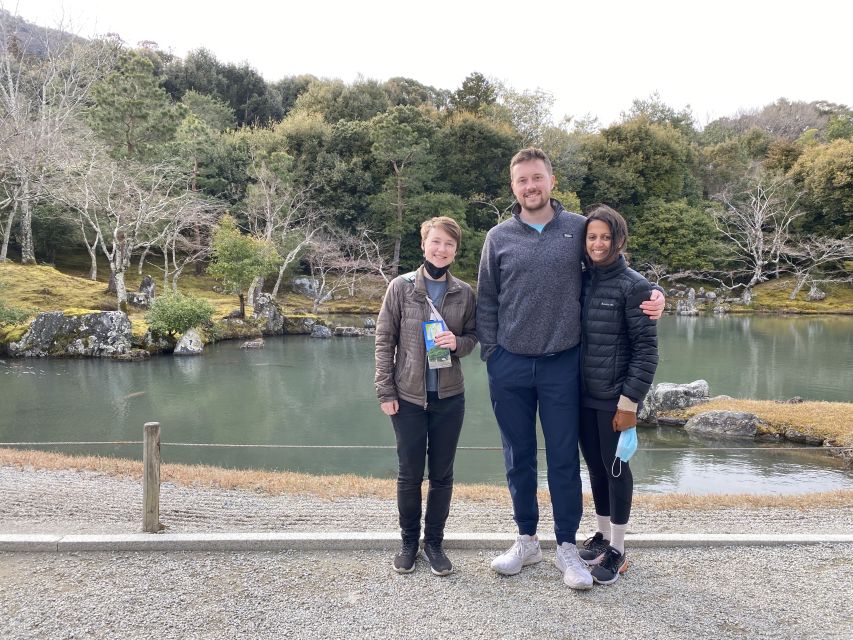
Tenryuji is one of Arashiyama’s essential stops, and entry is included in the $106 price. The temple is recognized as a UNESCO World Heritage Site, but the practical pleasure here is simpler: you can slow down, remove yourself from the traffic outside, and walk through carefully arranged Zen gardens.
The tour allows roughly 30 minutes for Tenryuji. Your guide helps explain what you are seeing, including the temple’s place in Kyoto’s religious and cultural story. Several guides have been praised for connecting the sites with Japanese language, customs, and history rather than offering only dates and names.
I particularly like this part of the schedule because it breaks up the cycling. You are not rushing through one attraction after another. The temple provides a quieter pause before the climb to Monkey Park.
Thirty minutes is still a short visit. If you want to study every garden feature or spend a long time inside the temple buildings, you may prefer a separate visit. This tour is designed to give you a strong introduction while also fitting in the bamboo forest, mountain walk, bridge, and local roads.
Same roads, a different saddle:
- 5 Top Highlights of Kyoto Full Day Bike Tour (E-bike option)
★ 5.0 · 511 reviews - Full Day Biking Tour Exploring the Best of Kyoto
★ 5.0 · 498 reviews - Kyoto: Memory Kyoto E-Bike Tour
★ 4.8 · 297 reviews - E-Bike Tours of the highlights of Kyoto!!!
★ 5.0 · 291 reviews
The uphill walk to Iwatayama Monkey Park
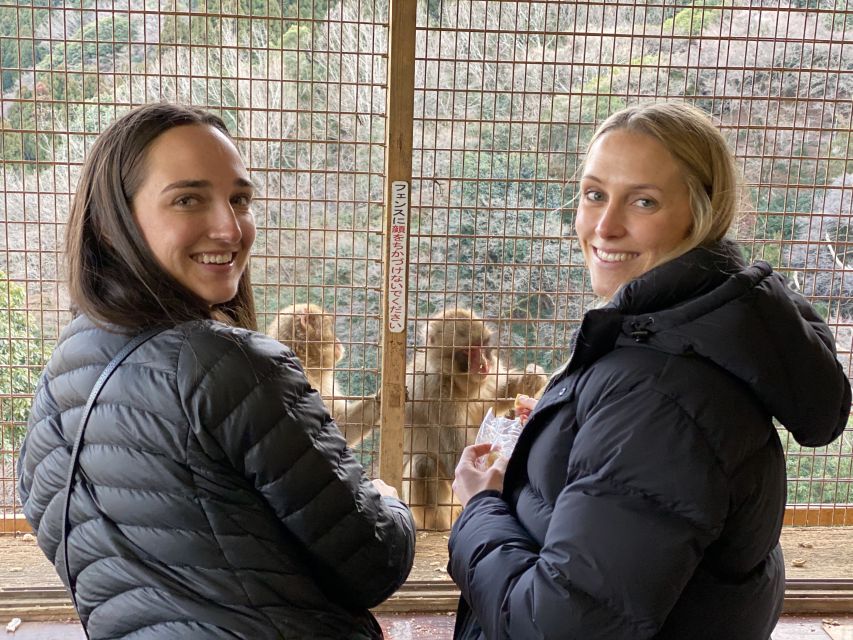
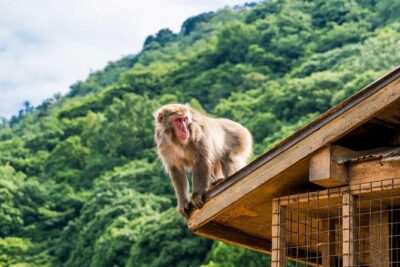
Monkey Park is the most memorable part for many people, but it is also the section you should judge honestly. Reaching the park requires a hike of about 20 minutes up Iwatayama Mountain. The walk is not a flat stroll, and one rider described it as tough when not fit.
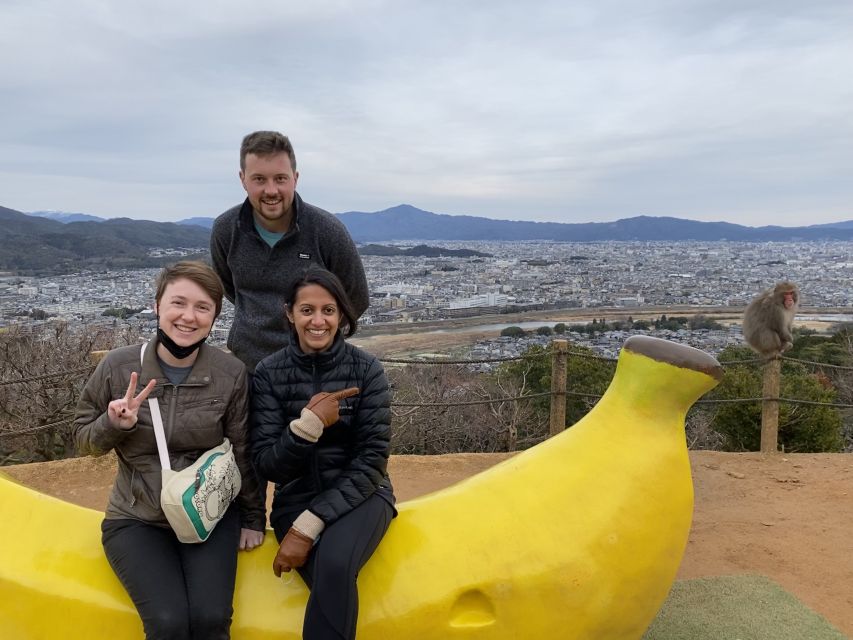
The effort pays off with a panoramic view of Kyoto and the chance to see the park’s monkeys. The animals are the main draw, but the hilltop setting adds something more. After spending time among temples and busy streets, you get open views and a stronger sense of the city’s position between hills and river valleys.
Follow the guide’s instructions around the monkeys. This is a wildlife park, not a petting zoo, and your attention should stay on the animals and the rules of the place. The schedule allows about an hour for the Monkey Park stop, including the walk and time at the top. Guides have been praised for not rushing this section when the group is enjoying it.
The climb deserves planning in every season. Summer can be hot and humid, while cooler months call for layers. In winter, one guide even supplied gloves for a cold ride. Comfortable shoes are essential, and bottled water is provided. If anyone in your group has difficulty with uphill walking, this is the main reason to choose a different Arashiyama outing.
Togetsukyo Bridge and the river scenery
The tour also pauses at Togetsukyo Bridge, one of Arashiyama’s signature views. The bridge crosses the Katsura River, with wooded hills and seasonal color around it. The setting changes with the time of year, so autumn foliage, spring greenery, and winter light give the same stop a different mood.
The scheduled visit is about 15 minutes. That is enough for photographs and a short look, but not a long riverside break. The bridge works well as a final scenic stop because it gives you a broad view after the enclosed bamboo paths and the wooded Monkey Park climb.
The bicycle makes the bridge easy to add without exhausting the group. Afterward, you return to Saga-Arashiyama Station rather than ending at an unrelated part of Kyoto. That is useful if you have dinner plans or another evening reservation.
What the guides add to the afternoon
The guide is a major part of the value here. Names that have appeared with this experience include Ray, Peter, Yuki, JS, and others, so you should not book expecting one particular person unless the operator confirms it. The common thread is a style built around explanation, safety, and conversation.
Ray has been praised for answering questions, adjusting to the group, and sharing information without overwhelming people. Peter is noted for his cultural background and for taking care with families. Yuki is described as friendly and generous with travel advice, while JS has used objects and language examples to make cultural points easier to understand.
Those details matter because a temple or shrine can be hard to read without context. A guide can explain why a garden is arranged in a certain way, help you understand what you are seeing, and connect the places to daily life in Kyoto. You can, of course, visit the bamboo forest and Monkey Park on your own. The tour’s added value is having someone turn a set of scenic stops into a coherent afternoon.
Some guides also take photographs and share them later. That is not listed as a formal inclusion, so treat it as a possible extra rather than a guarantee. Still, it can be useful when you want photographs of the whole family rather than another picture taken at arm’s length.
Is $106 a fair price?
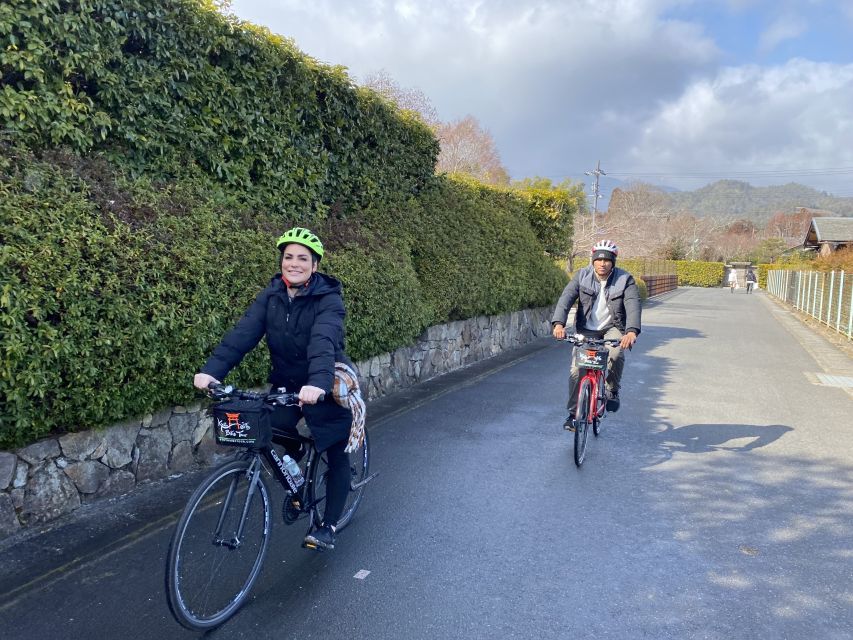
At $106 per person, this is not the cheapest way to see Arashiyama. You could reach the district by train and visit some sights independently for much less. The price makes more sense if you value the bicycle, the small group, the English-speaking guide, the included bicycle equipment, bottled water, Tenryuji admission, and the convenience of covering several stops in one afternoon.
The tour also saves planning time. You do not need to work out how to link the bamboo forest, Tenryuji, Monkey Park, Togetsukyo Bridge, and quieter local roads. You are paying for the route and the explanations as much as for the transport.
I would call it good value for a first Kyoto visit, especially if you have only a couple of days in the city. It is also a strong choice for families with older children and teenagers, couples, and adults who want a break from walking between temples. Keen cyclists may find the riding too easy, but even they can enjoy seeing local roads and using the tour as an introduction to further cycling in the area.
The cost is harder to justify if you already know Arashiyama well, dislike group activities, or want to spend hours at one temple. Independent visitors with plenty of time can create a slower and cheaper day.
Weather, fitness, and the best way to prepare
The activity lasts four hours and takes place outdoors for most of that time. Kyoto’s seasonal changes matter. Summer heat and humidity can make the Monkey Park climb feel much harder, while winter requires warm layers. Spring and fall offer comfortable conditions more often, but weather can change.
If rain is forecast, the operator may contact you about rescheduling or cancellation. The tour is not designed as a wet-weather city walk, so keep your schedule flexible if the forecast is uncertain.
Bring comfortable shoes and clothes. High heels are not allowed, and they would be a poor choice for both cycling and the mountain path anyway. Bottled water is included, but food and drinks beyond that are not. Consider eating before the tour or planning a meal afterward.
The cycling itself is generally relaxed, but you should be able to ride safely and manage the 20-minute uphill walk. If you are traveling with someone who tires easily, ask yourself if the Monkey Park view is worth the climb. For most reasonably active visitors, it is the tour’s most rewarding physical effort.
Who should book this Arashiyama bike tour?
I would choose this tour if you want the major Arashiyama sights without spending the whole day navigating them alone. It suits first-time visitors, families with older children, couples, and anyone who likes a little activity mixed with temples and gardens.
It is also useful for a short Kyoto stay. In four hours, you see the bamboo forest, Tenryuji, Monkey Park, Togetsukyo Bridge, and quieter local areas. That is a lot of ground without turning the afternoon into a race.
I would hesitate if you have difficulty with uphill walking, dislike bicycles, or want a slow, private visit to each attraction. The Monkey Park climb is not optional in the normal route, and the group schedule limits how long you can linger at any one place.
For most visitors who want nature, culture, and gentle exercise in one outing, I would book it. The strongest reasons are the small group, the useful guide commentary, the comfortable pace, and the chance to see more of Arashiyama than the famous bamboo lane alone.
FAQ
Where does the tour start and finish?
It starts at Saga-Arashiyama Station and returns to Saga-Arashiyama Station.
How long does the tour last?
The tour lasts four hours.
What language is the tour conducted in?
The live tour guide speaks English.
How large is the group?
The group is limited to eight participants.
Is bicycle rental included?
Yes. A bicycle and helmet are included in the tour price.
Is entry to Tenryuji Temple included?
Yes. Entry fees, including the Tenryuji Temple admission, are included.
How difficult is the cycling?
The cycling route is mainly described as relaxed and largely flat, but the tour also includes a 20-minute uphill hike to Monkey Park.
Do I need special clothing?
Wear comfortable clothes and comfortable shoes. High-heeled shoes are not allowed.
Are food and drinks included?
Bottled water is included, but other food and drinks are not included.
What happens if it rains?
If the forecast shows rain, you may receive a message about rescheduling or cancellation.
Can I cancel for a full refund?
You can cancel up to 24 hours in advance for a full refund.
Newest rides we have reviewed in Kyoto
- Best of Kyoto: Ginkakuji & Path of Philosophy E-Bike Tour★ 4.9 · 79 reviews
- Kyoto: Tailored E-Bike Tour to Highlights & Hidden Gems★ 4.9 · 32 reviews
- Kyoto: Full Day Bike Tour★ 4.9 · 39 reviews
- Kyoto: Half-day Guided Bike Tour with Fushimi Inari★ 4.9 · 21 reviews
- Kyoto: Early Bird E-Bike Tour with Lunch★ 5.0 · 14 reviews
- Kyoto: Full-Day City Highlights Bike Tour with Light Lunch★ 5.0 · 52 reviews
- Cycle Kyoto’s Hidden Gems & Gion Stroll★ 5.0 · 29 reviews
- Kyoto: Arashiyama Bamboo Forest Morning Tour by Bike★ 5.0 · 115 reviews
Kyoto Cycling Tours, compared.
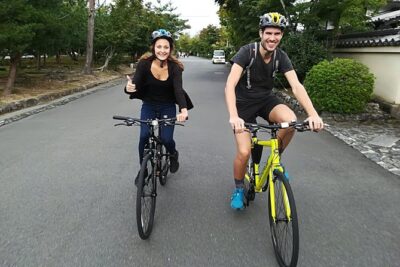
Arashiyama Bamboo Forest & Hidden Gems Bike Tour (Early Bird)
Read our review →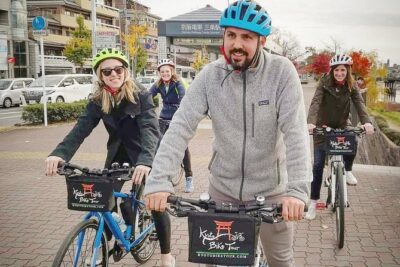
5 Top Highlights of Kyoto Full Day Bike Tour (E-bike option)
Read our review →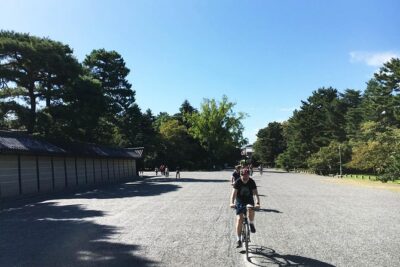
Full Day Biking Tour Exploring the Best of Kyoto
Read our review →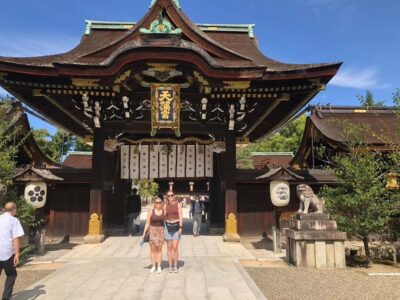
Afternoon Kyoto Bike Tour: Bamboo Forest, Monkeys & Hidden Spots
Read our review →Other lists this ride turns up in