
REVIEW · PRIVATE CYCLING TOURS IN JAPAN
Private eBike Tour Exploring Fushimi with Torii Red Gate Ride
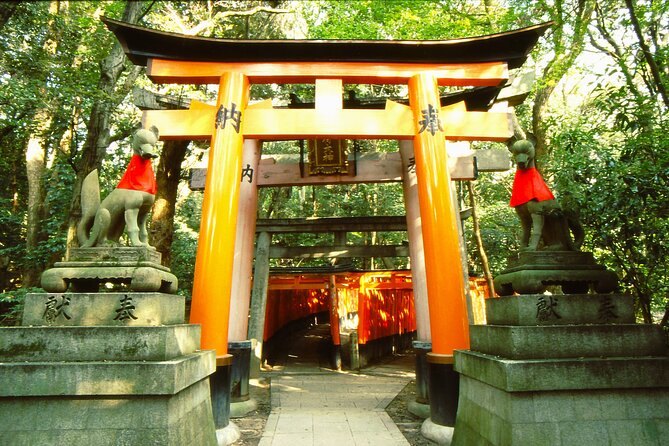
Fushimi Inari is best known for its endless tunnel of red torii gates, but this private eBike ride gives you more than a quick shrine stop. You pedal from Kyoto Station through quieter streets, pause at Sanjusangen-do and Tofuku-ji, then return beside the Kamo River.
I like two things here. First, the bicycle connects the sights in a way a taxi never can. You see Kyoto’s side streets and riverbanks at street level. Second, the small-group format, with two to six people per guide, gives guides such as Kaz, Yuichi, Tibor, and JJ room to adjust the pace and answer questions. The main consideration is time: 3½ hours includes all cycling, temple visits, photographs, and shrine walking, so Fushimi Inari will be a focused visit rather than a full mountain climb.
Key points to know before booking
- Private groups of two to six: Only your party takes part, with an extra guide arranged for groups of seven to twelve.
- Three major sights by bicycle: Sanjusangen-do, Tofuku-ji, and Fushimi Inari are linked by Kyoto’s quieter roads.
- One hour at Sanjusangen-do: Your guide accompanies you inside and explains the temple’s meaning and art.
- Fushimi Inari without a rushed transfer: You can walk through the famous torii paths after arriving by bike.
- Kamo River return route: The ride back includes peaceful embankments, nature, and wildlife.
- Practical gear included: You receive a bicycle, helmet, rain poncho, accident insurance, and cycling map.
Why a bicycle makes sense in southern Kyoto
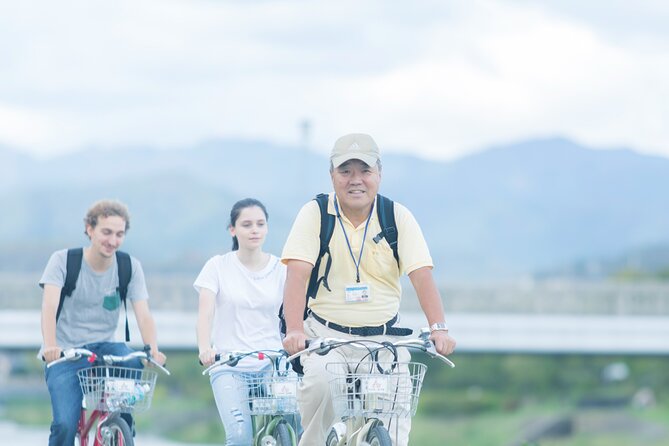
Kyoto is not a huge city by modern standards, but its famous sights are spread across different districts. A short ride can carry you from a railway station to a temple lane, then onward to a shrine entrance. That is where this tour earns its keep.
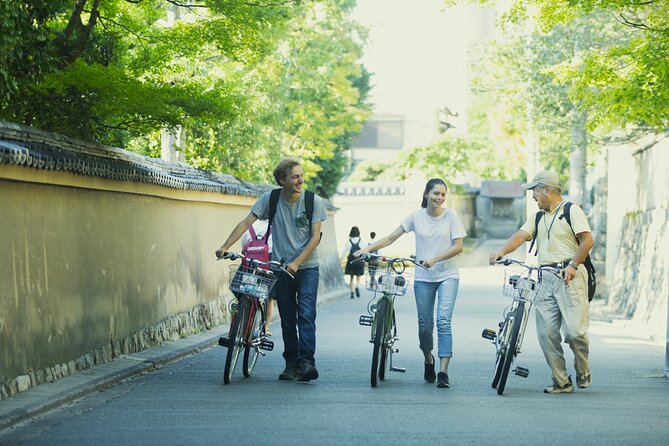
The route uses alleys, side streets, and less-trafficked roads rather than treating Kyoto as a string of highway transfers. You still need to ride safely on the road, but you get a better feel for the city between the headline sights. The ride itself becomes part of the visit.
This is not a hard cycling challenge in the information provided. The tour is described as leisurely and paced to your group. Still, the bikes are used in ordinary city streets, so you should be comfortable riding without help. Children must be at least 10 years old, 145 centimeters or taller, and able to cycle safely on the road unassisted.
The private setup matters. A guide can slow down for a child, linger at a temple, or keep moving if your group prefers photographs to a long explanation. Previous guides have included Kaz, Yuichi, Tibor, JJ, J Jay, Kay, Y Yagyu, and Kas. The strongest praise has focused on guides who mix local stories with humor, take useful photos, and remain patient with family questions.
More E-Bike Tours in Japan
- Hidden Kyoto E-Biking tour
★ 5.0 · 1,843 reviews - 5 Top Highlights of Kyoto Full Day Bike Tour (E-bike option)
★ 5.0 · 511 reviews - Kyoto: Memory Kyoto E-Bike Tour
★ 4.8 · 297 reviews
Starting at Kyoto Station and passing the Nintendo building
You meet at the Kyoto Cycling Tour Project’s Kyoto Station Cycle Terminal at 552-13 Higashiaburanokōjichō, in Shimogyo Ward. The tour ends at the same place, which keeps the start and finish simple if you are using Kyoto Station for trains or local transport.
One early point of interest is the former Nintendo building. You only spend about 10 minutes here and admission is free, so do not expect a museum visit or a long company history lesson. It is a quick look at a piece of Kyoto’s modern identity before the route turns toward older temples and shrines.
That contrast is useful. Kyoto is not only wooden lanes and sacred buildings. The city also produced one of Japan’s best-known companies, and cycling lets you notice these changes in the streets rather than seeing them through a vehicle window.
Your guide supplies a cycling map, helmet, and bicycle. A rain poncho is available, and the tour operates in rain. That does not mean wet-weather cycling will be comfortable for everyone, so check the forecast and dress for changing conditions. The equipment removes some worry, but it cannot make a rainy day dry.
Sanjusangen-do and its thousand statues
The first major stop is Sanjusangen-do, where you spend about an hour. Admission is included, and the guide accompanies you inside rather than leaving you to work out the visit alone.
The temple is famous for its long wooden hall and one thousand Buddha statues. The approach through the old corridors is part of the experience. Inside, the repeated figures create a powerful sense of order and scale, even if you are not deeply interested in Buddhist art.
This is the most structured cultural stop on the route. A guide can explain what you are seeing and point out why the hall matters, while you take time to absorb the quiet. One guide described in the tour feedback also took the group to a temple where they could sit and enjoy the moment. That detail captures the best pace for this outing: informative, but not a lecture delivered while everyone is standing.
The one-hour allocation is generous compared with the shorter photo stops later. If Sanjusangen-do is high on your Kyoto list, this tour gives it proper attention. If you prefer to spend most of your time riding, you should know that this indoor temple visit takes a substantial part of the morning or afternoon.
A short pause at Tofuku-ji
Tofuku-ji receives about 15 minutes. Admission is listed as free for this stop, and the main purpose is to pause, take photographs, and appreciate the imposing Zen temple.
Fifteen minutes is enough for an exterior look and a few photos, but not a full exploration of the grounds. That is not a flaw if you see Tofuku-ji as a scenic link on the way to Fushimi Inari. It would be limiting if this is the temple you most want to study.
The stop also breaks up the ride well. After the indoor concentration of Sanjusangen-do, you get open space and a chance to reset before the shrine. Bring a camera, but keep an eye on the clock. The tour has several moving parts, and lingering here means less time later.
More E-Bike Tours in Kyoto
- E-Bike Tours of the highlights of Kyoto!!!
★ 5.0 · 291 reviews - Kyoto: City Secrets eBike Tour
★ 4.9 · 196 reviews - Pedal Adventure Kyoto’s iconic landmarks on an e-bike tour
★ 5.0 · 189 reviews - Kyoto: Hidden Gems E-Bike Tour with Local Japanese Guide
★ 4.9 · 189 reviews
Entering Fushimi Inari’s red torii paths
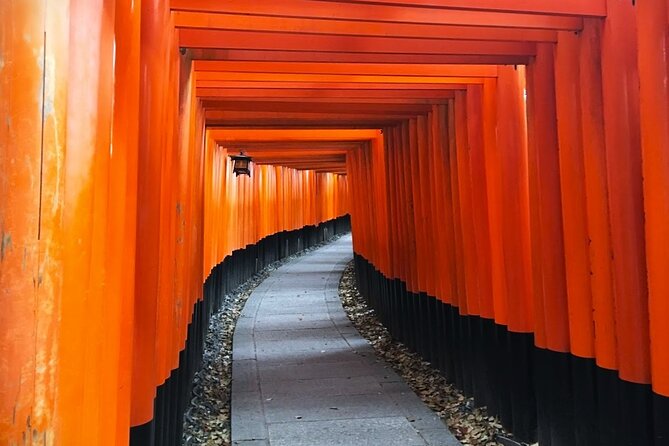
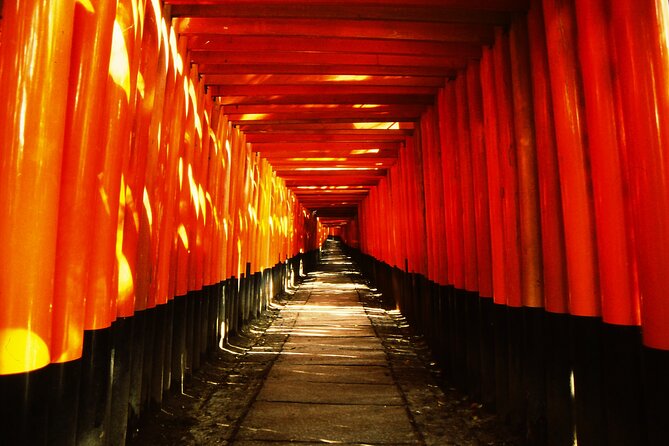
Fushimi Inari-taisha is the centerpiece. The shrine is famous for thousands of vermilion torii gates that climb through the wooded hills behind the main buildings. This tour takes you along the thousand-gate paths, with your guide explaining the shrine as you walk.
The bicycle gets you to the shrine efficiently, but you do not ride through the torii corridors. After locking up or leaving the bikes as directed, you explore on foot for about an hour. Wear shoes suited to walking and expect the shrine visit to involve steps and slopes if you go beyond the first gate-lined section.
An hour lets you see the iconic lower paths and enjoy the atmosphere, but it is not enough for a full climb to the upper summit and back. That distinction matters. Fushimi Inari can occupy half a day if you walk far into the hill, while this tour must also return to Kyoto Station.
The guide’s role is particularly useful here. The shrine can feel confusing because the gates continue in several directions, and the lower approach is one of Kyoto’s most popular sights. A guide can keep your route clear, explain the religious meaning of the gates, and help you spend your limited time well.
Afterward, you have a chance to wander among the shops and stalls around the shrine. Snacks are not included, so carry money if you want to try local specialties. The tour does not promise a formal food tasting, which keeps the price more focused on cycling and guiding.
Returning beside the Kamo River
The return ride follows the Kamo River embankment. This is one of the most appealing parts of the route because it changes the mood after the shrine crowds and temple interiors.
You cycle beside the water with opportunities to notice wildlife and open river scenery. The ride is described as peaceful, and it gives you a calmer final stretch before returning to the cycle terminal. It also shows why a bicycle works well in Kyoto: the route is not just about reaching the next attraction, but about moving through the city at a human pace.
The Kamo River section may be especially welcome if your visit to Fushimi Inari takes place at a busy time. You are not promised solitude, but the riverbank offers a clear change from the shrine approach. It is a good place to let the guide set a relaxed pace and take photographs.
What the $111.05 price buys you
At $111.05 per person, this is not the cheapest way to see Fushimi Inari. You can reach the shrine by train for far less, and independent visitors can walk through the gates without paying an admission charge.
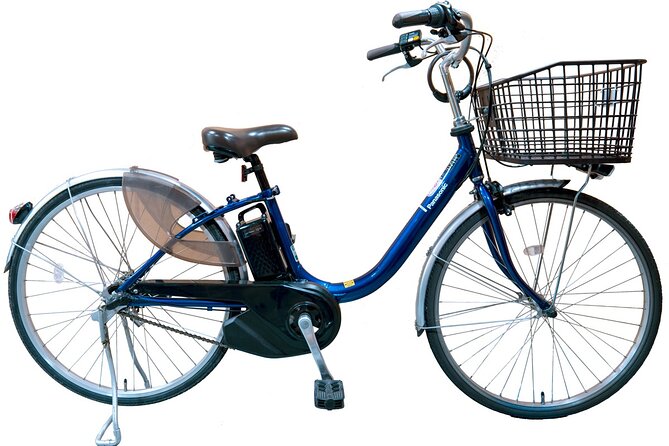
The value comes from combining several services in one half-day outing. You receive the bicycle, helmet, rain poncho, accident insurance, original cycling map, and licensed or certified English-speaking guide. Admission to Sanjusangen-do is included as well.
For a private group, the price is easier to justify. You are not paying for a large coach transfer or a guide speaking to strangers with different interests. You get a route, transport under your own power, explanations at the key sites, and a return to the same starting point.
I would book it if you want help making sense of Kyoto and like the idea of seeing more than one district in a short time. I would skip it if your priority is spending several hours climbing Fushimi Inari, shopping, or exploring each temple at your own pace. The tour covers breadth and connection rather than exhaustive time at one site.
The tour is commonly booked about 24 days ahead, which suggests you should not leave it until the last minute if your Kyoto dates are fixed. Confirmation is sent within 48 hours, subject to availability.
The guide can make or break the experience
The most praised feature is the human one: the guides. Kaz was described as warm, energetic, and good at combining local knowledge, history, and humor. Yuichi was noted for keeping the ride relaxed, taking photographs, and allowing time to sit quietly at a temple.
Tibor was especially patient with children and their questions. JJ and J Jay were praised for detailed explanations and practical help, including spending personal time assisting with a medical problem. Y Yagyu was described as kind, fun, and well informed about the area.
You cannot choose a particular guide from the information provided, so treat those names as examples of the guiding style you may encounter, not a guarantee. The consistent lesson is to expect an active guide who does more than lead the way. If you value stories, photos, and help with the route, that service adds real value.
Who should book this Kyoto bike tour?
This outing suits first-time Kyoto visitors who want a clear introduction to the city south of Kyoto Station. It also works well for families with older children, couples, and small groups who prefer a private schedule to a large organized tour.
It is a good match if you:
- Can ride safely on city roads without assistance
- Want Fushimi Inari plus two temple stops in one outing
- Prefer a relaxed ride to a packed walking route
- Appreciate an English-speaking guide at sacred sites
- Want equipment and accident insurance included
- Have only a few days in Kyoto
It is less suitable if you dislike cycling in traffic, need a completely flat and effortless activity, or want a long visit at the top of Fushimi Inari. The tour operates in rain, and the duration includes travel between every stop, so plan your expectations around a moving half-day rather than three and a half hours at the attractions.
Booking details worth checking
The activity is private, with a minimum of two people and a maximum of six per guide. Groups of seven to twelve can have an extra guide arranged without an added fee. One-person bookings are not accepted.
The supplied cancellation information is inconsistent: one section says cancellation at least three days before the tour, by 18:00 Japan time, may allow a refund, while another says the experience is non-refundable and cannot be changed. Check the exact terms shown at booking before paying.
Should you book it?
Book this tour if you want Fushimi Inari without handling every connection yourself, and if cycling sounds more appealing than moving between sights by train or taxi. The combination of Sanjusangen-do’s statues, Tofuku-ji’s Zen setting, the red torii paths, and the Kamo River gives you a varied slice of Kyoto in one private outing.
Do not book it simply because you want to conquer the entire Fushimi Inari mountain. For that, plan a longer independent visit. But if you want a well-paced route, a small private group, useful local explanation, and a bike ride that makes the spaces between Kyoto’s sights part of the day, this is a strong choice.
FAQ
How long does the private eBike tour last?
The tour lasts approximately 3 hours and 30 minutes. This includes the cycling time between locations, temple and shrine visits, and the return to the meeting point.
Where does the tour begin and end?
It begins and ends at the Kyoto Cycling Tour Project, Kyoto Station Cycle Terminal, at 552-13 Higashiaburanokōjichō, Shimogyo Ward, Kyoto, 600-8235, Japan.
Is the tour private?
Yes. Only your group participates. The standard group size is two to six people per guide. Groups of seven to twelve can have an additional guide arranged without an extra fee.
What is included in the price?
The price includes bicycle use, a helmet, rain poncho, accident insurance, an original cycling map, and a licensed or certified English-speaking guide. Admission to Sanjusangen-do is also included.
Can children join the tour?
Children must be at least 10 years old, 145 centimeters or taller, and able to ride a bicycle safely on the road without assistance.
Does the tour operate in rainy weather?
Yes. The tour operates in rain, and a rain poncho is provided. It is still wise to prepare suitable clothing and check the conditions before setting out.
More Private Cycling Tours in Kyoto
- Barcelona: Private Group Bike Tour
★ 4.8 · 1,420 reviews - Private Self-Guided E-Bike Ride in Tuscany with Vineyard Visit
★ 5.0 · 775 reviews - Bilbao: Guided Highlights Small Group or Private E-Bike Tour
★ 4.8 · 608 reviews - Florence Vintage Bike Tour–guided, small group or private option
★ 4.5 · 524 reviews
More Private Cycling Tours in Japan
- KIYOTO’s Kyoto Private E-Cycling Tour: Highlights & Hidden Gems
★ 5.0 · 48 reviews - The Beauty of Kyoto by Bike: Private Tour
★ 5.0 · 47 reviews - 1-Day Private Rural E-Bike Tour in Hida
★ 5.0 · 188 reviews - 3-Hour Tokyo Private E-Bike Tour Starting from Your Hotel
★ 5.0 · 117 reviews
Newest rides we have reviewed in Kyoto
- ONLY YOU in the Bamboo Forest! 4 hours E-bike tour with a local★ 5.0 · 45 reviews
- South Kyoto in a Nutshell: Gentle Backstreet Bike Tour!★ 5.0 · 225 reviews
- Pedal Adventure Kyoto’s iconic landmarks on an e-bike tour★ 5.0 · 189 reviews
- The Beauty of Kyoto by Bike: Private Tour★ 5.0 · 47 reviews
- Kyoto Bamboo Forest & Golden Pavilion E-Bike Tour★ 5.0 · 50 reviews
- Kyoto Shogun Cycling Tour★ 5.0 · 13 reviews
- Secret Eastern Kyoto Biking Adventure★ 5.0 · 44 reviews
- Arashiyama Bamboo Forest E-Biking Tour★ 5.0 · 183 reviews
Private Cycling Tours, compared.
Private Self-Guided E-Bike Ride in Tuscany with Vineyard Visit
Read our review →
Guided Highlights Small Group or Private E-Bike Tour
Read our review →
Florence Vintage Bike Tour–guided, small group or private option
Read our review →
Bike Tour Copenhagen. Private Guide, Concierge Service, Small Grp
Read our review →

Prague Bike City Tour with Small Group or Private Option
Read our review →
Other lists this ride turns up in