
REVIEW · SMALL-GROUP BIKE TOURS IN GERMANY
Small-Group Historical Bike Tour in Berlin
Berlin’s history is spread across a wide patch of central city, and a bicycle helps you cover it without spending half your day underground. This tour links the Berlin Wall, Brandenburg Gate, Reichstag, Jewish quarter, Holocaust Memorial, Checkpoint Charlie, and Museum Island in about four hours. It is part history lesson and part city orientation.
I like the way the route combines major sights with less obvious historical corners, especially St. Nicholas Church, Oranienburgerstrasse, and the Book Burning Memorial at Bebelplatz. I also like the personal touch: guides such as Jerry, Pablo, and Demetrios are willing to answer questions and, when the group is very small, adjust the route to your interests. The main caution is the bikes. Most are three-speed city bikes with back-pedal brakes, which can take a little practice.
Key points to know before you book
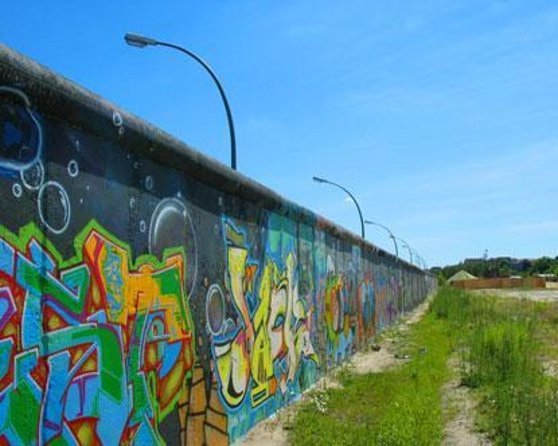
- A wide Berlin history lesson: The route covers medieval Berlin, Jewish history, Nazism, the Cold War, reunification, and modern memorials.
- A flat and manageable ride: Berlin’s mostly level streets make the cycling approachable, with frequent stops rather than a nonstop workout.
- Small-group attention: The activity is described as private, with only your group participating, and guides may tailor the discussion when numbers are low.
- A strong central location: The meeting point is at Panoramastraße 1 beside Alexanderplatz and the TV Tower.
- No museum admissions included or required: The experience focuses on outdoor sights and explanations, so food, drinks, hotel transfers, and indoor entry fees are not part of the price.
- Check the bike before setting off: Back-pedal brakes are standard on the supplied bikes, and one past outing also exposed problems with bike condition and delayed start time.
Why a bike works so well for Berlin’s history
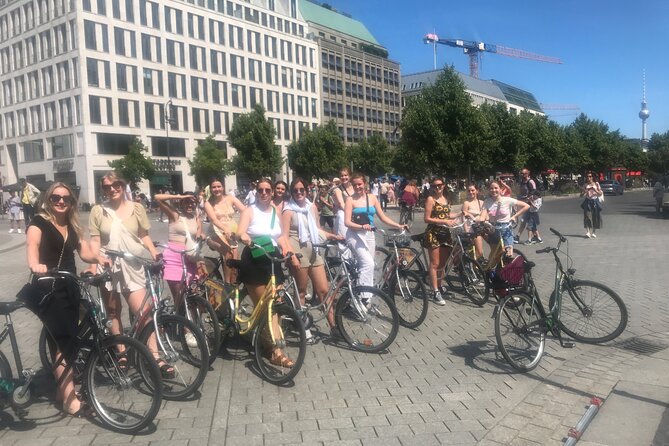
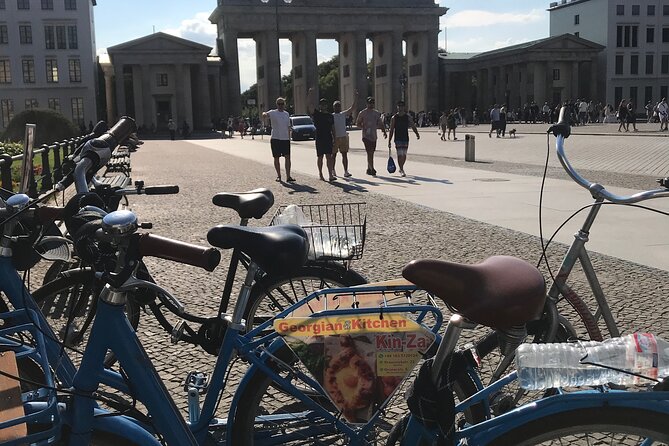
Berlin can look deceptively compact on a map. The Brandenburg Gate, former Wall sites, Museum Island, Checkpoint Charlie, and Alexanderplatz are all in the central area, but walking between every stop takes time and energy. On a bike, you can move from one chapter of the city’s past to another without losing the thread.
The route also gives you a useful first look at Berlin. You pass grand government buildings, broad former border zones, restored squares, memorials, and ordinary streets where history is less obvious. I would book this early in a visit if you want help deciding which places deserve a longer return visit.
At about $54.42 per person, the value depends on how much you want from the guide. You are paying for three to four hours of guiding, bicycle use, and a route that would be hard to organize efficiently on your own. You are not paying for museum entry, lunch, drinks, or transport from your hotel.
The tour begins at 11:00 a.m. at Panoramastraße 1, near the Berlin TV Tower at Alexanderplatz, and returns there. Allow extra time to identify the correct side and entrance of the TV Tower area. One practical complaint involved people waiting at the wrong side, so use the exact meeting instructions rather than simply typing TV Tower into a map.
More Small-Group Bike Tours in Germany
- Berlin Wall History Small Group Cycling Tour
★ 4.9 · 152 reviews - Berlin: Small Group Bike Tour Through City Center
★ 4.9 · 64 reviews - Munich Small-Group Bike Tour
★ 4.5 · 510 reviews
Alexanderplatz and the beginnings of Berlin
The ride starts near the Berliner Fernsehturm, Berlin’s famous television tower. The stop is brief, but Alexanderplatz gives the guide a useful opening stage. The square has changed greatly over time, and its location helps you understand the contrast between old Berlin and the planned, monumental style of the former East German capital.
From here, the route reaches St. Nicholas Church, one of central Berlin’s oldest landmarks. The church is tied to the city’s early development and the story of Berlin’s beginnings as a town. This is a good reminder that Berlin is not only a twentieth-century history lesson. Beneath the Wall stories and Nazi-era sites is an older city with medieval roots.
The stops are generally short, often 10 to 15 minutes. That keeps the ride moving, but it also means you should not expect a full church visit or an extended architectural lecture. You get the setting and the main story, then continue by bike.
Oranienburgerstrasse and Berlin’s Jewish history
Oranienburgerstrasse brings the group into one of central Berlin’s most important Jewish districts. The New Synagogue is the focus, along with the wider story of Jewish life in Berlin.
This part of the route matters because it broadens the tour beyond buildings connected to war and dictatorship. The guide can place Jewish history within the city’s longer story, including the presence of a Jewish community before the Holocaust and the destruction and loss that followed.
The stop lasts about 15 minutes. You will have time for an explanation and photographs, but not a lengthy interior visit. If Jewish history is a major reason for your Berlin trip, treat this as an introduction and plan a separate visit to a museum or synagogue site afterward.
The Berlin Wall Memorial at Bernauer Strasse
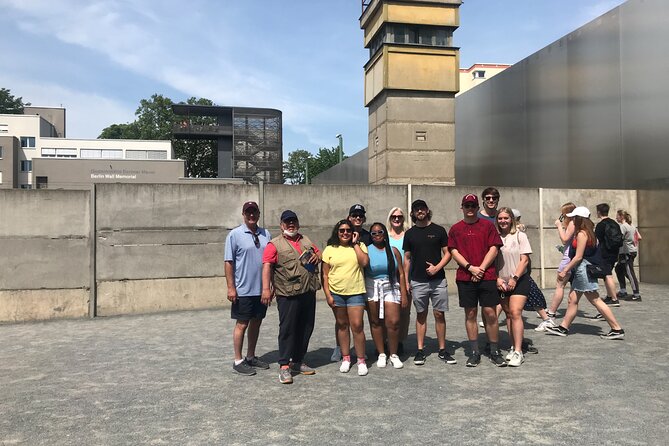
The Berlin Wall Memorial is one of the most useful stops on the ride. At Bernauer Strasse, the former border ran directly through a built-up part of the city. The memorial area stretches for about 1.4 kilometers and preserves a section of the Wall, border structures, and the former grounds behind the fortifications.
The guide explains how the border system developed and how the division affected people living on both sides. The surviving traces make the story easier to grasp than a simple panel or isolated piece of concrete. You can see that the Wall was not merely one barrier. It formed a wider border zone designed to prevent escape.
The planned stop is about 25 minutes, one of the longer pauses on the route. That is enough for a clear overview and photographs. It is not enough to inspect every part of the memorial, so I would return later if this subject interests you.
The cycling itself is generally gentle. Berlin is flat, and the route includes regular stops. Still, you need basic bike confidence. The supplied bicycles may use back-pedal braking, meaning you press the pedals backward to brake the rear wheel. This is common on some Berlin city bikes, but unfamiliar riders should practice before entering traffic.
More Heritage and Temple Bike Tours in Berlin:
- Berlin (E)Bike Tour Historical Highlights in Small groups
★ 4.5 · 24 reviews - Bangkok: Temples, Canals & Local Life Bike Tour
★ 4.9 · 3,511 reviews - Historical Singapore Bike Tour on Full-Sized Bicycles
★ 5.0 · 1,421 reviews - Barcelona: 2.5-Hour Bike or E-Bike Historical Tour
★ 4.5 · 1,262 reviews
Reichstag and the Brandenburg Gate
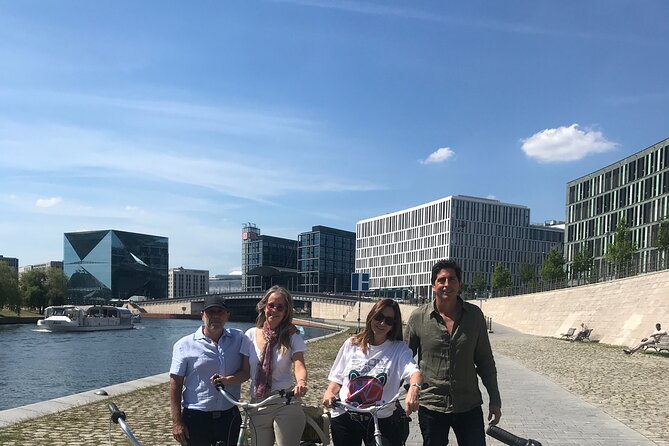
The Reichstag is a short stop, around 10 minutes, but its location gives the guide plenty to discuss. The building houses the German Parliament and was the seat of government during the Weimar Republic. Its history includes the 1933 fire and the political turmoil that helped the Nazis seize power.
You will view the building from outside. This tour does not include entry to the parliamentary building or its dome. That is worth knowing if you want to go inside, since the Reichstag has its own visit arrangements.
Nearby, the Brandenburg Gate provides one of the tour’s clearest symbols. Built during the reign of Friedrich Wilhelm II in the eighteenth century, it later stood in the restricted zone between East and West Berlin. The gate became associated first with division and later with reunification.
The route does not list a separate time for the gate, but the guide discusses it while moving through the area. I like this pairing: the Reichstag explains political power, while the Brandenburg Gate shows how one monument can take on a different meaning as a city changes.
The Holocaust Memorial and Topography of Terror
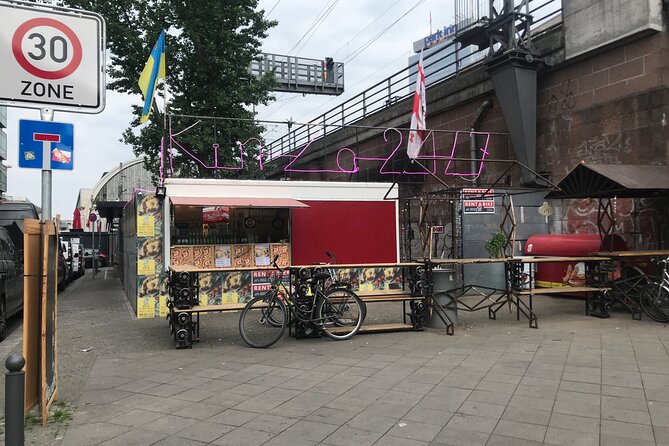
The Memorial to the Murdered Jews of Europe is a major stop, lasting about 15 minutes. You can walk among the concrete blocks and take photographs while the guide explains the purpose and design of the site.
The memorial is open to the public, but this outdoor visit does not replace the underground information center. If you want names, biographies, and a fuller account of Jewish life and persecution, plan additional time on your own.
The route then moves to the Topography of Terror, where you stop for roughly 10 minutes. The site was once home to the Gestapo headquarters and other Nazi security offices. The brief visit connects the city’s visible monuments with the machinery of dictatorship that operated behind them.
This section can feel compressed because two very serious subjects receive short stops. The benefit is range. In a single ride, you see how Berlin remembers victims, identifies places of persecution, and explains the structures that made Nazi rule possible.
Checkpoint Charlie and Gendarmenmarkt
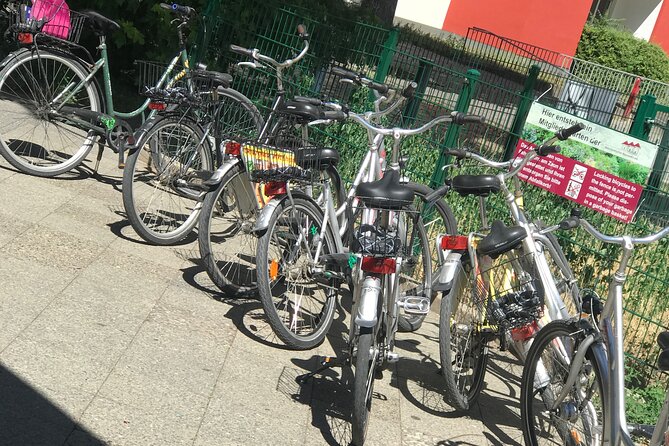
Checkpoint Charlie receives only about five minutes, so think of it as a quick orientation stop and photo opportunity. The former crossing point became one of the best-known symbols of Cold War Berlin. The guide places it within the larger story of a divided city, but there is not much time for a long discussion.
That short visit may suit you if you want to see the landmark without making it the center of your day. Checkpoint Charlie has a strong reputation, but the surrounding area can feel more commercial than historical. A guide helps separate the genuine Cold War meaning from the modern tourist presentation.
At Gendarmenmarkt, the group rides through the square, takes photographs, and hears about its buildings and role in the city. The stop lasts about 10 minutes. Its grand architecture provides a useful change of mood after the Wall and Nazi-era sites.
Bebelplatz and the Book Burning Memorial
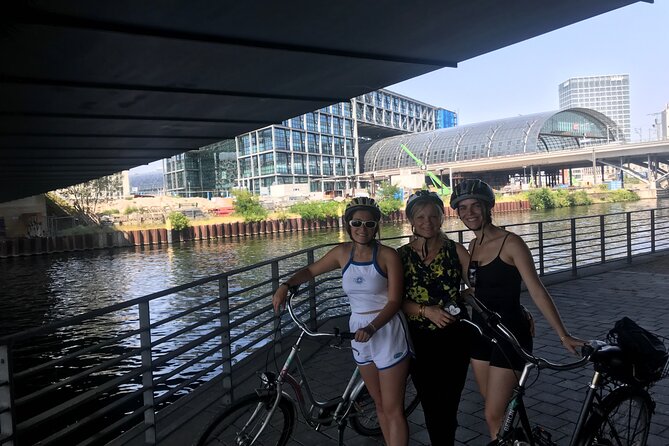
The Book Burning Memorial at Bebelplatz gets about 15 minutes. The memorial recalls the Nazi book burning carried out by students in 1933, and the guide explains the site before you continue.
Bebelplatz is particularly effective because the memorial is easy to miss. A simple feature in the pavement points toward empty underground bookshelves, creating a quiet contrast with the square above. The stop shows how Berlin uses small, deliberately restrained memorials as well as large public monuments.
This is another place where I would listen closely. The experience gives you the meaning and location, but not an extended indoor program. Its value comes from seeing the site in person and understanding why it was chosen.
Museum Island and the return to Alexanderplatz
The ride through Museum Island brings the tour back toward the center. You see the museums and hear about the island’s place in Berlin’s cultural history. The listed stop lasts about 15 minutes, enough to identify the main institutions and decide which one you may want to visit later.
You do not enter the museums during the bike tour. That is sensible, since the route is designed to connect many parts of the city rather than spend an hour inside one building.
The group then rides back to the meeting point near the TV Tower. The full outing usually takes three to four hours, although past experience shows that delays can occur. One outing began about 30 minutes late after difficulties with finding the guide and sorting out bicycles. That does not appear to be the normal plan, but it is wise not to schedule a tight reservation immediately afterward.
The guides and the feel of the ride
Jerry is the main guide associated with the experience, and Pablo and Demetrios have also led tours. Their styles differ, but the shared approach is personal and conversational. Jerry is described as warm, funny, and eager to answer questions. Pablo uses old photographs and visual material to help explain how Berlin changed. Demetrios is especially suited to travelers who want a strong historical thread.
The best part of the guiding is the chance to ask questions as you go. When a group is very small, the guide may adjust the route or spend more time on a particular interest. One solo rider received a personalized outing that included looking for a memorial plaque connected to the rider’s family.
The experience is advertised as a private activity, with only your group participating, while the tour title presents it as small-group. Group size can affect the feel of the day. A larger small group may be more social, while a tiny group gives you more room to shape the conversation.
The main weakness is consistency. Most riders describe friendly guides, clear explanations, and an easy pace, but one person felt the historical content was too light. If you already have a strong grasp of German history, tell the guide what you want to explore. If you want an academic-level treatment of every site, this is probably not the right format.
Bikes, timing, and practical comfort
Bicycle quality has received mixed treatment. Several riders found the bikes decent or easy to use, while another group reported older bikes, poor preparation, and trouble finding suitable bikes for young boys. The operator explained that a mechanic was ill that day and that the guide was still new to bike tours.
I would inspect the bicycle before leaving the meeting point. Check the saddle, tires, gears, and brakes, and make sure you understand the back-pedal system. Children must be accompanied by an adult, and the stated minimum age is two, but the information does not explain what type of child seat, trailer, or youth bicycle is supplied. Ask before booking if your child cannot ride a standard adult bike.
The dress code is casual. Bring clothing suited to the weather, since the ride is outdoors and some stops can feel cold, especially in winter. One guide stopped for coffee during a chilly outing, but food and drinks are not included, so carry money and plan accordingly.
Most people can participate, and the activity is near public transportation. Service animals are allowed. Hotel pickup and drop-off are not offered, so you need to make your own way to Alexanderplatz.
Cancellation and booking value
You can cancel for a full refund up to 24 hours before the 11:00 a.m. start time. Changes or cancellations made less than 24 hours before the start are not accepted for a refund. If the minimum number of participants is not reached and the activity is canceled, you are offered another date or experience, or a full refund.
For the price, I see this as a good buy for a first visit to Berlin, especially if you value a guide’s stories and want to cover a lot of ground. It is less compelling if you plan to enter several museums or want a specialist tour focused only on the Holocaust, the Cold War, or Jewish Berlin.
Should you book this Berlin bike tour?
Book it if you want a broad, outdoor introduction to Berlin and feel comfortable riding a bicycle in a city. The flat route, frequent stops, and friendly guiding make it suitable for many casual cyclists, and the mix of Wall history, Nazi-era sites, royal architecture, Jewish history, and city origins gives you a useful framework for the rest of your visit.
I would be cautious if you need highly polished equipment, exact timing, or a fully scripted academic lecture. Confirm the meeting point, arrive early, ask about the brakes, and tell the guide what subjects matter most to you. Done that way, this is a practical and good-value way to get your bearings fast while seeing far more than you could comfortably cover on foot.
FAQ
How long does the bike tour last?
The tour lasts approximately three to four hours.
What time does the activity start?
The tour starts at 11:00 a.m.
Where does the tour begin and end?
It begins at Panoramastraße 1, 10178 Berlin, Germany, near the TV Tower at Alexanderplatz, and ends back at the same meeting point.
Is bicycle use included?
Yes. Use of a bicycle and a local professional guide are included.
Are food, drinks, or hotel transfers included?
No. Food, drinks, hotel pickup, and hotel drop-off are not included.
What sights does the route visit?
The route includes Alexanderplatz and the TV Tower, St. Nicholas Church, Oranienburgerstrasse, the Berlin Wall Memorial, the Reichstag, Brandenburg Gate, the Holocaust Memorial, Topography of Terror, Checkpoint Charlie, Gendarmenmarkt, Bebelplatz, and Museum Island.
Can I cancel for a full refund?
Yes. You can cancel at least 24 hours before the start time for a full refund. Cancellations or changes made less than 24 hours before the start are not accepted for a refund.
More Small-Group Bike Tours in Berlin
- Small Group Guided Bike Tour of Amsterdam’s Hidden Gems
★ 5.0 · 3,936 reviews - Rome City Small Group Bike Tour with quality Cannondale EBike
★ 5.0 · 1,380 reviews - Complete Cracow Bike Tour (small group of maximum 15 people!)
★ 5.0 · 1,322 reviews - Rome by Night – Ebike Small Group Tour – Food and Wine (Option)
★ 5.0 · 1,275 reviews
Newest rides we have reviewed in Berlin
- From Berlin: Gardens & Palaces of Potsdam Bike Tour★ 5.0 · 61 reviews
- Berlin: Small Group Bike Tour Through City Center★ 4.9 · 64 reviews
- Berlin: Illuminated Berlin by Bike Taxi★ 4.8 · 162 reviews
- Berlin: Green City Guided Bike Tour★ 4.6 · 29 reviews
- Berlin: 48-Hour or 72-Hour Bike Rental★ 5.0 · 14 reviews
- Berlin (E)Bike Tour Historical Highlights in Small groups★ 4.5 · 24 reviews
- Berlin: From East to West & Wall Tour by Bike with a Guide★ 4.8 · 171 reviews
- Berlin: 3-hour bike tour – A journey through time in the capital★ 4.8 · 24 reviews
Heritage and Temple Bike Tours, compared.
Historical Singapore Bike Tour on Full-Sized Bicycles
Read our review →
Night Bike Tour with Temples & Flower Market Visit
Read our review →
Intramuros, Manila: Historical Bamboo Bike Tour
Read our review →
Historical Bike Tour of Savannah and Keep Bikes After Tour
Read our review →Other lists this ride turns up in