
REVIEW · KYOTO
Kyoto: Half-day Guided Bike Tour with Fushimi Inari
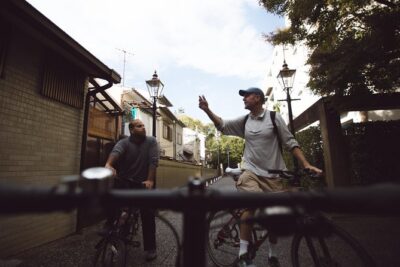
The best part of this Kyoto bike tour is the way it links famous sights with the quieter streets between them. In just three and a half hours, you pedal from Toji Temple to Fushimi Inari, passing canals, riverbanks, Gion lanes, and neighborhood streets that are easy to miss from a bus or train.
I like the gentle pace and the small group, capped at eight people. I also like the mix of major sights and less crowded corners, especially the ride beside the Takase and Kamo rivers and the backstreets of Gion. Guides such as Jay, Julian, Indra, Sean, and Mayco are praised for making the history easy to follow.
The main thing to consider is the distance. This is not a quick pedal between two sights. One outing covered more than 15 kilometers, and you need to be comfortable riding a bicycle for several hours. The route is not suitable for children under 13, people with back problems, or anyone who cannot ride.
Key points to know before you book
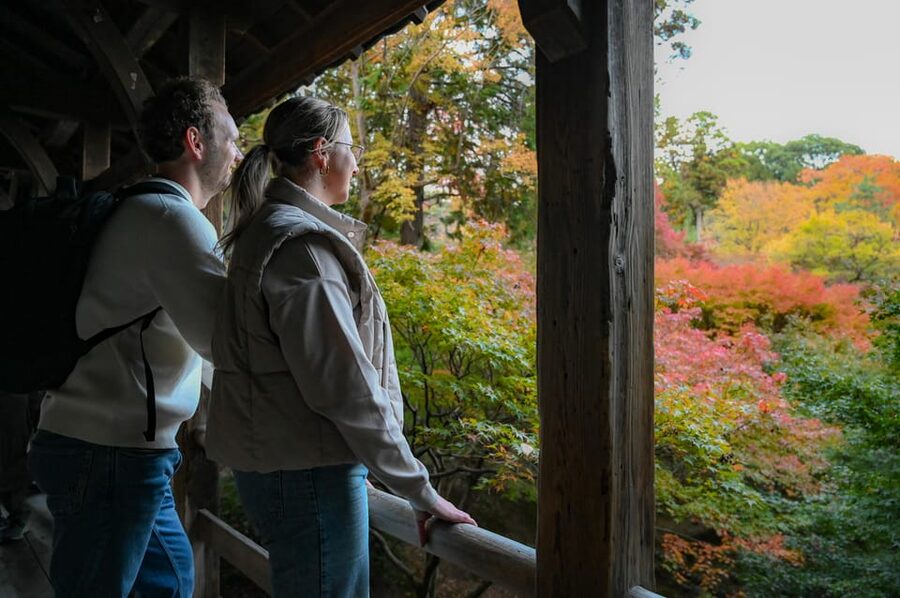
- Fushimi Inari comes after a full city ride: You reach the orange torii gates near the end, after temples, rivers, Gion, and Tofukuji.
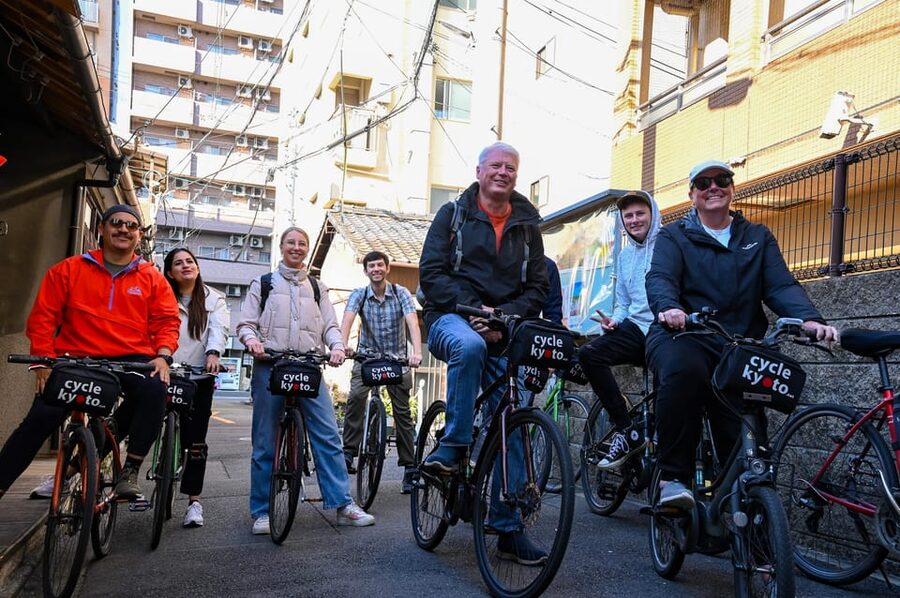
- The group stays small: A maximum of eight people makes it easier to ask questions and keep the pace relaxed.
- You see Kyoto between the headline sights: The Takase Canal, Kamo River, and local streets add a more everyday side of the city.
- Several guides receive especially strong praise: Jay, Julian, Indra, Sean, Juan, and Mayco are named for their humor, patience, cultural insight, and easy manner.
- An e-bike is available for 3,000 yen extra: Ask for one in advance if hills, distance, or Kyoto’s summer heat concern you.
- The $77 price buys more than a bicycle: The fee includes a bike, helmet, water, guide, and several hours of context at major temples and shrines.
Why this route works so well in South Kyoto
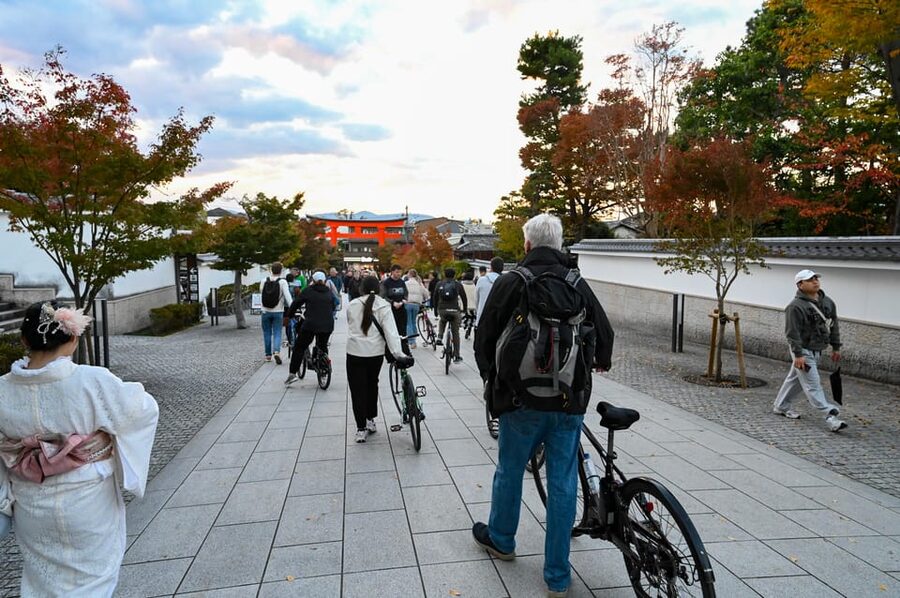
Kyoto can be awkward to cover efficiently. Its best sights are spread across the city, and buses can be slow while trains do not reach every temple entrance. A bicycle gives you a practical middle ground. You cover more ground than on foot, but you still see the narrow streets, waterways, and small details that pass too quickly from a vehicle.
This tour focuses on southern and central Kyoto. It does not try to squeeze in every famous temple. Instead, it builds a connected route around Toji, Higashi-Honganji, Gion, Tofukuji, and Fushimi Inari.
That connection matters. You are not simply being driven from one photo stop to another. You ride between places, which gives you a better sense of how the city fits together. The route also uses backstreets and riverside sections, making the ride feel less like a checklist of monuments.
The pace is described as relaxed, but you should still arrive ready to ride. A recent outing covered more than 15 kilometers, and the full experience lasts 210 minutes. The group size helps. With no more than eight people, the guide can slow down, answer questions, and adjust the amount of time spent at each stop when conditions allow.
More Half-Day Rides in Kyoto:
- Red Rock Canyon eBike Half-Day Tour
★ 5.0 · 1,870 reviews - Lisbon: 7 Hills Half-Day Electric Bike Tour
★ 4.9 · 1,592 reviews - Ubud: Rice Terraces & Villages Half-Day Fat Tire E-Bike Tour
★ 4.9 · 602 reviews
Starting near Kyoto Station
The tour begins at Cycle Kyoto, within easy reach of Kyoto JR Station. From the station, go past Avanti, cross one set of traffic lights, pass the Daily Yamazaki convenience store, and take the next left.
Give yourself enough time to find the shop. Kyoto Station is large, and a few extra minutes at the start are useful for getting settled, choosing a bicycle size, and listening to the safety briefing.
The opening safety talk lasts about 15 minutes. That may seem like time taken away from sightseeing, but it is welcome preparation for a city ride. You will be moving through local streets, along riverside paths, and through areas with pedestrians, so take the briefing seriously.
Bicycle rental, a helmet, and water are included. A small pouch on the bicycle is provided for personal items, but do not treat it as a full day bag. Bring only what you need, and keep valuables secure.
Toji: a strong first temple stop
The first major stop is Toji, one of Kyoto’s most important temple sites and described here as the city’s oldest temple. It is also a UNESCO heritage site, so this is more than a quick roadside pause.
The guided visit lasts about 35 minutes. That gives you enough time to look around and hear the guide explain what you are seeing without turning the stop into a long temple lecture.
Starting at Toji is smart. You get a substantial cultural stop early, before the route moves into the riverside and neighborhood sections. It also gives you a clear sense that this tour is not only about riding. The bicycle is the means of connecting several carefully chosen places.
Bring your camera, but leave room for listening. The value here comes from knowing why the temple matters and how it fits into Kyoto’s religious and architectural story.
Higashi-Honganji and central Kyoto
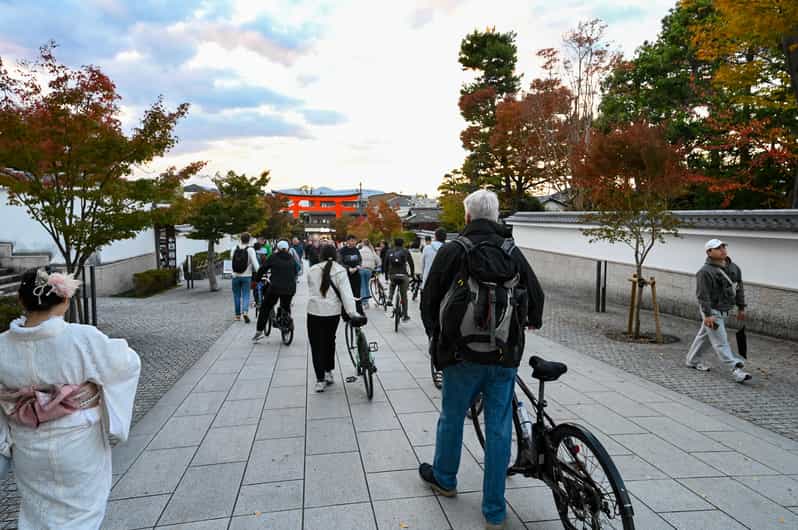
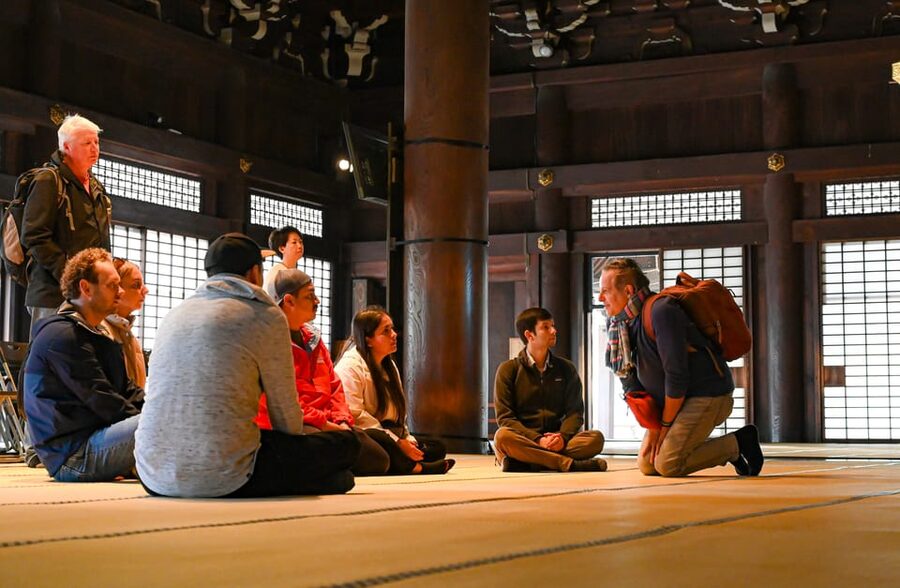
From Toji, the ride continues to Higashi-Honganji, one of Japan’s largest temples. You spend about 35 minutes here with the guide.
This stop adds a different feel from Toji. Seeing both temples early in the route gives you useful contrast, even if you are not already familiar with Japanese Buddhist traditions. The guide can help you notice the scale, layout, and religious purpose of the buildings rather than simply photographing large wooden structures.
Two temple visits back to back may feel like a lot for some people. If you have limited interest in religious sites, this part could seem formal. For most first-time visitors, though, the explanation makes the difference. You are not left to guess which details matter.
The tour is especially useful for anyone who wants context but does not want to commit to a full-day temple program. You get a solid introduction, then return to the bicycle for a change of pace.
More Guided Rides in Kyoto:
- Kyoto: Hidden Gems E-Bike Tour with Local Japanese Guide
★ 4.9 · 189 reviews - 3-Hour Porto Highlights on a Electric Bike Guided Tour
★ 5.0 · 4,392 reviews - Small Group Guided Bike Tour of Amsterdam’s Hidden Gems
★ 5.0 · 3,936 reviews - Porto: City Highlights 3-Hour Guided Electric Bike Tour
★ 4.8 · 3,092 reviews
Following the Takase Canal and Kamo River
After the central temples, the route follows the Takase Canal and then reaches the Kamo River. The canal stop lasts about 10 minutes, while the Kamo River visit takes around 15 minutes.
These are short stops, but they give the tour breathing room. Kyoto’s appeal is not limited to temple gates and grand halls. The waterways help explain the shape and rhythm of the city, and cycling beside them is calmer than working through main roads.
The riverside portions are also where the bicycle format feels most useful. You can cover ground without hurrying, and you get a view of Kyoto that is more open than the temple compounds. The ride breaks up the indoor and architectural focus of the first stops.
Do not expect a long riverside picnic or a leisurely café break. The schedule is active and focused. These are brief visits within a larger loop, not separate excursions.
Gion beyond the postcard streets
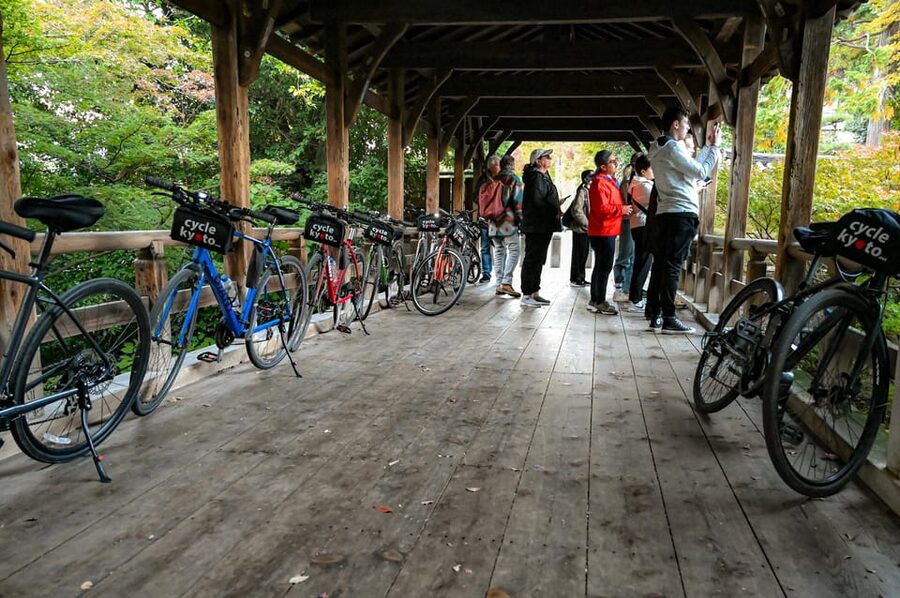
The tour then enters Gion, Kyoto’s famous geisha and teahouse district. The guided portion lasts around 30 minutes and focuses on the backstreets rather than only the best-known photo spots.
This is one of the strongest reasons to choose the bicycle tour. Gion is easy to visit on foot, but a guide can help you understand the district’s layout and customs while keeping you moving through a wider area. The quieter lanes offer a different experience from the main streets, where visitors often gather.
You should be respectful here. Gion is not a stage set. It is a working neighborhood with homes, businesses, and traditional establishments. Listen to the guide about where to stop and how to behave, and avoid treating people as photo subjects.
Cycling through Gion also requires care. Narrow lanes and pedestrians mean you should not rush. The group format helps the guide keep everyone together, but you still need to control your bicycle and follow instructions.
Tofukuji and the shift toward Fushimi
The next major stop is Tofukuji Temple, where you spend about 30 minutes for photographs. This is a photo stop rather than a full guided visit, so the emphasis shifts from detailed explanation to views and atmosphere.
Tofukuji is well placed in the route. It provides a natural transition from central Kyoto and Gion toward Fushimi Inari. After seeing large temples and traditional streets, you get time to pause, take pictures, and reset before the final shrine visit.
The tour then rolls through a local neighborhood. This section is important because it shows you the ordinary spaces between Kyoto’s major attractions. You might find the neighborhood riding less visually dramatic than the temples, but it gives the experience a more grounded feel.
This is also where the distance can begin to matter. If you are not accustomed to cycling, the cumulative riding may feel more demanding than any single section suggests. Comfortable clothing, proper shoes, sunscreen, and weather-appropriate layers are practical choices.
Fushimi Inari: the final major payoff
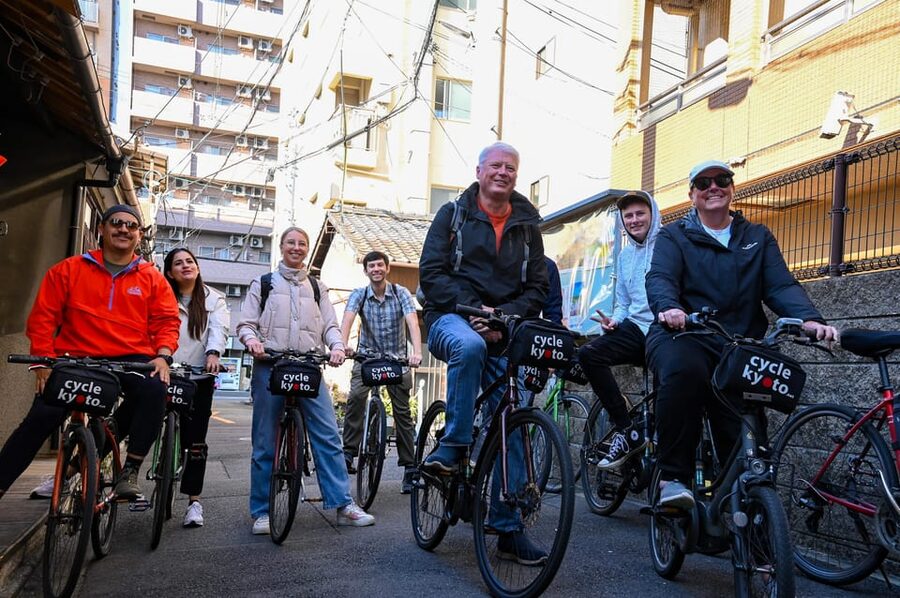
The last major stop is Fushimi Inari Taisha, with about 45 minutes for a guided visit. The shrine is famous for its long corridors of orange torii gates and is the most visited attraction in Japan according to the tour information.
Arriving by bicycle makes sense. Fushimi Inari is a major destination, and reaching it after riding through southern Kyoto gives the final stop a satisfying sense of progress. You are not seeing it in isolation. You have followed the city toward it, passing temples, rivers, historic districts, and local streets along the way.
The tour includes a walk around the famous torii gates. Forty-five minutes is enough for an introduction and photographs, but not for a complete exploration of every path on the mountain. Keep that in mind if Fushimi Inari is your top priority. You will see the main attraction, but this half-day outing is designed to show you several parts of Kyoto rather than spend most of the day at one shrine.
The timing also means you should save some energy for the end. Fushimi Inari is the final substantial visit before cycling back to Cycle Kyoto, so you do not want to arrive exhausted.
The guides make the difference
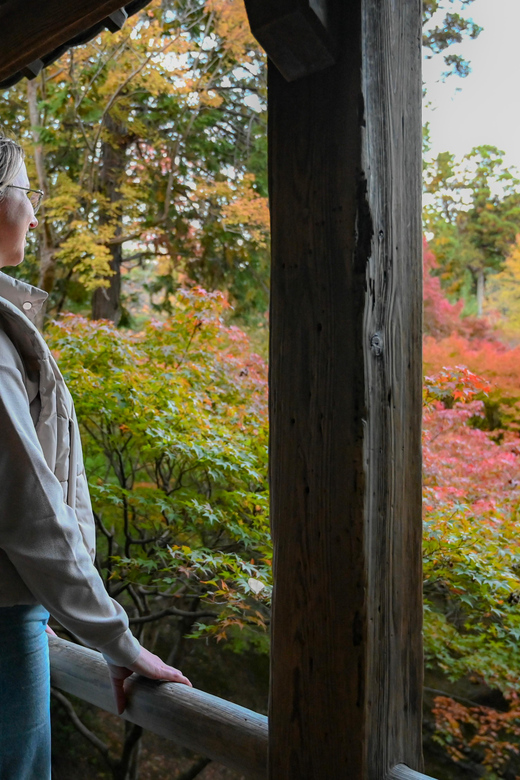
A bike tour is only as good as its guide, and this experience depends heavily on the person leading your group. Jay is praised for his passion and his ability to make everyone feel comfortable. Julian is described as easygoing and able to keep the experience enjoyable even in poor weather.
Indra is noted for answering questions and adding useful local information. Sean is praised for adjusting the pace and time at stops, while Juan is described as patient and full of information. Mayco is also singled out for a strong, well-informed presentation.
You cannot choose a particular guide unless the operator allows it, so treat these names as examples of the standard you may receive rather than a promise of one specific person. The key advantage is the small group. A maximum of eight makes conversation easier and lets the guide keep an eye on riders with different abilities.
English is the stated tour language. If you enjoy asking questions about Kyoto’s culture, temples, or neighborhoods, this format gives you more opportunity than a large coach tour.
Is $77 a fair price?
At $77 per person, the tour is not the cheapest way to see Kyoto. You could visit many of these areas independently using trains, buses, and your own walking route. The question is what you value.
The price includes the bicycle, helmet, water, guide, and 210 minutes of organized sightseeing. You are also paying for route planning, navigation, local explanation, and the chance to connect several locations without working out the transport between them.
I think the price is reasonable for first-time visitors who want an active introduction to southern Kyoto. It is particularly useful if you have only a few days and want to cover a lot without spending the whole day on foot.
The value is weaker for confident cyclists who already know Kyoto and prefer to set their own schedule. It is also less attractive if you mainly want a long, slow visit inside Fushimi Inari, since the tour divides its time among several places.
An e-bike costs an additional 3,000 yen. That upgrade is worth considering if you are unsure about riding more than 15 kilometers, visiting during warm weather, or keeping up with a group. Ask for it when booking, since availability is not guaranteed.
Practical details that affect your day
Wear comfortable clothing suitable for cycling. Good shoes matter more than stylish ones, and sunscreen is useful even when the day feels mild. Check the forecast before leaving, and bring warm layers in cooler weather.
Smoking, alcohol, and drugs are not allowed. The tour does not include meals, so eat before you start or plan to buy food afterward. The schedule does not list a meal break.
The public tour requires a minimum age of 13. It is not suitable for people with back problems or anyone who cannot ride a bicycle. If you have any concern about balance, stamina, or the distance, ask about the e-bike before paying.
Free cancellation is available up to 24 hours before departure for a full refund, and you can reserve now and pay later. Starting times vary, so check availability for the date you want.
Who should book this Kyoto bike tour?
I would choose this tour for a first visit to Kyoto, especially if you want more than a temple checklist. It suits active adults, older teenagers, couples, and small groups who like history but do not want to spend every hour inside formal temple grounds.
It is also a good choice for visitors who enjoy local streets and changing scenery. The route moves from temple compounds to canals, rivers, Gion lanes, neighborhood roads, and the torii gates of Fushimi Inari.
I would skip it if you dislike cycling, have back trouble, or want a very slow sightseeing day. You should also choose another plan if your main goal is to spend several hours at Fushimi Inari alone.
Should you book it?
Book this tour if you want a well-paced overview of South Kyoto with a guide, a bicycle, and a small group. The strongest features are the route design, the riverside riding, the Gion backstreets, and the personal attention possible with eight people or fewer.
Before booking, be honest about your cycling ability and the likely distance. If that feels manageable, $77 is a fair price for a morning that combines major temples, local streets, and Fushimi Inari without making you solve Kyoto’s transport puzzle yourself.
FAQ
How long does the Kyoto bike tour last?
The tour lasts 210 minutes, or three and a half hours.
What sights are included?
The route includes Toji, Higashi-Honganji Temple, the Takase River, the Kamo River, Gion, Tofukuji Temple, and Fushimi Inari Taisha.
Is the tour conducted in English?
Yes. The tour includes a live English-speaking guide.
How many people can join the group?
The group is limited to eight participants.
What is included in the price?
The price includes bicycle rental, a helmet, a guide, and water. Meals are not included.
Can I use an e-bike?
E-bikes are available upon request for an additional fee of 3,000 yen.
Is there a minimum age?
Yes. The minimum age for the public tour is 13. The tour is not suitable for children under 13, people with back problems, or people who cannot ride a bicycle.
Newest rides we have reviewed in Kyoto
- Best of Kyoto: Ginkakuji & Path of Philosophy E-Bike Tour★ 4.9 · 79 reviews
- Kyoto: Tailored E-Bike Tour to Highlights & Hidden Gems★ 4.9 · 32 reviews
- Kyoto: Full Day Bike Tour★ 4.9 · 39 reviews
- Kyoto: Early Bird E-Bike Tour with Lunch★ 5.0 · 14 reviews
- Kyoto: Full-Day City Highlights Bike Tour with Light Lunch★ 5.0 · 52 reviews
- Cycle Kyoto’s Hidden Gems & Gion Stroll★ 5.0 · 29 reviews
- Kyoto: Arashiyama Bamboo Forest Morning Tour by Bike★ 5.0 · 115 reviews
- Kyoto: Afternoon Bamboo Forest and Monkey Park Bike Tour★ 4.9 · 83 reviews
Kyoto Cycling Tours, compared.
Arashiyama Bamboo Forest & Hidden Gems Bike Tour (Early Bird)
Read our review →
5 Top Highlights of Kyoto Full Day Bike Tour (E-bike option)
Read our review →
Full Day Biking Tour Exploring the Best of Kyoto
Read our review →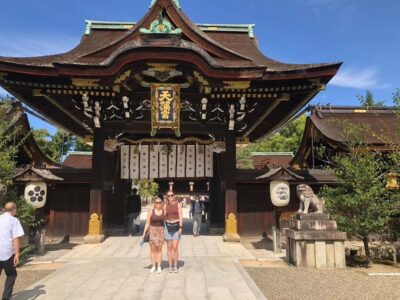
Afternoon Kyoto Bike Tour: Bamboo Forest, Monkeys & Hidden Spots
Read our review →Other lists this ride turns up in