REVIEW · CYCLING TOURS
Fatima Neighborhood and Church Unit Bike Tour
Brasília makes the most sense when you see how its grand plan works at street level. This three-hour bike tour takes you from the TV Tower through a model superquadra, parks, cinemas, music spaces, and two very different churches, including the small Fatima Church and the dramatic São João Bosco Sanctuary.
I like the route for two clear reasons: it explains daily life in the superquadras, not just Brasília’s famous monuments, and it mixes architecture with parks, music, film, and public spaces. I also like the manageable group size of no more than 15 people. The main consideration is the weather. The tour requires good conditions, and the open route can be less appealing on a very hot or rainy day.
Key points to know before you ride
- See Brasília as a planned neighborhood: SQS 308 shows how Lucio Costa’s residential idea works in practice, with housing, shops, schools, and cultural facilities close together.
- Ride through major green spaces: Parque da Cidade Sarah Kubitschek and Jardim Burle Marx give the route breathing room between urban stops.
- Expect culture beyond architecture: The tour includes Choro Club spaces, Cine Brasília, Renato Russo Hall, and Praça Eduardo e Mônica.
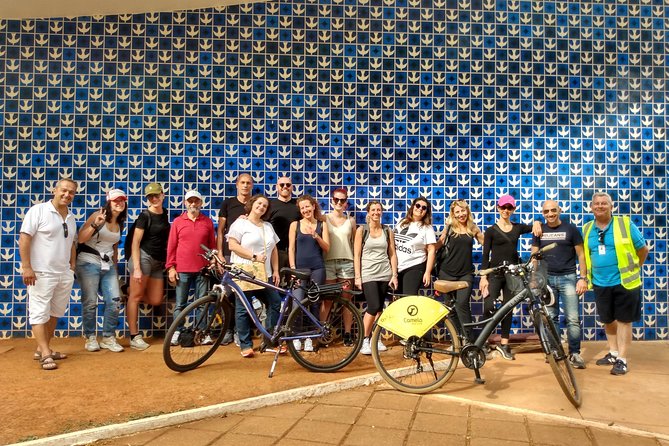
- Visit two very different churches: Fatima Church is known for Athos Bulcão’s blue-and-white tiles, while São João Bosco Sanctuary is dedicated to Brasília’s patron saint.
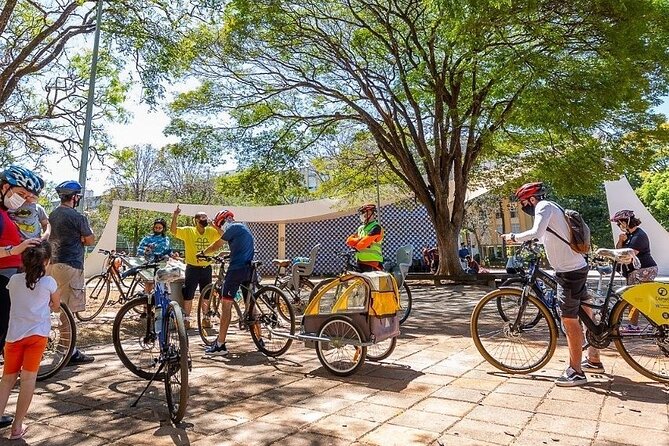
- A small group keeps the ride practical: The maximum group size is 15, and children ages 4 to 10 or 12 may use an articulated tandem trailer or bike if arranged ahead.
- Plan for a three-hour outing: The tour starts and ends at Camelo Bike Tour in Asa Sul and costs $62.73 per person.
Why a bike is the right way to read Brasília
Brasília is not a city that reveals itself all at once. From a car, you can cover the big distances, but you may miss how its residential units function. On foot, you can study a building or plaza, yet the city’s broad spacing makes a longer route tiring.
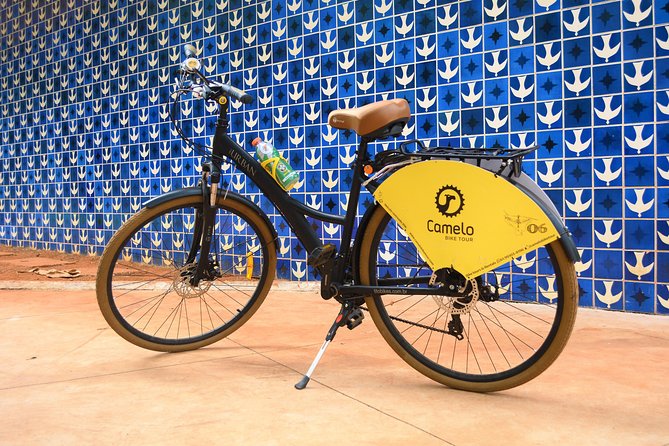
A bicycle gives you a useful middle ground. You move far enough to connect the stops, but slowly enough to notice the shift from major avenues to residential blocks and landscaped courtyards. The route also has a sensible rhythm: a short explanation, a photo stop, a ride, then another place to pause.
This is not a high-speed cycling challenge. The planned stops range from 10 to 45 minutes, with the longest period reserved for SQS 308, the model superquadra. That balance matters because the tour is really an urban study trip with bicycles, rather than a ride built around distance.
The meeting point is Camelo Bike Tour at SHS Quadra 06, Conjunto A, Bloco A, Loja 17, Centro Empresarial Brasil 21 in Asa Sul. The activity returns there at the end, which keeps the start and finish simple.
More Cycling Trips in the world:
- Lion City Bike Tour of Singapore
★ 5.0 · 6,211 reviews - Big Bike tour Amsterdam – See all in 3 unforgettable hours
★ 4.7 · 4,929 reviews - 3-Hour Porto Highlights on a Electric Bike Guided Tour
★ 5.0 · 4,392 reviews
Torre de Televisão: getting the city in view
The TV Tower is the first stop. You have about 10 minutes for an explanation and photographs, with no admission charge.
This is a useful opening because the tower helps frame Brasília as a planned capital rather than a collection of separate attractions. Your guide can establish the basic shape of the city before the ride moves into its residential districts. It is also a quick start, so you are not spending the first part of the tour standing around while the rest of the route waits.
The nearby cultural reference to the Choro Club adds another note. The space was inspired by the idealism of Reco do Bandolim and reflects Oscar Niemeyer’s interest in honoring Brazilian origins while supporting new cultural work. Concert halls for Brasília’s Choro Club were built there. That detail helps broaden the picture of the capital: Brasília is not only monumental government architecture. It also has places made for Brazilian music and local cultural life.
Parque da Cidade and the Praça Eduardo e Mônica
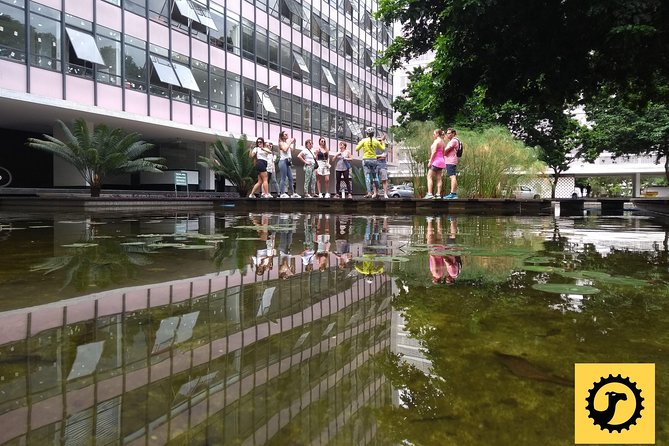
The route then reaches Parque da Cidade Sarah Kubitschek, one of the world’s largest urban parks. The park was created by landscape artist Burle Marx, whose work appears again later on the route.
You have about 25 minutes here, enough to take in the park setting without turning the tour into a long walk. The park offers a welcome change after the formal geometry of the city’s avenues and buildings. For you, this stop works best as a chance to see how Brasília’s plan includes large public recreation areas, not simply housing and government offices.
Inside the park, the tour visits Praça Eduardo e Mônica. The square honors the song of the same name by Legião Urbana, one of Brasília’s best-known bands. This is a small but telling detail. Music is part of the city’s identity, and the route gives it space alongside modernist design.
The park stop is also one of the better places to appreciate the tour’s pacing. You get a large public setting, a piece of local music culture, and time to pause before returning to the built-up residential areas.
Jardim Burle Marx and Brasília’s public design
Jardim Burle Marx is a shorter stop, about 10 minutes. Its name points to Roberto Burle Marx, the artist and garden designer who shaped major public spaces in Brasília.
The visit is brief, so you should not expect a long garden tour. Instead, treat it as a compact look at the way planting, paths, and open areas were included in the city’s original design. The stop also connects directly with Parque da Cidade, making the role of Burle Marx easier to understand across more than one setting.
For anyone interested in city planning, these two stops are more useful together than separately. You see a major recreational park, then a more focused garden space. That contrast helps you understand how public greenery can serve different purposes within one planned capital.
Same roads, a different saddle:
- Ninh Binh Full-Day Tour from Hanoi to Hoa Lu, Tam Coc & Mua Cave Via Boat & Bike
★ 5.0 · 4,384 reviews - Small Group Guided Bike Tour of Amsterdam’s Hidden Gems
★ 5.0 · 3,936 reviews - 3-hour Complete Prague Bike Tour
★ 5.0 · 3,674 reviews - Bangkok: Temples, Canals & Local Life Bike Tour
★ 4.9 · 3,511 reviews
SQS 308, the model superquadra
The heart of the tour is SQS 308 in Asa Sul. You spend about 45 minutes here, much longer than at any other stop. That extra time is well chosen because this is where the tour explains how people actually live within Brasília’s residential plan.
SQS 308 was selected as the city’s model court. Lucio Costa designed it, Burle Marx handled its urban planning and landscaping, and Banco do Brasil built it. It opened on February 19, 1962.
The key idea is the superquadra, a residential block planned as part of a wider neighborhood unit. This is not simply a group of apartment buildings. The route uses the model court to show the relationship between housing and nearby services. You see how a typical superquadra connects with its shopping area, school, and cinema.
That practical focus is one of the tour’s strongest features. Brasília is often discussed through its monumental civic buildings, but the residential plan was meant to shape ordinary daily life. SQS 308 gives you a way to test that idea against a real neighborhood rather than hearing only about it in the abstract.
The 45-minute stop also lets your guide explain details that are easy to miss from a passing vehicle. On the route, guide Duda has used a typical superquadra to show the residential scale planned by Lucio Costa. If you want to understand Brasília beyond its famous silhouettes, this is the portion to pay close attention to.
There is a possible limitation. This stop rewards curiosity about planning and architecture more than quick sightseeing. If you want a tour made only of headline monuments, the detailed neighborhood visit may feel slower. I see that as a strength, but it is worth knowing before you book.
Cine Brasília and Renato Russo Hall
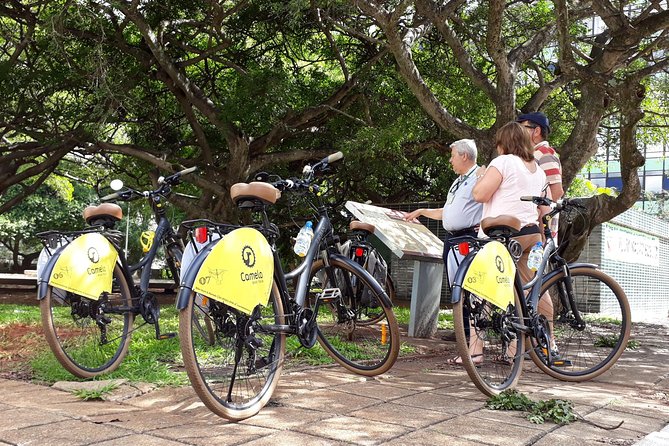
The route continues through cultural spaces tied to Brasília’s film and music life. Cine Brasília hosts the Brasília Film Festival and shows Brazilian releases, foreign films, themed programs, debates, book launches, and exhibitions of paintings, photographs, and posters.
The cinema also works with embassies, public schools, and universities. That gives it a role beyond film screenings. It helps build an audience for cinema and supports cultural exchange and education.
Renato Russo Hall adds another connection to Brasília’s music scene. Along with Praça Eduardo e Mônica, it reminds you that the city’s identity is not limited to the work of architects. The capital has its own musical voice, and this tour makes room for it.
The information at these stops can vary with access and timing, so think of them as cultural landmarks viewed from the route, not guaranteed extended visits inside every venue. Their value lies in showing the network of places that supports local film, music, and public culture.
Igrejinha Nossa Senhora de Fátima
The Nossa Senhora de Fátima Church, commonly called Igrejinha, was inaugurated in June 1958. It was the first church in Brasília’s residential sector and was built at Dona Sarah Kubitschek’s request after her daughter recovered from an illness.
You have about 20 minutes here. The church is especially memorable for the tile panels on its exterior, designed by Athos Bulcão. The tiles use stylized images of the Dove of the Divine and the Star of the Nativity.
This is a good example of Brasília’s modern design at a human scale. The church is smaller and more intimate than the capital’s grand civic structures, yet its simple form and bold tile work make it instantly recognizable. The story behind its construction also gives the building a personal connection to the Kubitschek family and the early years of the new capital.
The stop works well after the model superquadra because you have just seen the residential plan in action. Now you see one of the institutions built to serve that residential setting. It is a short visit, but the combination of design, faith, and personal history gives it real weight.
São João Bosco Sanctuary and the final impression
The final major stop is Santuário São João Bosco, also called the São João Bosco Sanctuary. The sanctuary was built in honor of Brasília’s patron saint, St. John Bosco.
You have about 10 minutes here. That is not enough for an extended architectural study, but it gives you time to see the sanctuary and finish the ride with one of Brasília’s most distinctive religious spaces.
The sanctuary provides a strong contrast with Igrejinha. The Fatima Church is tied to Athos Bulcão’s exterior tile work and the early residential sector. São João Bosco Sanctuary offers a larger, more dramatic closing point. Ending here gives the route a clear visual finish after the parks, neighborhood streets, cinema, and cultural references.
The tour then returns to the Camelo Bike Tour meeting point. Since the whole outing takes about three hours, you still have much of the day left for other Brasília sights.
What the $62.73 price gets you
At $62.73 per person, this is not the cheapest way to pedal around Brasília. The value depends on what you want from the ride.
If you only need transportation between the listed places, the price may feel high. If you want the city’s residential plan explained, the fee makes more sense. A guide adds the context that turns SQS 308 from a collection of apartment blocks into a working example of Lucio Costa’s idea. The route also links Burle Marx’s public spaces, Athos Bulcão’s tiles, Brasília’s film venues, and its music culture.
The maximum group size of 15 helps keep explanations and stops manageable. You are not paying for a large bus outing that rushes past the details. The route also includes several free-entry locations, so the cost is mainly for the guided experience, bicycle use, and the carefully connected itinerary rather than admission tickets.
For the best value, choose this tour early in your Brasília stay. It can give you a working map of Asa Sul and a better sense of how the capital fits together. The tour is booked on average 41 days ahead, so reserving early is sensible if your dates are fixed.
Who should book this bike tour?
I would choose this tour if you enjoy cities as designed places and want to see how residents use them. It suits visitors who like architecture, urban planning, Brazilian music, public art, and neighborhood life in equal measure.
It is also a good fit if you want a guided introduction without committing to a full-day outing. Three hours is long enough to cover a meaningful section of Brasília, but short enough to leave time for other plans.
Families can ask in advance about the articulated tandem passenger trailer or bike for children from ages 4 to 10 or 12. Most people can participate, and the experience is near public transportation. Still, cycling comfort and weather matter. If rain or poor conditions are expected, contact the provider or be ready for a new date. Cancellations made at least 24 hours before the start time receive a full refund, while later changes are not accepted.
Should you book the Fatima Neighborhood and Church Unit Bike Tour?
Book it if you want Brasília explained from the inside out. The model superquadra is the main reason to go, but the parks, Choro Club connection, film venues, Renato Russo Hall, Fatima Church, and São João Bosco Sanctuary give the ride welcome variety.
Skip it if you want only the monumental center, a long-distance cycling workout, or a tour that guarantees extended interior visits at every cultural stop. For most visitors who want to understand how Brasília’s grand plan meets everyday life, this is a thoughtful and well-paced choice.
FAQ
How long does the Fatima Neighborhood and Church Unit Bike Tour last?
The tour lasts approximately three hours, including the listed stops and cycling time between them.
Where does the tour start and finish?
It starts and ends at Camelo Bike Tour, SHS Quadra 06, Conjunto A, Bloco A, Loja 17, Centro Empresarial Brasil 21, Asa Sul, Brasília.
What is the price?
The listed price is $62.73 per person.
Is the tour suitable for children?
Most travelers can participate. An articulated tandem passenger trailer or bike is available for children from ages 4 to 10 or 12, but you need to ask for it in advance.
How large is the group?
The tour has a maximum of 15 participants.
What happens if the weather is poor?
The experience requires good weather. If it is canceled because of poor conditions, you can choose another date or receive a full refund.
Newest rides we have reviewed in the world
- 1 Day Bike Tour to Hell’s Gate And Lake Naivasha★ 5.0 · 14 reviews
- Afternoon Adventure: Okinawa Local Cycling with Spectacular Views★ 5.0 · 92 reviews
- Zodiac Shrines and Naha Backstreets Cycling Tour★ 5.0 · 29 reviews
- PANORAMA TOUR OF NANTES by electric bike★ 5.0 · 33 reviews
- Guided E-bike Tour★ 5.0 · 33 reviews
- Authentic Mykonos bike tour★ 5.0 · 23 reviews
- Private Munich Bike Tour: Flexible Times & Beer Garden Stop★ 5.0 · 15 reviews
- Mini Classic Bike Tour @ 4pm incl. Beer Garden & Surfers 2,5 hrs★ 5.0 · 251 reviews
Tours, compared.
Big Bike tour Amsterdam – See all in 3 unforgettable hours
Read our review →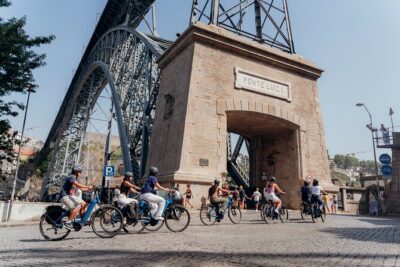
3-Hour Porto Highlights on a Electric Bike Guided Tour
Read our review →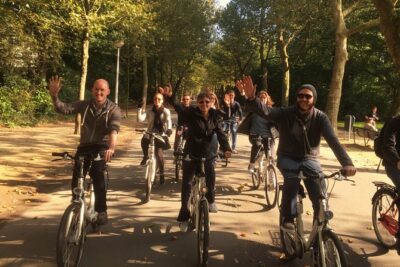
Small Group Guided Bike Tour of Amsterdam’s Hidden Gems
Read our review →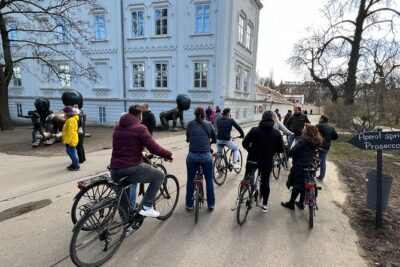
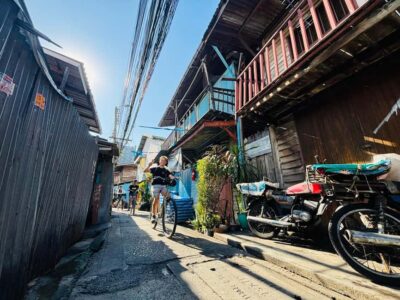
Hills, Alfama, and Mouraria Tour by Electric Bike
Read our review →