
REVIEW · KYOTO
Discover Kyoto at Night by Bike
Kyoto takes on a different mood after dark, and this small-group bike tour lets you move between shrines, temple streets, and old geisha districts without the daytime crowds. I like the lantern-lit views around Gion and Miyagawa-cho, and I like that guide Juan has been praised for helping riders feel safe. The bicycle, bottled water, and entrance fees are included.
The main thing to weigh is the balance between riding and explanation. One rider found there was more standing and talking than expected, with the tour running 45 minutes late, while another enjoyed the guide’s stories. You should be comfortable on a bicycle before booking, since this is not suited to a first-time rider.
Key points to know before you book
- Fushimi Inari after sunset: You see Kyoto’s famous orange torii gates at a cooler, quieter time of day.
- A compact group of no more than nine: The size should make street riding and guide communication easier.
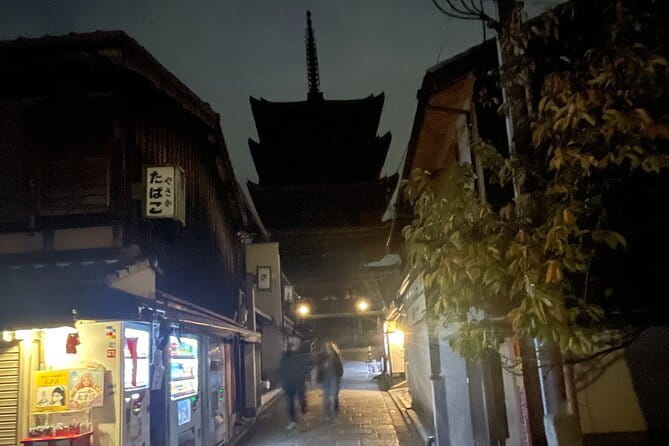
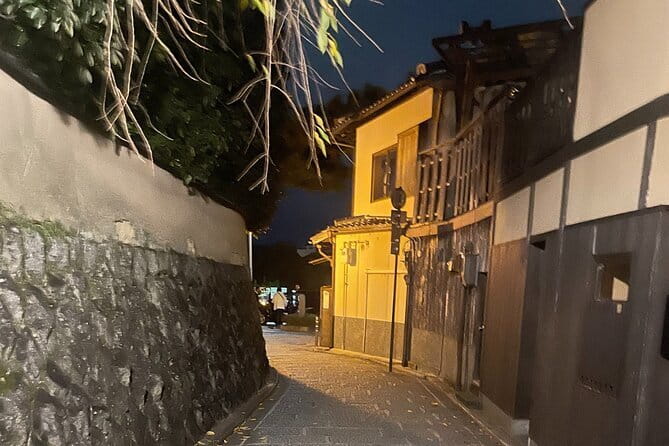
- Lantern-lit Gion and Miyagawa-cho: These traditional districts are the heart of the evening, with old wooden buildings and narrow lanes.
- A real bicycle outing: The experience includes cycling between stops, not simply a series of short walks.
- A guide-led cultural tour: Bilingual guides explain Kyoto’s customs, shrines, and traditional neighborhoods, so expect regular stops for commentary.
- $80 with bike and water included: The price pays mainly for the bicycle, guide, planning, and small-group format, since most listed sites are free to enter.
Why Kyoto works so well after sunset
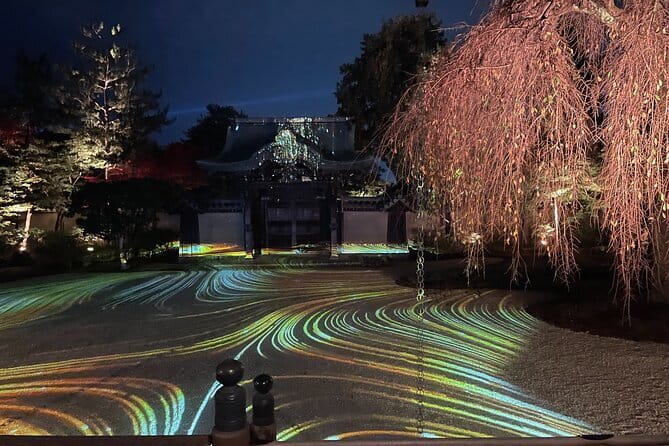
Kyoto can feel crowded around its most famous sights during the day. At night, the streets around Higashiyama, Gion, and the Kamogawa River take on a calmer tone, and the warm glow of lanterns suits the city’s old wooden architecture.
A bicycle also changes the scale of the evening. You can cover several districts in one outing, rather than spending much of your time waiting for buses or walking between widely spaced sights. The route lasts about 3 hours and 45 minutes, beginning at 5:00 pm, so the amount of darkness and evening atmosphere depends on the season.
I like the basic idea here because Kyoto’s beauty is not limited to the interiors of its temples. The ride connects quiet streets, river routes, shrine approaches, and traditional neighborhoods. You get a sense of how the old districts fit together.
Still, this is not a nonstop ride. The published stop times add up to less than two hours, leaving a large part of the tour for cycling, transitions, and guide commentary. That is useful if you want context, but less appealing if you expect to spend nearly four hours in the saddle.
More Night Bike Tours in Kyoto:
- Rome by Night – Ebike Small Group Tour – Food and Wine (Option)
★ 5.0 · 1,275 reviews - Rome by Night: E-bike Small Group Tour -Food & Wine (Option)
★ 4.9 · 1,233 reviews - Paris Evening Snapshot Bike Tour
★ 4.5 · 819 reviews
Starting at 7-Eleven near Kyoto Station
The meeting point is the 7-Eleven at 44-1 Higashikujō Kamitonodachō in Minami Ward. It is near public transportation, which makes the start practical, though you should allow enough time to locate the exact convenience store and arrive ready for a 5:00 pm departure.
Hotel transportation is not included. You make your own way to the start and return there at the end, so the round-trip structure is easy to understand. The mobile ticket is useful for keeping the booking on your phone.
The group is limited to a maximum of nine people. That matters on a bicycle tour. A smaller group is easier to keep together at intersections, and you have a better chance of hearing the guide when stopped in a narrow street or shrine approach.
The tour includes the bicycle and bottled water. All listed entrance fees are also included, although most of the stops have no admission charge. Guide gratuities and hotel transportation are extra.
Fushimi Inari with fewer daytime crowds
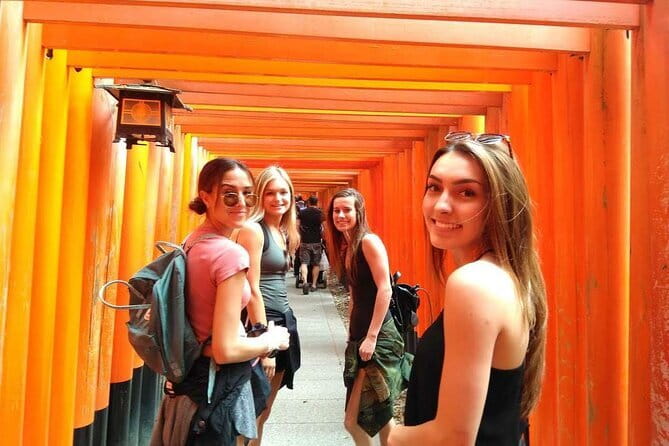
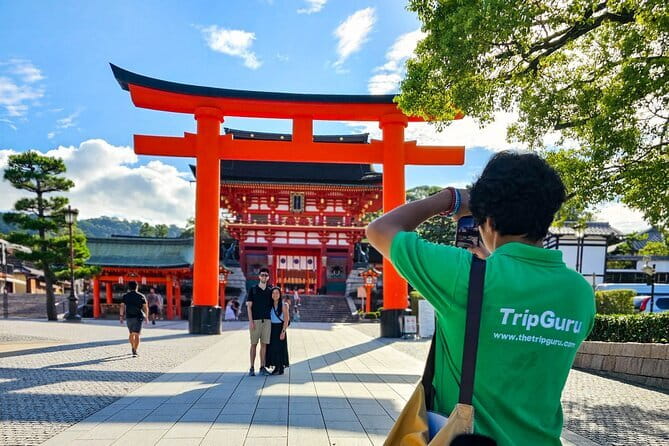
The first major stop is Fushimi Inari-taisha, Kyoto’s best-known Shinto shrine. Its thousands of torii gates form long corridors up the wooded shrine grounds, and the orange-red color is especially striking in the evening light.
You have about 40 minutes here, the longest stated stop of the tour. That gives you time to see the main approach and walk among some of the gates, though it is not enough for a full climb through the entire shrine complex.
The evening timing is the main attraction. Fushimi Inari is one of Kyoto’s most visited sites, so an after-dark visit can feel less pressured than a midday stop. The route is not simply a photo stop, either. A bilingual guide can explain the shrine’s role and the meaning of the torii gates, giving the place more context than a quick independent visit.
You should remember that this is a bicycle tour, not a full Fushimi Inari hike. If reaching the higher sections of the shrine is a priority, plan a separate visit with more time.
Miyagawa-cho and the first lantern-lit streets
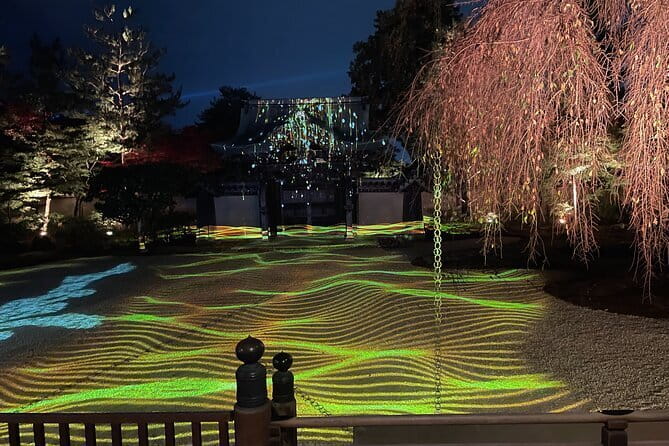
From Fushimi Inari, the ride continues toward Miyagawa-cho Dori, south of Gion and alongside the Kamogawa River. The district is known for old wooden buildings, traditional entertainment, and lanterns that become more noticeable after sunset.
The stop lasts about 15 minutes. That is enough to pause, look around, and listen to an explanation of the area, but not enough for a long exploration of its lanes. The short visit works because the appeal is atmospheric: glowing lights, quiet façades, and the feeling of passing through a district still linked to Kyoto’s traditional arts.
Please keep your voice low and your camera respectful in traditional entertainment areas. The tour description emphasizes culture and local traditions, but it does not promise access to private venues or performances. You are seeing the streets and learning about the district from outside.
The ride beside the river is another pleasant part of the route. One rider specifically praised the experience of cycling along the river and seeing illuminated shrines and temples. That detail is important: the pleasure here comes as much from moving through Kyoto as from checking off individual sights.
More Cycling Trips in Kyoto:
- Hidden Kyoto E-Biking tour
★ 5.0 · 1,843 reviews - Bike Tour Exploring North Kyoto plus Lunch
★ 5.0 · 1,087 reviews - Arashiyama Bamboo Forest & Hidden Gems Bike Tour (Early Bird)
★ 5.0 · 613 reviews - 5 Top Highlights of Kyoto Full Day Bike Tour (E-bike option)
★ 5.0 · 511 reviews
Gion after dark, with a short stop on Hanamikoji

Gion is the most famous traditional district on the route. At night, its narrow streets and old tea houses create the setting many people picture when they imagine Kyoto.
The tour includes about 10 minutes in Gion, with admission listed as included. The short timing means you should not expect a long wander through Hanamikoji Street. Instead, the guide points out the area, explains its connection to maiko and geisha culture, and gives you a quick look at the old streets.
This is one of the places where good manners matter most. Keep moving with the group, avoid blocking doorways, and do not treat working neighborhoods as a stage set. The value of having a guide here is partly cultural: you receive some context about the district rather than simply taking a picture and leaving.
If Gion is your top interest, you may want to return independently on another evening. The tour gives you an introduction, not a full night in the neighborhood.
Yasui-Konpiragu and its unusual purpose
Yasui-Konpiragu is a small but distinctive Shinto shrine in the Higashiyama area. It is associated with cutting ties to harmful relationships or habits and forming better connections.
You have around 10 minutes at the shrine. That is enough to hear the story behind its purpose and see what makes it different from Kyoto’s grander religious sites. The stop adds variety to the route, since the tour is not limited to the city’s most photographed monuments.
After this point, you continue through maiko and geisha alleyways. These lanes are part of the pleasure of cycling at night, but they may also require extra care. Traditional streets can be narrow, and you need to stay alert around pedestrians and other bicycles.
Yasaka Pagoda and the old streets around Hōkan-ji
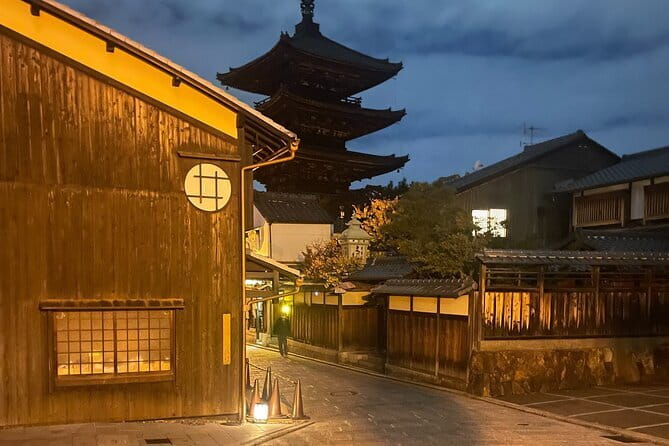
Hōkan-ji Temple, usually called Yasaka Pagoda, is among Kyoto’s most recognizable sights. The pagoda rises above narrow streets lined with traditional machiya townhouses, creating one of the strongest photo settings in eastern Kyoto.
The stop lasts about 15 minutes. You will have time to take in the view and photograph the pagoda from the surrounding streets, but the tour does not promise entry into the temple interior. The appeal is the exterior setting, especially after the crowds begin to thin.
This section is not flat sightseeing terrain. The area includes narrow, old-fashioned streets and slopes, so you should keep both hands ready and follow the guide’s instructions. A rider who is comfortable on a bicycle will get more from the stop than someone who is nervous around uneven or confined streets.
Ninenzaka, the best photo stop of the evening
Ninenzaka is one of two historic slopes in Higashiyama and is described as the route’s best area for night scenery and photographs. Its stone and wooden streets give you a strong sense of old Kyoto, especially with Yasaka Pagoda nearby.
You have about 15 minutes here. That is a sensible amount of time for photos and a short look around, though the area can still have people moving through it. Be careful with your bicycle and avoid riding carelessly on the slopes or in crowded sections.
Ninenzaka is also a useful reminder that the tour offers atmosphere more than lengthy sightseeing at every stop. You get a series of carefully chosen views, linked by a bike ride. If you like changing scenes and a guide’s running commentary, the pace should suit you. If you prefer to linger in one neighborhood, the short stop may feel rushed.
The Higashiyama park stop
The final listed area is a well-known park in Higashiyama with cherry trees, ponds, and wooden bridges. The information provided does not name the park, but it gives you a clear idea of the setting: a quieter green space that adds water, trees, and open air to an evening otherwise focused on narrow streets and historic buildings.
Because no duration is supplied for this stop, you should not count on a long park visit. Treat it as part of the route’s closing scenery rather than a separate major attraction.
The contrast is welcome. After shrine gates, old lanes, and busy photo spots, a park can give the group a calmer place to pause before returning to the starting point.
How much riding versus talking?
This is the most important point to understand before booking. One rider felt the tour included only about 1 hour and 45 minutes of actual riding and that the guide spoke too much about subjects that did not feel relevant. The tour also finished about 45 minutes late on that occasion.
The guide responded by saying that finding the right balance would be a priority. That response matters because the experience is clearly intended to combine cycling with cultural explanation, not to function as a speed-focused bike ride.
Other feedback was strongly positive. One person ended up alone on the tour and appreciated that it was not canceled, calling it a highlight of the trip. Guide Juan was praised for making the rider feel safe, and the ride along the river and illuminated religious sites made a strong impression.
My advice is simple: book this if you want a guided cultural ride with regular stops. Skip it if you want to pedal almost continuously or dislike standing while a guide explains local customs and history.
Is $80 a fair price?
At $80 per person, the tour is not the cheapest way to see these areas. Many of the shrines and streets are free, and you could visit several of them independently.
The value comes from the bicycle, route planning, bilingual guide, small group, and the chance to connect districts that would take more effort to cover on foot. Bottled water and entrance fees are included, though the entrance fees do not add much value here because most stated stops are free.
I consider the price reasonable for someone who wants an organized evening and is not confident planning a night ride through Kyoto. It is less compelling for an experienced cyclist who already knows the city and can rent a bicycle independently.
The maximum group size of nine helps support the price. You are not paying for a large coach outing, and the route is designed around cycling rather than simply transferring between sights.
Who should book this Kyoto night ride?
This tour suits you best if you:
- Can ride a bicycle with confidence in city streets
- Want to see several Kyoto districts in one evening
- Enjoy hearing cultural background at each stop
- Prefer a small group to a large sightseeing tour
- Like photography, lantern-lit streets, shrines, and old wooden neighborhoods
- Are happy with a mix of riding, stopping, and listening
It is a poor fit for a first-time cyclist. One rider specifically advised choosing it only if you are a fairly proficient rider, and noted that a warmer night would be preferable. The tour requires moderate physical fitness, and poor weather can lead to a different date or a full refund.
The route may also be less comfortable for anyone expecting a precise finish time. The scheduled duration is about 3 hours and 45 minutes, but the pace can vary if the guide gives longer explanations.
Final verdict: book it for atmosphere, not speed
I recommend this tour if you want to see Kyoto after sunset from a bicycle and enjoy learning as you go. Fushimi Inari, Miyagawa-cho, Gion, Yasaka Pagoda, and Ninenzaka make a strong evening route, and the small group adds comfort and control.
Before booking, be honest about your riding ability and your preferred pace. You should expect some standing and listening, not four hours of continuous cycling. If that balance sounds right, $80 buys a well-organized introduction to Kyoto’s night streets, with Juan and the bilingual guide team adding the local context that is hard to get from a map alone.
Free cancellation is available until 24 hours before the 5:00 pm start. Cancellations or changes within 24 hours are not refunded, and poor weather or failure to meet the minimum group size can lead to a new date or full refund.
FAQ
How long does the Kyoto night bike tour last?
The tour lasts approximately 3 hours and 45 minutes.
What time and where does the tour start?
It starts at 5:00 pm at the 7-Eleven located at 44-1 Higashikujō Kamitonodachō, Minami Ward, Kyoto, 601-8002, Japan.
Where does the tour finish?
The tour ends back at the original meeting point.
What is included in the price?
The price includes bicycle use, bottled water, and all entrance fees listed for the activity.
How many people can join the tour?
The maximum group size is nine people.
Can I cancel for a full refund?
Yes. You can cancel at least 24 hours before the experience start time for a full refund. Cancellations or changes made within 24 hours are not refunded.
Newest rides we have reviewed in Kyoto
- ONLY YOU in the Bamboo Forest! 4 hours E-bike tour with a local★ 5.0 · 45 reviews
- South Kyoto in a Nutshell: Gentle Backstreet Bike Tour!★ 5.0 · 225 reviews
- Pedal Adventure Kyoto’s iconic landmarks on an e-bike tour★ 5.0 · 189 reviews
- The Beauty of Kyoto by Bike: Private Tour★ 5.0 · 47 reviews
- Kyoto Bamboo Forest & Golden Pavilion E-Bike Tour★ 5.0 · 50 reviews
- Kyoto Shogun Cycling Tour★ 5.0 · 13 reviews
- Secret Eastern Kyoto Biking Adventure★ 5.0 · 44 reviews
- Arashiyama Bamboo Forest E-Biking Tour★ 5.0 · 183 reviews
Night Bike Tours, compared.
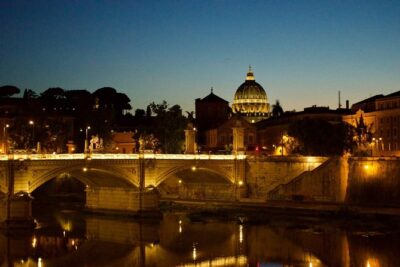
Rome by Night – Ebike Small Group Tour – Food and Wine (Option)
Read our review →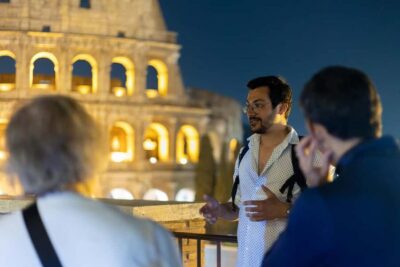
Rome by Night: E-bike Small Group Tour -Food & Wine (Option)
Read our review →
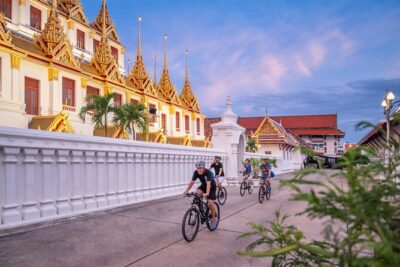
Night Bike Tour with Temples & Flower Market Visit
Read our review →
Washington DC Sites at Night Guided Bicycle Tour
Read our review →
Other lists this ride turns up in