REVIEW · CYCLING TOURS
Bike ride in the city
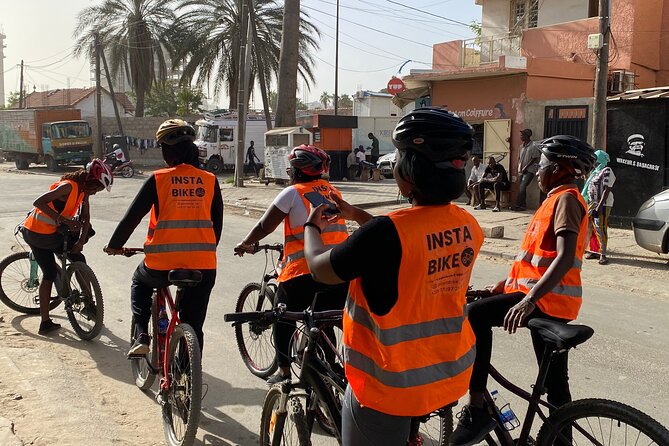
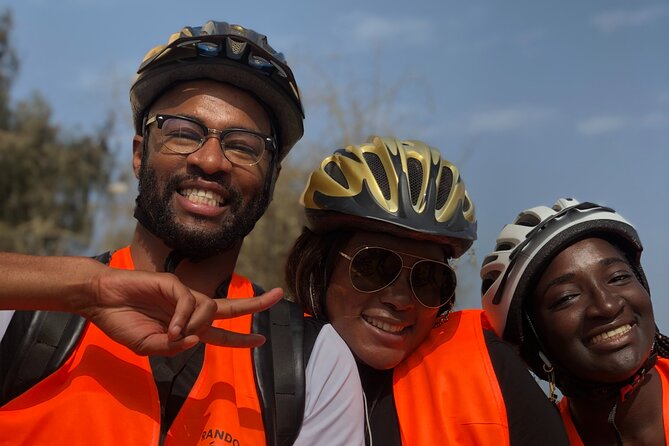
Dakar reveals itself well from a bicycle, especially on a private four-hour ride that links monuments, colonial buildings, sea views, and the Museum of Black Civilisations. You are not boxed into a tour bus. You move at street level, stop for photos, and get a simple introduction to the city’s past and present.
I like the flexible route and the small-group format. You can discuss your interests before the ride and adjust the basic plan, while your French- or English-speaking guide keeps the day personal. I also like the finish at the museum, where an on-site guide takes over for a proper look inside.
The main caution is the road experience. Dakar traffic, heat, and uneven city conditions can make cycling tiring, and one poor experience began with confusion over the pickup point. Confirm where you are meeting before the 10 a.m. start, and make sure a four-hour ride suits your fitness level.
Key points to know before you book
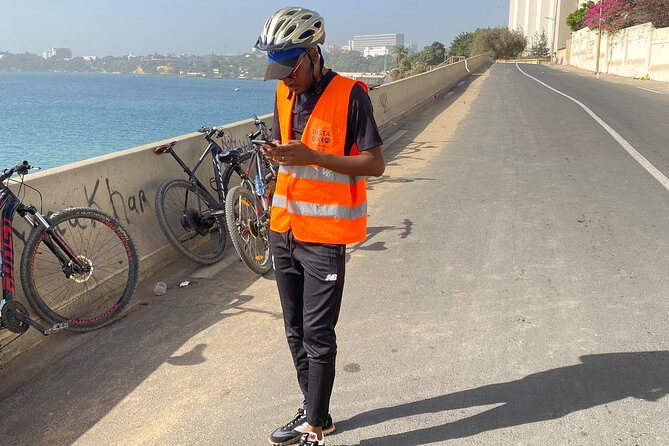
- The route covers Dakar’s landmarks by bicycle: You see the Millennium Monument, Independence Square, Anse Bernard beach, the Presidency, the Goree ferry point, and the Museum of Black Civilisations.
- It is a private activity: Only your group takes part, so you can ask for changes to the standard route.
- The museum is the strongest cultural finish: A museum guide leads the final one-hour visit, but the 5,000 CFA admission fee is extra.
- The tour includes useful basics: Your bicycle, cycling jersey, and snacks are provided.
- Pickup is offered, but the listed meeting point matters: The stated start is 817 Rue 22 in Dakar at 10 a.m.
- The price reflects personal attention: At $92.92 per person, this makes the most sense for visitors who value a private guide and active sightseeing.
Why Dakar works well on two wheels
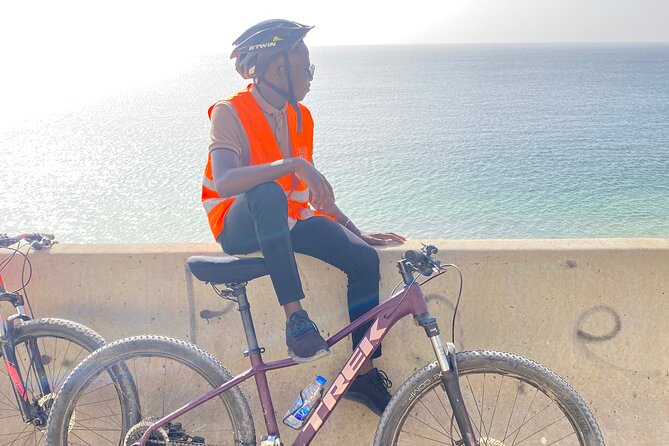
Dakar is a city of sharp contrasts. Modern transport projects, colonial-era buildings, Atlantic viewpoints, religious and civic landmarks, and busy central streets all sit within the same broad urban setting. A bike lets you connect these places without spending the whole morning inside a vehicle.
This is not a mountain-bike outing or a long ride beyond the city. It is a sightseeing trip with exercise built in. The route includes several stops of 15 to 30 minutes, a short rest, and a one-hour museum visit. That makes the pace more manageable than four straight hours in the saddle.
The private format matters here. You are not trying to keep up with a large group or waiting for people who want different things. If architecture interests you, you can spend more time around the colonial buildings. If photographs matter most, you can ask for extra time at Anse Bernard. The operator also invites you to discuss changes before the activity begins.
The guide speaks French or English. Since no individual guide names are provided, ask at booking who will lead your ride and confirm your preferred language.
More Cycling Trips in the world:
- Lion City Bike Tour of Singapore
★ 5.0 · 6,211 reviews - Big Bike tour Amsterdam – See all in 3 unforgettable hours
★ 4.7 · 4,929 reviews - 3-Hour Porto Highlights on a Electric Bike Guided Tour
★ 5.0 · 4,392 reviews
Beginning at the Millennium Monument
The first major stop is the Monument du Millénaire, also called the Gate of the Third Millennium. Built at the start of the 21st century, it represents Africa opening toward a new millennium. The symbolism is important in Senegal, and the large contemporary form gives you an immediate sense that Dakar is not only looking backward.
You get about 30 minutes here, with no admission fee. That is enough time to look at the structure, hear the guide explain its meaning, and take photographs. Because it is an outdoor stop, it also gives you a first taste of the heat and light you will deal with during the ride.
I would treat this as a visual and symbolic introduction, not a full museum-style lesson. The value comes from seeing a national statement in its urban setting. Your guide can also help explain how the monument fits Dakar’s modern identity.
Colonial architecture at Hotel Sokhamon
The ride continues to Hotel Sokhamon, described as a colonial architectural jewel in the heart of Dakar. The stop lasts about 20 minutes. Admission is not included, so clarify in advance whether your visit is an exterior look or whether any interior access requires a separate payment.
This is a good pause for anyone who likes buildings more than formal monuments. Colonial architecture can be easy to skim past when you are walking or driving through a city. On a bicycle, you have a reason to stop, look up, and ask questions about the design and its place in Dakar.
There is also a practical benefit here. The route includes a short break to catch your breath. That matters in a warm city, particularly if you are not used to cycling in Dakar’s conditions. Use the pause to drink water and reset before the next group of stops.
The old courthouse and Dakar’s art scene
The Ancien Palais de Justice adds a different layer. This former courthouse now houses an art exhibition connected with the Biennale of Dakar. You have around 30 minutes here, and admission is not included.
The building links civic history with Senegal’s present-day art life. You are not simply looking at an old government structure. You are seeing how a historic public building has been put to cultural use.
The stop may be more satisfying for people who want context than for those seeking a long gallery visit. Thirty minutes is a short window, and the details of admission are not stated. Ask whether the exhibition is open during your visit and whether you will have time to enter. If access is limited, the building itself still gives the guide a useful point for explaining Dakar’s public architecture.
Same roads, a different saddle:
- Ninh Binh Full-Day Tour from Hanoi to Hoa Lu, Tam Coc & Mua Cave Via Boat & Bike
★ 5.0 · 4,384 reviews - Small Group Guided Bike Tour of Amsterdam’s Hidden Gems
★ 5.0 · 3,936 reviews - 3-hour Complete Prague Bike Tour
★ 5.0 · 3,674 reviews - Bangkok: Temples, Canals & Local Life Bike Tour
★ 4.9 · 3,511 reviews
Atlantic views at Anse Bernard
Plage de l’Anse Bernard is the route’s quick scenic stop. You get about 15 minutes at this beach, with free admission. The appeal is straightforward: an open view, a change from the city streets, and a strong place for photographs.
The short timing tells you what to expect. This is not a beach afternoon, and you should not plan to swim or linger for hours. It is a chance to pause beside the water, catch your breath, and enjoy one of Dakar’s best city viewpoints.
I like the way this stop breaks up the architecture-heavy part of the ride. After monuments and government buildings, the coast gives you space and a different sense of the city. Bring your camera, but keep the stop in proportion. The tour is about seeing Dakar as a whole, not settling at one beach.
Passing the Presidency and reaching Independence Square
The bike route passes in front of the Presidency of Senegal before reaching Place de l’Indépendance. The Presidency is a pass-by rather than a formal stop, so you should expect an exterior view and a brief explanation from the guide.
Place de l’Indépendance is described as Dakar’s central civic heart. Its symmetrical design includes major colonial buildings such as the Gouvernance, once the office of the French governor, and the Chamber of Commerce. You have about 30 minutes here, with no admission fee.
This is one of the most useful places to understand Dakar’s official center. The square is not just an open space. It reflects the city’s administrative past and its role as Senegal’s capital. Your guide can point out how the buildings relate to one another and explain what changed after the colonial period.
A bicycle is handy here because you can arrive without dealing with a large vehicle in the middle of the city. Still, central streets can be demanding. Keep your attention on the guide and the road, and do not assume every pause will feel quiet or relaxed.
The Goree ferry point and the face of modern Dakar
The route also passes the place used for the maritime connection between Dakar and Goree Island. Goree is one of Dakar’s 19 districts and sits in the Atlantic bay off the capital. This tour does not include the ferry trip or a visit to the island, so think of this as an orientation stop.
That distinction is important. If Goree is a priority for you, you need a separate block of time for it. The bike ride only shows you where the connection begins and places the island within Dakar’s wider geography.
You also get a look at the TER, Senegal’s regional express train. The route uses it as a sign of the country’s current development and changing transport network. This brief encounter helps balance the older colonial buildings and monuments with a modern Dakar that is building new ways to move through the city.
Finishing at the Museum of Black Civilisations
The strongest cultural stop comes at the Museum of Black Civilisations, where the ride ends. The museum is near central Dakar, opposite the Grand Theatre National. Its four-storey building covers about 14,000 square metres and takes architectural ideas from the round impluvium huts of Casamance and Great Zimbabwe.
The design is intended to bring daylight into the museum’s spaces. Even before you enter, the building gives you something substantial to look at. The museum’s Pan-African focus also makes it a fitting place to finish a route that has moved through Senegalese civic, colonial, artistic, and modern symbols.
You spend about one hour inside with an on-site museum guide. That separate guide is a real benefit. The cycling guide can connect the city’s monuments, while the museum guide can give the exhibits their own proper explanation.
Admission costs 5,000 CFA per person and is not included in the tour price. Budget for it separately. The supplied information does not list other admission charges at the old courthouse or Hotel Sokhamon, but those stops also do not include tickets, so ask about access before you go.
What $92.92 buys you
The price is $92.92 per person. That is not the cheapest way to see Dakar, especially since the museum ticket costs extra and the tour lasts about four hours. The value comes from the private format, guide service, bicycle, jersey, snacks, and the ability to shape the route around your interests.
For one person or a couple, the cost may feel high compared with a shared walking tour. For a group, the calculation can look better because you are paying for a private activity rather than a seat on a large scheduled outing. The exact value depends on how many people are in your group.
I would book this for the personal attention, not simply as a way to save money. You are paying to combine exercise, transport between sights, local explanation, and a museum visit in one morning. If you only want to photograph the major monuments, a cheaper city tour may be enough.
Snacks are included, but no full meal is listed. Plan accordingly. The 10 a.m. start and four-hour duration also mean you should think about how you want to arrange lunch afterward.
Timing, pickup, and physical effort
The stated meeting point is 817 Rue 22 in Dakar, with a 10 a.m. start. Pickup is offered, but the precise pickup terms are not detailed. Because one reported problem involved confusion about where to meet, send a message before the day of the ride and confirm the exact location, pickup time, and guide language.
The activity is marked as suitable for most participants and is near public transportation. Still, that does not mean it is effortless. You will cycle between several city stops, deal with heat, and spend time moving through urban streets. The route has rest opportunities, including a quick stop, but you should be comfortable with an active morning.
The tour requires good weather. If poor conditions cancel it, you are offered another date or a full refund. You can also cancel for a full refund up to 24 hours before the start. Inside 24 hours, no refund is provided, and changes are not accepted.
Who will enjoy this ride most
I would choose this for an active first look at Dakar, especially if you want more than a vehicle-based city circuit. It suits people who like architecture, public history, coastal views, and a guide who can adjust the morning to their interests.
It is also a good match if you have already planned to visit the Museum of Black Civilisations. The ride gives you context on the way there, and the museum provides a substantial ending rather than leaving you with only outdoor photo stops.
You may want another option if you dislike cycling in traffic, need a slow indoor tour, or want to spend a full day on Goree Island. This experience does not include the ferry crossing, and several stops are brief. It is a compact city overview, not a complete examination of every major Dakar sight.
Should you book the Dakar bike ride?
Book it if you want a private, active introduction to Dakar and like the idea of connecting old buildings, civic landmarks, ocean views, and a major museum in one morning. The flexible route and museum finish give it more substance than a simple photo ride.
Skip it if you want a low-cost tour, a long beach stop, or a full Goree excursion. Confirm the meeting details, reserve room for the 5,000 CFA museum fee, and be honest about your comfort with a four-hour urban bike ride. For the right group, this is a practical way to get your bearings while seeing Dakar at street level.
FAQ
How long does the bike ride last?
The activity lasts approximately four hours, including the cycling route, sightseeing stops, breaks, and the museum visit.
What time does the tour start?
The stated start time is 10 a.m.
Where does the tour begin?
The listed starting point is 817 Rue 22, Dakar, Senegal. Pickup is offered, so confirm the exact meeting or pickup details before the tour.
Where does the tour end?
The tour ends at the Museum of Black Civilisations in Dakar-Plateau, Dakar.
Is the tour private?
Yes. Only your group participates in the activity.
What language does the guide speak?
The guide is available in French or English.
Is museum admission included?
No. Admission to the Museum of Black Civilisations costs 5,000 CFA per person and is paid separately.
What happens if the weather is poor?
The experience requires good weather. If it is canceled because of poor weather, you are offered another date or a full refund.
Newest rides we have reviewed in the world
- 1 Day Bike Tour to Hell’s Gate And Lake Naivasha★ 5.0 · 14 reviews
- Afternoon Adventure: Okinawa Local Cycling with Spectacular Views★ 5.0 · 92 reviews
- Zodiac Shrines and Naha Backstreets Cycling Tour★ 5.0 · 29 reviews
- PANORAMA TOUR OF NANTES by electric bike★ 5.0 · 33 reviews
- Guided E-bike Tour★ 5.0 · 33 reviews
- Authentic Mykonos bike tour★ 5.0 · 23 reviews
- Private Munich Bike Tour: Flexible Times & Beer Garden Stop★ 5.0 · 15 reviews
- Mini Classic Bike Tour @ 4pm incl. Beer Garden & Surfers 2,5 hrs★ 5.0 · 251 reviews
Cycling Tours, compared.
Big Bike tour Amsterdam – See all in 3 unforgettable hours
Read our review →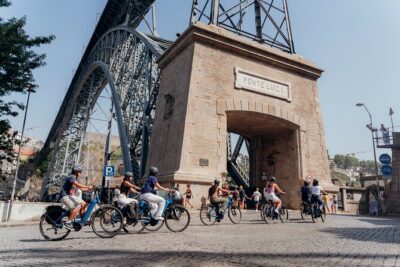
3-Hour Porto Highlights on a Electric Bike Guided Tour
Read our review →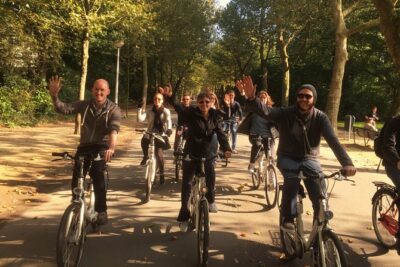
Small Group Guided Bike Tour of Amsterdam’s Hidden Gems
Read our review →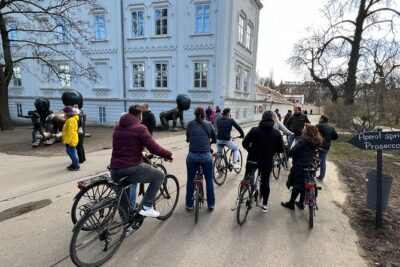
Hills, Alfama, and Mouraria Tour by Electric Bike
Read our review →