
REVIEW · CYCLING TOURS
Top 6 Days Mt. Kilimanjaro Bike trek Tour by Marangu-Kilema Route
Kilimanjaro by bicycle is not a gentle sightseeing ride. It is a high-altitude expedition with rough volcanic tracks, long sections where you may need to walk, and a summit night that still relies heavily on hiking. The special reward is riding the only bike-accessible route to Africa’s highest peak, then descending through several striking climate zones.
I like the practical setup: transfers from Moshi, porters, meals, park fees, and crew wages are handled in one package. I also like the contrast between rainforest, alpine desert, ice, and open mountain country. The main caution is that the advertised price of $3,668 does not include a mountain bike or personal gear, and the route description has a few timing details you should confirm before paying.
Key points to know before booking
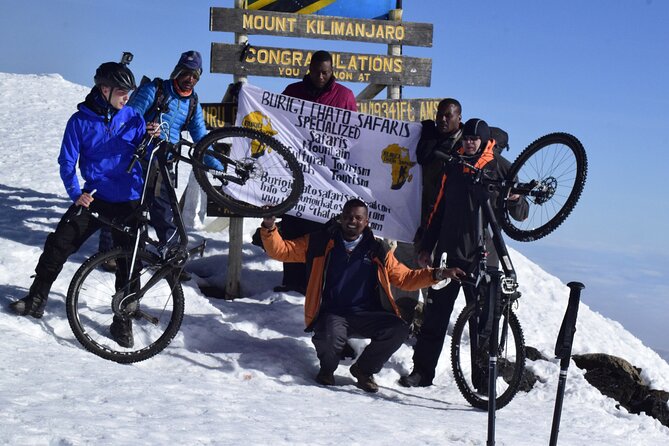
- The Kilema Route is the only bike-accessible approach to Kilimanjaro, but the summit section is partly a hike with your bicycle carried by porters.
- Day one covers 16 kilometers from Kilema Gate to Horombo Hut, rising from 1,950 meters to 3,705 meters.
- Day two is a 10-kilometer acclimatization ride toward Mawenzi Hut and back to Horombo, mostly across alpine desert.
- The summit attempt begins around 4:00 a.m., with a steep climb to Gilman’s Point before the ride toward Uhuru Peak.
- Bike rental and personal trekking equipment are extra, so the headline price is not the final price for most riders.
- The strongest positive feedback concerns the crew, motivation, organization, and well-maintained bicycles, though some published comments concern separate Moshi and Arusha bike tours.
What makes a Kilimanjaro bike trek different
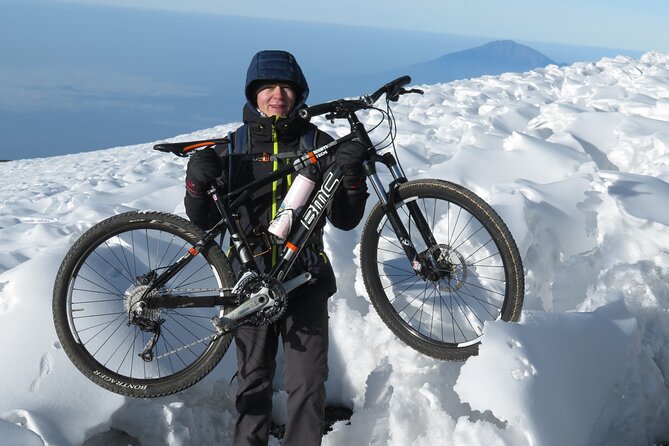
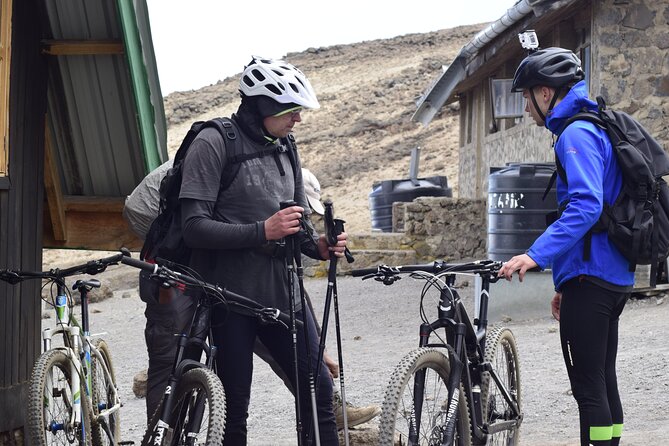
Most people picture Kilimanjaro as a walking climb. This route changes the rhythm. You pedal where the trail and your energy allow, push or carry the bike across rougher sections, and hike at the highest elevations where thin air and steep ground make cycling impractical.
That mix is important. You are not signing up for six days of smooth mountain biking. You are signing up for a mountain climb with a bicycle as part of the adventure. On the lower slopes, riding gives you a quicker and more playful way to move through the mountain. Higher up, the bike becomes a challenge to manage as much as a vehicle.
The route begins at Kilema Gate after registration at Marangu Gate. From there, the track reaches Horombo Hut, then continues into the open saddle between Mawenzi and Kibo. The scenery changes quickly, and so does the riding. Forest-like vegetation gives way to sparse alpine desert, volcanic rock, cold air, and the ice fields near the summit.
The experience provider lists private transport, park fees, crew wages, meals, and porters. That matters on Kilimanjaro, where carrying food, sleeping equipment, and group supplies is a major part of the operation. It also means you can focus more on pacing and altitude instead of managing every logistical detail yourself.
More Bike and Hike Tours in the world:
- Ketchikan Electric Bike and Rain Forest Hike Ecotour
★ 5.0 · 562 reviews - Palm Springs Indian Canyons Bike and Hike
★ 5.0 · 212 reviews - TRIPLE ACTIVITY TOUR, Bike Kayak Hike, ANTIGUA
★ 5.0 · 211 reviews
Day one: Kilema Gate to Horombo Hut
Your first transfer takes you from Moshi to Marangu Gate in about 45 minutes. Everyone registers at the park office there, then you continue by vehicle to Kilema Gate at roughly 1,950 meters.
Before riding, check your daypack carefully. You need drinking water, lunch, extra clothing, and anything you may need during the day. The guide also checks the mountain bike before you begin. This is the right place to solve a loose fitting, poor brake adjustment, or missing item, not halfway up the mountain.
The first route section covers about 16 kilometers and ends at Horombo Hut, at approximately 3,705 meters. The day is listed at about six hours, but the actual pace will depend on road conditions, fitness, and how much of the track you ride.
This is a substantial first day. The elevation gain is the real test, not just the distance. A rider with good fitness and solid off-road skills may cycle much of the lower route, but you should expect rocky sections and possible pushing. Your guide rides with you, which is useful for pacing and route choices.
Horombo is an important stop because it gets you into the mountain environment without immediately forcing you to sleep at the highest camps. You will likely notice the cold and altitude here. Keep the evening quiet, drink steadily, and resist the urge to treat the first day like a race.
Day two: Alpine desert and Mawenzi Hut
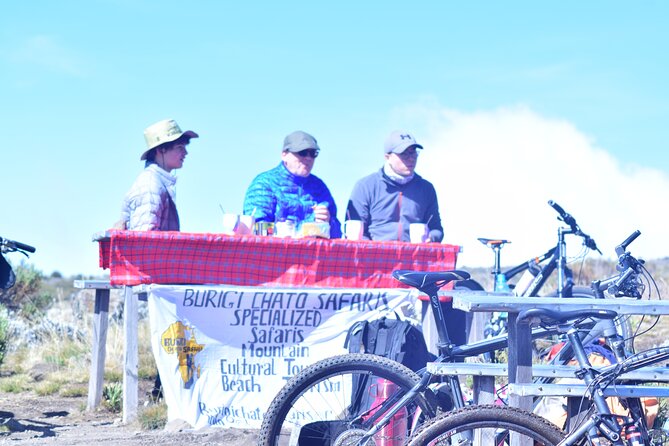
After breakfast, you ride toward Mawenzi Hut and return to Horombo. The total cycling distance is about 10 kilometers, and the day is described as being 90 percent riding across alpine desert vegetation.
The short distance can be deceptive. The itinerary allows up to 12 hours, which suggests a slow acclimatization day with difficult ground, pauses, and time spent adjusting to the altitude. Some areas have small loose stones, and the surface may require careful handling rather than speed.
This day has real value. You gain more time at altitude while returning to the same hut, so you do not need to carry everything to a new sleeping place. The route also gives you views toward Mawenzi, one of Kilimanjaro’s rugged volcanic peaks.
For you, the key skill is controlled effort. Use a low gear, keep your breathing steady, and avoid chasing stronger riders. A bicycle can tempt you to push harder than your body should at altitude. The guide’s role here is not only to lead the route but also to help you slow down before fatigue becomes a problem.
Day three: Across the Saddle to Kibo Hut
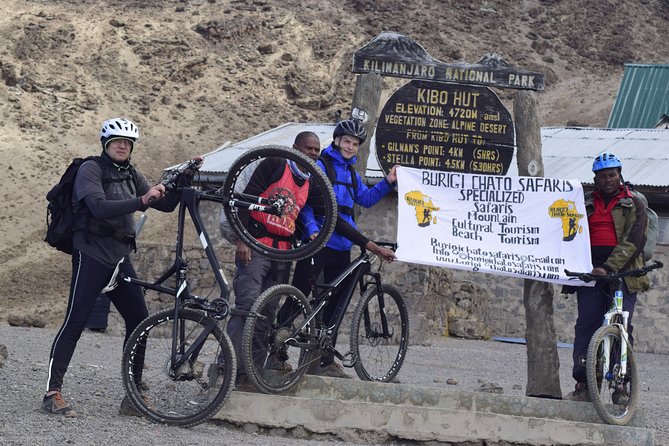
The next morning begins with another ascent through the alpine desert. The first three kilometers are described as very rocky, eroded, and difficult to cycle. This is a likely hike-a-bike section, so bring patience and gloves that let you handle the bicycle comfortably.
After the rough opening, the trail improves. The Saddle, the broad area between Mawenzi and Kibo, is relatively flat, and cycling becomes easier. It may feel like a welcome break, but the altitude remains serious.
The final seven kilometers toward Kibo Hut are challenging because of thin air, cold conditions, and the steady climb. The last kilometer is especially strenuous. The total day is listed at about eight hours.
Kibo Hut sits at roughly 4,700 meters, although the supplied description does not give its exact elevation. At this point, water, clothing, and pacing matter more than cycling speed. Drink often, even if you do not feel thirsty. Keep your spare layers easy to reach, and do not assume the bicycle will make this part easier.
The route description places the ride to Kibo on this day, then describes another approach to Kibo on day four. That appears to be a scheduling overlap or a variation in the operating plan. Ask the operator to confirm exactly where you sleep on the third night and how day four is organized.
Same roads, a different saddle:
- Lion City Bike Tour of Singapore
★ 5.0 · 6,211 reviews - Big Bike tour Amsterdam – See all in 3 unforgettable hours
★ 4.7 · 4,929 reviews - 3-Hour Porto Highlights on a Electric Bike Guided Tour
★ 5.0 · 4,392 reviews - Ninh Binh Full-Day Tour from Hanoi to Hoa Lu, Tam Coc & Mua Cave Via Boat & Bike
★ 5.0 · 4,384 reviews
Day four: Rest, preparation, and a night ascent
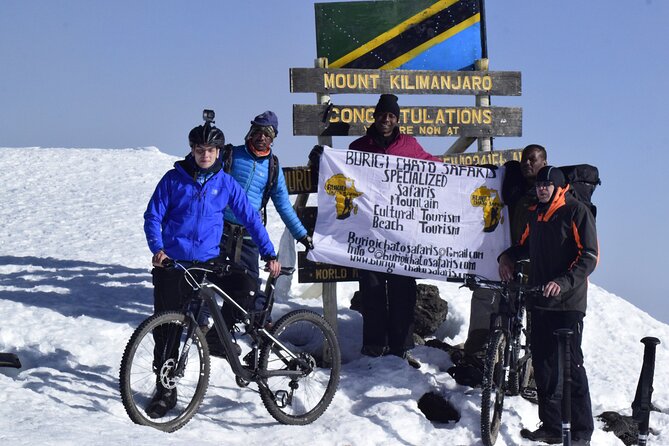
Day four is built around preparation for the summit attempt. You are told to pack your duffel, return toward Kibo Hut, eat lunch, and rest. Around 4:00 p.m., you may hike partway up the summit route to get familiar with the direction and terrain.
The summit rises another 1,195 meters from this point. The final ascent takes place overnight, so the afternoon rest is not optional in practical terms. Save your energy, eat even if your appetite is low, and organize your clothing before darkness arrives.
This is also when small equipment problems can become major ones. Check your headlamp and camera batteries, and carry spares. Keep batteries protected from the cold. Your thermal clothing needs to be ready before you are tired and shivering.
The exact wording of the itinerary is not fully consistent about the day four route, so ask for a final day-by-day schedule. The key fact is clear: you will spend the afternoon resting and make the summit attempt later that night.
Day five: Gilman’s Point, Uhuru Peak, and the long descent
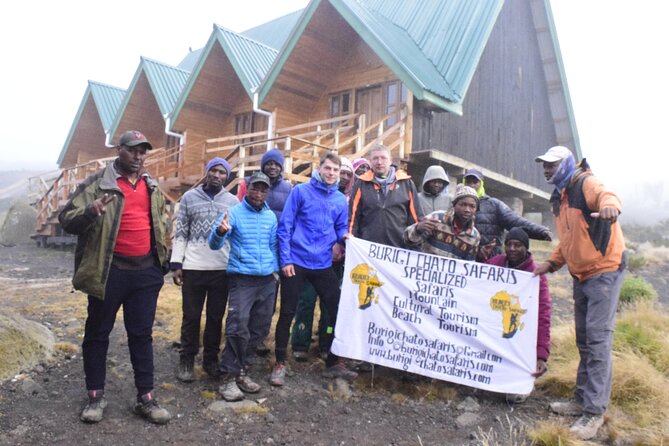
The summit day starts at about 4:00 a.m. You climb a zigzagging scree slope for around two hours to Hans Meyer’s Cave. From there, the gradient becomes steeper, and the next section to Gilman’s Point can take about three hours.
This is primarily a hike, not a cycling climb. The itinerary says porters carry the bicycle and that you take it from them after reaching Gilman’s Point. You then ride toward Uhuru Peak, the highest point on Kilimanjaro, stop for photographs, and continue down to Stella Point.
That short summit ride is a remarkable feature, but it should not be misunderstood. You are not pedaling from the hut to the summit in one continuous effort. The high-altitude ascent is a demanding walk, and your bike becomes part of the summit experience once the trail and conditions allow it.
After lunch, you descend toward Horombo. The return is described as alpine desert and icecap country, with roughly 15 to 20 percent vegetation from Kibo to Uhuru and alpine desert conditions from Kibo to Horombo. The descent should feel faster, but tired legs, loose ground, and cold can still make it demanding.
The full day is listed at about eight hours, though summit schedules can vary. The important thing is to judge the climb by your body, not by the clock. Altitude sickness is a serious possibility on any Kilimanjaro climb. One specific account describes first-aid support and help from the crew when altitude symptoms appeared, but you should still discuss medical procedures, evacuation plans, and guide training before booking.
Day six: Riding back through the rainforest
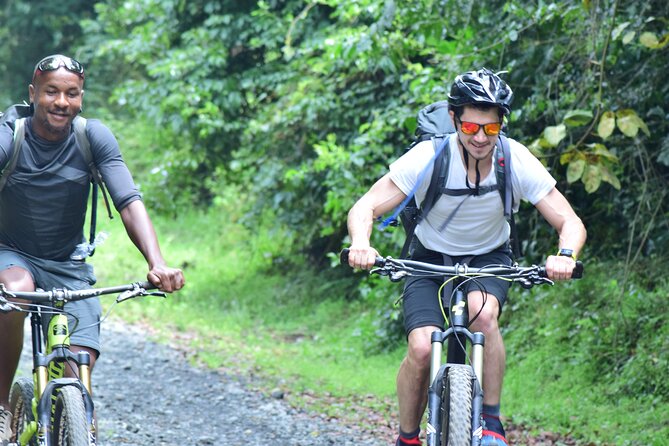
After breakfast, you make the final ride down to Kilema Gate. The route crosses alpine terrain and then returns to rainforest, creating one of the clearest visual changes of the trip.
The listed riding time is about two hours, though the transfer and park checkout add to the morning. At Kilema Gate, you transfer to Marangu Gate for checkout and then continue to your hotel in Moshi.
This descent is a satisfying finish because it lets you see the mountain in reverse. The sparse upper slopes give way to thicker vegetation and a warmer, more familiar environment. After several days at altitude, the return to Moshi should feel like a genuine change of world, not just the end of a trail.
What the $3,668 price really covers
At $3,668 per person, this is a major purchase. The value depends on how much of the included support you would otherwise need to arrange yourself.
The package includes private transportation, park fees, crew wages, gate transfers, airport pickup and drop-off, porters, and meals. It also includes hotel accommodation before and after the trek if arranged through the operator, though the wording allows you to book that accommodation directly instead.
Meals are listed as six dinners, six lunches, and five breakfasts. Since the trip lasts six days, ask for a written meal schedule. The numbers may reflect the timing of arrival and departure rather than six complete days of hotel and hut meals.
The largest extra cost is the mountain bike itself. Bike hire is not included. Personal mountain clothing and trekking equipment are also excluded, as are flights, visas, tips, and crew gratuities.
That can make the tour good value for a rider who wants one company handling vehicles, permits, porters, and food. It is less attractive if you already have a full support system or if you expect a high-end bike to be waiting at the gate. Ask what type of bicycle is available, what repair tools are carried, and what happens if a guide’s or rider’s bike breaks.
A bicycle problem has already been a concern on one trip, when a guide’s bike failed and replacement arrangements caused anxiety. That does not prove a regular equipment problem, but it makes a pre-trip bike inspection and a clear repair plan sensible.
Guides, crew support, and the human side
The crew is central to the experience. Porters carry the bicycle during the steepest summit section, and the guides set the pace, monitor conditions, and help keep the group moving when the altitude becomes difficult.
A guide named Gabriel is specifically praised in the supplied material for making the riding enjoyable and helping with the Kilimanjaro experience. Because guide assignments can change, ask if Gabriel is available rather than assuming he will lead your departure.
The strongest praise is directed at motivation, organization, porter support, and the way camp arrangements are handled. One account describes arriving to find tents already prepared, while another describes first-aid help when altitude symptoms appeared. The information supplied for this trip also refers to mountain huts, so confirm the exact accommodation style for your dates.
You should also budget a tip for the crew. It is not included, and the people carrying equipment and supporting the summit attempt are a major part of what makes the climb possible.
Who should book this adventure?
This trip suits a fit mountain biker who is comfortable with rough ground, long days, altitude, and the possibility of walking beside the bicycle. You need more than ordinary city-cycling ability. The route includes rocks, erosion, cold, thin air, and a summit night that begins before dawn.
It is a good match if you want a more unusual Kilimanjaro challenge and like the idea of combining cycling with classic mountaineering. It also suits someone who values an organized package with transfers, food, porters, and crew support already arranged.
It is not the right choice if you want continuous downhill-style mountain biking, a relaxed sightseeing ride, or a guaranteed pedal all the way to Uhuru Peak. The summit is still a strenuous climb, and the bicycle is carried for part of it.
The operator accepts group bookings and offers group discounts. The listed maximum is 200 people, which is a large possible capacity, so ask how many riders will be in your actual departure group. A smaller group may make pacing, bike repairs, and guide attention easier.
Booking details worth checking
The activity starts at 9:00 a.m. and ends back at the meeting point after the Moshi transfer. Pickup is offered, and mobile tickets are available. Confirmation is provided at booking.
You can cancel for a full refund up to 24 hours before the local start time. Cancellations or changes made inside that period are not accepted for a refund. The experience requires suitable weather, and a weather cancellation leads to another date or a full refund.
Before booking, get clear answers to these practical points:
- Is the bike rental a standard mountain bike, and what is the daily rate?
- Where exactly do you sleep on nights three and four?
- What is included in the six-day meal schedule?
- How large will your actual group be?
- Who handles repairs if a bicycle fails?
- Is Gabriel available, or who is the assigned lead guide?
- What medical and evacuation support is available for altitude illness?
Should you book the Kilema bike trek?
Book it if the idea of combining a Kilimanjaro climb with genuine off-road riding excites you, and if you accept that the summit is partly a hike. The route gives you a rare way to experience the mountain, with changing vegetation, rugged volcanic ground, porters, huts, and a memorable ride near the summit.
I would not book it on the headline price alone. Add bike hire, clothing, tips, flights, visas, and any hotel costs you arrange yourself. Then request a corrected itinerary, a bike specification, and a clear equipment and emergency plan.
For a strong cyclist who wants a serious adventure rather than a polished resort activity, this is a distinctive and potentially rewarding choice. For anyone expecting six days of easy pedaling, it will be a hard lesson in the difference between mountain biking and climbing a mountain with a bike.
FAQ
How long is the Kilimanjaro bike trek?
The experience lasts approximately six days, including transfers from Moshi, the mountain climb, the summit attempt, and the descent to Kilema Gate.
Which Kilimanjaro route does the tour use?
The tour uses the Kilema Route, reached through Kilema Gate after registration at Marangu Gate. It is described as the only bike-accessible route on Kilimanjaro.
Is bicycle rental included in the price?
No. Trekking mountain bike hire is not included. You also need to pay separately for personal mountain trekking gear.
Does the tour include meals and porters?
Yes. The package includes porter support, six dinners, six lunches, and five breakfasts as listed. Ask the operator to confirm the meal schedule because the trip lasts six days.
Does the tour include accommodation?
Mountain hut accommodation is part of the route description. Hotel accommodation before and after the trek can be booked through the operator or directly by you, so confirm exactly what your package includes.
Can I cycle all the way to Uhuru Peak?
No. The summit attempt begins as a hike, and the bicycle is carried by porters for the steep upper section. After Gilman’s Point, you take the bike and ride toward Uhuru Peak if conditions and your strength allow.
What happens if bad weather cancels the experience?
If poor weather causes cancellation, you are offered a different date or a full refund. You can also cancel up to 24 hours before the start time for a full refund.
Newest rides we have reviewed in the world
- 1 Day Bike Tour to Hell’s Gate And Lake Naivasha★ 5.0 · 14 reviews
- Afternoon Adventure: Okinawa Local Cycling with Spectacular Views★ 5.0 · 92 reviews
- Zodiac Shrines and Naha Backstreets Cycling Tour★ 5.0 · 29 reviews
- PANORAMA TOUR OF NANTES by electric bike★ 5.0 · 33 reviews
- Guided E-bike Tour★ 5.0 · 33 reviews
- Authentic Mykonos bike tour★ 5.0 · 23 reviews
- Private Munich Bike Tour: Flexible Times & Beer Garden Stop★ 5.0 · 15 reviews
- Mini Classic Bike Tour @ 4pm incl. Beer Garden & Surfers 2,5 hrs★ 5.0 · 251 reviews
Bike and Hike Tours, compared.
Ketchikan Electric Bike and Rain Forest Hike Ecotour
Read our review →
TRIPLE ACTIVITY TOUR, Bike Kayak Hike, ANTIGUA
Read our review →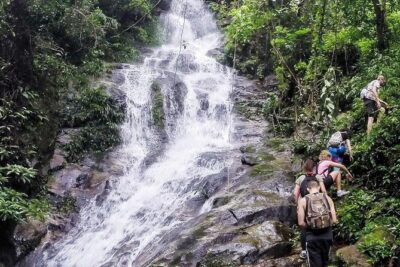
Chiang mai Hike & Downhill Bike Adventure –Suthep National Park
Read our review →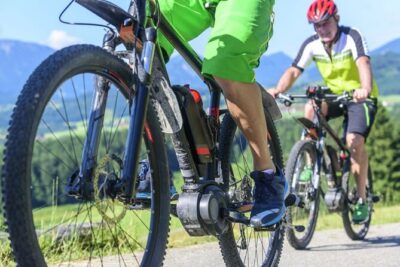
eBike and Hike Banff to Johnston Canyon small group guided program
Read our review →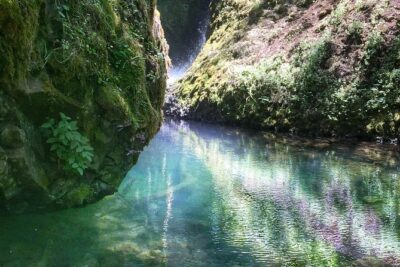
Hike and Bike Tour to Columbia River Gorge Waterfalls
Read our review →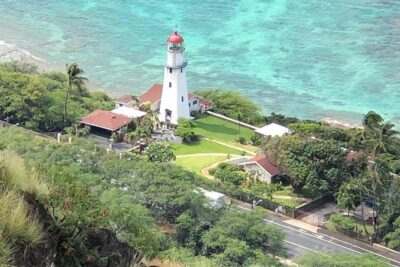
Suthep National Park Hiking & DH Mountain Biking
Read our review →Other lists this ride turns up in