REVIEW · CYCLING TOURS
Experience Intramuros with Bamboo Bicycle – Ecotours
Intramuros is best seen at a slow pace, with time to notice its old gates, battered walls, churches, and quiet corners. This small-group bamboo-bike tour gives you that pace, plus a guide who connects the buildings to Spanish rule, Chinese influence, Japanese occupation, and World War II.
I like the personal bike fitting and the easy route. I also like the way guides such as Anj, Chi, Paolo, JD, Josh, and Justine use photos and stories instead of simply pointing at buildings. The main drawback is that this is more a history tour with cycling than a long bike ride, and some stretches share roads with traffic and pedestrians.
Key points to know before you book
- Choose your own bamboo bike: Bikes come in different styles and sizes, so you can pick one that feels comfortable.
- Mostly flat, gentle cycling: The pace suits many riding levels, with stops for history and photos.
- Ride beside Intramuros walls: The route includes the old walls, gates, plazas, and main landmarks.
- Strong guide element: Guides such as Anj, Chi, Paolo, and JD are praised for clear stories, energy, and careful group handling.
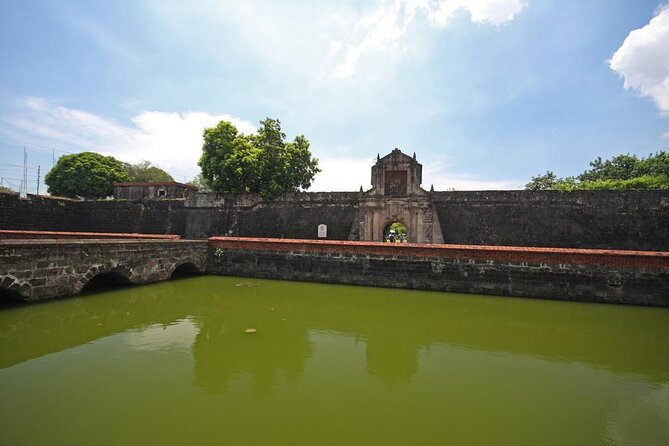
- Fort Santiago gets real time: About 40 minutes are set aside for the fortress, including some walking.
- Expect Manila conditions: Heat, rain, pedestrians, cars, motorcycles, and occasional unpleasant smells can all be part of the ride.
Why a bamboo bike works so well in Intramuros
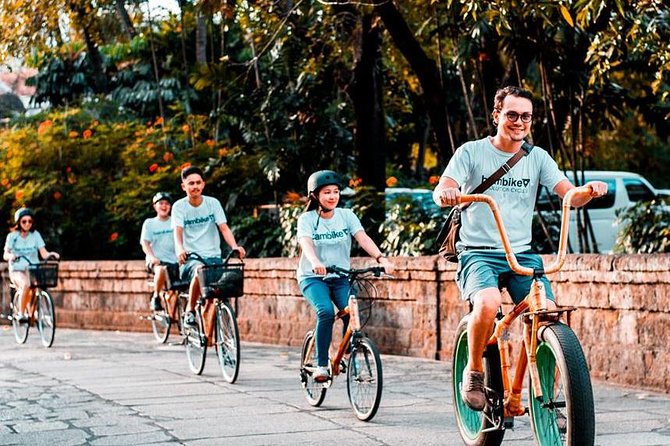
The bamboo bicycle is not just a novelty. It gives you a quiet, open way to move through Intramuros, where the important sights are spread across gates, plazas, churches, walls, and fortifications.
You begin at Bambike headquarters in the Casa Manila complex. After signing a waiver, you choose a bike by size and style. That personal choice matters. A bike that fits well makes the slow ride easier, especially in Manila’s heat.
The tour is limited to a maximum of 15 people. That is large enough to create a friendly group, but small enough for a guide to keep watch and answer questions. Some outings also use a second guide to help the group cross or share busier roads. This is useful because Intramuros is not a sealed bicycle park. At times, you ride near cars, motorcycles, pedestrians, and uneven city activity.
The route is generally flat and gentle. You do not need to be a serious cyclist, but you should be comfortable riding a bike and staying with a group. Children must be accompanied by an adult, and children should ride well enough to manage roads shared with traffic.
More Cycling Trips in the world:
- Lion City Bike Tour of Singapore
★ 5.0 · 6,211 reviews - Big Bike tour Amsterdam – See all in 3 unforgettable hours
★ 4.7 · 4,929 reviews - 3-Hour Porto Highlights on a Electric Bike Guided Tour
★ 5.0 · 4,392 reviews
Casa Manila and the start in Spanish-era surroundings
Casa Manila is your first proper look at the district. The building is a copy of a traditional home inspired by Spanish Colonial architecture, so it helps set the tone for the rest of the ride.
You spend about 15 minutes here. That is enough for an introduction, but not a full house museum visit. The value is in seeing the style before you move through the wider district, where Spanish planning, defensive walls, churches, and public squares shape the route.
The Bambike base sits in the Casa Manila area, one of the more attractive parts of Intramuros. Arrive ready to ride, but also ready for a little walking. The tour includes several stops, and Fort Santiago requires time on foot.
The Japanese cannon and a harder chapter of Manila’s past
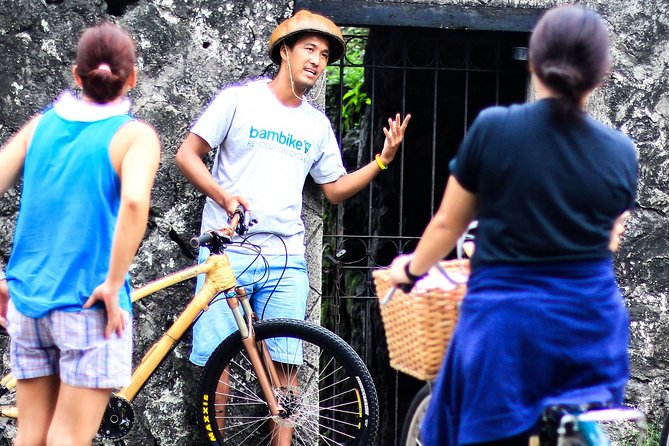
Along Muralla Street, the group pauses by a Japanese cannon. This stop shifts the story from Spanish colonial rule to the Japanese occupation and World War II.
It is a short stop of about 15 minutes, but it adds needed context. Intramuros can look like a Spanish-era postcard if you only focus on gates and churches. The cannon reminds you that this district also went through wartime destruction and occupation.
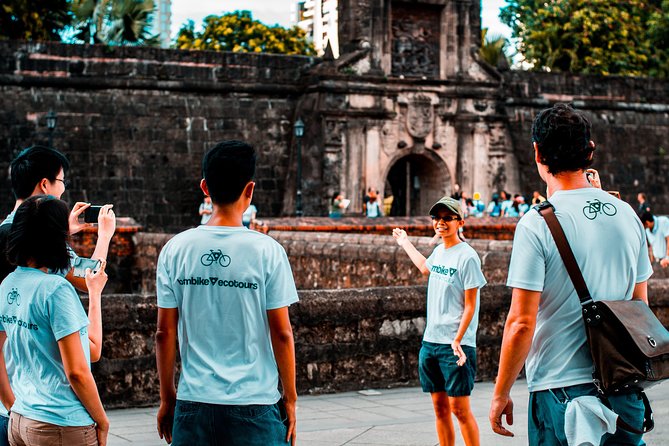
This is one place where a good guide makes a big difference. Guides have used photographs and supporting images to explain what you are seeing, which helps when the physical remains alone do not tell the whole story.
Puerta Real Gardens and the city’s defensive design
Puerta Real Gardens gives you a closer look at one of Intramuros’s principal gates. The stop lasts about 20 minutes and explains how the Spanish designed defenses beyond the main walls.
I like this part because it turns the walls from background scenery into a working military system. You begin to see why the gates, open areas, and fortified approaches were placed where they were.
The gardens also offer a pause from the road. This is a good time for photographs, and guides commonly leave room for the group to look around rather than rushing everyone back onto the bikes.
Same roads, a different saddle:
- Ninh Binh Full-Day Tour from Hanoi to Hoa Lu, Tam Coc & Mua Cave Via Boat & Bike
★ 5.0 · 4,384 reviews - Small Group Guided Bike Tour of Amsterdam’s Hidden Gems
★ 5.0 · 3,936 reviews - 3-hour Complete Prague Bike Tour
★ 5.0 · 3,674 reviews - Bangkok: Temples, Canals & Local Life Bike Tour
★ 4.9 · 3,511 reviews
Café Y Ruedas and a needed break
The group then rides toward the walls for a refreshment stop at Café Y Ruedas. The schedule allows about 15 minutes.
Bottled water is provided throughout the tour, and the tour includes refreshments afterward. A cold towel comes at the end, which is particularly welcome on a warm Manila day. A sweet cold treat has also been part of the finish for some groups.
Food and drinks beyond what is specified are not included, and alcoholic drinks are available to buy. I would still carry water if you prefer to drink often, though the tour does provide bottled water.
The café stop is practical rather than a major sightseeing event. It breaks up the riding and gives you a chance to cool down before the next set of historic stops.
Puerta del Parian and Manila’s Chinese connections
Puerta del Parian receives one of the longer visits, about 30 minutes. This gate and nearby public space help explain the role of Chinese people and Chinese influence in Philippine history.
That subject adds range to the tour. Intramuros was not shaped by Spanish rule alone, and this stop gives the guide room to explain the different communities tied to Manila’s growth.
It is also a good place to ask questions. The guides are expected to lead the group, but the best part of the stop is often the chance to connect the broad history to the streets directly around you.
Plaza Roma, Manila Cathedral, and the center of old Manila
At Plaza Roma, you spend about 10 minutes learning about the square and the buildings around it. The Manila Cathedral is central to this part of the route.
The cathedral is described as the heart of Christianity in the Philippines, and you have about 10 minutes to see its history and interior. That is enough for a focused visit, but not a long church tour. Dress respectfully and remember that this is an active religious site.
The plaza and cathedral work well together. One shows the public and civic side of Intramuros, while the other shows its religious importance. The bike lets you cover the distance between them without spending the whole morning walking.
Fort Santiago is the main historic stop
Fort Santiago gets the longest stop, about 40 minutes, and rightly so. This stone fortress contains several places tied to Philippine history, and the tour includes time to walk inside it.
You should expect to leave the bike for part of this visit. The tour notes a small amount of walking, especially inside Fort Santiago, so comfortable shoes are sensible even though the ride itself is easy.
Fort Santiago is also where the guide’s storytelling matters most. A bare circuit of the walls would only show you stone and gateways. A well-organized guide can explain how the fort fits into the wider story of Intramuros and the Philippines.
You will have time for photographs, but this is not a private museum tour with unlimited time in every room. The 40-minute schedule gives you a useful introduction while keeping the whole route within roughly three hours.
San Agustin Church and the final church stop
The last listed stop is San Agustin Church, also known as Immaculate Conception Parish. You spend about five minutes here, so think of it as a brief look and explanation rather than a full visit.
It is identified as the oldest church in the Philippines and is recognized by UNESCO as a World Heritage Site. Even with limited time, it gives the tour a strong closing point: you finish among some of Intramuros’s most important religious and colonial buildings.
If churches are your main interest, you may want a separate visit later. The bike tour gives you a broad introduction, not a detailed study of every interior.
What the guides do best
The strongest part of this experience is the guide service. Names that appear repeatedly across the guide team include Anj, Chi, Paolo, JD, Josh, Justine, Mika, and Chloe.
The best guides keep the history clear, answer questions, and watch the road at the same time. Anj is noted for humor and strong storytelling. Paolo is praised for detail and enthusiasm. JD and Josh have been particularly effective at combining history with road safety. Chi is described as attentive and energetic, while Justine is good at giving the group time for pictures.
Guide quality can vary from one departure to another, as it does on any group tour. Still, the structure supports a good outing: stops are short enough to keep moving, yet long enough to hear the main story.
I also like that guides offer to take photographs. That matters for solo visitors, who can otherwise spend the day photographing buildings but rarely appear in the pictures themselves.
How much cycling should you expect?
Set your expectations correctly. This is not a long-distance bicycle excursion, and one point of criticism is that there is less actual biking than some people expect.
The cycling is slow, flat, and broken into many stops. That suits you if your goal is to cover Intramuros comfortably while learning its story. It may disappoint you if you want several hours of uninterrupted riding.
Crowded pedestrian areas can also slow the group. At other points, you may share city roads with cars and motorcycles. The guides work to keep everyone together and help manage crossings, but you still need to stay alert.
Rain does not automatically end the ride. The tour supplies rain ponchos when needed and operates in changing weather conditions. The booking terms also allow a different date or a full refund if poor weather causes the activity to be canceled. Manila rain can arrive quickly, so wear clothes that dry fast and bring footwear suitable for wet pavement.
Price and overall value at $39
At $39 per person, the value rests on the guide, the access to several major sights, and the ease of moving around Intramuros.
You are paying for roughly three hours, a local guide and tour escort, the bamboo bike, helmet, bottled water, sunscreen or rain poncho when needed, refreshments, a cold towel, and gratuities. The listed admissions include the café stop and Fort Santiago. Other stops are listed without an admission charge.
That is a fair price if you want an introduction to Intramuros rather than arranging separate visits and transport between each location. The guide turns scattered landmarks into one connected story, and the bike saves energy in the heat.
The value is lower if you already know the district well or want a serious cycling workout. In that case, you may feel the frequent stops leave too little riding time. For a first visit, though, the combination of transport, history, and photographs makes practical sense.
Who should book this tour?
I would choose this for a first visit to Manila, especially if you have only a short time for Intramuros. It is also a good fit for solo visitors, couples, families with older children who ride confidently, and anyone who prefers a gentle outing over a demanding activity.
It suits people who like history but do not want a long walking tour. The bike carries you between the gates, plazas, churches, and fort, while the stops provide the detail.
You should think twice if you dislike riding near traffic, have trouble cycling in a group, or want a quiet private visit at each landmark. The route can include pedestrians, road traffic, rain, heat, and occasional unpleasant smells in parts of the district. Those are real city conditions, not flaws that a bamboo frame can remove.
Free cancellation is available up to 24 hours before the start time. Changes or cancellations inside that window are not accepted for a refund. Children need an adult with them, service animals are allowed, and most people can take part.
Should you book the Bambike Intramuros tour?
Book it if you want an easy, well-organized introduction to old Manila, with a bicycle doing the walking between sights. The bamboo bikes are fun, the route is manageable, and the strongest guides add clear stories to places that can otherwise blur together.
Skip it if your priority is nonstop cycling or long, independent visits inside each church and fortress. For most first-time visitors, the balance is right: a flat ride, major Intramuros landmarks, a small group, useful safety support, and a cool finish after the heat.
FAQ
How long does the Bambike Intramuros tour last?
The tour lasts approximately three hours.
Where does the tour start and finish?
It starts at Bambike HQ in the Casa Manila area of the Plaza San Luis Complex, at Real Street and M General Luna Street in Intramuros. It ends back at the same meeting point.
How many people can join the tour?
The maximum group size is 15 people.
Is the cycling difficult?
The route is generally flat and paced for a range of riding levels. You will ride near pedestrians, cars, and motorcycles at some points, so you should be comfortable riding a bicycle and staying with the group.
Are bamboo bikes and helmets provided?
Yes. The tour includes use of a bamboo bicycle and helmet. You choose a bike style and size at the start to help with comfort.
What happens if it rains?
The tour operates in changing weather conditions and provides rain ponchos when needed. If poor weather causes the activity to be canceled, you are offered another date or a full refund.
Is Fort Santiago included?
Yes. Fort Santiago is part of the route, with about 40 minutes scheduled there. Some walking is involved inside the fortress.
Are refreshments included?
Bottled water is provided during the ride, and refreshments are included after the tour. Food and drinks beyond what is specified are not included, and alcoholic drinks can be purchased.
Can children join the tour?
Yes, but children must be accompanied by an adult. Children should also be able to ride safely because some parts of the route use roads shared with traffic.
Newest rides we have reviewed in the world
- Ljubljana by E-Bike: Guided City Highlights Tour★ 4.8 · 28 reviews
- London Christmas Lights Bike Tour★ 4.5 · 70 reviews
- Lisbon: Portuguese Petiscos Tasting Tour by E-Bike★ 5.0 · 16 reviews
- Liverpool: The Beatles Tour on Electric Pedal-Assist Ebikes★ 5.0 · 17 reviews
- Lisbon Bike Tour: Langs de rivier van Belém naar Lissabon★ 4.7 · 59 reviews
- Lisbon: E-Bike Adventure Through the City of Seven Hills★ 5.0 · 28 reviews
- Lisbon: 7 Hills Panoramic Guided Tour by E-Bike★ 4.8 · 50 reviews
- Lisbon: Guided E-Bike Tour to Belém★ 4.8 · 115 reviews
Cycling Tours, compared.
Big Bike tour Amsterdam – See all in 3 unforgettable hours
Read our review →
3-Hour Porto Highlights on a Electric Bike Guided Tour
Read our review →
Small Group Guided Bike Tour of Amsterdam’s Hidden Gems
Read our review →
Hills, Alfama, and Mouraria Tour by Electric Bike
Read our review →