REVIEW · CITY HIGHLIGHTS BIKE TOURS IN BERLIN
Berlin (E)Bike Tour Historical Highlights in Small groups
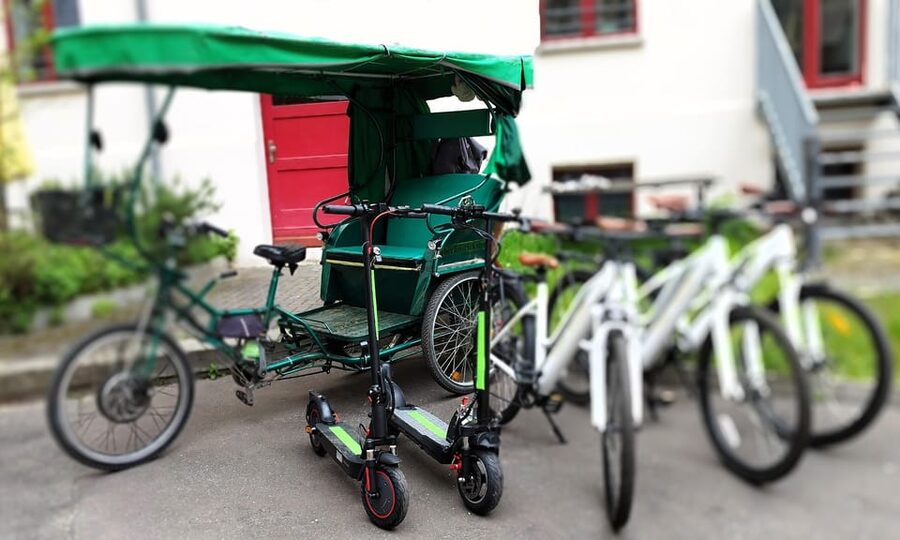
Berlin’s historic center is too spread out for a pleasant walk, yet many of its key sights are too close together to justify a bus ride. This small-group e-bike and rickshaw tour solves that problem neatly, taking you from the TV Tower and Museum Island to Checkpoint Charlie, the Berlin Wall, Brandenburg Gate, and the Reichstag in three and a half hours. The rickshaw makes it especially useful for families and mixed-mobility groups.
I like the flexible transport choice, since active riders can pedal while children, grandparents, or less mobile companions ride comfortably in the rickshaw. I also like the many photo stops and the guide’s role as an informal photographer, a handy touch when you want everyone in the picture. The main caution is that equipment and service may not always be equally smooth: one past booking involved an e-bike losing power and a frustrating exchange with the organizer.
Key points
- One route, two ways to ride: Choose an e-bike, or use the traditional rickshaw if cycling is not practical for you.
- A tight six-person group: The small format allows for a more personal pace and easier questions.
- Berlin’s major historical sites in 210 minutes: The route connects Museum Island, Nazi and Cold War landmarks, Brandenburg Gate, and the Reichstag.
- Useful for mixed-age families: The rickshaw can carry up to two people and requires only a few steps to board.
- Strong guide feedback: Levent has been praised for enthusiastic Dutch-language commentary, while Jakob received high marks for his guiding.
- Good early-trip orientation: Take this tour near the beginning of your stay so later visits make more sense.
Why a bike works so well in central Berlin
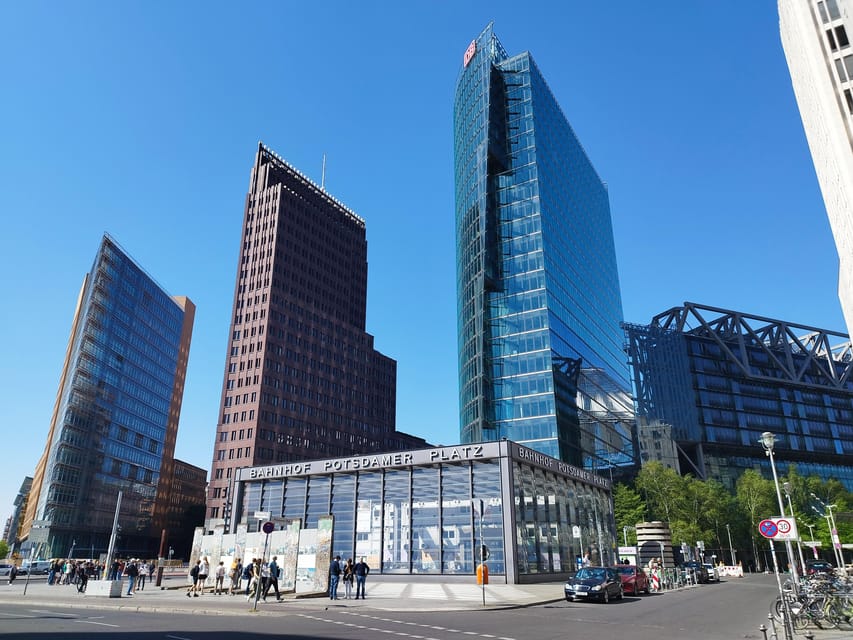
Berlin Mitte covers a lot of ground. The TV Tower, Museum Island, Unter den Linden, the Brandenburg Gate, Checkpoint Charlie, and the Topography of Terror are all part of the same historical core, but walking between every stop takes time and energy.
A bike gives you a practical middle ground. You can cover long stretches faster than on foot, yet still see the streets, buildings, memorials, and changing city scenes along the way. You are not sealed inside a bus, and you do not spend the whole afternoon walking from one major sight to the next.
The route is guided rather than a free-form rental. You ride behind or with the guide, stopping at important places for explanations and photographs. That matters in Berlin, where a plain-looking car park may mark one of the most important sites in twentieth-century history.
The group is limited to six people. That is small enough for the guide to keep track of the group and answer questions without turning the ride into a mass tour. It also makes the rickshaw arrangement more manageable when some people pedal and others ride.
More City Highlights Bike Tours in Berlin
- Berlin: Sights and Highlights Bike Tour with a Local Guide
★ 4.8 · 2,698 reviews - Berlin Highlights 3-Hour Bike Tour
★ 5.0 · 948 reviews - Berlin Highlights: 3-Hour Bike Tour
★ 4.9 · 809 reviews
Starting at Rosenthaler Platz
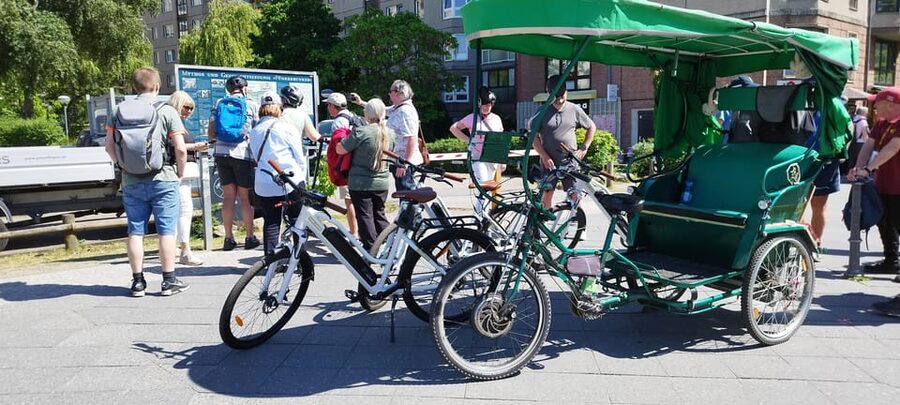
The meeting point is Weinbergsweg 6, near the Rosenthaler Platz U-Bahn station. Rosenthaler Platz is a handy starting point in Mitte, with cafes, bars, shops, street art, and easy public transport connections.
Weinbergsweg has a quieter feel than the plaza itself. The nearby Weinbergspark gives you a pleasant place to wait or sit before the tour, though you should arrive ready to begin rather than expecting a long orientation session.
The tour returns to the same address. That makes the start and finish simple, especially if you are staying in northern Mitte. Wear comfortable shoes even though much of the route is by bike or rickshaw. You will still be getting on and off, pausing at memorials, and standing for explanations.
TV Tower and Museum Island
The first major sight is the Berlin TV Tower, one of the easiest landmarks to spot across the city. You get a guided look and a photo stop rather than a visit inside the tower. Its height and location provide a useful first reference point for understanding central Berlin.
From there, the route continues toward Museum Island. This group of museums on the Spree is one of Berlin’s grandest architectural areas. The tour gives you a street-level introduction, with time to look around and take photos, but it does not include museum admission or an indoor visit.
That distinction is important. If you want to see the Pergamon Museum or another collection, plan a separate visit. The bike tour is best for orientation and connections between sights, not for spending an hour inside each one.
Berlin Cathedral is also part of the central Mitte area covered by the tour, and you can expect to see it along this stretch. The cathedral’s large dome and riverfront setting make it one of the easiest photo stops in the city.
Unter den Linden and the Nazi book-burning memorial
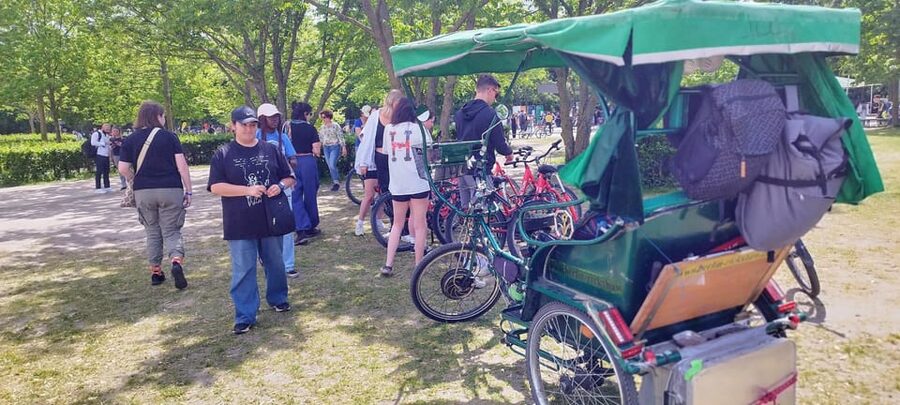
Unter den Linden is Berlin’s famous east-west boulevard. It links many of the city’s major institutions and historic buildings, so riding along it helps you see how the royal, political, and cultural parts of Mitte fit together.
The route also stops at the memorial to the Nazi book burning of May 10, 1933. The memorial is easy to miss if you pass by quickly. Its quiet design carries more weight once you understand what took place there and why the site matters.
This is one of the useful features of a guided ride. You see more than facades and traffic. The guide connects a square, street, or empty space with the event that shaped it. Keep in mind that the tour moves at a steady pace, so the stop is for explanation and reflection rather than a long museum-style presentation.
More City Highlights Bike Tours in Germany
- Berlin Highlights Sightseeing Bike Tour in Small Groups
★ 5.0 · 652 reviews - Berlin: Guided Bike Tour to Explore the Highlights
★ 4.8 · 506 reviews - Berlin: E-Bike Tour of the Berlin Wall and Mitte Highlights
★ 4.7 · 60 reviews - Munich: Guided City Tour by Bike with Beer Garden Stop
★ 4.7 · 604 reviews
Checkpoint Charlie and the Cold War story
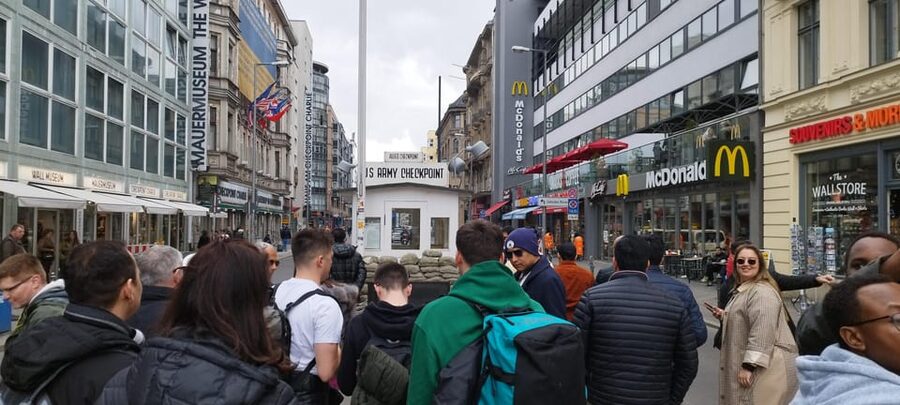
Checkpoint Charlie is one of Berlin’s most recognizable Cold War locations. The former border crossing now has a busy, commercial feel, with visitors taking photographs around the guardhouse and sign.
The tour gives you the historical setting behind the image. You learn why this crossing mattered and how Berlin was divided during the Cold War. It is a useful stop, though the surrounding area can feel more tourist-oriented than other memorial sites in the city.
That contrast is worth noticing. Berlin does not present its past in one consistent style. Some places are quiet and solemn, while others are crowded with souvenir shops and photo opportunities. A guide helps you separate the historical importance from the modern presentation.
Hitler’s bunker and the Holocaust Memorial
The former Führerbunker site is another place where the physical setting can surprise you. There is no dramatic surviving bunker interior to visit here. The location is marked in a more restrained way, and much of the site is ordinary modern city space.
That makes the guide’s explanation particularly important. Without context, you could easily pass through without realizing what happened there during the final days of the Nazi regime. The stop is brief, but it places the end of that period into the larger route.
Nearby, the Holocaust Memorial offers a very different experience. Its field of concrete blocks creates narrow paths and changing views as you move through it. The tour includes a photo stop and guided explanation, but you should treat the site with care. This is not simply a striking backdrop for pictures.
You may have a little time to walk among the blocks, but the schedule includes many other sights. If you want to visit the underground information center, set aside separate time. The bicycle tour gives you the main outdoor encounter and historical setting.
The Berlin Wall and Topography of Terror
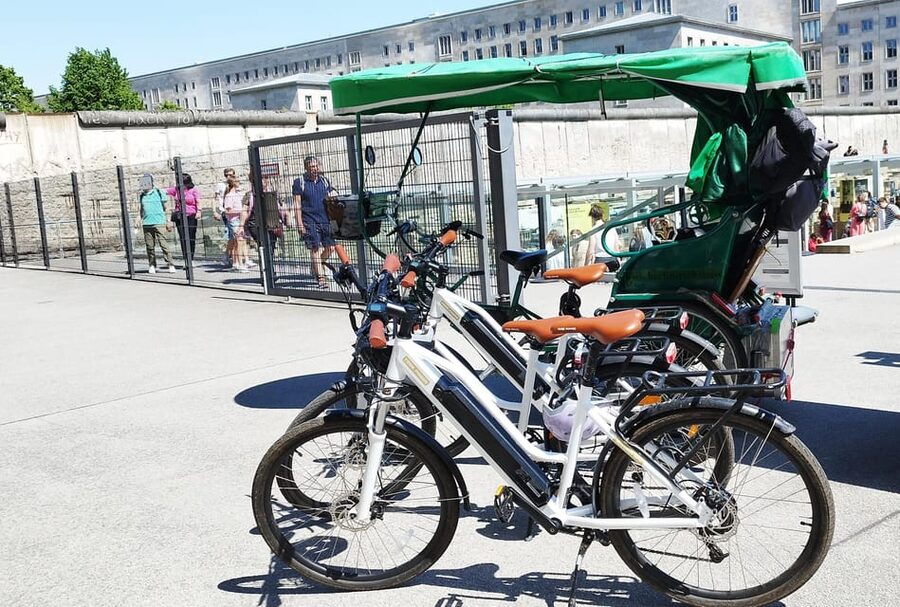
The Berlin Wall portion of the tour brings the city’s division into physical focus. Surviving sections and marked traces help you understand how the barrier cut through streets, neighborhoods, and everyday life.
The route is designed to show you historical places in relation to one another. That is more useful than seeing isolated memorials with no sense of direction. You begin to understand how close together the Nazi and Cold War sites are, and how modern Berlin has been built around them.
At the Topography of Terror, the focus returns to the Nazi period. The site was once connected with the SS and Gestapo, and the outdoor displays explain the machinery of persecution and repression. The tour includes a photo stop and a short visit from the outside.
This is another place where you may want to return on your own. The documentation center deserves more time than a moving tour can provide. Think of the stop as an introduction that helps you decide which museums or memorials deserve a longer visit later.
Brandenburg Gate and the Reichstag
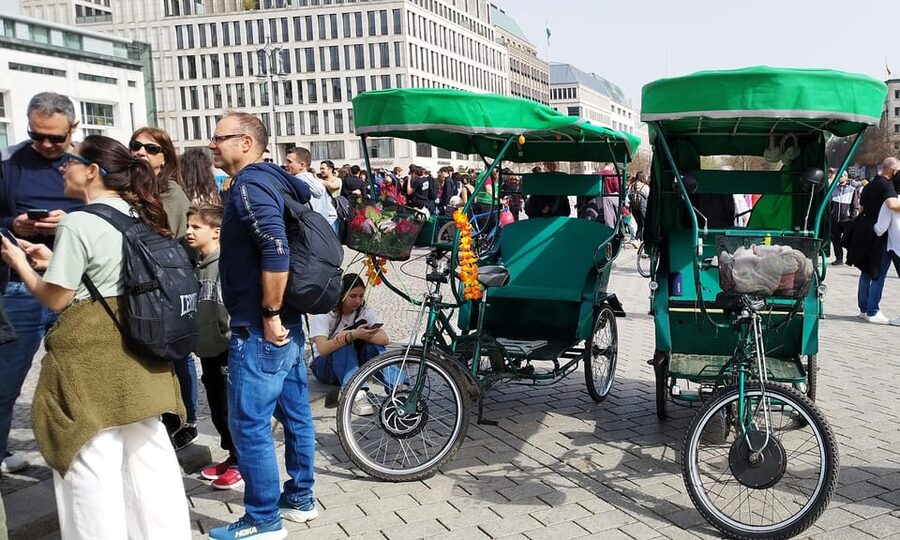
Brandenburg Gate is the classic Berlin stop, and the tour gives you time to see it from the ground and hear how it became a symbol of the city. It has served as a royal entrance, a backdrop for political events, and a marker of Berlin’s division and reunification.
The gate can be crowded, so the bike format is useful. You can arrive, stop nearby, and move on without losing the time it would take to navigate the whole area on foot. The guide also takes photos, which helps avoid the familiar problem of returning home with pictures of everyone except the person holding the camera.
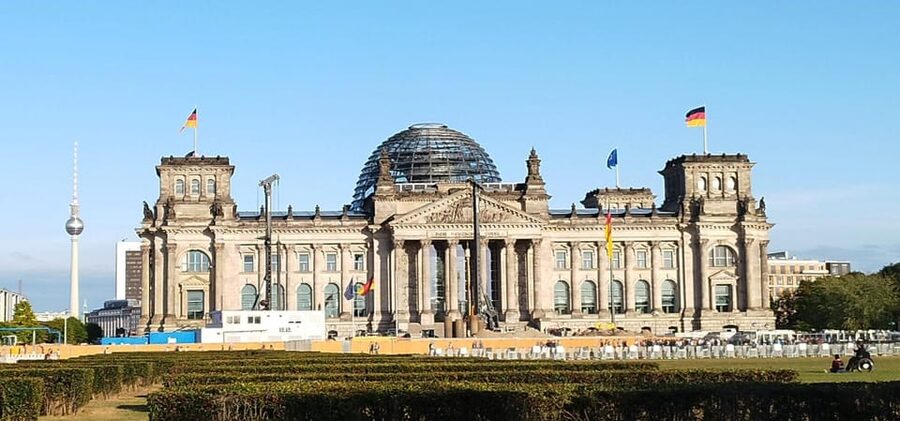
The Reichstag is close by. You see the German parliament building from outside and learn about its role in modern Germany. The tour does not include entry to the dome or a parliamentary visit, so reserve those separately if they are a priority.
This final section gives the tour a strong finish. You have moved from the old center and Museum Island through Nazi and Cold War landmarks to the institutions of present-day Germany.
The rickshaw option for families and less mobile riders
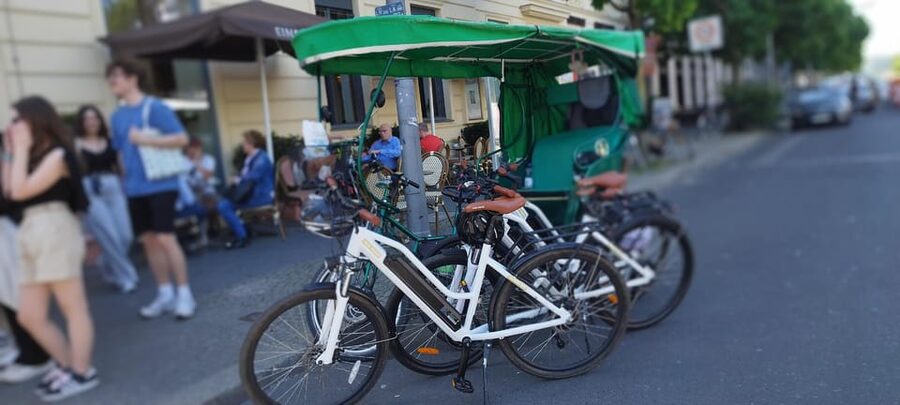
The rickshaw is the most distinctive part of this experience. It can carry up to two people, making it practical for a grandparent and child, two children, or a pair of adults who do not want to cycle.
The design is intended to make boarding simple, with only a few steps. It also lets a less mobile rider remain part of the same outing instead of waiting at the hotel or splitting from the group.
This arrangement is particularly useful for mixed groups. One person can ride an e-bike while another uses the rickshaw, allowing everyone to follow the same route and hear the same guide. Young children under 14 are also specifically included among those suited to the rickshaw option.
There is one practical point to clarify before you book: the supplied details describe the rickshaw as accommodating two people, but they do not explain exact weight limits, child-seat arrangements, or how many rickshaws are available for a larger booking. If your group depends on this option, confirm the setup in advance.
Guide quality and the small-group feel
The most consistent strength of this tour is the guide. Past feedback gives especially positive attention to clear, lively explanations. Levent was praised for enthusiastic commentary in Dutch, and Jakob received strong marks for his guiding.
The advertised language is English, so Dutch commentary should not be assumed for every departure. Still, the guide names give you useful context about the people who have led recent tours.
The guide also takes photographs during the route. That is a small but meaningful benefit for couples, families, and groups who want a record of the day without handing a phone to a stranger at every stop. Bottled water is included as well.
The small group size should help the ride feel less rigid than a large coach tour. You can ask questions and get closer to the guide. At the same time, this is still a scheduled route with many stops, so do not expect a private custom tour that lingers wherever you wish.
The main weakness: equipment and communication
Most of the available feedback is highly positive, with a 4.5 rating from 24 reviews and repeated praise for the guide. A few bookings also point to the limits of a small operator experience.
One serious complaint described two e-bikes losing electrical power during the ride. The riders continued for about half the tour without assistance, and the conversation with the organizer became unpleasant. Another comment described the bike coordinator as disorganized, even though the guide himself was excellent.
You should not treat one bad experience as proof that every bike will fail. But e-bike reliability matters, especially on a three-and-a-half-hour route. Check the bike before setting off, make sure you understand how the power system works, and speak up at once if the motor cuts out.
The rickshaw can also create an unusual formation. If the guide rides in a rickshaw and you follow behind on bikes, the arrangement may feel less natural than riding beside a cycling guide. That is not necessarily a problem, but it is worth knowing if you want a tightly led bicycle group.
Is $82 a fair price?
At $82 per person, this is not the cheapest way to see Berlin. You are paying for a 210-minute guided route, an e-bike, the rickshaw alternative, a small group capped at six, bottled water, and help with photographs.
The value improves if you would otherwise need several public transport rides or a private vehicle to connect these sites. It also improves for a family or group with different physical abilities, since the rickshaw lets everyone take part without arranging a separate plan.
The value is weaker if you are a confident cyclist who enjoys exploring alone, or if your main goal is to spend serious time inside museums. This tour is about seeing the broad shape of Berlin’s story and covering distance efficiently.
I would use it as an orientation tour near the beginning of a stay. Afterward, you can return to the Holocaust Memorial, Topography of Terror, Museum Island, or the Reichstag with a better sense of where everything lies.
Who should book this Berlin ride?
I would recommend it most strongly to families, multigenerational groups, first-time visitors, and anyone who wants a quick but meaningful introduction to Berlin Mitte. It is also a good fit when one member of your party cannot comfortably cycle.
The tour is less suitable if you want long visits at each memorial, a museum-heavy day, or a fully private itinerary. The many stops are an advantage for orientation, but they also mean each site receives limited time.
Book it if the combination of history, movement, and accessibility matches your plans. Skip it if you prefer to explore at a slow pace and spend an entire afternoon at one or two sites.
FAQ
How long does the tour last?
The tour lasts 210 minutes, or three and a half hours.
Where does the tour start?
It starts at Weinbergsweg 6, near the Rosenthaler Platz U-Bahn station in Berlin Mitte.
Where does the tour finish?
The tour returns to Weinbergsweg 6.
Is the tour conducted in English?
Yes. The listed live tour language is English.
How many people are in the group?
The group is limited to six participants.
Can I take a rickshaw instead of an e-bike?
Yes. The rickshaw option is intended for non-cyclists, less mobile participants, and people under 14.
How many people can one rickshaw carry?
The rickshaw accommodates up to two people.
Which sights are included?
The route includes the TV Tower, Museum Island, Unter den Linden, the May 10, 1933 Nazi book-burning memorial, Checkpoint Charlie, Hitler’s bunker site, the Holocaust Memorial, the Berlin Wall, Topography of Terror, Brandenburg Gate, and the Reichstag.
Is bottled water provided?
Yes. Complimentary bottled water is included.
What should I bring?
Bring comfortable shoes.
Can I cancel the booking?
You can cancel up to 24 hours in advance for a full refund. The booking also offers a reserve-now, pay-later option.
More Heritage and Temple Bike Tours in Berlin
- Small-Group Historical Bike Tour in Berlin
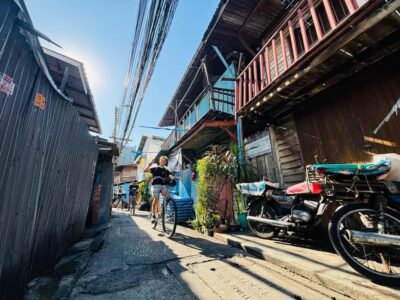
★ 4.5 · 103 reviews - Bangkok: Temples, Canals & Local Life Bike Tour
★ 4.9 · 3,511 reviews - Historical Singapore Bike Tour on Full-Sized Bicycles
★ 5.0 · 1,421 reviews - Barcelona: 2.5-Hour Bike or E-Bike Historical Tour
★ 4.5 · 1,262 reviews
Newest rides we have reviewed in Berlin
- From Berlin: Gardens & Palaces of Potsdam Bike Tour★ 5.0 · 61 reviews
- Berlin: Green City Guided Bike Tour★ 4.6 · 29 reviews
- Berlin: Small Group Bike Tour Through City Center★ 4.9 · 64 reviews
- Berlin: Illuminated Berlin by Bike Taxi★ 4.8 · 162 reviews
- Berlin: 48-Hour or 72-Hour Bike Rental★ 5.0 · 14 reviews
- Berlin: From East to West & Wall Tour by Bike with a Guide★ 4.8 · 171 reviews
- Berlin: 3-hour bike tour – A journey through time in the capital★ 4.8 · 24 reviews
- Small-Group Historical Bike Tour in Berlin★ 4.5 · 103 reviews
Heritage and Temple Bike Tours, compared.
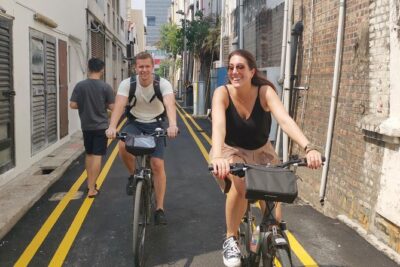
Historical Singapore Bike Tour on Full-Sized Bicycles
Read our review →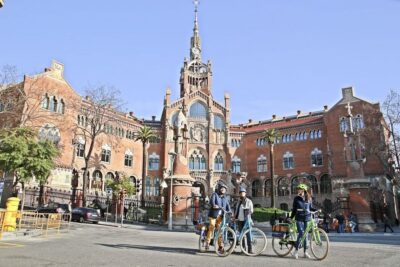
Night Bike Tour with Temples & Flower Market Visit
Read our review →
Intramuros, Manila: Historical Bamboo Bike Tour
Read our review →