
REVIEW · PRIVATE CYCLING TOURS IN MEXICO
Private Historical Tour in the Sierra Santa Rosa by Bicycle
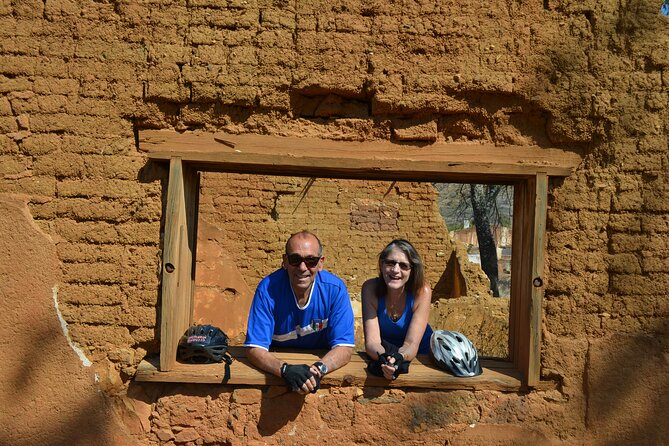
Guanajuato’s mining past feels more real when you leave the city streets and follow old mountain roads by bicycle. This private ride links Valenciana, Santa Rosa de Lima, Mineral del Monte de San Nicolás, Mata Dam, and Pastita, with the historic Camino Real de Tierra Adentro adding a useful thread to the journey.
I like the mostly downhill route, which makes the ride more approachable than a hard mountain climb. I also like the personal scale: your own group rides with a guide, and pickup, bicycles, water, transportation, and accident insurance are included.
The main consideration is physical fitness. The ride is described as technically and physically easy by one rider, but the operator still asks for a moderate fitness level, and mountain roads can feel less forgiving than city streets. Snacks are not included, so bring something small if you tend to get hungry.
Key points at a glance
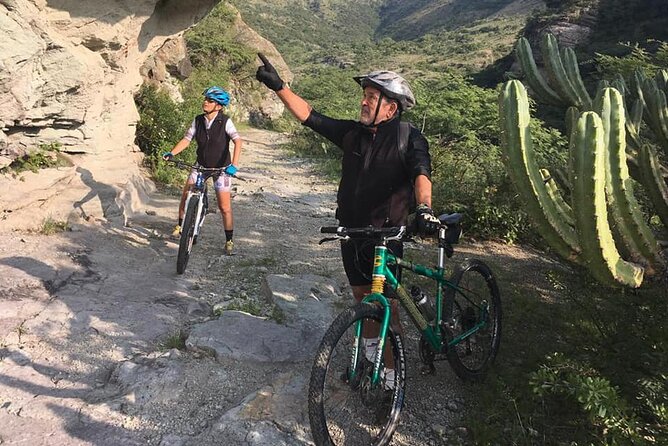
- Mostly downhill mountain riding: The route uses fire roads and mountain roads outside Guanajuato, with less sustained climbing than you might expect.
- A direct link to mining history: Valenciana and the old mining settlements help explain why the Sierra Santa Rosa mattered in the 18th century.
- A piece of the Camino Real de Tierra Adentro: You ride the road between Santa Rosa de Lima and Mexicanos, part of this historic inland route.
- Private, English-language guiding: Only your group takes part, and guide José is specifically associated with a well-organized experience.
- Small cultural stops: Mineral del Monte de San Nicolás, Mata Dam, and Pastita add churches, waterworks, and Nahua history to the ride.
- Good value for an active half-day: At $105 per person, the price includes equipment, transport, water, insurance, and a private guide.
Leaving Guanajuato for the Sierra Santa Rosa
The tour begins with hotel pickup at about 9:30 a.m. The exact pickup details are arranged once you are at your hotel, which gives the operator some flexibility but means you should keep your phone available and be ready to confirm the meeting plan.
The drive briefly crosses the Valenciana neighborhood before the cycling begins. That short passage matters because Valenciana was one of the mines that helped make Guanajuato wealthy in the 18th century. You do not spend the whole morning in a mine or museum. Instead, the guide uses the area as a starting point for understanding the settlements, roads, and work that shaped the hills around the city.
That approach suits me. You get context without losing the main purpose of the outing, which is to ride. If you want a long, detailed mine tour with underground visits, this is not that experience. If you want the mining story placed in its wider setting, the opening drive helps.
The ride is private, so the pace can be more personal than on a large group excursion. That does not mean you should expect a completely unstructured outing. You will still follow the planned route and stop points, but your guide can focus on your group rather than managing a crowd.
More Private Cycling Tours in Mexico
- Private Tour: Coba Ruins by Bike, Tulum Ruins by Boat and Swim in a Cenote
★ 5.0 · 85 reviews - Private Tour in El Malecon Boardwalk Bike Ride
★ 5.0 · 69 reviews - Neon Bike Party – Private Bike Tour
★ 4.5 · 34 reviews
Getting set up in Santa Rosa de Lima
Santa Rosa de Lima is where the bicycle portion properly begins. The guide prepares the equipment and explains how the ride will work before you set off. This is a useful moment to check the bicycle, ask questions, and make sure you understand the surface and pace.
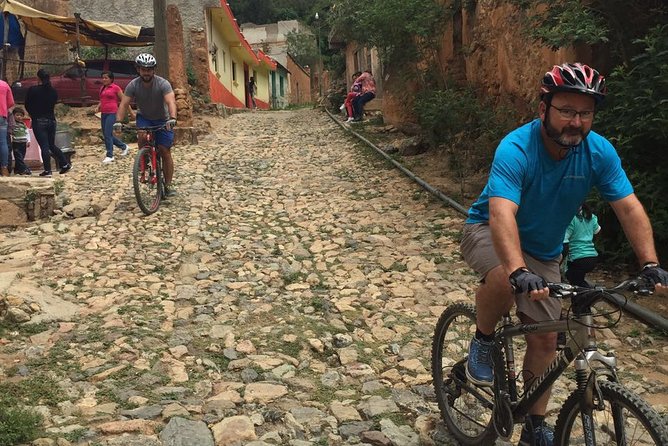
The route from Santa Rosa de Lima toward Mexicanos follows a section of the Camino Real de Tierra Adentro, the old inland road system that connected important places across central Mexico. Even without a long lecture, riding an old route gives the history more physical meaning. You are not simply being driven past a sign about the past. You are using a road that formed part of movement through the region.
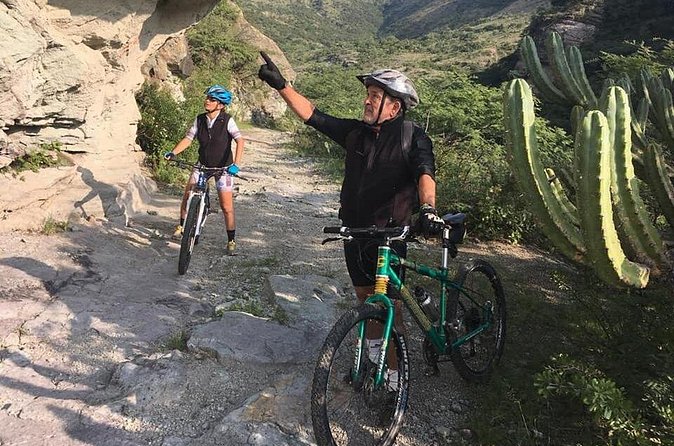
A practical point: the route is not presented as a paved city cycle. One description calls it a ride through hills and mountains, mostly downhill on fire roads. That makes the outing appealing for riders who want open country and a little rougher texture under the wheels, but it also explains the moderate fitness requirement.
The phrase mostly downhill should not be read as effortless. A downhill route still asks you to brake, steer, stay alert, and handle changes in surface. You may also have short uphill sections or uneven stretches. The available details describe the ride as technically and physically easy, but your comfort will depend on your cycling experience and fitness.
Mineral del Monte de San Nicolás and its temple
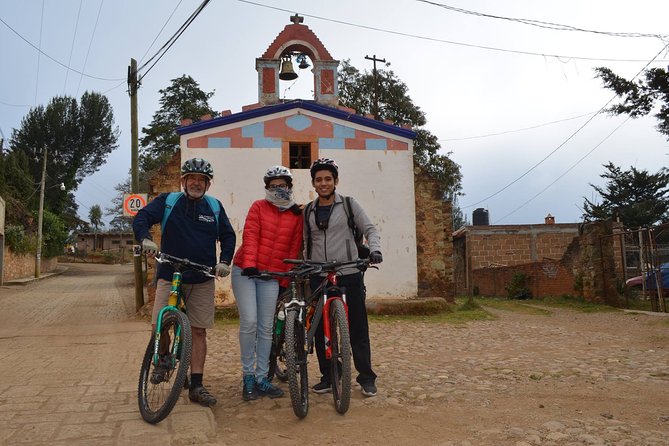
The next named stop is the Temple of Mineral del Monte de San Nicolás. Admission is free, and the stop gives the ride a clear cultural pause after the open road from Santa Rosa de Lima.
A temple in a former mineral settlement is more than a quick photo stop. It helps show how religious life grew alongside mining communities. The tour does not promise a long interior visit or a formal church talk, so you should think of this as a brief historical stop rather than a full architectural tour.
That balance works well on a bicycle outing. You get enough time to pause, listen, and look around, then return to the road. The route does not try to turn every stop into a long presentation. Its appeal comes from the connection between movement, place, and local history.
If churches are your main interest, you may want a separate walking tour in Guanajuato. Here, the temple is one part of a larger ride through the Sierra Santa Rosa.
A short pause at Mata Dam
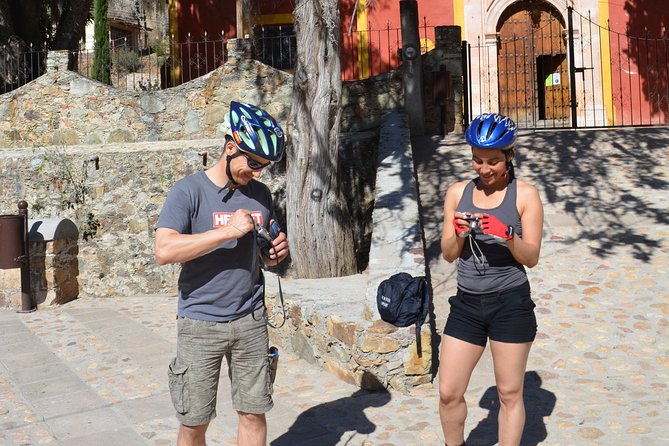
The ride also includes a brief stop at Mata Dam. No extended visit or special activity is specified, so expect a quick break rather than a major attraction with a long stay.
Still, a dam gives the route another useful angle. The tour is not only about mines and churches. Water control mattered to communities and industry, and a stop at the dam helps broaden the story of how people used the mountain area.
This is also a sensible point to catch your breath and drink some of the bottled water supplied with the tour. Since snacks are not included, you may want to carry a small snack of your own. The tour lasts about three and a half hours, which is manageable for many people, but cycling can make you hungrier than sightseeing by van.
More Heritage and Temple Bike Tours in Mexico:
- Bangkok: Temples, Canals & Local Life Bike Tour
★ 4.9 · 3,511 reviews - Historical Singapore Bike Tour on Full-Sized Bicycles
★ 5.0 · 1,421 reviews - Barcelona: 2.5-Hour Bike or E-Bike Historical Tour
★ 4.5 · 1,262 reviews - Bangkok: Night Bike Tour with Temples & Flower Market Visit
★ 4.8 · 751 reviews
Pastita and the Nahua roots of Guanajuato
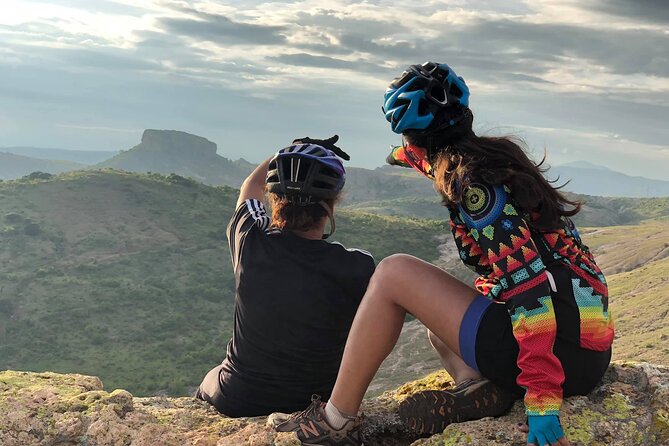
The final named stop is Pastita, an old neighborhood associated with some of the first Nahua communities in the area. The name comes from the presence of paxtle, reflected in the earlier name Paxtitlan. The stop lasts about 20 minutes.
Pastita gives the outing a different kind of history. The route begins with mining and colonial roads, but it ends with an older cultural layer tied to Nahua settlement. That range is one of the best reasons to choose this tour instead of a simple recreational bike ride.
You are not only looking at scenery from a saddle. You are moving between places shaped by mining, transport, religion, water, and Indigenous history. The stop is short, but the subject is important. A 20-minute visit will not explain every part of Pastita, yet it gives you a clear reason to notice the neighborhood rather than pass through it without thought.
The route returns from this final section after the Pastita stop, completing an outing of about three hours and 30 minutes. The exact amount of riding time versus driving and stopping can vary, but the schedule is short enough to leave part of your afternoon free.
What riding conditions are really like
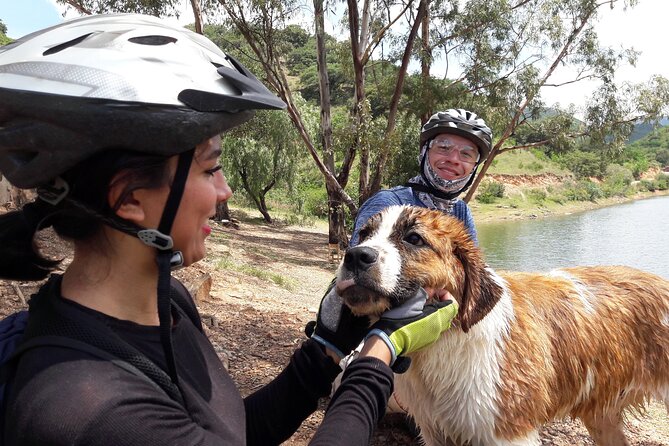
The strongest practical detail about the cycling is that the route is mostly downhill on fire roads. One rider described it as technically and physically easy, with a bicycle that was easy to ride. That is encouraging if you want mountain scenery without signing up for an intense athletic challenge.
At the same time, I would not book this as a casual city bike ride. The operator asks for moderate physical fitness, and the route passes through hills and mountain roads. You should be comfortable riding for several hours, controlling a bicycle on a non-city surface, and handling a ride that may include some rough or changing conditions.
The equipment is included, as is accident insurance. Those inclusions lower the planning burden and help justify the price. You do not need to arrange a bicycle rental separately or sort out transport to the starting point on your own.
Because the tour requires good weather, conditions can affect the schedule. If poor weather causes cancellation, you are offered another date or a full refund. That is a fair policy for an outdoor ride, especially where mountain roads are involved.
Why the private format matters
A private tour is especially useful here because the route combines cycling and interpretation. Your group is not tied to the needs of a large mixed crowd, and the guide can explain the history of the places you pass at a sensible pace.
Guide José is specifically associated with a well-organized ride. The bicycle was easy to handle, and the route was presented in a clear, practical way. The guide’s role matters because much of the value comes from knowing why a road, temple, dam, or neighborhood is worth noticing.
The experience is offered in English, which makes it easier to follow the historical explanations if you do not speak Spanish. The available information does not state the guide’s exact language background beyond the English offering, so you should confirm any detailed language needs when booking.
The private format also helps couples, families with older children, or friends who want a shared activity without joining strangers. It may be less appealing if you prefer a large social cycling group or want to meet other riders.
The occasional bakery stop and what to expect
One especially appealing detail from the ride description is a stop at a village bakery with fresh buns. This is not listed as a guaranteed formal stop in the scheduled route, so you should treat it as a possible local touch rather than build your plans around it.
If it happens, it adds something that a standard sightseeing circuit often misses. A small bakery can tell you more about everyday life than another viewpoint. Fresh bread, a village setting, and a short break make the ride feel connected to the communities along the road.
Since snacks are not included, you should not assume the bakery stop will serve as your meal. Bring a snack if needed, and consider the bakery an extra chance to buy something only if the guide includes it that day.
Is $105 per person a fair price?
At $105 per person, the tour is not the cheapest way to see the hills around Guanajuato. But the price includes private transportation, hotel pickup, bicycle use, bottled water, accident insurance, and an English-language guide for a private group.
Those inclusions matter. A cheaper self-guided ride would still require you to arrange a bicycle, find the route, reach the trailhead, and learn the history on your own. Here, the transport and equipment are handled for you, and the guide connects the stops into one story.
The value improves if your group wants a personal outing rather than a basic rental. The private format means the cost pays for more than wheels. You are also paying for route planning, local context, and the convenience of being collected at your hotel.
The value is weaker if you already have a bicycle, know the area, and only want a short independent ride. It is also less suitable if your main goal is an intensive athletic challenge, since the route is described as mostly downhill and physically easy by one rider.
Who should book this ride?
I would recommend it to people who want to see a side of Guanajuato beyond the central streets. It suits you if you like combining light adventure with history, prefer a private guide, and enjoy seeing small settlements rather than moving only between major sights.
It is a good fit for couples and friends who want flexibility, as well as for active visitors who are comfortable on a bicycle but do not want a highly technical mountain ride. The free cancellation policy up to 24 hours before the start also gives you some useful flexibility, though changes or cancellations inside that period are not refunded.
I would think twice if you dislike dirt or fire roads, have limited cycling fitness, or want a fully paved route. The tour requires good weather, and snacks are your responsibility. You should also confirm pickup details and make sure your hotel location can be served.
Final call: book it for history with wheels
Book this tour if you want Guanajuato’s mining story to extend beyond the city center and into the hills. The route combines Valenciana, the Camino Real de Tierra Adentro, a historic temple, Mata Dam, and Pastita’s Nahua background in one private half-day outing.
The best reasons to choose it are the mostly downhill route, the easy-to-handle bicycle, the private transportation, and guide José’s well-organized approach. Skip it if you want a long mine visit, a serious mountain workout, or a ride with no uneven roads.
For an active morning that mixes local history, mountain roads, and small community stops, $105 is a reasonable price, especially when you count the bicycle, insurance, water, guide, and transport.
FAQ
Where does the tour start?
Hotel pickup is offered in Guanajuato City. The pickup details are arranged with you once you are at your hotel.
What time does the tour begin?
The scheduled start time is 9:30 a.m.
How long does the experience last?
The tour lasts approximately three hours and 30 minutes.
Is the tour offered in English?
Yes. The experience is offered in English.
Is this a private tour?
Yes. Only your group participates in the activity.
What is included in the price?
The price includes bicycle use, accident insurance, bottled water, and private transportation.
Are snacks included?
No. Snacks are not included.
What happens if bad weather cancels the tour?
If poor weather causes cancellation, you are offered a different date or a full refund. You can also cancel at least 24 hours before the start time for a full refund. Cancellations or changes made less than 24 hours before the start are not refunded.
Newest rides we have reviewed in Mexico
- From Mexico City: Teotihuacan Pyramids and Bike Tour★ 4.7 · 20 reviews
- Tulum: Cenote Trail Bike Tour★ 4.8 · 142 reviews
- Neon Bike Party – Private Bike Tour★ 4.5 · 34 reviews
- Private Tour: Coba Ruins by Bike, Tulum Ruins by Boat and Swim in a Cenote★ 5.0 · 85 reviews
- Private Tour in El Malecon Boardwalk Bike Ride★ 5.0 · 69 reviews
- Electric Bike and Beach Camel Ride with Mexican Buffet Lunch★ 5.0 · 92 reviews
- Beach Camel Ride and Sky Bike in Cabo★ 4.5 · 143 reviews
- Beach UTV and Sky Bike Combo in Cabo★ 4.5 · 200 reviews
Heritage and Temple Bike Tours, compared.
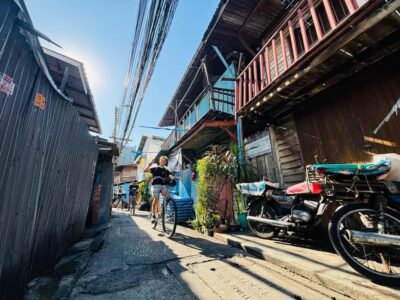

Historical Singapore Bike Tour on Full-Sized Bicycles
Read our review →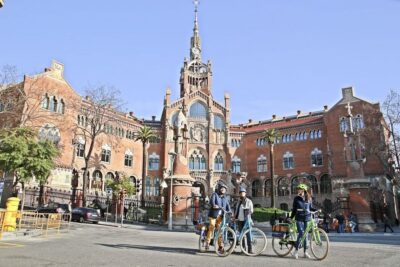
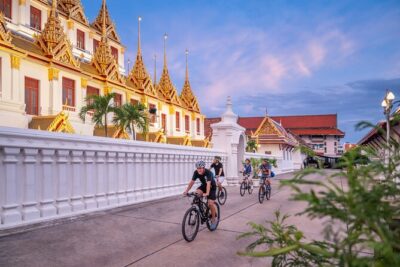
Night Bike Tour with Temples & Flower Market Visit
Read our review →
Intramuros, Manila: Historical Bamboo Bike Tour
Read our review →
Historical Bike Tour of Savannah and Keep Bikes After Tour
Read our review →Other lists this ride turns up in