
REVIEW · ARGENTINA
Buenos Aires Bike Tour: North Districts, Recoleta and Palermo
Buenos Aires opens up when you ride it. This three-hour route links the city’s sleek waterfront, grand Recoleta mansions, Evita’s cemetery, and Palermo’s broad parks in one steady outing. You see the city changing block by block, from old cobbles to smooth bike paths and leafy avenues.
I like the wide mix of neighborhoods and the chance to see ordinary residential streets between the famous sights. I also like the small-group format, capped at 15 people, with guides such as Alex, Marcos, Ezekiel, and Anna Julia praised for safety, humor, and useful local context.
The main concern is traffic and uneven pavement. Some sections use bike paths, but you may also ride beside traffic and over cobblestones. Guide quality and English clarity have varied, and the tour can run longer than advertised when the group moves slowly.
Key points to know before you ride
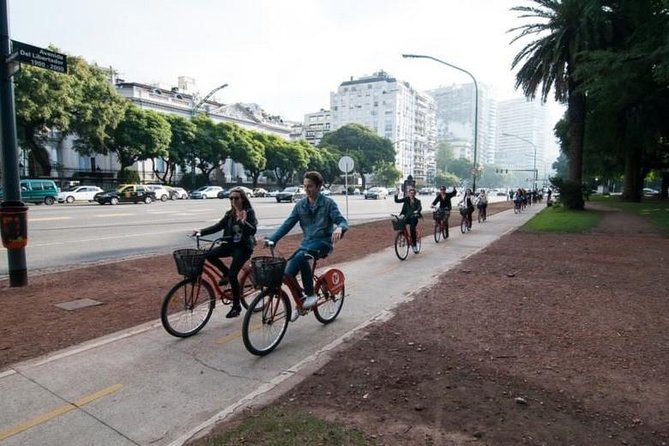
- Four major districts in one ride: Cover Puerto Madero, Recoleta, Barrio Norte, and Palermo without spending the day in a car or bus.
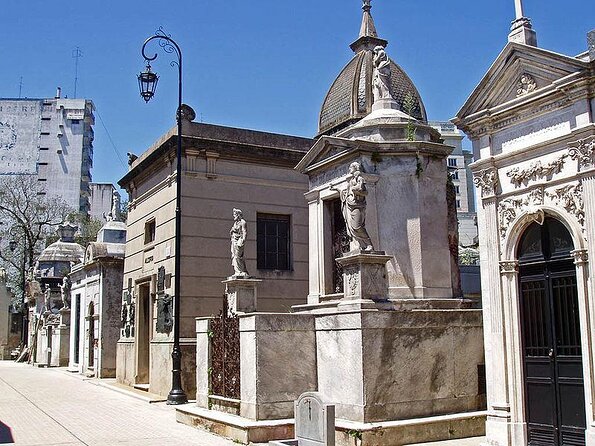
- A real cemetery visit: Recoleta Cemetery brings you close to the ornate mausoleums of Eva Perón and other famous Argentinians.
- Mostly gentle riding: The pace is designed for sightseeing, with regular stops for photos and short breaks.
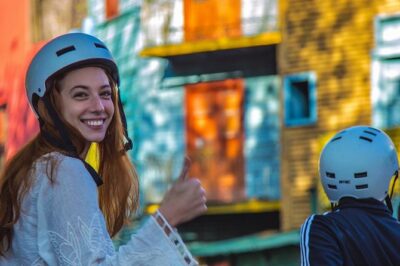
- Comfortable beach cruisers: Bikes and helmets are included, with electric bicycles available on request for riders who need extra help.
- A useful first-day orientation: The route gives you a broad sense of Buenos Aires and helps you choose places to revisit later.
- Expect city riding: Bike paths make up much of the route, but narrow lanes, traffic, and cobbled streets are part of the deal.
Why this route works as a Buenos Aires introduction
Buenos Aires is too large to understand from one central plaza. The city’s character shifts sharply between neighborhoods, and this ride lets you see those changes at street level.
You begin in San Telmo, one of the city’s older quarters, then head toward Puerto Madero, where former docks now hold restaurants, lofts, and offices. From there, the route moves through Recoleta’s French-influenced architecture and grand green spaces before reaching Palermo, the city’s largest district.
I like this northbound design because it avoids spending the whole tour around one cluster of sights. You get famous stops, but also residential streets, embassies, mansions, parks, university buildings, and everyday city scenes. That mix gives you a better feel for Buenos Aires than a simple monument-to-monument ride.
The ride is leisurely rather than athletic, but you still need moderate fitness. You will be in the saddle for several hours, with time to stop and listen. The operator provides bottled water, a helmet, and a beach cruiser bike. Food is not included, so eat before you arrive or plan a meal afterward.
More Cycling Trips in the world:
- Lion City Bike Tour of Singapore
★ 5.0 · 6,211 reviews - Big Bike tour Amsterdam – See all in 3 unforgettable hours
★ 4.7 · 4,929 reviews - 3-Hour Porto Highlights on a Electric Bike Guided Tour
★ 5.0 · 4,392 reviews
Starting in San Telmo with a beach cruiser
Meet at Dr. José Modesto Giuffra 370 in San Telmo. The guide gives a short safety briefing, demonstrates the bike, and fits you with a helmet before the group sets off.
The supplied bikes are comfortable beach cruisers, which suit a relaxed city route. They are not performance bicycles, and that is mostly a benefit here. The upright position makes it easier to look around, listen to the guide, and take in the buildings as you go.
A few riders have found the bikes somewhat old or worn. If you care about gears, saddle comfort, or a newer bicycle, ask about the equipment before setting out. Electric bicycles can be requested if you are not in physical condition to pedal continuously for three hours, but they are not automatic and should be arranged ahead of time.
The tour has a maximum of 15 people. That is large enough for a social outing but small enough for the guide to keep the group together. Smaller departures can be especially pleasant. A few tours have had only two participants, allowing the guide to adjust the pace and answer questions freely.
Puerto Madero: old docks and wide river views
Puerto Madero is the first major stop. Its former docklands have been remade as a modern district of restaurants, apartments, and offices. The broad waterfront gives you a striking view toward the Río de la Plata and back toward Buenos Aires.
This section provides an easy start because the streets and open spaces feel less cramped than the older parts of the city. You can settle into the bike and get used to riding in a group before the route becomes more varied.
The value here is not just the waterfront view. Puerto Madero shows how Buenos Aires has repurposed an industrial edge into a polished modern quarter. The contrast with San Telmo and later stops helps you read the city’s growth.
Your guide also uses the stops to explain local history and city life. The amount of commentary can vary. Some guides, including Alex, Marcos, Ezekiel, and Anna Julia, have been praised for making the history clear and lively. Other departures have received less explanation than expected, so ask questions when the group pauses.
Recoleta brings grand buildings and open parks
From Puerto Madero, you ride into Recoleta. This small, wealthy district is known for French-style buildings, family mansions, luxury hotels, embassies, and large parks.
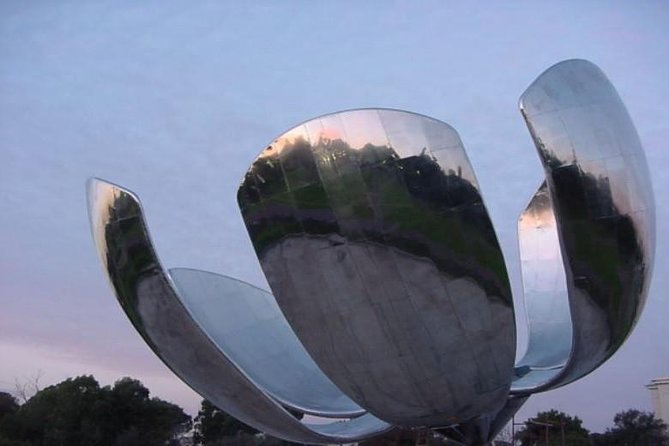
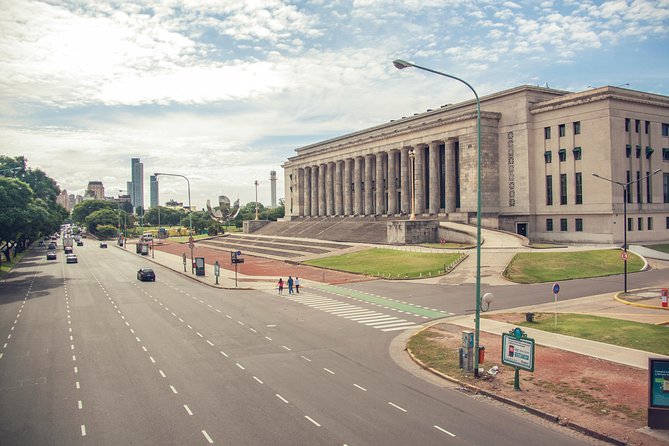
The route also passes the Law University and Floralis Genérica, the large metal flower sculpture that has become one of Buenos Aires’ recognizable modern sights. These are good photo stops, but they also show how varied Recoleta can be. Within a short stretch, you may see formal academic buildings, diplomatic residences, manicured lawns, and busy city avenues.
I like Recoleta best as a cycling district because it gives you room to look up. The architecture is spread along broad streets, and the parks provide a break from traffic. It is also a useful place to hear how Buenos Aires developed its European architectural style without simply being a copy of a European city.
The route does not treat every sight as a full guided visit. You should think of this as a moving overview, with stops for explanation and photographs, rather than a series of long interior tours.
Same roads, a different saddle:
- Ninh Binh Full-Day Tour from Hanoi to Hoa Lu, Tam Coc & Mua Cave Via Boat & Bike
★ 5.0 · 4,384 reviews - Small Group Guided Bike Tour of Amsterdam’s Hidden Gems
★ 5.0 · 3,936 reviews - 3-hour Complete Prague Bike Tour
★ 5.0 · 3,674 reviews - Bangkok: Temples, Canals & Local Life Bike Tour
★ 4.9 · 3,511 reviews
Recoleta Cemetery and the story of Eva Perón
Recoleta Cemetery is the emotional center of the ride. It is filled with ornate family mausoleums, narrow passageways, and elaborate memorials. Eva Perón, known as Evita, is buried here, along with other well-known Argentinians.
The cemetery gives the tour more depth than a simple park ride. Buenos Aires’ political and cultural story is written into these tombs, and the guide can help explain why certain families and figures matter. You will have a chance to see the cemetery rather than merely pass its entrance.
The stop is especially useful if you have not yet visited the cemetery on foot. After the bike tour, you may want to return independently for more time. The route covers many districts, so the time at each attraction is limited.
From the cemetery, the ride continues through Barrio Norte, the informal name for the lively area around Santa Fe Avenue. This is a busier urban section, with more traffic and less open space. The transition is a good reminder that Buenos Aires is not one uniform city. Recoleta can feel stately and quiet one minute, then crowded and commercial the next.
Palermo Woods, rose gardens, and city landmarks
Palermo is the largest district on the route and receives the longest stop, about an hour. The ride heads toward Palermo Woods, the city’s largest park, where you can see the rose garden with more than 400 rose bushes.
The park section is the easiest place to relax into the ride. You have more open space, more greenery, and less pressure from city traffic. You also pass several major sights, including the Buenos Aires Zoo, Botanical Garden, Plaza Italia, Galileo Galilei Planetarium, and the Spaniard’s Monument.
Not every stop means a long visit inside. The tour is designed to show you the setting and explain what you are seeing. If the Planetarium, Botanical Garden, or rose garden catches your interest, note it for a later visit.
Palermo is also where the tour best delivers its promise of local life. Along with famous attractions, you see residential streets and the parks that residents use. This makes the route feel less like a checklist and more like a look at how Buenos Aires spends its free time.
Some riders have found the cycling here particularly pleasant, while others felt the schedule became rushed when traffic or a slower group caused delays. The pace is usually easy, but the number of sights packed into one outing means you should not expect a full tour of every Palermo attraction.
What riding conditions are really like
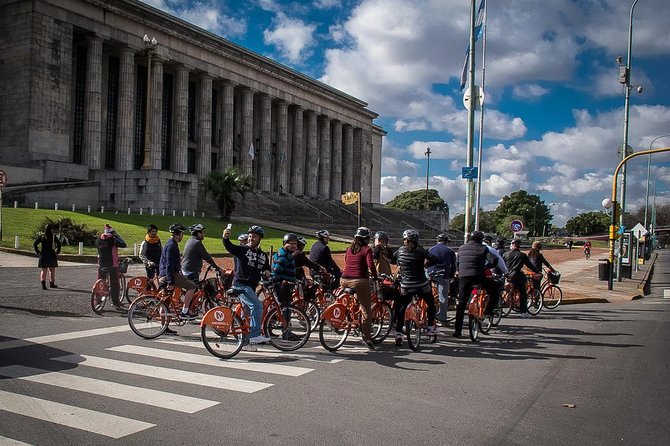
Most of the route uses bike paths or relatively manageable streets, but you are not riding on a completely protected course. Cobblestones appear in older areas, and traffic can be uncomfortable for anyone who rarely cycles in cities.
One rider described the Palermo and Recoleta sections as easy while finding the narrow lanes and old cobbles more demanding. That is a fair way to picture the day. You need to stay alert, follow the guide’s instructions, and keep enough distance from the rider ahead.
The guides have received strong praise for safety. Anna Julia, Alex, and other named guides have been credited with keeping groups together and helping less confident riders. Still, no city bike tour can remove every traffic concern.
Wear clothes you can pedal in and shoes that stay secure. Bring sun protection and use the provided water. If it rains, rain gear is available, but heavy rain normally leads to cancellation. If rain is falling on the day of your booking, call the operator using the contact details on your voucher.
Guide quality and the role of language
The tour is led in English and Spanish. Guide quality is important here because the ride covers a lot of ground and much of the value comes from the explanations between stops.
Several guides have drawn especially strong praise. Julian has been noted for a clear speaking style and a route that stayed off major roads when possible. Barbie, Marcos, Alex, Romania, Ezekiel, Alejandro, and Anna Julia have also been singled out for humor, history, safety, or personal attention.
That said, English clarity has not been consistent on every departure. A few riders found it hard to follow the guide, while another felt the commentary was too light for the number of sights passed. If history and political context matter greatly to you, ask questions during the stops and confirm that your departure will be conducted in English.
The best guides do more than name buildings. They connect the cemetery to national politics, explain why neighborhoods look different, and point out details you might miss while pedaling. That can turn a pleasant ride into a useful city lesson.
Is $45 a fair price?
At $45 per person, the tour is reasonably priced if you want a broad orientation and do not plan to visit every attraction in depth. The fee includes the guide, bike, helmet, and bottled water. It does not include hotel pickup, meals, or drinks beyond the water.
I see the price as good value for a first day in Buenos Aires, especially if you are comfortable cycling and want to cover several districts quickly. A taxi-based sightseeing route might show you more in bad weather, but it would not give you the same street-level view or sense of distance between neighborhoods.
The value drops if you mainly want a polished history lecture, a new high-end bicycle, or long visits inside museums and gardens. This is an active overview, not a private architectural tour.
The usual duration is about three hours, though the detailed route is described as roughly three and a half hours, and one departure lasted more than four hours. Delays, traffic, group size, and extra stops can affect the finish time. Keep your evening plans flexible, especially if you have a dinner reservation soon after.
Who should book this ride?
I would choose this tour for a first or second day in Buenos Aires. It helps you decide where to return, and it covers areas that are spread too far apart for a casual walking tour.
It suits adults, families with older children who meet the minimum height of 4 feet 9 inches, and anyone with moderate fitness. A rider who is nervous in traffic should understand the conditions before booking, though much of the route uses bike paths.
It is less suitable for anyone who dislikes uneven pavement, cannot pedal for several hours, or needs a tightly controlled timetable. An electric bicycle may help with stamina, but it does not remove traffic, cobblestones, or the need to follow the group.
Book at least a little ahead during busy periods. This tour is booked around two weeks in advance on average, and the small-group limit can matter.
Final call: a lively overview with a few tradeoffs
I recommend the ride if you want to see Buenos Aires in broad strokes, especially Puerto Madero, Recoleta, and Palermo in one outing. The route is varied, the parks are a relief from city streets, and Recoleta Cemetery gives the day a memorable focus.
Go in expecting a city ride, not a protected recreational path. Ask for an English-speaking guide, request an electric bicycle early if needed, and avoid scheduling an important appointment immediately afterward.
For an active introduction with useful orientation, $45 is a fair buy. For a quiet, highly detailed sightseeing tour, choose a slower walking or private option instead.
FAQ
Where does the bike tour begin and end?
It begins at Dr. José Modesto Giuffra 370 in San Telmo and ends back at the same meeting point.
How long does the tour last?
The advertised duration is about three hours. The route description gives an estimated three and a half hours, and the actual finish can be later depending on traffic, stops, and group pace.
Which Buenos Aires neighborhoods does the tour visit?
The route includes San Telmo, Puerto Madero, Recoleta, Barrio Norte, and Palermo, including Palermo Woods.
Is Recoleta Cemetery included?
Yes. The route includes a stop at Recoleta Cemetery, where Eva Perón and other notable Argentinians are buried.
What equipment is provided?
A beach cruiser bicycle, helmet, and bottled water are included. Electric bicycles are available on request for people who may not be able to ride continuously for three hours.
Is the tour conducted in English?
The guide speaks English and Spanish. English clarity has varied by guide, so confirm your preferred language with the operator before the tour.
Can I cancel for a full refund?
Yes. You can cancel at least 24 hours before the start time for a full refund. If poor weather causes the operator to cancel, you can choose another date or receive a full refund.
Newest rides we have reviewed in the world
- Ljubljana by E-Bike: Guided City Highlights Tour★ 4.8 · 28 reviews
- London Christmas Lights Bike Tour★ 4.5 · 70 reviews
- Lisbon: Portuguese Petiscos Tasting Tour by E-Bike★ 5.0 · 16 reviews
- Liverpool: The Beatles Tour on Electric Pedal-Assist Ebikes★ 5.0 · 17 reviews
- Lisbon Bike Tour: Langs de rivier van Belém naar Lissabon★ 4.7 · 59 reviews
- Lisbon: E-Bike Adventure Through the City of Seven Hills★ 5.0 · 28 reviews
- Lisbon: 7 Hills Panoramic Guided Tour by E-Bike★ 4.8 · 50 reviews
- Lisbon: Guided E-Bike Tour to Belém★ 4.8 · 115 reviews
Argentina Cycling Tours, compared.
Other lists this ride turns up in