
REVIEW · CAMBODIA
Local Livelihood Full Day Bike Tour in Battambang
The best part of this Battambang day is not a single sight. It is the steady change of scene as you pedal from rice fields to village homes, food workshops, temples, memorials and French colonial landmarks. You get a close look at daily life, not just a quick photo stop. The final ride on the bamboo train adds a bit of Cambodian fun to an otherwise thoughtful cultural day.
I like the hands-on visits to families making rice paper, dried bananas, fish paste, rice wine and bamboo sticky rice. I also like the home-cooked lunch, the gentle pace, and the chance to ask a local university student guide questions about religion, work and family life. Guides such as Savith, Pek, Pich and Phalla have been praised for their care, humor and strong English.
The main drawback is the long day. You may be out for 7.5 to 9 hours in heat, on a bike, with several stops. The afternoon route can change with timing, and hotel drop-off is not included, so plan a little extra energy and transport money for the end.
Key points at a glance
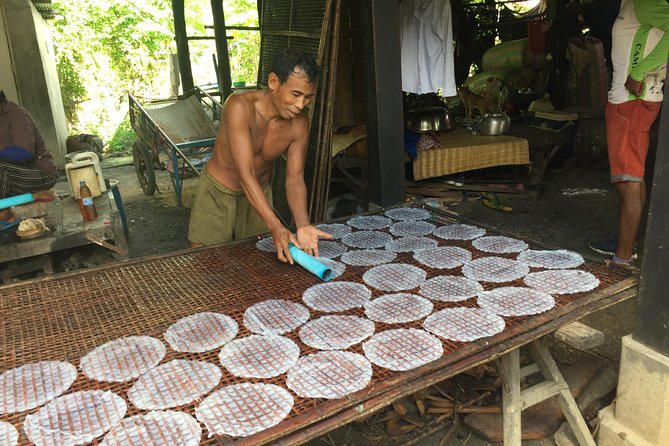
- Local production up close: Help with rice paper and dried banana making, and taste products such as rice wine, coconut and fresh fruit.
- A gentle countryside ride: Most of the cycling uses small roads through villages and rice fields, with regular breaks.
- Lunch in a Khmer home: A local family prepares Cambodian food in a traditional house.
- History beyond the postcard: The route includes a Khmer Rouge memorial, French colonial sites and a Buddhist temple.
- The bamboo train finale: Ride Battambang’s famous bamboo train as part of a full day of local culture.
- Tourism with a local return: Part of the fee goes to the families visited, while local university guides receive training and support.
Why this bike tour feels different
Battambang is one of Cambodia’s best places to slow down. Its countryside is close to town, and the flat setting makes cycling a sensible way to see it. Instead of spending the day moving between distant attractions in a vehicle, you travel through the spaces between them: narrow village roads, fields, family compounds and small production sites.
That matters because the tour is built around people. You are not simply shown a finished product. You can see how ordinary families earn money from food and craft work, ask questions through your guide, and sometimes try part of the process yourself.
The social purpose also gives the $50 price more weight. Part of the fee goes back to the families you visit. The guides are local university students receiving vocational training and support. So your payment covers transport, equipment, lunch, food tastings and guiding, while also helping maintain a small local tourism network.
This is not a luxury tour. It is a practical, community-focused day with good bicycles, a maximum group size of 10, and a route designed to connect several small experiences.
More Full-Day Rides in Cambodia:
- Siem Reap: Bike the Angkor Temples – Full-Day 30km Tour
★ 5.0 · 463 reviews - Siem Reap: Bike the Angkor Temples – Full-Day 30km Tour
★ 4.9 · 159 reviews - Full day tour by bicycle & tuk tuk,bamboo train,bat cave,villages
★ 5.0 · 27 reviews
Starting with a hotel pickup and bike briefing
Pickup is offered from your Battambang hotel, with collection listed at about 7:20 a.m. The tour start is given as 8 a.m., so be ready early. You may first stop at Kinyei Cafe for one included drink, or go straight to the road.
Before setting off, you receive a short safety tutorial and basic Khmer language instruction. The language lesson is small but useful. Even a few local words can make greetings and family visits feel less formal.
A mountain bike and safety helmet are provided. You should give your height when booking so the operator can prepare a suitable bike. Dress with your shoulders and knees covered, especially because the route includes temples and family homes.
The morning start is sensible. Cambodia becomes hot, and the earlier hours are usually the most comfortable part of a cycling day. Bring a sense of humor if your group takes time getting organized. The tour includes many moving parts, from pickup to food stops to the train ride.
Cycling through villages and rice fields
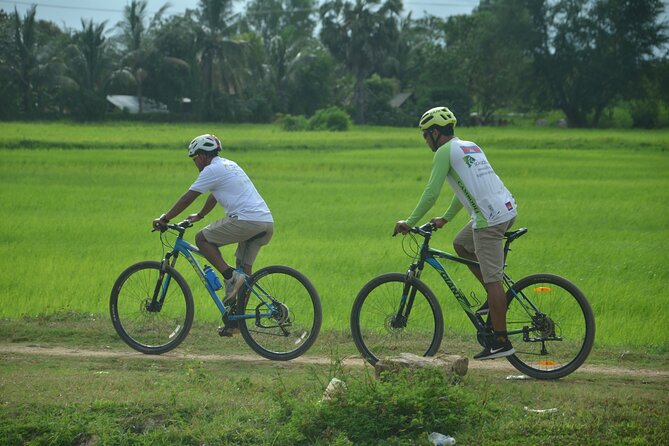
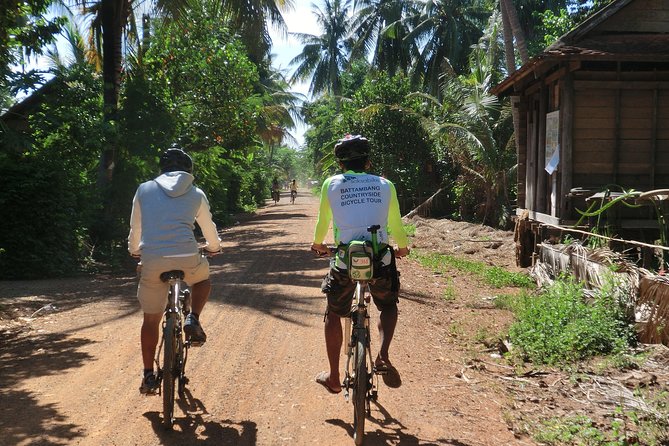
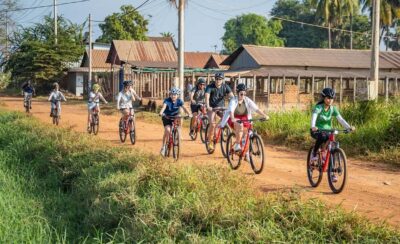
The ride takes you away from the main tourist streets and onto smaller roads around Battambang. The countryside is the star here. You will pass homes, working areas and rice fields while your guide explains how people live and work in rural communities.
You should not expect a race or a demanding sports ride. The route is described as gentle, with plenty of stops. That makes it suitable for many people who can participate in a full-day cycling activity, including those who are not regular cyclists. Guides have adjusted the pace for people with limited fitness, and one of the strongest parts of the experience is the attention given to the group.
Still, seven or more hours outside is a commitment. You may spend less time pedaling than the total duration suggests, but the day remains active. Water is included, along with snacks and tastings, yet sun protection and comfortable clothing are still sensible choices.
The quiet roads also make the ride more personal. You have time to notice how homes are arranged, how food is prepared and how village businesses fit into daily life. Your guide can explain what you are seeing instead of leaving you to guess.
Rice paper, dried bananas and other family businesses
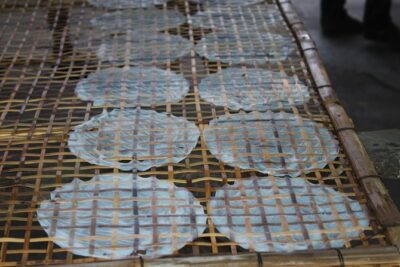
The food stops are among the most useful parts of the day. You visit families producing traditional items such as rice paper, dried bananas, bamboo sticky rice, fish paste and rice wine.
These visits show Cambodian food as work, not just something placed on a restaurant table. You may see the practical steps behind familiar products and, depending on the stop, take part in the process. Some people have particularly enjoyed helping with rice paper and dried banana production.
Tastings are included, so you can try several local foods rather than only hearing an explanation. Rice wine is part of the route, and there are also snacks, fresh fruit, coconuts and bottled water. If you have dietary restrictions, state them when booking. The tour includes lunch and tastings, so this information matters.
A short break in a traditional house gives the day a welcome pause. Fresh fruit and coconut are simple refreshments, but they also let you sit down and talk rather than hurry from one stop to the next.
Your guide is important here. Local guides including Savith, Pek, Pich and Phalla have been praised for explaining both the products and the wider customs around them. Their role is not just to translate. They help you ask families questions that might otherwise remain unasked.
More Cycling Trips in Cambodia:
- Siem Reap Countryside Bike Tour / E-Bike or Tuk Tuk
★ 5.0 · 935 reviews - Angkor Sunrise Bike Tour / E-Bike or Tuk Tuk
★ 5.0 · 615 reviews - Phnom Penh Silk Island Bike Tour/ E-Bike or Tuk Tuk
★ 5.0 · 495 reviews - Siem Reap: Angkor Wat Sunrise Bike Tour & Jungle Breakfast
★ 5.0 · 415 reviews
Meeting a family for a home-cooked Khmer lunch
Lunch takes place at a local family home in a traditional Khmer house. This is one of the tour’s strongest features because it connects food with place and people.
The meal is home-cooked Cambodian cuisine, and the food has been described as tasty and satisfying. Exact dishes are not specified, so do not book expecting a particular menu. Instead, think of lunch as a chance to eat in a family setting and learn how a local household welcomes visitors.
There is a clear difference between eating at a restaurant and sitting in a home included in the local economy. The second option can feel more direct and more memorable, but it also asks you to be respectful. Follow your guide’s lead, dress appropriately, and remember that the family is sharing its space as well as its food.
For anyone interested in responsible tourism, this stop explains the tour’s model better than any brochure could. The family receives part of the tour revenue, and you get a meal linked to the community you are visiting.
A Khmer Rouge memorial and a local Buddhist temple
The day does not avoid Cambodia’s difficult past. A memorial site for victims of the Khmer Rouge is included, giving your guide a place to explain part of the country’s recent history.
This stop may feel more serious than the food visits and countryside riding. That contrast is useful. Cambodia is not only temples, smiles and rural scenery. Understanding the violence and loss of the Khmer Rouge period adds necessary context to the people and communities you meet.
The tour also visits a local temple, where you learn about Buddhism and monkhood. This is a chance to understand how religion fits into everyday Cambodian life. A temple visit can be easy to treat as a photo stop, but the guide’s explanation gives it more meaning.
Because shoulders and knees should be covered, pack clothing that works for both cycling and religious sites. This is a practical point, not a minor rule. The right clothing keeps you comfortable and avoids an awkward change of plan.
French colonial sites and Battambang’s layered past
French colonial sites add another historical layer to the route. Battambang has a visible connection to the French period, and these stops help place the town within Cambodia’s wider past.
The tour does not appear to treat history as a long lecture. Instead, the guide connects architecture and sites with everyday Cambodian life. That works well for a cycling tour because you keep moving, but still get enough context to see Battambang as more than a base for countryside trips.
The quality of the explanation depends partly on your guide. English ability has been a strong point with guides such as Pich and Pek, and the young local guides are used to answering questions about culture, religion, marketing and family life. If you enjoy conversation, ask questions as you go. This is where the tour becomes much more than a list of stops.
Riding the bamboo train
The bamboo train is the day’s most playful feature. Battambang is famous for this unusual rail experience, and the tour includes a ride before returning toward the Soksabike office through the countryside.
It is a good finale because it changes the rhythm. After hours of cycling, tasting and listening, you get to sit back and enjoy a local attraction that is both practical and memorable.
The exact timing of afternoon stops is flexible and depends on the day. That means the bamboo train may not fit a rigid schedule in the way a private car itinerary might. I see that as a fair trade for a community-based tour, but you should avoid booking an evening activity immediately afterward.
You also need to remember that hotel drop-off is not included. The return is to the Soksabike office, so arrange your way back to your accommodation or ask the operator for current local options.
What $50 includes, and where the value lies
At $50 per person, this is not the cheapest way to see Battambang’s countryside. It is good value if you would otherwise need to arrange a bicycle, guide, transport, lunch, drinks and separate visits yourself.
The price includes:
- Hotel pickup
- Local guide
- Mountain bike and helmet
- Lunch at a local family home
- Snacks and tastings
- Water and bottled water
- One drink at Kinyei Cafe
- Bamboo train ride as part of the day’s program
The fee also supports the families visited and the guide training program. That does not make the tour automatically perfect, but it gives the cost a clear purpose.
The value is strongest for someone who wants interpretation and access, not simply a bike rental. If you only want to pedal through the fields independently, $50 may feel high. If you want cultural explanations, food production visits, lunch, history and local transport arranged in one day, the price is easier to justify.
Who will enjoy this day most
I would choose this tour if you want to understand Battambang through ordinary work and family life. It suits people who like food, local stories, gentle activity and small cultural encounters more than polished attractions.
It also works well for couples, families with older children, and small groups who prefer a personal guide. The group limit of 10 keeps it from becoming a large coach outing, though the exact group size on your date can vary up to that limit.
You should think twice if you dislike heat, long days, flexible timing or tasting unfamiliar foods. The route is not presented as strenuous, but cycling in Cambodia still takes effort. Anyone with dietary restrictions should provide those details at booking, and anyone concerned about insurance should note that insurance is not included.
Free cancellation is available when you cancel at least 24 hours before the start time. Changes or cancellations inside that window are not accepted for a refund.
Should you book the Local Livelihood Full Day Bike Tour?
Book it if your ideal Battambang day includes rice fields, family homes, local food, a serious history stop, a temple and the bamboo train, all tied together by a local guide.
I especially recommend it for first-time visitors who want a useful introduction to rural Cambodia without arranging many separate trips. The strongest reasons to go are the human scale, the home-cooked lunch, the chance to help with traditional food production, and the local benefit built into the tour.
Skip it if you want a short ride, a tightly timed sightseeing schedule or a purely athletic cycling trip. For most curious visitors with a full day to spare, though, this is one of the better ways to see what lies beyond Battambang’s center.
FAQ
How long does the Local Livelihood Full Day Bike Tour last?
The tour lasts approximately 7 hours 30 minutes to 9 hours. Afternoon stops are flexible and depend on timing.
What time does the tour start?
The listed start time is 8 a.m., with hotel pickup at about 7:20 a.m.
Is hotel pickup included?
Yes. Hotel pickup in Battambang is included. Hotel drop-off is not included, and the tour returns to the Soksabike office.
What equipment is provided?
A mountain bike and safety helmet are provided. You should give your height when booking so the bike can be prepared appropriately.
Is lunch included?
Yes. Lunch is prepared by a local family and served at a traditional Khmer home. Snacks, tastings and water are also included.
What should I wear?
Wear clothing that covers your knees and shoulders out of respect for local culture, especially during the temple visit and family stops.
How many people can join the tour?
The maximum group size is 10 people.
Newest rides we have reviewed in Cambodia
- Phnom Penh: Cycling Adventure on Islands of the Mekong★ 5.0 · 225 reviews
- Explore local livelihood & countryside (Half-Day Cycling Tour)★ 5.0 · 19 reviews
- Cultural Cycling Tour – half day (8:00-11:30)★ 5.0 · 26 reviews
- Customs and Culture Half Day Walk and Bike Tour in Battambang★ 5.0 · 23 reviews
- Full day tour by bicycle & tuk tuk,bamboo train,bat cave,villages★ 5.0 · 27 reviews
- Siem Reap: Countryside Cycle and Local Village Life Tour★ 4.7 · 32 reviews
- Siem Reap: Countryside Sunset Bike Tour / E-Bike or Tuk Tuk★ 4.7 · 13 reviews
- Siem Reap: Angkor Sunset Bike & Boat Tour /E-Bike Available★ 4.9 · 23 reviews
Cambodia Cycling Tours, compared.
Siem Reap Countryside Bike Tour / E-Bike or Tuk Tuk
Read our review →
Phnom Penh Silk Island Bike Tour/ E-Bike or Tuk Tuk
Read our review →
Angkor Wat Sunrise Bike Tour & Jungle Breakfast
Read our review →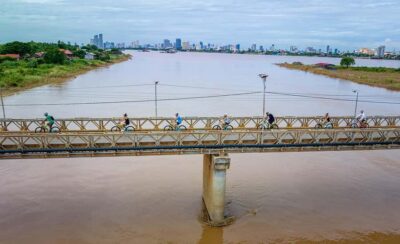
Local Livelihood Half Day Bike Tour in Battambang
Read our review →Other lists this ride turns up in