
REVIEW · SEVILLE
Seville City Bike Tour: Top Seville’s Monuments
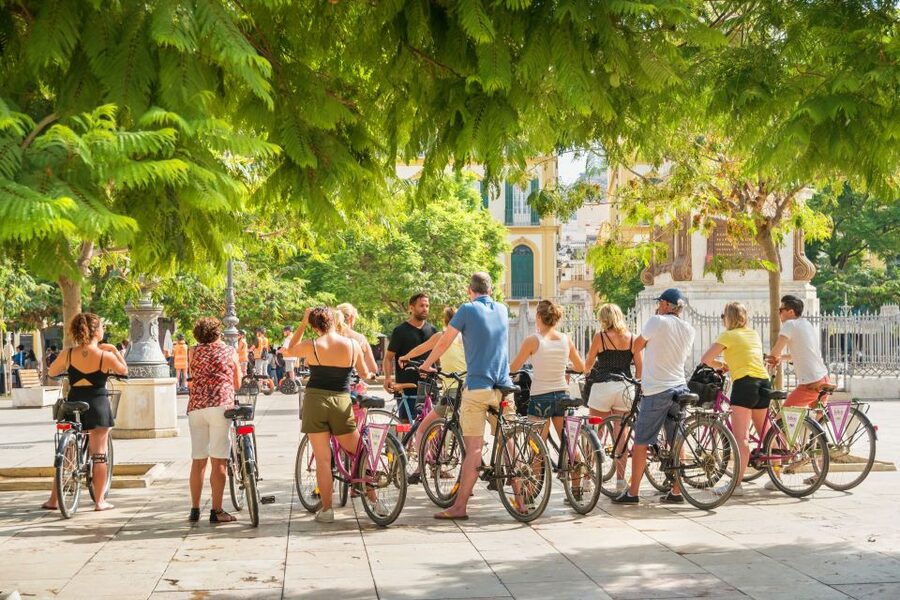
Seville reveals itself quickly from a bike. In a couple of hours, you can move from the narrow lanes of Santa Cruz to the tiled Plaza de España, cross toward Triana, and finish near the cathedral and Alcázar. That makes this a useful first-day tour, especially if you want to understand how Seville’s main districts fit together.
I like the broad route and the guides’ personal touch. French-speaking guide Zack, along with guides such as Barry and Giacomo, receives especially warm praise for clear stories, local tips, and an easygoing style. I also like that the tour includes both famous sights and ordinary city streets. The main drawback is timing: the information lists both two hours and two and a half hours, and the long route may leave some stops as quick pass-bys.
Key points at a glance
- A fast city orientation: Cover Santa Cruz, Plaza de España, Triana, the riverfront, Alameda, and Setas de Sevilla in one ride.
- Strong guide feedback: Zack, Barry, and Giacomo are noted for lively explanations, local advice, and good conversation.
- Major sights from the outside: See the Cathedral, Alcázar, old tobacco factory, bullring, Golden Tower, and Cartuja area without entering most buildings.
- The 1929 exposition gets proper attention: Plaza de España and Parque de María Luisa provide some of the tour’s best scenery and context.
- Bikes, helmets, and water are included: You do not need to arrange basic riding gear separately.
- Check the advertised duration: The booking details say two hours, while the route description refers to two and a half hours.
Why a bike is a smart way to see Seville
Seville’s center is compact, but its main sights are spread across several districts. The Cathedral and Alcázar sit beside Santa Cruz, while Plaza de España lies farther south, Triana is across the river, and the Cartuja is north and west of the center.
A walking tour can cover one or two of these zones well. A bike lets you connect them. You get a sense of Seville’s shape instead of seeing each monument as an isolated stop. I find that especially useful early in a stay, when you are still deciding where to return for a longer visit.
The tradeoff is depth. You will pass most monuments rather than enter them. The tour is about orientation, outside views, stories, and movement. If your main goal is a detailed visit inside the Alcázar or Cathedral, you need separate admission and more time.
The route is also fairly ambitious for a short outing. You go from the historic center through gardens, university buildings, an exposition park, the riverfront, Triana, the Cartuja, Alameda, and back to Santa Cruz. That variety is the appeal, but it can make the ride feel brisk.
More Cycling Trips in Seville:
- Seville Highlights Bike Tour (English)
★ 5.0 · 2,225 reviews - Seville: Highlights City Bike Tour
★ 4.8 · 2,168 reviews - Seville: Relaxing City Bike Tour with a Tour Guide
★ 4.8 · 1,588 reviews
Starting in Santa Cruz and finding your bearings
The tour begins at TopSegway with a safety briefing of about 10 minutes. You receive a bike, helmet, and bottled water, then set off with the guide.
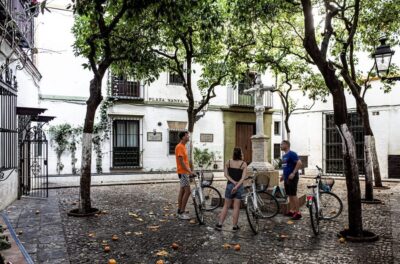
Starting in Barrio Santa Cruz makes sense. This former Jewish quarter is one of Seville’s most atmospheric areas, with tight streets, small plazas, whitewashed walls, and sudden views toward major monuments. On a bike, you are likely to move through its streets rather than stop at every corner, so pay attention to the guide’s explanation of the district’s layout.
You should be comfortable handling a bike at low speed and around other people. The route includes central streets and tourist areas, where you may need to slow down or walk the bike for a short stretch. The supplied information says the activity is wheelchair accessible, but it does not explain the exact bike setup or route adaptations, so ask TopSegway about your specific needs before booking.
Jardines de Murillo and the old tobacco factory
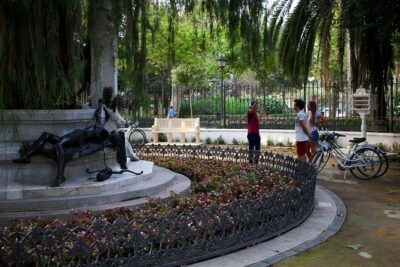
From Santa Cruz, the route heads through the Jardines de Murillo, a leafy garden area beside the historic center. This gives you a calmer section after the narrow lanes and lets the guide connect Seville’s old quarters with its grand civic buildings.
Next comes the Antigua Fábrica de Tabacos, now home to Seville University. The building was once the city’s royal tobacco factory, and its scale helps explain the importance of tobacco production in Spain’s imperial economy. You pass by rather than tour the interior, but the exterior is worth a close look.
This is one of the tour’s better examples of useful context. A guide can point out how Seville’s institutions, trade, and monumental architecture connect. Without that explanation, the building might look like just another imposing historic structure.
Plaza de España and Parque de María Luisa
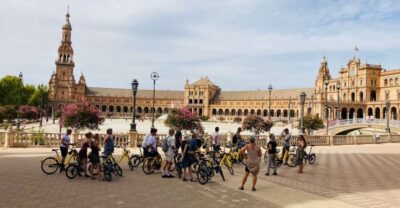
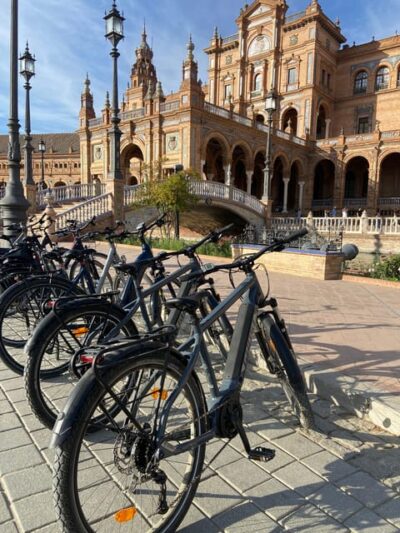
The ride then reaches Plaza de España, the visual centerpiece of the 1929 Iberian-American Exposition. You have about 15 minutes listed for this stop, enough for a break, photographs, and a look at the famous ceramic tile panels.
The tiled alcoves represent Spain’s provinces, and the mix of brick, ceramics, towers, and curved arcades makes the plaza unlike anything else on the route. I would use the stop to slow down and study the details rather than simply take one wide photograph. The tiles reward attention.
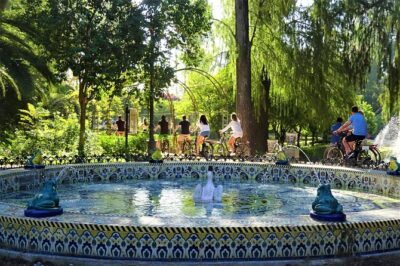
The plaza is part of Parque de María Luisa, which gets its own visit of about 10 minutes. The park gives you shade, open paths, and a change of pace from the stone streets around Santa Cruz. The route description calls the park the centerpiece of the 1929 exposition, so the guide can help place the plaza within that larger event rather than treating it as a stand-alone photo stop.
The limitation is time. Plaza de España can easily absorb an hour if you want to examine the provincial panels or sit by the water. Here, it is an introduction. Plan to return later if this is high on your Seville list.
Same roads, a different saddle:
- Seville: City Sightseeing and Local Culture Bike Tour
★ 4.9 · 1,120 reviews - Seville Electric Bike Tour – Small Group
★ 5.0 · 841 reviews - Seville: Guided Tour by Electric Bike
★ 4.8 · 712 reviews - Sunset Guided Bike Tour in Seville
★ 5.0 · 438 reviews
Down to the river, the Golden Tower, and the bullring
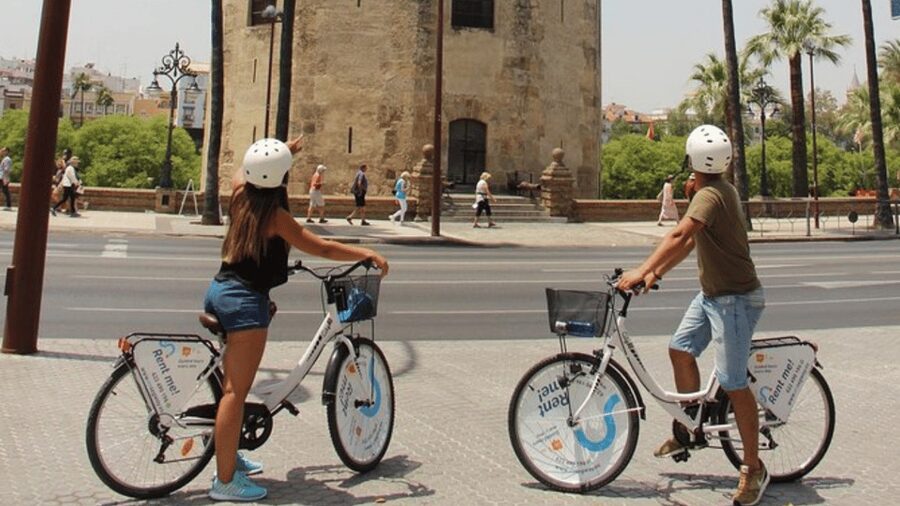
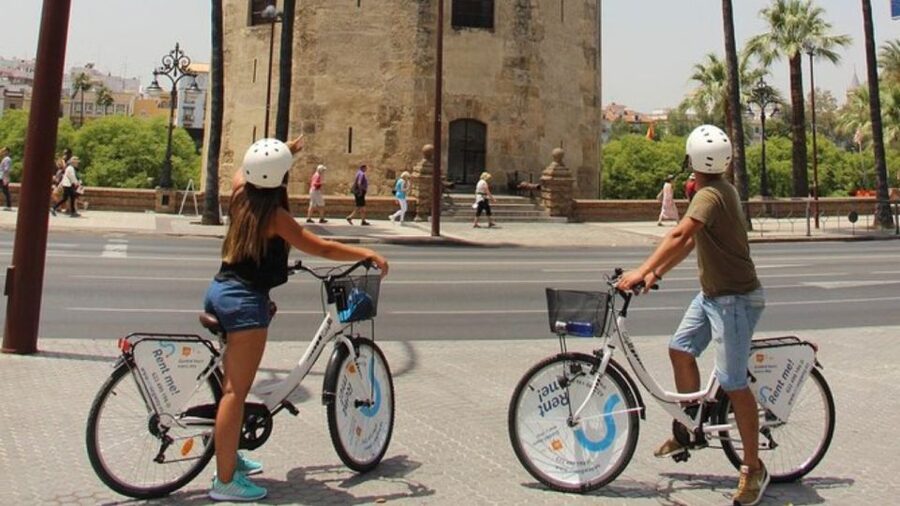
From the park, you head toward the river and pass the Torre del Oro, or Golden Tower. The stop is listed as a short pass-by, so expect a quick look and explanation rather than a museum visit.
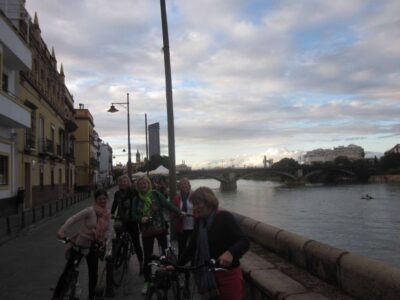
The tower is one of Seville’s best-known river markers. Its position helps you understand the city’s historic connection with the Guadalquivir and the port trade that made Seville powerful. Seeing it from a bike also gives you a practical sense of the distance between the center, the river, and Triana.
The route continues by the Plaza de Toros de la Maestranza, Seville’s famous bullring. Again, this is an exterior view. If you want to tour the ring or learn its traditions in detail, you will need a separate visit.
These brief stops work well as part of a moving city tour. They work less well if you expect every landmark to receive a full lecture. I would listen for the guide’s key facts, take a quick photograph, and note where to return.
Crossing into Triana
Triana gives the tour a welcome change in character. Across the river, the district is closely tied to ceramics, flamenco, and everyday Seville life. The route includes about 15 minutes here, enough to get a feel for the area and hear local context.
This is one of the places where a guide adds real value. A map can show you where Triana is, but a local guide can explain why it feels different from Santa Cruz and the monumental center. Giacomo, also referred to as Pedro and Pascal in one review, is praised for combining historical explanation with amusing local details. That sort of commentary suits a district with strong traditions and its own identity.
Do not expect a long shopping stop or a dedicated ceramics workshop. The tour gives you an orientation ride. If Triana catches your interest, return later on foot and spend more time in its streets.
The Cartuja and Seville’s 1992 exposition
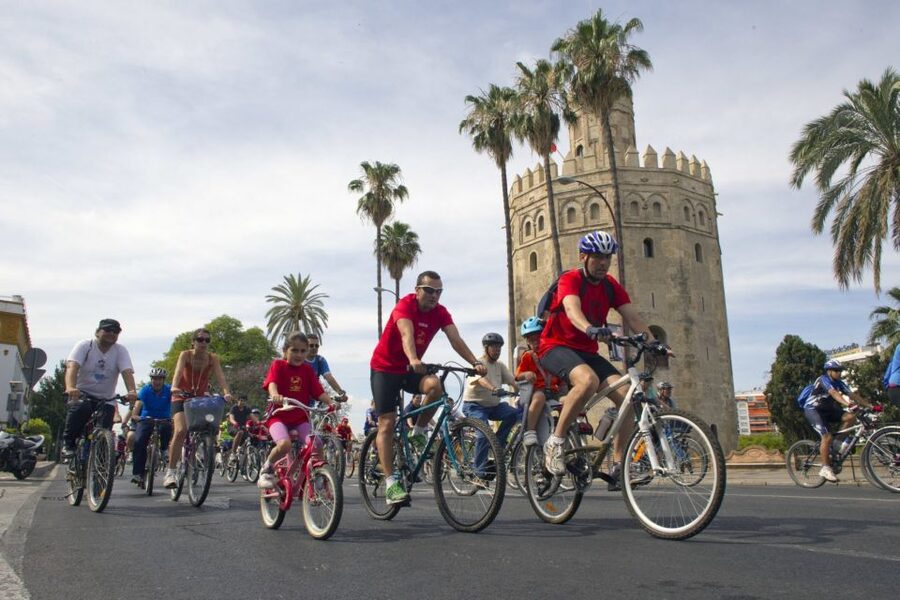
The route then heads north toward the Cartuja, the site of Seville’s 1992 exposition. This is a useful counterpoint to Plaza de España and the 1929 exposition site. You see how Seville used major international events at different points in the city’s modern history.
The Monasterio de la Cartuja is the main historic point in this section. The route includes the area, but it does not list an interior visit. The ride here gives you a broader view of Seville, including parts of the city that many short walking tours skip.
This section may be the least satisfying for someone who wants only the classic postcard sights. It is also part of what makes the tour more than a circuit of the Cathedral, Alcázar, and Plaza de España. You get a wider map of Seville, including a place you might not otherwise reach during a short visit.
Alameda, Campana, and the Setas
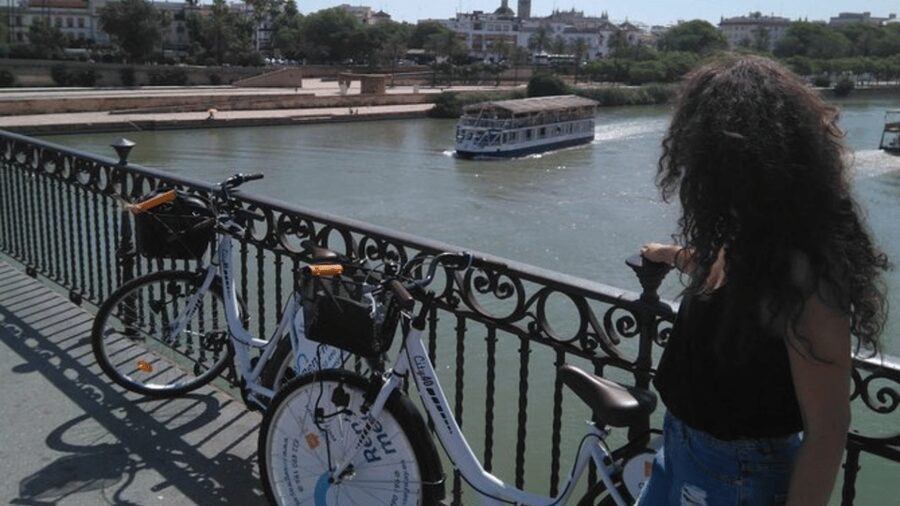
After the Cartuja, you return toward the center and reach Alameda. This area is known for nightlife, restaurants, and a more modern social side of Seville. The guide uses the route through central streets and alleys to help you understand the city beyond its major monuments.
The tour also includes a stop at the Campana Café to get your bearings near the Setas de Sevilla, the large wooden structure often called the mushrooms. The stop is listed at about 15 minutes, with time to see the structure and orient yourself.
The Setas area contrasts sharply with the old stone buildings around the Cathedral and Alcázar. It is a good reminder that Seville is not only a preserved historic center. The guide’s job here is less about a long architectural lecture and more about placing this modern landmark within the city’s street plan.
Ending beside the Cathedral and Alcázar
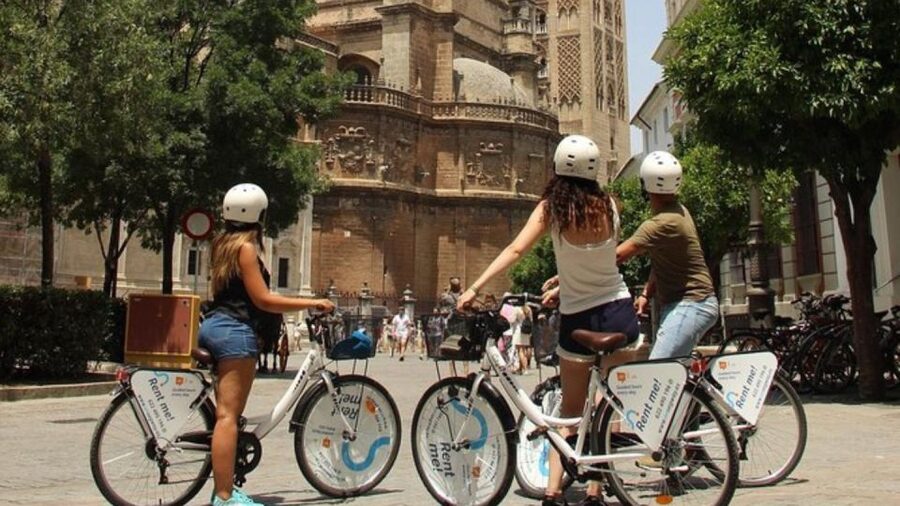
The final pedal takes you back around Santa Cruz and past Seville Cathedral and the Alcázar. Both are listed as pass-by sightseeing, not entry visits.
That distinction matters. The Cathedral is one of Seville’s essential interiors, and the Alcázar deserves several hours if you want to explore its rooms and gardens properly. This bike tour helps you see where they are, understand their place in the old center, and decide how to plan a separate visit.
Finishing here is practical. You end near the city’s main monument zone, with a clear idea of what you have already seen from the outside and what deserves more of your time. I would schedule this tour before booking a detailed Alcázar or Cathedral visit, not after.
The guides and the feel of the ride
The strongest praise centers on the guides. Zack receives repeated approval from French-speaking participants for his warmth, city knowledge, patience, and useful advice. One person noted that he spent extra time with the group, causing some delay, but considered the extra attention worthwhile.
Barry is described as enthusiastic and good at pointing out appealing places, with local information delivered in an engaging way. Giacomo receives praise for being prepared, kind, and passionate, using stories and amusing details rather than giving a dry recital of dates.
That pattern suggests a tour shaped by the person leading it. You should expect a live, conversational experience rather than an audio guide. The official language information lists English, Spanish, and French, while the tour description also refers to Italian-speaking guides. If language choice matters to you, confirm availability before you pay.
The rating is 4.7 from 28 reviews, a small but encouraging sample. The repeated approval of guide quality is more useful than the number alone. Still, a personal guide style can vary, and the route’s pace may depend on the group and the amount of time spent answering questions.
Price, timing, and practical value
At $40 per person, the tour is fairly priced for a two-hour guided ride that includes the bicycle, helmet, guide, and bottled water. I see the best value in the amount of ground covered and the early orientation it provides.
The price is less compelling if you want detailed monument visits. Since the Cathedral, Alcázar, bullring, Golden Tower, and Monasterio de la Cartuja are viewed from outside or passed by, you will pay separately for the interiors that interest you.
The timing needs a close look. The main details say two hours, while the longer description calls it a two-and-a-half-hour tour. The listed safety briefing takes 10 minutes, and the route has many stops. Ask for the exact duration and departure time when booking so you can avoid a clash with lunch, a timed monument ticket, or another activity.
Free cancellation up to 24 hours before the tour and the reserve-now, pay-later option make planning easier. You need to bring a passport or identity card. The activity is offered as a private group, which may suit families or friends who want a more personal pace.
Who should book this Seville bike tour?
I would choose this for a first or second day in Seville. It gives you a mental map, introduces the main historic zones, and helps you decide where to spend your limited sightseeing time.
It suits active visitors who like moving through a city and hearing stories along the way. It also works well for people who find a full walking tour tiring but still want more contact with the streets than a bus tour provides.
You may want something else if you dislike bicycles, need long stops at each monument, or want to enter the Alcázar and Cathedral during the tour. Families and private groups should ask about the exact bike arrangements and route before booking, especially if riders have different comfort levels.
Should you book it?
Book it if you want a lively overview of Seville, especially one that reaches Triana, Parque de María Luisa, the Cartuja, and Alameda as well as the famous center. The guides are the main strength, and Zack, Barry, and Giacomo are singled out for thoughtful, engaging help.
Skip it if your priority is interior sightseeing or a slow architectural tour. For $40, you are buying orientation, local explanation, and efficient coverage, not admission to Seville’s major monuments. Confirm the two-hour versus two-and-a-half-hour timing and your preferred guide language, then use the ride as a smart first look at the city.
FAQ
Where does the bike tour begin?
The tour begins at TopSegway.
How long does the tour last?
The activity details state two hours, while the longer route description refers to two and a half hours. Confirm the exact duration when checking availability.
What is included in the price?
Bike rental, a helmet, a guide, and bottled water are included.
Which languages are available?
The activity information lists English, Spanish, and French. The tour description also refers to Italian-speaking guides, so confirm Italian availability before booking.
Does the tour enter the Cathedral or Alcázar?
No interior visit is listed. The route passes by Seville Cathedral and the Alcázar for sightseeing.
Is Plaza de España included?
Yes. The route includes a visit and sightseeing stop at Plaza de España, followed by time in Parque de María Luisa.
Does the tour visit Triana?
Yes. Triana is included as a sightseeing and visit stop.
Can I cancel for a full refund?
Yes. You can cancel up to 24 hours in advance for a full refund.
Newest rides we have reviewed in Seville
- Seville: Relaxing Electric Bike tour with Tour Guide★ 4.8 · 31 reviews
- Seville: Dutch Cycling Highlights Tour with local guide★ 4.7 · 163 reviews
- Sevilla: 100% Nederlandstalige Highlights Tour op E-BIKE★ 4.9 · 54 reviews
- Seville: Electric Stand-Bike Tour★ 5.0 · 18 reviews
- Seville: Historic Center Bike Tour★ 4.8 · 21 reviews
- Seville: 2.5-Hour Private City Tour by Bike★ 4.8 · 45 reviews
- Seville: 2.5-Hour Evening Electric Bike Tour★ 4.8 · 14 reviews
- Seville: 3-Hour Tapas Tour by Bike★ 3.9 · 72 reviews
Seville Cycling Tours, compared.
Other lists this ride turns up in