
REVIEW · SEVILLE
Seville: Relaxing City Bike Tour with a Tour Guide
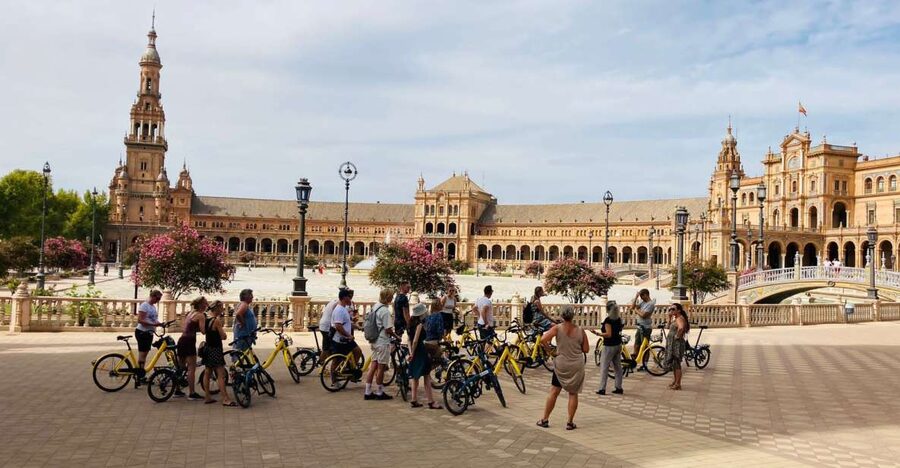
Seville opens up beautifully from a bicycle. In a few easy hours, you can roll from the old lanes of Barrio Santa Cruz to orange trees, grand plazas, the Guadalquivir River, and Triana, with a local guide explaining what you are seeing. I especially like the flat route and the frequent stops, which let you cover far more ground than you could on foot without turning the outing into a race.
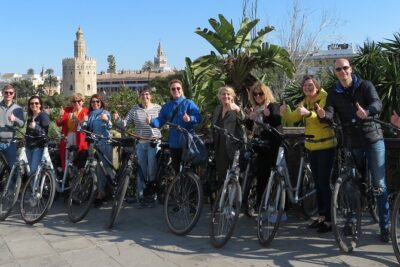
I also like the small-group format, capped at 15 people, and the way guides such as Carmen and Juan adjust the pace to suit the group. The main thing to consider is traffic and crowds: some central streets are busy, so you need to feel comfortable steering around other people and staying close to the guide.
Key points at a glance
- About 10 kilometers on mostly flat ground: The route is manageable for casual cyclists and includes no long climbs.
- A strong first-day orientation: You see major sights such as Plaza de España, the Cathedral area, Torre del Oro, Triana, and Las Setas.
- Local guides shape the experience: Carmen, Juan, Daniel, Pablo, and others are praised for history, culture, flamenco, and restaurant advice.
- Stops break up the riding: You are not in the saddle for three straight hours, making this easier for occasional cyclists.
- Best departure choice: The morning ride at 10:00 or 10:30 may offer quieter streets, though you should confirm the exact time when booking.
- Good value at $35: Bike hire, optional helmet, water, insurance, and guiding are included.
Why a bicycle works so well in Seville
Seville is a city made for easy riding. The center is largely flat, and the route uses cycle lanes and quieter stretches where possible. A bicycle also helps you connect areas that feel separate on a walking map. Santa Cruz, María Luisa Park, the riverfront, Triana, and the modern Metropol Parasol are not far apart, but seeing them all on foot takes more time and energy.
This is not a strenuous cycling excursion. The pace is deliberately gentle, with regular stops every few minutes in some sections. You will ride, pull over, hear a short explanation, and then continue. That rhythm works well in Seville, where the buildings, gardens, and public squares deserve a proper look.
The tour is especially useful on your first day. You get a broad sense of the city’s layout, then you can return later to places that caught your attention. A guide may also point you toward a tapas bar, flamenco show, or neighborhood worth exploring after the tour.
More Guided Rides in Seville:
- Seville: Guided Tour by Electric Bike
★ 4.8 · 712 reviews - Sunset Guided Bike Tour in Seville
★ 5.0 · 438 reviews - Seville: Guided Sunset Bike Tour
★ 4.9 · 332 reviews
Starting in Barrio Santa Cruz
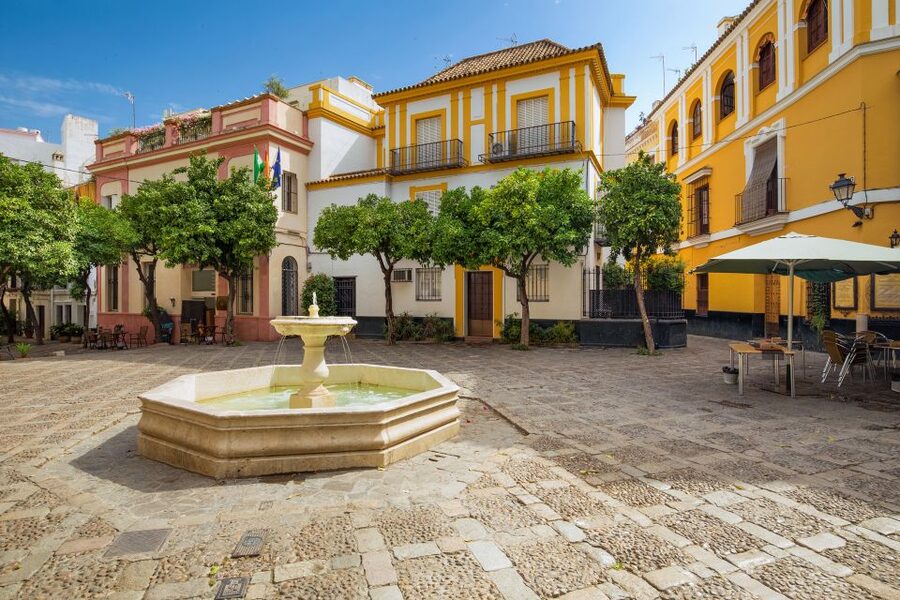
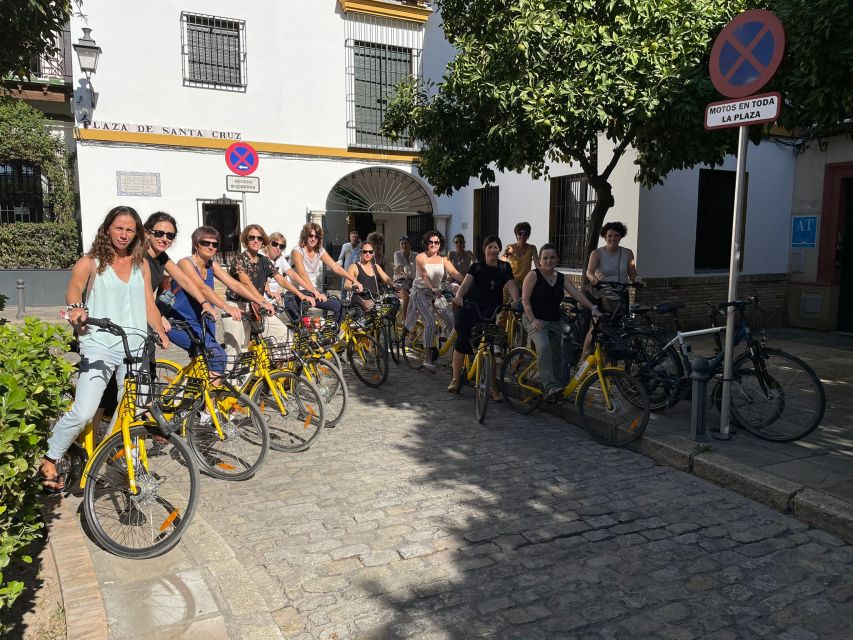
The meeting point is at Plaza de Santa Cruz 4, behind the Jardines de Murillo. This puts you right beside one of Seville’s most atmospheric districts, so the tour begins with narrow lanes, old walls, small plazas, and the feel of the former Jewish quarter.
The streets here are charming but not always ideal for fast riding. Expect cobblestones, pedestrians, and tight corners. The guide keeps the group together and sets a practical pace, but you should be comfortable making slow turns and stopping when asked.
This opening section is less about distance than orientation. You begin near the Cathedral, the Alcázar area, and the gardens, so the guide can explain how the historic center fits together before taking you farther out.
Orange trees and quiet paths in the Jardines de Murillo
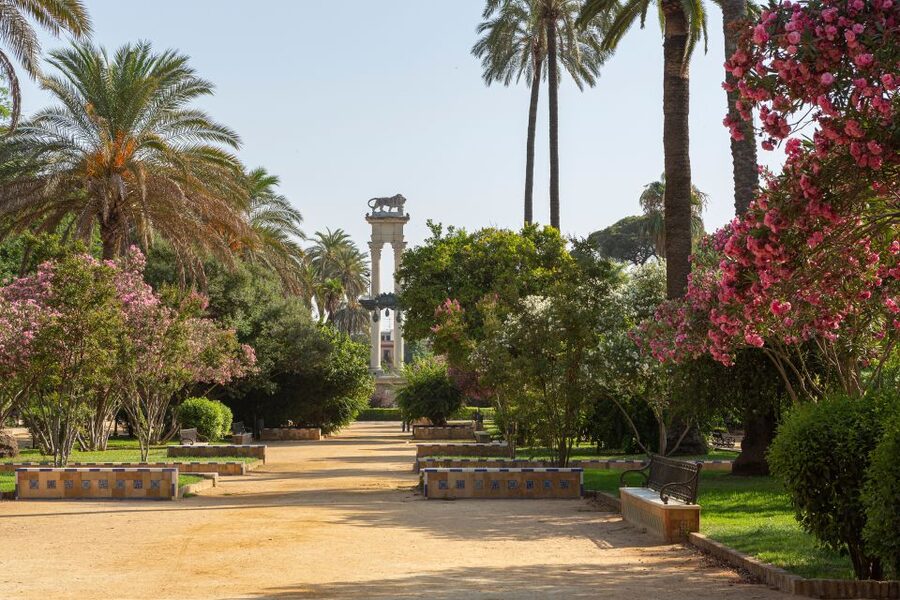
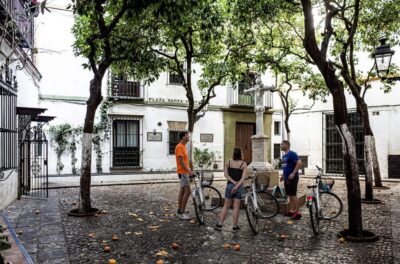
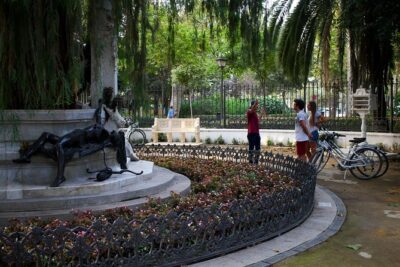
The Jardines de Murillo provide an easy transition from the old quarter to the wider city. You pedal beneath orange trees and palm groves, with more room to ride and fewer awkward corners than in Santa Cruz.
This is one of the nicest sections for taking in Seville’s climate and planting. The gardens offer shade, which matters during hot months, and they create a calmer setting for the guide’s first longer explanations.
You will likely pause rather than simply pass through. That is important because the tour is not designed as a point-to-point transfer. The garden stops give you time to listen, take photographs, and settle into the bike before the route becomes more varied.
María Luisa Park and Plaza de España
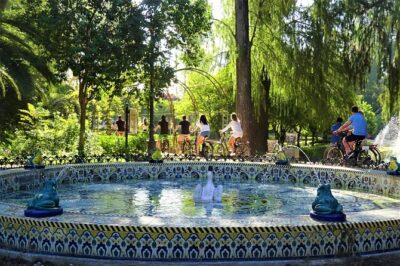
Parque de María Luisa is a major highlight. Its broad paths, fountains, trees, and open spaces make it a pleasant place to cycle, and the greenery offers a welcome break from Seville’s stone streets.
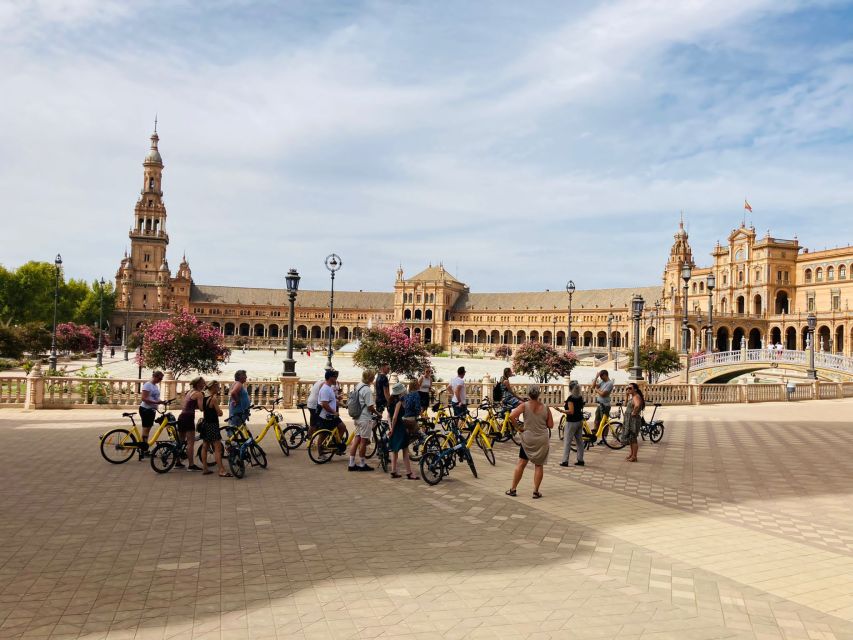
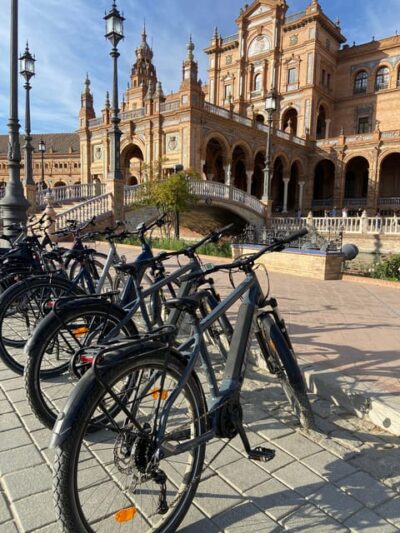
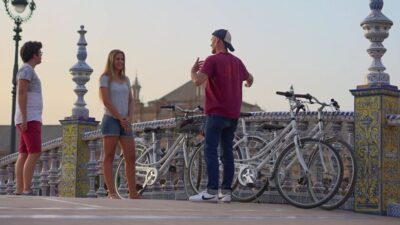
The park leads to Plaza de España, built for the 1929 Iberian-American Exposition. Its curved brick buildings, tiled alcoves, bridges, and long canal create one of the city’s most recognizable views. The mosaic work is not just decoration. Each province of Spain is represented in tiled panels, giving you plenty to inspect while the guide explains the site.
You should expect time to stop here, not simply a quick pass by. Plaza de España is popular and can be crowded, particularly later in the day. Your bicycle gives you a practical way to reach it, but you will still need patience around pedestrians and photo stops.
This part of the route offers some of the tour’s best visual variety: shady paths in María Luisa Park followed by the grand scale and colorful tilework of the exposition site. If you have limited time in Seville, that combination alone makes the ride useful.
More Cycling Trips in Seville:
- Seville Highlights Bike Tour (English)
★ 5.0 · 2,225 reviews - Seville: Highlights City Bike Tour
★ 4.8 · 2,168 reviews - Seville: City Sightseeing and Local Culture Bike Tour
★ 4.9 · 1,120 reviews - Seville Electric Bike Tour – Small Group
★ 5.0 · 841 reviews
From the old tobacco factory to the river
The Antigua Fábrica de Tabacos is another notable stop. This former royal tobacco factory is now associated with the University of Seville, and its large scale reflects the importance of tobacco production in the city’s past.
You may not go inside, since the activity is an outdoor cycling tour, but seeing the building helps connect Seville’s architecture with its economic and political past. The guide can give the structure context in a way that is easy to miss if you simply walk past it.
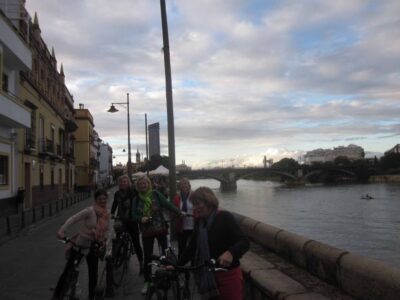
From there, the route heads toward the Guadalquivir. The riverfront opens the view and gives you a different side of Seville, with more space, broad skies, and the Torre del Oro near the water.
The Torre del Oro is one of the city’s most familiar landmarks. Its position beside the river made it part of Seville’s defenses and river traffic system. The stop is a good chance to understand why the Guadalquivir mattered so much to the city’s growth.
Crossing into Triana
Triana sits across the river and has a character distinct from the historic center. It is linked with flamenco, ceramic work, and long-standing local traditions. The route gives you a taste of the neighborhood without requiring a separate half-day visit.
The cycling itself may feel busier here. You might share streets and paths with pedestrians, local cyclists, and other traffic. The guide’s job becomes especially useful at this point, since the group needs to stay together while still moving at a reasonable pace.
I like this section because it adds more than another landmark. You are not only collecting photographs of famous buildings. You are seeing how Seville’s neighborhoods differ, and you get a sense of the river as a dividing line and a connection between them.
If flamenco interests you, ask the guide for current suggestions. Several guides, including Juan and others named by visitors, are praised for their interest in flamenco and for offering ideas about evening shows. Advice can vary by guide and day, so treat it as a useful starting point rather than a guarantee.
The Cathedral, Giralda, and Las Setas
The route also takes in Seville Cathedral and the Giralda, two of the city’s major architectural markers. You should not expect an interior visit or a full guided tour of the cathedral. The value here is seeing the buildings in context and learning how they relate to the surrounding old quarter.
The Giralda is particularly striking from street level. Its form reflects the layers of Seville’s past, and it remains one of the easiest landmarks to use when finding your way around the center.
Metropol Parasol, commonly called Las Setas, provides a sharp contrast. Its large wooden structure rises above the older streets and gives the tour a modern finish. Seeing it alongside Santa Cruz, the Cathedral, and the river helps show that Seville is not frozen in one historical period.
This final stretch can be crowded. You will need to follow the guide’s signals, slow down often, and accept that the bicycle is a tool for reaching the sights rather than a way to speed through them.
The pace, bikes, and group size
The tour is generally described as relaxed, and that is the right expectation. The route covers about 10 kilometers, with no sustained hills and frequent stops. You need to know how to ride a bicycle, but you do not need athletic ability.
The supplied bicycle is a city bike, and the package includes a helmet, bottled water, and liability insurance. Helmet use is listed as optional, but I recommend wearing one, especially if you are not used to cycling in a city.
A maximum of 15 people keeps the group fairly manageable. Smaller groups may feel more personal, and some departures can be much smaller. That gives the guide more room to answer questions and adjust the pace.
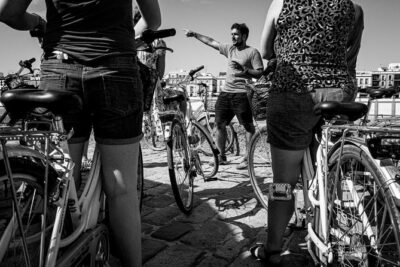
The most consistent strength among the named guides is their ability to make the city’s past easy to follow. Carmen is noted for checking that the group was comfortable and moving at a suitable speed. Juan is often praised for his stories about history, flamenco, politics, and culture. Daniel, Pablo, Alvarito, Ally, Leon, Paolo, and others have also led tours that combine facts with humor and practical suggestions.
Guide quality can never be promised by name, since schedules change. Still, the operation has a clear strength: the guides are expected to do more than point at buildings. They explain why places matter and help you use the rest of your time in Seville well.
Is $35 a fair price?
At $35 per person, this is a good-value introduction to Seville. You receive the bicycle, helmet, water, insurance, and a guided route lasting roughly two and a half to three hours. A private guide would cost far more, while exploring the same ground on foot would take longer and leave you with less local context.
The value is strongest if you are visiting for a short stay or want help with orientation. You can see a wide spread of the city in one outing, then decide which areas deserve a return visit.
It is less useful if you want long visits inside monuments. The tour passes major sights but does not replace a proper visit to the Cathedral, Alcázar, or any museum. Think of it as a city overview with historical explanation, not a series of full interior tours.
Best time to ride
Departure information lists morning and afternoon options, including 10:00 and 14:00, while another detail gives a daily 10:30 departure. Since the schedule is not presented consistently, confirm your exact start time when booking.
A morning departure is likely the better choice if you want cooler conditions and less activity on the streets. One morning group found the city easier to cycle before the main crowds arrived. Afternoon rides can work well if your arrival schedule demands it, but Seville’s heat may be more noticeable, especially in late spring and summer.
Wear light, comfortable clothing, use sunscreen, and bring your passport or ID card. You should also have enough confidence on a bicycle to ride through busy areas. The tour is not suitable for anyone who cannot ride.
Who should book this ride?
I would recommend it to first-time visitors, couples, families with cycling children, and anyone who wants a broad look at Seville without a hard workout. It also suits people who enjoy history but prefer learning while moving rather than sitting through a long lecture.
Families have used the tour with children as young as seven and nine, with the guide adjusting the pace. That said, each child must be able to control a bicycle and handle occasional crowds.
You may want a different activity if you dislike city cycling, need a fully private pace, or want deep interior tours of Seville’s monuments. Busy pedestrian areas can feel awkward, and even an easy route requires attention.
Should you book the Seville city bike tour?
Book this tour if you want to cover Seville’s main districts in one relaxed outing, especially at the start of your stay. The flat route, small group, regular stops, and strong local guiding make it a practical way to get your bearings.
Choose the morning if possible, confirm the departure time, and be ready for a few crowded stretches. At $35, it offers a useful mix of transport, sightseeing, local stories, and planning advice. For most first-time visitors who are comfortable on a bike, it is a smart introduction to Seville.
FAQ
Where does the bike tour start?
The meeting point is Plaza Santa Cruz 4 in Barrio Santa Cruz, behind the Jardines de Murillo.
How long does the tour last?
The tour is described as lasting about two and a half to three hours. Confirm the exact duration when booking.
How far do you cycle?
The route covers approximately 10 kilometers.
Is the route hilly?
The route is mainly flat and is described as suitable for all levels. Some information and one family account mention a few more challenging hills, so expect the possibility of short inclines.
What sights does the tour visit?
The route includes Barrio Santa Cruz, Jardines de Murillo, María Luisa Park, Plaza de España, the Antigua Fábrica de Tabacos, the Guadalquivir Riverside, Torre del Oro, Triana, Seville Cathedral, the Giralda, and Metropol Parasol.
Is a bicycle included?
Yes. A city bike, helmet, bottled water, and liability insurance are included.
Is helmet use required?
A helmet is provided and listed as optional.
What languages are available?
The tour is offered in Spanish, English, French, Italian, and Dutch. Other booking information also lists German, Russian, and Portuguese, so specify your preferred language and confirm availability.
What should I bring?
Bring comfortable clothing, sunscreen, and a passport or ID card.
Who should not take this tour?
The tour is not suitable for people who cannot ride a bicycle. You should also be comfortable cycling through some busy city areas.
Newest rides we have reviewed in Seville
- From Seville: Half-Day Guided Bike Trip to Italica★ 4.9 · 126 reviews
- E-Bike tour in Sevilla★ 4.6 · 34 reviews
- Bike Tour in Seville★ 4.8 · 20 reviews
- Seville: Electric Bike Tour in Small Group★ 4.9 · 185 reviews
- Seville: Electric Bike City Tour★ 4.7 · 188 reviews
- Seville Bike Tour with Full Day Bike Rental★ 4.5 · 117 reviews
- Seville: Bike Rental★ 4.2 · 29 reviews
- Seville: Bike Rental for a Day★ 4.1 · 72 reviews
Seville Cycling Tours, compared.
3-hour Guided Bike Tour along the Highlights of Seville
Read our review →Other lists this ride turns up in