REVIEW · CITY HIGHLIGHTS BIKE TOURS IN SEVILLE
Seville: Highlights City Bike Tour
Seville is made for seeing by bicycle. In three hours, you can link the cathedral and Alcázar with Triana, Maria Luisa Park, and Plaza de España without wearing out your feet on the city’s broad avenues and quiet lanes. The route gives you a useful first look at Seville, then leaves you free to return to the places that catch your eye.
I like the flat route, which makes a regular bicycle realistic even if you do not cycle often. I also like the practical local advice: guides such as Malik, Rigo, Philip, Natasha, and Lukas point out places to eat and help you plan the rest of your stay. The main consideration is that this is a panoramic tour, so entry to the cathedral and Alcázar is not included.
Key points to know
- Three hours covers a lot of Seville: You see the central sights, Triana, the river area, Maria Luisa Park, and Plaza de España in one outing.
- The city is very flat: A standard bicycle should suit many people, while an e-bike adds comfort and a little fun.
- The cathedral and Alcázar are viewed from outside: You get orientation and advice, but attraction tickets cost extra.
- Triana adds local character: The guide explains its pottery, tile-making, and flamenco traditions.
- The tour works best early in your stay: It helps you decide where to return for a longer visit, tapas, or an evening show.
- The guide makes the difference: Malik, Rigo, Philip, Natasha, Lukas, and others are praised for clear explanations and an easy pace.
Why a bicycle is a smart way to see Seville
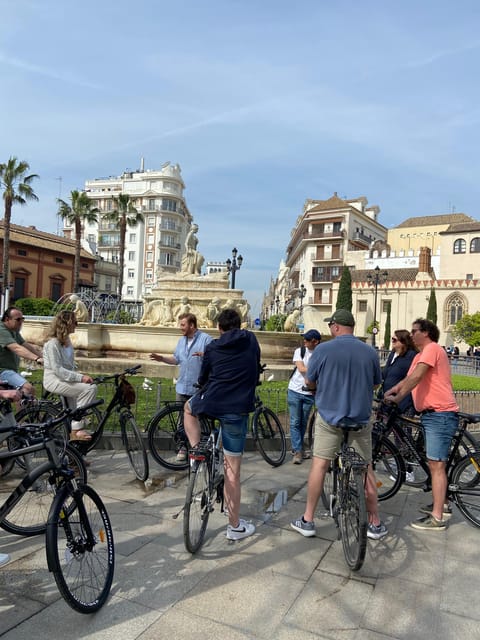
Seville’s main sights are spread across a fairly compact center, but walking between them can take time, especially in warm weather. A bicycle lets you cover the distance quickly while still moving slowly enough to notice tiled facades, shaded plazas, gardens, and everyday street life.
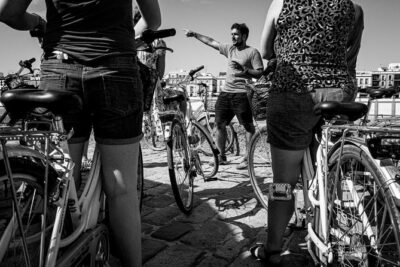
You are not racing from stop to stop. The route pauses regularly, often every five or ten minutes at an important sight. That rhythm gives you a short explanation, a chance to take pictures, and time to catch up with the group before riding on.
The city’s flat ground is a major advantage. Several people who do not normally cycle found the standard bikes manageable, and one person chose a regular bike specifically to get a little exercise. If you prefer less effort, an e-bike may be the better pick. It is also useful in Seville’s hotter months, when even gentle riding can feel tiring by the end of three hours.
The cycling itself is part of the experience. You move between major monuments rather than seeing Seville only through a guide’s lecture. The bike lanes make the route easier to follow, although you still need to pay attention to the guide, pedestrians, and other road users.
More City Highlights Bike Tours in Seville
- Seville Highlights Bike Tour (English)
★ 5.0 · 2,225 reviews - Seville: City Sightseeing and Local Culture Bike Tour
★ 4.9 · 1,120 reviews - 3-hour Guided Bike Tour along the Highlights of Seville
★ 5.0 · 315 reviews
Starting near the pedestrian streets
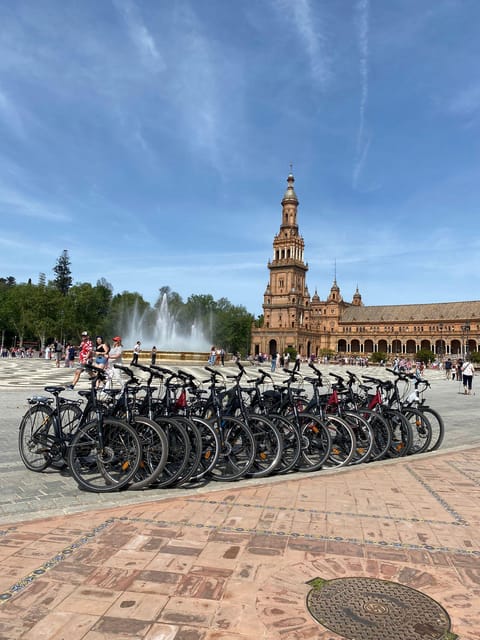
The meeting point is the ATD Bikes shop on a pedestrian street. You will receive your bicycle and meet the guide there before setting out. Allow a little time to get comfortable with the bike, especially if you have not used an upright city bicycle or an e-bike recently.
Bike fit matters more than people expect. One rider specifically appreciated having the bicycle adjusted to their height, and that small step can make the difference between a pleasant ride and a sore one. Wear comfortable shoes, as requested, and choose clothing that lets you move easily.
The tour is guided in Spanish, English, Dutch, French, or German. English-speaking guides named in the feedback include Malik, Rigo, Philip, Natasha, Lukas, and others. The best guides keep the history clear and conversational, rather than turning every stop into a long classroom talk.
Group size can vary. Some outings feel small and personal, while others include a larger set of riders. A smaller group is easier to follow through the streets, but the company has also handled family groups and younger riders well.
The cathedral and Alcázar: orientation before admission
The first major sights are the Cathedral of Seville and the Alcázar, usually seen from outside. This is an important distinction when you compare the tour with a walking visit that includes tickets.
The Cathedral of Seville is one of the largest churches in the world, and its scale is difficult to grasp from a guidebook photograph. From the bicycle route, you get a broad view of the building and the surrounding cathedral quarter. The guide can explain how to return for a proper visit and offer advice on the best way to fit it into your schedule.
The nearby Alcázar is Seville’s royal palace, a complex of courtyards, rooms, and gardens that deserves more time than a quick bike stop allows. Seeing it on this tour gives you a useful preview. You can decide later if you want to spend a few hours inside, rather than wandering into the area without knowing what awaits.
This opening section is especially useful on a first day in Seville. You learn where the two major sights sit in relation to one another, how the old center connects to the river, and which streets you may want to explore on foot later.
The drawback is simple: you will not enter either attraction. Admission is not included, and the tour does not replace a booked cathedral or Alcázar visit. Think of these stops as an introduction and a planning aid.
Crossing into Triana for tiles and flamenco
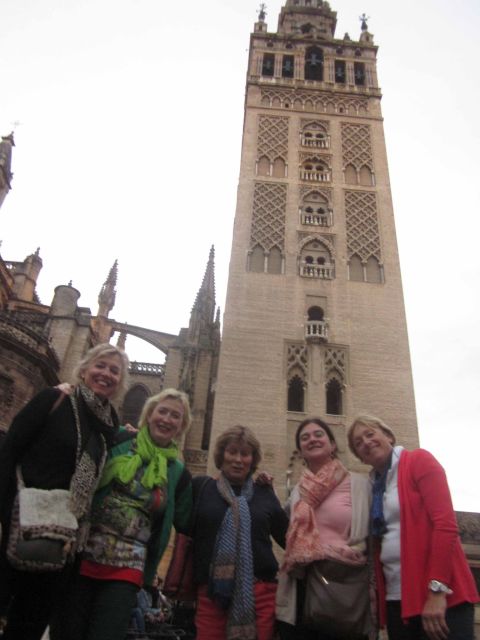
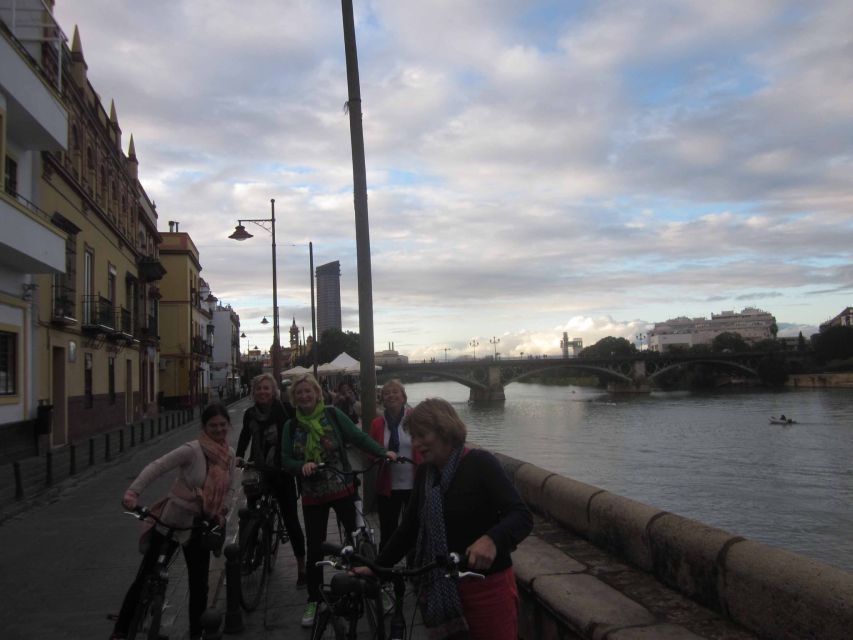
The route continues toward Triana, across the river from the oldest central districts. Triana feels different from the monumental center, and this change is one of the strongest parts of the outing.
The guide explains Triana’s pottery and tile industry, which has shaped the district’s appearance and local identity. Seville’s colorful ceramic tradition is not just decoration. Tiles appear on churches, patios, street signs, homes, and public spaces, so learning where that craft comes from adds meaning to details you will notice all over the city.
You also hear about flamenco culture in Triana. The district is closely linked with the music and dance traditions that visitors come to Andalusia hoping to experience. A bike tour cannot give you a full flamenco performance, but it can show you the setting and help you understand why Triana matters.
I like this part because it moves beyond the standard monument checklist. You are still seeing a major area, but the focus shifts from royal power and grand architecture to local crafts and performance culture.
The guide may also point out places worth returning to for food or an evening. This is where the tour’s practical value grows. A good recommendation can save you from choosing a restaurant at random in the most crowded sightseeing zone.
More City Highlights Bike Tours in Spain
- Seville: Highlights Bike Tour with Local Guide
★ 4.3 · 295 reviews - Seville: Electric Bike City Tour
★ 4.7 · 188 reviews - Highlights & Hidden Spots of Barcelona Bike Tour w/ Local Guide
★ 4.5 · 3,009 reviews - Valencia: City Highlights Guided Bike Tour
★ 4.7 · 2,373 reviews
Maria Luisa Park: shade, space, and a slower pace
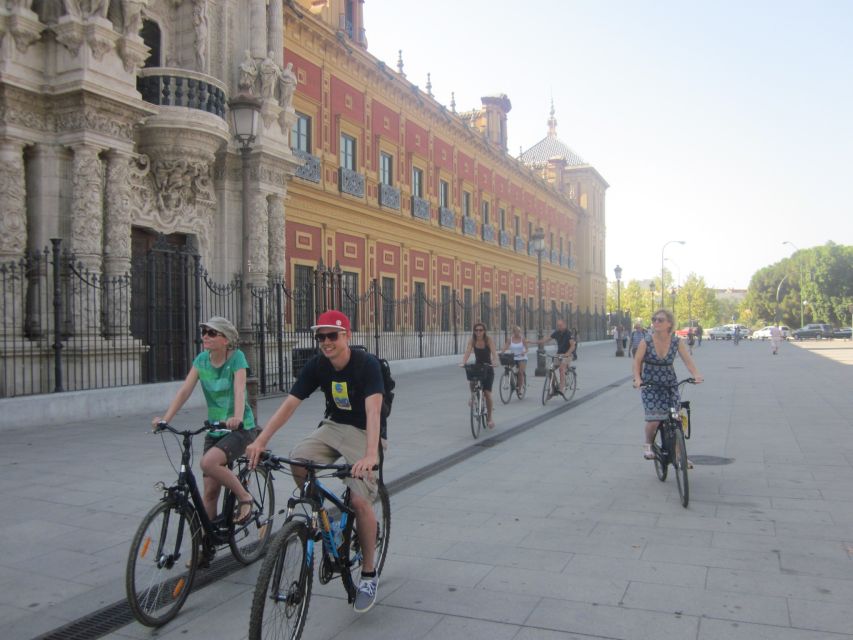
After the denser central streets, Maria Luisa Park gives the tour room to breathe. The park’s green spaces offer shade and a calmer setting for riding, which is welcome during Seville’s warmer months.
The pace remains gentle, with stops for explanations and photographs. Several outings in hot weather were comfortable because the route used shady places and did not push the group hard. That does not mean you should ignore the heat. Morning departures are sensible in summer, since the temperature can rise sharply by late morning or early afternoon.
The park works well on a bicycle because you can cover more of it without treating the visit as a long march. You get a sense of its paths and open spaces, then can return later if you want a slower walk.
Some riders have also enjoyed a drink stop in or near the park, including coffee, water, or sangria. This is not presented as a fixed included feature, and drinks cost extra. Still, it can be a pleasant pause if the guide and group schedule one.
Plaza de España and the 1929 exhibition
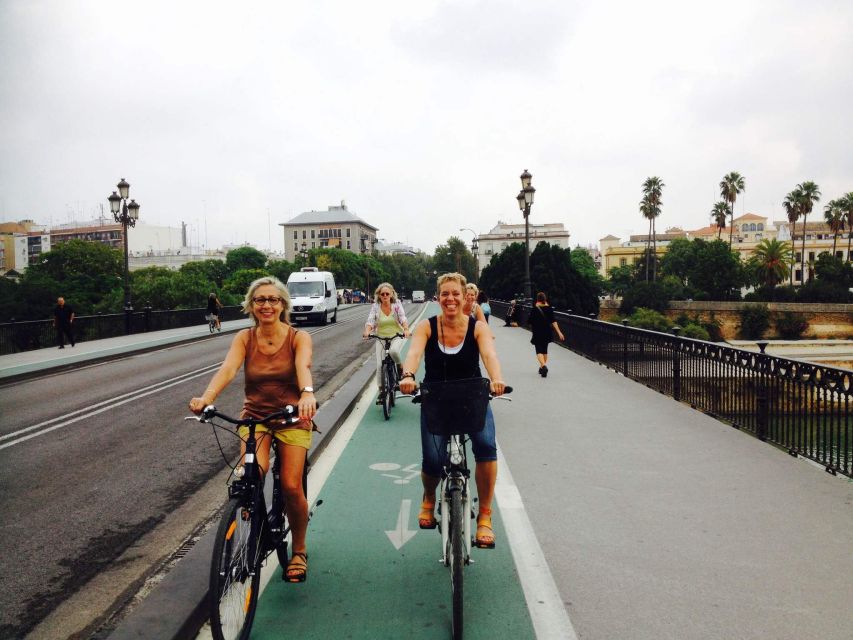
Plaza de España is the visual centerpiece of the park and one of Seville’s most memorable public spaces. It was built for the Ibero-American Exposition of 1929, and its grand semicircle, bridges, waterway, and tiled details make it an easy highlight of the route.
This is a good place to understand Seville’s talent for combining scale with ornament. The plaza is large enough to feel ceremonial, but its ceramic work rewards close attention. The bicycle lets you arrive without spending your energy walking across the city first.
Access can change because of concerts or other events. On one occasion, the plaza was closed for a concert, and the guide adjusted the route to show other places instead. That flexibility is useful, but it also means the exact sequence may vary on your date.
Do not expect a long independent visit at every monument. The tour has to keep moving, and Plaza de España can be busy. You will have time to see the space and hear its story, then you can return later for photographs or a more relaxed look.
The guide’s role is more important than the bicycle
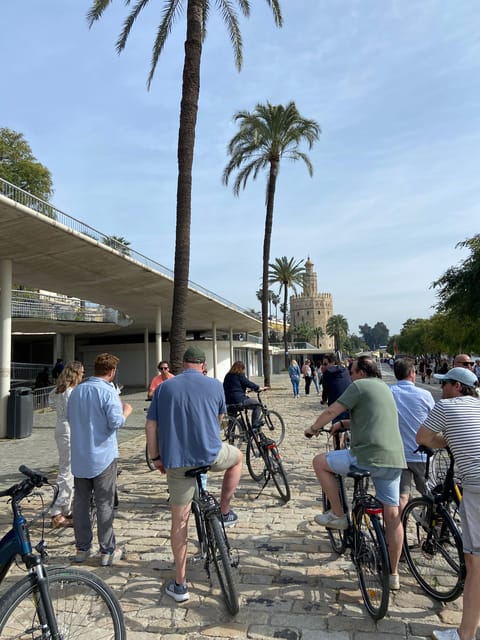
The bicycle gets you around, but the guide determines how useful the three hours feel. The strongest guides balance facts with movement. Malik is repeatedly praised for clear English, a good sense of timing, and explanations that do not overwhelm each stop. Rigo is noted for an easy pace and an informal style that worked well for families with teenagers and younger children.
Philip is a good example of the tour’s value for people who want more than a basic route. His explanations include lesser-known places, and he has helped riders find restaurants afterward. Natasha and Lukas are also praised for friendly, well-organized outings and clear information.
You should not expect every guide to give the same commentary word for word. That is part of the nature of a live city tour. The common strength is the mix of history, safety guidance, and local suggestions.
The guides also appear willing to adapt. A replacement bicycle was brought out when one bike developed a problem, and routes have been adjusted when a site was temporarily closed. One rider did report a bicycle malfunction that happened twice, so equipment issues are possible, even if they seem uncommon.
How much ground can you cover in three hours?
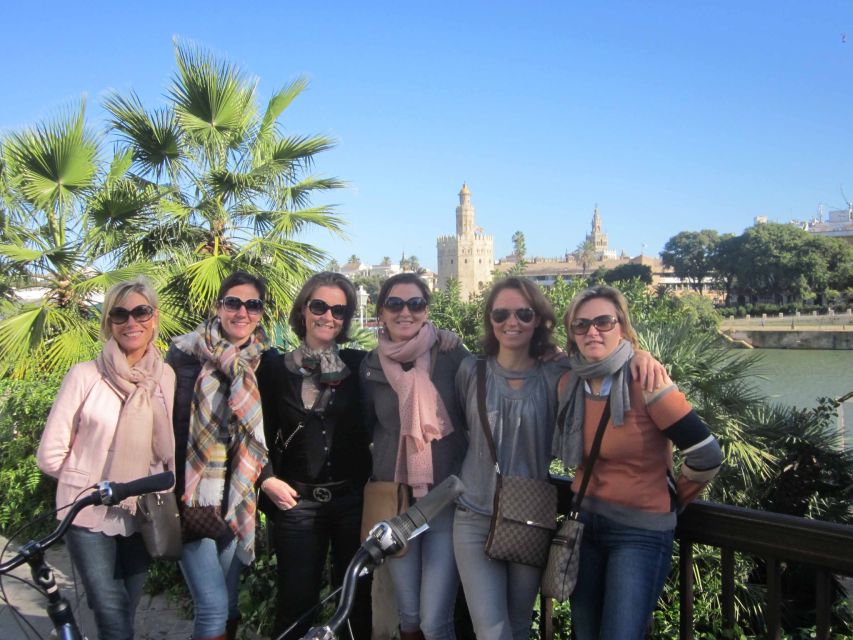
The tour is designed as an overview, not a detailed study of every district. In three hours, you can expect to see the cathedral area, Alcázar, Triana, Maria Luisa Park, Plaza de España, and additional points along the way.
The frequent stops keep the ride manageable. You are not pedaling continuously for three hours, and the flat route means you do not need to be especially fit. Still, you should be comfortable riding in a city and able to keep with the group.
The main benefit is orientation. After the ride, you will know how the major districts connect and which areas deserve a second look. This is particularly valuable if you have only a day or a day and a half in Seville.
I would schedule it near the beginning of your stay. You can then return to the Alcázar, cathedral, Triana, or Plaza de España with a clearer sense of how to use your time. It also gives you a chance to ask the guide about restaurants, bars, theaters, and other places for the remaining days.
Is $38 good value?
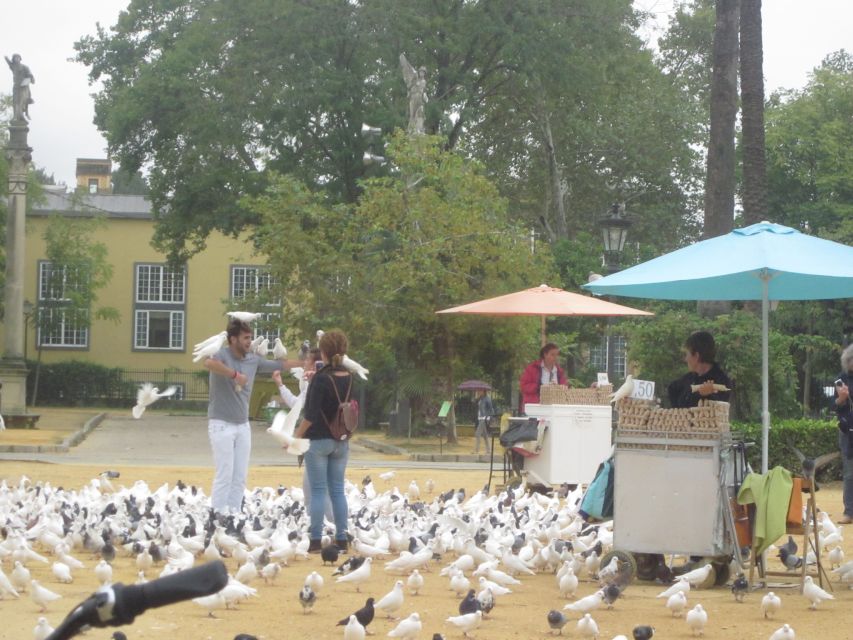
At $38 per person, the tour is reasonably priced for three hours with a bicycle, a live guide, and accident and civil responsibility insurance included. You are paying for transport, but also for the city orientation and local context that would be hard to assemble on your own in one morning.
The price looks strongest if you have limited time. A self-guided route may cost less, but you would need to plan it, find the safest connections, and research the background of each site. Here, the route links the main sights efficiently and gives you restaurant suggestions at the same time.
The value is lower if your only goal is to enter the cathedral and Alcázar. You will need separate admission, and the tour provides panoramic views rather than interior visits. For a full sightseeing day, combine the bike tour with one or two timed attraction visits later.
Extra costs may include attraction tickets and drinks during a pause. Keep that in mind when planning your budget.
Who should book this Seville bike tour?
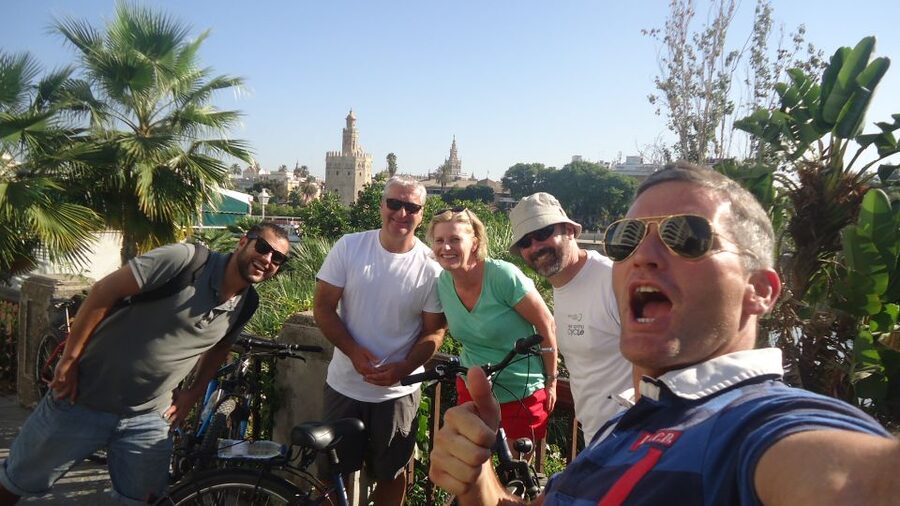
I would recommend it to first-time visitors, people on a short break, families with children who can cycle, and anyone who prefers seeing a city in motion. It is also a good choice if walking in summer heat sounds unpleasant.
You do not need to be a serious cyclist. The route is flat, the pace is described as easy, and standard bicycles have worked well for people who rarely ride. An e-bike is worth considering if you want help with the effort or simply enjoy the extra boost.
Families should note that minors must be accompanied by at least one adult. Unaccompanied minors are not accepted, and the activity is not suitable for wheelchair users.
I would think twice if you dislike cycling in city streets, need a fully accessible activity, or want long interior visits at the cathedral and Alcázar. A walking tour or private sightseeing plan may suit you better in those cases.
Rain can also affect the day. If the weather is poor and you do not want to ride, you can change the date or cancel under the stated policy. That flexibility helps, but check the forecast before setting aside the morning.
Should you book it?
Book this tour if you want a fast, friendly introduction to Seville and plan to explore the major sights in more detail afterward. The flat route, regular stops, multilingual guides, and useful food advice make it a strong first-day activity.
Choose the e-bike if you want the easiest ride, or the regular bike if you are comfortable cycling and would like a little exercise. Keep your expectations clear: the cathedral and Alcázar are viewed from outside, and entry tickets are separate.
For $38, I think the tour earns its place in a short Seville visit. You see a surprising amount, learn how the districts fit together, and finish with a practical list of places to revisit. If you have only a limited amount of time, that kind of orientation is worth far more than another morning spent guessing which street leads where.
FAQ
How long is the Seville Highlights City Bike Tour?
The tour lasts three hours. Starting times vary, so check availability when booking.
What sights are included?
The route includes panoramic views of Seville Cathedral and the Alcázar, plus Triana, Maria Luisa Park, Plaza de España, and other city sights.
Can I go inside the cathedral or Alcázar?
No. Entry to attractions is not included, so the cathedral and Alcázar are viewed from outside during the bike tour.
Is the route difficult?
The route is mostly flat and is described as suitable for an easy pace. You can choose a regular bicycle or an e-bike depending on the available booking option.
Which languages are available?
Live guides are available in Spanish, English, Dutch, French, and German.
Can children join the tour?
Minors can join only when accompanied by at least one adult. Unaccompanied minors are not allowed.
Newest rides we have reviewed in Seville
- From Seville: Half-Day Guided Bike Trip to Italica★ 4.9 · 126 reviews
- E-Bike tour in Sevilla★ 4.6 · 34 reviews
- Bike Tour in Seville★ 4.8 · 20 reviews
- Seville: Electric Bike Tour in Small Group★ 4.9 · 185 reviews
- Seville: Electric Bike City Tour★ 4.7 · 188 reviews
- Seville: Bike Rental★ 4.2 · 29 reviews
- Seville: Bike Rental for a Day★ 4.1 · 72 reviews
- Sevilla Bike Rental★ 4.5 · 49 reviews
City Highlights Bike Tours, compared.
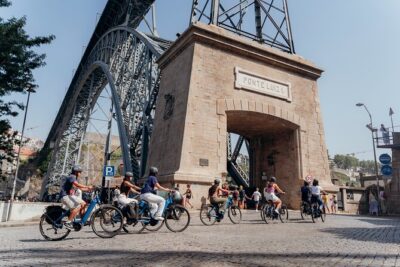
3-Hour Porto Highlights on a Electric Bike Guided Tour
Read our review →
City Highlights 3-Hour Guided Electric Bike Tour
Read our review →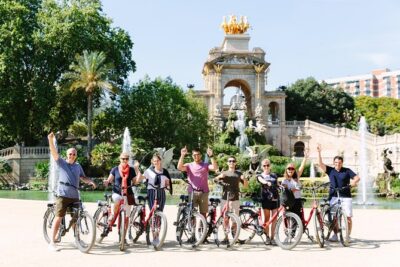
Highlights & Hidden Spots of Barcelona Bike Tour w/ Local Guide
Read our review →
Sights and Highlights Bike Tour with a Local Guide
Read our review →
Highlights 3 Hour Bike Tour with a Local Guide
Read our review →