
REVIEW · SEVILLE
Seville: Historic Center Bike Tour
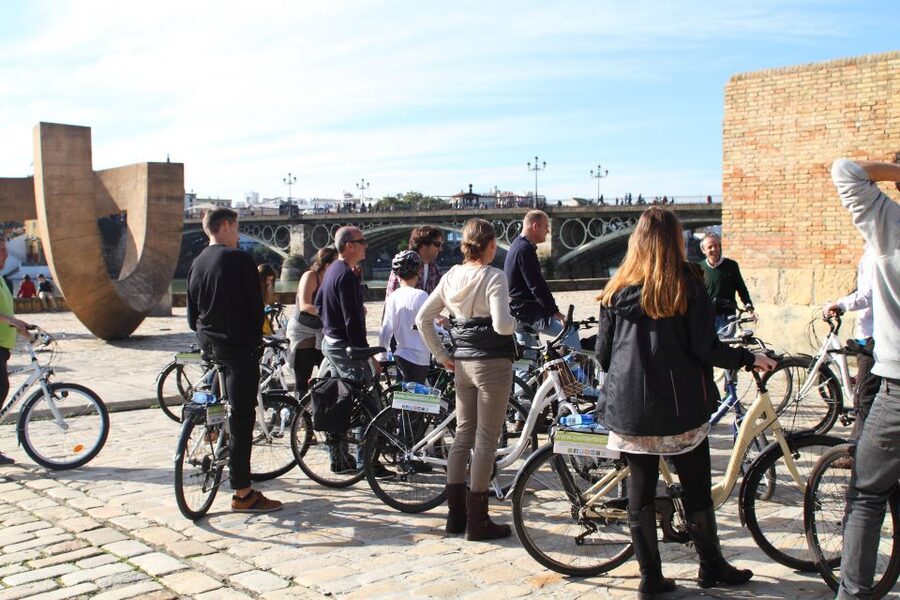
Seville’s old defensive route gives this 2.5-hour bike tour a clear purpose. You are not simply pedaling from one famous sight to another. You follow the line of the city’s former walls, stopping at gates where armies, carriages, merchants, and ordinary residents once entered and left.
I like the way the route joins big history with visible remains, especially around Macarena, Puerta de Córdoba, and the Alcázar. I also like the practical format: bike rental, water, a map, and a live guide in Spanish, English, or French are included.
The main drawback is the equipment. One rider found the bicycles near the end of their working life, though still usable. This tour also is not suitable for people with mobility impairments, and cycling through a historic center may not suit anyone who prefers a slow walking tour.
Key points to know before booking
- The route follows Seville’s former defensive walls, rather than covering only the city’s postcard sights.
- You hear the full timeline, from Tartessian, Carthaginian, and Roman settlement to the Almoravid walls and the 1868 upheavals.
- Important gates shape the ride, including Puerta Carmona, Puerta Osario, and Puerta Triana.
- Guides can make a major difference, with Luca, Daniel, and Sébastien praised for clear explanations and attentive service.
- The price is $35 per person, including the bicycle, guide, water, map, and helmet rental for children.
- The ride requires ordinary cycling ability, and the bicycles have received one mixed comment about their condition.
Why the defensive walls make this Seville tour different
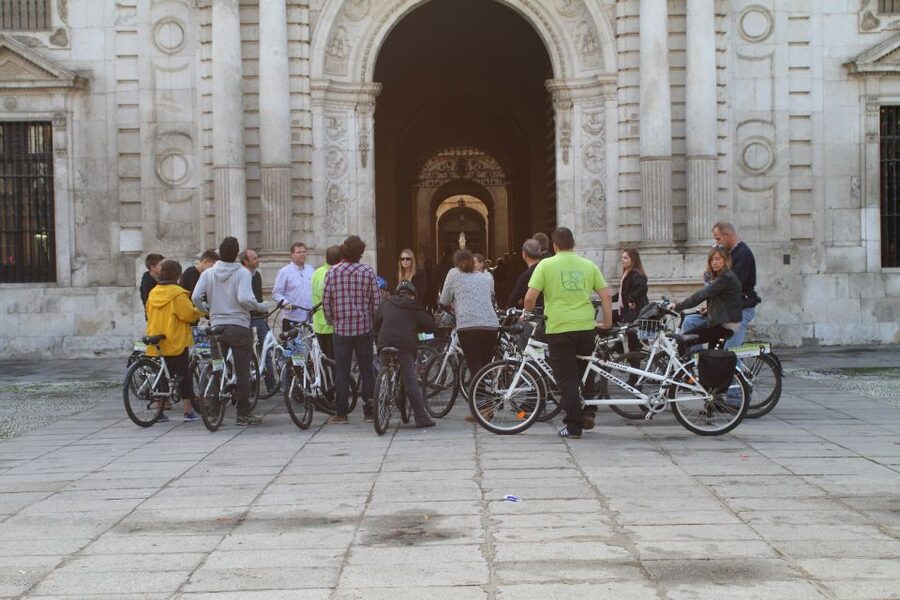
Many city bike tours are mainly transportation between sights. This one has a stronger thread: the old defenses of Seville.
The walls are not preserved as one unbroken circuit. Instead, you see remaining sections and the places where gates once controlled movement through the city. That makes the ride useful for understanding Seville’s shape. A gate is no longer just a name on a map. It becomes a point where people were checked, carriages stopped, and stories unfolded.
The tour also gives you a long view of Seville’s past. Your guide explains the early Tartessians, the Carthaginians, and the Romans before moving into the period when the Almoravids made Seville one of Europe’s best-walled cities. You then hear about the riots of 1868 and the Glorious Revolution, which changed the city and helped bring down parts of its old defenses.
I like this approach because the history is tied to places you can see. You do not need to remember a long list of rulers and dates. The walls and gates give the story a physical frame.
More Cycling Trips in Seville:
- Seville Highlights Bike Tour (English)
★ 5.0 · 2,225 reviews - Seville: Highlights City Bike Tour
★ 4.8 · 2,168 reviews - Seville: Relaxing City Bike Tour with a Tour Guide
★ 4.8 · 1,588 reviews
Starting at Centerbici on Calle Espronceda
You meet at Centerbici Store at C/ Espronceda, 5, in Seville’s 41004 postal district. From there, you receive a bicycle and meet your live guide.
The tour includes a bilingual guide, with Spanish, English, and French available. The description identifies the languages, but not a guaranteed language for every departure, so choose your preferred language when booking and confirm it if that matters to you.
Guide quality appears to be one of the strongest parts of the experience. Luca is praised for speaking French, Italian, and Spanish, with English also among his languages. Daniel is described as an excellent guide, and Sébastien received similar praise for his work. Another guide made an effort to help French-speaking riders follow an English explanation by using phone translation when needed.
That tells you something useful: the guides seem willing to adjust their delivery rather than simply recite a script. Still, if you need a particular language, ask before you set out.
You receive water and a map, which are small but welcome touches on a bike ride. A helmet can be rented for children. The supplied information does not say that helmets are included for all riders, so ask Centerbici about adult helmet arrangements if you want one.
Macarena and Puerta de Córdoba: the strongest wall section
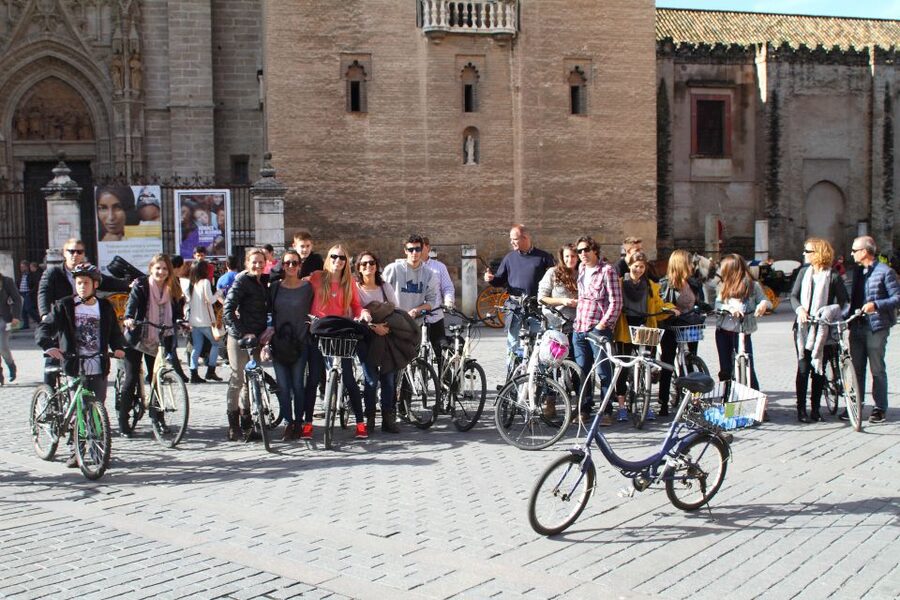
The route takes you toward Macarena and Puerta de Córdoba, two of the most useful points for understanding Seville’s defenses.
Macarena is linked with surviving sections of the old wall. Here, your guide can show how the defensive line once protected the city and explain Seville’s growth under the Almoravids. The wall was not decoration. It defined the city’s edge, controlled access, and marked the boundary between Seville and the surrounding area.
Puerta de Córdoba adds another layer to the story. Gates were practical places, but they also carried political and social meaning. People passed through them for trade, work, travel, and military reasons. A stop here helps you picture a city that was far more enclosed than modern Seville.
This is one of the tour’s best features for first-time visitors. You get a sense of the city’s size and structure before modern streets and traffic blurred the old outline.
The drawback is that the remaining walls and gates may require some imagination. You are not seeing a fully restored medieval city wall from end to end. You are seeing sections, traces, and strategic points, then using the guide’s explanation to connect them.
The Alcázar and Seville’s changing architectural styles
The ride also includes the Alcázar area, one of Seville’s most important historic settings. The focus here is on the structure and its place in the city’s defenses, not on a full interior visit.
That distinction matters. This is a cycling tour of the historic center, not an Alcázar admission tour. You should not book it expecting extended time inside the palace complex. Instead, you see the Alcázar as part of Seville’s changing urban story and admire the mix of architectural styles around it.
The route is useful because Seville does not present its past in one neat period. Roman foundations, Islamic defenses, later Christian buildings, and modern changes sit close together. Cycling lets you cover more ground than walking while still stopping for explanations at key points.
The tour also includes a skip-the-ticket-line feature in its activity details. Since the experience is centered on cycling through the city rather than listing an included palace visit, check exactly what that benefit applies to before booking. The supplied information does not specify a separate attraction ticket.
Same roads, a different saddle:
- Seville: City Sightseeing and Local Culture Bike Tour
★ 4.9 · 1,120 reviews - Seville Electric Bike Tour – Small Group
★ 5.0 · 841 reviews - Seville: Guided Tour by Electric Bike
★ 4.8 · 712 reviews - Sunset Guided Bike Tour in Seville
★ 5.0 · 438 reviews
Puerta Carmona, Puerta Osario, and Puerta Triana
The tour continues through several former gates, each adding a different angle to Seville’s past.
At Puerta Carmona, you hear about the movement of people and goods through the city. The gate was part of the controlled entry system, so it helps explain how Seville managed traffic long before modern roads and signs.
Puerta Osario brings another former entrance into view. Stops like this are valuable because they reveal the practical side of history. Wars and political changes matter, but so do the daily movements of carriages, workers, traders, and residents.
At Puerta Triana, the route reaches one of the better-known names in Seville’s old defensive network. Your guide connects the gate with stories, mysteries, and the city’s changing fortunes. You may find this stop especially useful if you have already seen Triana but want to understand how it related to the walled center.
The route does not treat each gate as an isolated monument. Together, they form a chain. You begin to understand how the city was entered, protected, and divided.
From Roman origins to the upheavals of 1868
The historical range is unusually broad for a short city tour. Your guide starts with the early cultures that settled in the area, including the Tartessians and Carthaginians, then explains the Roman period and Seville’s later rise in importance.
The Almoravid period receives special attention because it shaped the city’s defenses. Seville became known as one of Europe’s best-walled cities, and the surviving sections make more sense once you know why those walls were built and how they worked.
The final part of the story reaches the riots of 1868 and the Glorious Revolution. Parts of the walls and gates were left behind after this period of upheaval. That detail gives the tour a useful warning: historic places are not always lost through neglect. Political change, urban pressure, and public unrest can reshape a city quickly.
I appreciate that the tour does not stop with ancient Rome or medieval Seville. The 19th century explains why you see fragments rather than a complete defensive ring today.
What cycling adds, and what it asks of you
A bicycle is a good match for Seville’s historic center because it lets you cover several separated points in one outing. You can move from wall sections to gates, then toward the Alcázar and other historic structures without spending the whole tour on foot.
The format also keeps the route active. You are not sitting in a vehicle while the guide points out distant buildings. You see the streets at a slower pace and stop where the history matters.
At the same time, cycling is not effortless. You need to be comfortable riding for 2.5 hours and handling the normal demands of a city route. The activity is specifically listed as unsuitable for people with mobility impairments.
The bicycle condition deserves a practical note. One rider found the bikes somewhat worn, describing them as near the end of their working life, but not unusable. That is not a reason to reject the tour outright, but it is fair to set expectations. If the bicycle feels poorly adjusted at the start, tell the staff before leaving.
The tour includes a child helmet rental, which is useful for families, but no other child-specific information is provided. Ask about bicycle sizes and safety equipment before booking with younger riders.
Guide quality and language support
The guide can make or break a history tour, and the strongest praise here centers on personal attention.
Luca is described as especially cultured, interesting, and careful about the comfort of his group. He is also said to speak French, Italian, and Spanish very well, with English available as well. Daniel is recommended as a strong guide, and Sébastien is also singled out for making the tour enjoyable.
You should not assume that one named guide will lead every departure. These are individual guide names associated with particular tours, not a promise of assignment. Still, the pattern is encouraging: the people leading the rides appear to know Seville well and care about making the information understandable.
The language setup is Spanish, English, and French. If you speak French, this tour may be especially appealing because Luca is reported to speak it fluently. If your language is not one of those three, do not count on interpretation.
Is $35 a fair price?
At $35 per person, this is a reasonable price for a 2.5-hour guided city tour, especially because the bicycle rental, water, and map are included.
The real value comes from the route and explanation. You could walk past parts of Seville’s walls and old gates without understanding their purpose. A guide turns scattered remains into a connected story and helps you notice details you might otherwise miss.
The tour is also less expensive than booking several separate sightseeing activities, though it does not replace an interior visit to the Alcázar or another major monument. Think of it as an orientation and history ride, not a complete sightseeing pass.
The value is strongest early in a Seville visit. After the ride, you will have a better mental map of the historic center and may choose to return to places that deserve more time. If you already know Seville well, the defensive-wall theme still gives the outing a specific focus.
Who should book this ride?
I would recommend it to first-time visitors who want context before visiting individual monuments. It suits you if you enjoy history, do not mind covering ground by bicycle, and like seeing how a city grew around walls and gates.
It is also a good fit for visitors with only a short stay. In 2.5 hours, you get an overview of major historic areas without committing an entire day.
Families may find the bicycle format appealing, particularly because child helmet rental is available. You will need to confirm bicycle sizes and other equipment directly if your children are young.
I would be more cautious if you want a relaxed walking pace, a deep interior visit to the Alcázar, or a tour focused mainly on art and architecture. The architecture is part of the route, but the central idea is Seville’s defensive network and historical development.
Practical details before you reserve
The meeting point is Centerbici Store, C/ Espronceda, 5, 41004 Seville. The tour lasts 2.5 hours, and departure times vary, so check availability for your date.
You can cancel up to 24 hours in advance for a full refund. A reserve-now, pay-later option is also available, which helps if your Seville schedule is still changing.
The activity is offered with live guides in Spanish, English, and French. Bring comfortable clothing for cycling and confirm helmet arrangements if an adult helmet is important to you. Since one rider found the bicycles worn, arrive with enough time to check your bike before the group leaves.
Should you book the Seville Historic Center Bike Tour?
Book it if you want Seville’s history explained through its walls, gates, and street plan rather than through a string of famous facades. The route from Macarena and Puerta de Córdoba to Puerta Carmona, Puerta Osario, Puerta Triana, and the Alcázar gives the ride a strong sense of purpose.
At $35, it offers solid value for a guided 2.5-hour introduction. The main cautions are the cycling requirement, the lack of suitability for people with mobility impairments, and the possibility of a well-used bicycle. If those points work for you, this is a practical way to get your bearings and understand why Seville became such a heavily defended city.
FAQ
How long does the Seville Historic Center Bike Tour last?
The tour lasts 2.5 hours.
How much does the tour cost?
The listed price is $35 per person.
Where does the tour meet?
The meeting point is Centerbici Store at C/ Espronceda, 5, 41004 Seville.
What languages are available?
The live tour guide is available in Spanish, English, and French.
Is bicycle rental included?
Yes. Bike rental is included in the tour price.
What else is included?
The tour includes a bilingual guide, a water bottle, and a map. Helmet rental for children is also included.
Which historic places does the route visit?
The route includes sections of Seville’s old walls, Macarena, Puerta de Córdoba, the Alcázar area, Puerta Carmona, Puerta Osario, and Puerta Triana.
Is the tour suitable for people with mobility impairments?
No. The activity is listed as unsuitable for people with mobility impairments.
Newest rides we have reviewed in Seville
- Seville City Bike Tour: Top Seville’s Monuments★ 4.7 · 28 reviews
- Seville: Relaxing Electric Bike tour with Tour Guide★ 4.8 · 31 reviews
- Seville: Electric Stand-Bike Tour★ 5.0 · 18 reviews
- Seville: Dutch Cycling Highlights Tour with local guide★ 4.7 · 163 reviews
- Sevilla: 100% Nederlandstalige Highlights Tour op E-BIKE★ 4.9 · 54 reviews
- Seville: 2.5-Hour Private City Tour by Bike★ 4.8 · 45 reviews
- Seville: 2.5-Hour Evening Electric Bike Tour★ 4.8 · 14 reviews
- Seville: 3-Hour Tapas Tour by Bike★ 3.9 · 72 reviews
Seville Cycling Tours, compared.
Other lists this ride turns up in