
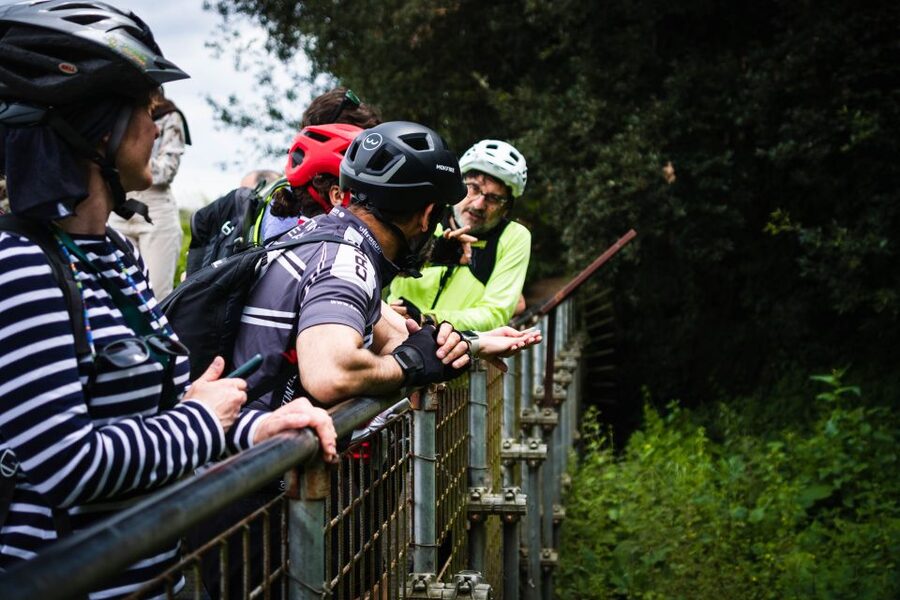
REVIEW · E-BIKE TOURS IN ROME
Rome: Appian Way Guided Tour on E-Bike with italian Aperitif
Rome’s ancient Appian Way makes far more sense from an e-bike than from a tour bus. You roll over old paving stones, pass tombs and ruined villas, and move from city streets into open parks and fields. I especially like the small group of up to 10 and the chance to see several major Roman sites without spending four hours underground or indoors.
I also like the relaxed finish: wine and local products at a farmhouse in the park. Guides such as Costanza, Georgia, and Masse have led this route, and the strongest feedback points to careful riding, clear explanations, and good bikes. The main consideration is simple: the route covers a lot in four hours, so you should expect a lively ride with short visits rather than long archaeological inspections.
Key points to know before booking
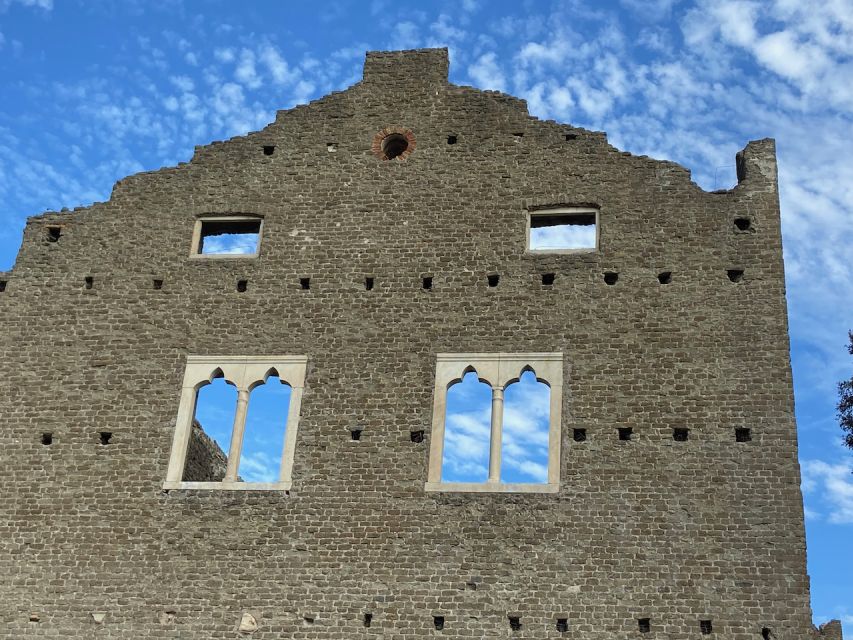
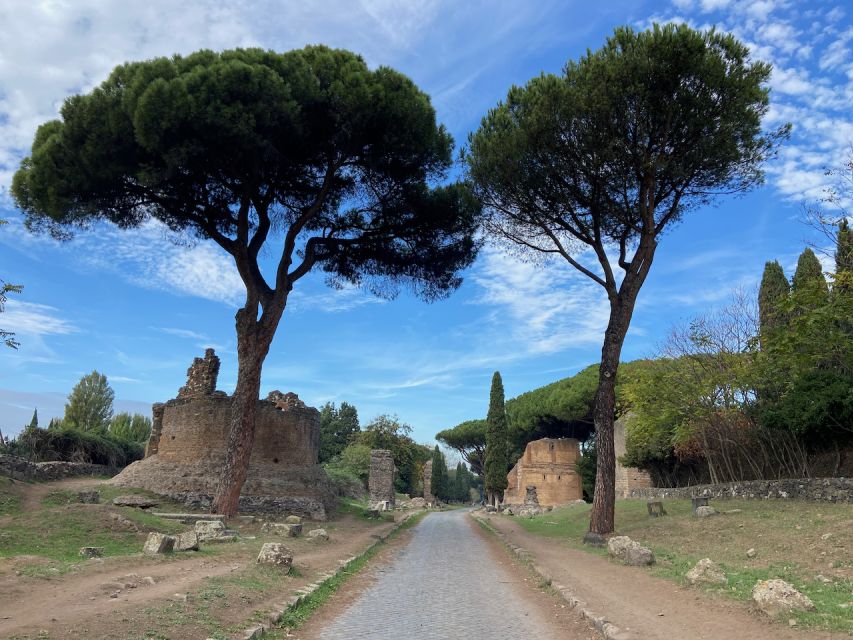
- Ancient roads by e-bike: Ride along the Regina Viarum, the old Appian Way, including stretches of ancient paving.
- Three major park areas: The route links Caffarella Park, the Appian Way Archaeological Park, and the Park of the Aqueducts.
- Roman sights beyond the center: See the Baths of Caracalla, Villa of Maxentius, Tomb of Cecilia Metella, Villa dei Quintili, and the Aurelian Walls.
- Farmhouse aperitif: Stop for wine and local products at a selected local restaurant or farmhouse in the park.
- Compact, guided group: The tour is limited to 10 people, with English and Italian guides.
- Useful family option: A child’s seat is available if requested in advance.
Why the Appian Way works so well by e-bike
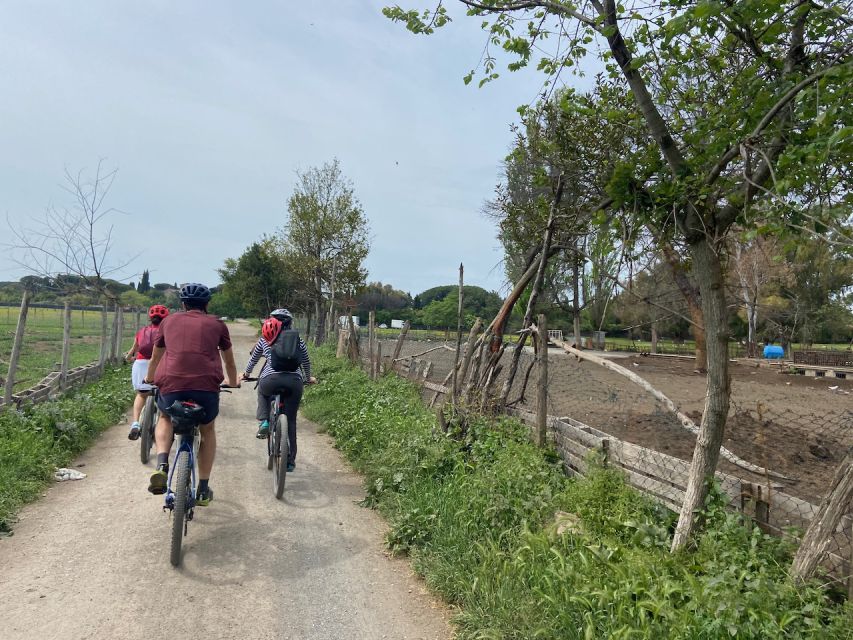
The Appian Way was one of ancient Rome’s great roads, and this tour lets you experience it as a route rather than a string of isolated monuments. You begin near the Pyramid of Cestius, then gradually leave the dense center behind as the parks open up.
That change is the real appeal. Rome can feel packed, noisy, and full of queues. Here, you trade much of that for trees, grass, ruined walls, aqueduct arches, and long views across the countryside around the city. An e-bike matters because the route is broad and varied, with enough distance between the main sights to make ordinary cycling more tiring.
You are not simply pedaling past ruins. The guide connects the road, villas, tombs, churches, parks, and water system into one readable story. I find that useful in Rome, where ancient sites can otherwise blur together after a few days.
The ride lasts four hours, so the pace is active but not designed as a serious cycling workout. You stop often for photographs and explanations. The e-bike takes some effort out of the route, while still giving you the pleasure of moving under your own power.
More E-Bike Tours in Italy
- Rome EBike Tour: Appian Way, Catacombs & Roman Aqueducts
★ 5.0 · 1,766 reviews - Rome: Top Highlights & Hidden Gems Tour by Cannondale E-Bike
★ 4.9 · 1,760 reviews - Rome: Appian Way & Aqueducts E-Bike Tour (Catacombs & Food)
★ 4.9 · 1,498 reviews
Starting at the Pyramid of Cestius
The meeting point is Bikesquare Roma bike rental at Viale della Piramide Cestia, 33. The nearby Pyramid of Cestius appears again at the end of the route, when you return to the same area.
The first listed stop is the Baths of Caracalla, with about 10 minutes to take in the site. You should think of this as an orientation stop rather than a full visit. The baths were a huge Roman public complex, and even a brief look helps show the scale of ancient city life.
From there, you reach Porta San Sebastiano. This gate belongs to the Aurelian Walls, the defensive circuit built around Rome in the late third century. The stop gives you an early look at the military side of the city before the route becomes more rural.
The tour is not built around long periods inside monuments. Instead, the guide uses each place as a piece of the larger route. That format suits you if you want context and variety, but it may feel too quick if you prefer to study every site at length.
Villa of Maxentius and the Tomb of Cecilia Metella
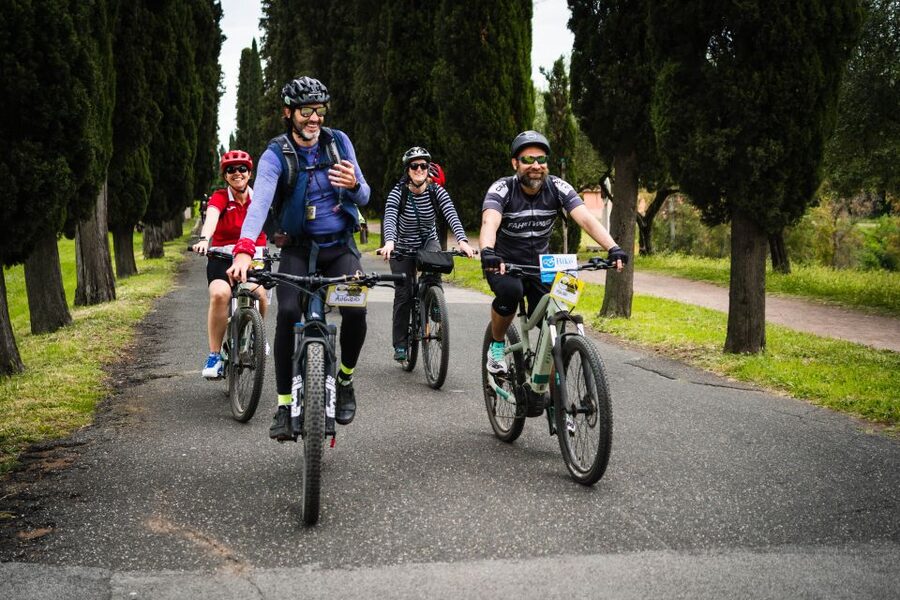
At the Villa di Massenzio, the planned stop is about 15 minutes. The complex is tied to Emperor Maxentius and includes the remains of a large ancient estate along the Appian Way.
A short visit here gives you a sense of how much Roman building once lined this road. You will see ruins in an open setting rather than the tightly packed monuments of central Rome. The guide can point out the relationship between the villa and the road, which is one reason a guided ride is more useful than simply cycling past on your own.
The Tomb of Cecilia Metella receives about 20 minutes. Its round form is one of the Appian Way’s best-known sights, and it shows how important this road became as a place for monumental tombs. The tomb is not just a grave marker. It also tells you that Roman families wanted their status displayed along a major public route.
This is one of the points where the old paving becomes part of the experience. Riding on ancient stones can be exciting, but it is not the smoothest section of a cycling tour. The mountain e-bikes help, and the guide sets the pace, yet you should wear comfortable clothes and shoes and keep both hands ready for uneven ground.
The Appian Way Archaeological Park
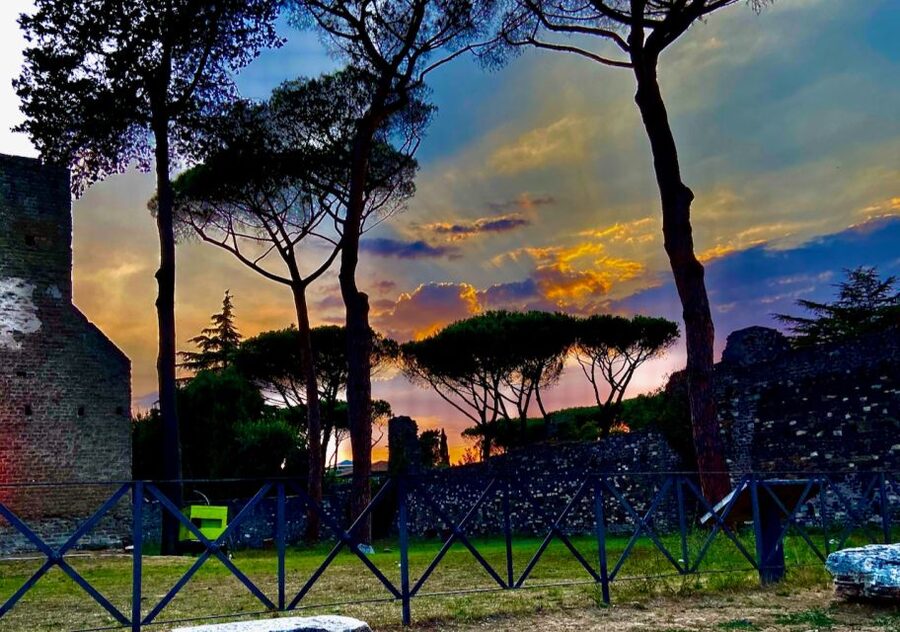
The Appia Antica Archaeological Park is the heart of the outing. The planned stop lasts around 30 minutes, although the route itself continues through this broader area.
Here, the road feels less like a monument and more like a living corridor through the countryside. Tombs, villas, walls, and other remains appear along the way. You may also pass near catacombs and other attractions connected with the ancient road, though the tour does not present itself as a dedicated catacomb visit.
I like this part because you can understand the road’s scale. Walking through a single ruin tells you about one building. Cycling along the Appian Way shows how Roman engineering shaped movement across the region.
The guide is particularly important here. The route includes many fragments, and a short explanation can turn a pile of stone into a villa boundary, tomb, or roadside monument. Costanza has been specifically praised for being attentive and careful, while other guides, including Georgia and Masse, have been singled out for making the ride both educational and safe.
More E-Bike Tours in Rome
- Rome: Appian Way, Catacombs, & Roman Aqueducts E-bike Tour
★ 4.9 · 1,421 reviews - Rome City Small Group Bike Tour with quality Cannondale EBike
★ 5.0 · 1,380 reviews - Rome by Night – Ebike Small Group Tour – Food and Wine (Option)
★ 5.0 · 1,275 reviews - Rome by Night: E-bike Small Group Tour -Food & Wine (Option)
★ 4.9 · 1,233 reviews
Villa dei Quintili and the Park of the Aqueducts
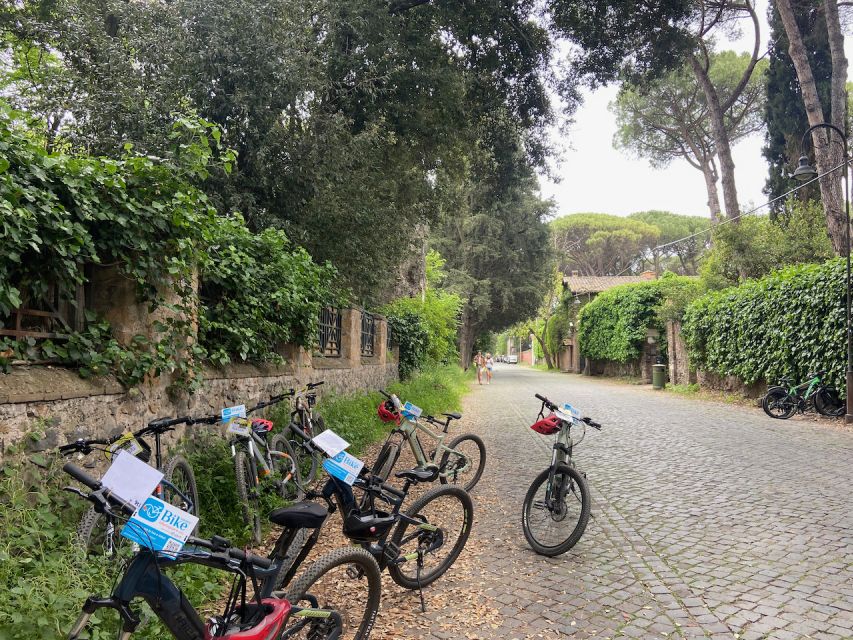
The route continues to Villa dei Quintili, with roughly 10 minutes for a stop. This was another substantial Roman villa, and its position along the ancient road reinforces the idea that the Appian Way was lined with homes, estates, and monuments for the Roman elite.
The brief timing matters. You will not have enough time for a slow, detailed archaeological visit. Instead, you get an outdoor overview and a chance to understand how large private estates sat beside the public road.
The Park of the Aqueducts receives around 30 minutes. This is one of the most memorable parts of the ride because the long arches make Roman infrastructure easy to read from a distance. The aqueducts carried water into Rome, and their remains still dominate the open park.
By bike, you can appreciate their length in a way that is harder on foot. You move beneath or alongside the arches, stop for photographs, and hear how the water system supported the ancient city. This is also a welcome visual change after the tombs and villa ruins.
The parks are not presented as polished museum grounds. Their open, spacious setting is part of the charm. You should be ready for a mix of paved and rougher routes, along with changing surfaces and conditions.
Torre Fiscale and the farmhouse aperitif
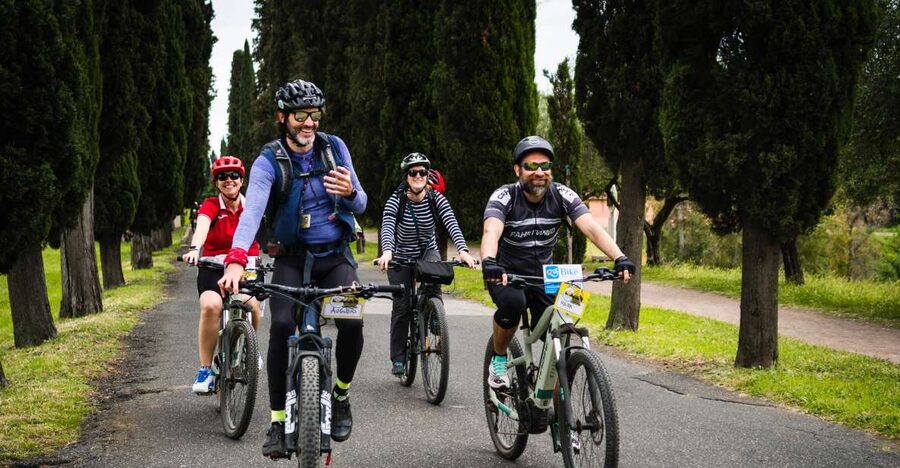
Torre Fiscale Park follows with about 20 minutes. The area is known for its towers and aqueduct views, and it adds another layer to the route’s mix of ancient remains and later countryside.
This is where the ride begins to feel especially far from central Rome, even though you are still within the city’s wider orbit. You get a break from traffic and a chance to look across open ground rather than at one more monumental facade.
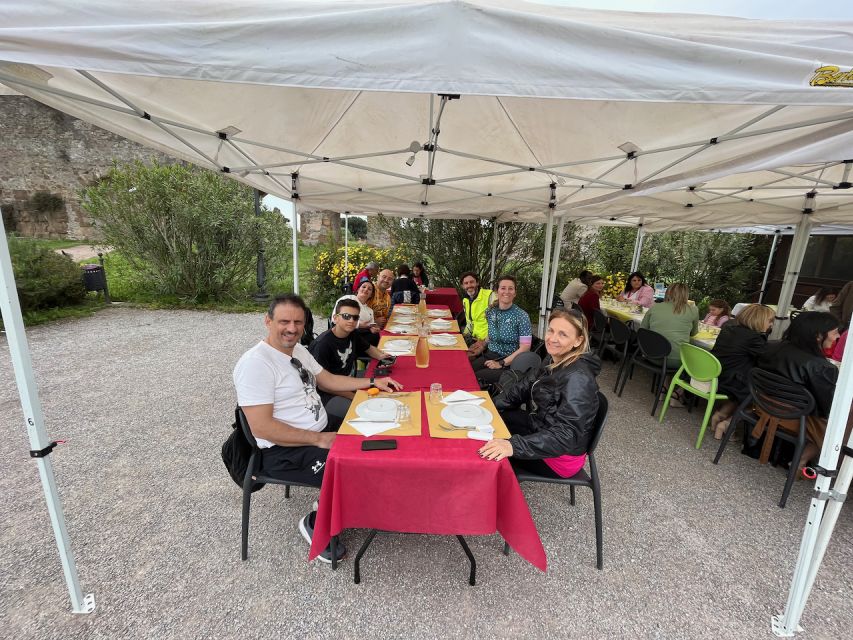
The aperitif stop lasts about 30 minutes at a local restaurant or selected farmhouse in the park. It includes wine and local products. Lunch or dinner is not included, so you should view this as a tasting break, not a full meal.
That distinction matters when judging the $81 price. You are paying for the e-bike, guide, four hours of route planning, the small group, and the tasting. If you are mainly looking for a large meal, the value will feel different. If you want a local pause built into an active sightseeing route, the stop adds a pleasant change of pace.
The wine and food also give the tour a more local finish than a quick coffee stop. You sit down, recover from the ride, and sample products connected to the region before heading back toward Rome.
Caffarella Park and Domine Quo Vadis
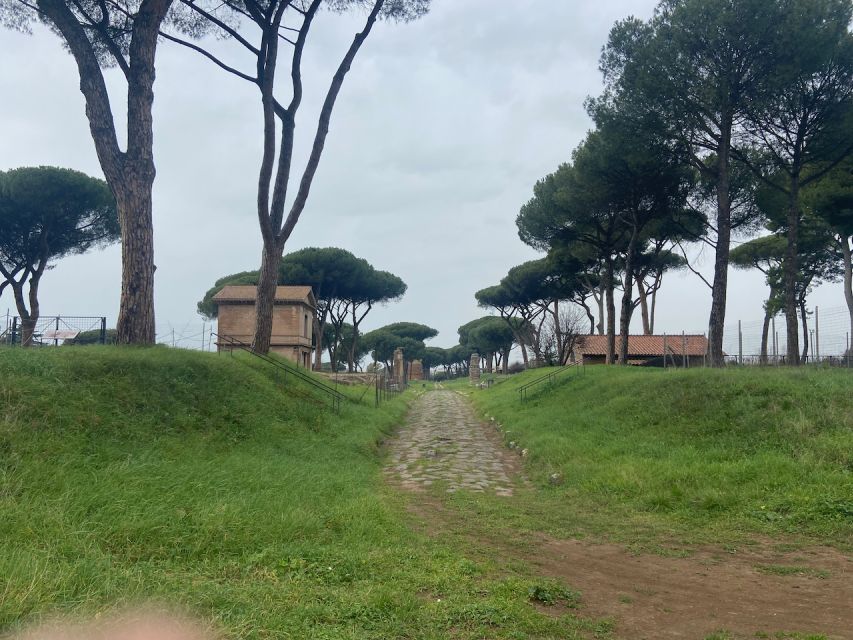
Caffarella Park is another major part of the route, with around 25 minutes scheduled for a visit. The park offers open space, Roman remains, and a quieter setting near the ancient road.
I like the way Caffarella balances the archaeological stops. You are not spending the whole tour looking at walls and tombs. The park gives you room to breathe and helps explain why this part of Rome feels so different from the historic center.
The route then reaches the Church of Domine Quo Vadis, with about 15 minutes. The church is connected with the Christian tradition surrounding the Appian Way and adds a religious dimension to a route otherwise dominated by Roman engineering, villas, and funerary monuments.
You should expect the guide to explain the significance of the stop rather than provide an extended church visit. As with the other points, the tour favors a broad view of the area.
Returning along the Aurelian Walls
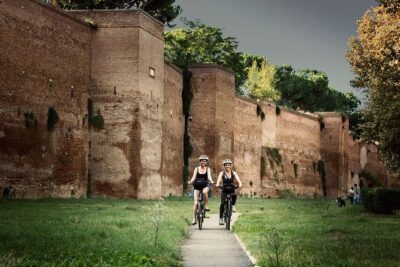
The Aurelian Walls receive about 20 minutes toward the end of the ride. You have already seen Porta San Sebastiano earlier, but this later stop lets you appreciate the defensive circuit as part of Rome’s wider shape.
The walls help connect the rural edge of the route with the city you are returning to. After parks and aqueducts, you begin to see Rome as a fortified ancient capital again.
The final stop is the Pyramid of Cestius, with about five minutes before returning to Viale della Piramide Cestia. That short pause works as a visual bookend. You start near the pyramid, leave Rome through its ancient roads, and return beside the same striking monument.
Because the route covers many stops, you should not expect every scheduled time to function like a formal guided visit. Some stops are quick photo and explanation points. The benefit is range: in four hours, you see more of Rome’s southern archaeological edge than you could comfortably cover on foot.
Bikes, guides, and group size
The tour supplies a mountain e-bike and guide. A child’s seat is available on request, which makes the outing more practical for families, though you should arrange that ahead of time.
The group is limited to 10 participants. That is small enough for the guide to keep the ride together and give instructions without shouting across a crowd. It also matters for safety on a route with changing surfaces.
Past guides have included Costanza, Georgia, and Masse. The feedback attached to their work consistently points to careful route handling, good explanations, friendly attention, and high-quality bikes. One useful practical detail is that a first-time e-bike rider can learn the controls during the outing, although you should still feel comfortable cycling before booking.
Arrive on time at the rental shop. One group had to wait for the shop to open, so do not assume the meeting point will be ready before its stated start. Wear comfortable shoes, sunglasses, and clothes suitable for four hours outdoors. Large bags and luggage are not allowed.
Who gets the best value from the $81 price
At $81 per person, this is not the cheapest way to see the Appian Way. But the price includes a mountain e-bike, a four-hour guided route, a small group, and an aperitif with wine and local products.
I see the best value if you want three things at once: Roman archaeology, time outdoors, and a gentle cycling adventure. Hiring a bike independently would not give you the same route knowledge or the same sequence of stops, and navigating the parks alone could mean missing the meaning behind many scattered ruins.
The value is less clear if you want long visits inside archaeological sites, a full lunch, or a hard cycling challenge. This is a sightseeing tour on bikes, not a museum tour and not a restaurant experience.
It also makes a good second or third day in Rome, when you have already seen the main center and want a different side of the city. You get away from the usual squares and fountains without giving up Roman history.
Should you book this Appian Way ride?
I would book it if you are comfortable on a bicycle and want a half-day outside Rome’s busiest streets. The route packs in ancient roads, villas, tombs, aqueducts, parks, churches, and a wine stop, while the e-bike keeps the distance manageable.
Choose another experience if you need a slow archaeological tour or a substantial meal. For most active visitors, though, this is a smart way to see the Appian Way: broad in scope, personal in scale, and pleasantly different from central Rome.
The strongest reasons to book are the well-regarded guides, the small group, and the chance to connect several parks and monuments in one ride. Just arrive on time, leave the large bag behind, and expect a busy four hours rather than a leisurely afternoon at one site.
FAQ
Where does the Appian Way e-bike tour start?
It starts at Bikesquare Roma bike rental, Viale della Piramide Cestia, 33.
How long does the tour last?
The tour lasts four hours.
What languages are available?
The live guide is available in English and Italian.
How many people are in the group?
The group is limited to 10 participants.
What is included in the price?
The price includes a mountain e-bike and a guide. A child’s seat is available upon request.
Is food included?
The tour includes an aperitif with wine and local products at a local restaurant or farmhouse. Lunch or dinner is not included.
What should I bring?
Bring comfortable shoes, sunglasses, and comfortable clothing.
Can I bring luggage or a large bag?
No. Luggage and large bags are not allowed.
Can I cancel the booking?
You can cancel up to 24 hours in advance for a full refund. You can also reserve now and pay later.
Newest rides we have reviewed in Rome
- Rome: Guided eBike Evening Tour with italian Aperitif★ 5.0 · 16 reviews
- Rome: Villa Borghese E-Bike Tour (Small Group or Private)★ 4.9 · 92 reviews
- Rome: Taste of Rome by quality Cannondale E-Bike★ 5.0 · 12 reviews
- Rome: Appian Way, Aqueducts, & Catacombs E-Bike Guided Tour★ 4.9 · 54 reviews
- Rome: Villa Borghese, Villa Ada, and Coppedè E-Bike Tour★ 4.8 · 78 reviews
- Rome: Panoramic Off-the-beaten-track Cannondale E-Bike tour★ 5.0 · 71 reviews
- Sunrise in Rome: Small Group E-Bike Tour & Italian breakfast★ 4.9 · 177 reviews
- Rome: Top 10 Highlights Guided Tour by Bike or E-Bike★ 4.4 · 15 reviews
E-Bike Tours, compared.
3-Hour Porto Highlights on a Electric Bike Guided Tour
Read our review →
Hills, Alfama, and Mouraria Tour by Electric Bike
Read our review →
Athens Scenic Electric Bike Tour with optional Acropolis visit
Read our review →
City Highlights 3-Hour Guided Electric Bike Tour
Read our review →
Rome EBike Tour: Appian Way, Catacombs & Roman Aqueducts
Read our review →
Top Highlights & Hidden Gems Tour by Cannondale E-Bike
Read our review →Other lists this ride turns up in