
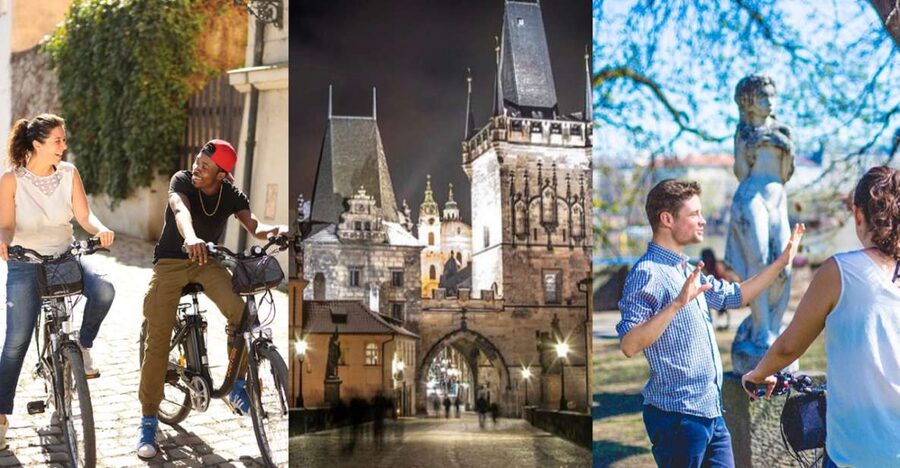
REVIEW · E-BIKE TOURS IN PRAGUE
Prague: 3–Hour Communism and World War 2 E-Bike Tour
Prague’s modern story is not confined to one museum or square. This 3.5-hour e-bike tour links the places where Nazi occupation, Communist rule, and the 1989 Velvet Revolution changed the city. You ride from the Old Town to Malá Strana, the Jewish quarter, and key resistance sites, with a local guide explaining what happened at each stop.
I like two things right away: the electric motor lets you cover a lot of ground without turning the tour into a workout, and the free Museum of Communism admission gives the story a useful indoor follow-up. Guides such as Michal, Marek, Tatiana, Nayeem, and Niam have been praised for clear English and lively explanations.
The main drawback is the riding itself. Prague’s cobblestones and crowded pedestrian areas can mean a bumpy route, and you may need to walk the bike through busy sections. One particularly critical assessment also found the route light on everyday Communist-era buildings, so this tour is strongest on political events and landmark sites rather than daily life under the regime.
Key points to know before booking
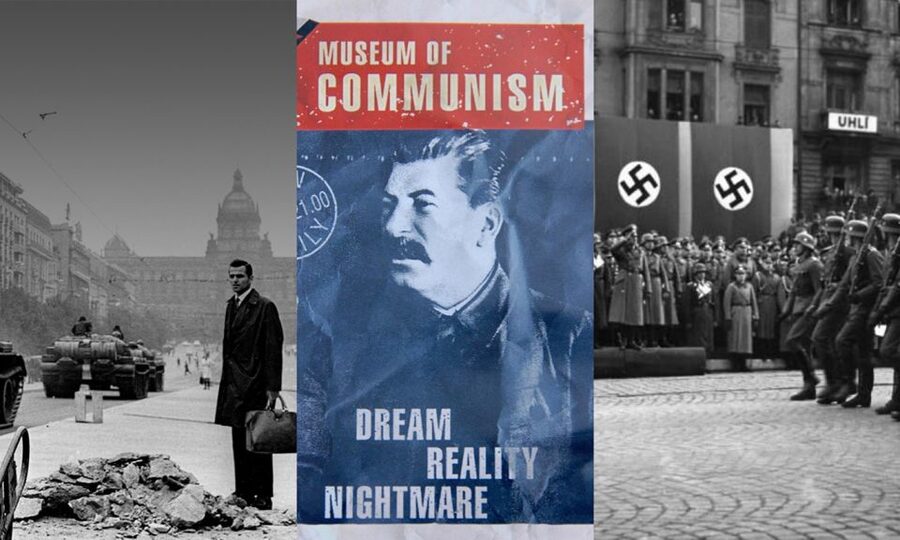
- More than 30 history-focused stops: See sites tied to Nazi occupation, Communist rule, Jewish Prague, resistance, and the Velvet Revolution.
- Electric assistance matters: The bike makes a long city route manageable in warm weather and helps you reach places quickly.
- Museum of Communism included: Use the admission during the tour or return at another time, according to the arrangements on the day.
- Small groups only: The group is limited to 10 people, leaving room for questions and route requests.
- A serious subject with a light finish: Water is supplied during the ride, and a cold beer is included at the end.
- Prepare for uneven streets: Cobblestones, traffic, and occasional bike walking are part of the Prague experience.
Why an e-bike works for Prague’s modern history
The tour begins at Prague by E-Bike on Besední Street in Malá Strana, near the Újezd tram stop. Arrive 15 minutes early with your passport or identity card. The operator supplies the e-bike and helmet, with a poncho available if needed.
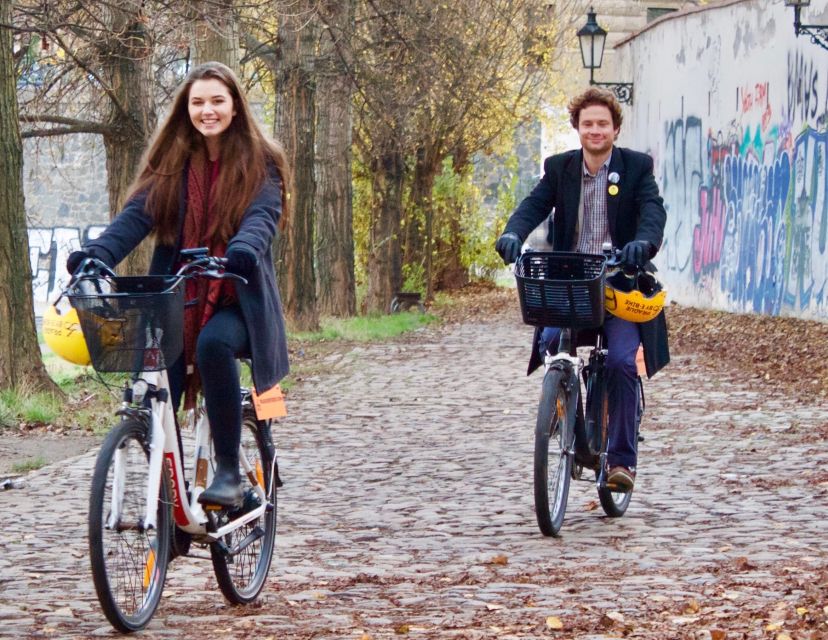
The electric motor is more than a novelty here. Prague’s main sights are spread across several districts, and a walking tour covering the same ground would require more time and more stamina. On a hot day, the assistance keeps you from arriving at each stop overheated. It also makes the tour a reasonable choice if you want to see a lot but do not usually ride for hours.
Still, you are not simply sitting on a motorized platform. You need to handle a bicycle around other people and over uneven paving. Several parts of central Prague are crowded, so your guide may ask you to walk the bike for safety. If you dislike cycling on cobblestones, this is worth considering before you pay.
The group size is capped at 10. That is small enough for a guide to answer questions and adjust the pace when possible. One particularly positive experience involved just two people, which allowed plenty of questions and requests. Larger groups may not feel quite that personal, but the limit is still modest for a city tour.
More E-Bike Tours in Prague
- Prague E-Bike City Tour with A Local Guide
★ 5.0 · 924 reviews - 7 BEST VIEWS – PRAGUE eBIKE TOUR
★ 5.0 · 793 reviews - Prague: Bike or E-Bike City Tour with A Local Guide
★ 4.9 · 416 reviews
Old Town, Jewish Prague, and the marks of occupation
The route visits Prague’s Old Town and the Jewish Old Town, areas where the city’s medieval beauty sits beside painful twentieth-century history. You should expect the guide to connect streets, buildings, memorials, and public spaces with the political events that shaped them.
The Jewish Old Town is especially important because the tour does not treat Prague as a collection of pretty facades. It places the area within the story of Nazi occupation and the destruction and persecution that followed. The tour also includes locations tied to the Second World War and bombing sites, giving you a broader view of how the war affected the city.
The exact order of stops can vary. That matters because you should think of this experience as a guided route through connected historical places, not as a formal museum tour at every location. Your guide provides the context as you move, then the Museum of Communism supplies a more concentrated indoor presentation later.
The Old Town portion also helps establish the contrast between Prague’s tourist center and the political events that unfolded there. You may pass from a famous square or landmark into a story about occupation, protest, or state power within a few minutes. That contrast is one of the tour’s strengths.
Nazi headquarters and resistance sites
The tour includes the former SS Headquarters and several sites linked to anti-Nazi resistance. These stops give the Second World War section a human scale. Instead of hearing only about dates and armies, you see where authority was imposed and where local resistance took shape.
One of the most notable stops is the Cyril and Methodius Church. It is connected with the anti-Nazi resistance and was also used as a filming location for the 2016 war film Anthropoid. The film connection may help you recognize the setting, but the site matters even if you have never seen the movie. The guide explains why the church is part of Prague’s wartime story.
This section can be emotionally heavier than the cycling suggests. You move at a pleasant pace on an e-bike, but the subject includes occupation, persecution, and resistance. A good guide needs to explain these events clearly without turning the stops into a string of grim facts. Guides including Michal and Tatiana have been praised for making difficult material understandable and engaging.
The information supplied for the tour does not promise an interior visit at every wartime location. Some places are viewed from the street or public space, so you should expect interpretation and explanation rather than a series of full museum entries.
The Communist Memorial and life after 1948
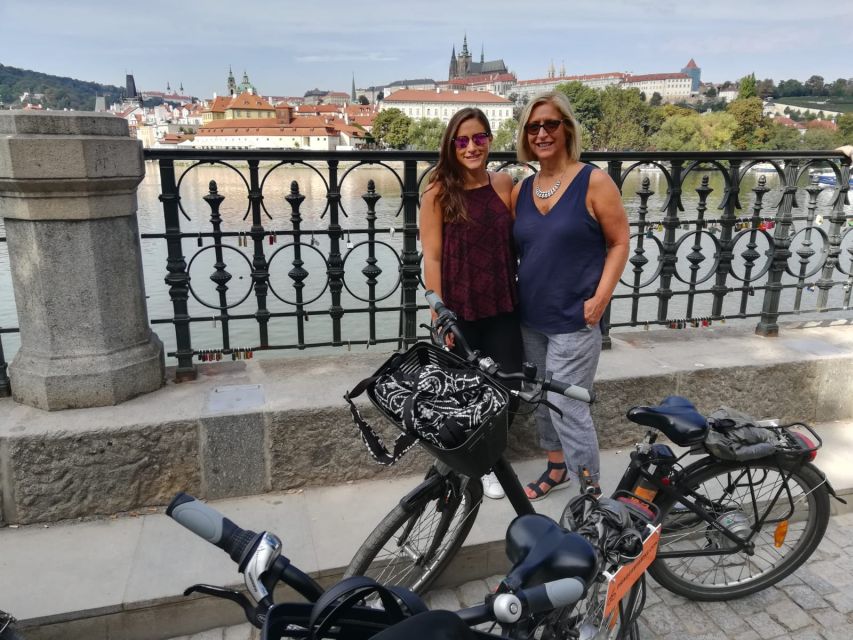
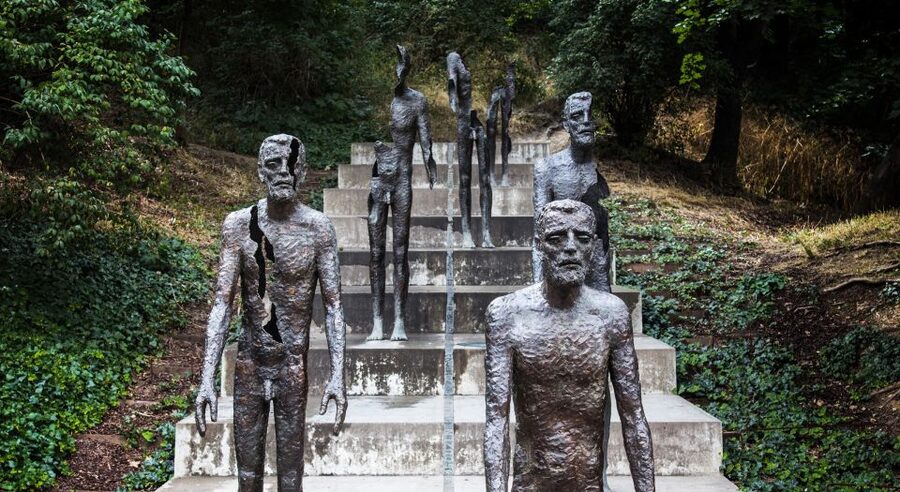
The Communist Memorial is one of the main stops. It provides a physical way to discuss the human cost of Communist rule, rather than treating the period as a simple change of government. The tour places the memorial alongside other locations connected with the regime and the protests that eventually challenged it.
The experience is most useful if you want the broad political outline of Czechoslovakia after the Second World War. Your guide discusses how Communist and Soviet influence took hold after the Nazis were defeated, then connects that period with the later collapse of Communist authority.
Here, the tour has a clear limitation. One assessment found that the route concentrated more on the Velvet Revolution than on the ordinary buildings and objects of Communist daily life. If you want to study housing blocks, shops, workplace culture, consumer shortages, or the visual design of the Communist era, the included museum will probably do more for you than the bike stops.
That is not a reason to reject the tour. It simply helps you choose it for the right purpose. You are booking a moving history lesson with landmarks and political turning points, not a specialist architectural survey of Communist Prague.
Same roads, a different saddle:
- 3-hour Complete Prague Bike Tour
★ 5.0 · 3,674 reviews - Prague: Complete Bike Tour
★ 4.8 · 769 reviews - Hidden Prague Bike Tour
★ 5.0 · 673 reviews - Prague Bike City Tour with Small Group or Private Option
★ 5.0 · 355 reviews
Following the path toward the Velvet Revolution
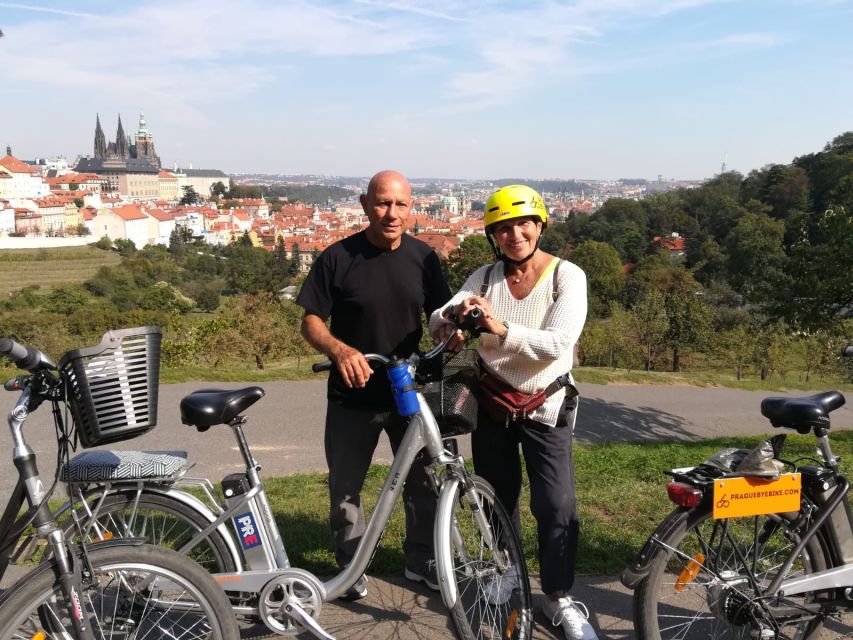
The tour follows the footprints of the student march that helped spark the Velvet Revolution. This is one of the clearest links between a place in Prague and a major political change. You see where public action gained force and how the movement contributed to the end of Communist rule.
The route is particularly helpful for first-time visitors because the guide gives the political sequence as you move through the city. You are not left to remember a list of dates from a book. Each stop adds another piece to the story of protest, public pressure, and regime change.
The student march section is also where the e-bike has a practical advantage. You can connect sites that are too far apart for a short walking tour without spending your entire day on foot. The pace remains active, but the motor reduces the effort between stops.
Do not expect every minute to be spent riding. You stop often, listen to the guide, and sometimes walk the bikes through crowded spaces. The tour is best understood as a city history tour using bicycles for transport, rather than as a fast cycling excursion.
John Lennon Wall and Kafka Museum
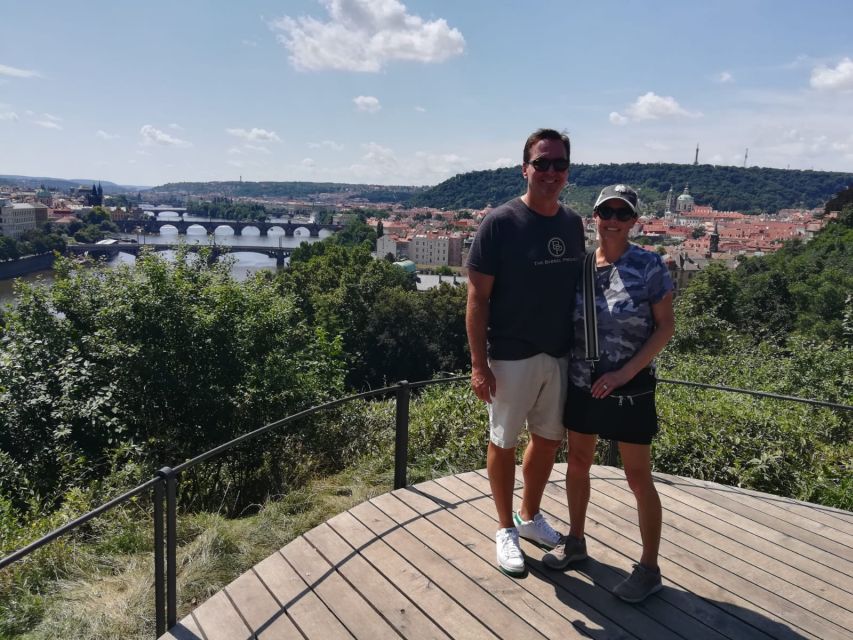
The John Lennon Wall adds a different tone. It is associated with protest, personal expression, and the desire for freedom during the Communist period. Set beside the more formal memorials and government-related sites, it shows how opposition could also appear through art and public messages.
The stop helps break up the heavier wartime and political material. It also gives your guide a chance to explain how Prague’s public spaces carried meaning during the Communist years. The wall is not just a colorful photo stop in this context, although the tour does not turn it into a long art lecture.
The route also visits the Kafka Museum. The supplied information does not specify a full museum entry, so you should expect to see the location and hear about its place in Prague rather than assume a separate admission is included there. The free indoor admission specifically applies to the Museum of Communism.
Together, the John Lennon Wall and Kafka Museum help widen the tour beyond military and political headquarters. You get art, literature, public protest, and the city’s changing cultural identity alongside the major events.
What the Museum of Communism adds
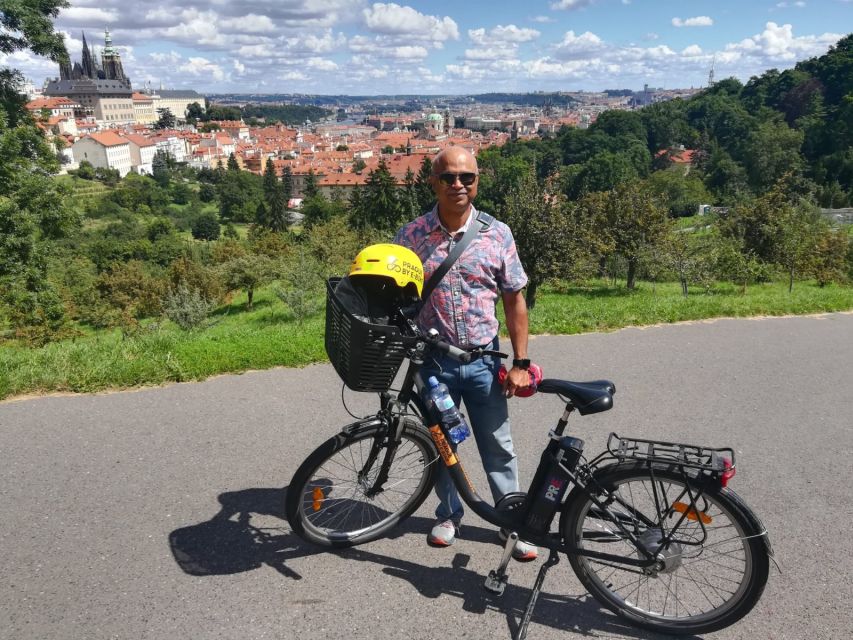
Admission to the Museum of Communism is included, and this is one of the strongest practical reasons to book the tour. The museum presents objects, images, information, and rooms styled to recall life during the Communist period. It gives you time to stop moving and absorb the background at your own pace.
The museum can function as a break in the middle of the cycling route. You may also have the option to return at another time, depending on the day’s arrangements. This flexibility is useful because the bike portion moves quickly, while museum displays reward slower reading.
The museum is especially valuable if you want more than political headlines. The tour itself covers major sites and the Velvet Revolution, but the museum offers a closer look at the period’s material culture and everyday setting. It fills the gap created by the outdoor route’s limited focus on Communist-era buildings.
Allow about an hour if you want to read the displays carefully. The tour information does not promise that the guide will remain with you throughout the museum visit. On one occasion, the guide used that hour for lunch, so ask at the start how the museum stop will be handled.
Guides, language, and the feel of the tour
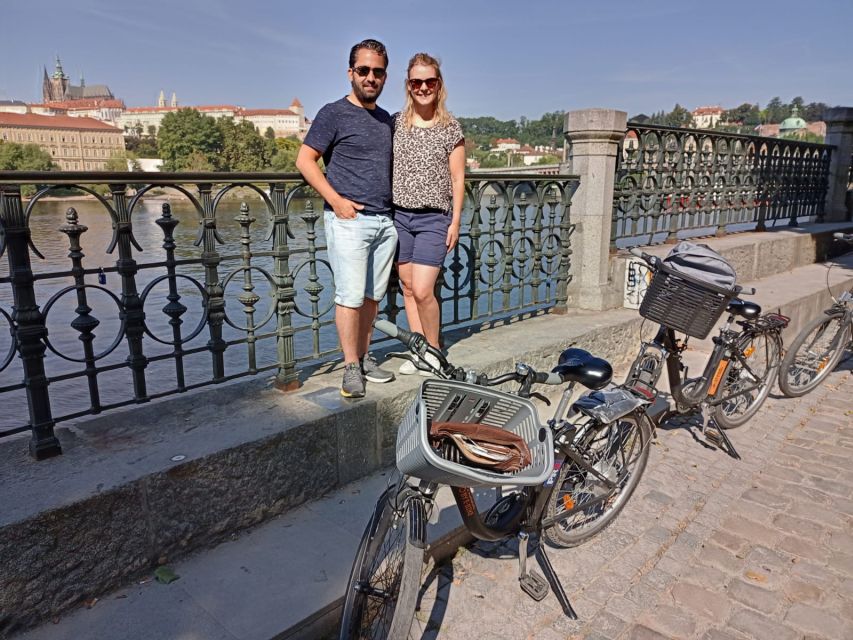
The tour is conducted in English with a live local guide. The best feature is not a scripted list of dates but the guide’s ability to make the sequence clear. Michal, Marek, Tatiana, Nayeem, Niam, and Michelle are among the guides associated with strong experiences, with particular praise for clear English, friendly manner, humor, and useful answers to questions.
Tatiana has been described as accommodating and attentive to what the group wanted from the tour. She also dealt with a minor bike problem by offering a switch. That is a small detail, but it matters on a cycling activity: equipment can have an issue, and a helpful response keeps it from spoiling the afternoon.
Guides may also add general Prague history when you ask. That is useful if you want more than the stated Nazi and Communist themes. The experience can become more personal when you request stories about the city and its people, though the main structure remains modern political history.
The 4.9 rating from 56 ratings suggests a very strong overall response, but you should not read that as a guarantee of identical guiding on every departure. One less positive assessment found the guide friendly but less effective at filling the full time and felt the route was not always well chosen. The tour’s quality depends heavily on the person leading it and on the day’s traffic.
Price, timing, and what is included
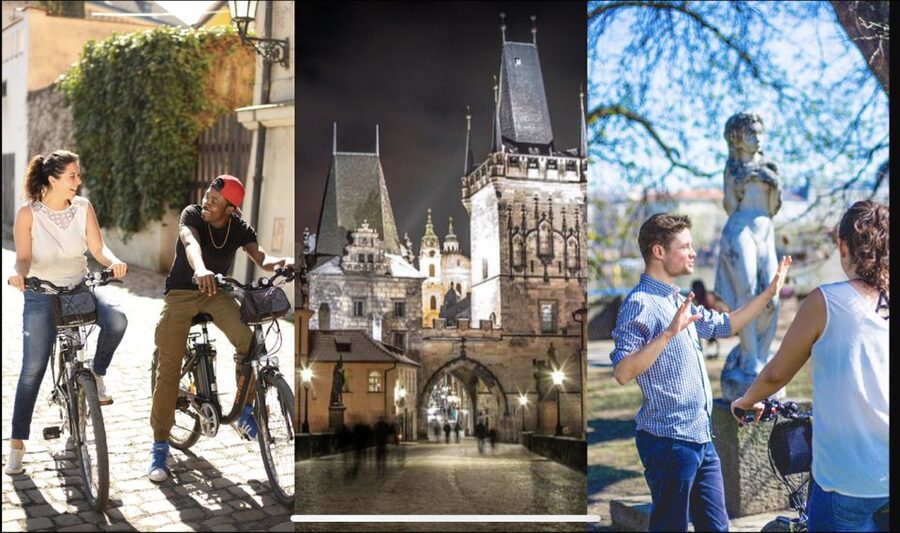
At $74 per person, the tour is not the cheapest way to see Prague. The price covers 3.5 hours, the e-bike, helmet, English-speaking guide, Museum of Communism admission, a bottle of water, and one cold beer at the end. You are paying for transport, interpretation, and a planned route across several districts, not just a rental bike.
I think the price makes the most sense if you value efficiency. You can see more than on a short walking tour, and you avoid arranging separate museum admission. The beer is a pleasant extra, but it should not be the reason you book.
The tour starts and ends at Besední 440/2 in Malá Strana, close to Újezd tram station. Check the available departure times when booking, since the start time is not fixed in the information provided. Free cancellation is available up to 24 hours before departure, and you can reserve now and pay later.
Bring your passport or identity card and arrive 15 minutes early. A helmet is provided, and a poncho is available on request. The route returns to the meeting point, so you do not need to arrange a separate ride back from the final stop.
Who should book this Prague e-bike tour?
I would choose this tour if you want a clear introduction to Prague’s twentieth-century story and prefer moving around the city to sitting in a classroom. It suits first-time visitors who want to connect the Jewish Old Town, resistance sites, Communist memorials, the Velvet Revolution, and the Museum of Communism in one half-day.
It also suits anyone worried about the physical demand of a long cycling route. The electric assistance helps, especially in warm weather, though you still need to be comfortable steering over cobbles and stopping in crowded areas.
I would look elsewhere if your main interest is everyday life under Communism, Communist architecture, or a slow museum-focused experience. You may also prefer a walking tour if bike handling in busy streets sounds stressful. The route is active, and some sections are more enjoyable when you are prepared to walk the bike.
FAQ
How long does the Prague Communism and World War 2 e-bike tour last?
The activity lasts 3.5 hours. Check availability for the starting times offered on your chosen date.
Where does the tour start and finish?
It starts and ends at Prague by E-Bike, Besední 440/2, 118 00 Praha 1, Malá Strana. The meeting point is close to the Újezd tram station.
What language is the tour conducted in?
The live guided tour is conducted in English.
How many people are in the group?
The tour is limited to 10 participants.
Is Museum of Communism admission included?
Yes. Free entrance to the Museum of Communism is included in the activity.
What should I bring?
Bring your passport or identity card. You should also arrive 15 minutes before the scheduled start.
Are a helmet, water, and a drink included?
Yes. A helmet and one bottle of water are included. You can request a poncho, and one cold beer is provided at the end of the tour.
Should you book it?
Book this tour if you want a broad, efficient history route with an active format and a strong guide. The combination of e-bike transport, more than 30 stops, resistance sites, the Velvet Revolution, and Museum of Communism admission gives you a useful first look at Prague’s difficult twentieth century.
Skip it if you want a detailed study of ordinary Communist life or dislike cobblestones and crowded cycling routes. For most visitors who want history, context, and a lot of Prague in a short time, $74 is fair value, especially when the guide, bike, museum entry, water, and final beer are all included.
Newest rides we have reviewed in Prague
- Prague: Monster Bike Trike Tour Euro Segway Experience★ 4.8 · 24 reviews
- Prague: Heart of Prague Electric Tricycle Scooter Tour★ 5.0 · 57 reviews
- Prague Viewpoints & Historical Ebike Tour★ 4.2 · 13 reviews
- Prague Electric Scooter and eBike Grand Tour★ 5.0 · 15 reviews
- Prague E-Bike City Ride tour : 2hrs★ 4.5 · 36 reviews
- Prague: Panoramic Viewpoints Guided Electric Tricycle Tour★ 4.9 · 108 reviews
- Prague: Classic City Bike Tour★ 4.7 · 149 reviews
- Prague: E-Bike or E-Scooter Tour with A Local Guide★ 4.8 · 154 reviews
E-Bike Tours, compared.
3-Hour Porto Highlights on a Electric Bike Guided Tour
Read our review →
Hills, Alfama, and Mouraria Tour by Electric Bike
Read our review →
Athens Scenic Electric Bike Tour with optional Acropolis visit
Read our review →
City Highlights 3-Hour Guided Electric Bike Tour
Read our review →
Rome EBike Tour: Appian Way, Catacombs & Roman Aqueducts
Read our review →
Top Highlights & Hidden Gems Tour by Cannondale E-Bike
Read our review →Other lists this ride turns up in