
REVIEW · MEXICO
Mérida: Montejo Boulevard and Historic Center bike tour
Mérida is spread out enough that walking can eat up your energy before you reach the sights. This 2.5-hour bike tour fixes that neatly, carrying you from leafy Paseo de Montejo to the colonial center and onward to La Plancha, all on a flat route of about 4 miles.
I like two things here: you cover a useful slice of the city without a long, hot march, and guide Ivan gives the ride real local flavor with history, restaurant suggestions, and answers to questions about Yucatán and Maya culture. The main consideration is the bicycles. Some have been reported as shabby, so inspect yours before setting off.
Key points at a glance
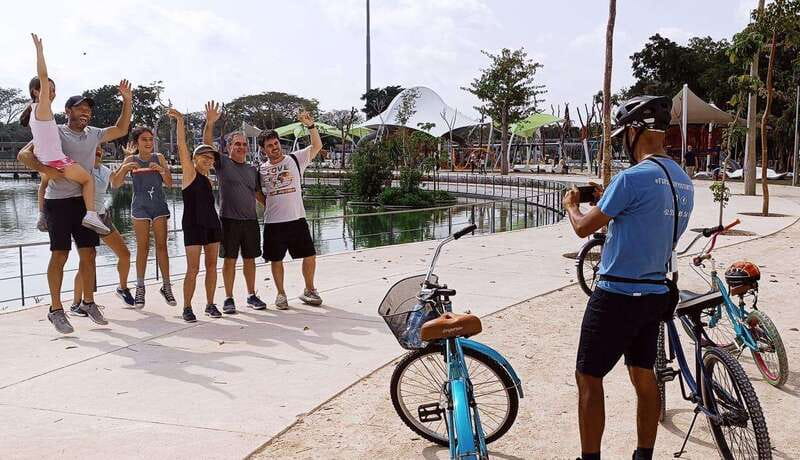
- Paseo de Montejo by bicycle: Ride under trees and palms on Mérida’s bicycle lanes, with shade at many stops.
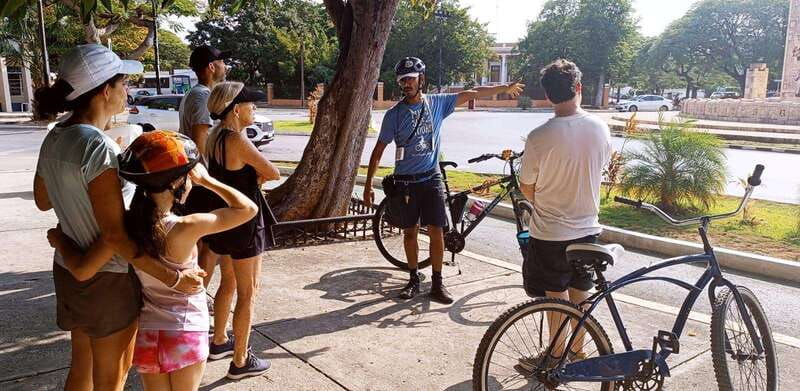
- Ivan’s clear guiding: He uses a speaker while riding and a handheld laser to point out details on buildings and monuments.
- Grand mansions and Yucatecan wealth: Learn who lived along the boulevard and how the houses connect to the region’s prosperous past.
- Colonial Mérida in one ride: Visit Plaza Grande, Casa Montejo, the cathedral, historic parks, and the city’s main theater from outside.
- A cold drink at a local market: Finish or pause at Santa Ana market with a fruit drink, coconut, or another non-alcoholic refreshment.
- Family bike choices: Children’s bikes, child seats, tandems, and an adult tricycle are available, subject to the group’s needs.
Why cycling works so well in Mérida
Mérida rewards slow looking, but its major sights are not all packed into one small square. Paseo de Montejo begins north of the old center, and the route between the boulevard and Plaza Grande is much easier by bicycle than on foot in Yucatán heat.
You ride roughly 7 kilometers on completely flat ground. That distance is modest, but the bicycle lets you save your legs for the stops. The pace is gentle rather than athletic, and the route uses bicycle lanes for the first part. In the historic center, you continue through streets where traffic is described as light and patient around cyclists.
I would call this light exercise, not a fitness ride. You need to know how to ride a bicycle and be comfortable outdoors in heat. The guide pauses at useful points instead of expecting you to listen while pedaling hard. At some stops, you leave the bikes briefly to look more closely at a building or monument.
The group size is kept small, which matters here. You have a better chance to ask Ivan about a detail that catches your eye, and the guide can adjust the pace when people need shade or a short break. One practical point: stay close to the group. The route can spread out at times, and explanations are easiest to hear near the guide.
More Cycling Trips in Mexico:
- Electric Bike Beach Adventure with Tequila Tasting and Lunch
★ 5.0 · 1,162 reviews - Frida Kahlo VIP [Museum Tickets Included] Bike, Markets & Churros
★ 5.0 · 1,072 reviews - Mexico City: 19 City Highlights Bicycle Tour
★ 5.0 · 425 reviews
Meeting at Palacio Cantón
The meeting point is the corner of Calle 43 and Paseo de Montejo, outside the Museo Regional de Antropología, also called Palacio Cantón. Do not expect the bikes to be lined up right on the museum corner. Wait there for the guide, who will take you to the bicycles on a nearby side street.
Bike fitting is quick. You can choose from different sizes and colors, and the bikes can be adjusted to your height. Helmets are provided, and tall riders have been able to get suitable frames. Children’s bikes, seats for small children, tandem bikes, and an adult tricycle are also listed among the choices.
That range makes the tour more flexible for families, though you should confirm the right setup when booking. The adult tricycle carries two passengers in the back and one person in front to pedal and steer. It is an unusual option for people who need more support, but the tour is not suitable for wheelchair users or people who cannot ride.
Before leaving, check the brakes, tires, seat, and gears. Two riders found their bicycles below the standard they expected from an urban bike tour. That is the clearest weakness in an otherwise well-regarded experience. If a bike feels wrong at the start, say so immediately.
Paseo de Montejo and the Monument to the Homeland
The first stretch follows Paseo de Montejo, Mérida’s grand avenue of trees, palms, statues, and large historic homes. The shade does not erase the heat, but it makes the ride much more pleasant than an exposed road. The bicycle lanes also let you take in the avenue without constantly watching every passing vehicle.
The first major stop is the Monument to the Homeland. You get about 15 minutes of explanation and time for photographs. The monument is a distinctive Mérida landmark, filled with carved scenes tied to Mexican history and identity. This is a good place to settle into the tour because you can listen in the shade, look carefully, and ask questions before continuing.
The guide’s use of a speaker is helpful. Ivan can ride at the front and speak to the group without forcing everyone to crowd around him. A handheld laser is used to point toward details that are too high or too far away for a simple finger gesture to work well.
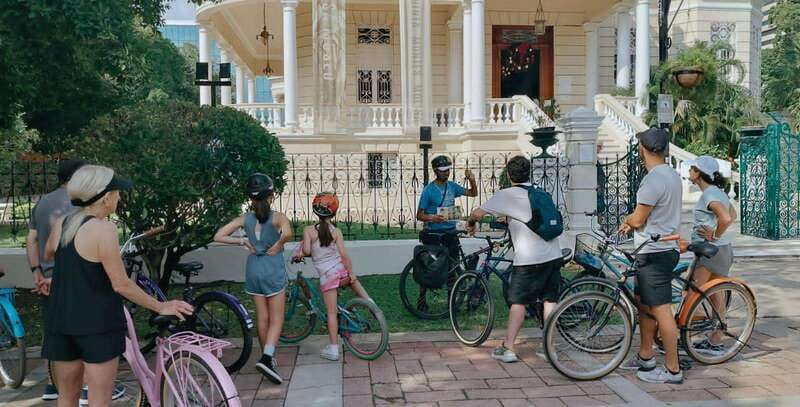
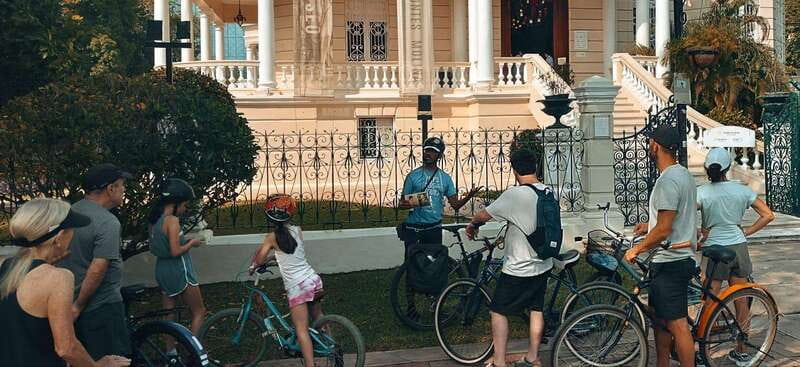
After the monument, the ride turns back along Paseo de Montejo. You stop at four attractive mansions, hearing who lived in them and how their owners connected to the golden age of Yucatán. These are not quick photo-only stops. The value comes from linking the façades to the people and money behind Mérida’s grand boulevard.
Expect about 20 minutes of break time along the avenue. This gives you room to take pictures and recover from the heat. The route is scenic, but the boulevard can feel more like an architectural introduction than a full museum visit. You see the outside of the homes and hear their stories, rather than entering each one.
From the boulevard to Plaza Grande
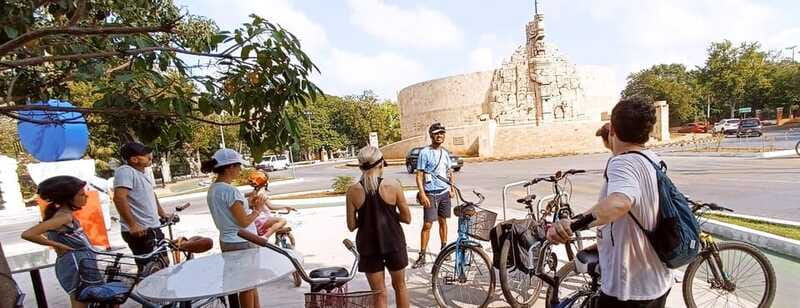
The second half uses a safe street toward Mérida’s historic center. This change in setting is one of the tour’s strengths. You move from the wide, formal avenue into the older center, where parks, churches, government buildings, and colonial-era homes sit closer together.
At Plaza Grande, the guide spends about 15 minutes explaining the square and its major buildings. You see Mérida Cathedral and other important structures from the outside, with time to understand how the center developed. The tour also points out parks created in the 19th century and the city’s main theater, viewed from outside.
The ride gives you a useful first orientation. Afterward, you will know where the central landmarks sit in relation to one another, which helps if you plan to return on foot. Since the visit is guided from the street, do not book this expecting long interior visits or a museum-heavy morning.
The focus is on connections: colonial buildings beside later civic spaces, old streets leading into newer public areas, and Mérida’s continuing daily life around its historic core. Ivan has a strong command of local history and can also answer broader questions about Mexico and Maya culture.
Same roads, a different saddle:
- Mexico bike tour
★ 5.0 · 407 reviews - Bikes and Bites: Taco Bicycle Tour in Puerto Vallarta
★ 5.0 · 341 reviews - Mexico City: 19 City Highlights Bicycle Tour
★ 5.0 · 302 reviews - Mexico City E-Bike Tour with a taco and churros stop
★ 5.0 · 292 reviews
Casa Montejo and Mérida Cathedral
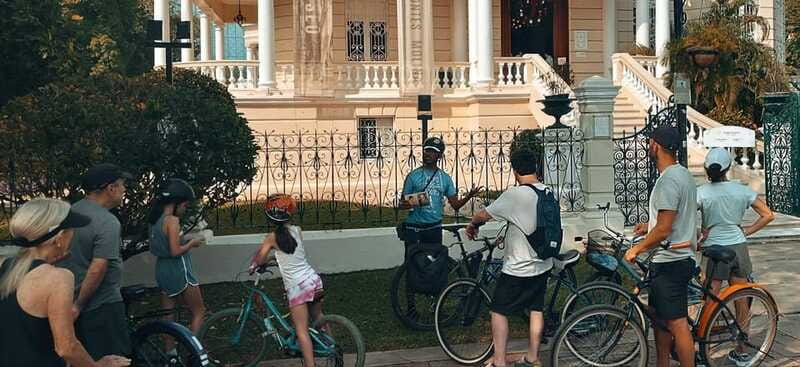
Casa Montejo Museum receives about 10 minutes of guided attention. The building is tied to the conquistador family and offers one of the clearest links between Mérida’s Spanish colonial beginnings and the city you see today. You should expect an exterior-focused explanation rather than a long museum visit inside.
The cathedral follows, with about five minutes devoted to the building. That may sound brief, but it works as part of a moving tour that also covers the plaza, Casa Montejo, parks, and nearby streets. If you want a slow look at the cathedral’s interior, plan to return independently.
Short stops also help in the heat. The guide regularly chooses shaded places for explanations, and you can walk a little at selected points to examine details more closely. The route is designed for seeing a lot without turning every stop into a lecture.
La Plancha and the market refreshment
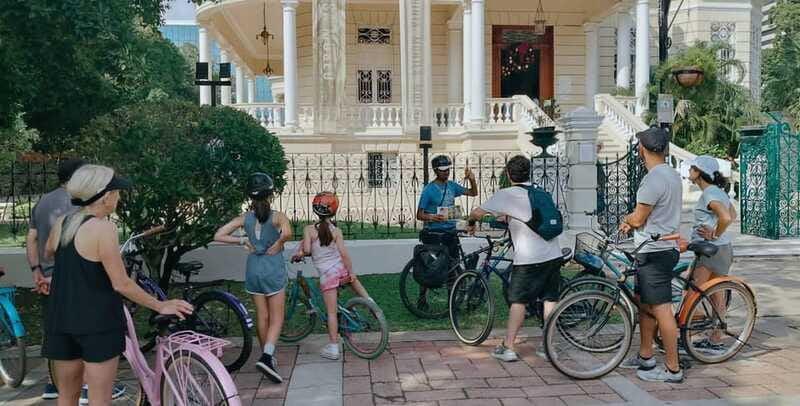
The schedule includes about 25 minutes at La Plancha for a photo stop, a visit, and more explanation. This section gives you a break from the string of colonial façades and lets you see another part of Mérida’s changing city life.
The exact refreshment timing can vary. You receive one non-alcoholic drink either halfway through or near the end, at one of the markets in a historic neighborhood. Santa Ana market is specifically included in the route description, and the choices may include a fruit drink or fresh coconut.
That cold drink is not just a small extra. In Mérida, a shaded pause with something cold can make the difference between enjoying the last part of the ride and wishing it were over. You may also get useful suggestions for restaurants, bars, and other places to visit after the tour.
The ride then returns to the original meeting area near Palacio Cantón, where you leave the bicycles.
What Ivan adds to the ride
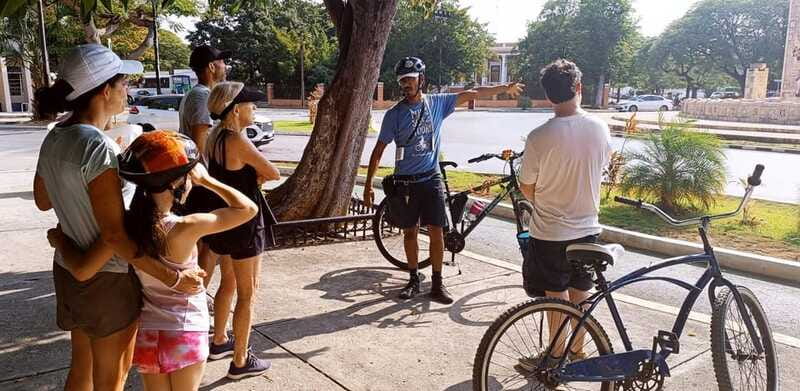
The strongest part of this experience is the guide’s attention to explanation and safety. Ivan asks about names and home countries, speaks clear English, and makes time for questions. His enthusiasm for Mérida comes through most clearly when he explains the city’s people, colonial past, Maya connections, and present-day food scene.
He also keeps the ride relaxed. The pace is easy enough for a mixed group, and breaks can be added when people need them. The speaker means you can hear information while moving, although you should stay near the front if you want every detail.
The restaurant advice is especially useful if this is your first day in Mérida. You get suggestions based on your interests rather than a generic list, and the guide has sometimes continued helping with food or lodging ideas after the ride. That personal advice can add real value to a short city tour.
Still, the group needs to stay together. If riders spread out, it becomes harder to hear the guide and find the next stop. This is a small-group activity, not a private ride, so keep the pace and regroup promptly.
Is the $40 price fair?
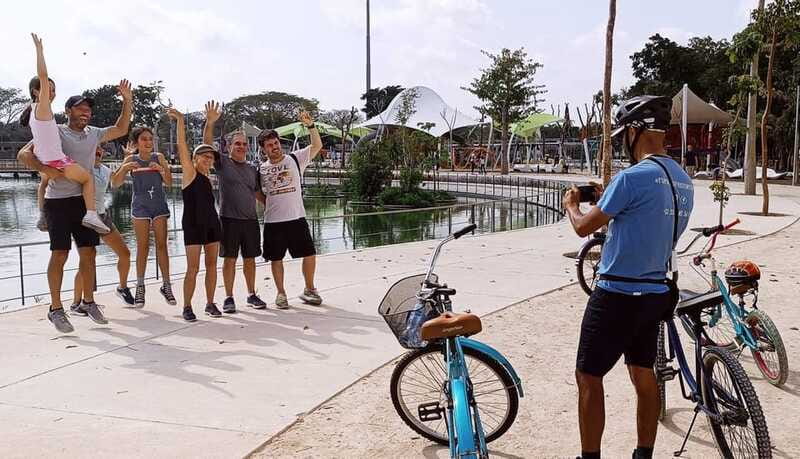
At $40 per person, the tour is not the cheapest way to see Mérida, but the price includes the bicycle, helmet, guide, guided stops, and a non-alcoholic drink. You are also paying for local orientation, a route that connects two major parts of the city, and the convenience of not arranging a rental bike yourself.
I see the value most clearly if you are staying in Mérida for several days. The tour gives you a map in your head early in the visit, then leaves you with ideas for restaurants and places to revisit. It is less compelling if you already know the city well or want extended time inside museums and churches.
The tour has a 4.7 rating from 43 reviews, with repeated praise for the guide, gentle pace, safety, English, and historical detail. The bike quality is the one recurring concern. At this price, you are right to expect a bike that shifts, brakes, and fits properly, so make the check before departure.
You can cancel up to 24 hours ahead for a full refund, and reserve now while paying later. The route may change during periods of heavy rain or high temperatures, but the duration remains 2.5 hours and safety guides the decision.
Heat, fitness, and practical planning
Bring comfortable clothing, water, and a hat. Wear something that allows easy pedaling and protects you from the sun. Shade is available at the stops, but this is still an outdoor activity in a hot city.
Morning or a cooler starting time will usually feel easier, but the available start times vary, so check before booking. Rain and high heat can change the route. The guide keeps the same duration while choosing the safest and most practical streets.
You should skip this tour if you cannot ride, have a low level of fitness, or need wheelchair access. The booking information also lists restrictions for epilepsy and several maximum weights, with different figures shown, including 309, 331, and 350 pounds. Because those limits are not consistent, confirm the applicable limit directly before reserving.
Alcohol and drugs are not allowed. This is a calm sightseeing ride, not a party bicycle tour.
Who should book this Mérida bike tour?
I would choose it for a first visit, especially early in a stay. You see Paseo de Montejo, the grand houses, Plaza Grande, Casa Montejo, the cathedral, La Plancha, and a market in one outing. The route is long enough to give you context but short enough to leave time for lunch or an afternoon museum.
Families may like the equipment choices, including child seats and smaller bikes, but confirm the arrangement before booking. Older riders who are comfortable on a bicycle may also appreciate the slow pace and shaded breaks.
I would not choose it if your main goal is indoor sightseeing, detailed cathedral visits, or a polished high-end bicycle fleet. In that case, a walking tour and separate museum visits may suit you better.
Should you book it?
Book this tour if you want a broad, friendly introduction to Mérida with light exercise and plenty of local explanation. Ivan’s careful guiding, the flat route, the speaker system, and the market drink make the experience practical as well as enjoyable.
Go in with sensible expectations. You will see buildings from outside, spend time in the heat, and may need to request a better bicycle at the start. If those points work for you, $40 buys an efficient first look at Mérida and useful advice for the rest of your stay.
FAQ
Where does the Mérida bike tour start?
It starts at the corner of Calle 43 and Paseo de Montejo, outside Museo Regional de Antropología, Palacio Cantón. Wait at the museum corner for the guide, who will take you to the bicycles on a nearby side street.
How long is the tour?
The tour lasts 2.5 hours and covers about 4 miles, or 7 kilometers.
Is the route difficult?
The route is completely flat and follows a gentle pace. You still need to be able to ride a bicycle and have enough fitness for a 2.5-hour outdoor activity.
Which languages are available?
The live guide speaks English and Spanish.
Are bicycles and helmets included?
Yes. Bicycles can be adjusted to your height, and helmets are provided. Children’s bikes, child seats, tandem bicycles, and an adult tricycle are also available.
Is a drink included?
Yes. You receive one non-alcoholic drink, such as a fruit drink or another market refreshment, either during the ride or near the end.
What should I bring?
Bring comfortable clothing, water, and a hat.
Can I cancel the booking?
You can cancel up to 24 hours in advance for a full refund. A reserve-now, pay-later option is also available.
Newest rides we have reviewed in Mexico
- Bike Tour in Mexico City★ 5.0 · 45 reviews
- Michelin Taco Bike Tour: Roma Norte & Condesa /All-Inclusive.★ 5.0 · 100 reviews
- Bike tour in the Chapultepec Forest and Roma Condesa★ 4.5 · 20 reviews
- Private Ebike Tour in Chapultepec Forest in CDMX★ 5.0 · 14 reviews
- Teotihuacán plus Bike Tour★ 5.0 · 114 reviews
- The best of Mexico City Bike Experience EXPRESS★ 5.0 · 22 reviews
- Explore Chapultepec & Mexico City sights by Bike★ 5.0 · 85 reviews
- Night Street Food & Bike Tour / Small Groups /All Inclusive★ 5.0 · 25 reviews
Mexico Cycling Tours, compared.
Electric Bike Beach Adventure with Tequila Tasting and Lunch
Read our review →
Frida Kahlo VIP [Museum Tickets Included] Bike, Markets & Churros
Read our review →
Bikes and Bites: Taco Bicycle Tour in Puerto Vallarta
Read our review →
Mexico City E-Bike Tour with a taco and churros stop
Read our review →
Mexico City; ART NACO : Murals & Street Art Bike Tour
Read our review →Other lists this ride turns up in